


Dry Bulk FFA: Panamax Index- a bullish hidden divergence would suggest an upside move is due
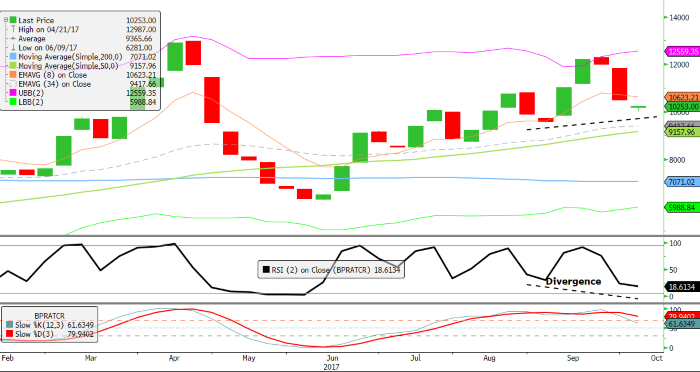
Support – 9,538, 9,224, 8,765
Resistance – 12,343, 12,478, 12,987, 13,877
Resistance USD 12,343 Support USD 9,538
Stochastic at 18
The technical pullback broke the USD 10,812 support last week but currently remains above the USD 9,538 level, keeping the index in bull territory. A close below this level would neutralize the bull trend and increase the probability of a lower high forming. The weekly stochastic at 18 is now showing a hidden divergence with the price. Not a buy signal it does warn of strengthening momentum, and suggest the index is due another up move soon. Although technically bullish, there is a small note of caution as the latest market pullback has been greater in time and price than the previous 3 market corrections. This would suggest that selling pressure looks to be increasing. Market buyers should look to tighten risk if a lower high forms, as this will attract technical sellers to the market looking for a potential change in the trend from bullish to bearish.
 |
Panamax Oct 17 Daily
Support – 11,013, 10,710, 10,500
Resistance – 12,310, 12,760, 13,080
Resistance at USD 13,080 Support at USD 10,710,
Stochastic at 12
The hidden divergence mentioned last week has now come into play with price action holding above the USD 10,710 support, having initially broken the more minor supports between USD 11,300 and USD 11,173. Although near term bullish, the overall trend remains neutral and market buyers should look to tighten risk on any upward moves that fail to close above USD 13,080. Upside moves that fail to close above the recent market high should attract fresh technical sellers to the market looking to test the USD 11,013 support, and potentially lower.
 |
Panamax Q4 17 Daily
Support – 11,250, 11,020, 10,460
Resistance – 12,610, 12743 Resistance is at USD 12,610
Support is at USD 11,250
Stochastic at 23
The Q4 futures held above support last week, and the hidden divergence has resulted in higher pricing. A close above USD 12,610 would put the index back into bullish territory. However, this will almost certainly result in a bearish divergence with the stochastic, and market buyers should be cautious if buying a technical breakout. Upside moves that fail to close above the USD 12,610 resistance should attract technical sellers to the market, and market longs should look to tighten risk. Price action is strong, but not matched by the momentum indicators indicating it could be short lived. Caution due to the potential divergence.
 |
Panamax Cal 18 Daily
Support – 9,317, 9,181, 9,100
Resistance – 9,903, 10,038 Resistance at USD 9,750
Support at USD 9,462, 9,100, 8,943
Stochastic at 22 Higher pricing on the back of the hidden divergence last week has resulted in a strong upside move. This technical is very similar to the Q4, and has the potential to produce a bearish divergence on a technical breakout to the upside (if it achieves a new high). Although near term bullish, market buyers should be cautious above USD 10,038 as it looks like a bear trap could be forming. Technical sellers need to see a lower high form before entry on anything other than shorter term opportunities, as the lower high would suggest either a longer term corrective phase, or a directional change in the trend bias. Momentum would suggest that upside moves could soon be limited.
 |
Source: FIS (Freight Investor Services)
SAFETY4SEA Conference addressed safety challenges ahead
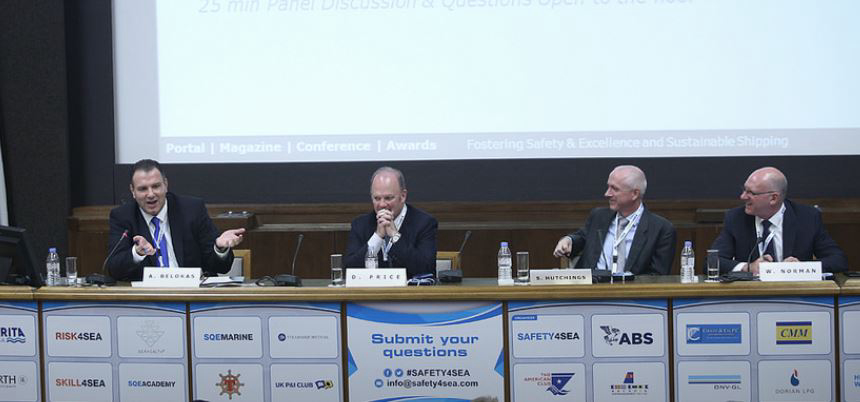
The event organized by SAFETY4SEA and sponsored by ABS, American P&I Club, Arcadia Shipmanagement Co Ltd, CHALOS & Co PC, Consolidated Marine Management, DNV GL, Dorian LPG, Gray Page Ltd, Green Jakobsen A/S, Hellenic Mutual War Risks Club, INSB Class, MacGregor, Marita Hellas, Marshall Islands Registry, North of England P&I Club, RISK4SEA, SEAHEALTH, SQE ACADEMY, SQE MARINE, Steamship Mutual, T&T SALVAGE and UK P&I Club.
The event brought together expert speakers who discussed issues concerning safety culture, crew competence, training and vetting. Inspiring presentations and panel discussions highlighted the importance of embracing a safety culture and focusing on safety performance. Experts shared their views on the crew competency gap, crew training needs and Safety Management Systems overhaul, which still remain challenging topics for the industry. In addition, safety-related issues in the cyber and autonomous era were put on the agenda. Panels also addressed the vetting evolution, measurement of safety performance and TMSA 3 challenges. Presentations were given in six panels as follows:
Panel No. 1 – Conference Opening
David Price, Managing Director, Wallem Ship Management, talked about engagement as the key to safety and operational excellence. He stated that safety of seafarers remains a top priority for Wallem and explained why safety is intrinsically linked with operational excellence. He also explained Wallem’s approach to increase engagement among its people, by referring to company’s safety strategy which focuses on five key areas: communication (ship & shore), retention, training, shipboard working & living conditions, recognition & rewards.
Sean Hutchings, Chief Technical Officer, Thome Group of Companies, noted that since the introduction of the ISM Code in the mid 90’s, there has been an increase in the number and complexity of maritime safety management systems. At the same time, there has been a rise in the number of complicated new regulations coming into force combined with increased demands from owners and charterers; all of which, he said, has led to an exponential rise in the number and complexity of administrative tasks on board. Mr. Hutching therefore explained how a SMS can be easy to navigate and understandable to serve its purpose.
Warwick Norman, CEO, Rightship, talked about the vetting evolution over the last twenty years. Capt. Norman said that the motivation for the creation of RightShip was largely a desire to improve safety standards, in particular around the cape fleet where both BHP & Rio shared a common risk. The success of RightShip tells us is that the industry has changed, said Capt. Norman who believes that human factor will be one of the next area for vetting reviews and a focus for the future.
Panel No. 2 – Safety Perspectives
Apostolos Belokas, Founder & Managing Editor, SAFETY4SEA, presented a set of Key Performance Indicators to demonstrate resilience of a Safety Management system. He outlined the concept behind safety I and Safety II and urged the industry to proceed from reactiveness to proactiveness with a faster pace. Under the key practical definition of resilience as “progress despite adversity” he stressed the fact that adversity for a ship operator may be initiated from encounters with Port State Control, Vetting and Incidents. He demonstrated that the cornerstone of an SMS is the management of its deficiencies and highlighted a set of four KPIs that may act as precursors of a properly operated “resilient” safety management system urging for their employment and benchmarking as an improvement tool.
Elias Psyllos, VP Commercial and Risk Management, T&T Salvage, shared his experience from recent incidents and referred to the appropriate steps for a correct risk assessment. The steps that ship operators should take into consideration are: appoint a protecting agent; activate a salvage company; perform on-site assessment; issue a refloating plan; notify OSRO and; execute refloating plan.
Konstantinos Voutzoulidis, Senior Engineer, ABS, noted that personnel transfers using ship’s cranes during Ship-to-Ship transfer operations have significantly increased the last years; an increase in related accidents has been reported as well. Loss of time, damage of equipment, injuries and even fatalities are among the reported incidents, he said, and there are many causes that may lead to such, either due to human or equipment factors. Mr. Voutzoulidis advised that ship’s cranes, as being one of the identified causes, should be provided with certain safety features if intended to be used for personnel lifts and should be appropriately designed and meet the respective class requirements.
David Nichol, Senior Loss Prevention Executive, Thomas Miller Hellas, talked about important issues related to crew mental health. Mr. Nichol said that a broad range of factors, including anxiety, social isolation, pressure of work and disturbed sleep, can negatively influence the mental health of seafarers. Crew fitness evaluations have previously given emphasis to physical health and it is only relatively recently that due attention is being given to the mental wellbeing of seafarers. Therefore, the UK P&I Club places a high priority on the matter by raising awareness to the problem and in providing support and advice to its members.
Panel No. 3 – Loss Prevention
Mark Bull, Marine Consultant, Trafalgar Navigation, pointed out that we are on the threshold of a major change in our industry; it has already started and it is picking up speed. He said that the new ‘buzz’ word that is around now is autonomous, however, many things need to be considered about. The know on effect is far reaching and will require many conventions to be overhauled or dropped completely, new training systems to be developed, new control centres to be stablished, decisions made on responsibility; the story goes on. He highlighted that history always teaches us and we need to learn from the past so not to repeat the same mistakes in the autonomous era.
Chris Adams, Head of Loss Prevention, Steamship Mutual, discussed how cyber risks affect navigational safety. Considering that the computerisation of operating and control systems on vessels requires effective cyber security arrangements, it is vitally important to raise awareness of cyber security risks with personnel and to implement safe practices to avoid putting systems at risk. If however, navigational data should be compromised by a cyber event, traditional navigation skills should ensure that the ship is not placed at risk. Mr. Adams presented two case studies to question whether there is confidence that shipping assets are really protected.
Rod Lingard, Joint Managing Director, Thomas Miller War Risks Services Ltd, focused on war risks hot topic at his presentation. Mr. Lingard began by reminding delegates of the War Risks Additional Premium areas and then went on to look briefly at incidents and recent developments in a number of areas including, the Gulf of Guinea particularly Nigeria, Somalia, Yemen and the Bab el-Mandeb Strait, Asia particularly the Sulu Sea and some incidents in other areas. Mr. Lingard concluded his presentation with a brief look at Cyber Attack Exclusion Clauses.
James Wilkes, Managing Director, Gray Page, raised awareness on how terrorism has distorted industry’s security priorities. Sixteen years ago, the shipping industry was told that there was a significant threat “to the security of passengers and crews and the safety of ships”. Mr. Wilkes noted. In response, IMO produced the ISPS Code, the first and only global maritime security regulation of its kind. Mr. Wilkes explained how the shipping industry’s response to concerns about terrorism has distorted its physical security priorities and why tackling regular and common security problems in shipping should be central to its security priorities in the future.
Panel No. 4 – Crew Competence & Training
Dr. William H. Moore, SVP, Loss Prevention, American Club, focused on loss prevention challenges regarding seafarer competency assessment and competency assurance. Dr. Moore presented concerns over seafarer competency and important key points associated with training. He highlighted that training is necessary for both skill development and regulatory compliance and that learning outcomes should be consistent with performance criteria objectives. Above all, he emphasized that commitment to training, assessment and competency assurance is vital to maintain the quality of their seafarer’s skill sets and employment and referred to tools for shipowners, based on claims experience, surveys and regulatory developments.
Colin Gillespie, Deputy Director (Loss Prevention), North P&I, shared his views on the ‘right crew’ from a loss prevention perspective. Mr. Gillespie explained that at North, officers who have the right combination of knowledge, experience and attitude as recognized as ‘The Right Crew’. During his presentation, he explored the relationship between systems and people, focusing on the three key elements of safety culture: Sensible Systems, Safety Behaviour and the Right Crew.
George M. Teriakidis, Regional Business Development Manager, DNV GL, presented findings from a training survey which was conducted last year among the main shipping clusters in the world. The main target was to investigate if shipping community does have safety high on their agenda and which crucial elements contribute to safety awareness and culture. Mr. Teriakidis presentation gave an overview of these results and how crew, along with its training, is considered one of the main pillars of safety awareness.
Panel No. 5 – Safety Culture
Yuzuru Goto, Managing Director, K Line LNG Shipping (UK) Ltd, gave advice on how to avoid major accidents in LNG shipping. Mr. Yuzuro stressed that failures occur because it is difficult to eliminate risk in a complex industry like shipping, regardless all efforts on technology, training, regulations and procedures. He also noted that when we focus on doing everything right in the first place and police this through inspections and audits, we risk making people reluctant to admit their failures, concerns and mistakes. This, in turn, creates and supports a culture of cover-ups – creating a negative cycle based on distrust. Taking into consideration that in shipping accidents, crew knew before the event of the failures that caused the incident, but they failed to raise or correct the issue, the way to tackle this, is to create strong organisational culture.
Erik Green, CEO Green-Jakobsen A/S, explained how to measure real safety performance, considering that TMSA3 requirements and industry stakeholders are increasingly turning their attention towards safety performance that is driven by people’s enhanced soft skills. The latter are very much linked to reflection and learning from experience rather than learning from incidents, he said. Mr. Green further presented the his company’s approach in cooperation with four shipping companies , for measuring the safety performance and highlighted its importance for meeting the requirements of safety excellence through building resilient safety cultures.
Vivek Menon, Head of Occupational Health and Safety Dept, SEAHEALTH, focused his presentation on the ‘Safety Recruitment Assessment’ which assesses the likelihood for individuals to perform in a safe manner and enables the maritime industry to recruit the right people. Each potential staff member is assessed by using three elements -Knowledge, Personality and Reasoning. The process is on three distinct aspects that combine to filter applicants through to identify one firm safety profile.
Panel No. 6 – Ship Operators Vetting
Capt. Panagiotis Nikiteas, HSQE Manager / DPA / CSO, Anangel Maritime Services Inc, encouraged operators instead of discussing about vetting theory and following directly or indirectly imposed requirements, to discuss and implement actions to bring operators and managers, instead of followers, to the forefront of developments and applied innovations. During his presentation, Capt. Nikiteas suggested how industry players can work towards reduction and elimination of substandard shipping and presented actions to denote different approaches.
Stavros Meidanis, DPA/CSO, Safety & Quality Manager, Capital Ship Management Corp. , presented how TMSA 3 presents a new challenge for the Ship Operator. The 3rd edition, launched in April 2017, adopts a similar document structure as previous TMSA editions, but with more wording clarity, consistency of language and focus on continuous improvement. Mr. Meidanis talked about the major changes introduced such as expansion of Element 6 – Cargo, Ballast, Tank Cleaning, Bunkering, Mooring and Anchoring Operations, an updated Element 10 combining Environmental and Energy Management and a newly introduced one, Element 13-Cyber Security. Also, special focus has now been given on continual improvement cycle, taking into consideration additional KPIs with ultimate target an effective performance management.
Capt. Panos Chatzikyriakos, HSE Director, Sea World Management & Trading Inc., provided insight into the current vetting challenges. As we became experts at slicing and dicing data to obtain amplified details on SIRE performance, the threat of sidetracking from our target grows, he said. Therefore, Capt. Chatzikyriakos urges for caution in determining the right indicators and targets for companies with this type of culture as the individuals may see their role as managing the indicator rather than managing the process that it is indicative of.
All sessions ended with a round table discussion and exchange with the audience.
Finally Apostolos Belokas as the Forum Chairman thanked the delegates for their participation, the sponsors for their support and the speakers for their excellent presentations and also the organizing team of the event for their contribution towards forum objectives.
.Press Release of the Awards: Available online by clicking here
3.Video Presentations: All presentations will be made available on YouTube in high resolution within this month at the SAFETY4SEA Channel
4.Speaker Articles: Edited articles with key points of each presentation will be available at www.safety4sea.com under ‘Opinions’ column within this month
5.Event Photos: Available at SAFETY4SEA Flickr
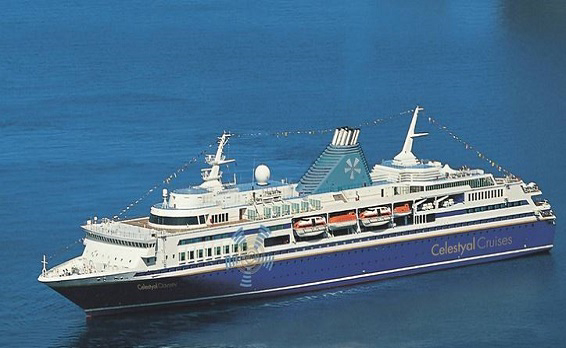
Celestyal Cruises appoints new Vice President Commercial, Europe
 |
| Andrew Magowan |
Magowan joins Celestyal Cruises with 25 years of international cruise distribution experience, having previously worked with all major cruise agents, tour operators and trade distribution partners in the industry. Previous roles include Vice President Europe Middle East and Africa for Seabourn and other senior sales & marketing roles within the cruise industry including NCL, Cunard Line, Swan Hellenic & SeaDream.
Magowan’s appointment is part of an ongoing strategy to grow Celestyal’s presence in the UK and Europe, strengthening the European sales network of the company.
Kyriakos Anastassiadis, CEO of Celestyal Cruises, said;
“Andrew’s experience and in-depth knowledge of the travel industry will further strengthen the Celestyal brand as a cruise operator that offers immersion in local experiences in both Greece and Cuba. Andrew’s appointment follows growth in the UK and European market and we are delighted to have him on board as part of our expansion and development plans.”
About Celestyal Cruises
Celestyal Cruises is the only home-porting cruise operator in Greece and the preeminent cruise line serving the Greek Islands and circumnavigating the island of Cuba, year-round. The company operates five mid-sized vessels; each one being cosy enough to provide genuine and highly-personalized services. The foundation of the company’s philosophy is the ‘destination.’ Every cruise focuses on true cultural immersion, offering authentic, lifetime experiences both on board and onshore wherever its vessels sail.
Corporate Responsibility
Celestyal Cruises is deeply committed to sustainability and ethical business practices. The company actively supports the local communities in the destinations it visits, particularly in the field of education. Since 2015, more than 1,200 students on the Greek islands of Milos, Patmos and Ios have enjoyed a ‘journey to knowledge’, by attending specialized educational programs, initiated by Celestyal Cruises. Additionally, Celestyal Cruises supports cultural NGOs; while promoting youth entrepreneurship, marine student development and child welfare.
ISO Certification
The entire spectrum of Celestyal Cruises’ ship management, including technical, hotel and crew management, and offices, are certified in accordance with ISO 9001/14001 standards. The certifying authority is DNV-GL, which is by widely recognized as the biggest and most respected rating agency in the marine industry.
Awards & recognition
In 2017, Celestyal Cruises received four Cruisers’ Choice Awards from Cruise Critic, the world’s largest online cruise community, being voted ‘Best’ in the mid-sized category, for ‘Embarkation’, ‘Entertainment’, ‘Shore Excursions’ and ‘Value’. At the Greek Tourism Awards 2017, the company won five awards, as an indication of its dynamic presence in the cruise sector, as well as its great value offered. More specifically, the company won the gold award in the following categories: ‘Tourism Season Expanding Initiatives-Greek Tourism Product Enrichment’, ‘Guest Service Excellence’, ‘Gastronomic Tourism’ and ‘Corporate Identity-Corporate Reputation Management- Branding’; while also receiving a silver award in the ‘Integrated Marketing Campaign’ category. Connect with Celestyal Cruises: Facebook, Instagram, Twitter, LinkedIn
Ms. Despina Panayiotou Theodosiou, WISTA Cyprus President, elected WISTA International President
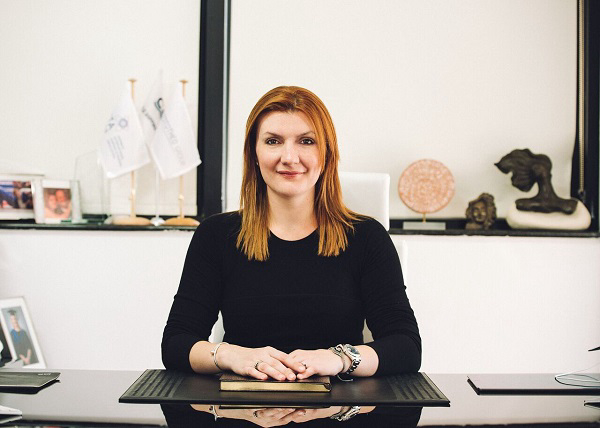
 |
| DESPINA PANAYIOTOU THEODOSIOU - Managing Director, TOTOTHEO Group, President of WISTA Cyprus and of WISTA (International). |
During the 37th AGM of the Association, the new Board was elected, where the new President was announced to be, Ms. Despina Panayiotou Theodosiou, President and founding member of WISTA Cyprus, succeeding the position from Ms. Karin Orsel, who has held this role successfully for the last six years. On accepting this honor at the WISTA AGM in Rotterdam, Despina talked about a future where business women play an important role in our industry, a role she currently exemplifies.
Despina Panayiotou Theodosiou, stated "It is an honour to take over the role of President of WISTA, supporting and serving an Association whose potential I believe in and support. We have an important role in the shipping industry and it is one we should embrace, remaining true to the values and identity that make us what we are. I take over this role from Karin Orsel who has achieved much in her tenure, both in growing our Association and giving it a stronger sense of value."
Despina is the CEO of TOTOTHEO Maritime, a leading maritime technology and satellite communications enablement business. She has served on the Executive Committee of WISTA International as Secretary for the last two years, as President of WISTA Cyprus and is a Member on the Board of Directors of the Cyprus Shipping Chamber.
WISTA is a networking Association of women at management level positions in the Shipping industry. In 1974, 6 shipping women with a vision, from 3 European countries, founded WISTA. Today, WISTA International has 40 member-countries around the globe with almost 3,000 members, all sharing the same passion - Shipping!
Following the AGM the new Board of Directors is as follows:
PRESIDENT - DESPINA PANAYIOTOU THEODOSIOU - Managing Director, TOTOTHEO Group
SECRETARY - DIANE EDWARDS - General Manager People, Systems and Technology, Ports of Auckland Limited - New Zealand
TREASURER – RACHEL LAWTON – Audit Director, MAZARS LLP - UK
BOARD MEMBERS:
JEANNE GRASSO - Partner, Blank Rome LLP - USA
Sanjam Gupta - Director, Sitara Shipping Ltd - India
Katerina Stathopoulou - Executive Director, Investment & Finance Ltd - Greece
Naa Densua Aryeetey - Head Shippers' Services, Ghana Shippers' Authority - Ghana
WISTA is a networking organization for women at management level in the maritime industry. Which aims to:
· Facilitate the exchange of contacts, information and experiences among its members
· Promote and facilitate the education of its members
· Provide liaison with other related institutions and organizations worldwide
Face the cyber threat in the maritime industry in Hamburg on Tuesday
 |
However, criminals and terrorists also read and learn from the news, and they understand how huge and vulnerable this industry is. They will be attacking your ships or your data systems any time now, with very serious economic consequences and possibly loss of life; and we need to be prepared before this happens.” David Nordell, Senior Vice President for Strategy, Policy and Law, Centre for Strategic Cyberspace and Security Science
Hear from David Nordell and our esteemed line-up of Speakers and Panellists on Tuesday, 10th October at the Le Meridien Hotel, Hamburg. Still time to register to attend.
In this information era of the connected ship, the cyber threat is growing across all sectors. With the shipping industry's increasing reliance on technology and remote monitoring, maritime cyber security is no longer optional, but is business-critical.
Building on the resounding success of the Maritime Cyber Resilience Forums held in Rotterdam and Athens earlier this year, Digital Ship’s Maritime Cyber Resilience Forum Hamburg will contain plenary presentations and panel discussions in four focused sessions:
1. An Overview of Maritime Cyber Challenges and Focus on Building Resilience
2. Business Planning and Cyber Preparedness
3. New Developments in Maritime Cyber Regulations and Guidelines
4. Are We Cyber Ready? The Shipping Operators’ Outlook
This Forum will bring advisors, end-users, technology providers and policy makers together, aiming to
• Understand, define and assess the threats and risk of maritime cyber-attack
• Raise awareness of cyber security and risk issues and identify information sharing mechanisms
• Discuss appropriate regulation and guidelines for clearer standards throughout the industry
The event will include networking opportunities and a Post-Conference Reception on 10 October
Date: Tuesday, 10 October 2017 Website: https://www.hamburg.thedigitalship.com/
Enquiries: This email address is being protected from spambots. You need JavaScript enabled to view it.
ABOUT DIGITAL SHIP
For 17 years Digital Ship magazine has provided the digital community of the world's maritime industry with the latest news and developments, including satellite communications, software, navigation, vessel efficiency, cyber security, big data and analytics, to help keep shipping operating with maximum safety, efficiency and crew comfort.
-
High-flying new marine insurer American Hellenic Hull picks Cyprus as a base
 |
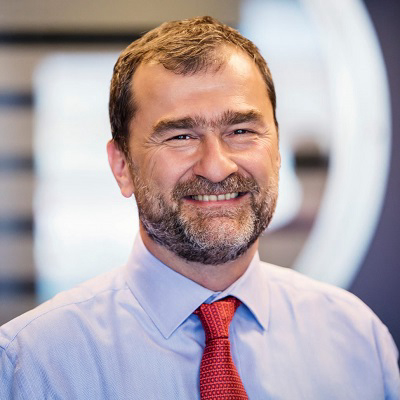
| Mr.Ilias Tsakiris Chief Executive Officer & Chief Underwriter |
Until last year, this group was focused on managing the Hellenic Hull Mutual Association, which insured about one quarter of all Greek-owned fleets.
The new hull insurer is a wholly owned subsidiary of the American Club and based in Cyprus. Receiving its operating licence last year, it became the first marine hull insurer in Cyprus — and in the wider region — to comply with the European Union’s stringent Solvency II directive.
By mid-2017, American Hellenic Hull had already soared beyond most of its key targets for the first year of operations, with premium income of more than $10m and a fleet of 1,900 insured vessels.
For the opening chapter in its existence, AHHIC has been insuring 10\% lines and following traditional underwriters. On a 100\% basis, the tonnage currently covered amounts to 35m gt.
But it has sought its own rating from specialist ratings agency AM Best and thereafter it expects to start leading business itself.
The company has set itself an ambitious “indicative” goal of insuring 4,000 vessels by 2020. About half the current insured fleet is owned by Greek and Cypriot owners.
AHHIC is doing business across the globe and has offices sprinkled across main European, Asian and American markets.
But the Limassol office is the company’s headquarters. It is staffed by 20 highly trained executives from Cyprus and Greece, who are responsible for delivering customer service across the company’s international network.
AHHIC chief executive Ilias Tsakiris sees great potential for Cyprus to become a leading marine insurance hub.
“The shareholders and the board of directors evaluated Cyprus as the best destination for the company’s operations,” he tells Lloyd’s List.
Its credentials include practical company legislation that eases the path for international companies to transfer their business headquarters to the island.
It also offers a growing home-based maritime community, a high level of marine insurance expertise and an educated workforce.
“It is an inviting climate in all senses,” says Mr. Tsakiris. “But, at the same time, the review process for us to gain approval was a very thorough one. It took the time necessary to evaluate such a big project, including subjecting it to many financial stress tests.
“The approval procedure favourably demonstrated Cyprus’ seriousness as a marine insurance sector,” he says.
“We are convinced that many insurance entities present in the UK will look hard at Cyprus as an option for mitigating the fallout from Brexit.”
Its horizons are global, but American Hellenic Hull is already a well-integrated member of the island’s maritime community.
Indicative of that, the company is a Gold Sponsor of this year’s Maritime Cyprus conference, as well as sponsoring the event’s opening reception.
Read Lloyd’s List article here
Capital Product Partners L.P. Announces the Appointment of Mr. Keith Forman as Non-Executive Chairman of the Board
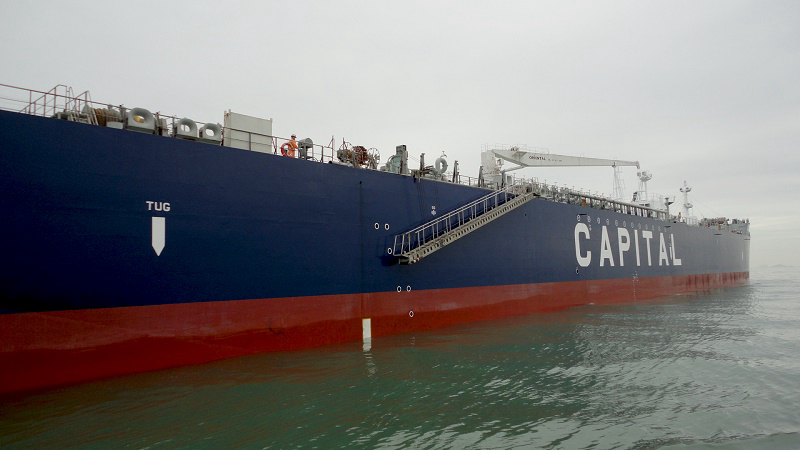
His appointment is effective from October 1, 2017. Mr. Forman has been an independent non-executive director of the Partnership since April 2007. He has served as a director and Chairman of the Board's conflicts committee and as a member of the audit committee. Mr. Forman will continue to serve in the same positions with both the Board's audit and conflicts committees.
Mr. Forman will replace Mr. Ioannis Lazaridis, who resigned as Chairman of the Board of the Partnership in September 2017.
Commenting on these changes, Mr. Lazaridis said: "With the recently announced new credit facility intended to refinance, together with available cash, most of the Partnership's indebtedness, I believe that the Partnership is in an excellent position to seek new growth opportunities. I feel that this is the right time for me, three years after I relinquished the roles of CEO & CFO of the general partner to the Partnership, to pursue my personal investment interests.
"I am delighted to see Mr. Forman appointed as Chairman of the Board of the Partnership and I wish him every success in his new role. I believe that with his wealth of experience and deep knowledge of Master Limited Partnerships, Mr. Forman is the right person to chair the Board of CPLP going forward. Importantly, I would like to thank all the Board members of the Partnership and colleagues in the Capital entities for their cooperation to date."
Mr. Forman commented: "I am honored to be appointed Chairman at this important juncture for the Partnership, and I look forward to working with the Board and management of the general partner in developing and executing the Partnership's growth strategy going forward."
The Partnership also previously announced the retirement of Mr. Pierre Demandolx-Dedons from the Partnership's board of directors, with effect upon the general meeting of the unitholders held on September 8, 2017 and the appointment of Mr. Rory Hussey, a former ING Bank and Citibank executive with extensive experience in ship finance.
Brief Biography of Mr. Keith Forman
Mr. Forman has been involved in the Master Limited Partnership industry since its inception 30 years ago. Initially he was a banker at a predecessor of JP Morgan, before becoming the CFO and a Director of a midstream MLP ultimately merged into Enterprise Products Partners. His other MLP related experience, in addition to his Directorship at Capital Product Partners, has been to have at various times served as a Director of Kayne Anderson Energy Development, Rentech Nitrogen Partners and CVR Partners. A more comprehensive biography of Mr. Forman is incorporated in our public filings and is viewable through our website.
Biography of Mr. Rory Hussey
Mr. Hussey was elected to our Board of Directors on September 8, 2017. Mr. Hussey previously served as a Managing Director of ING Bank, in charge of ING's ship finance business in Southern Europe and the Middle East. Mr. Hussey retired from his position in July 2017. Mr. Hussey started his career with Citibank's shipping team in 1974. He held a variety of positions within Ship Finance at Citibank and worked for 20 years in Hong Kong, New York, Taipei, and Athens. After returning to London, he headed Citi's transportation finance syndications team. He joined ING in 2001 in charge of shipping syndications before becoming head of Sales for the London Syndications team. Mr. Hussey subsequently returned to ship finance and became Managing Director of ING Bank in 2009. Mr. Hussey holds a M.Sc. (Econ) from the London School of Economics and Political Science.
About Capital Product Partners L.P.
Capital Product Partners L.P. (NASDAQ: CPLP), a Marshall Islands master limited partnership, is an international owner of tanker, container and drybulk vessels. The Partnership currently owns 36 vessels, including twenty-one modern MR (Medium Range) product tankers, four Suezmax crude oil tankers, ten neo Panamax container vessels and one capesize bulk carrier. Its vessels trade predominantly under period charters to Cargill International S.A., CMA-CGM S.A., Cosco Bulk Carrier Co. Ltd., CSSA S.A. (Total S.A.), Flota Petrolera Ecuatoriana, Hyundai Merchant Marine Co. Ltd., International Seaways, Inc., Pacific International Lines (Pte) Ltd, PetróleoBrasileiro S.A., Repsol Trading S.A., and Capital Maritime.
EU MRV update
Without a verified EU MRV plan and plausible reporting, you could find some of your vessels fined or even locked out of EU or EFTA ports. To avoid this, ship-specific monitoring plans had to be submitted for verification by 31 August 2017 and reporting must be in use 1 January 2018 latest.
Did you submit your monitoring plans yet?
If you have not submitted your monitoring plan yet, use our MRV Monitoring Plan Generator to create individual monitoring plans for your ships. Reaching compliance has never been easier. And the creation of the monitoring plan is free of charge.
Are your ships prepared to report in full compliance to the regulation?
Your ships will need to report in a structured manner and sequence. For each ship and for each voyage to, within and from EU ports reports are required for:
- port of departure / arrival
- amount and emission factor for each type of fuel consumed in total
- CO2 emitted
- distance travelled
- time spent at sea
- cargo carried
- transport work
If you are in doubt whether your present ship-shore reporting tool will cover this additional task, contact us to learn more about Navigator Insight 2.0.
You like to avoid discussions during PSC campaigns?
With DNV GL as a trusted MRV verifier with competitive pricing you can lower the risks of having discussions during PSC campaigns. Also, you can have a minimized workload when IMO MRV comes on top of EU MRV. DNV GL has verified almost 5,000 ships already.
Request a quote in just two steps
You are interested in gaining more insights on MRV? Visit our MRV pages.
DNVGL
Making headway into alternative fuels
 |
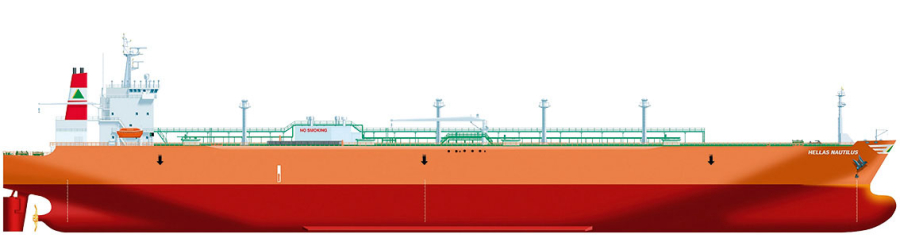
| The LPGreen concept design combines the best technologies available today. |
The successful outcome of an innovative project depends very much on the parties involved and in the case of the LPGreen design concept, Kostas Vlachos, COO of Consolidated Marine Management (CMM), believes the mix is perfect. “The LPGreen project could not have happened at a better time. With 2020 fast approaching, the shipping industry will have to make the right decisions in regard to the proper option and avoid spending a lot of money unnecessarily to meet the new regulations coming over the horizon.
This concept of LPG carriers offering the efficient option of burning LPG is new. Nothing like it has been developed in the past,” says Vlachos. He should know. Athens-based gas carrier owner and operator CMM, a company of Latsco Shipping, is one of the four industry leaders partnering to develop the LPGreen concept design. By contributing the expertise of a ship operator, CMM is key to the project.
 |
| Representatives of all key segments of the industry contribute their unique know-how to the development of a design for tomorrow‘s market demand. |
Rapid progress
Apart from CMM, the partners to the LPGreen concept design project include the shipyard Hyundai Heavy Industries (HHI), the cargo handling systems manufacturer Wärtsilä Oil & Gas (WAR), and DNV GL as the classification society.
Seeking to develop a safer and more energy-efficient, environmentally friendly and competitive vessel for the transport of LPG products, the project utilizes the latest advances in machinery technology, ship design and operational experience. Within the bounds of existing shipbuilding methods it pursues the clear target of arriving at an LPG carrier concept design that can be ordered and built immediately.
Vlachos, a former chairman of Intertanko’s powerful Hellenic Mediterranean Panel, is a member of Intertanko’s executive council, its safety and technical committee (ISTEC) and its chemical committee. He says the idea for the concept of using LPG as a fuel was first voiced several years ago. The project took shape in November 2015 when the partners formally agreed to cooperate, with the actual project work launched in May 2016.
The LPGreen project pursues five main objectives: use LPG as a fuel; develop a highly fuel-efficient vessel; increase load rates to spend less time at terminals; and, most importantly, give utmost attention to both safety and an ergonomic arrangement of machinery to improve the safety of the ship personnel as well as ship operability.
Almost a year into the project, the partners agree the results to date have been good. The goal is ambitious, and with the highly valuable contributions of HHI and cargo handling system provider Wärtsilä Oil & Gas, the primary targets have been achieved: the new design will enable savings of five per cent to nine per cent in total consumption for all stages of operation (loading, discharging as well as sailing in laden condition and under ballast, including chilling and maintaining pressure), compared with the reference design, a conventional VLGC built by HHI.
CMM and HHI have been enjoying a strong working relationship since HHI began building gas carriers for the Greek operator at the South Korean yard in 2002. CMM embarked upon this project with a focus on finding a practical, energy-efficient design that is both competitive and safe, “with the safety aspect at the top of the list,” says Vlachos. “Any concept which is not safe is of no use to anyone,” he argues.
 |
Safety tops the list
George Dimopoulos, Principal Specialist for R&D and Advisory, DNV GL South East Europe & Middle East Region, who manages the LPGreen project, says CMM’s operational experience provided invaluable insight into the design aspects. “CMM collaborated very actively and closely with DNV GL on most of the safety aspects, a very important concern for the entire project,” he stresses. “About half of the project’s roughly 130 new ideas and vessel features involve safety criteria.”
Intensifying environmental pressure is driving energy efficiency improvements across the shipping industry. As the LPGreen concept matures, it will allow LPG-fuelled LPG carriers to become a reality, says Vlachos. The results obtained so far are encouraging: “We have a steady baseline,” he says, “since the vessel the project is based on is CMM’s own 54,400 dwt, 84,000 cbm VLGC Hellas Gladiator built in 2016. She is a modern and very efficient ship so all results of our project are true achievements.”
Summarizing the project status, George Dimopoulos says the design concept is technically feasible, competitive and practicable. “Comparisons with the reference ship demonstrate that the concept improves overall efficiency by up to nine per cent, reduces energy demand for the cargo handling system by up to six per cent, potentially cuts loading times by up to 35 per cent, and reduces fuel costs through the use of LPG fuel by up to 30 per cent,” he points out.
Being able to draw on the extensive experience and competence of DNV GL in the LPG shipping sector as well as the classification society’s advanced analytical tools has enabled this consortium of international industry leaders to create an innovative ship concept with tangible improvements for the project partners.
The project has utilized the latest advances in machinery technology, ship design and operational experience within the bounds of existing shipbuilding methods. The contribution of the DNV GL computer modelling tool COSSMOS has been greatly appreciated: “COSSMOS allowed the project to take an analytical approach to data gathering and evaluation. Various options were compared, and the whole project proceeded in a highly professional, focused way towards the main goal: a design concept for a more energy-efficient VLGC operating on LPG,” says Vlachos.
He believes this is the first time the complete cargo, auxiliary and propulsion machinery was modelled, simulated and optimized for a full operating profile, and the COSSMOS application made this possible. “The role of this and other advanced technologies in identifying the best solutions for the industry is finding more wide-spread recognition,” he points out. “There is no doubt today’s computational methods speed up the development process considerably, enabling us to examine the numbers and reach conclusions faster.”
 |
Promoting the concept
Vlachos also notes that LPGreen is an international project in which Greek shipping has taken a leading role, working closely with other leaders across geographies and coordinated by the Piraeus office of DNV GL.
CMM’s COO says shipowners and their customers should be made aware of the concept as the industry is considering using LNG as a ship fuel. “But on an LPG carrier, that is not the best option,” he emphasizes. “I believe LPG ships burning LNG are not the right idea to pursue, since LPG is already available on board LPG carriers and adding a second gas fuel (LNG) will add to the overall complexity.
Rather, the market should discuss the LPGreen concept, and by the market I mean all the players, from owners, charterers, clients, to shipbuilders, equipment makers and bodies such as Bimco, SIGTOO and Intertanko. They all should promote the idea of burning LPG rather than natural gas and formulate the proper clauses in charter parties for that purpose, because this involves a complex set of regulations.
In fact, the concept is a legal matter that should be addressed as soon as possible. Until now nothing has been done on this front, and time is moving fast.” This is a good time to promote a new design concept as ship newbuilding prices are reasonable, Vlachos points out.
Until all parameters are clear and all questions answered, CMM will hold off on ordering a new ship, however. “We have always wanted to lead the way but have to wait and see what happens in the coming months, but I expect market pressure to speed up acceptance of the LPGreen concept design,” he says.
The far-reaching deviations from traditional designs will make the LPGreen concept attractive, he believes, not only in terms of the type of fuel burned by the main engine but also the changes affecting the cargo reliquefaction plant. Meanwhile, Wärtsilä is proposing a new configuration with only two redundant cargo compressors instead of the typical three.
Further efforts are needed to make charterers aware of the innovative features of the LPGreen design regarding bunker capacity as well as loading and discharging procedures, Vlachos adds. “Charterers in particular have to be brought up to speed about the development since increased capacity and reduced time spent in terminals is of great interest to them, along with the significant reduction in fuel consumption during all stages of operation. Besides, it is simply necessary to have the charterers on board.”
The LPGreen concept offers great benefits to VLGC owners and operators. “Now it is up to us to convince the Asian market to follow. The concept is a revolution compared to the classical designs. It secures a lot of energy savings and safety advantages. It opens the road into the future, and that is what we at CMM have chosen as our mission.”
The decisive factor that has made this truly innovative and practicable concept possible is close collaboration of representatives of all key industry segments — builders, vendors and class. “All the partners in this project have given their best, offering their knowledge and experience from their respective sectors,” Vlachos emphasizes.
"The concept is a revolution compared to the classical designs. It secures a lot of energy savings and safety advantages."
Kostas Vlachos
COO,Consolidated Marine Management
WISTA International wins the SAFETY4SEA Sustainability Award
The SAFETY4SEA Awards took place for a second consecutive year as part of the SAFETY4SEA Conference within the scope of fostering Safety Excellence & Sustainable Shipping. The award process was a combination of open nomination and vote and the objective was to communicate and celebrate exceptional performance of the organizations that contributed towards sustainable shipping.
WISTA is a networking Association of women at management level positions in the Shipping industry. In 1974, 6 shipping women with a vision, from 3 European countries, founded WISTA. Today, WISTA International has 40 member-countries around the globe with almost 3,000 members, all sharing the same passion - Shipping! The Award came at a great time, just before the Association's Annual General Meeting and Conference in Rotterdam.
Karin Orsel, President of WISTA International, stated "Receiving such a prestigious award is a recognition that diversity and equal opportunities matter within our Industry. WISTA International has been advocating the importance of increasing the competences and professional development for female leaders in the maritime industry for many years; it is common knowledge that a diverse team leads to more creativity, success and thus profit. There is still a long way to go in many regions of the world, but we work hard to cultivate and establish women in the best industry in the world!"
Katerina Stathopoulou, member of the Executive Committee of WISTA International, accepted the award on behalf of WISTA and stated: "Diversity in the workforce promotes sustainability and this can only be achieved by engaging the underutilized talents of the female workforce. In the maritime industry, male and female talent and skills are complementary, and therefore, Shipping Women are indispensable to the Maritime world."
We would like to devote this Award to all our members for playing an essential role to the industry's sustainability and take this opportunity to congratulate all the winners!
About WISTA International
The Women's International Shipping & Trading Association (WISTA) is an international organization for women in management positions involved in the maritime transportation business and related trades worldwide. WISTA is a major player in attracting more women to the industry and in supporting women in management positions. With networking, education and mentoring as our focus, we can enhance members' competence and empower career success. Founded in 1974, WISTA has grown to include 40 National WISTA Associations with nearly 3,000 members worldwide. For more information, go to www.wista.net.


WISTA Int'l ExCo Member, Katerina Stathopoulou accepted the Safety4Sea Award on behalf of WISTA. Photo Credit: SAFETY4SEA

Powered by  © Μaritimes 2019