


G. Frydas: We always offer our customers the most sophisticated products available in the market

 |
| (right) George Frydas, Maria Choupa, Natasa Sardi |
“Technology should adapt to the day-to-day needs of each company. I have witnessed how new products and services are created in the IT field through efforts to address these needs,” he noted.
Fortune Technologies’ strategic collaboration with Microsoft allows the company to be able to fully meet clients’ needs.
"Our comparative advantage is the shipping technology platform we are developing with Microsoft through our product, Dynamics NAV, which is constantly enriched by Microsoft's latest achievements. This is what we are providing our customers" Frydas explained.
He revealed that soon Fortune Technologies will announce new collaborations in security issues, telecommunications, as well as for system e-mails and for the GDPR regulation which concerns data protection.
Microsoft is already working intensively and investing in developing new solutions for these “hot” issues, Frydas said.
"On our part, we are fully prepared to upgrade our own product. Therefore, we are in position to offer our customers the most sophisticated products and services available in the market when it comes to changing demands and innovations,” he stressed.
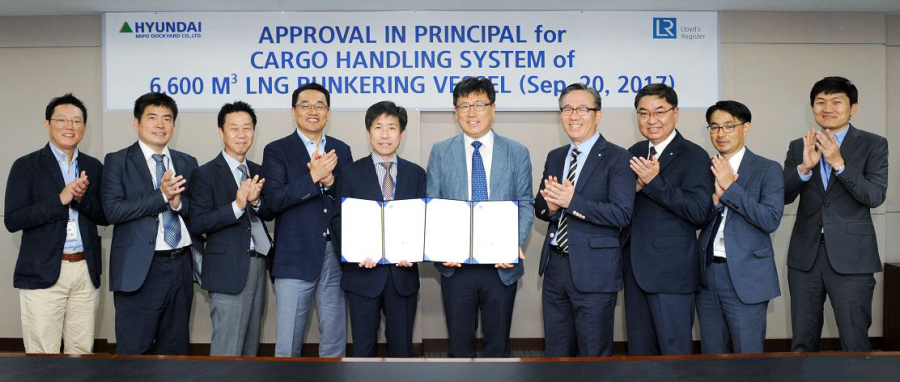
HMD receives approval in principle for cargo handling system design for 6,600m³ LNG bunkering vessel
 |
HMD and the Hyundai Heavy Industries (HHI) Corporate Research Centre jointly developed the cargo handling system design based on their extensive experience of building gas carriers. HMD chose to develop the LNG bunkering vessel design because of the potential for growth in the LNG-fuelled ship sector.
The cargo handling system is designed for LNG bunkering to a LNG-fuelled ship, as well to supply fuel gas to the dual-fuel main engine and managing Boil-Off Gas (BOG). The cargo pumps are capable of bunkering at a maximum of 1,100 m³/h to a LNG-fuelled ship and fuel gas to dual-fuel main engine can be supplied by BOG compression or LNG vaporing. BOG returned from the LNG-fuelled ship during bunkering can be burnt in the dual-fuel engine or collected inside the Type C cargo tank.
Insulation for the cargo tank is designed for lower BOG generation. BOG generated from the cargo tank is less than the fuel gas consumption of the main engine at the normal continuous rating. This means that all BOG can be utilised by burning in the main engine so that the cargo tank pressure and temperature can be managed in a stable manner.
A HMD official commented: "HMD and the HHI Corporate Research Centre expect that a cargo handling system for larger LNG bunkering vessels and LNG carriers can also be developed based on this approved design for a 6,600 m³ LNG bunkering vessel."
LR’s Jin-Tae Lee, Ph.D, Korea Chief Representative & Marine Manager, said: "We are pleased that LR LNG carrier specialists and Busan Technology Support Office, headed by Y.D. Kim, have provided and facilitated their vast experience through the entire gas technology supply chain to support HMD and the HHI Corporate Research Centre to achieve the required level of compliance with the international regulations for HMD’s design, and this is endorsed by issuing the AiP certification."
About Lloyd’s Register
Lloyd’s Register (LR) is a global engineering, technical and business services organisation wholly owned by the Lloyd’s Register Foundation, a UK charity dedicated to research and education in science and engineering. Founded in 1760 as a marine classification society, LR now operates across many industry sectors, with some 8,000 employees in 78 countries.
LR has a long-standing reputation for integrity, impartiality and technical excellence. Its compliance, risk and technical consultancy services give clients confidence that their assets and businesses are safe, sustainable and dependable. Through its global technology centres and research network, LR is at the forefront of understanding the application of new science and technology to future-proof its clients’ businesses.
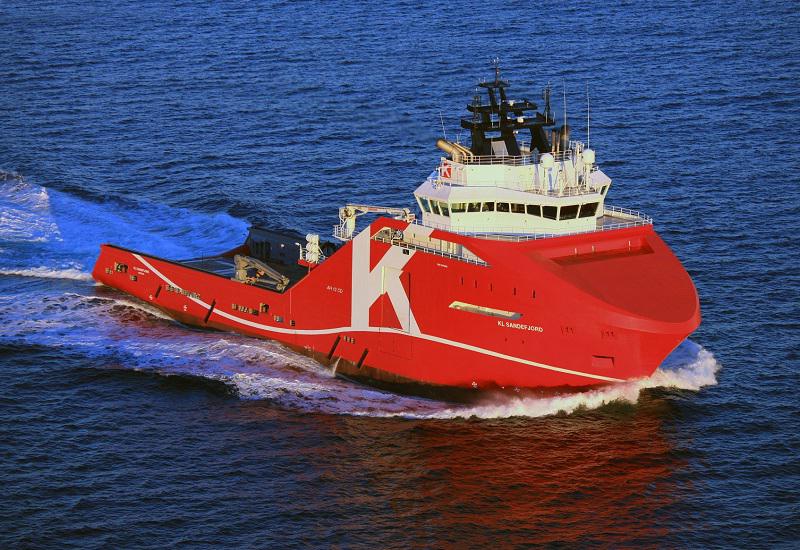
KL Sandefjord – First Offshore Vessel with DNV GL’s Shore Power Class Notation
 |
| The offshore vessel KL Sandefjord |
“We are very pleased to receive this notation for our large and powerful anchor handler KL Sandefjord which reflects our commitment to ensure a cleaner port environment,” says Espen Sørensen, Senior Vice President, Operation and Technical in K Line Offshore AS. “With an on-board shore power installation tested and verified by DNV GL, we now have an offshore vessel equipped for the future. And as result of the good cooperation we have enjoyed with the Bergen Port Authority and DNV GL during this process, we have also decided to apply for the Shore Power class notation for the sister vessel, KL Saltfjord.”
By tapping into an onshore electrical supply, vessels not only reduce their fuel consumption, but they also eliminate the associated emissions. This will have a marked improvement on the air quality in the port and surrounding environment, cutting PPM, NOx, SOx and reducing CO2 by using more efficient shore-based electricity. In combination with renewable energy sources, electrical supply can even result in zero emission operation for the duration of a vessel’s stay in port. In addition, it can free the engines for maintenance, reduce wear and tear, and limit noise.
“There is an increasing awareness of the impact of shipping emissions in ports and this is driving investments in cold ironing,” says Jon Rysst, Senior Vice President and Regional Manager North Europe, DNV GL. “This is leading to ports both requiring and incentivizing the use of alternative maritime power (AMP). As access expands, alongside the rise of fully electric and hybrid vessels, cold ironing could soon become standard procedure in many ports around the world – with a noticeable positive impact on air quality. With the Shore Power notation shipowners can easily document a safe interface between shore facilities and the ship, based on IEC standards.
DNV GL’s electrical shore connection class rules cover safety requirements for a vessel’s on-board electrical shore connection. The Shore Power notation ensures a safe and efficient way of performing the connection and disconnection of shore power. DNV GL also verifies compatibility between ship and port and provides recommendations for a well-defined future proof technical solution.
The technical requirements are based on the international standard for high voltage shore connections established by IEC, ISO and IEEE in IEC/ISO/IEEE Publication ‘80005-1 Utility connections in Port – Part 1: High Voltage Shore Connection (HVSC) Systems’. Part 3 of this standard is currently under development and will deal with low voltage shore connections. DNV GL is actively involved in this work as a member of the IEC working group.
About DNV GL
Driven by our purpose of safeguarding life, property and the environment, DNV GL enables organizations to advance the safety and sustainability of their business. We provide classification, technical assurance, software and independent expert advisory services to the maritime, oil & gas and energy industries. We also provide certification services to customers across a wide range of industries. Operating in more than 100 countries, our professionals are dedicated to helping our customers make the world safer, smarter and greener.
About DNV GL – Maritime
DNV GL is the world’s leading classification society and a recognized advisor for the maritime industry. We enhance safety, quality, energy efficiency and environmental performance of the global shipping industry – across all vessel types and offshore structures. We invest heavily in research and development to find solutions, together with the industry, that address strategic, operational or regulatory challenges. For more information visit www.dnvgl.com/maritime
ERMA FIRST Establishes Partnership with Bactest for Compliance Testing Toolkit

 |
“ERMA FIRST has always been committed to deliver total ballast water solutions for all types and sizes of vessels. In an effort to satisfy our customers’ needs we established this cooperation with Bactest. We are honoured to be working with such a well-known company. The implementation of the IMO Ballast Water Management Convention is an important milestone for the environment and such cooperations will promote sustainable development.” states Dr. Efi Tsolaki, Chief Scientific Officer at Research & Development Dpt. of ERMA FIRST S.A.
Speedy Breedy SeaSure, compliance testing toolkit, will ensure ERMA FIRST FIT BWTS users are adhering to BWTS standards whilst enabling them to demonstrate this compliance to Port State Control officers.
Bactest CEO Prof. Annie Brooking said “We are delighted to be working with ERMA FIRST to provide their customers with a secure system that will enable them to track the results of their ballast water testing by way of our secure fully integrated ballast water testing solution Speedy Breedy SeaSure. “
Unlike other testing solutions, Speedy Breedy SeaSure is suitable for on-board testing and tests to the IMO-D2 standard bacteria, phytoplankton, residual chemicals and salinity. These results, together with vessel data as per IMO requirements, are integrated into a secure report called Ballast Log, which can be stored electronically creating a secure audit trail or e-mailed to relevant parties such as ship owners and port state authorities in advance of the ships’ arrival in port.
About BACTEST
BACTEST Ltd is a Cambridge, UK based venture-backed company, that specialises in turning microbial activity into data that can be used to make operational and management decisions. In November 2016 Bactest launched its third product line Speedy Breedy SeaSure® aimed at ship board and portable testing of treated ballast water to determine compliance to the IMO-D2 standard. www.speedybreedyseasure.com.
About ERMA FIRST
ERMA FIRST S.A. was established in 2009 by a team of specialists with strong background and expertise in waste and water treatment technology in Marine applications. Driven by the maritime needs and regulations, and monitoring the Environmental Protection challenges, the company started designing and manufacturing ballast water treatment systems. Being successfully tested in the most prominent test facilities, ERMA FIRST systems are certified and have been awarded prizes for technological achievement many times through the years. ERMA FIRST technology uses a 40 μm filtration followed by efficient full flow electrolysis.
Nowadays, ERMA FIRST has a prestigious and fast growing reference list comprised of ship-owners and shipyards in Greece, Denmark, UK, Germany, Japan, Korea, Italy, Turkey, Romania, US, etc.
ermafirst.com
MAN Diesel & Turbo Hellas hosts “2nd Technical Workshop 2017”

On Wednesday 27 September 2017, MAN Diesel & Turbo Hellas hosted the “2nd Technical Workshop 2017” for Technical Department members of Greek Shipping Companies in the premises of MAN PrimeServ Academy Piraeus.
Over 140 participants joined the event, which begun with a welcome speech by Mr. Dionissis Christodoulopoulos – Managing Director of MAN Diesel & Turbo Hellas, making a brief introduction about the 50 year celebration and the agenda of the event.
Presentation on Two-Stroke Service Experience plus Interpretation of HPU and HPS events took place by both Mr. Allan Juul Larsen and Mr. Peter Nerenst focusing on real-life examples and best practices.
Such workshops will be organized throughout the year with a series of customer-oriented events, with the “3rd Technical Workshop” taking place in December 2017, covering major technical issues with real life examples and hands-on opportunities that are of great interest to the end users.
 |
 |
 |
Dry bulk FFA market: Last summer hurrah for freight rates

The short-lived joy reminisced a last summer hurrah as freight rates made the final cavalry charge just before China’s Golden holiday from 1 – 8 October, where rates are likely to lie low throughout.
Prior to the Golden Week holiday, iron ore and coal buyers are busily re-stocking for the upcoming Q4 as well as having sufficient inventory to last through the week-long holiday. However, the restocking spree lost steams mid-way, as the Chinese authority began their first wave of output cut, targeting the steel-making cities of Tangshan, Shijiazhuang, Anyang, and Handan.
The 50\% cut in sintering fines and pelletizing was commenced on Monday, affected around 20m tonnes of steel or 7.5\% of China’s national annual output. The after-effect of cut will impact the iron ore and coking coals imports, leading to less tonnage-miles for seaborne cargoes.
“Chinese pollution regulation was one reason that circulated again on Monday with concerns how this could affect the supply chain,” said an Asia-based FIS FFA broker.
As such, the bearish market sentiments broke out among the capesize contracts on Monday with the Q4 traded down to $17,250 at the low before finding decent buying support, also Cal 18 lost significant ground and traded down to $13,400.
By Wednesday, the capesize 5 Time Charter Average has dropped to $21,639, down $811 day-on-day, a drop of 6.3\% from Monday’s rate of $21, 639. The sliding rates may imply the fading re-stocking optimism among the iron ore and coal importers as dates drawn nearer to the golden week.
“We all know the capes can change quickly and on the close of play, there were rumours of better numbers paid but details are yet to surface,” opined a FIS FFA broker.
As the capesize market lost its glitter, panamax took a beating at the start of week with Oct trading down to $11,800 and Q4 trading down to $11,650, before finding some support mid-morning on Monday.
The situation did not change for the better on Wednesday, as both October and Q4 trading down to $11,200 lows with average of $300 wiped off the front of the curve despite good volume changing hands. As such, the panamax Time Charter Average posted $11,298 on Wednesday, down 4.6\% from $11,851 recorded on Monday.
“Panamax paper continued to come under pressure on Wednesday through most of the day as both basins offer up easier levels,” commented a FIS FFA broker.
However toward the market closing on Wednesday, he observed there was a change in market sentiment, as buyers came stepping back in. Most of the buyers seem to be chasing a very thin offer side which eventually resulted in October and Q4 trading back up to $11,500 leaving the rate relatively flat on the day by the close.
Similar softer opening was seen in the supramax market, as the prompt months went down right at the start of the week. On Monday, Oct contract was $11,200 while Nov traded at the range of $11,000 - $11,200 with the time charter average recorded at $10,740.
By Wednesday, the supramax had dropped to $10,580, down 1.4\% since Monday’s rate and saw Oct traded at the $10,800-$10,550 range, while Q4 plunged down to $10,550. On the other hand, the handysize time charter average traded at $9,026 on Wednesday, up slightly by 1.7\% as compared to $8,873 on Monday.
With the Chinese trade participants set off for holiday next week, the freight market might have already seen the last rally of the freight rates. Market is expected to be muted with little activities as the Golden Week wears on, testing the very true strength of the recent freight market revival.
source: seatrade-maritime.com
Digital Ship returns to Athens in November for the 15th Annual Maritime Conference & Exhibition
 |
Five key focus sessions throughout the 2 days will discuss:
Focus Session 1 - Harnessing Maritime’s Digital Future
Focus Session 2 - Developing Big Data Ecosystems
Focus Session 3 - Building Cyber and Security Resilience – with a Special Focus on GDPR
Focus Session 4 - Blockchain in Practice – Creating Trust in the Maritime Supply Chain
Focus Session 5 - Vessel Performance Optimisation
The event will include interactive Roundtable Sessions focussed on solutions and business strategy as well as an Exclusive Workshop hosted by Marlink and many Networking Functions, including a Gala
Dinner on 1 November – open to all participants.
Speakers and Panellists will be announced soon
For more information and to register attendance, please visit https://www.athens.thedigitalship.com/
Sponsorship and Exhibition opportunities are available - Please contact: This email address is being protected from spambots. You need JavaScript enabled to view it. to hear how you can use Digital Ship Athens 2017 to showcase your products and services.
ABOUT DIGITAL SHIP
For 17 years Digital Ship magazine has provided the digital community of the world's maritime industry with the latest news and developments, including satellite communications, software, navigation and electronics, to help keep shipping operating with maximum safety, efficiency and crew comfort.
CO2 emissions reductions of the shipping – European Shipowners discussing the impact of improved machinery, propulsion, operation and design

“In our seminar this week, we discussed with our stakeholders and European decision-makers different measures that enable to minimise the environmental impact of the shipping sector. In one analysis, the measures were divided in categories including the Technical and operational measures, Alternative fuels and Logistics related to the speed management of a vessel”, explained Tor Christian Sletner, the Chairman of ECSA’s Air Emissions Working Group and Director, Head of Environment of the Norwegian Shipowners’ Association.
Following the International Maritime Organisation’s (IMO) latest meeting of the Marine Environment Protection Committee (MEPC71) and in view of the second meeting of the intersessional working group on reduction of GHG from ships in October 2017, European Shipowners this week organised the seminar on CO2 reduction in the shipping industry. In the event, shipowners presented their initiatives followed by a debate with stakeholders, including the Commission, maritime attachees, European Parliament’s representatives and NGOs such as Transport and Environment.
“We certainly aim to promote ambitious short, mid and long term global measures in line with IMO MEPC71 roadmap for the CO2 reductions from international shipping, and the Paris COP21 Agreement on climate change. We feel that the shipping industry is fully engaged in advancing the emission reduction agenda. We call for the EU Member States to proactively engage IMO’s global members that IMO continues to seriously address CO2 reduction for ships and adopts an IMO CO2 strategy as soon as possible, as a global solution is what our industry indeed needs”, concluded Sletner.
http://www.ecsa.eu
Moore Stephens: Fifth successive year of decline in shipping’s operating costs
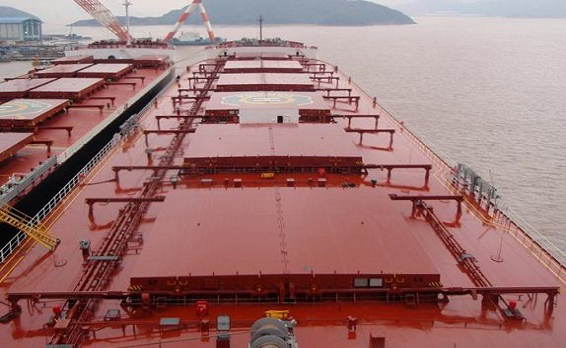
On a year-on-year basis, the tanker index was down by 3 points, or 1.7\%, while the bulker index also fell by 3 points, or 1.9\%. The container ship index, meanwhile, was down by 1 point, or 0.6\%. The corresponding figures in last year’s OpCost study showed falls of 6 points in both the bulker and container ship index, and of 4 points in the tanker index.
There was a 0.4\% overall average fall in 2016 crew costs, compared to the 2015 figure, which itself was 1.2\% down on 2015. By way of comparison, the 2008 report revealed a 21\% increase in this category. Tankers overall experienced a fall in crew costs of 1.8\% on average, compared to the 1.3\% fall recorded in 2015. All categories of tankers reported a reduction in crew costs for 2016 with the exception of Aframax Tankers and Suezmax Tankers, which recorded increases of 0.8\% and 0.2\% respectively, compared to reductions for 2015 of 1.9\% and 2.6\%. The most significant reductions in tanker crew costs for 2016 were the 2.8\% and 2.7\% recorded by Tankers 5,000 to 10,000 dwt and by Handysize Product Tankers respectively.
For bulkers, meanwhile, the overall average fall in crew costs in 2016 was 0.6\%, compared to 1.1\% recorded 12 months ago. All categories of bulkers reported a reduction in crew costs, the biggest fall being the 1.2\% reduction in spending by the owners of Capesize Bulkers.
Expenditure on crew costs in the container ship sector, meanwhile, was up by 1.1\% compared to the fall of 3.3\% recorded for 2015. The biggest increase in this category was the 2.1\% recorded for ships of between 2,000 and 6,000 teu, which in 2015 led the reductions in the container ship crew costs category with a fall in expenditure of 3.6\%.
Expenditure on stores was down by 2.9\% overall, compared to the fall of 4.3\% in 2015. The biggest fall in such costs was the 5.1\% recorded by owners of container ships of between 100 and 1,000 teu. In the same tonnage category, the fall in stores costs for owners of container ships of between 1,000 and 2,000 teu was 4.9\%, the same figure as that recorded in the tanker sector for Aframax Tankers. Other significant reductions included Handysize Bulkers (4.8\%) and Panamax Bulkers (4.4\%).
For bulk carriers overall, stores costs fell by an average of 4.2\%, compared to a fall of 7.7\% in 2015, while in the tanker and container ship sectors the overall reductions in stores costs were 2.2\% and 5.2\% respectively, compared to the corresponding figures of 4.3\% and 5.5\% for 2015. The only rise in stores expenditure by any category of vessel was the 0.3\% increase recorded by Coastal Tankers.
There was an overall fall in repairs and maintenance costs of 0.8\% in 2016, compared to the 4.3\% reduction recorded for 2015. The biggest fall in such costs was that recorded by Panamax Bulkers (3.2\%), closely followed by Capesize Bulkers (3.1\%). All vessels in the bulker category recorded reduced repairs and maintenance expenditure, but there were increases in the tanker sector, most notably the 2.4\% additional outlay by Panamax Tankers compared to 2015. There were examples of small increases in repairs and maintenance expenditure in the container ship sector, while for RoRo’s the increase amounted to 2.2\%.
The overall drop in costs of 3.0\% recorded for insurance compares to the 3.2\% fall recorded for 2015. No vessel types in any of the tonnage and size categories included in OpCost paid more for their insurance in 2016 than in 2015.The biggest reduction in such costs was the 5.2\% recorded by container ships of between 2,000 and 6,000 teu. Not far behind were Handysize Bulkers and Panamax Bulkers (4.7\% and 4.6\% respectively), while in the tanker category it was Aframax Tankers which led the way in terms of reduced insurance expenditure (4.6\%). Ro-Ro owners, meanwhile, paid 4.0\% less for their insurance in 2016 than in 2015, in which year they spent an additional 2.4\% in premiums compared to the previous year.
Richard Greiner, Shipping & Transport Partner, says: “This is the fifth successive year-on-year reduction in overall ship operating costs, although the reduction this time is less than half the figure recorded 12 months ago for 2015.
“The biggest cost reductions were those in the Insurance category. Insurance is a major item of expenditure for all owners and operators, without which most would not be able to operate on an international basis. The fact that such costs continue to fall may be due in part to a reduction in the incidence of major casualties. Most of the larger reductions in insurance costs tracked by OpCost, however, were recorded by bulk carriers, which are no strangers to the pages of the casualty reports. So cheaper insurance must also say much about the fierce competition for business which exists throughout marine underwriting markets worldwide.
“The next biggest cost reduction was in the Stores category, where the slower than anticipated improvement in world oil prices doubtless had a continuing beneficial knock-on effect on lube oil costs in 2016.
“The reduction in Repairs and Maintenance costs in 2016 was 3.5\% down on the figure for the previous year. This confirms that maintenance can only be postponed for so long by owners and operators who accept the need to invest in their ability to compete for business in a highly competitive market which is more tightly regulated than ever before. Strategic short-term lay-up is a waypoint rather than a destination.
“Over the years, the OpCost study has recorded annual average crew cost increases of more than 20\%, but there was a reduction in such costs this time of less than half of one percent compared to the figure for 2015. The continuing challenging shipping markets are doubtless a significant factor.
“Although 2016 was another difficult period for shipping, the year closed on a note of rising confidence, according to the Moore Stephens Shipping Confidence Survey. Owners and charterers were more confident, than for some time previously, of making new investments, and there were improved expectations of higher freight rates in all three main tonnage categories. The expectation, too, was that oil prices and the Baltic Dry Index could only go up.
“That increased confidence, which has carried over into 2017, should logically lead to greater activity, which will mean higher operating costs. When freight rates allow owners to absorb such increased costs, the numbers start to look healthy. At present, however, owners and operators are not earning what they should be, or would like to be, from most of the markets in which they operate. Positive net sentiment is good, but it is not enough. Something has to change.
“It is also true that in shipping – as elsewhere – what goes down must come up. For example, OpCost records that, at year-end 2008, the average daily operating cost for a Capesize Bulker was US$ 7,512. In 2016, it was US$ 6,691. For a VLCC, the comparable figures are US$ 10,812 and US$ 9,950 respectively.
“Future OpCost studies are likely to reflect the start of spending – or planning for – the introduction of the likes of the Ballast Water Management Convention, the new global limit on SOx emissions from 2020 and initiatives to contain cyber-crime, which are assuming increasing importance in the industry. The results will also reflect, albeit subtly, the effect of geopolitical developments, which can seldom have been in a greater state of flux than they are today.
“Shipping can certainly find encouragement in a fifth successive annual fall in operating costs. But nothing is for ever, and nothing is more certain than that the shipping industry will continue to be characterised by uncertainty, which can be both its strength and its weakness.”
Source: Moore Stephens
DNV GL creates new 1,000 strong organization to accelerate digital drive
Høvik, 27 September 2017: DNV GL is creating a specialized Digital Solutions organization, consisting of 1,000 digital experts, to leverage the full potential of an increasingly digital world. The company has been a digital pioneer since the 1960’s and recently launched its independent open industry platform Veracity. The new organization will optimize its expertize capture the opportunities that lie in data sharing, advanced analytics, automation, and machine learning as well as addressing challenges related to data quality and security. Digitalization is central to DNV GL’s strategy because it will help the company to offer better services as well as new services. The company has a long-term focus on research and innovation, both through significant investments internally, but also through working closely with customers and stakeholders.
“Data is the raw material of the 21st century. It is the foundation and driver of the digital transformation and forms the basis of value creation. To serve our customers in a better way and to stimulate innovation, we are consolidating our digital assets and resources in our new Digital Solutions organization,” says Remi Eriksen, Group President and CEO of DNV GL.
The new Digital Solutions organization will absorb DNV GL - Software which has built a strong reputation as a vendor of trusted third party software, solving technical and operational challenges related to industrial assets. Today it is one of the world's leading software providers within the oil and gas, renewable and maritime industries. The new organization will also oversee the running of the Veracity platform which is designed to extrapolate meaning from the user’s data and serve as a source for the application of DNV GL software products, particularly software-as-a-service.
Elisabeth Heggelund Tørstad will be heading DNV GL’s new Digital Solutions business, she previously held the position of CEO for DNV GL’s Oil & Gas business. She will be based at the DNV GL headquarters in Høvik, Norway and be a member of the Executive Committee for the DNV GL Group. To further support DNV GL’s digital transformation, a Chief Digital Transformation Officer will also be recruited.
“Elisabeth Heggelund Tørstad has a strong focus on our customers to ensure that we stay relevant and continue to add value. She brings the cross-industry knowledge and drive for collaboration across the business that this new organization needs,” says Remi Eriksen, Group President and CEO of DNV GL.
“We are passionate about constantly developing foresight and knowledge of the technical and operational business challenges our customers face. By building a strong data-driven organization, we accelerate the development of new digital services to support our customers,” says Elisabeth Heggelund Tørstad, DNV GL Digital Solution CEO.
About DNV GL
DNV GL is a quality assurance and risk management company providing certification and independent expert advisory services to the oil & gas, power, and maritime industries. Driven by our purpose of safeguarding life, property and the environment, DNV GL enables organizations to advance the safety and sustainability of their business.
As a technology-based company, DNV GL continuously invests in research and collaborative innovation, empowering customers’ decisions and actions with trust and confidence. With origins stretching back to 1864, DNV GL's reach today is global with operations in more than 100 countries.
www.dnvgl.com

Powered by  © Μaritimes 2019