

-
Home

-
Maritimes NEWS
-
Ports
- maritimes


maritimes
Explainer: How U.S. "de-risking" from China poses heightened risks to global supply chains?
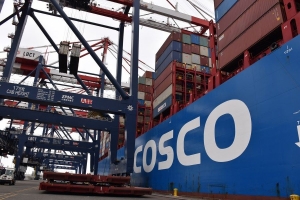
Those so-called "de-risking" attempts have failed in containing China's economic rise or its technological advancements but only made its own supply chains costlier and less efficient in this shock-prone world.
by Xinhua writer Ma Qian
BEIJING, Jan. 13 (Xinhua) -- Global supply chains, now at a crucial stage of realignment, are overshadowed by heightened risks of disruptions and fragmentation, thanks to U.S. "de-risking" strategies with China as a main target.
Realizing it is unfeasible to thoroughly "de-couple" from China and create a self-dominated manufacturing and trade network, Washington has been trying to reshuffle global supply chains to lock China out through a series of approaches in the name of "de-risking."
Those approaches include finding replacement countries like Mexico and Vietnam and resorting to tariff barriers, export controls, investment reviews, and domestic legislation such as the Inflation Reduction Act and the CHIPS and Science Act.
It turns out, however, that these so-called "de-risking" attempts have failed in containing China's economic rise or its technological advancements but only made its own supply chains costlier and less efficient in this shock-prone world. As analysts have argued, the U.S. policy, which smacks of economic nationalism and protectionism, may ultimately fail in its objective of reducing dependence on the supply chains with China as a critical link.
ELONGATED WITH HIGHER COSTS
Global supply chains normally act as logistics networks between firms, regardless of their geographical or industrial boundaries, to deliver raw materials, intermediate goods, and finished products to consumers and customers at various levels.
The reality is that oftentimes, U.S. allies or partners, not least in Asia, function as assembly lines, processing plants or packaging hubs for goods and products originally manufactured in China, so as to circumvent U.S. sanctions and tariffs.
By analyzing firm-level network data, the Bank for International Settlements (BIS) has recently revealed that the global value chains have lengthened since late 2021, and the lengthening of supply chains is especially significant for supplier-customer linkages from China to the United States, which suggests that firms from other jurisdictions, notably in Asia, have interposed themselves in the supply chains from China to the United States.
The redirection of China-U.S. supply chains via other Asia-Pacific economies is particularly striking in the IT industry, where the share of cross-country linkages is one of the highest, BIS said in a report in October last year.
Little surprise that those countries first import Chinese intermediate goods, and then export finished products to the United States and other Western countries, elongating corresponding supply chains with extra links that could have been shunned otherwise.
China remains embedded in U.S. supply chains, even as American firms have taken steps to reduce direct imports from China, according to a paper presented at the Federal Reserve Bank of Kansas City's annual Jackson Hole conference in August 2023.
In this regard, Apple provides a prime example of how hard it would be for multinationals to disengage their supply chains from China. Although the consumer technology giant is working to move manufacturing outside China over the past years, much of its production still relies on Chinese companies.
Of the top 200 suppliers that account for 98 percent of Apple's global procurement, manufacturing and assembly businesses, 151 have production activities in China.
In terms of equipment, about 75 percent of Apple supply chains' spending on smart manufacturing equipment is used to buy Chinese-developed intelligent production equipment.
Equally palpable is that the abrupt relocation of U.S. supply chains from China to intermediaries resulted in much higher costs and increasingly complex trade networks for U.S. buyers, who thereby fall victim to mounting uncertainties and price volatility.
The Centre for Economic Policy Research (CEPR), a European think tank, elaborated in a recent report that the reallocation of trade to other countries has been associated with significant increases in import prices from these alternative sources. In the United States, the policies to encourage shifts in sourcing patterns may well contribute to wage and cost pressures.
To be specific, the think tank estimated that a 5 percentage-point trade-weighted average decrease across products in the share of U.S. imports from China is associated with a 9.8 percent and 3.2 percent rise in the unit prices of imports from Vietnam and Mexico, respectively.
Besides, instead of being more resilient, the elongated global supply chains have caused such difficulties as less transparency and dampening efficiency for companies to operate, monitor and supervise the flow of goods and capital.
BIS pointed out in its report that the overall lengthening of firm distances has not been accompanied by an increase in the density of the network as a whole, indicating that supplier relationships are not diversifying. That's because the average out-degree, which represents the mean number of customers for each supplier, has not seen an increase.
CHINA AS INDISPENSABLE LINK
China, as observers have perceived, remains integral to the growingly intertangled global supply chains.
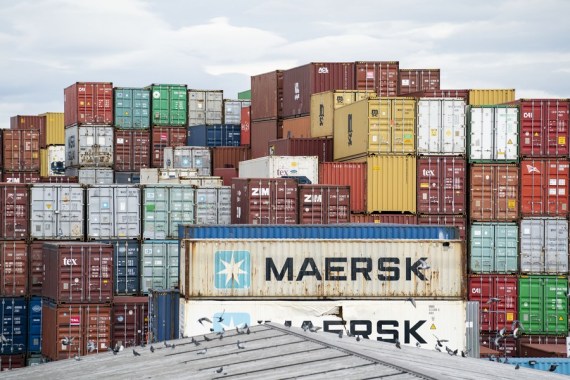
Containers are seen at the Port of Baltimore in Maryland, the United States, Oct. 26, 2021. (Xinhua/Liu Jie)
The cold reality is that much production in Asia and part of that in Europe and Mexico rides on Chinese imports and investment, notwithstanding the larger market shares they have in global trade with the United States.
In recent years, China's booming exports of the "new three" speaks volumes. The three major tech-intensive green products -- solar batteries, lithium-ion batteries and electric vehicles -- stand as an eloquent testimony to China's manufacturing prowess and strong presence in global supply chains.
According to the European Automobile Manufacturers' Association, China is the third largest market for European Union (EU) EV exports after Britain and the United States.
On top of those "Made in China," Western EV manufacturers also purchase various raw materials and components from China, most notably batteries, a component reputed to be the heart of an EV. Nowadays, of the top 10 power battery sellers in the world, more than half of them come from China.
Stellantis, the world's fourth largest automotive group, and Chinese battery manufacturer Contemporary Amperex Technology signed in November 2023 a non-binding Memorandum of Understanding for the local supply of lithium iron phosphate battery cells and modules to power Stellantis' electric vehicle production in Europe.
While the United States has cut direct reliance on China via imports, China has increased its import market share in third countries, including all the top-five import partners of the United States, except Japan, CEPR said in the above report.
"To the extent that Chinese firms' exports to these other locations involve components assembled into later-stage goods that are then sent to the U.S. market, China would ultimately continue to be a relevant player in the upstream stages of U.S. supply chains," the think tank noted.
MORE RISKS OF FRAGMENTATION
For global firms and investors, the increasingly diversified delivery routes in global supply chains come with more risks meriting prudent assessment. Stability, fairness, transparency and predictability, among others, are all important criteria for assessing a country's business environment.
In a forecast last month, the United Nations Conference on Trade and Development (UNCTAD) said that the outlook for global trade in 2024 remains "highly uncertain" and "generally pessimistic," and predicted that global trade in 2023 would fall by around 5 percent compared to 2022.
Mounting geopolitical tensions, an uptick in trade-restrictive measures, elongated supply chains, and commodity price volatility were among the factors weighing on trade, UNCTAD warned.
In its World Economic Outlook 2023, the International Monetary Fund (IMF) used "fragmentation" over 170 times to refer to the splintering of countries into blocs that trade and cooperate exclusively with each other.

Photo taken on April 6, 2021 shows an exterior view of the International Monetary Fund (IMF) headquarters in Washington, D.C., the United States. (Photo by Ting Shen/Xinhua)
The IMF cautioned that intensifying geoeconomic fragmentation -- in various forms of trade tariffs, technological decoupling, limited capital flows and migration restrictions -- will raise costs, cause price volatility, and impede both portfolio flows and foreign direct investment.
In an interview earlier this month, IMF Managing Director Kristalina Georgieva warned against fragmentation of the global economy along geopolitical lines due to increasing national security restrictions, with countries gravitating towards separate blocs. Allowed to continue, it could ultimately reduce global GDP by 7 percent, she said.
"Policymakers need to focus on the issues that matter most not only to the wealth of nations but also to the economic well-being of ordinary people," Georgieva wrote in a recent article in Foreign Affairs magazine.
"They must nurture the bonds of trust among countries wherever possible so they can quickly step up cooperation when the next major shock comes," she noted.
(Xinhua reporters Lei Mingyu, and Yang Jun in Beijing contributed to the story.)■
China's coastal bulk freight index up in December 2023

SHANGHAI, Jan. 14 (Xinhua) -- China's coastal bulk freight index went up 11.9 percent month on month in December 2023, data from the Shanghai Shipping Exchange (SSE) showed.
Last month, the composite index for coastal bulk freight, which measures transportation costs in the coastal shipping market, stood at 1,135.21, according to the SSE.
During this period, the sub-index for coal logged the most notable month-on-month increase of 15.8 percent, followed by that for grain and metal ore.
The sub-index for crude oil edged up 0.5 percent from the previous month, while the figure for refined oil rose 2 percent monthly.
The SSE initiated the index in 2001 under the guidance of the Ministry of Transport to fully reflect fluctuations in the Chinese coastal transport market. ■
China's weekly coastal bulk freight index falls
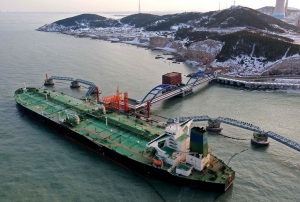
SHANGHAI, Jan. 14 (Xinhua) -- China's coastal bulk freight index dropped during the week ending on Jan. 12, according to the Shanghai Shipping Exchange (SSE).
The composite index for coastal bulk freight fell 3.1 percent week on week to 1,052.92, the SSE said.
According to data, the coal sub-index decreased 4.8 percent to 1,040.64.
The figure for crude oil rose 3.1 percent to 1,643.47, while that for refined oil edged up 0.3 percent from the previous week to 1,508.20.
The SSE initiated the index in 2001, under the guidance of the Ministry of Transport, to reflect fluctuations in the Chinese coastal transport market. ■
China's weekly export container shipping index up
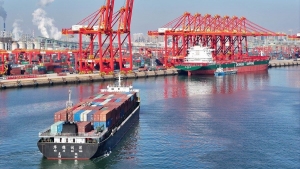
SHANGHAI, Jan. 14 (Xinhua) -- China's export container shipping index rose in the week ending Jan. 12, according to the Shanghai Shipping Exchange (SSE).
The SSE added that the average China Containerized Freight Index (CCFI) recorded an increase of 21.7 percent from the previous week to reach 1,140.31.
The sub-indices for all 12 shipping routes registered week-on-week rises, with that for the Europe service achieving the biggest increase of 40.1 percent.
The CCFI tracks spot and contractual freight rates at Chinese container ports for 12 shipping routes globally, based on data from 22 international carriers.
The index was set at 1,000 on Jan. 1, 1998. ■
China slams U.S. State Department's statement on election in China's Taiwan
BEIJING, Jan. 14 (Xinhua) -- The U.S. State Department's statement on the election in China's Taiwan region seriously violates the one-China principle and the three China-U.S. joint communiques, a Chinese foreign ministry spokesperson said on Sunday.
It goes against the U.S.' own political commitment of maintaining only cultural, commercial, and other unofficial relations with the Taiwan region, and sends a gravely wrong signal to the "Taiwan independence" separatist forces, the spokesperson said.
"We strongly deplore and firmly oppose this, and have made serious representations to the U.S. side," the spokesperson said.
The Taiwan question is at the very core of China's core interests and the first red line that must not be crossed in China-U.S. relations. The one-China principle is a basic norm in international relations, a prevailing consensus among the international community, and the political foundation of China-U.S. relations, according to the spokesperson.
The spokesperson said China firmly opposes the U.S. having any form of official interaction with Taiwan and interfering in Taiwan affairs in any way or under any pretext.
The spokesperson urged the U.S. to earnestly abide by the one-China principle and the three China-U.S. joint communiques and act seriously in accordance with the commitments that have been reaffirmed multiple times by the U.S. leaders to not supporting "Taiwan independence", "two Chinas" or "one China, one Taiwan", and not seeking to use the Taiwan question as a tool to contain China.
The spokesperson said China urges the U.S. to stop interactions of an official nature with Taiwan and stop sending any wrong signal to the separatist forces for "Taiwan independence." ■
Chinese banks report forex settlement deficit in December
BEIJING, Jan. 15 (Xinhua) -- Chinese banks reported a net forex settlement deficit of 31 billion yuan (about 4.36 billion U.S. dollars) in December, official data showed on Monday.
In yuan terms, forex purchases by banks exceeded 1.43 trillion yuan, and sales were approximately 1.47 trillion yuan, according to data from the State Administration of Foreign Exchange (SAFE).
In 2023, forex purchases by banks came in at 15.53 trillion yuan, and sales totaled approximately 16.06 trillion yuan.
"China's foreign exchange market operated steadily and showed strong resilience last year," SAFE deputy head Wang Chunying said, adding that the RMB exchange rate remained basically stable at a reasonable and balanced level with two-way fluctuation.
The willingness of foreign capital to invest in the Chinese market and allocate RMB assets has steadily increased, Wang said. In December 2023, the net increase of RMB assets held by foreign investors reached 24.5 billion U.S. dollars. The net inflow of foreign direct investment capital exceeded 10 billion U.S. dollars last month.
The administration's earlier data showed that China's forex reserves stood at 3.238 trillion U.S. dollars at the end of 2023. ■
Nauru makes right decision: China's State Council Taiwan Affairs Office
BEIJING, Jan. 15 (Xinhua) -- A spokesperson for China's State Council Taiwan Affairs Office said on Monday that the Nauru government has made the right decision to sever the so-called "diplomatic ties" with Taiwan.
Chen Binhua said that Nauru's decision, which was made in line with the trend of the times, is appreciated.
There is only one China in the world and Taiwan is an inalienable part of the Chinese territory, which is both a legal and historical fact as well as a prevailing consensus of the international community, he said.
Chen said that it has been proven time and again that upholding the one-China principle is the will of the people and the trend of the times. ■
Chinese firms to travel abroad in search of trade deals
BEIJING, Jan. 15 (Xinhua) -- China plans to arrange overseas trips for a large number of foreign trade companies in 2024 to help them make deals and expand their markets.
The China Council for the Promotion of International Trade (CCPIT) said on Monday that it will arrange for more than 1,000 groups of enterprises to visit foreign countries this year to participate in exhibitions, conduct market research and hold business talks.
According to the CCPIT, these foreign visits will prioritize important trade and economic partners such as Europe, North America, Japan, South Korea, the Association of Southeast Asian Nations and Latin America.
CCPIT head Ren Hongbin said at a national meeting on foreign trade promotion that the council will make further efforts to assist Chinese firms in expanding their overseas markets in 2024.
Official data shows that China's foreign trade stood at 41.76 trillion yuan (about 5.88 trillion U.S. dollars) in 2023, up 0.2 percent year on year in yuan terms. ■
Xinhua Commentary: China, Europe reach out to each other in icy winter
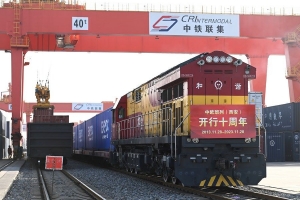
For many European countries, one thing they can be certain about is that their cooperation with China has been mutually beneficial.
BERN, Switzerland, Jan. 15 (Xinhua) -- Amidst the picturesque Swiss landscape draped in a pristine blanket of snow, a red carpet was unfurled on Sunday to welcome Chinese Premier Li Qiang, who chose Europe for his inaugural overseas visit in the new year.
The Swiss leg of Li's tour marks the commencement of high-level interactions between China and Europe in 2024. During his four-day trip, Li is slated to participate in the World Economic Forum (WEF) Annual Meeting 2024 and pay official visits to Switzerland and Ireland.
Li was received by President of the Swiss Confederation Viola Amherd at Zurich international airport. During their train journey from Zurich to the Swiss capital, Bern, the two leaders had a chat over tea "in a relaxing and friendly atmosphere."
Li told Amherd that "China will open its door wider and wider to the outside world and welcomes more Swiss investors."
While Davos, the venue for the WEF annual meeting, enjoys the limelight, Swiss media outlet SWI swissinfo.ch suggests that the most important meeting during Li's visit, from a Swiss perspective, could be the one taking place some 270 km away in Bern, where the Chinese premier is scheduled to hold more meetings with Amherd and other members of the Federal Council.
This photo taken on Jan. 14, 2024 shows the logo of the World Economic Forum (WEF) in Davos, Switzerland. On the theme of "Rebuilding Trust," the 54th WEF Annual Meeting will take place here from Jan. 15 to Jan. 19. (Xinhua/Lian Yi)
The WEF has highlighted Li's participation by placing his name first among the political leaders taking part. This year's WEF theme, "Rebuilding Trust," aligns with China's aspirations to increase exchanges and communication and enhance mutual understanding and trust with other parties in face of the "de-risking" rhetoric peddled by the U.S.-led West.
In Dublin, Irish Prime Minister Leo Varadkar said ahead of Li's visit to Ireland that the country recognizes China as a major country politically and economically and Ireland's "important economic partner," and looks forward to extending a "warm welcome" to Li and holding "in-depth and constructive discussions" with the Chinese guest, according to the Department of the Taoiseach.
The emphasis on Li's visit can be partially explained by the value placed on certainty in this uncertain world. For many European countries, one thing they can be certain about is that their cooperation with China has been mutually beneficial.
The Chinese market holds significant importance for Europe's post-pandemic recovery. In 2022, China-EU trade reached 847.3 billion U.S. dollars, implying that in every minute, trade exchanges between China and the EU valued over 1.6 million dollars on average.
As for Switzerland, the Central European country has the distinction of being among the earliest Western countries to recognize the People's Republic of China, and stands out as one of the pioneering European nations to formalize a free trade agreement with China. Cooperation between the two countries in areas such as trade, finance, innovation, and culture has immense potential.
This year marks the 45th anniversary of diplomatic relations between China and Ireland. The China-Ireland strategic partnership for mutually beneficial cooperation has grown steadily, seeing frequent interactions at various levels, with deepening cooperation in trade and investment, green development, culture, education and other fields.
In Switzerland and Ireland, the shelves of many stores display a myriad of products bearing the label "Made in China," as the local tourism industry eagerly anticipates the arrival of Chinese visitors.
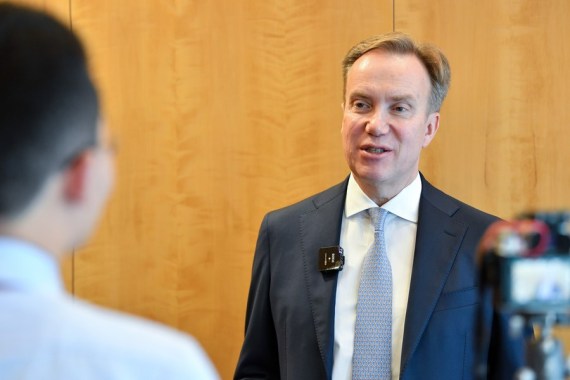
World Economic Forum (WEF) President Borge Brende speaks during an interview with Xinhua at the WEF headquarters in Geneva, Switzerland, Jan. 9, 2024. (Xinhua/Lian Yi)
However, challenges and tests loom over China-Europe relations as the U.S. government disrupts and reshapes the global supply chains, and lures Europe to label China as a "systemic rival" in certain areas and weaponize the "de-risking" strategy as tools disrupting China-Europe relations.
Such actions could undermine trust and mutually beneficial cooperation, leading to greater turbulence and problems. An anti-subsidy investigation by Brussels into Chinese electric vehicles is an alarming manifestation of this trend.
Regarding concerns in Europe, Li addressed what he considered to be the real risks during his visit to Europe in June last year. In a dialogue with representatives from the German business community in Berlin, he said that "failure to cooperate is the biggest risk, and failure to develop is the biggest insecurity."
Guarding against risks and cooperation are not opposite to each other, he said, adding that for some specific problems, all parties should analyze them case by case, and jointly prevent and respond to them through consultation and cooperation.
Li's perspective has been gaining more affirmation and resonance. Concerning the EU's protectionist measures against Chinese electric cars, there is increasing reflection within Europe.
Days ago, The Economist published an article pointing out that the successes of Chinese cars should be celebrated, not feared as "the potential gains to the West from a ready supply of cheap, green vehicles are simply enormous."
Simultaneously, many European businesses, defying political pressures, are increasing their investments in China and expanding their operations, signaling that China is viewed as an opportunity rather than a risk.
Last July, German automaker VW declared a substantial 700-million-dollar investment in the Chinese electric vehicle manufacturer XPeng, acquiring a nearly 5-percent stake in the company to collaboratively develop and manufacture electric vehicles. In September of the same year, Airbus broke ground on its second final assembly line in north China's Tianjin as the European aircraft manufacturing consortium seeks expansion in the Chinese market.
"De-risking" China-reliant supply chains doesn't solve problems but, as The Wall Street Journal puts it, is "creating new risks."■
GLOBALink | Health of Chinese economy positive for world, says WEF managing director

In light of a gloomy outlook for the world economy in the short term, the health of Chinese economy means positive spillover for the rest of the world, said Saadia Zahidi, managing director of the World Economic Forum (WEF), in an interview with Xinhua.
"The measures taken by the Chinese leadership are starting to work and starting to bear fruit, whether that is more focused on the manufacturing sector, whether that's more focused on green technologies, whether it's making sure that there's a revival in trade," she said.
Produced by Xinhua Global Service■

Powered by  © Μaritimes 2019