

-
Home

-
Maritimes NEWS
-
Ports
- maritimes


maritimes
[xclusiv] S&P Report 15th January 2024
![[xclusiv] S&P Report 15th January 2024](/media/k2/items/cache/7e786f29b154c6ec27447ea064de3581_Generic.jpg)
MARKET COMMENTARY:
The dry bulk market has started the new year on the back foot. The market's correction following the nearly 40-day rally (November-December 2023) is a reality, and it appears to be intensifying as we approach the Chinese New Year. Within the first two weeks of 2024, the Baltic Dry Index (BDI) has lost almost 31%, compared to the 18% loss it experienced in the last two weeks of 2023. Capesize vessels have seen their average five-route time charter (T/C) rate fall to $18,015 per day, about 38% lower than at the end of 2023. Meanwhile, Panamax five-route T/C rates and Handysize seven-route T/C rates have declined by around 24% in the first two weeks of 2024, reaching $12,693 and $11,089 per day, respectively. Supramax vessels have experienced the smallest drop in rates at the beginning of the year, with a 17% decline, bringing their average 10 T/C rate to $11,967 per day. This correction in freight rates is certainly not a cause for alarm or a sign of a "bad market," as intense volatility has become the norm over the past four years. Of course, seasonality and commodities stockpiling ahead of the Lunar New Year holiday (10 February 2024 to 17 February 2024) have also played a significant role.
China, having emerged from the COVID-19 pandemic, is actively pursuing a return to pre-pandemic levels of economic activity. According to official customs data, China's coal imports soared by a remarkable 61.8%, reaching an unprecedented high in 2023. Last year's imports totalled 474.42 million metric tons, eclipsing the previous record and exceeding initial projections of 470 million tons for the entire year by approximately 5 million metric tons. Additionally, last month's coal imports set an all-time monthly record of 47.3 million tons, marking an 8.7% increase from November. This surge in imports can be attributed to a record-breaking cold wave that gripped various regions of the country, driving up coal demand. China's crude imports rebounded 10.3% month on month to 11.44 million b/d in December 2023 from a four-month low in November, while oil products exports fell to a six-month low of 4.64 million mt amid tight export allowances. The month-on-month gain in crude imports was within expectations as independent refineries were set to bring more barrels once new import quotas were available. Exports of oil products dropped 39.7% year on year in December but pushed total outflow in 2023 to gain 16.7% from a year ago to 62.69 million mt. The year-on-year gain of 80.3% in oil products imports, which was stronger than exports, led China's net oil product exports to drop 45% to 14.99 million mt in 2023. In December, China imported 4.76 million mt of oil products, surging 45.2% year on year and growing 14.5% from November, customs data showed.
The Red Sea situation is deteriorating rapidly, raising concerns about a prolonged closure of the vital trade route and its potential economic and inflationary consequences for the global economy, businesses, and consumers. Following the recent US-UK airstrike on Houthi targets, the Houthi rebels have threatened to escalate their attacks on shipping vessels. In response, Danish tanker company Torm A/S has suspended all transits through the southern Red Sea, and Japanese shipping giant Mitsui O.S.K. Lines has imposed an immediate ban on all vessels transiting near Yemen, including the Red Sea and the Gulf of Aden. The recent decisions by Torm and Mitsui O.S.K. Lines suggest that tanker shipping may also be forced to take this longer, more expensive route, potentially exacerbating supply chain disruptions and driving up global energy prices.
S&P Activity:
Dry
On the Newcastlemax secor, the “Mineral Qingdao” - 206K/2020 Qingdao Yangfan was sold for USD 54.25 mills to clients of Winning Shipping. Greek buyers acquired the Capesize “Coronet”- 183K/2011 Kawasaki for USD 27 mills. Greek buyers also acquired the Kamsarmax “Kavala” - 83K/2009 Sanoyas for USD 16.3 mills. On the Supramax sector, the Scrubber fitted “Crested Eagle” - 56K/2009 IHI and the “Stellar Eagle” - 56K/2009 IHI were sold enbloc for USD 14.5 mills each. 2x Handymax vessels, the “Notos Venture”- 43K/2017 Qingshan and the “Eurus Venture” - 43K/2017 Qingshan found new owners for USD 23 mills each. Last but not least, on the Handysize sector, Turkish buyers acquired the “Helga Bulker” - 34K/2017 Hakodate for excess USD 22 mills, while the 2-year older Non-Eco “Lowlands Hopper”- 36K/2015 Shikoku was sold for excess USD 17 mills to Far Eastern buyers.
Tanker
Frontline sold a series of its oldest VLCCs. The Scrubber fitted “Front Signe” - 297K/2010 SWS, the “Front Cecilie”- 297K/2010 SWS, the “Front Endurance” - 321K/2009 Daewoo, the “Front Kathrine” - 298K/2009 SWS and the “Front Queen” - 298K/2009 SWS were sold enbloc for USD 290 mills to clients of Sinokor. Moving down the sizes, the LR2 “Fair Seas”- 115K/2008 STX changed hands for USD 43.5 mills. Emarat Maritime acquired 2x LR1s Ice Class 1A, the “Brook Trout” - 74K/2007 STX and the “Lake Trout” - 74K/2007 STX for USD 26 mills each. Finally, on the MR1 sector, the Ice Class 1A “Dinah”- 37K/2008 HMD and the “Pluto” - 37K/2008 HMD were sold enbloc for USD 41.75 mills.
DNV delivers a market study on Denmark’s opportunities for becoming a European CO2 hub
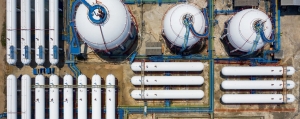
DNV has recently completed an extensive market study commissioned by a consortium of Danish companies and organizations in the CCUS (Carbon Capture, Utilization, and Storage) industry. The study focuses on assessing the possibilities and business potential of establishing Denmark as a key European CO2 hub. This initiative aligns with Denmark's ambitious climate targets, aiming for a 70% reduction in carbon emissions by 2030 and complete climate neutrality by 2045.
As part of the Danish government’s commitment to achieving the climate targets, a CCUS strategy has been introduced to address carbon emissions in challenging sectors like industry and waste management. The DNV market study, conducted by an international team of experts, delves into the market and regulatory landscape, mapping essential prerequisites for the development of a robust CCUS industry in Denmark.
The development of this industry is also important on a European level. According to the Paris agreement, all member states in the EU have committed to reducing emissions by at least 55% by 2030 compared to 1990 levels. To achieve this, the EU will depend on cross-national collaboration with countries importing and exporting e.g. electricity, hydrogen, and CO2.
As part of the study, three different scenarios with infrastructure and ports were developed. The cost-benefit analyses of these scenarios form the basis for actionable conclusions and policy recommendations to guide Denmark in fostering a profitable and publicly supported CCUS sector. The report aims for the CCUS industry to not only contribute to economic growth but also to facilitate Denmark in meeting its climate targets and supporting EU’s regional goal of decarbonization.
“The report delivered by DNV uncovers how the market may evolve, both from a perspective following today’s policies but also by proposing a different alternative. The CCUS industry has a lot of potential to become successful in Denmark, but there are challenges that need to be addressed to enable the industry to truly pick up speed,” explained Kjersti Aarrestad project manager and DNV senior consultant.
The CCUS industry has great potential to flourish in Denmark, particularly in relation to the hard to abate sectors that struggle to reduce emissions. However, a notable challenge identified revolves around the economies of scale of transportation of CO2. Coordinated efforts are necessary to realize the potential as well as development of a CO2 backbone that connects CCS port infrastructure, Danish CO2 emitters, and import pipelines with storage sites and the future CO2-use industry. If this is realized, the study predicts that the industry can contribute to substantial economic growth and support Denmark’s fulfilment of the climate targets.
“DNV’s Energy Transition Outlook (ETO) predicts that carbon prices will begin to approach the cost of CCS in the 2030s, which will cause the uptake to accelerate and the deployment at scale to begin. This means that countries must already now begin to prepare to leverage the emission targets for 2030. It is clear that the CCUS technology will have a role to play in reaching the EU climate goals, but there is a need for new policies, regulations and investments in the technology and infrastructure to fully leverage this potential. In DNV, we’re proud to have been chosen to conduct this market study and utilize our many years of qualified expertise to uncover the possibilities for CCUS in Denmark,” said Mick Cramer Jakobsen, Head of Customer Relations and Sales, Energy Systems at DNV.
“Our goal is that the market study conducted by DNV will help pave the way for Denmark in becoming a European CO2 hub. The results shed light on important challenges that must be solved as well as provide recommendations on how to move forward. The consortium chose DNV for this study due to their status as an independent advisor as well as their vast experience within the field of carbon capture and storage. We’re pleased with the results, which will be presented in full at the CO2 Hub Europe reveal on 18 January,” concluded Peter Kristensen, Chair of CO2 Hub Europe.
DNV has helped scale the CCUS services of more than 200 projects across the entire CCUS value chain in the last 10 years. By conducting and facilitating numerous research- and joint industry projects (JIP), DNV has helped drive the development of the first CCUS standards and continue to conduct JIPs within the field of CCUS. Today, DNV delivers CCUS advisory and independent verification as well as certification services to investors on due diligence and to owners and developers for assets and projects.
source:DNV
MAN Energy Solutions and Karpowership signed a contract for 48 dual-fuel engines
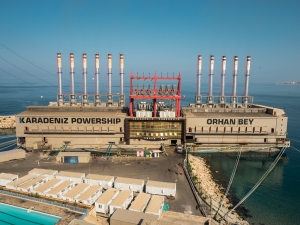
The new engines add another 1,000 MW to Karpowership’s current generation capacity of 6,000 MW
MAN Energy Solutions and Karpowership have signed a contract for the delivery of a total of 48 dual-fuel engines for Karpowership’s fleet of power plant ships (Powerships). The engine order consists of MAN 18V51/60DF dual-fuel engines with a mechanical output of 20.7 MW each.
The engines will be split between a number of Powerships. In addition to the engines, MAN Energy Solutions will also supply the control systems for the Powerships as well as other electromechanical equipment.
Alexander Stöckler, Head of Sales, Tendering & Project Management, Power Segment at MAN Energy Solutions, said: “MAN Energy Solutions has been supplying engines for Karpowership's floating power plants since 2009. And we are proud of playing our role in Karpowership’s ability of realising the energy transition in a fast-track manner in any location in the world by now expanding the company’s fleet by a considerable 1,000 MW with this major order. Our dual-fuel technology has already proven itself in other Powerships, and we have now even been able to increase the engine output from 19 MW to almost 21 MW, which will make the upcoming Powerships even more effective.”
Gökhan Koçak, Chief Technical Operations Officer at Karpowership, emphasized the importance of the two companies’ long-term collaboration and added: “MAN Energy Solutions plays a vital role in Karpowership’s mission of providing high-efficient, reliable and low cost electricity in a fast-track manner all around the world. The two companies share a vision of supporting countries in their energy transition paths by providing a high-efficient multi-fuel technology.”
Stefan Eefting, Head of MAN PrimeServ Germany, added: “Karpowership not only places high demands on the quality of the engines, but also on the services and expertise in the area of maintenance and after-sales. In recent years, we have been able to increase the availability of the engines in Karpowership's existing fleet to 98% with our services. This overall package of efficient and powerful engines combined with high service quality has once again convinced the customer to rely on us.”
Existing fleet with a total of 36 powerships
Karpowership has the world's largest fleet of Powerships. The active fleet currently comprises a total of 36 Powerships with a total capacity of 6,000 MW. The future newbuilds equipped with MAN engines will also be deployed globally.
“Powerships stand for flexibility. After all, the floating power plants bring electrical energy to where it is urgently needed and help to alleviate urgent energy shortages,” explained Tilman Tütken, Vice President Strategic Projects, Power, at MAN Energy Solutions. “The Powerships will be deployed in various regions of Asia, South and Central America and Africa.”
Long-standing partnership
Timur Iyi, Managing Director of MAN Energy Solutions Turkey, added: “We have a long-standing partnership with Karpowership. Quality in product and services and a trustful relation and dialog is the key for this success. The company has already commissioned us to supply over 100 engines and together we have always been able to find solutions for emerging issues. We are delighted that Karpowership has placed its trust in us again and that we can continue to contribute to the success of this unique Powership concept with our technology.”
Karpowership partners with MAN Energy Solutions not only for newbuild projects, but also for the modernisation of its existing fleet. MAN PrimeServ, the after-sales brand of MAN Energy Solutions, is currently converting four barges with a total of 32 engines to dual-fuel operation. Karpowership also benefits from MAN PrimeServ's extensive local capacities in Turkey as well the global service network when deploying its power plant vessels worldwide. With over 140 service locations worldwide, MAN PrimeServ offers the fastest possible support for troubleshooting, no matter where the power plant vessels are currently in operation.
China-Russia 2023 trade value hits record high of $240 billion – Chinese customs
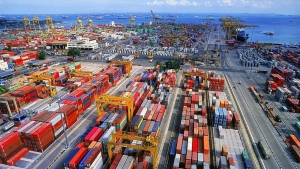
China’s 2023 two-way trade with Russia hit $240 billion, setting yet another new record, Chinese customs data showed on Friday, as the two countries pushed for closer economic ties even as the war in Ukraine raged on.
China, one of the world’s top oil consumers, has emerged as a major economic lifeline for energy exporter Russia, currently under Western sanctions. Moscow has also stepped up purchases of Chinese goods from cars to smartphones as European and U.S. brands left the Russian market.
China-Russia dollar-denominated trade hit $240.1 billion in 2023, growing 26.3% from a year earlier, according to the data by China’s General Administration of Customs.
Chinese shipments to Russia jumped 46.9% in 2023 from a year earlier, and soared 64.2% compared with 2021, before the Russia-Ukraine war, the customs data showed.
Imports from Russia rose 13% last year from 2022.
Half of Russia’s oil and petroleum exports in 2023 have been shipped to China, Russia’s state news agencies cited Russian Deputy Prime Minister Alexander Novak as saying in late December.
The Chinese customs did not release the oil imports data from Russia for the month of December.
Leaders and officials from both countries held multiple bilateral talks last year, hailing their “no-limits” partnership.
Beijing intends to expand energy cooperation with Russia along all stages of production, Chinese Ambassador to Russia Zhang Hanhui told the Russian state RIA news agency on December 19.
While Russia ramps up payments for imports amid Western sanctions, China has also increased the use of yuan to buy Russian commodities.
In yuan terms, two-way trade value between China and Russia stood at 1.69 trillion yuan ($235.90 billion) last year, up 32.7% year-on-year, the customs data showed.
Source: Reuters
New ammonia chapter for technical and operational decision support

Ammonia has attracted the shipping industry’s attention as a potential zero-carbon fuel, especially when produced as green ammonia. In a new chapter added to its Alternative Fuels for Containerships guidance paper, DNV explores the properties, requirements and implications for ship design.
In the order books of major shipyards, it is evident that the container shipping industry has already embarked on the path towards sustainability, increasingly embracing green technologies and fuels. “In the current year, all new containerships with a capacity of over 5,000 TEU have been ordered with alternative propulsion systems,” says Jan-Olaf Probst, Business Director Containerships at DNV.
DNV’s guidance paper Alternative Fuels for Containerships has recently been complemented by a new chapter discussing ammonia. “The aim of the guidance paper is to offer shipowners a decision framework for numerous alternative fuels currently under discussion, testing and research,” Probst explains. “Decision makers pondering the most feasible propulsion options for newbuilding programmes or retrofitting projects will find valuable, neutral, fact-based information covering the relevant design, engineering and safety criteria to bear in mind.”
Ammonia: A versatile industrial product and promising hydrogen carrier
Ammonia (NH3) is an important industrial product and a commonly traded commodity, typically transported in liquefied form at −33°C and atmospheric pressure. Primarily used to make fertilizers and pharmaceuticals or as a refrigerant, it is also considered a key future storage and long-distance transport medium for hydrogen. While the liquefaction, storage and transport of pure hydrogen requires enormous energy input and is technically complex, handling ammonia is comparatively simple and established industrial practice. Furthermore, the energy density of liquefied ammonia is higher than that of liquefied hydrogen, making its transport more efficient.
Green ammonia: Revolutionizing decarbonization in shipping’s energy mix
“Since ammonia combustion emits no carbon compounds, green ammonia is a strong candidate as an alternative, climate-neutral fuel in the energy mix of a future decarbonized shipping fleet,” says Benjamin Scholz, Expert for Alternative Fuel Systems at DNV. “Once production capacities have been scaled up, green ammonia produced using hydrogen from seawater hydrolysis and renewable energy is expected to play a major role in decarbonizing shipping.”
Ammonia can power diesel-cycle two-stroke engines or Otto-cycle four-stroke engines. Due to its poor ignition properties, ammonia requires a pilot fuel, typically diesel or biodiesel. Ammonia-ready dual-fuel ship engines have been introduced recently or are being developed by major manufacturers. Ammonia may also be used in fuel cells.
Managing corrosion and storage challenges: Choosing the right tanks for ammonia in ship design
The corrosive nature of ammonia makes certain steel alloys susceptible to stress corrosion cracking. Careful selection of the tank, piping and equipment material is therefore crucial. The available tank types vary in terms of space utilization, temperature and pressure tolerance, safety barriers as well as design and manufacturing complexity.
Because of its lower energy density, ammonia has a significantly shorter sailing range per unit of volume than both HFO and LNG. Depending on the fuel containment solution chosen, ammonia tanks may be up to four times larger than tanks for an equivalent amount of HFO with the same energy content. Unlike LNG, however, ammonia does not require storage at cryogenic temperatures. On larger ship types, the increased space needed for fuel storage may not be of grave concern.
IMO Type A, B, C and membrane tanks made of suitable materials may be used. The alternative fuels guidance paper elaborates on the advantages and disadvantages as well as the ship design requirements associated with each tank type.
Environmental and safety considerations for ammonia as fuel
Ammonia is a colourless, caustic, highly toxic and therefore hazardous gas. “As a flammable fuel it is subject to the IGF Code and requires specific bunkering equipment on board that minimizes ammonia leakage, as well as designated safety zones and special crew training as detailed in the STCW Code (Seafarers’ Training, Certification and Watchkeeping),” Scholz points out. Fuel tank and piping arrangements must follow the principles of segregation, double barriers including thermal insulation, and leakage detection.
Furthermore, liquefied ammonia requires boil-off gas management. The necessary on-board safety systems and arrangements are explored in detail in the guidance paper.
The combustion of ammonia is carbon-free but releases nitrogen oxides. Since N2O, or laughing gas, is a powerful greenhouse gas, ammonia-burning ship engines must include N2O management, for example through selective catalytic combustion (SCR) systems.
DNV class rules for ammonia
DNV has issued classification rule updates relating to ammonia that took effect in January 2022 and January 2023. Two new class notations were introduced that are relevant for ammonia as ship fuel. “The Fuel Ready class notation provides shipowners with the option to prepare their newbuilds for later conversion to multiple different alternative fuel options, including ammonia, LNG, LPG and methanol,” Scholz explains. “It comes with several qualifiers specifying mandatory basic as well as optional levels of preparation, relating to structural aspects, engine and machinery, piping and bunkering, and miscellaneous other requirements.”
Furthermore, the Gas Fuelled Ammonia class notation gives owners the option to start building ships for future ammonia propulsion today, setting out the requirements for the ship’s fuel system, fuel bunkering connection and piping through to the fuel consumers. “Through both of these class notations DNV provides a practical path for owners to implement a zero-carbon fuel option for their newbuilds,” says Scholz.
Bunkering options for ammonia
Ammonia may be bunkered ship-to-ship, truck-to-ship or terminal-to-ship. Each method has its advantages and disadvantages. “The ship-to-ship concept is most flexible, being independent of port infrastructure; bunkering from a terminal or jetty at a safe distance from other port installations allows the highest bunkering rates,” Scholz elucidates. Truck-to-ship bunkering is essentially possible anywhere but suitable for smaller amounts of ammonia only. Various ports around the world are currently developing or planning to build ammonia bunkering infrastructure. Both ship-to-ship and terminal-to-ship bunkering will typically be designed to transfer refrigerated, liquefied ammonia.
Minimizing future retrofitting capex
Ammonia is clearly a realistic decarbonization option. “Owners contemplating a future ammonia retrofit of a ship being built today are well advised to choose a design with a high degree of ammonia-readiness along the relevant DNV class notations to minimize future retrofitting capex,” Probst advises.
The CO2-equivalent emissions of an ammonia-ready vessel, maximizing ammonia use after the retrofit, will be significantly lower than those of a vessel gradually increasing the share of biocarbon-based fuels to align with the decarbonization trajectory because, unlike ammonia, biofuels emit CO2.
Prices for green ammonia will be key decision factor
The technology for green and blue ammonia exists, but current production volumes are very small. As with all low- or zero-carbon fuels, the availability of sufficient amounts of green ammonia at an affordable price will be a decisive factor for the uptake. Producing green ammonia requires a sufficient supply of green energy while blue ammonia depends on carbon capture and storage capabilities. Blue ammonia could become a feasible transitional fuel with low well-to-wake emissions.
Source: DNV
Capesize: Market conditions remaining somewhat subdued

Capesize
The capesize market concluded the week on a relatively sombre note. The Pacific market struggled with limited participation from the miners throughout the week, resulting in declining rates driven by tonnage build-up and an overall shortage of coal enquiry. The Atlantic market faced a slow start, with notable bid reductions from charterers, leading to a widening bid-offer spread and fewer fixtures being concluded. However, towards the end of the week, there were indications of increased activity from South Brazil and West Africa to the Far East, suggesting a potential attempt to find a market equilibrium. By midweek, the North Atlantic market exhibited signs of stabilisation after experiencing substantial downturns earlier in the week. This resulted in market conditions remaining somewhat subdued as the week drew to a close, reflecting the impact of growing tonnage against a backdrop of diminishing cargo availability. The BCI 5TC commenced the week at $29,851 but experienced notable losses, concluding the week at $18,015 by Friday’s close.
Panamax
The decline in the Panamax market showed no signs of abating this week, with further substantial corrections in both basins. In the Atlantic, a distinct lack of mineral demand in the North, as well as a build-up of tonnage count, weighed heavily on the very few deals to be reported this week. Limited talk midweek of a floor being found from EC South America appeared premature, with charterers still able to pick off the ample ballasters, dependent on the arrival window, the customary rate variance played out but generally the P6 route averaged out to around $13,500 and $13,750 levels. Asia also remained downcast, with Indonesian coal exports continuing to be an issue and, despite some minor support ex NoPac and Australia, this did little to impact an ever-growing tonnage count with limited options. Mixed rates on period throughout the week, the highlight being an 82,000-dwt delivery China achieving $14,350 for one year.
Ultramax/Supramax
The rather inauspicious start to the new year continued over the week with little for owners to get excited about. In the Atlantic, activity appeared softer in most key areas with a healthy tonnage supply more than keeping up with demand. Brokers spoke of very little requirement from the South Atlantic for trans-Atlantic runs. From the Asian arena, some described the week as positional. With a reasonable number of fresh requirements both from the NoPac and Australia, limited fresh enquiry further south saw rates remain in check for the most part. Activity from the Atlantic included a 63,000-dwt fixing a trip delivery EC North America redelivery East Mediterranean at $24,000. Elsewhere, a 58,000-dwt was fixed delivery North Continent for a scrap run to East Mediterranean in the mid $16,000s. From Asia, a 63,000-dwt open North China for heard fixed for a NoPac round voyage redelivery WC India at $12,750. From the south, a 55,000-dwt open South China was fixed for a trip via Vietnam redelivery Bangladesh at $9,000.
Handysize
Continued negativity was seen across the handy sector, with limited cargo availability and growing tonnage lists continuing. In the Mediterranean, a 28,000-dwt was fixed from Arzew to Florida with bagged cement at $7,500 whilst a 40,000-dwt was rumoured to have fixed for from Algeria to US Gulf at $9,000. The South Atlantic also saw levels fall, with a 36,000-dwt fixing from Santos to Morocco with a cargo of sugar in the mid-teens whilst a 36,000-dwt was said to have been fixed from Rio Grande to WC Central America at $23,000. With similar market conditions in the US Gulf, sentiment remained negative. Southeast Asia also experienced a lack of fresh enquiry as a 38,000-dwt fixed from Singapore via Western Australia to China with alumina at $8,400. Further north, a 34,000-dwt opening in CJK fixed a trip to Southeast Asia at $8,000. Period interest was still evident with a 28,000-dwt in Cigading fixing for four-to-six months at $9,250.
Source: The Baltic Exchange
World's oceans break record for highest temperatures five years in a row: study

BEIJING, Jan. 11 (Xinhua) -- The ocean temperatures in 2023 have once again shattered records, and the warming trend will persist throughout this century, even if greenhouse gas emissions were to be halted, according to a new study.
The annual research, published Thursday in the journal Advances in Atmospheric Sciences, was conducted by a multi-national team of scientists from 17 research institutes spanning China, the United States, New Zealand, Italy and France. They found that last year was the hottest on record for the world's oceans for the fifth year in a row.
Cheng Lijing, lead author of the study and a researcher at the Institute of Atmospheric Physics under the Chinese Academy of Sciences, said ocean warming is a key indicator for quantifying climate change, since more than 90 percent of global heat ends up in the oceans.
"Oceans also control how fast the Earth's climate changes. To know what has happened or what will happen to the planet, answers can be found in the oceans," Cheng said.
Compared with 2022, the previous hottest year ever recorded, the upper 2,000 meters of the Earth's oceans have absorbed a larger amount of heat, which is "equal to boiling away 2.3 billion Olympic-sized swimming pools," Cheng explained.
The impact of this is an increase in water temperatures. According to the study, the global average sea surface temperature in 2023 showed a notable rise of 0.23 degrees Celsius compared to the previous year, 2022.
The study also calculated the salinity of ocean water, discovering that areas of high salinity experienced an increase in salinity, whereas the opposite was true for areas of lower salinity.
"The salty gets saltier, while the fresh gets fresher" pattern also ranked among the top five years.
The warming ocean will reduce oxygen in the seawater and its ability to take up carbon dioxide, leading to severe consequences for ocean, plant and animal life, said the study.
It can also supercharge weather. The extra heat and moisture that enters into the atmosphere makes storms more severe with heavier rain, stronger winds, and more significant flooding.
According to the scientists, ocean warming is an irreversible phenomenon that will persist throughout this century, even if greenhouse gas emissions could be stopped.
"This poses new challenges for climate governance, requiring not only emission reduction and increased use of renewable energy sources but also a greater focus on climate change adaptation," said Cheng.
He called for strengthened climate monitoring capabilities and improved forecasting and early warning systems to prevent climatic disasters. ■
China's largest offshore crude oil base sets new annual output record
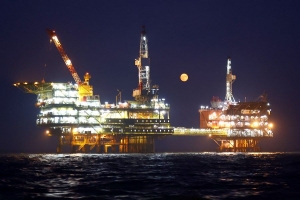
TIANJIN, Jan. 12 (Xinhua) -- China's largest offshore crude oil producer, Bohai Oilfield, saw its annual oil and gas output top 36.8 million tonnes of oil equivalent in 2023.
This milestone includes record highs 34 million tonnes of crude oil and 3.5 billion cubic meters of natural gas, according to the Tianjin branch of China National Offshore Oil Corporation (CNOOC) on Friday.
The increase of crude oil output from the year before neared 2.3 million tonnes, accounting for about half of the total increase of crude oil in China.
Since the construction of the base in 1965, more than 50 oil and gas fields and nearly 200 production facilities have been developed, making Bohai Oilfield the main oilfield with the highest output and the largest scale in Chinese waters. Its daily oil and gas output has exceeded 100,000 tonnes of oil equivalent.
According to Yan Hongtao, general manager of CNOOC Tianjin, Bohai Oilfield has played an important role in China's offshore oil and gas supply.
The oilfield aims to achieve annual oil and gas output exceeding 40 million tonnes by 2025. This year will be crucial in achieving this endeavor, Yan said. ■
China's Ningbo-Zhoushan port sees rising cargo, container throughput in 2023

HANGZHOU, Jan. 12 (Xinhua) -- The Ningbo-Zhoushan Port in east China's Zhejiang Province reported steady growth in its cargo and container throughput in 2023.
According to statistics from the Zhejiang provincial port shipping management center, the port recorded more than 1.3 billion tonnes of cargo throughput in 2023, up 4.94 percent year on year. During the period, the port's container throughput totaled more than 35.3 million twenty-foot equivalent units (TEUs), a year-on-year increase of 5.85 percent.
As of 2023 end, the number of container routes from Ningbo-Zhoushan Port stands at 300, of which 130 are related to Belt and Road partner countries. The port also has 25 sea-rail intermodal transportation routes in operation, helping connect 65 prefecture-level cities in 16 Chinese provinces, autonomous regions and municipalities. ■
Update: China's foreign trade up 0.2 pct in 2023
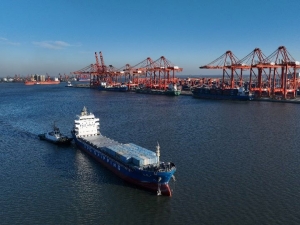
BEIJING, Jan. 12 (Xinhua) -- China's total goods imports and exports expanded 0.2 percent year on year in yuan terms in 2023, official data showed Friday.
In 2023, the country's foreign trade stood at 41.76 trillion yuan (about 5.87 trillion U.S. dollars), according to the General Administration of Customs (GAC).
Exports grew 0.6 percent year on year to 23.77 trillion yuan, while imports edged down 0.3 percent from one year earlier to 17.99 trillion yuan, the data showed.
The data have demonstrated that China's export products still hold solid competitive advantages, GAC deputy head Wang Lingjun told a press conference.
The total export value of the tech-intensive green trio, namely solar batteries, lithium-ion batteries, and electric vehicles, surged 29.9 percent to 1.06 trillion yuan in 2023. It marks the first time that the figure topped the one-trillion-yuan mark.
The export value of machinery and electronic products, accounting for 58.6 percent of total exports, increased 2.9 percent during the period, while that of ships hiked 35.4 percent from a year earlier.
Wang also noted an increase in the share of trade with Belt and Road Initiative participating countries in total foreign trade. Last year, China's trade with these countries accounted for 46.6 percent of the total, up 1.2 percentage points from 2022. ■

Powered by  © Μaritimes 2019