Tuesday, April 28, 2026
maritimes

maritimes

Tuesday, 23 January 2024 15:26

[xclusiv] S&P Report 22nd January 2024

MARKET COMMENTARY:

In its widely monitored monthly oil market report, the Organization of the Petroleum Exporting Countries (OPEC) projects global oil demand to increase by 2.25 million barrels per day (b/d) in 2024, followed by an additional 1.8 million b/d in 2025, driven by a strengthening Chinese economy. In contrast, the growth of non-OPEC liquids production is expected to be more moderate, reaching 1.34 million b/d in 2024 and 1.27 million b/d in 2025, led by the United States, Canada, Guyana, and Brazil. OPEC anticipates demand for its crude to reach 28.49 million b/d in 2024 and 28.96 million b/d in 2025, exceeding the December 2023 output of 26.7 million b/d.

On the other hand, the U.S. Energy Information Administration (EIA) forecasts global liquid fuels consumption growth to be 1.4 million barrels per day (bpd) in 2024 and 1.2 million bpd in 2025, a slowdown from the 1.9 million bpd growth observed in 2023. This moderation is attributed to a weakening Chinese economy, enhanced vehicle fleet efficiency, and the end of pandemic-related growth in 2023. The EIA also predicts that U.S. crude production will reach record levels in the next two years, but at a slower pace. Additionally, it expects global production to surpass consumption by mid-2025, leading to an increase in petroleum inventories.

The escalating pressure on shipowners to avoid the Red Sea significantly impacted European refined product imports during the first half of January. Surging freight rates and diverted tanker routes constrained supplies. Europe's imports of oil products from outside the region averaged 2.3 million b/d from January 1 to 17, down from the 2.9 million b/d recorded in December. Arrivals from Saudi Arabia, India, and Kuwait plunged by 15%, 31%, and 43%, respectively, from December levels during the same period. These diminishing import volumes pose a considerable threat to diesel supplies. Europe relies on the Middle East for approximately one-third of its diesel supply, and with Insights Global data indicating stock levels 257,000 barrels below the five-year average on January 11, the risk of shortages is substantial.

Although the dry bulk market has corrected significantly, with the BDI closing at 1,308 points on Wednesday, the lowest level of the past 4-months, during the last two days of the week we witnessed signs of resistance. BDI closed the week at 1,503 points gaining around 13% in 2 days, while the BCI increased almost 23% during the last days and closed the week at 2,244 points. BPI closed the week at 1,550 points, an increase of around 10% on a weekly basis, while the BSI has reduced almost 5% w-o-w to 1,030 points. Rio Tinto's Group announcement offers a glimmer of optimism for the dry bulk sector. The leading exporter of iron ore globally anticipates that the expanded stimulus measures in China will propel the overall economy towards a gradual recovery this year. During the early stages of the fourth quarter, China's economy displayed indications of stabilization, with augmented investments in infrastructure and manufacturing counterbalancing the prolonged challenges in the troubled property sector. 

S&P activity:

Dry

Buying appetite was focused mainly on vintage vessels this week as all vessels sold were older than 12 years old. The Panamaxes "Kerveros" - 76k/2003 Imabari and "Alpha Afovos" - 74k/2001 Daewoo were sold for USD 9.35 mills and USD 7 mills respectively. On the Supramax segment, "Lan Hai Sheng Hui" - 56k/2011 China Shipbuilding, "Hai Yang Zhi Hua" - 56k/2011 China Shipbuilding, were sold for USD 12.5 mills each, while the Japanese built "Isabella M" - 56k/2006 Mitsui found new owners for USD 12.5 mills. This highlights the strong demand for Japanese-built vessels, especially those over 10 years old. Lastly, the 53k Supramax "Amarnath" - 53k/2004 Iwagi was sold for USD 7.75 mills, and the Handysize "Uni Wealth" - 29k/2009 Yangzhou Nakanishi was sold for approximately USD 8 mills. 

Tanker

Four South Korean, three Japanese, and only one Chinese tanker were sold this week. The VLCC “Nereides" - 300k/2004 IHI was sold for USD 29 mills, while LR2s “Mare Oriens" - 110k/2008 Mitsui and “Wonder Sirius" - 115k/2005 Samsung found new owners at China and Turkish respectively, for USD 42 mills and USD 33.8 mills. Four HMD-built vessels were also sold this week: the MR2s “Lady Malou" - 51k/2013 HMD and “King Gregory" - 51k/2013 HMD for USD 36 mills and USD 34 mills each, and the MR1s “Olympic Glory" – 37k/2005 HMD and “Paprika" - 51k/2003 HMD for USD 16.5 mills and mid USD 15 mills respectively. The only Chinese-built vessel sold was “Patea" - 16k/2008 Jiangnan for USD 13.2 mills.

Tuesday, 27 February 2024 15:09

World Maritime Forum: Copenhagen

Topics

Global Maritime Sector:

Today / 2030 / 2050

  • Overview of the current market situation in the maritime sector;
  • Fresh overview of the implementation process of IMO regulations;
  • Enforcement of the existing regulations;
  • Update on the maritime policies in Europe;
  • Forecast 2030/2050;
  • Regional, national and international environmental projects and initiatives: best practices;

Getting To Zero Emissions

  • Greenhouse gas regulations – where are we headed?;
  • LNG as a marine fuel;
  • Fuel prices: future forecast;
  • Alternative fuels;
  • Combination of fuels;
  • Green transition in ports and implementation of the bunker fuels of tomorrow;
  • Ship propulsion power – how to supply the consumption?;
  • Power of collaboration.

Smart, Efficient And Compliant Ship

  • Focus on scrubbers;
  • Effective propulsion technologies;
  • BWTS: Getting closer to 2024;
  • MRV and DCS and the decarbonization journey;
  • Solutions for effective fleet performance management;
  • General maintenance, cleaning and disinfection solutions;
  • Ensuring safety at the sea.

Cybership: Improve Vessels With The Latest Technology

  • Autonomous and remotely operated ships;
  • Maritime simulators;
  • Latest electronics, IT, AI, cyber security solutions;
  • Implementation of blockchain technology in maritime.

Safety And Wellbeing Of The Crew

  • Mental health matters – what’s your strategy?;
  • Safety of the crew – latest trends and biggerst issues;
  • Crew training – latest methods and technologies in this field.

Ship Design / Build / Retrofit / Repair

  • Latest innovations in shipbuilding sector;
  • Ship design of the future;
  • Improvements in hull design;
  • Ensuring safe and timely supplies: spare parts, provision, etc.;
  • Retrofitting, repairing and recycling a ship;
Register:

ATHENS, Greece, Jan. 19, 2024- C3is Inc. (Nasdaq: CISS) (the “Company”), a ship-owning company providing dry bulk and crude oil tanker seaborne transportation services, today announced the pricing of a firm commitment underwritten public offering with gross proceeds to the Company expected to be approximately $7.0 million, before deducting underwriting discounts and other estimated expenses payable by the Company. The offering was upsized from $6.0 Million. The offering consists of 28,000,000 Common Units or Pre-funded Units, each consisting of one share of common stock (“Common Share”) or Pre-Funded Warrant, one half of a Class B-1 Warrant to purchase one Common Share at an exercise price of $0.375 per share (or 150% of the price of each Common Unit sold in the offering) or pursuant to an alternative cashless exercise option, which warrant will expire on the five-year anniversary of the original issuance date (the “Class B-1 Warrants”) and one Class B-2 Warrant to purchase one Common Share at an exercise price of $0.425 per share (or 170% of the price of each Common Unit sold in the offering) which warrant will expire on the five-year anniversary of the original issuance date (the “Class B-2 Warrants” and together with the Class B-1 Warrants, the “Warrants”). The purchase price of each Common Unit is $0.25, and the purchase price of each Pre-Funded Unit is $0.24 (which is equal to the public offering price per Common Unit minus $0.01). The Pre-Funded Warrants will be immediately exercisable and may be exercised at any time until all of the Pre-Funded Warrants are exercised in full.

The Company intends to use the net proceeds from this offering for capital expenditures, including for payment towards the $38.7 million remaining purchase price for the Aframax tanker we acquired in July 2023, or acquisitions of additional vessels which we have not yet identified, which may include vessels in seaborne transportation sectors other than the drybulk and tanker sectors in which we currently operate, working capital, or for other general corporate purposes, or a combination thereof.

The closing of the offering is expected to occur on January 23, 2024, subject to customary closing conditions.

In addition, the Company has granted Aegis Capital Corp. a 45-day option to purchase up to 15% of the number of Common Shares and/or Pre-Funded Warrants sold in the offering, and/or additional Warrants representing up to 15% of the Warrants sold in the offering solely to cover over-allotments, if any.

Aegis Capital Corp. is acting as the sole book-running manager for the Offering. Goodwin Procter LLP is serving as U.S. counsel to the Company for the offering. Sichenzia Ross Ference Carmel LLP is serving as counsel to the sole book-running manager, Aegis Capital Corp., for the offering.

The offering is being made pursuant to an effective registration statement on Form F-1 (No. 333- 276430) previously filed with the U.S. Securities and Exchange Commission (the “SEC”) and declared effective by the SEC on January 18, 2024 and the Company’s registration statement on Form F-1MEF (File No. 333-276597) filed with the SEC on January 19, 2024 that became effective upon filing.. A preliminary prospectus (the “Preliminary Prospectus”) describing the terms of the proposed offering was filed with the SEC and is available on the SEC’s website located at www.sec.gov. A final prospectus (the “Final Prospectus”) relating to and describing the terms of the offering will be filed with the SEC and will be available on the SEC’s website located at www.sec.gov. Electronic copies of the Preliminary Prospectus and Final Prospectus, when available, may be obtained by contacting Aegis Capital Corp., Attention: Syndicate Department, 1345 Avenue of the Americas, 27th floor, New York, NY 10105, by email at This email address is being protected from spambots. You need JavaScript enabled to view it., or by telephone at (212) 813-1010.

This press release shall not constitute an offer to sell or the solicitation of an offer to buy nor shall there be any sale of these securities in any state or jurisdiction in which such offer, solicitation or sale would be unlawful prior to registration or qualification under the securities laws of any such state or jurisdiction.

ABOUT C3IS INC.

C3is Inc. is a ship-owning company providing dry bulk and crude oil seaborne transportation services. The Company owns three vessels, two handysize dry bulk carriers with a total capacity of 64,000 deadweight tons (dwt) and an Aframax oil tanker with a cargo carrying capacity of approximately 115,800 dwt, resulting with a fleet total capacity of 179,800 dwt. C3is Inc.’s shares of Common Stock are listed on the Nasdaq Capital Market and trade under the symbol “CISS”.

Riyadh, KSA, 18 January 2024 - Proman, the world’s second largest methanol producer, and Bahri, a global leader in logistics and transportation, have announced a five-year agreement for Bahri Chemicals, a Bahri business unit, to time-charter two methanol-powered ships, Stena Provident and Stena Progressive, to transport various products globally.

The vessels were officially named during a ceremony hosted at Guangzhou Shipyard International (GSI) in China in November 2023 where both ships were built. The vessels are the final two of an initial six-strong methanol-fuelled tanker fleet commissioned through the partnership between Proman and Stena Bulk.

The state-of-the-art IMOIIMeMAX ships are highly efficient dual-fuel tankers with Marineline coating that can be used to ship a wide variety of cargo, bulk products, and chemicals. Since the delivery of the Stena Pro Patria in 2022, the first vessel of the IMOIIMeMAX fleet, operational efficiency has been demonstrated by the low EEDI (Energy Efficiency Design Index) value. Phase 3 of the EEDI requires all vessels built from 2022 to achieve at least a 30% reduction in carbon intensity (grams CO2 per ton-mile) by 2025, and the Stena Pro Patria has already delivered 11% below this level, setting a new benchmark for methanol-fuelled tankers.

Anita Gajadhar, Executive Director of Marketing and Logistics at Proman, credited the long-standing and fruitful relationship between the two companies and the proven capabilities of methanol as a cleaner fuel as key to the deal. She also highlighted the record-breaking number of methanol dual-fuel ships due for delivery in the coming years, adding “methanol is increasingly becoming a mainstream marine fuel and Proman is committed to time-chartering our vessels to enable others to gain operational experience of using methanol as a fuel, to realise the immediate air quality benefits and emissions reductions it brings, and to understand its value and role on the pathway to a lower-emission future”.

Faisal Al Husseini, President of Bahri Chemicals stated: “The path to carbon reduction in the maritime transportation ecosystem is multi-faceted. We at Bahri Chemicals believe methanol is an important component of that equation. As the flagship carrier of the Kingdom of Saudi Arabia and the largest owner and operator of IMO2 MR vessels, we strive to continually play a vital role in protecting the environment and setting industry standards.

Compared with conventional marine fuel, methanol cuts nitrogen oxides (NOx) by up to 80 percent and virtually eliminates sulphur oxides (SOx) and particulate matter, delivering immediate cleaner air benefits. It is also biodegradable in water, compatible with existing technology, easy to handle, and widely available at over 120 ports globally.

Since methanol’s properties are the same no matter how it is produced, methanol from different feedstocks and with the use of Carbon Capture technology can be blended or produced at a lower carbon intensity as production of green methanol ramps up. This offers a credible pathway that allows vessel owners to take the long-term investment decisions needed to allow their vessels to comply today and throughout their operational life.

To reduce its emissions, Bahri Chemical also recently took delivery of 10 eco newbuild “AMWAJ-type” vessels from Dammam-headquartered HMD General Contracting (HMD) in 2022 and 2023 featuring 60,000 m3 cubic capacity and wide beam design. Al Husseini affirmed that “creating scalable value collaboratively with our longstanding customers and like-minded partners will facilitate growth to come and allow us to meet our carbon reduction goals.

“We are grateful for the support of the Parliament on the very concerning developments in the Red Sea. The attacks on ships put the safety and lives of our seafarers at risk. They also have a direct impact on imports and exports, and energy prices in Europe. We urgently need more concerted efforts at EU level to keep seafarers safe and trade routes secure. This is key for the security of the continent” said Sotiris Raptis, ECSA Secretary General.

Protecting key shipping routes and the international principle of freedom of navigation is essential to guarantee the energy, food and supply chain security of Europe. The Red Sea is a key route for European trade and our international connectivity. Disruptions of key services are reported in the Red Sea with a 96% drop in gas tankers transiting the Bab al-Mandab compared to December, and over 80% of container ships transiting between the Atlantic/Med and the Indian Ocean choosing to reroute.

On 17 January, the European Parliament (EP) adopted the own-initiative report “Building a Comprehensive European Port Strategy”. The report recognizes the strategic importance of Europe's waterborne ecosystem, including shipbuilding and maritime equipment manufacturing as the drivers of the European economy.

SEA Europe welcomes the EP’s commitment to protecting the economic independence of the EU's waterborne ecosystem, against the background of increased Chinese investments in Europe’s maritime infrastructure.

The report also underlines the growing importance of safeguarding critical infrastructure at sea and underwater, encompassing energy pipelines, communication networks, and offshore renewable energy facilities. Against this background, SEA Europe urges the European Union to harmonize measures that strengthen the resilience and protection of these critical infrastructures, ensuring the safety and security of EU waters and operations.

Finally, the report recognises the need for EU measures against Asia's unfair competitive practices, which pose a risk to the EU's economic security. In the maritime technology sector, Europe's heavy reliance on Asian shipbuilding has led to a loss of shipbuilding markets and consequently to a threat to the region's technological sovereignty.

Christophe Tytgat, Secretary General of SEA Europe, commented, "The EP’s call on the European Commission to urgently define an ambitious European Industrial Maritime Strategy is highly appreciated and very timely. Adequate measures to enhance the competitiveness and resilience of European shipyards, maritime equipment manufacturers, and their entire supply chains are necessary to secure Europe’s strategic autonomy, defence, and security but also to enabling this industry to full tap into the economic growth that the EU’s political ambitions offer in terms of potential to build and retrofit future proof zero-emission, sustainable and digital waterborne transport. An ambitious European Industrial Maritime Strategy will also offer the maritime technology industry the relevant means to full exploit Europe’s Blue Economy and related activities, including offshore wind energy”.

SEA Europe looks forward to the European Commission taking urgent and proactive steps to address the needs of the waterborne sector and translates the EP’s report and recommendations into tangible policy and/or legislative actions to the benefit of the sustainability, competitiveness and resilience of Europe's maritime (technology) industry as well as to the benefit of Europe’s own future.

Davide Cucino, Chairman of SEA Naval, added “we also welcome the direct references to the critical infrastructure protection, both at sea and underwater. Ensuring the safety and security in EU waters and ports is paramount to the EU strategic autonomy, and this requires adopting an ambitious strategy reflecting the indivisible link between civil and military shipbuilding, a European Industrial Maritime Strategy.”

Background Note:
SEA Europe represents close to 100% of the European shipbuilding industry in 16 nations, encompassing the production, maintenance, repair, and conversion of all types of ships and floating structures, commercial as well as naval, including the full supply chain with the various producers of maritime systems, equipment material, and services. As an NGO observer at the International Maritime Organisation (IMO), CESA represents the shipbuilding industry and its supply chain from EU Member States, Norway, and Turkey.

Today, the European Parliament officially adopted the Berendsen report, an own-initiative report on “building a comprehensive European Port Strategy” (585 in favour, 21 against, 26 abstentions).

The European Sea Ports Organisation (ESPO) highly welcomes Parliament’s recognition of and support for the strategic and vital role that Europe’s ports play for European society and economy. The voted text also demonstrates a good understanding of the challenges ports are facing and the high investment needs ports have to be able to play the more comprehensive and critical role they have nowadays.

On top of being the Union’s gateways to the world, logistic nodes and industrial clusters, Europe’s ports are hubs of energy. As has been demonstrated over the last two years, ports play a critical role in ensuring Europe’s energy security and are at the same time facilitators, and even accelerators of the energy transition. Ports need large public and private investments to take on all these responsibilities and to continue to develop.

In today's geo-economic and geopolitical context, it is clear that the strategic role of ports is gaining in importance. Europe needs strong ports and solid supply chains at its core. ESPO therefore supports the Parliament’s plea to further harmonise the measures to strengthen the resilience and protection of Europe’s critical infrastructure, including ports. Ports look forward in that respect to the proposal to review the current Foreign Direct Investment Regulation, which is due to be released next week. For ESPO, this review should oblige all EU Member States to implement a foreign direct investment screening system and carry out screenings in a more harmonised manner. This must enhance the necessary level playing field within Europe, and contribute to more legal certainty for potential investors aiming to invest in European ports. ESPO highly welcomes that the report underlines the importance of a more stable investment climate and predictability in investment assessments.

ESPO further welcomes Parliament’s focus on putting the competitiveness of Europe’s ports to the forefront, which comes with some important messages. The Parliament is asking for support for the role of ports in the energy transition, in particular in terms of developing hydrogen infrastructure in ports as well as speeding up the permitting procedures. It further calls for avoiding carbon and business leakage, avoiding excessive administrative burden, boosting of hinterland connections to and from ports, as well as for providing dedicated port envelopes under the Connecting Europe Facility.

Overall, ESPO believes that this report should pave the way for an approach ensuring a fair balance between strengthening Europe’s security and competitiveness on the one hand and safeguarding an open trade and attractive investment environment and the resilience of strong supply chains that are vital for Europe’s society and economy on the other.

Isabelle Ryckbost, ESPO Secretary General: “This Parliament report is a strong document. It comes at a right time. Ports in Europe are in transition. Both in their traditional role as gateways to trade and hubs in the supply chains, as well as in their new roles as enablers of Europe’s important transitions, ports are playing an increasingly strategic and critical role. This can only be sustainable if there is a supporting policy in place that is stable, provides certainty and supports ports in remaining competitive, including towards ports outside Europe. For us, supporting and enabling ports to maintain their important role, to prepare and ‘build’ for their new roles in achieving Europe’s ambitions is the best possible port strategy.

ESPO finally stresses the importance of implementation of the legislation that has been put in place over the last years. Ports in Europe have been working with many new (European) legislative initiatives, specifically since 2017, ranging from the Port Services Regulation and the revised General Block Exemption Regulation, to the Foreign Direct Investment Regulation, the Distortive Foreign Subsidies Regulation, the Network and Information Security Directive, the Critical Entities Regulation and the relevant pillars of the Fit for 55 Package. For ESPO, it is now important to see that these rules are being adequately implemented, progress is being made in reaching the ambitions, before launching reviews and taking additional measures. There is no time to lose.

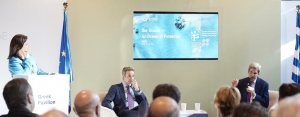
The Prime Minister of the Hellenic Republic and President of New Democracy Party, Mr. Kyriakos Mitsotakis, is pleased to announce the appointment of Dr. Dionysia-Theodora Avgerinopoulou, MP, as Special Envoy for the Ocean. Dr. Avgerinopoulou will be serving as coordinator of the 9th Our Ocean Conference, scheduled to take place in Athens, Greece, from April 15th to 17th, 2024.
“Our Ocean Conference”, which was first organized in 2014, is an initiative by the U.S. Department of State and the Secretary John Kerry. The 9th Our Ocean Conference (OOC-9) is expected to consider ways of addressing the impacts of climate change, over-fishing and pollution of the seas. Within the Conference six (6) Areas of Action will be addressed: Marine Protected Areas; Sustainable blue economy; Climate-ocean nexus; Maritime security; Sustainable fisheries; Marine pollution, while Greece will underscore four horizontal elements cutting across the six areas of action of the Conference: (i) sustainable tourism in coastal areas and islands, (ii) green shipping, (iii) reduction of marine plastic and microplastic pollution, (iv) the green transition in the Mediterranean.

Dr. Dionysia-Theodora Avgerinopoulou, Member of the Parliament, Chair of the Special Permanent Committee on Environmental Protection and the Subcommittee on the Water Resources, has also served as Chair of Water of the Energy and Environment Committee of the International Chamber of Commerce; Chair of the Circle of the Mediterranean Parliamentarians on Sustainable Development; Vice-Chair of the Steering Committee of the Global Water Partnership Organization; and Vice-Chair of the Mediterranean Commission of Sustainable Development of UNEP/MAP. She has also been presented with the “Green Star” Award by UNEP/OCHA. Dr. Avgerinopoulou holds a Doctorate Degree in International Environmental Law, focusing on the protection of the marine environment and climate change.


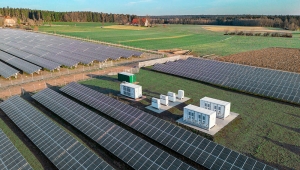
A study by Frontier Economics - commissioned by Fluence, BayWa r.e., ECO STOR, enspired, and Kyon Energy - provides valuable insights for advancing the energy transition in Germany. The new analysis underlines the pressing need for the electricity storage strategy recently put forth by the Federal Ministry of Economics and urges its prompt completion and implementation.

- By 2030, the volume of battery-based energy storage in Germany is expected to increase fortyfold reaching 57 GWh with a connected capacity of 15 GW.

- Battery storage can generate €12 billion in added economic value and reduce the cost of electricity for end-customers.

- With the deployment of storage, Germany can avoid the need to build an additional 9 GW of new gas-fired power plants by 2030, reducing CO2 emissions by up to 6.2 million tonnes in 2030.

Storage is crucial to the advancement of the energy transition

The recognition of energy storage’s role in power systems will increase significantly in the coming years. The analyses conducted by Frontier Economics show that the capacity of storage deployed in Germany will rise to 15 GW / 57 GWh by 2030, if a supportive policy framework is in place. This means a forty-fold increase compared to today.

By 2050, the capacity of large-scale battery-based storage systems in Germany can reach 60 GW / 271 GWh. This increase is driven by the growing demand for flexibility services in the electricity system and falling costs of storage.

Dr. Christoph Gatzen, Director at Frontier Economics, sees the study results as clear indicators for the future role of storage in Germany: “Large-scale battery storage is critical for the energy transition in Germany. Without the flexibility provided by storage, the country will face higher economic costs caused by increasing gas imports and expensive curtailment of renewable generation.”

The deployment of storage is expected to follow a growth trajectory similar to the one photovoltaic (PV) technology experienced in recent years, both in terms of cost degression and the expansion rate. However, the deployment of storage is purely market-driven, as new projects can be built and operated economically without government funding.

Storage has the potential to generate at least €12 billion in added economic value

Frontier Economics estimates that using storage to shift the availability of electricity from times of surplus generation to times of electricity shortages can generate a (macro)economic value of around €12 billion by 2050. This value is estimated based on the savings from the wholesale markets alone and will increase further when additional benefits of storage, such as system services, decreased CO2emissions, and participation in intraday markets, are taken into consideration.

According to the study, the deployment of large-scale storage systems in Germany has the potential to limit CO2 emissions by 6.2 million tonnes by 2030 and by approx. 7.9 million tonnes in 2040 compared to an electricity system which uses gas-fired power plants instead of storage.

Furthermore, storage participation in the wholesale market will lower wholesale electricity price by €1/MWh on average between 2030 and 2050 compared to a scenario where no energy storage is built. If no energy storage is built and the missing capacity is not replaced by additional new gas plants, the wholesale prices would rise by 4€/MWh.

Storage can significantly reduce the need for investment in gas-fired power plants

The forecasted deployment of energy storage systems will further ease pressure to invest in new gas fired power plants. According to the study, Germany needs to develop approx. 26 GW of new gas-fired power plants by 2030. However, without the deployment of storage as forecasted in the model, additional 9 GW of new gas power plants will be needed.

The modelling by Frontier Economics concluded that although storage cannot replace the construction of gas power plants entirely, it will reduce significantly the investment required compared to an increased build out and operation by 2030.

Considering the current budget crisis and the shortage of financing required for hydrogen-ready gas power plants, Dr. Christoph Gatzen stated: "Grid-scale storage systems can be built without government funding and can reduce the need for construction of new hydrogen-ready gas power plants as well as their fuel usage. Ensuring investment security for storage and green generation assets through the introduction of a clear and reliable regulatory framework should be a priority for policymakers. We expect the demand for electricity and peak load requirements in Germany to increase significantly in the coming years. There is an urgent need for new large-scale storage systems and other generation assets in addition to the expansion of renewable energies for ensuring security of supply.”

Industry expectations from policymakers

The initiators of the Frontier Economics’ study call on policymakers to ensure investment security for the development of new large-scale battery-based energy storage systems.

Bureaucratic and regulatory barriers in Germany, such as complex approval processes for new storage projects, should be reduced. All markets for energy trading, capacity, and ancillary services should be market-based and open to all technologies, including storage.

The Federal Government should meet the requirements set by the European Commission in the current reform of the European Electricity Market and set indicative storage targets for Germany as quickly as possible. Building on this, the Federal Government should present an expansion strategy for energy storage in Germany. With the recent publication of the electricity storage strategy, the Federal Government has taken the first step that must now be translated into concrete legislative proposals without delay.

About the study

The study on the value of large-scale battery-based energy storage in the power system in Germany was developed by Frontier Economics and commissioned by Fluence Energy GmbH, BayWa r.e. AG, ECO STOR GmbH, enspired GmbH and Kyon Energy Solutions GmbH. The study used the modelling of the European Electricity Market with Frontier's Combined Investment and Dispatch Model in three different scenarios: (1) a reference modelling in which the endogenous expansion of batteries and gas-fired power plant is implemented in the model, and two simulation variants in which the expansion of energy storage is not possible in Germany, and the capacity replacement of missing energy storage by the endogenous expansion of gas-fired power plant is permitted (2) or not permitted (3).


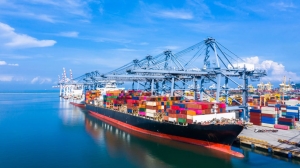
Following the serious attacks on ships, mainly - but not only - container ships, in the Red Sea by the Houthi movement, shipping lines decided to redirect their ships around the Cape of Good Hope in order to avoid the operators risks of attacks to both vessel and crew. With these attacks the rebels are seriously hampering the traffic through the Suez Canal which is a strategic waterway and the fastest shipping route between Asia and Europe. The rerouting adds another 3,000-3,500 nautical miles (6,000km) to this route and can make the voyage Asia- Europe 8 to 15 days longer, depending on the shipping segment.

The European Sea Ports Organisation (ESPO) fully shares the safety concerns of the shipping lines and the need to protect the crews and avoid any risk of attack on vessels. Europe’s ports underline their strong concerns about this escalating situation, which is also causing important disruptions in the supply chain and risks to hamper the just in time deliveries to certain industries in the short run. Ports moreover see container rates going up steeply, and reaching again the extreme high rates that were being applied by shipping lines during COVID.

The situation in the Red Sea jeopardises the passage through the Suez Canal, which is the main maritime artery connecting Asia and Europe. This crisis is once again creating major supply chain disruptions, and is adding an element of uncertainty to an already very difficult geo-economic and geopolitical environment. The longer routes, and possible re-organisation of calls in Europe will be impacting ports, which have to adapt and be flexible in view of keeping the supply chains going. In the case of the Ever Given, we were faced with an unfortunate accident and the solution depended on technical and operational expertise. Now, we are facing a geopolitical hindrance of a major commercial trading route, which makes it more difficult and unpredictable to solve.”, says Zeno D’Agostino, chair of ESPO.

Page 3 of 574

logo

Subscribe to our Newsletter