
Friday, May 01, 2026

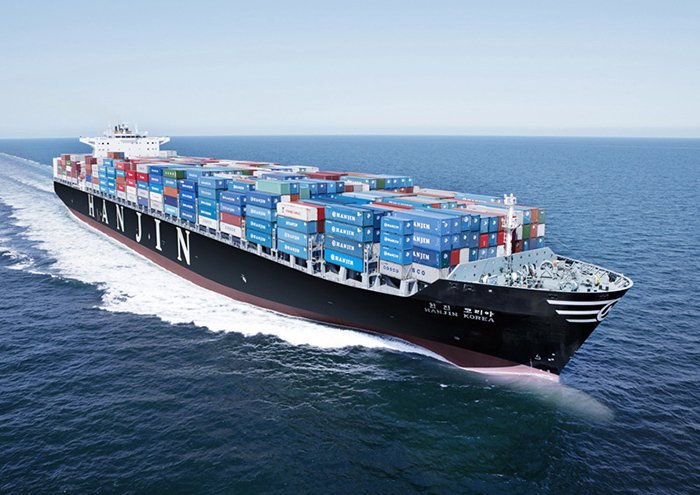
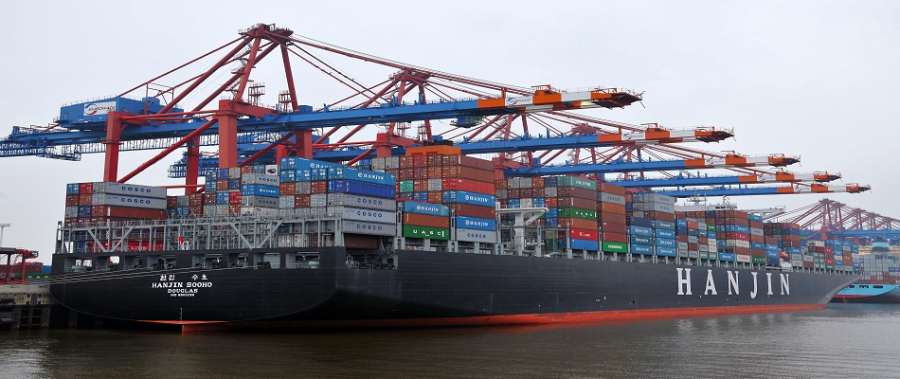
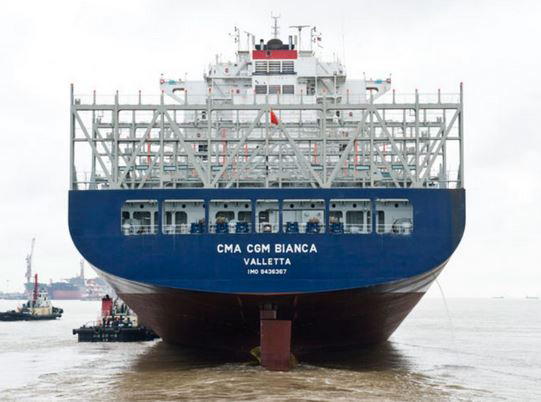
Hanjin Shipping Co.’s vessels are getting stranded at sea after the South Korean container mover filed for court protection, roiling the supply chain of televisions and consumer goods ahead of the holiday season.

LG Electronics Inc. is trying to find new carriers for its goods, the world’s second-largest manufacturer of televisions said. Shipments through Hanjin account for between 15 percent and 20 percent of LG’s deliveries to America. Hyundai Merchant Marine Co., the nation’s second-biggest container line, stepped in saying it plans to add 13 more vessels to ease the squeeze.

Woes at Hanjin Shipping, South Korea’s largest sea container shipping firm and the world’s seventh-biggest with a 2.9 percent market share, are derailing the supply chains of companies that need to send goods well in advance of the year’s biggest shopping season as Thanksgiving and Christmas holidays approach. TVs, cars and sneakers sail about 10 days to reach Los Angeles from Asia while they could take as many as 30 days to Rotterdam. Hanjin Shipping owns 59 of the 132 container and bulk ships in its fleet.

 
For many, a stretching waistline is part of getting older, and in the sixty years since the first commercial containership voyage, the boxship fleet has been expanding significantly

During July 2016, boxship fleet capacity reached a new milestone of 20 million TEU, so it’s a good time to pause to examine the characteristics and drivers of the rapid expansion and the prospects for the future of the fleet.

Getting Chubbier

2016-08-30_upload_6172428_CIM1608Looking back, containership fleet capacity reached the 1m TEU mark back in 1984, and it had doubled to break the 2m TEU barrier before the end of 1992. Since then, the expanding boxship fleet has regularly ticked off the milestones. As the graph shows, 8,000+ TEU vessels first entered the fleet in 1997, and ten years later in 2007 total containership capacity reached 10m TEU, having doubled in six years. By then, 8,000+ TEU vessels alone contributed over 1m TEU of capacity, and also the first 15,000+ TEU vessels had been delivered, marking a new wave of even larger ships as operators sought further economies of scale. By August 2016, the 15,000+ TEU sector accounted for 1.1m TEU, helping drive total containership capacity to the 20m TEU mark.

Bigger Dinners

A key feature of the robust growth of the containership fleet has been consistent upsizing, with larger ships being used over time on most parts of the liner network. In 1990, the average size of units in the fleet stood at 1,270 TEU and this had risen to 1,707 TEU by 2000 and 2,700 TEU by 2010. Today, with behemoth boxships of over 19,000 TEU on the water, the average size of units in the fleet is 3,832 TEU, and the average size of units on order is a massive 8,030 TEU.

Backing The Box

What has driven fleet expansion? Fundamentally it has been the rapid rise in container trade; trade multiplied by an estimated 6-7 times 1990-2015 and fleet capacity expanded by over 11 times in response. Historically, rapid box trade expansion has been propelled by robust growth in manufactures trade, containerization of new cargoes and outsourcing of production to distant locations. Along the way, the fleet was given a helping hand by the KG finance scheme in Germany prior to the financial crisis, and by a rapid rise in shipbuilding capacity in the 2000s.

Slow Food

So, the boxship fleet has grown rapidly, with a CAGR between 1990 and 2015 of 10\%. However, the rate of growth appears to be slowing in 2016. The orderbook looks historically slim at 17\% of the fleet, scrapping has increased substantially, and contracting has slowed sharply. Capacity growth is projected to hit just 2.4\% this year, down from 8.1\% in 2015.

What’s Next On The Menu?

Could the latest milestone turn out in fact to be a turning point? Well, if owners restrict their intake (ordering) and continue to exercise in order to shed excess weight (scrapping), that could be the case. But with containerized transport still at the heart of a globalised world economy, few would bet against the boxship sector putting on a bit more weight yet.

Source: Clarksons
Rahul Kapoor, Drewry Financial Research Services director, discusses the outlook for the shipping industry with Bloomberg's Rishaad Salamat on "Trending Business." (Source: Bloomberg)

http://www.bloomberg.com/news/videos/2016-09-01/drewry-s-kapoor-outlook-for-shipping-industry-is-grim


The words “blank cheque company” and “hunting license” and “optionality” are often grouped together when the conversation comes to investment strategies in beleaguered shipping markets.

So it is with Stellar Acquisition III Inc., a public offering launched by two Greek shipping veterans at a time that pundits suggested that “only established companies can raise money, and then for follow-ons only.” In this particular flavor of offering, also known as Special Purpose Acquisition Corp, or SPAC, the entity raised a top line $ 65m amount (and $76m if the underwriters choose to exercise their over-allotment options in the next few weeks), which can be used in the future to pursue investment opportunities in a specific sector.

An additional $3.8m was added to the company’s coffers, deposited in a trust account, from an investment by the company’s sponsors. Here, this Nasdaq-listed SPAC (with the symbol “STLR”) will set its sights on “international oil and gas logistics, land and maritime oil and gas transportation, terminal and energy storage industries”. Collectively, these segments comprise what’s called “the energy logistics” sector.

Messrs. Akis Tsirigakis and George Syllantavos, the principals of Stellar, have been there before, albeit in a more benign marketplace for energy logistics, with Nautilus Marine Acquisition Corp, a previous SPAC, launched in 2011 that bought a half dozen OSVs in 2013 from Vega Offshore, and ultimately sold them onwards, in 2015, to Dryships.

Previously, the pair launched another successful SPAC that bought drybulk vessels ultimately absorbed into the entity that is now Star Bulk (“SBLK”). Stellar’s ultimate business voyage is not known at the outset, but the composition of its proposed Board of Directors points strongly in the direction of energy assets, but there is also considerable expertise in the drybulk sector- which arguably presents a different visage of energy logistics than those highlighted in the offering documents.    

Unlike traditional equity offerings, the underwriting group, led by New York veterans Maxim Securities, also have considerable skin in the game in the form of a deferral on part of their compensation, subject to completion of an acquisition within the allotted timeframe that could stretch out to early 2018.

A “hunting license” held by a well-seasoned and highly experienced pack of deal pursuers, at a time when many prey are hobbled by too much debt and poor market prospects - against the backdrop of a continued low oil prices and continued drybulk vessel oversupply - will make Stellar a player to watch closely.

seatrade-maritime.com

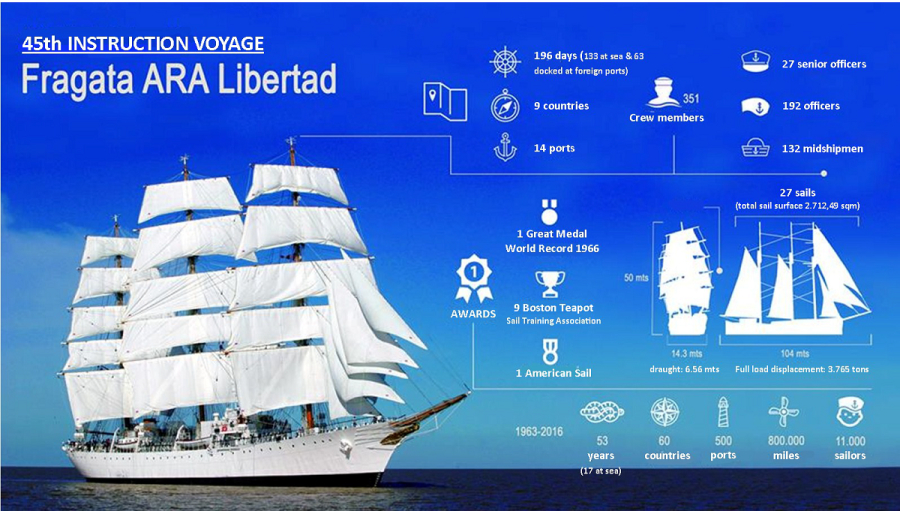
The Argentine Navy training vessel, Frigate “Libertad” will visit Greece as a sign of friendship between both countries, from 3 to 7 September on her 45th instruction voyage.

On the year of the Argentine Republic 200th anniversary of independence, Frigate “Libertad” will be carrying a message of peace and friendship to the world in what has been designated the “Bicentennial Voyage”.

The 196 days long itinerary to 10 countries began last 23rd of April when she departed from Buenos Aires-Argentina. Before arriving in Greece (Piraeus & Hydra) she will have visited Recife (Brazil); Baltimore, Norfolk & New York (USA); Amsterdam (Holland); Boulogne Sur Mer & Brest (France); Liverpool (UK); Dublin (Ireland); Ferrol (Spain); Toulon (France); Citavecchia (Italy). The itinerary will continue with calls in Cádiz (Spain); Río de Janeiro (Brazil) and Montevideo (Uruguay), returning to Buenos Aires on November 5th.

It sails under the command of Captain Ignacio Errecaborde with a 350 crew on board, 20\% of which are women.

She will moor in the Port of Piraeus on the morning of the 3rd of September. The official program includes protocol visits, receptions on board; cultural visits and friendly sport matches between navy cadets of both countries. The Frigate will be open free to visit by the public, daily from 2 to 6pm.

She will depart towards Hydra on the 7th of September, where a tribute will be paid to the Greek-born sailors Samuel Spiro and Nicolas Jorge (Kolmaniatis), who joined and fought in Argentina´s war of independence two centuries ago. A wreath ceremony will take place at the monument to Nicolas Jorge (Kolmaniatis) which is erected in that island´s port, followed by an academic event at the Museum and Historical Archives of Hydra.  

Built in 1956 and commissioned in 1963, Frigate A.R.A. “Libertad” has a length of 103.70 metres and 27 sails. Her figurehead represents the Republic and its rooted sense of liberty. More than 11.000 navy officers have been trained on board. Since 1963, the “Ambassador of the Seas” as she has been designated, has covered over 800.000 nautical miles and visited over 500 ports in 60 countries. In 2008 she toured 

around the world for the fourth time in its history. The last time Frigate A.R.A “Libertad” visited Greece was almost 20 years ago, in 1997.

She has been internationally awarded and has won a number of important trophies, including the Great Medal in 1966; she also set the world record for the fastest North Atlantic crossing –which still stands to this day– covering 2,058 miles from Cape Race (Canada) to the Dublin/Liverpool line in just eight days and 12 hours.


THE GENERAL PUBLIC IS WELCOME TO VISIT

The Frigate will be open free to the public daily

3 to 6 September from 2:00 to 6:00 pm

Piraeus Port, Akti Miaouli, Pireas (entrance from Gate E11)

You can follow live the journey of the Frigate http://www.fragatalibertad.mindef.gob.ar/?page_id=2742

and enjoy a 360º virtual tour inside the vessel http://www.fragatalibertad.mindef.gob.ar/?page_id=2926

Detailed information attached. For any enquiry please contact the Argentine Embassy.

Thursday, 01 September 2016 20:16

Hanjin Shipping on the verge of bankruptcy

With Hanjin Shipping on the verge of bankruptcy, state run Korea Development Bank stated the shipper’s debt stood at $5.5 billion at the end of June (Source: WSJ).

However Hanjin own 63 vessels, worth today $1.7 billion dollars (live and newbuilding contracts). See below for how this is cut for each segment:


Hanjin Shipping Fleet


Vessel Type

Number of Vessels

Total Size

Total Value USDm

BULKER

18

      2,162,700

 $                      306.5

CONTAINER

39

          283,286

 $                  1,394.4

SMALL DRY

1

            10,400

 $                          6.9

TANKER

5

            82,800

 $                        54.2

Grand Total

63


 $                  1,762.0


HMM Fleet


HMM who is rumoured to be interested in the takeover, only owns 36 vessels.


HMM


Vessel Type

Number of Vessels

 Total Size

 Total Value USDm

BULKER

15

      1,985,500

 $                      283.3

CONTAINER

18

          135,898

 $                      624.2

TANKER

3

          402,600

 $                        58.1

Grand Total

36


 $                      965.5


This would bump up the combined fleet value of HMM & Hanjin to $2.7 billion. Even though this sounds a lot, the merged Hanjin & HMM company would only rank 27th in the world in terms of fleet value (COSCOCS coming in 1st with 786 ships worth $20.0 bn).


Container fleets


Hanjin ranks as South Korea’s largest container liner, owning 39 vessels with a total of 283,286TEU worth $1.4 billion. HMM comes in second with 8 container vessels, holding 135,898 TEU, worth $624 million.


Attached a spreadsheet which outlines the total number, size and value of the container alliances as they currently stand, including companies which have recently merged. This gives an idea of which alliances could be affected by the impending bankruptcy and the possible merger.

DNV GL's Maritime Academy Hellas is offering on September 29 & 30 a two day course on Risk Management & Incident Investigation.

This two-day course is designed for shore and ship staff who want to get a better understanding of the principles of risk assessment and how they are related to the tasks of incident investigation.

Participants will learn the step by step approach, starting with hazard identification and working through risk assessment and finally to risk management. Furthermore they will learn why and how to investigate incidents taking safety management principles into consideration.

The course is highly interactive, switching regularly between input sessions using a presentation style and group work where participants will be involved in a variety of different activities (discussing, analyzing, applying, comparing, categorizing, etc.).

Additional two-day courses, one focusing on risk assessment and one focusing on incident investigation are available for those who wish to go deeper into these topics.

We strongly recommend that all interested parties start with this foundation level to have a strong base on which to build their knowledge.

Objectives:

§ To familiarize the participants with the key principles of risk assessment and learn how to implement risk management procedures in a maritime organization
§ To understand the main aspects of incident investigation and root cause analysis


Focus points:

§ Understanding the Concept of Risk
§  Requirements for Risk Management
§  The Risk Management process
§  The “Just Culture” Approach
§  Application of Risk Management
§  Requirements for Incident Investigation
§  DNV GL Loss Causation Model and M-SCAT
§ Investigation in Practice
§ Learning from Experience
 

Entry requirements: Previous knowledge of codes, best practice guidance or standards applied in the shipping industry e.g. ISM Code and/or TMSA, OVMSA, OHSAS 18001, ISO 9001, ISO 14001

Duration: 2 days

Who should attend:  Shore and ship staff involved in implementation, maintenance and continuous improvement of a management system, e.g. safety, health, security, environmental and quality managers, operations managers, designated persons, company security officers, superintendents, masters, ship officers and engineers.

                                   Others: Personnel of maritime administrations, insurance firms, consultants, engineers.

Teaching Method: Lecture, Discussion, Interaction among participants, case exercises.

Language: Lecture in Greek/English, Material in English

Date: 29 & 30 September 2016
Location: DNV GL’s Piraeus office, 5, Aitolikou street, Piraeus
Time Schedule: 09.30hrs – 17.00hrs
Trainer: Mr. Evangelos Marangakis
Enrolments until: September 22nd  

E-mail This email address is being protected from spambots. You need JavaScript enabled to view it. 

Keeping up with our successful Posidonia 2016 initiative, our dedicated team will be in SMM, from 6-9 September 2016 at Hamburg Messe and Congress, in order to arrange video interviews with industry experts who will have to answer a few questions on a range of hot topics.

Stay tuned to SAFETY4SEA's Twitter account & Facebook Page for around the clock updates of what's being said during the interviews and exclusive behind the scenes photos!

Monday, 29 August 2016 12:44

New Ideas for the Shipping Industry

Record Attendance at the International Shipping Conference

“Let’s meet in Hamburg!” The International Association of Maritime Economists (IAME) held its annual conference in Germany for the first time, hosting a record number of 276 guests from all over the world.

“The shipping crisis of the last seven years has made only too clear” explained Prof. Dr. Orestis Schinas from HSBA Hamburg School of Business Administration, “that the business models of the past are not sufficient to support the shipping industry of the future.” Today, it is not only about transporting something from A to B. Successful business models must answer the complex challenges faced, considering the significant changes that have taken place in the market. Up until 2008, German banks financed approximately 60\% of all shipping projects. Today, China aims to bridge the gap, while German and European banks have largely withdrawn from shipping finance. “’Go alone’ concepts no longer work” is Schinas’ conclusion. “We can no longer have purely German or Greek mentality in our shipping companies. Shipping companies must become increasingly international, both in terms of cooperation as well as in terms of their staff.” Additionally, the digitalisation of processes has become a pressing need. Due to the expense of satellite transmission, many ships are not yet equipped with the necessary communication equipment on board, but regulatory and operational needs dictate the exchange of important documentation with the port authorities and terminals before arrival. The need to provide environmentally conscious transportation is also a major consideration. Professor Michele Acciaro from the Kühne Logistics University (KLU) put it very clearly: “Companies in the maritime sector must innovate in order to survive.” That is not just a reference to the shipping companies themselves, but also to the terminal operators, port authorities and freight forwarding agencies that work with hinterland freight transport. One KLU study showed that the many sectors of the industry are not only willing to innovate, but have already started. “The only thing we are lacking” according to Acciaro, “is the development of a clear corporate strategy to which our innovations can be aligned.”

According to Schinas, “shipping is going through a substantial change”. The conference, organised in collaboration with HSBA and KLU, was designed to present this change meaningfully for maritime industries. The almost 200 presentations discussed matters of port policies, hinterland logistics, cruise shipping, financing opportunities, modern management methods, environmentally friendly shipping and new technologies on board. To summarise his impressions of the conference, Commerce Minister Frank Horch said “The port of Hamburg is in a process of constant change – we are ready to take on the newest developments in the shipping industry. The IAME annual conference provides us with important motivation to further develop shipping and the Hamburg harbour.”

About the IAME International Association of Maritime Economists:

Founded in 1990, the International Association of Maritime Economists (IAME) has developed into the most prominent global platform for shipping industry experts. The most important event of the Association’s year is the annual conference, which brings shipping industry specialists from all over the world together to exchange information and the latest developments in maritime research. This year, the conference took place in Hamburg for the first time. The focus of the conference was “The maritime transport of the future: the role of innovation uptake, sustainability and availability of shipping finance”. The four day event took place at the Kühne Logistics University and HSBA Hamburg School of Business Administration campuses, and included lectures and workshops as well as an interesting side programme.

For further information: www.IAME2016.org


About HSBA Hamburg School of Business Administration:

HSBA Hamburg School of Business Administration is the university for commerce in Hamburg. Founded in 2004 by the Hamburg Chamber of Commerce, it collaborates today with over 250 companies. As an accredited university, if offers economic and corporate courses in a dual track form, allowing more than 850 students to study the theory while working and applying their knowledge in practice. HSBA is characterised by its transmission of high-level practice oriented content and excellent study conditions, all guided by the values of the honourable merchant. HSBA also has the Dr Jürgen Meyer Foundation Chair of Commercial Ethics and Sustainability. The range of courses is rounded out with high quality further education for specialists and management as well as application oriented research and consulting.


About the KLU Kühne Logistics University:

Kühne Logistics University – Wissenschaftliche Hochschule für Logistik und Unternehmensführung (Technical University for Logistics and Management – KLU) is a dynamic developing private university. This independent state-accredited university is funded by the non-profit Kühne Foundation, and has been located in the Hamburg HafenCity since 2010. The programme of studies includes a Bachelor of Science in Management, two Masters of Science, in Global Logistics, and in Management, a Ph.D. programme for doctoral students and a part-time Executive MBA in Leadership & Logistics. The courses are conducted in English. The courses on offer also include open and company specific further education programmes for specialists and management. Lecturers and students come from all over the world. With lecturers and researchers high competent in the practical orientation of logistics and management, KLU is unique in the world.


Whilst it is self-evident that the mainstay cargoes of oil tankers are crude and refined petroleum products they are not the only cargo that these tankers can carry.

Indeed, a number of product tankers, with certain characteristics, can carry edible oils (also called veg oils) as well as oil products, meaning that veg oil trade should not be overlooked when considering potential sources of product tanker demand.

A Sprouting Trade

Veg oils is the ‘catch-all’ term used to describe the oils derived from vegetables and other plant-based materials. Veg oils are typically used in cooking, biofuels and for other industrial uses. Palm and soy oils are the major types of edible oils, together accounting for around 75\% of international seaborne veg oil trade in 2015, which, on the basis of customs statistics, stood at an estimated 75mt(equivalent in size to around 8\% of refined oil products trade). The remainder of veg oil trade is accounted for by commodities such as sunflower and olive oils.


Veg oil trade is dominated by a few major exporters, with the top two suppliers, Indonesia and Malaysia, who are estimated to account for around 60\% of global seaborne exports last year. Meanwhile, the top two importer nations in 2015 were India and China, who imported an estimated 15mt and 9mt respectively, whilst EU imports stood at an estimated 12mt.

Choosing Your Tools

Due to the potentially hazardous nature of veg oils, IMO regulations indicate that they should only be carried in IMO II graded tankers, although an exemption has been granted for IMO III graded tankers which meet certain specifications. Given this, many vessels classified as chemical and product tankers can transport veg oils. Interestingly, the proportion of the fleet of all tankers over 10,000 dwt which are IMO II or III graded has increased from 10\% of tonnage in the fleet at the end of 2005 to 17\% at the start of August 2016 (93m dwt), partly supported by increased popularity of some designs of product tankers with IMO II graded tanks in recent years.

Harvesting The Rewards

For some product tankers, while there are operational concerns with regards to switching between clean petroleum products (CPP) and veg oils, the ability to carry veg oils enables vessels to pick up extra cargoes and reduce ballast time. For example, one such theoretical voyage for an MR product tanker comprises a laden leg from Netherlands to West Africa carrying CPP, followed by a laden leg from Argentina to India carrying soy oil, followed by third leg carrying palm oil from Malaysia back to Europe. The estimated proportion of time spent ballasting on this voyage is around 20\%, compared to 45\% on a typical US Gulf-UKC MR round voyage. In 1H 2016, guideline earnings on this theoretical route were around 40\% higher than estimated guideline clean MR average spot earnings.

So, edible oils trade has grown steadily over the last decade, contributing to product tanker demand. In spite of reported disruptions from El Niño, veg oils trade appears to have grown further in Q1 2016 and although edible oils form a relatively small part of product tanker trade, they can still be an important cargo.
Source: Clarksons

Page 76 of 354

logo

Subscribe to our Newsletter