



Nakilat Damen delivers 5 vessels for New Port Project
 |
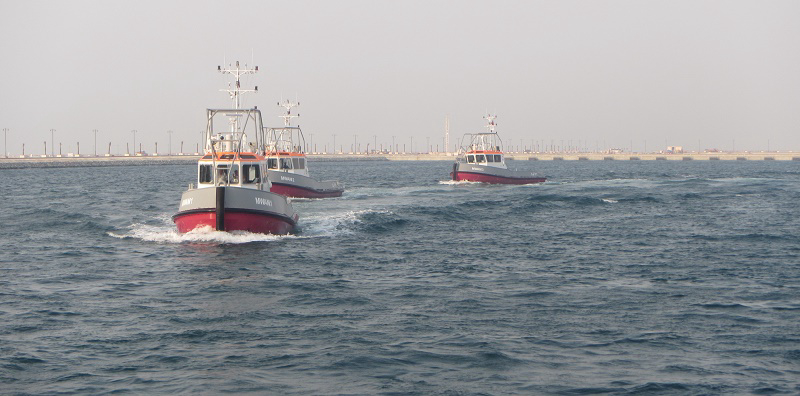
Built entirely at the Erhama Bin Jaber Al Jalahma Shipyard in Ras Laffan Industrial City, the vessels were launched and delivered to NPP after successful completion of their sea trials. Measuring 15.4 meters long with a beam of 5 meters and a speed of 25 knots, the two Damen Stan Pilot 1505 pilot boats Um Alhoul 1 and Um Alhoul 2 will be used to carry out pilot duties and the transportation of personnel. The three Damen Stan Tug 1606 mooring boats, Mwani 1, Mwani 2 and Mwani 3, measure 16.7 meters long with a beam of 5.9 meters and have a bollard pull capacity of 13.7 tonnes. These vessels will be used to assist ships entering and departing the port.
Eng. Abdullah Al-Sulaiti Nakilat Managing Director, said: “We are pleased to be delivering the first five vessels for NPP. This project is a reflection of hard work incorporated with vision that has worked well on all levels: successful new builds for a local client at Erhama Bin Jaber Al Jalahma Shipyard, based on a proven design. The cooperation between Nakilat and NPP is an excellent example of how local organizations are working together to support the development and growth of our local economy, that will in turn contribute to the achievements of Qatar National vision 2030.”
Capt. Abdulla AL-KHANJI, MWANI - CEO & New Port Project - General Supervisor said:
“Hamad Port is being developed as a world-class facility as befits the State of Qatar. The delivery of these vessels is an important milestone in the delivery of the project. The completion of these marine units represent the culmination of a successful collaboration between NPP and NDSQ. To have vessels of such outstanding quality manufactured in Qatar, for use in Hamad Port is testament to the professionalism of all those involved.”
Qatar Gas Transport Comp.
Diana Shipping Inc. Announces that it has Engaged Financial Advisors
In connection with these negotiations, the Company has reached an agreement in principle with certain lenders, including the Company’s largest lender, for terms that include, among other provisions, the deferral of amortization payments and amending financial covenants. This agreement in principle is subject to the Company reaching similar deferral and covenant terms with its other lenders. In support of its negotiations with lenders, the Company is currently deferring certain amortization payments under its credit facilities. While the Company is in ongoing negotiations with its lenders, it has not obtained formal waivers from any lender regarding payment deferrals or amendments to financial covenants.
About the Company
Diana Shipping Inc. is a global provider of shipping transportation services through its ownership of dry bulk vessels. The Company’s vessels are employed primarily on medium to long-term time charters and transport a range of dry bulk cargoes, including such commodities as iron ore, coal, grain and other materials along worldwide shipping routes.
Diana Shipping Inc
Hapag-Lloyd CEO says planned UASC merger benefits to show in 2017
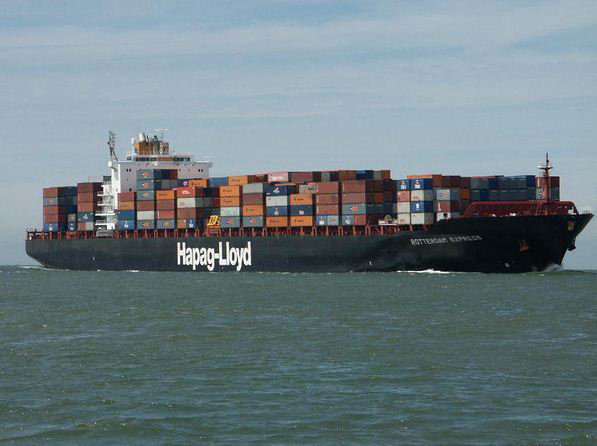
The company, which swung into the red in the first half of this year as tumbling freight rates hurt its business, signed a binding agreement with United Arab Shipping Company (UASC) in July to form the world's fifth largest shipping company by the end of 2016.
The merger will give it greater scale as it seeks to weather a downturn in global shipping.
"We plan to realize the full synergies from 2019 and in that way to lower our costs permanently," Chief Executive Rolf Habben Jansen told a shareholders meeting on Friday, held to decide whether to approve a related capital increase.
Hapag-Lloyd will still face merger costs next year. It estimates total merger costs at around 150 million euros ($169 mln) and has said they will be booked in its 2016 and 2017 balance sheets.
Some of the controlling shareholders have committed to backstop a cash capital increase of $400 million planned through a rights issue within six months of the deal closing.
The company hopes this will be achieved by the end of this year, depending on approval from around a dozen or so cartel authorities.
Habben Jansen also affirmed significantly lower earnings before interest and taxes for 2016. Freight rates fell 20 percent in the first six months of this year and the CEO has said they will take between 18 and 24 months to stabilize. [nL8N1AR1BI]
UASC shareholders backed the merger, which will create a group with an estimated value of 7 to 8 billion euros, in June with a relative valuation of the two businesses at 72 percent for Hapag-Lloyd's shareholders and 28 percent for UASC's shareholders.
Through the deal, Hapag-Lloyd gains access to bigger ships on the important Asia to Europe trade route. UASC for its part gets wider access to trans-Atlantic and trans-Pacific loops, where Hapag-Lloyd is strong.
www.reuters.com
Cosco Shipping Ports tipped to bid for new Algeciras terminal
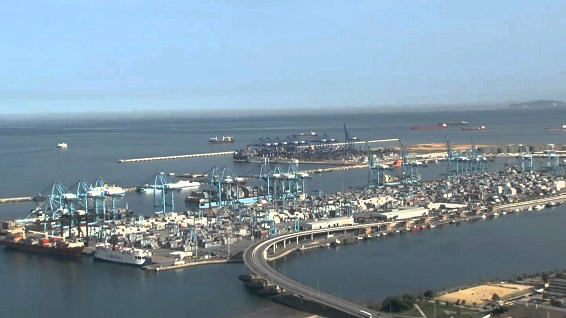
The Algeciras Port Authority has set a Nov. 30 deadline for companies to submit bids for a 50-year concession for a public or dedicated terminal that must include “automated solutions.”
Cosco Shipping Ports, which combines the port units of the recently merged Chinese ocean carriers Cosco and China Shipping Group, two weeks ago sealed the acquisition of a 51 percent stake in the Greek port of Piraeus, where it already handles about 3 million 20-foot-equivalent units annually.
The Hong Kong-based company’s drive to extend its presence in the fast-growing Mediterranean transshipment market suffered a setback, however, in April, when it lost out to a consortium led by Eurogate, the German terminal operator, in the bid for a 25-year contract to operate the Limassol Container Terminal in Cyprus.
The Algeciras tender is expected to attract widespread interest as the Spanish port is a major success story, posting the fastest growth in the world’s top 30 container ports in the first half of the year, with traffic up 13.1 percent to 2.35 million TEUs in a global market that is expected to grow by just 0.3 percent in 2016, according to industry analyst Alphaliner.
The third terminal, to be built next to the intermodal freight railway terminal, will pose a major challenge to the existing terminals operated by Maersk’s port arm APM Terminals and TTIA Algeciras, which handled 4.5 million TEUs in 2015, the second-highest volume in Spain after Valencia.
APM Terminals has an agreement with Maersk Line under which the carrier has dedicated capacity in Algeciras — and at its new automated terminal in Rotterdam and a terminal in Tangier, Morocco — and is responsible for any financial risks.
Piraeus is one of the most successful operations in Cosco’s domestic and global portfolio, with traffic surging by 15.2 percent in July to 323,300 TEUs for a seven-month increase of 14.2 percent to just more than 2 million TEUs.
Cosco is also expanding its presence in northern Europe, acquiring a 35 percent stake in Rotterdam’s Euromax terminal in May from Hong Kong’s Hutchison Port Holdings for 125.4 million euros ($141.7 million).
The company also operates terminals in the Belgian ports of Antwerp, which handled 1.2 million TEUs in the first seven months of the year, and Zeebrugge, where traffic topped 200,000 TEUs.
http://www.joc.com/
New Silk Road Route Across Russia Slashes Costs of Chinese Freight
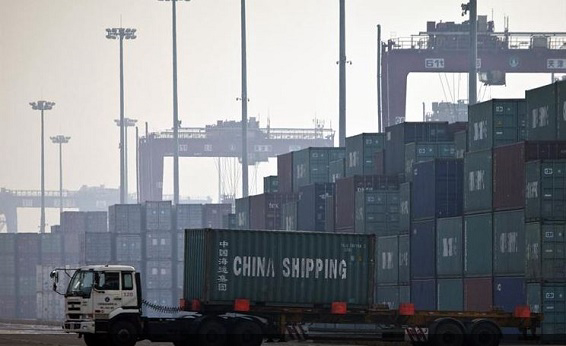
BEIJING (Sputnik) – A cargo train left Guangzhou to travel some 7,150 miles to reach the logistics center in the Vorsino industrial park located near Kaluga in two weeks, the Xinhua news agency reported. The new route is the latest one launched to boost trade relations with the countries situated along the Silk Road trade corridor, the media outlet added. According to the news service, the route between Guangzhou and Vorsino will save 30 days if to compare with shipping and some 80 percent of cost if to compare with air transportation. In 2013, Chinese President Xi Jinping proposed the construction of a new Silk Road to facilitate the direct flow of goods from the Pacific Ocean to the Baltic Sea. The project is intended to connect China with Europe and strengthen economic ties between Asia, Europe and the Gulf states.
China Cosco Suffers Record Loss Even as Dry Bulk Shipping Stabilizes
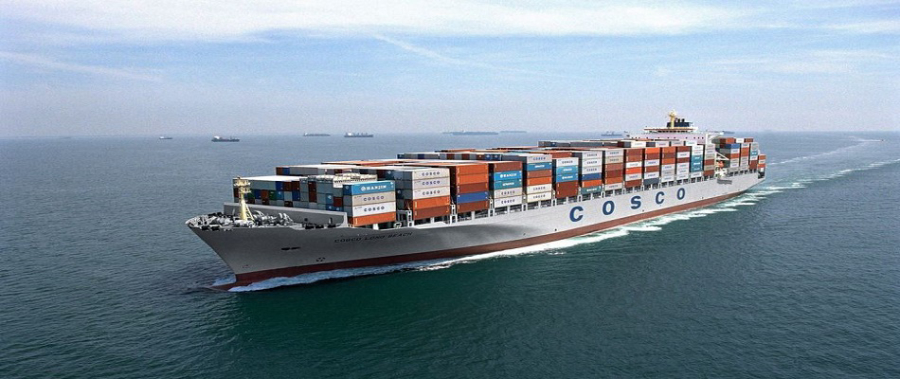
The Hong Kong-listed shipping giant, formerly known as China Ocean Shipping Co. (Cosco), reported net loss of 7.2 billion yuan (US$1.1 billion) for the first six months of 2016, compared to profits of 1.97 billion of profits a year ago.
The state-owned company blamed the loss on lower demand for container shipping services and one-time charges related to the Feb. merger between Cosco and China Shipping Group. Of the total deficit, 2.4 billion yuan were related to sales of subsidiaries—at a loss—in connection with the consolidation.
The massive six-month loss is the biggest of any listed Chinese company since A-shares were introduced in 1990.
Industry-Wide Slump
The entire dry bulk shipping industry had been mired in a years-long slump.
The dry bulk market has been experiencing disequilibrium between supply and demand. Expecting continued emerging markets growth—especially from China—a large number of ships were ordered prior to the 2008 global financial crisis.
Due to the high backlog and slow shipbuilding process, by the time the ships were finally delivered into service years later, the Chinese economy had slowed considerably and its demand for iron ore, coal, and lumber waned. The excessive supply of ship capacity and lower imports from China drove down price and volume of global shipping.
Market Rebalancing
In recent months, the dry bulk market has rebounded somewhat and while experts offer divergent views, the consensus is that the market has been stabilizing on a convergence of supply and demand.
 |
Golden Destiny Market Report Week 34/16
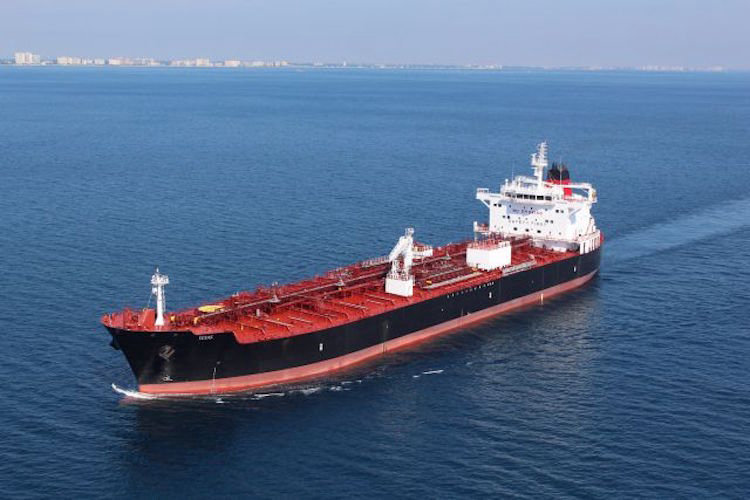
- Weekly S&P Market Report (Week 34 Report No 34.16)Special Edition Weekly SP Market Trends Week ending August 26 2016 (Week 34 Report No 34.16)
- Special Edition: S&P Market Trends (Secondhand- Demolition- Newbuilding Market), describing the pace of activity up to date.Weekly SP Market Report Week ending August 26 2016 (Week 34 Report No 34.16)
Mexico’s July Crude Output Down, Exports Up Month-on-Month
However, exports were up by 48K b/d from June but remained 41K b/d below last year. Exports to the Americas fell by 42K b/d month-on-month to 578K b/d, the lowest since January and a 213K b/d decline from July 2015. Long-haul shipments to Europe and Asia were up by 49K b/d and 42K b/d on the month respectively. Compared to July 2015, volumes to Europe were marginally lower, but those to Asia were up by 186K b/d. Meanwhile, the country imported a combined 756K b/d of gasoline and diesel in July, 86K b/d more than the previous year and 66K b/d more than June.
Dysfunctional OPEC loses battle to US shale producers

“OPEC agrees only on one thing and that is to continue to disagree,” Fadel Gheit, said by phone on August 23. “Saudi Arabia and Iran are basically in a proxy war and have been in quite a long time.”
On August 17, seven people were reportedly killed in Saudi Arabia when a missile fired from Yemen struck a commercial district in the city of Najran. Gheit said the faction in Yemen is supported by Iran. “That is a sign of escalation, not de-escalation and I don’t see any credibility to the reports that suggest that Iran is going to change course and play nice with Saudi Arabia. To the contrary, I think Iran has been emboldened by the fact that it is actually housing Russian bombers that basically established a base in Iran,” he said, adding that Russia and Iran are on one side supporting Syrian President Bashar al-Assad and there is no way that Saudi Arabia wants to let off the pressure on Tehran and Moscow.
Commenting on Russian Energy Minister Alexander Novak’s statement on August 15 that Russia is consulting with Saudi Arabia on freezing output levels if needed, Gheit said, they are “going through the motions”. “The degree of mistrust has never been greater among OPEC producers and especially Iran and then outside the OPEC producers is Russia. Russia does not trust Saudi Arabia and Saudi Arabia doesn’t trust Russia,” the Oppenheimer energy expert told New Europe, adding that any agreement “is dead on arrival”.
Goldman Sachs warned on August 23 that a production freeze would also likely prove self-defeating if it succeeded in supporting oil prices further, with the US oilrig count up 28\% since May.
Gheit predicted that oil prices would be at around $50 per barrel next year. The shale producers in the US are encouraged by the drilling results and adding rigs every week now, he said, adding that companies cannot do that unless or until they are absolutely sure that the new ones that they drill will generate a return.
“That means the longer OPEC plays this game, the more and more shale production will come to market because time and technology are against OPEC,” Gheit said, adding that US companies have to depend on themselves by lowering cost and improving operations. “Companies that could not break even two years ago, are now well above the break even point, so that’s why they are putting more money back in the ground by operating more rigs,” he said.
According to Gheit, OPEC needs an oil price between $70-$80 in order to avoid bankruptcies. “They have tremendous social spending that they have to do otherwise they can risk regime changes,” he said. Iran is in a much stronger position compared to the rest of the OPEC countries. “They were basically in the penalty box for several years and now that has ended and now they can see flexibility and legroom to conduct their business,” he said, adding that Iran is trying to maximize production.
By Kostis Geropoulos
Energy & Russian Affairs Editor, New Europe
www.neweurope.eu
Asia’s Biggest Container Shipper Posts Loss After China Merger
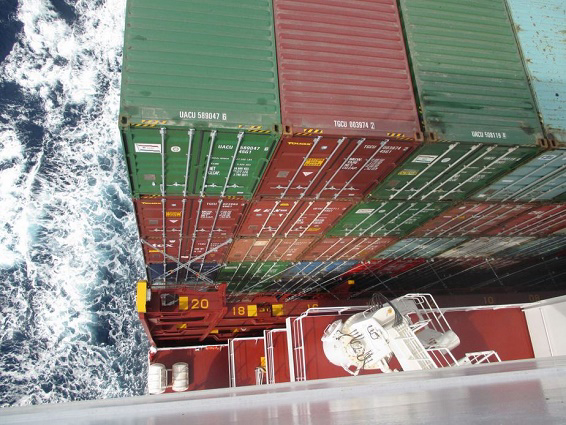
The net loss was 7.21 billion yuan ($1.1 billion) in the six months to June, compared with a restated 1.97 billion yuan profit a year earlier, the Tianjin-based company said in a statement to the Shanghai stock exchange Thursday. Sales dropped 8.5 percent to 30.9 billion yuan. It’s the first earnings report since the merger.
China last year merged China Ocean Shipping Group and China Shipping Group to form China Cosco Shipping Corp. as part of the government’s efforts to shrink industries plagued by overcapacity while creating globally competitive businesses. China Cosco Holdings is a subsidiary of China Cosco Shipping.
Profit at container lines have declined or companies have posted losses amid a slump in global freight rates. The industry has been trying to consolidate through mergers as cargo charges stayed depressed in the past five years. A.P. Moeller-Maersk A/S, owner of the world’s biggest container shipping company, said earlier this month that it’s conducting a review that may lead to the breakup of the 112-year conglomerate.
Falling Rates
Following the merger of the Chinese shipping groups, China Cosco Holdings is responsible for the container shipping and terminal operations. Bulk shipping operations have been transferred to its parent China Cosco Shipping.
Spot prices to move a 20-foot container to Europe from Asia fell to $932 in the week ended July 1, from $1,149 in the week ended Jan. 1, according to the Shanghai Shipping Exchange. Levies to the U.S. West Coast dropped to $1,166 per 40-foot box, from $1,518. The two routes are the busiest trade lanes.
CMA CGM SA, the world’s third-biggest container shipping company, bought Singapore’s Neptune Orient Lines Ltd. for S$3.38 billion ($2.5 billion) this year in the industry’s biggest acquisition since 2005. Hapag-Lloyd AG and United Arab Shipping Co. said in June they agreed to merge to become the fifth-largest container shipping company. That comes after the German company bought the container business from Chilean rival Cia. Sud Americana de Vapores SA in 2014.
©2016 Bloomberg L.P.

Powered by  © Μaritimes 2019