



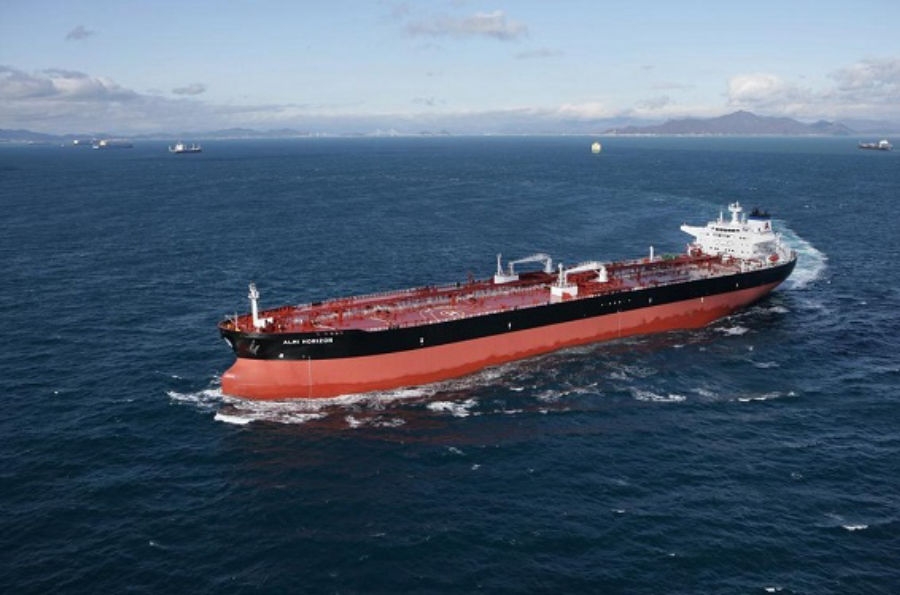
Indeed, a number of product tankers, with certain characteristics, can carry edible oils (also called veg oils) as well as oil products, meaning that veg oil trade should not be overlooked when considering potential sources of product tanker demand.
A Sprouting Trade
Veg oils is the ‘catch-all’ term used to describe the oils derived from vegetables and other plant-based materials. Veg oils are typically used in cooking, biofuels and for other industrial uses. Palm and soy oils are the major types of edible oils, together accounting for around 75\% of international seaborne veg oil trade in 2015, which, on the basis of customs statistics, stood at an estimated 75mt(equivalent in size to around 8\% of refined oil products trade). The remainder of veg oil trade is accounted for by commodities such as sunflower and olive oils.
Veg oil trade is dominated by a few major exporters, with the top two suppliers, Indonesia and Malaysia, who are estimated to account for around 60\% of global seaborne exports last year. Meanwhile, the top two importer nations in 2015 were India and China, who imported an estimated 15mt and 9mt respectively, whilst EU imports stood at an estimated 12mt.
Choosing Your Tools
Due to the potentially hazardous nature of veg oils, IMO regulations indicate that they should only be carried in IMO II graded tankers, although an exemption has been granted for IMO III graded tankers which meet certain specifications. Given this, many vessels classified as chemical and product tankers can transport veg oils. Interestingly, the proportion of the fleet of all tankers over 10,000 dwt which are IMO II or III graded has increased from 10\% of tonnage in the fleet at the end of 2005 to 17\% at the start of August 2016 (93m dwt), partly supported by increased popularity of some designs of product tankers with IMO II graded tanks in recent years.
Harvesting The Rewards
For some product tankers, while there are operational concerns with regards to switching between clean petroleum products (CPP) and veg oils, the ability to carry veg oils enables vessels to pick up extra cargoes and reduce ballast time. For example, one such theoretical voyage for an MR product tanker comprises a laden leg from Netherlands to West Africa carrying CPP, followed by a laden leg from Argentina to India carrying soy oil, followed by third leg carrying palm oil from Malaysia back to Europe. The estimated proportion of time spent ballasting on this voyage is around 20\%, compared to 45\% on a typical US Gulf-UKC MR round voyage. In 1H 2016, guideline earnings on this theoretical route were around 40\% higher than estimated guideline clean MR average spot earnings.
So, edible oils trade has grown steadily over the last decade, contributing to product tanker demand. In spite of reported disruptions from El Niño, veg oils trade appears to have grown further in Q1 2016 and although edible oils form a relatively small part of product tanker trade, they can still be an important cargo.
Source: Clarksons

