


SMM 2016: The Who’s Who of the Maritime World Meets in Hamburg
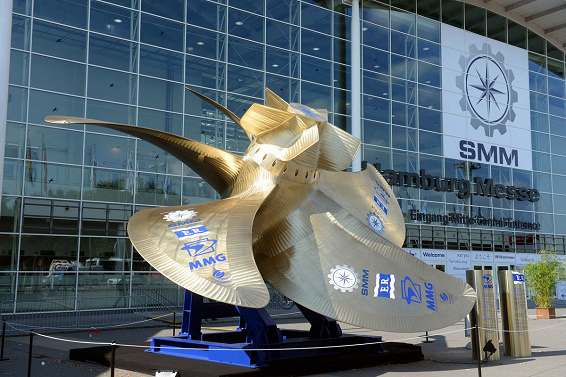
Two thirds of exhibiting companies are from abroad - Successful expansion: Additional 3,500 m2 hall featuring eco-friendly propulsion is fully booked
The leading fair has a leitmotif: Digitalisation in the shipping industry is the main topic of this year's SMM. Smart Shipping – comprehensive network integration of ships and smart use of data to enhance efficiency – is a common theme throughout the exhibition halls and expert discussions. "Digitalisation is a key factor for the future success of this industry," says Bernd Aufderheide, President and CEO of Hamburg Messe und Congress.
The Maritime Future Summit at SMM 2016 marks the first time the fair hosts a special conference on digitalisation and smart shipping. Digitalisation is also at the heart of the three other SMM conferences, which focus on environment protection, maritime security and defence, and the offshore sector, respectively. In addition, SMM visitors can follow the "Digital Route" to study digitalisation-related products and services offered by the exhibitors.
With more than 2,200 exhibitors from 66 countries, 93,000 square metres of exhibition area, and around 50,000 expected visitors, SMM stays the course in spite of the crisis in the shipbuilding industry. "We're especially pleased to have been able to further increase the share of foreign exhibitors," says Aufderheide. More than two thirds of the exhibiting companies are based abroad. A number of countries are presenting their combined maritime know-how in national pavilions; this year Iran, Malaysia, India and Greece, among others, are taking advantage of this opportunity for the first time.
The newly erected Hall A5 which is focussed on alternative and environmentally compatible propulsion technology enlarges the SMM exhibition area by 3,500 square metres. “The new exhibition space brings an additional highlight to SMM this year,” says Aufderheide. The new Hall A5 has been fully booked for weeks.
During the SMM opening press conference, Uwe Beckmeyer, Parliamentary Secretary at the Federal Ministry for Economic Affairs and Energy, and Federal Government Coordinator for the Maritime Industry, underscores the importance of the sector for Germany as an industrial nation: "German shipbuilding and supply companies enjoy an excellent reputation all over the world. They are known for their innovative technologies and advanced engineering skills. We support this industry so as to preserve its strengths and build upon them.”
New ideas are especially in demand in times of economic difficulties, emphasises Thomas Rehder, owner of the shipping company Carsten Rehder: "If you want your fleet to remain competitive, you have to address every single efficiency-related aspect," says Rehder who is on the board of the German Shipowners Association VDR. Making better use of available information and correlating data from various sources is just as important as the combined efforts to reduce ship fuel consumption and the resulting noxious emissions, he adds. “SMM provides customers with an overview of recent technological achievements while allowing them to compare solutions from different vendors,” Rehder points out.
As a place where manufacturers and service providers can interact personally with customers, the fair provides ideal conditions for finding tailored solutions for specific needs, adds Dr Alexander Nürnberg, Managing Director of MacGregor Hatlapa, and Chairman of the Board of the Marine Equipment and Systems working group at the German Mechanical Engineering Industry Association (VDMA). "The offshore and shipping industries should not sit on their hands waiting for the economic upturn. For those who are willing to join forces and take action there are plenty of opportunities to improve the situation right now,” says Nürnberg who also heads the development department of the shipbuilding supplier MacGregor. SMM might just lend some fresh impetus to such initiatives.
Dr Reinhard Lüken, General Manager of the German Naval Architecture and Ocean Engineering Association (VSM) praises the German industry’s exceptional capabilities in systems engineering. "Germany is not only home to several hundred highly specialised, world-class maritime technology companies but also offers tremendous expertise in integrating complex systems. The digital revolution renders these essential success factors even more important. This is why the maritime innovation initiative as well as excellent professional training are top priorities at VSM,” Lüken stresses. More than ever SMM is a source of inspiration and new opportunities for the maritime sector, he adds.
http://www.smm-hamburg.com/
ALBA Incentive Provider for the International Green Award
 |
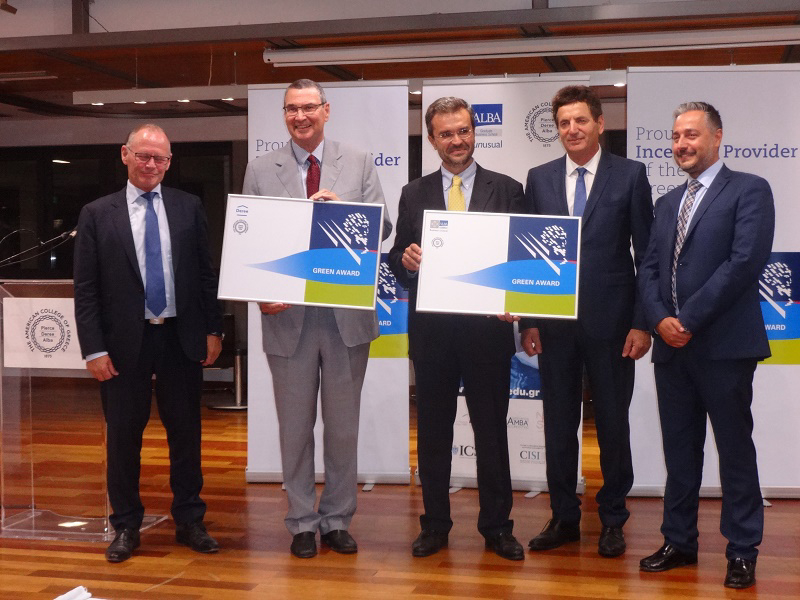
| from left:Jan Fransen, Green Awards Executive Director, Dr. David G. Horner, President of The American College of Greece, Dr. Kostas Axarloglou, The Dean of ALBA Graduate Business School, Capt Dimitrios Mattheou, Green Awards Chairman, Managing Director Arcadia Shipmanagement, Spyros VougiousDirector Shipping Programs at ALBA Graduate Business School at The American College of Greece. |
A cocktail party at ACG campus – Open Air Theater Plaza on Wednesday 7th of September, 2016 at 19:30
An official commencement ceremony took place during the reception and will be carried out by our honored guests Mr. Dimitrios Mattheou, Chairman of the Green Award Foundation, and Mr. Jan Fransen, Executive Director of the Green Award Foundation.
The Green Award Foundation is an independent quality assurance organization that certifies shipping companies and vessels that go beyond the industry standards in terms of safety, quality and the environmental performance. Green Award brings together top tier ship owners and managers with ports and maritime service companies that reward quality ships with incentives. For more information, please visit www.greenaward.org
ERMA FIRST ESK Engineering Solutions S.A. Presents a New Way to Experience a Ballast Water Treatment Installation
 |
The public reception to the stand of ERMA FIRST has been overwhelming, exceeding its expectations. ERMA FIRST has breathed new life into the technological experience at the exhibition.
In addition to the steady flow of stand visitors, people are also flocking to experience, explore and educate themselves on the Ballast Water Treatment installation, which is featured on the VR.
ERMA FIRST manages to put the audience at the heart of the action by transporting them instantly to a real engine room, where they can see the world through its eyes, by coming into contact with the actual installation of the ERMA FIRST BWTS FIT 1500 m3/h on board a ship.
Based on 81,000 DWT Bulk Carrier and its operation, two ERMA FIRST BWTS FIT 1500 m3/h are selected and installed on the discharge side of the ballast pumps. Through a virtual work around the engine room, the guests are able to have an inside look at how the system and its components are placed using the existing pipes, whilst maintaining an exceptionally low footprint.
By means of this immersive, impactful and memorable VR experience, ERMA FIRST strives to be new and fresh and aims to engage the senses of the viewers and make them more familiar with the BWTS FIT, share its experiences and discuss the future application of its technology.
About ERMA FIRST:
ERMA FIRST S.A. was established in 2009 by a team of specialists with strong background and expertise in waste and water treatment technology in Marine applications. Being successfully tested in the most prominent test facilities, the ERMA FIRST systems are certified and have been awarded for technological achievement many times through the years. ERMA FIRST holds a strong position in the global competition in ballast water treatment with some of the systems’ main advantages being low energy consumption, low pressure drop, small footprint and operation in fresh water. In a very short period of time, the company has numerous projects in Greece, Germany, Romania, China, Korea, Japan, Italy, Turkey as well as other areas.
For more information, please visit: www.ermafirst.com
Paris agreement: MEPs ratify deal, push for entry into force
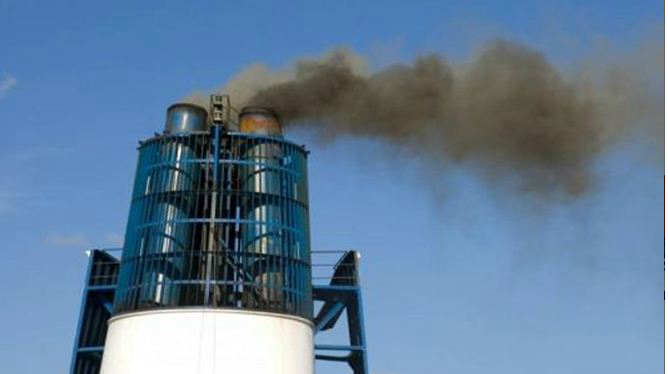
They also urged all EU member states to conclude the ratification process, to ensure its rapid entry into force. In a separate resolution, they also called on the EU to upgrade its emission reduction pledges, so as to close the gap between the individual targets agreed by the Parties and the Paris goals.
“It is unthinkable that the Paris Agreement might enter into force without the EU as a signatory, considering the EU leadership on the fight against climate change,
its role in the Kyoto Protocol, and its continuous efforts towards a subsequent universal treaty. For this reason, we urge the Council and the individual member states to take the necessary steps to complete their EU and national ratification process prior to the next climate conference in Marrakech, enabling it to enter into force” said rapporteur and Environment Committee chairman Giovanni La Via (EPP, IT).
World “not even close” to 2-degree target with existing commitments
In a separate resolution, on the next round of talks to take place in Marrakech in November, MEPs regret that the sum of all the submitted Nationally Determined Contributions (NDCs) submitted “does not bring the world even close to the two degree target” and stress the urgent and critically important need for all Parties to raise their emission reduction commitments. The EU should also commit to further emission reductions for 2030, they say.
Mid-century strategy
MEPs say that the EU should also revisit its own mid- and long-term goals and policy instruments, and call upon the Commission to “prepare a mid-century zero emissions strategy for the EU, providing a cost-efficient pathway towards reaching the net zero emissions goal adopted in the Paris agreement”.
Migration
MEPs notes with concern that 166 million people were forced to leave their homes because of floods, windstorms, earthquakes or other disasters between 2008 and 2013. They call for the recognition of the issue of climate refugees, saying that climate-related developments in parts of Africa and the Middle East could contribute to political instability, economic hardship and an escalation of the refugee crisis in the Mediterranean.
Aviation and shipping
MEPs insist on the need to lower emissions from international aviation and shipping, and call on all the Parties to work through the ICAO and the IMO to take measures to set adequate targets before the end of 2016.
Climate finance
Further efforts are necessary to ensure the mobilisation of climate finance to meet the $100bn goal by 2020, say MEPs. Additional sources should be delivered, including a financial transactions tax, setting aside some EU ETS emission allowances or revenues from EU and international measures on aviation and shipping emissions.
Brexit
Amendments tabled by British MEPs and endorsed by the committee say that the EU should uphold the commitments agreed in Paris in spite of any changes of status of EU member states, and ask that “strong efforts” be made to keep any member states with a changing status in the EU carbon market.
Next steps
The recommendation that Parliament consent to the conclusion of the agreement, was approved by 47 votes to 1.The full European Parliament can vote and give its consent to the Paris Agreement only when an agreement is reached at the Council.
The resolution on COP22, was approved by 48 votes to 1, with 2 abstentions. The vote in the full House is planned for early October.
Background
The Paris Agreement will enter into force on the 30th day after the date on which at least 55 parties to the Convention, accounting in total for at least 55\% of global greenhouse gas emissions, have deposited their instruments of ratification, acceptance, approval or accession at the UN. As of 7 September 2016, 27 Parties have deposited their instruments of ratification at the UN, accounting in total for 39.08 \% of the total global greenhouse gas emissions.
Further information
What happens to alliances and their customers when a partner like Hanjin files?
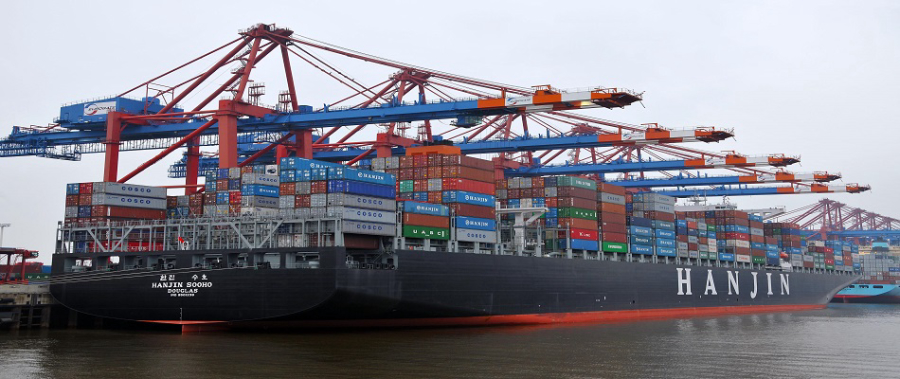
One question that not many beyond lawyers probably really thought too much about was: “What happens if one of the carriers goes belly up?”
With Hanjin Shipping filing for court receivership last week both the industry and shippers have quickly found out.
Hanjin was one of five member lines of CKYHE alliance, and also had five joint services with CMA CGM, no doubt some other smaller agreements. As result of the receivership filling an awful lot of cargo from other lines is suddenly stranded on vessels in various parts of the world.
Fellow CKYHE members K Line and Evergreen have already publicly distanced themselves from Hanjin saying they will not load boxes from the South Korean line on their vessels or load cargoes on Hanjin vessels – although the latter is hardly a realistic scenario at the moment. Its membership of the CKYHE alliance has also been suspended.
French line CMA CGM went further on 31 August terminating all its five joint services with Hanjin effectively. “Please be assured that we are actively monitoring the situation to address any issue that might occur and ensure flawless continuity of service,” CMA CGM said in an advisory to customers.
While certainly the line will not want any disruption to its customers - ensuring this is really the case is extremely difficult in practice.
Shippers and retailers are already expressing serious concerns about shipments stranded on Hanjin vessels stranded outside ports, or on the high seas around the world.
Holman Fenwick Willan partner Craig Neame said in a briefing note: “Serious disruption to supply chains is anticipated over the coming weeks as a result of delays and uncertainty caused by Hanjin’s position.”
That serious disruption includes its alliance and service partners, and their customers with cargo on Hanjin ships.
“Hanjin’s partners are likely to be concerned about recovery of freight and termination of their slot sharing arrangements, given the overlap between the governing law of the contracts and the rights of the receiver in the rehabilitation to cancel such contracts,” Neame said.
As is happening he noted partner lines would be looking bar Hanjin cargoes being loaded onto their vessels, and unload their own boxes from the Korean line’s vessels.
“Hanjin’s vessel partners may begin efforts to have containers re-delivered so that alternative shipment can be arranged. This could lead to complications arising between Hanjin’s partners and other interested parties, in particular other Hanjin creditors.
Indeed legal actions have already been taken by creditors looking to seize Hanjin vessels via ship arrests. The 1998-built Hanjin Rome was actually arrested in Singapore the day before the company filed for receivership.
Reuters reported that a judge in California ordered the arrest of the Hanjin Montivideo over $488,750 in unpaid bunker costs owed to World Fuel Services. Anyone who followed the OW Bunker bankruptcy will no this will not be the last such legal attempt to arrest assets.
Hanjin has been slow steaming its vessels or anchoring them just outside 12nm territorial limits as the consequence of possible vessel arrests that will make the whole process even more complex for other parties, including unloading cargoes on the vessels.
In some good news there are some solutions in sight in some cases. According to the Port of Prince Rupert agreement has been reached with terminal operator DP World and CN Rail had established a procedure for handling containers from the Hanjin Scarlet which has been sitting outside the port since 30 August. DP World will, however, require pre-payment for the handling of all Hanjin containers.
An agreement that once enabled lines to serve a lot more destinations from Korea than they could on their own is now set to become a very complex legal and logistical problem impacting not just the partner carrier but also their customers.
http://www.seatrade-maritime.com
NAPA and FURUNO announce collaboration to bring digital reporting to mainstream shipping
NAPA, the leading maritime data analysis, software and services provider, and FURUNO, the global leader in marine electronics equipment and solutions, announced today an ongoing partnership designed to support the digital progress of the global maritime fleet.
The two leaders in maritime data and electronics, have integrated NAPA Performance Monitoring and NAPA Logbook software with FURUNO hardware to offer a market-ready data logging and reporting solution using data signals already present onboard. This partnership offers a simple step forward into the Big Data era for ship owners, operators and managers with Internet of Things data-collection, electronic logging, and ship-shore and data-centre communications. The services offered will use existing FURUNO hardware and satellite communication solutions to support data-driven streamlining of operations, through business intelligence and boosting vessel performance, crew productivity and shore operation.
The two data-led platforms offered form the basis of NAPA’s Shipping Solutions, designed to optimise vessel efficiency, safety, and enhance productivity both on-board and for shore based offices. Electronic data collection and analytics provide rationalised, easy-to-understand and accurate reporting to shore based management teams, and best-in-class data security through cloud storage. Furthermore, they support owners, operators and managers in addressing key challenges such as safety reporting, engine and waste logs, and providing a full reporting solution for the EU’s Monitoring Reporting and Verification (EU MRV) legislation.
Juha Heikinheimo, President, NAPA Group commented: “NAPA would like to thank our partner FURUNO for their support and vision in the development of this project. NAPA and FURUNO’s offerings perfectly complement each other to deliver significant value to both parties, and to make a unique and fundamental contribution to the digitalisation of the international maritime industry and its fleet. The future of the industry is enhanced communications, greater scrutiny on reporting and monitoring, and the exploitation of Big Data to deliver excellence. Together NAPA and FURUNO can support and enhance that progression.”
Muneyuki Koike, Senior Managing Director, FURUNO commented: “NAPA delivers excellent data collection, analysis and control solutions for the maritime industry. We are confident that the combination of NAPA’s Shipping Solutions and FURUNO’s expertise in navigation and communication equipment with its worldwide service network will create very powerful synergy, and we are looking forward to an exciting growth of the partnership within the maritime IoT world.”
SMM 2016
At SMM NAPA and FURUNO are holding a signing ceremony for their new cooperation. This will be at the NAPA stand, B1.OG.212, on Tuesday 6th at 3pm. Spokespeople are also available for interview for the duration of SMM. Please contact Kate O'Connor to confirm your attendance at the signing ceremony or secure a time for an interview.
About NAPA
In its nearly 30 years of operation, NAPA has become a global leader in software, services and data analysis for the maritime industry; providing best in class data-led solutions for safety, efficiency and productivity in both ship design and operations.
NAPA operates globally, with eleven offices across Asia, Europe and the Americas supported by its Helsinki headquarters. To date, NAPA has nearly 400 user organisations for its design solutions and over 2,000 installations onboard vessels.
For more information, visit www.napa.fi
About FURUNO
Since its inception in 1948, when the world's first fish finder was commercialized, FURUNO ELECTRIC CO., LTD. has been running at the forefront of the marine electronics industry around the world, delivering first class navigation and communication equipment including Inmarsat terminals to meet the needs of a variety of vessels, ranging from large merchant fleets to smaller recreational craft.
FURUNO strives to enhance the availability of inspection, repair and other technical services and supports from service bases around the world. FURUNO manages a worldwide service network that covers more than 40 countries with authorized service agents and spare parts depots scattered around the world.
FURUNO has entered into the business field of shipborne satellite communication solution under the brand name "SafeComNet". Through "SafeComNet", FURUNO provides streamlined broadband ship-to-shore communication environment onboard ships, hence assisting in achieving optimal ship operation as well as implementing crew welfare. For more information, visit www.furuno.com
Navios sweats on Hanjin capesize charters
The Greek owner is among several companies with bulkers fixed to the troubled South Korean owner, according to a fleet list drawn up by Banchero Costa (Bancosta).
Navios has three capesizes fixed to Hanjin Shipping until 2020 at $29,356 per day, well in excess of current market rates. On Friday capes were earning around $5,300 per day.
The three capesize bulkers involved are the 180,000-dwt Navios Buena Ventura, the Navios Etoile and the Navios Luz (all built 2010).
One of the vessels is owned by Navios Maritime Holdings, while two are owned by Navios master limited partnership (MLP) spin-off Navios Maritime Partners.
At the time of the dropdowns of the Navios Buena Ventura and the Navios Luz to the US-listed MLP, Navios said both charters had been insured by an AA+ rated insurance company in the European Union.
Fellow Greek shipowner Kyla Shipping also has three bulkers on charter to Hanjin Shipping – one capesize unit and two panamaxes.
The ships involved are the 180,000-dwt Captain Vangelis L (built 2009), the 81,365-dwt Aphrodite L (built 2011) and the 81,259-dwt Odysseas L (built 2013).
Germany’s C P Offen has two capesize bulkers fixed to Hanjin Shipping – the 180,000-dwt CPO America (built 2010) and the CPO Asia (built 2011).
A number of Japanese shipowners also have tonnage employed by the South Korean shipowner, but largely in the smaller sizes and typically only one ship.
Some of the names are said to include Daiichi Chuo, Mitsubishi Corp, MC Shipping, Sojitz Marine and Shoei Kisen.
The one exception is Kumiai Senpaku which has its 180,000-dwt bulker Hanjin Matsuyama (built 2011) fixed to Hanjin Shipping.
The latest list also shows that Hanjin Shipping had already begun to return chartered-in tonnage as the latest number of fixed-in vessels is just 19 compared with 33 at the end of the second quarter.
www.tradewindsnews.com
Cyprus-Egypt pipe deal opens door for East Med gas

The agreement sets the political framework for additional commercial agreements, Cyprus’ Energy Minister Yiorgos Lakkotrypis and Egypt’s Petroleum Minister Tarek el-Molla said.
Asked if this gas will also be exported to Europe and other markets, Constantinos Filis, director of research at Institute of International Relations, told New Europe this depends on the agreements that will be made by the Consortium that will take over.
Italian energy major ENI is developing Egypt’s massive offshore Zohr field where exploration activities yielded positive results. “If Zhor field proves efficient to cover Egypt’s growing internal consumption, then any further quantities concentrated in Egypt will probably going to be exported,” Filis said, adding that in that case, the natural gas will be transported in the form of liquefied natural gas (LNG), which makes the European market, in contrast to the Asian one, of the most attractive options.
Filis said the agreement to build a pipeline between Cyprus and Egypt would probably affect the East Med pipeline. He added, however, that the East Med project anyway was a low priority.
“However, East Med can be materialised with Israeli gas alone. But the Cypriot side, as it realised that the Vassilikos LNG plan [in Cyprus] could not been realised, logically turned to the most ‘obvious’ option, given that Egypt hosts two LNG facilities that do not need lots of money and time in re-operating. Of course, the political risk is high, given Cairo’s authoritarian regime struggle to stabilise internally and the danger of extremist elements, which are emerging in the country and the concomitant terrorist resurgence. So, Nicosia should develop more alternatives for exporting its gas,” Fillis said, adding that he encouraging news is that new energy finds in its Exclusive Economic Zone (EEZ) are underway.
According to Lakkotrypis, the first gas through the Cyprus-Egypt gas pipeline should be completed sometime between 2020 and 2022.
Cyprus, Egypt and Greece are already planning to expand energy cooperation. Nicosia and Athens are in separate talks on strengthening energy ties with Tel Aviv.
Asked if the Cyprus-Egypt deal means that a pipeline across Turkey for Med gas seems even more distant, Filis told New Europe that in his view there is no pipeline across Turkey but rather to Turkey. Using Turkish soil for transporting gas from the Mediterranean is a very problematic scenario, not least in terms of cost – due to the need for building new infrastructure connecting the southern with the north-western part of the country – but also with regard to the dangers stemming from the fragile internal environment and its gradual alienation from the West, Filis said.
“In any case, since we are not talking about huge quantities – based on nowadays discoveries – in the wider region, the latter cannot feed many projects/markets at the same time. But again, the defining factor is Israel, as the more mature producer, and Egypt because of Zhor field and to a lesser extent Cyprus,” Filis said.
By Kostis Geropoulos
www.neweurope.eu
Danaos Corporation Receives Notice that Counterparty has Entered into Court Receivership
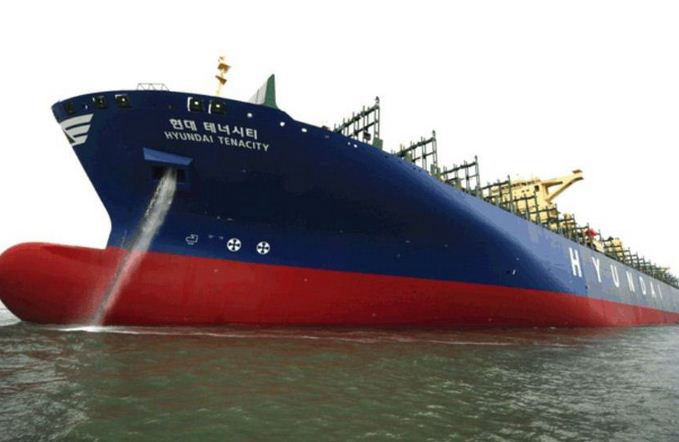
Danaoscurrently charters eight of its vessels to Hanjin on long term, fixed rate time charters. The time charters associated with these vessels represent approximately $560 million ofDanaos' $2.8 billion contracted revenue backlog as of June 30, 2016. The vessels contracted to Hanjin include three 10,100 TEU vessels built in 2011 and five 3,400 TEU vessels built in 2010 and 2011.
"We are disappointed that the Korean Development Bank has failed to support an important participant in the global containership business," stated Dr. John Coustas, Chief Executive Officer of Danaos. "Danaos actively supported Hanjin in its efforts to restructure its operations and we are hopeful that Hanjin will be able to achieve a restructuring of its business and emerge from court receivership as a financially stronger company. We will closely monitor the process and seek to preserve the value of our assets for the benefit of our shareholders."
About Danaos Corporation
Danaos Corporation is one of the largest independent owners of modern, large-size containerships. Our current fleet of 59 containerships aggregating 353,586 TEUs, including four vessels owned jointly with Gemini Shipholdings Corporation, is predominantly chartered to many of the world's largest liner companies on fixed-rate, long-term charters. Our long track record of success is predicated on our efficient and rigorous operational standards and environmental controls. Danaos Corporation's shares trade on the New York Stock Exchange under the symbol "DAC".
INTERTANKO has received clarification from the Chinese MSA
The following is taken from INTERTANKO’s recent advisory. It details the questions put to the Chinese authorities about bunkers from outside China and the fuel sampling and testing regime along with the answers received.
Question 1
“In paragraph 2 of item 1, the Notice requires the bunker suppliers to: ‘test every batch of fuel and keep the records; and provide vessels with the Bunker Delivery Note (BDN) and samples of the fuel supplied.’ It is possible that many of such bunker suppliers are based outside China so we would like to know how the MSA intends to enforce this. If the foreign bunker suppliers do not comply with this requirement, what would be the repercussions? Our view is that the vessel/owner should not be unduly penalised for non-compliance on the part of the bunker supplier. If the bunker supplier does not send the fuel sample for testing and the owner/vessel sends the sample it has collected for testing, we feel that the MSA should accept the owner’s test report. Furthermore, if the voyage between the bunkering port and the Chinese ECA port is short and the report has not reached the vessel upon arrival at the port, how will the Chinese MSA respond in such a situation?”
Answer from Shanghai MSA
“Foreign (outside China) bunker suppliers will need to provide BDN and fuel samples as per MARPOL. The Notice is based on the ‘Regulations on Administration of the Prevention and Control of Marine Environment Pollution Caused by Vessels’ which lays out those requirements on local (China-based) bunker suppliers and can be enforced on such suppliers.”
Question 2
“In section 2.2(2), could you advise how such random checks will be conducted? Will it entail samples to be taken onboard by Chinese officials or will the officials simply request to take the sample fuel available onboard, whether provided by the bunker supplier or the owner/vessel, for separate testing?”
Answer from Shanghai MSA
“Any testing done by the vessel is on samples taken during the supply of the bunkers per MARPOL regulations whereas the focus of the Chinese ECA requirements is on the fuel that was being used while the vessel is in the ECA region. As such, any checks required by the local authorities must be conducted by sending officials onboard to take samples from the fuel pipeline for testing.”
Question 3
“In section 2.2(3)a, the Notice states that the MSA could either draw samples or use the vessel’s fuel samples for testing. We feel that using the vessel’s fuel sample and test report provided either by the bunker supplier or the Owner’s sample and test report would be more ideal instead of sending officials onboard to carry out separate sampling and testing which may cause undue burden and delay on the vessel/owner. However, if MSA has strong reasons to want to conduct its own sampling and testing, we would like to know if the vessel will be detained while awaiting the test results?”
Answer from Shanghai MSA
“The vessel will not be detained while awaiting the test results from the samples taken by the officials.”
From these answers, INTERTANKO have provided the following remarks and suggestions to their membership:
“Fuel suppliers operating in China are mandated to sample and test fuels delivered to ships. This provision cannot be applied to fuel suppliers operating outside China. To be on the safe side, and to the extent it is possible and practicable, we would suggest that ships calling the Chinese ECA attempt to bunker 0.50\% fuel in China. It provides better protection as the ships would have documentation to demonstrate the fuel purchased is compliant.”
“Apparently, the Chinese authorities would expand fuel sampling onboard arriving ships. This is not a practice under MARPOL Annex VI regulations but a practice under the EU Sulphur Directive. We would suggest ships establish safe sampling points in the engine room and are provided with guidelines for proper sampling. Ships should also keep part of the fuel sampled by the authorities.”
“It is positive that, irrespective of whether the result of the test on fuel sample taken by the local authorities is not available, ships will not be delayed in leaving the port”
“The penalty stated in Article 106 of the ‘Law of the People’s Republic of China on the Prevention and Control of Atmospheric Pollution’ determines a fine of 10,000Renminbi and above, up to a maximum of 100,000Renminbi for vessels using bunker fuels that do not meet Chinese ECA standards or requirements”
“The penalty stated in Article 63 of the ‘Regulations on Administration of the Prevention and Control of Marine Environment Pollution Caused by Vessels’ determines a fine of up to 20,000Renminbi for bunker suppliers that do not truthfully fill up the BDN, or did not provide the vessel with BDN and samples of the bunker fuel”.
We thank INTERTANKO for their kind permission to reproduce their article.
Source: North P&I Club

Powered by  © Μaritimes 2019