


Thursday, April 30, 2026

Monday, 02 January 2017 20:46

Cargo theft: Rising to the challenge

Cargo crime is a global issue which must be tackled across all continents and takes different shapes and forms in different parts of the world.

The issue has heightened in recent years due to criminals becoming more organised and international in their reach, with new and more sophisticated methods. Accordingly “cargo theft” is now permanently high on IUMI’s agenda, and a position paper on the topic was published last year highlighting members concerns and recommending measures to combat such crimes. The Transported Asset Protection Association (TAPA) EMEA is a partner on this important issue, sharing IUMI’s strong focus on preventing cargo theft. TAPA and IUMI sealed a formal cooperation and became mutual affiliates earlier this year.

Mark Gruentjes, TAPA EMEA board member, emphasised in his remarks at IUMI’s annual conference in Genova that the true cost of losses due to cargo theft far exceeded the financial cost of the goods themselves. This, he said, was as a consequence of dis- rupted supply chains, reputational damage, and higher insurance premiums. Mark highlighted the difficulties faced in assessing the actual size of the problem, due to a lack of reliable and complete data as many losses are not being reported. Moreover, law enforcement agencies do not necessarily have specific categories to classify cargo theft and the collection of data is often fragment- ed within countries.

IUMI recently had the opportunity to discuss this and other challenges related to the supply chain with Carlos Mestre Zamarreno, Head of Transport Security Unit at DG Move in the European Commission, a contact which had been established thanks to TAPA EMEA. As a result of this initial meeting, IUMI has since become a member of the Stakeholders Advisory Group on Maritime Security in which organisations representing sectors of the maritime industry have an opportunity to provide updates and input on current issues relevant to the industry.

To expand IUMI’s partnership with TAPA, David Taylor, chairman of IUMI’s Loss Prevention Committee, spoke at TAPA’s annual conference and outlined the opportuni- ties for further cooperation. David noted that closer collaboration and direct exchanges between insurers and TAPA members would allow better insights into supply chain operations. This in turn would better advise insurers enabling them to make better informed pricing and more accurate coverage decisions on risks associated with the supply chain. The TAPA conference agenda included topics of common concern such as secure parking spaces and exposure of the supply chain to cyber threats. One out- come of the conference, on which all participants agreed, concerned the rise in the number and the variety of threats to the supply chain and the urgent need for all par- ties to respond to this challenge by collaborating with like-minded organisations.
Source: IUMI (By Hendrike Kühl, Policy Director, IUMI)

Euroseas Ltd. (NASDAQ: ESEA), an owner and operator of drybulk and container carrier vessels and provider of seaborne transportation for drybulk and containerized cargoes, announced today that it took delivery of the M/V RT Dagr, a 1,645 teu feeder containership built in 1998. As previously announced, the vessel was purchased by issuing 900,000 shares of the Company's common stock.

The Company also announced that it agreed to sell for scrap the M/V Eleni P, a 72,119 dwt 1997-built drybulk carrier. The M/V Eleni P is the oldest drybulk vessel in the Company's fleet and is expected to be delivered to its buyers in the beginning of January 2017.

Aristides Pittas, Chairman and CEO of Euroseas commented: "This transaction is an overall positive development for Euroseas and showcases our ability to take advantage of market opportunities to renew our fleet. For a nominal incremental investment, the M/V Eleni P will be replaced by a larger and younger vessel, the M/V Capetan Tassos, a 75,100 dwt 2000-built drybulk vessel, whose acquisition we announced on November 23rd, 2016. We will continue positioning our fleet for a potential market recovery and exploiting investment opportunities in the present market environment."

After the sale of the M/V Eleni P, the delivery of the M/V RT Dagr, and the previously announced acquisitions of the M/V Alexandros P and the M/V Capetan Tassos (to be delivered to the Company in January 2017), the Company's fleet will consist of 14 vessels, including one Kamsarmax, three Panamax, one Ultramax and one Handymax drybulk carriers, and eight feeder containerships.

About Euroseas Ltd.: Euroseas Ltd. was formed on May 5, 2005 under the laws of the Republic of the Marshall Islands to consolidate the ship owning interests of the Pittas family of Athens, Greece, which has been in the shipping business over the past 140 years. Euroseas trades on the NASDAQ Capital Market under the ticker ESEA since January 31, 2007.

Euroseas operates in the dry cargo, drybulk and container shipping markets. Euroseas' operations are managed by Eurobulk Ltd., an ISO 9001:2008 and ISO 14001:2004 certified affiliated ship management company and Eurobulk (FE) Ltd. Inc., also an affiliated ship management company, which are responsible for the day-to-day commercial and technical management and operations of the vessels. Euroseas employs its vessels on spot and period charters and through pool arrangements.

Excluding M/V Eleni P and including the previously announced acquisitions of M/V Alexandros P and M/V Capetan Tassos (both to be delivered to the Company January 2017), the Company has a fleet of 14 vessels, including one Kamsarmax drybulk carrier, three Panamax drybulk carriers, one Ultramax drybulk carrier, one Handymax drybulk carrier, and eight Feeder containerships. Euroseas six drybulk carriers have a total cargo capacity of 417,753 dwt, its eight containerships have a cargo capacity of 13,170 teu. The Company has also signed a contract for the construction of one Kamsarmax (82,000 dwt) fuel efficient drybulk carrier. Including the new-building Kamsarmax, the total cargo capacity of the Company's drybulk vessels will be 499,753 dwt.

Euroseas Ltd

The Great Eastern Shipping Company Limited (GE Shipping) has signed contracts to buy 2 Suezmax Crude Carriers of about 157,000 dwt each. The 2010 & 2011 built vessels are expected to join the Company’s fleet in Q4 FY17.

The Company’s current fleet stands at 38 vessels, comprising 24 tankers (7 crude carriers, 15 product tankers, 2 LPG carriers) and 14 dry bulk carriers (1 Capesize, 7 Kamsarmaxes, 6 Supramaxes) with an average age of 9.89 years aggregating 2.94 mn dwt. Additionally, the company has 2 Secondhand Aframaxes, 1 Secondhand Suezmax & 1 Newbuilding Kamsarmax on order. After delivery of these 6 contracted vessels, the company will have a fleet of 44 vessels.

http://www.greatship.com/

An exciting region for port development globally, South Asia had a busy 2016 and much more is expected in 2017.

Geopolitics is probably the biggest driver of port activity in South Asia, as regional powers invest in facilities to increase influence in the Indian Ocean and develop better access to resources and future markets in Central Asia and the Middle East.

The high-profile China-built Gwadar port in Pakistan, a major One Belt One Road hub, made an effort to demonstrate its purpose in November with a ceremony attended by high-level officials celebrating the first large consignment of goods to travel overland from China and shipped out from the port in the southwest of the country.  The shipment of 160 containers bound for Colombo and Dubai was intended to represent the beginning of a major new overland trade route linking China with the Indian Ocean and the markets of the Arabian Gulf.

Under the original development masterplan, Gwadar was to handle around 100 million tonnes of cargo in 2017, but it is nowhere near achieving that. Just one mainline shipping company currently serves the port, mostly carrying construction materials for China Pakistan economic infrastructure projects as well as some locally produced exports.

A major objective is for the port to become a hub for oil shipments to China and an alternative to the Malacca Strait for the country’s energy needs. Two oil terminals capable of handling 200,000 dwt tankers are being constructed to handle a growing portion of the huge quantities of oil the world’s second largest economy buys from the Middle East. 

The development of Gwadar is provoking response from other regional powers concerned about the boost in influence it is giving China in the Indian Ocean region. This, and the easing of economic sanctions against Iran, resulted in movement by India on the long-discussed development of the Iranian port of Chabahar. 

Like Gwadar, Chabahar is also on the Arabian Sea and located just 70 km from the Pakistani port. Progress on the project is slow but there is commitment from India at the highest level and we can expect more interesting developments in this part of the world over the course of 2017. 

Sri Lanka is another major destination for Chinese One Belt One Road funding for port development. An official agreement that will see state-owned China Merchants buy an 80\% stake in the loss-making Hambantota port for more than USD1 billion is expected early in 2017. The purchase of the loss-making port will complement the company’s existing investment in Colombo International Container Terminal, which is rapidly becoming one of the region’s major transhipment facilities.

Bangladesh is one country in South Asia to watch this year as competition to develop much-needed modern port facilities intensifies. 

After ten years of average annual growth of 6\%, the South Asian country desperately needs modern port infrastructure. Its export sector is expected to eclipse USD50 billion in value by 2021 as global demand for its ready-made woven and kitted garments, frozen foods, jute and leather continues to rise.

Bulk throughput is expected to rise to 44 million tonnes by 2023 and 73.3 million tonnes by 2043. The dry bulk segment is forecast to book average annual growth of 3.9\% to 55.5 million tonnes by 2043, driven by high demand for cement clinker, reflecting the large potential in the construction sector.

More than 90\% of foreign trade volumes are currently handled by the old and inefficient Chittagong port. Located 16 km up the Karnaphali river from the Bay of Bengal, Chittagong has a draft of only 9.2 m, requiring the costly practice of transferring cargo from large to small vessels before berthing and discharge.

Despite ample commercial incentive and a clear need for a modern port, a definitive deep-sea port project in Bangladesh has yet to materialise as China, Japan and India fight for the right to provide finance and with that a ticket to build their influence in the country and in the region.

In India, the mammoth Sagarmala port-led development programme will continue to be the main driver of port development over the course of 2017.

Sagarmala is centered on the modernisation of India’s ports as well as the provision of infrastructure that can move goods to and from ports quickly, efficiently and cost effectively. Port hinterlands are to be industrialised and lead economic transformation of the country’s coastal regions that already account for more than 60\% of national GDP.

The programme is central to prime minister Narendra Modi’s plans to build a manufacturing-led, trade-export growth economy mainly fuelled by private domestic and foreign investment.

The programme envisages spending of somewhere between USD10 – 11billion on port upgrades over the coming five years, adding up to 1,500 MTPA in capacity and including the development of several new greenfield ports. A further USD3 billion or more is to be spent on dozens of last mile port-rail links to increase the efficiency and cost effectiveness of delivering cargo to and from the ports.

Mobilising the necessary funding remains one of the key challenges for Sagarmala.  Maintaining the political ability to implement and deliver projects is the other major challenge.

The government currently has sufficient motivation and the clout necessary to introduce the reforms and policies to successfully deliver Sagarmala and its objectives but it is a situation that is subject to change. Ensuring local populations and governments are onside for the delivery of major economic and social change will be key to the speed with which the programme moves towards its objectives.

Main factors driving change in Southeast Asia’s ports

High GDP growth, particularly in India and Bangladesh. Development potential in Pakistan, Iran and countries of Central Asia, including opportunities to develop resource exploitation.
Poor existing port infrastructure, particularly in Pakistan and Bangladesh. Enormous room for improvement in the quality of infrastructure, cargo handling processes and landside connectivity in

India. 
India’s goals to increase export manufacturing and the desire to control more of its own transhipment business and its Sagarmala programme, which has ports and development of coastal regions at its core. 

Existing investment by major global terminal operators such as DP World and clear signals of interest in the potential for further investment in the region.
A geopolitical hotspot with China, India and Japan all vying for greater influence through port project investment. A key region in China’s One Belt One Road programme.

What to watch for in 2017

Slower rates of project development than most other parts of Asia, as funding and foreign and domestic stakeholder complexities delay and complicate projects.

Security problems causing delays to projects and reducing trade volumes: a key risk for the development of Gwadar in the volatile Balochistan region and CPEC infrastructure in general.

Slow but continuing improvement in productivity and the management structure of ports in India.

New investment and projects, particularly in India and Bangladesh.

http://fairplay.ihs.com/

Malaysia’s Petroliam Nasional Bhd. is seeking to move ahead with a proposed $27 billion liquefied natural gas project in western Canada after identifying a new site for shipping the fuel, a shift that may help reduce costs and quell local opposition.

Petronas’s Pacific NorthWest LNG project would continue as planned with the liquefaction plant on Lelu Island in British Columbia. The company would move the docking facilities to neighboring Ridley Island, where ships would berth to take deliveries of the fuel for export, according to two people familiar with the negotiations.

Such a re-design would eliminate the need for a costly suspension bridge that was part of the original plan and also circumvent an environmentally sensitive marine area that’s been a flash point of controversy.

Petronas and its partners -- China Petrochemical Corp., Japan Petroleum Exploration Co., Indian Oil Corp. and Brunei National Petroleum Co. -- are expected to decidewhether or not to proceed with the project in early 2017. The facility would produce as much as 19.2 million metric tons a year of LNG and open up a new trade route for Canadian gas to be shipped to Asia.

“Pacific NorthWest LNG is conducting a total project review over the coming months," spokesman Spencer Sproule said in an e-mail. “During this time, the project is continuing to work with area First Nations, stakeholders and regulators to manage any potential impacts through mitigation measures and design optimization."

Construction Schedule

It’s unclear how changing the design might impact the construction timeline -- the Kuala Lumpur-based company is in talks with the government and stakeholders to see if the modification could be carried out without sparking fresh regulatory delays, according to the people. Construction of the facility and shipping terminal, which is estimated to cost $11 billion, is the final step in the $27 billion project that also included Petronas’s 2012 acquisition of Progress Energy Canada Ltd. 

Canada’s Environmental Assessment Agency hasn’t received any information yet about potential changes, the agency said in an e-mail. “If ‎we receive any new information from Petronas, we will review it and determine the appropriate next steps, including any potential environmental assessment requirements," it said.

The project won Canadian government approval in September following more than three years of regulatory review. In that time, the global LNG market tanked with spot prices for the fuel falling by more than two-thirds amid a supply glut.

Flora Bank
Canada Prime Minister Justin Trudeau won power in 2015 with pledges to balance heightened environmental standards and economic growth for the oil and gas exporting country. Trudeau has introduced a carbon price and a ban on crude oil tankers along the northwest coast where the Petronas gas facility is proposed. He also approved two new crude pipelines last month.

Petronas is reassessing the project’s costs before it goes to the partners to make a final investment decision, a process it expects to complete by about April, Rich Coleman, British Columbia’s minister of natural gas development, said in a Nov. 15 interview. It would be the first major onshore LNG project to be built from scratch since 2013, according to Wood Mackenzie Ltd.

Petronas chose a highly contentious site for its proposed terminal near an ecologically sensitive islet called Flora Bank -- a breeding ground for salmon and considered sacred by local indigenous groups, who have joined with environmental activists to block the project.

‘Concern’ Remains
Moving the shipping facility would only partially address concerns about project, said Greg Knox, executive director of the SkeenaWild Conservation Trust, one of a number of groups that filed a legal challenge against the government’s approval of the project.

"The ideal situation is if they move from Lelu Island altogether," Knox said, although the redesign "would significantly reduce concerns over the potential collapse of the Flora Bank."

Petronas has still not formally proposed anything to the indigenous communities who jointly submitted their request for judicial review with Knox’s group in October, he said.

"It seems as though they’re leaving some key aboriginal groups out of these discussions again," he said. "We will wait until we see Petronas come out publicly, or contact us personally, to assess how serious they are about altering their design or moving sites."

Save Costs
The company modified the project in 2014 to minimize the impact on Flora Bank by agreeing to build a 1.6-kilometer (1 mile) long suspension bridge linking the LNG plant to marine berths further out at sea.

The new proposal would save as much as $1 billion by eliminating the need for that suspension bridge, according to one of the people. Instead, the LNG could be transported by pipeline across a less contentious route to Ridley Island to be shipped from there, according to both people.

Petronas has identified an available spot on Ridley Island that was formerly held by Canpotex Ltd., according to both people. Canpotex relinquished its lease for a potash export terminal on Ridley earlier this year, according to the Prince Rupert Port Authority, which oversees the area.

source:www.bloomberg.com

Taking a quick look at technical levels and trend lines for Paragon Shipping Inc. (PRGNF), we see that the stock has a 14-day ADX of 24.66.

For traders looking to capitalize on trends, the ADX may be an essential technical tool. The ADX is used to measure trend strength. ADX calculations are made based on the moving average price range expansion over a specified amount of time. ADX is charted as a line with values ranging from 0 to 100. The indicator is non-directional meaning that it gauges trend strength whether the stock price is trending higher or lower. In general, and ADX value from 0-25 would represent an absent or weak trend. A value of 25-50 would indicate a strong trend. A value of 50-75 would indicate a very strong trend, and a value of 75-100 would signify an extremely strong trend.

Looking further at additional technical indicators we can see that the 14-day Commodity Channel Index (CCI) for Paragon Shipping Inc. (PRGNF) is sitting at -193.28. CCI is an indicator used in technical analysis that was designed by Donald Lambert. Although it was originally intended for commodity traders to help identify the start and finish of market trends, it is frequently used to analyze stocks as well. A CCI reading closer to +100 may indicate more buying (possibly overbought) and a reading closer to -100 may indicate more selling (possibly oversold).

Moving averages can help spot trends and price reversals. They may also be used to help find support or resistance levels. Moving averages are considered to be lagging indicators meaning that they confirm trends. A certain stock may be considered to be on an uptrend if trading above a moving average and the average is sloping upward. On the other side, a stock may be considered to be in a downtrend if trading below the moving average and sloping downward. Shares of Paragon Shipping Inc. (PRGNF) have a 7-day moving average of 0.13. Taking a glance at the relative strength indictor, we note that the 14-day RSI is currently at 41.29, the 7-day stands at 35.77, and the 3-day is sitting at 24.73.

The Relative Strength Index (RSI) is a momentum oscillator that measures the speed and change of stock price movements. The RSI was developed by J. Welles Wilder, and it oscillates between 0 and 100. Generally, the RSI is considered to be oversold when it falls below 30 and overbought when it heads above 70. RSI can be used to detect general trends as well as finding divergences and failure swings
Source: Yankee Analysts

Royal Bank of Scotland is close to selling at least $600 million worth of shipping loans from its portfolio, two sources familiar with the matter told Reuters.

RBS, which is more than 70 percent state-owned, is still in the throes of a restructuring, which includes asset sales, job cuts and tackling multi-billion dollar charges to settle litigation and pay regulatory fines for past misconduct.

The sources said buyers of the various shipping loan tranches included Japanese financial services firm Orix Corp , Germany's Berenberg Bank, Bank of America Merrill Lynch and asset manager Davidson Kempner.

Bank of America and Berenberg declined to comment. Orix could not be reached for comment, while Davidson Kempner did not immediately respond to a request for comment.

RBS declined to comment.

The loans, which primarily come from RBS's Greek shipping business which was valued earlier this year at $3 billion, are being sold in various parcels, one of the sources said.

"Discreet sales talks have been going on for a while," the source said.

RBS announced in September it had begun winding down its global shipping finance business, abandoning efforts at that time to sell it off during a worsening downturn across the freight industry.

Around 90 percent of world trade is transported by sea but the shipping industry is stuck in its deepest slump on record, as international trade slows and freight rates fall in a market flooded with too many vessels.

German banks, which provide a quarter of the world's $400 billion of outstanding shipping debt, are struggling to recoup their loans, while many other lenders are looking at ending or reducing their exposure.

Sources had told Reuters earlier this year that Orix and Berenberg were among potential suitors that had looked at RBS's Greek shipping business.

The Edinburgh-based bank which has had eight years of annual losses was rescued with a more than 45 billion pound ($55.54 billion) bailout at the height of the financial crisis.

Last month, RBS was the biggest failure in the Bank of England's annual stress test, partly because of a mounting legal bill and the difficulty it has selling off unwanted assets.

RBS's overall exposure to shipping exposure was 5.514 billion pounds at the end of September, down from 6.765 billion pounds at the end of June and 6.776 billion pounds at the end of 2015, RBS data showed.

source:reuters.com

Thursday, 29 December 2016 19:35

GMS: Vale’s VLOC Demolition Sale Fails

Brazilian mining giant Vale’s recent sale of a very large ore carrier (VLOC) for demolition has reportedly failed, according to a report from GMS, a cash buyer of ships for recycling.

“The sale of the VLOC failed to its intended cash buyers and the vessel is now being re-introduced for sale,” GMS said.

The vessel in question is the 251,200 dwt Ore Brucutu, which was said to be sold to a Bangladeshi shipbreaking yard for USD 338 per LDT, a total of USD 9.8 million for the 29,122 LDT ship, data from VesselsValue shows. The 30-year-old Capesize has a market value of USD 8.6 million.

In early December, Vale concluded the talks with shipping company Polaris Shipping for the sale of four Capesize bulk carriers for a total of USD 140 million, equivalent to USD 35 million per vessel, which will be received by Vale upon the delivery of each ship.

Following the sale of the ships, Vale’s owned fleet counts 11 bulkers with a total size of 2.9 million dwt.

World Maritime News Staff

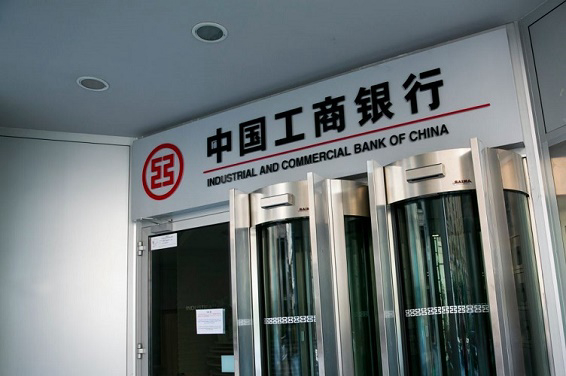
China hopes to finance Iranian shipping orders in order to boost newbuilding opportunities at Chinese yards, a senior official at a leading bank has told IHS Fairplay in an exclusive interview.

“There is no specific budget or plan yet, but roughly, we could consider financing USD1 billion of projects on Iranian ships in the [initial] stage,” said Bill Guo, executive director, shipping, ICBC Financial Leasing Co Ltd (ICBCL).

“That could mean, in one scenario, an order for about 10-12 vessels of capacity of 14,000 teu. The value of such deals is hard to say. It depends on the value of the vessels. Maybe the total amount of shipping Iran requires would take five to ten years to deliver. It’s hard to calculate. The sale-leaseback structure is our preferred one, and I believe it is also favoured by them,” he said in an interview with IHS Fairplay.

This month, Islamic Republic of Iran Shipping Lines (IRISL) announced an order for 10 vessels from South Korea’s Hyundai Heavy Industries, including four 14,600 teu containerships.

Efforts to build ties between the two nations have been under way for some time. In January, Iranian minister Ali Rabiei said that a Chinese bank intended to extend a USD5 billion credit line to develop Iran’s shipping lines and tanker fleet and in the first quarter of 2016, a team from ICBC Bank visited Iran to sound out the market.

“We have a sort of strategy in Iran. In February or March, [when ICBC officials visited Tehran], we sought feedback on new shipping projects in Iran, with a view to understanding the [local] banks’ support for the industry and the country’s general strategy,” said Guo.

“We asked for indications of the scope of Iran’s plans, and saw that there was big potential, which is of interest to us, as we want to stimulate new projects in China’s shipyards. Iran clearly told our colleagues at ICBC that they were open to the option of having ships built in China’s shipyards. We are keen on financing these projects,” Guo said.

“There are plans that, hopefully, a new Iranian dry bulk order could be built in China. For the Iranians, container shipping and dry bulk vessels are of interest, so hopefully they can make this order in China. Then we can finance them.”

Guo said second-hand vessels and ro-ro, a ‘stable’ sector, could also be of interest. “With tankers, it depends on their type. We are cautious on that segment,” he said. Chemical vessels could also be a possibility: Iran is exporting chemicals every month, and needs vessels for fleet renewal.

Information carried on ICBCL’s website does not give portfolio size, but shows that the bank’s current leasing assets are split 23\% domestic and 77\% foreign, with 25\% in bulk and 23\% in offshore vessels, and 21\% in drilling rigs. Only 5\% of the book is in container ships. The company’s 452-strong aircraft leasing portfolio includes 119 Boeings and 154 Airbus.               

Guo said ICBCL was looking to exploit several global opportunities. “Our first priority is most international markets, especially in Europe, such as Germany, Greece, France, and England, as well as Scandinavian countries. There are opportunities for fleet expansion. They are using ships on Asia-Europe trades. The owners and traders come from European countries.”

Responsible for leasing involving container ships and very large ore carriers (VLOCs), Guo said ICBCL was close to both IRISL and National Iranian Tanker Co (NITC).

“We are talking to both companies. Of course, we are looking at the long term — five years, definitely. Specifically or generally, in 2017, we hope to see some kind of ordering in Chinese yards from Iran by both companies,” he said.

“They have had no new ships for some time. They do need a lot of new ships. We would like to help them to grow. IRISL now has 6,000 or 7,000 teu container ships. They need bigger ships. I think 14,000 teu capacity vessels are what they are looking for right now [as the Hyundai orders proved].

“Iranian ports are definitely not large enough to handle such large vessels. It will take them two years to upgrade terminals to requirements.”

When asked which was China’s priority, Pakistan’s Gwadar or Chabahar, he said, “They are different. The Iranians are more commercially oriented. Gwadar is now running as a state-owned project. You can't say which one is more important. When the opportunity comes, [China] could support both.”

He said the new US administration's stance on Iran would be important. “Iran’s projects could stop as a result of a political event. That is a major question mark right now. We cannot ignore the US. If we ignore sanctions, our business in the US will be impacted. Hopefully, by mid-2017, there will be more clarity and projects can move on; of course, the earlier the better, from our perspective.

 “We have to be patient.”

http://fairplay.ihs.com/

Thursday, 29 December 2016 19:19

Shipping 2016 - a year in review

Be it be in shipping, the economy or politics 2016 has been a tumultuous year. Seatrade Maritime News takes a look back at the year and top stories in the world of shipping and maritime.

January

2016 was not to start with much good cheer. The first week of the year saw oil prices drop to an 11 year low and what was to become a wave of restructurings in the offshore and marine industry were already underway.

On 11 January the crew of the Seaman Guard Ohio were sentenced to five years hard labour by Indian court despite having previously acquitted.

And on 20 January we reported the passing of Evergreen founder Chang Yung-fa at the age of 88 which was to spark a family battle for control of the Taiwanese shipping and aviation conglomerate.

February

Moving into February the dry bulk shipping market was in freefall dropping to unprecedented levels, falling below 300 points after Chinese New Year it finally hit an absolute low of 290 points, thankfully things did start to recover in the second half of the year.

In what was set to be a year of consolidation China Cosco Shipping was officially launched on 18 February bringing together Chinese state-owned giants Cosco and China Shipping.

March

With lifting of sanctions against Iran there now some serious investment opportunities starting to develop with the country expected to spend $25bn on oil and gas projects over the coming decade.

However, for those focused on Iran investments many issues remained due to bank's concerns over US regulations.

April

The first of two major re-alignments of major container shipping alliances – the Ocean Alliance comprising Cosco, CMA CGM, Evergreen and OOCL was unveiled on 20 April.

May

Following the announcement of the Ocean Alliance the second major realignment of container shipping alliances was unveiled comprising the Japanese big three NYK, Mitsui OSK Lines and K Line, Hapag-Lloyd (including UASC) and Yang Ming.

June

The 26 June saw the historic inauguration of the expanded Panama Canal with the transit by the containership Cosco Shipping China.

Meanwhile another major waterway the Suez Canal, which had already undergone expansion, was offering $70,000 discounts for VLCC transits.

And as container shipping consolidation continued Hapag-Lloyd and United Arab Shipping Co (UASC) announced they had reached merger terms.

The largest Greek shipowner Angelicoussis gives struggling Korean shipbuilder Daewoo Shipbuilding & Marine Engineering a welcome boost with a $1bn order.

July

Singapore-listed offshore marine provider Swiber Holdings stunned the market when it announced its senior management had quit and it was winding-up. Then confusing the market further with 48 hours reversed the decision to wind-up and opted for judicial management instead.

Consolidation was also be seen in the chemical tanker sector with Stolt-Nielsen announcing it was buying Jo Tankers chemical tanker operations for $575m.

Meanwhile with environment and emissions high on the agenda a new cross industry group was formed to promote LNG as fuel.

August

In the seismic event of the year for shipping – if not the decade – at the end of the August Hanjin Shipping announced it was filing for receivership. The bankruptcy of the world’s seventh largest container line was reverberate across the shipping and industry and the supply causing chaos for months to come – the full extent of which is revealed on the Seatrade Maritime News timeline.

If there was any complacency over piracy it was proved to be misplaced after merchant shipping was place on alert following a Red Sea attack.

September

After years of waiting the IMO’s Ballast Water Management Convention was finally ratified with the date of 7 September 2017 set for implementation

Shareholders of the Baltic Exchange voted in favour of a $104m takeover bid by the Singapore Exchange of the London based shipping institution.

Anyone struggling to understand why much of shipping is suffering from overcapacity could find an easy answer when Clarksons revealed the global fleet had grown 50\% since the 2008 economic crisis.

October

Showing bribery doesn’t pay coatings manufacturer Hempel fires four in a corruption scandal.

In our most read single story of the year Japan’s big three NYK, K Line and Mistui OSK Lines announce they are to merge their container shipping businesses into a joint venture, continuing the sector’s year of consolidation.

November

You’ve been Trumped – protectionist billionaire Donald Trump surprises many by winning the US presidential election and starts naming shipping related people to his team.

A new player announced its arrival in the container trades – Korea Line – buying out the Asia – US business of bankrupt Hanjin Shipping for $31.4m.

And welcome to the Hyperloop as DP World invests in this nascent technology with a view to high speed container handling in the UAE.

December

And container shipping’s year of consolidation just kept on going with Maersk Line announcing it was going to buy Hamburg Sud with the deal expected to complete by the end of 2017.

Meanwhile the world’s largest ship manager V.Group got new owners in the shape of the appropriately named for December private equity group Advent International.

Page 53 of 354

logo

Subscribe to our Newsletter