


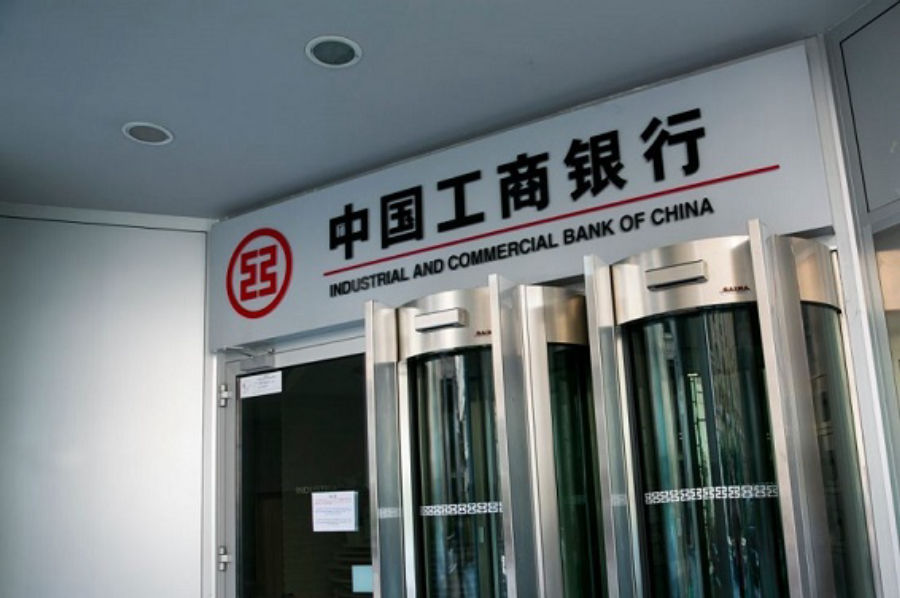
“There is no specific budget or plan yet, but roughly, we could consider financing USD1 billion of projects on Iranian ships in the [initial] stage,” said Bill Guo, executive director, shipping, ICBC Financial Leasing Co Ltd (ICBCL).
“That could mean, in one scenario, an order for about 10-12 vessels of capacity of 14,000 teu. The value of such deals is hard to say. It depends on the value of the vessels. Maybe the total amount of shipping Iran requires would take five to ten years to deliver. It’s hard to calculate. The sale-leaseback structure is our preferred one, and I believe it is also favoured by them,” he said in an interview with IHS Fairplay.
This month, Islamic Republic of Iran Shipping Lines (IRISL) announced an order for 10 vessels from South Korea’s Hyundai Heavy Industries, including four 14,600 teu containerships.
Efforts to build ties between the two nations have been under way for some time. In January, Iranian minister Ali Rabiei said that a Chinese bank intended to extend a USD5 billion credit line to develop Iran’s shipping lines and tanker fleet and in the first quarter of 2016, a team from ICBC Bank visited Iran to sound out the market.
“We have a sort of strategy in Iran. In February or March, [when ICBC officials visited Tehran], we sought feedback on new shipping projects in Iran, with a view to understanding the [local] banks’ support for the industry and the country’s general strategy,” said Guo.
“We asked for indications of the scope of Iran’s plans, and saw that there was big potential, which is of interest to us, as we want to stimulate new projects in China’s shipyards. Iran clearly told our colleagues at ICBC that they were open to the option of having ships built in China’s shipyards. We are keen on financing these projects,” Guo said.
“There are plans that, hopefully, a new Iranian dry bulk order could be built in China. For the Iranians, container shipping and dry bulk vessels are of interest, so hopefully they can make this order in China. Then we can finance them.”
Guo said second-hand vessels and ro-ro, a ‘stable’ sector, could also be of interest. “With tankers, it depends on their type. We are cautious on that segment,” he said. Chemical vessels could also be a possibility: Iran is exporting chemicals every month, and needs vessels for fleet renewal.
Information carried on ICBCL’s website does not give portfolio size, but shows that the bank’s current leasing assets are split 23\% domestic and 77\% foreign, with 25\% in bulk and 23\% in offshore vessels, and 21\% in drilling rigs. Only 5\% of the book is in container ships. The company’s 452-strong aircraft leasing portfolio includes 119 Boeings and 154 Airbus.
Guo said ICBCL was looking to exploit several global opportunities. “Our first priority is most international markets, especially in Europe, such as Germany, Greece, France, and England, as well as Scandinavian countries. There are opportunities for fleet expansion. They are using ships on Asia-Europe trades. The owners and traders come from European countries.”
Responsible for leasing involving container ships and very large ore carriers (VLOCs), Guo said ICBCL was close to both IRISL and National Iranian Tanker Co (NITC).
“We are talking to both companies. Of course, we are looking at the long term — five years, definitely. Specifically or generally, in 2017, we hope to see some kind of ordering in Chinese yards from Iran by both companies,” he said.
“They have had no new ships for some time. They do need a lot of new ships. We would like to help them to grow. IRISL now has 6,000 or 7,000 teu container ships. They need bigger ships. I think 14,000 teu capacity vessels are what they are looking for right now [as the Hyundai orders proved].
“Iranian ports are definitely not large enough to handle such large vessels. It will take them two years to upgrade terminals to requirements.”
When asked which was China’s priority, Pakistan’s Gwadar or Chabahar, he said, “They are different. The Iranians are more commercially oriented. Gwadar is now running as a state-owned project. You can't say which one is more important. When the opportunity comes, [China] could support both.”
He said the new US administration's stance on Iran would be important. “Iran’s projects could stop as a result of a political event. That is a major question mark right now. We cannot ignore the US. If we ignore sanctions, our business in the US will be impacted. Hopefully, by mid-2017, there will be more clarity and projects can move on; of course, the earlier the better, from our perspective.
“We have to be patient.”
http://fairplay.ihs.com/

