



DryShips Inc. Enters Into $200 Million Common Stock Purchase Agreement With Kalani Investments Limited
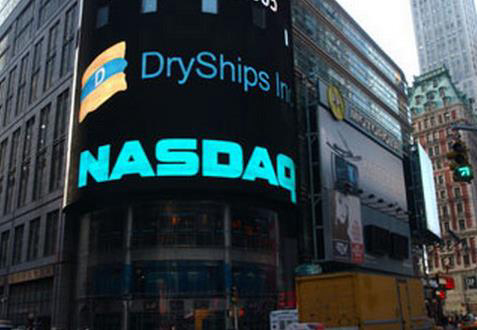
Under the agreement the Company may sell up to $200.0 million of its common stock to Kalani over a period of 24 months, subject to certain limitations. Proceeds from any sales of common stock will be used for general corporate purposes.
Kalani has no right to require any sales and is obligated to purchase the common stock as directed by the Company, subject to certain limitations set forth in the agreement. In consideration for entering into the agreement, the Company has agreed to issue up to $1.5 million of its common stock to Kalani as a commitment fee. No warrants, derivatives, or other share classes are associated with this agreement.
Mr. George Economou, Chairman and CEO commented:
"We are very excited to now have the ability to raise up to $200 million of equity having full control of the timing. Together with available liquidity in excess of $120 million we are now in a position to commence the process of re-building the Company's fleet and earnings capacity and pursuing investments in various shipping segments as they arise. We are already evaluating a number of opportunities that we hope will materialize in the very near future."
This press release shall not constitute an offer to sell or the solicitation of an offer to buy any securities. Any offers of securities will be made only by means of a prospectus supplement and accompanying base prospectus. A shelf registration statement on Form F-3 (File No. 333-202821), including a base prospectus, relating to the securities being offered has been filed with the U.S. Securities and Exchange Commission ("SEC") and declared effective. A prospectus supplement relating to the offering is being filed by the Company with the SEC. Copies of the prospectus supplement, together with the accompanying base prospectus, can be obtained at the SEC's website at http://www.sec.gov or from DryShips Inc., 109 Kifissias Avenue and Sina Street, 151 24, Marousi, Athens, Greece, Attention: Investor Relations.
About DryShips Inc.
The Company is an owner of drybulk carriers and offshore support vessels that operate worldwide. The Company owns a fleet of 13 Panamax drybulk carriers with a combined deadweight tonnage of approximately 1.0 million tons, and 6 offshore supply vessels, comprising 2 platform supply and 4 oil spill recovery vessels.
The Company's common stock is listed on the NASDAQ Capital Market where it trades under the symbol "DRYS."
DSME to build yard in Iran
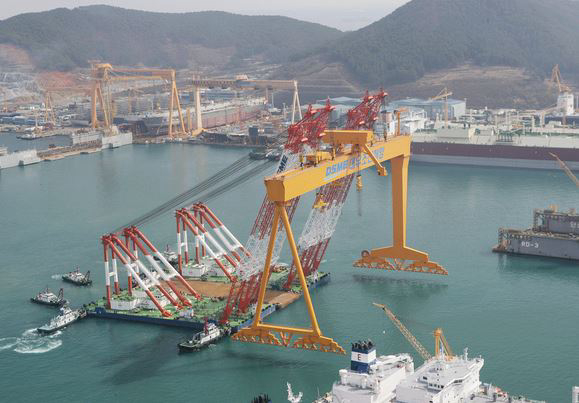
The yard will focus on building tonnage for Iran’s main lines, NITC and IRISL. DSME has a track record of supplying tonnage to Iran’s top two lines having built 38 ships and five rigs for Iranian companies over the years.
Sino-Global Signs Strategic Cooperation Agreement with COSCO Logistics
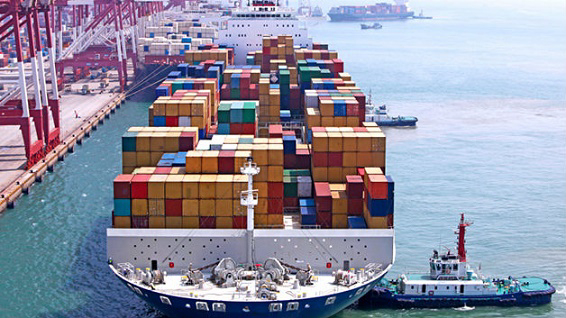
in which both companies will mutually provide logistics services between China and the United States and develop shipping customers as an end-to-end global logistics service. COSCO Logistics is part of China COSCO Holdings Company Ltd. (1919.HK/601919.SS), China's largest integrated shipping company which is publicly traded on both Shanghai Stock Exchange and Hong Kong Stock Exchange.
Sino-Global expects to work with COSCO Logistics to provide inland transportation services in US for shipments to and from China. The Company has worked to expand its business to provide logistics services to customers who ship goods into the U.S.A. In January 2016 Sino-Global formed a new subsidiary, Sino-Global Shipping LA Inc., and has been working to integrate inland trucking services to both coasts in the United States. These services include cargo forwarding, trucking and customs declaration and filing. The Company is seeking additional customer relationships and believes this partnership will assist in broadening its potential customer base.
As part of the Agreement, the two companies will also assess locations in America to potentially establish warehouse / distribution facilities in the coming months and share pricing information for short-haul trucking across selected regions of the country.
Mr. Lei Cao, Chief Executive Officer of Sino-Global, stated, "We are very excited to expand and reinforce our long-term relationship with COSCO. This Agreement combines our logistics expertise and relationships with that of COSCO's service component in Asia to provide a seamless bridge between China and the United States. We believe that both of our management teams share a similar vision for collaboration between merchants based in China and integrating trucking services in America coupled with the growing trend of e-commerce driven logistics services. Since establishing our west coast subsidiary, we have leveraged our global relationships to forge ahead with new customer agreements. We are very pleased with the progression and look forward to continuing to provide updates to our investors."
About COSCO Logistics Americas
COSCO Logistics Americas is a leading global supply chain services company dedicated to providing a wide range of transportation and distribution services. With operation centers strategically located throughout North America, COSCO Logistics offers an integrated supply chain network, designed to streamline supply chain and reduce cycle times from order placement to delivery.
COSCO Logistics is a subsidiary of China COSCO Holdings Company, China's largest integrated shipping company. China COSCO Holdings Company is public listed on Shanghai Stock Exchange under the code of 601919.SS as well as Hong Kong Stock Exchange under the code of 1919.HK.
About Sino-Global Shipping America, Ltd.
Founded in the United States in 2001, Sino-Global Shipping America, Ltd. is a company engaged in shipping, chartering, logistics and related services. Headquartered in New York, Sino-Global has offices in Los Angeles, Mainland China, Australia, Canada and Hong Kong. The Company's current service offerings consist of shipping agency services, shipping and chartering services, inland transportation management services and ship management services. Additional information about Sino-Global can be found on the Company's corporate website at www.sino-global.net. The Company routinely posts important information on its website.
How hard will OPEC’s production cuts hit tanker markets in 2017?
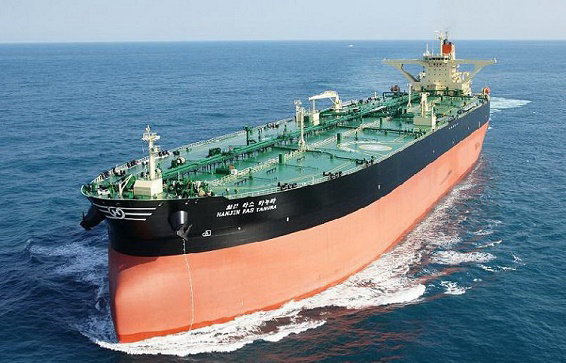
The agreement by OPEC members and non-members alike to cut production in an attempt to reduce oversupply will be a core determinant of conditions in 2017.
The latest MSI Quarterly Tanker Market analysis* finds that despite the cuts having a limited negative near-term impact, there are reasons to be positive on prospects for the longer-term.
Despite some seasonal upside in the final period of the year, 2016 has overall undoubtedly been a year of negative dynamics across the tanker industry. This has been the case both in terms of the annual change in freight rates, which has been universally negative against 2015, and asset prices, on which the twin gravitational forces of lower newbuild prices and lower earnings have acted forcefully.
Compared to other shipping sectors, the last couple of years in the tanker market have seen a distinct lack of trend. Markets have move up rapidly and then retreated at almost the same speed. Volatility and uncertainty over the shifting landscape of the oil market have been reflected and amplified in the tanker freight market.
“Oversupply of productive capacity in the oil market has been mirrored by excess tonnage capacity in the tanker market. Both are now rebalancing and although fleet growth is expected to remain high in 2017, low earnings and the ratification of ballast water treatment regulations support MSI’s expectations that tanker scrapping will move sharply higher in 2017,” says MSI Senior Analyst Tim Smith.
“This will helping construct a market recovery in 2018 and beyond, built on much lower fleet growth rates than being seen currently, both in the large crude and product tanker sectors.”
Relative restraint in Middle East crude production during 2017 has been and remains an implicit element of the MSI Base Case. OPEC’s decision to cut output remains fraught with uncertainty on how the group will manage to maintain discipline and encourage non-OPEC participants to join in. Moreover, the cut is not especially big.
Despite the negative ramifications of such action, MSI cautions on becoming too bearish, given the relatively light cut by OPEC, prospects for crude coming out of the US and potential improvement in the refining sector, should the oil glut be alleviated.
“This latter process has been protracted and downside risks of net fleet growth, a relapse in Chinese demand and broader macroeconomic malaise resulting from protectionist measures are still present, and could still push 2017 substantially lower than the MSI Base Case, adds Smith.
“The tanker market, like the oil market, is in a clearing phase, removing over-supply and rebalancing. That process could take another year or so before returning to a position where sustained gains can be made, but we remain positive on the long-term outlook.”
Source: Maritime Strategies International
Ship Finance Adds First 19,200 TEU Boxship
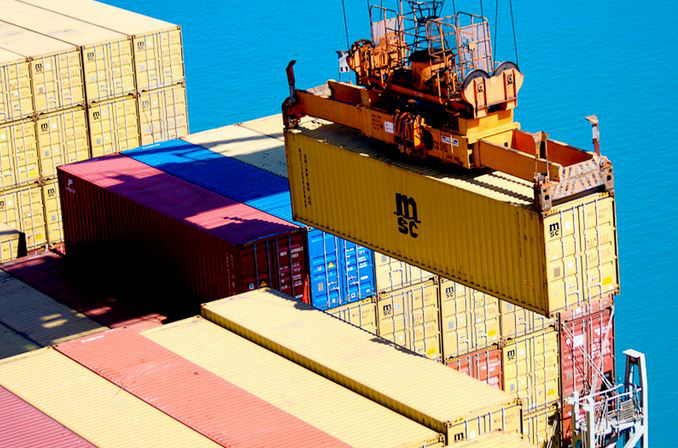
The ultra large container vessel (ULCV) is chartered out to Swiss-based Mediterranean Shipping Company (MSC) for a period of 15 years. Lease financing has been secured for the full term of the charter, according to Ship Finance.
The second vessel is expected to be delivered in February 2017. The newbuilding is also scheduled to start working for MSC, according to data provided by VesselsValue.
Furthermore, Ship Finance has appointed Gary S. Vogel to the board of directors to fill a vacancy on the board.
The firm said that Vogel has a long career in the dry bulk shipping market and is currently Chief Executive Officer (CEO) of Eagle Bulk Shipping, a US-listed owner and operator of geared dry bulk vessels.
Previously, Vogel served as CEO of Clipper Group in Denmark.
Ship Finance owns a fleet of more than 70 vessels comprising tankers, bulkers, container vessels and offshore assets.
Clarksons: Niche Sectors See Better Earnings in 2016
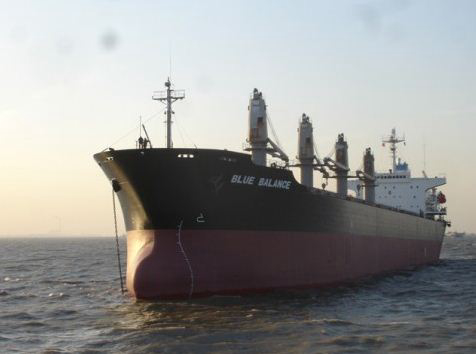
In the wider fleet some niche sectors have seen better earnings, but even so, most shipowners will surely be hoping that 2017 brings with it a significant change in fortunes, Clarksons said.
The ClarkSea Index, an average of earnings for tankers, bulkers, boxships and gas carriers, averaged USD 10,574 per day in November 2016, down 11\% on the average since the start of 2009, a handy marker for the onset of the downturn. In the dry bulk sector, the market has been under significant pressure for some time, and in November 2016, Capesize spot earnings stood 14\% below the average since 2009.
Meanwhile, oil tanker earnings have fallen this year, from a strong 2015, despite robust trade growth. Clarksons informed that firm fleet growth in both the crude and product tanker sectors has placed pressure on the tanker markets, with clean MR average spot earnings in November 23\% below the average since start 2009.

The specialised shipping sectors are faring little better. LPG market conditions have deteriorated acutely this year, reflecting the impact of rapid fleet growth, taking the one year VLGC timecharter rate from over USD 70,000 per day in mid-2015 to just USD 17,466 per day in November 2016. LNG market conditions have remained challenging, but may have now bottomed out, according to Clarksons.
The PCTC market has also come under pressure, with the rate for a 6,500 ceu vessel averaging USD 16,000 per day in November, down 24\% on the average since start 2009. In the general cargo sector, the boxship charter market has been notably depressed, with rates at bottom of the cycle levels. The 6-12 month charter rate for a 2,750 TEU boxship stood at USD 6,050 per day in November, 26\% lower than the average since start 2009.
“However, in some of the niche general cargo areas, things look a little better,” as timecharter rates for Ro-Ro vessels have firmed this year, with the November rate for a 4,000 lm vessel up by 43\% on the average since 2009.
Clarksons said that some niches are performing more strongly than others, with passenger ferry charter rates in November up 46\% on their start 2015 level, and the cruise sector in full-on expansion mode.
WISTA Hellas Annual Forum debates shipping’s resilience in an unstable environment

More than 300 shipping professionals attended the debate entitled “The Shipping industry maintaining its resilience in a continuously unstable environment” and follow-up dialogues by representatives from major market sectors, which further added to the success of the event.
Efthimios Mitropoulos, Secretary-General Emeritus of the International Maritime Organization (IMO), and Chairman of the Maria Tsakos Public Benefit Foundation, opened the forum which was moderated by Nigel Lowry, Correspondent of Lloyd’s List in Greece. The panel was composed of (in alphabetical order): Mariella Bottiglieri-Green, Managing Director of Giuseppe Bottiglieri Shipping Company S.p.A.; Karin Orsel, CEO of MF Shipping Group, Vice President of the International Chamber of Shipping (ICS) and President of WISTA International; Irene Panagopoulos, Managing Director of Magna Marine Inc.; Nicky A. Pappadakis, Chairman A.G. Pappadakis and Co. Ltd. & Vice Chairman Emeritus of INTERCARGO; Mr. Akis Tsirigakis, CEO of the Nautilus Offshore Services Inc.; and Harry Vafias, President and CEO of StealthGas Inc.
Each panelist offered their insight into the forum’s theme and responded to questions about some of the greatest challenges facing shipping today. The result was an open and impulsive discussion that kept the audience focused to the very end. Subjects discussed included global financial instability, low freight rates, maritime training, challenges faced by specific sectors, new onboard technology, and new investment in an uncertain business environment. A wide range of opinions and perspectives were aired, ensuring strong engagement throughout the debate.
In her opening address, WISTA Hellas President Angie Hartmann said: “Greek shipping stands tall, against every obstacle, showing great strength and honoring its history and tradition. It continues to maintain the leading role in the international maritime market”.
Closing the forum, Mrs. Hartmann thanked the panelists, the sponsors and the audience for a constructive and successful event, and invited everyone to a cocktail reception which lasted long into the evening.
 |
 |
 |
 |
 |
 |
 |
 |
 |
 |
 |
 |
 |
 |
 |
 |
 |
 |
 |
 |
 |
 |
 |
Diana Shipping get bulker newbuilding price cut

The shipowner said it had agreed with China Shipbuilding and Trading, and Jiangnan Shipyard to reduce the price of two newcastlemax bulker newbuildings by $1m each the. The newbuildings expected to be delivered on 4 January 2017 are now priced at $47.7m compared to $48.7m previously.
Diana Shipping has also chartered the 208,500 dwt vessel Newport News, currently under construction, to SwissMarine for between 22 and 26 months. The daily gross charter rate will be 24\% above the BCI_2014 average of the five pre-determined time charter routes as published by the Baltic Exchange minus a 5\% commission.
It has also chartered two panamax vessels to Glencore Agriculture. The Naias has been chartered for 9 – 13 months at $7,750 per day minus 5\% commission, while the Leto has been chartered at $7,500 per day minus 5\% commission for 7 – 10 months.
© Copyright 2016 Seatrade (UBM (UK) Ltd).
Boxship owners send record 700,000 slots for scrap in 2016
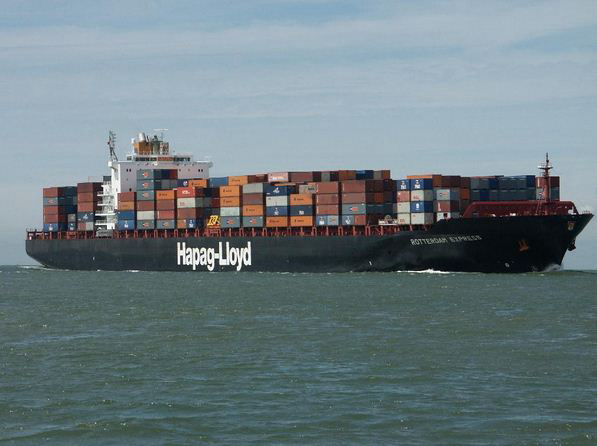
As of December 20, a total of 699,000 teu (201 ships) had been sent for scrap, smashing all records. By comparison, 187,500 slots were sold for recycling in 2015.
Splash understands German companies have been the most keen to scrap ships, especially given their strong share of panamax boxships – a subsector that has dropped in value dramatically this year.
Braemar ACM is reporting that in the 30 days from November 21 to December 20 32 ships equating to 102,000 teu were sold for scrap.
A wintry outlook for shipping

Simply put shipping, or that part that is in the public eye, continues to decline as revenues fail to cover costs while the ships age and decline in value.
Much has been written about Brexit and the Trump win in the US election but I suggest neither will have any effect on international shipping.
Shipping is a unique industry in that most of the ships are registered as owned in small nations, Open Registries, which can process all the shipping paperwork, but are barely involved in the actual trade of the ships.
This has created an enormous efficiency as thousands of ships have been built and are operating with little or no political influence from the nations at either ends of their voyages,
However, some countries have imposed restrictions on their domestic seaborne trade. The largest of these is the infamous US Jones Act that restricts shipping between US ports to US owned companies using ships built in the USA and employing US crews.
This has combined to create an enormous surcharge on the domestic shipping trade and has prevented coastal shipping solutions taking cargoes off the clogged highways of the US East coast.
The shipping industry has raised substantial funds through the public stock markets, supported by an equally huge amount of debt from careless banks and export credit agencies in the major shipbuilding nations of Korea and China,
These funds were chasing the illusion that ship values would quickly rise enabling the ships to be sold for a profit.
The reality is that shipping is a service industry whose assets physically depreciate over a relatively short time and only earn money when they carry cargoes.
The influx of this new money caused a surge of orders for new ships culminating in a huge increase in the carrying capacity of most sectors of the world fleet, at a time when the Chinese industrial boom had stalled and continues to decline.
Thus the cargo interests have been able to set freight rates at historically low levels, below operating costs in many sectors. This has caused most shipping companies to be unprofitable and unable to generate funds to replace their ageing fleets.
Investors need to understand the workings of the industries they invest in and not attempt to influence the values of the assets that generate the operating revenues.
Shipping will continue to carry the world’s cargoes into the far distant future but as ships physically depreciate so the capital requirements for their replacements will continue. Unfortunately the industry’s present problem, caused by excessive investment in new ships, has created a severe financial recession in the companies that own and operate the ships.
Service industries flourish by meeting the demands of their customers and shipping provides an extraordinary service operating thousands of ships of all types and sizes. However investors have speculated in building hundreds of new ships without securing their profitable employment.
Investors who have speculated by funding the construction of hundreds of new ships without securing any profitable employment when they are delivered, has caused most of the shipping industry to languish in losses.
Cargo owners would pay more for shipping their cargoes if there were fewer ships available and the owners were financially able to properly maintain and operate the ships with greater efficiency for their customers.
Surprisingly a lot of new funding has emerged for some of the public companies but one most hope it isn’t wasted on ordering new ships.
A closer relationship between shipowners and cargo interests is essential for both industries to flourish and continue to carry world trade for the foreseeable future.
© Copyright 2016 Seatrade (UBM (UK) Ltd).

Powered by  © Μaritimes 2019