

-
Home

-
Maritimes NEWS
-
Ports
- maritimes


maritimes
INTERCARGO Statement on Black Sea Grain Initiative

INTERCARGO, which represents the world’s dry bulk carrier owners, expressed its concern at the cessation of the Black Sea Grain Initiative.
This humanitarian initiative has enabled the safe transit of ships exporting various agricultural products from three Ukrainian ports – Odesa, Chornomorsk, and Yuzhnyi. It has been instrumental in preventing a global food crisis and some 32.9 million metric tonnes have been exported through the corridors with a significant quantity supporting the World Food Programme. The scheme has also been paramount in protecting the lives of dry bulk carrier seafarers operating ships in the Black Sea area.
INTERCARGO stresses the importance of using all resources available to ensure safety of navigation for bulk carriers and their crews and supports all efforts by the International Maritime Organisation (IMO) and international initiatives to find a solution to protect the global supply chain and food security.
Sustainable bio-path towards decarbonization
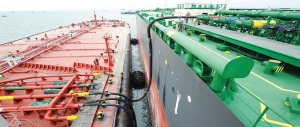
The shipping industry is facing a pressing challenge: the need to decarbonise and reduce its impact on climate change. As regulators push for stricter environmental standards, the use of biofuels in shipping has emerged as a promising solution. Biofuels, such as methane, methanol, and fuel oils derived from biomass, offer a convenient and potentially carbon-neutral way for the maritime sector to achieve its decarbonisation goals.
Biofuels have gained traction due to their drop-in capability, allowing them to mix with existing fossil fuel counterparts. This flexibility appeals to shipowners as it offers a cost-effective approach to carbon reduction without necessitating substantial capital investments. By leveraging the carbon-neutral properties of biofuels, shipping can significantly contribute to global decarbonisation efforts and mitigate its impact on climate change.
The findings presented in DNV’s Biofuels in Shipping white paper suggest that biofuels can play a significant role in the decarbonisation of the shipping industry. However, in the short-term, there are limitations on the production capacity of advanced biofuels, which may restrict their supply to the shipping sector. Furthermore, as other industries also strive to adopt biofuels for decarbonisation, competition for sustainable biomass resources may arise, potentially affecting the availability of biofuels for shipping.
At present, DNV calculates the global production capacity for sustainable biofuels stands at approximately 11 million tonnes of oil equivalent (Mtoe) per year. However, DNV projects this capacity will increase to 23 Mtoe per year by 2026. Considering stringent sustainability criteria, the estimated sustainable and economically viable supply of biofuels could reach 500-1,300 Mtoe per year by 2050.
This would account for 20-50% of total potential supply in 2050, said DNV.
Sustainability and capacity
The class society said it is important to address two critical aspects that impact the contribution of biofuels to shipping’s decarbonisation. The first is sustainability. The sustainability of biofuels depends on the feedstock used and the production process. Strict sustainability measures, in line with regulations like the EU’s Renewable Energy Directive II (RED II), must be implemented to ensure the protection of high-carbon stock forests and avoid negative environmental impacts.
The second is production capacity. While the current global production capacity for advanced biofuels is projected to increase, scaling up production remains crucial, said DNV. The utilisation of advanced biomass sources, particularly forestry and wood industry residues, shows promise for expanding biofuel production.
The maritime industry has conducted numerous trials of biofuels onboard ships over the past few decades. Bio-methanol and bio-LNG, with similar properties to their fossil-based counterparts, offer drop-in capability without modifications to existing vessels, provided the necessary onboard equipment is installed. However, for biodiesels and bioliquids used as replacements for fuel oils and distillates, drop-in capability depends on factors like feedstock and production processes, necessitating a case-by-case evaluation.
said Eirik Ovrum, principal consultant in DNV Environment Advisory and co-author of the biofuels white paper. “Dialogue should be held with engine manufacturers and equipment suppliers to make sure that there are no compatibility issues with certain biofuels. Seafarers and other personnel should be provided with relevant training related to the application of biofuels.”
Biofuels are already helping to decarbonise other sectors, such as cooking, water and space heating, timber, pulp and paper production, and road transport.
Slow uptake
Biofuel use in shipping has so far been very low. Before 2022, use was limited to demonstrations, pilots and trials. However, in 2022, use accelerated with reports of around 930,000 tonnes of blended biofuel being bunkered in Singapore and Rotterdam.
“Blended biofuels typically consist of around 30% biofuel so we concluded that these figures from Singapore and Rotterdam accounted for around 280,000 tonnes of pure biofuels,” said Ovrum. “Whilst this might seem like a large number, it still accounts for just 0.1% of total maritime fuel consumption of 280 million tonnes of oil equivalent (Mtoe) per year.”
Therefore, while biofuels hold great promise for decarbonising shipping, it is unlikely that they will be the sole solution for achieving zero greenhouse gas (GHG) emissions in the future, said DNV. “In the short-term, there are limitations on production capacity of advanced biofuels that may limit the supply to shipping, and a large-scale building out of production capacity is needed. In the longer-term, depending on the extent to which other industries use bioenergy as a pathway to decarbonisation, there could be limitations on the availability of sustainable biomass to produce marine biofuels.”
“We are already seeing progress in the uptake of biofuels in shipping and we predict significant growth in the years ahead,” added Ovrum.
This means combining biofuels with more energy efficiency measures as well as developing the infrastructure for other carbon-neutral fuels.”
Source: Baltic Exchange
Dry Bulk Market: Capesize Market Gradually Stabilizing

Capesize
The Pacific market this week was marked by overall sluggishness, experiencing limited activity. The presence of two out of the three major players failed to stimulate trading volumes, leading to stagnant and lacklustre market conditions. Rates in the Pacific have continuously declined throughout the week, reflecting the subdued demand and limited fixture activity. Today’s market activity has shown a slight correction in rates, with a few fixtures concluding at slightly improved levels.
In contrast to the Pacific, the Atlantic market has experienced a slightly higher level of activity, primarily driven by the South Brazil and West Africa routes to the Far East. However, despite this modest increase in activity, the market faced difficulties in gaining momentum or making any significant progress. Throughout the week, freight rates have come under pressure, although, as the week comes to an end, brokers have observed signs indicating that the market is gradually stabilising, suggesting that it may be beginning to establish a more balanced level and a notable clear out of tonnage.
Panamax
The Panamax market provided further losses this week and is showing little signs of abating. Despite a steady level of activity, this failed to stem the tide with both basins yielding sizeable losses. The Atlantic saw rates erode for a further successive week, as pressure from the nearby and committed ships continued to underpin the market. From East Coast South America, the focus this week was on mid-August arrival with the APS load port rates now hovering around the $14,000 + $400,000 mark, but limited support to end the week. Asia similarly witnessed another week of falls. A lack of demand on the longer round trips remained the nemesis to an already weak market. There were reports midweek of an 82,000-dwt delivery Japan achieving $8,750 for an Australian round trip, but activity remained light as the market drifted. Like previous weeks, older and smaller units tended to soak up much of the Indonesia coal demand.
Ultramax/Supramax
A mixed week for the sector with the Asian arena leading the way. The Atlantic generally remained positional throughout, with the US Gulf being the only relatively stable region despite slightly lower levels of enquiry as the week progressed. From Asia, the demand for Indonesian coal remained, which helped rate levels to remain fairly reasonable. However, a lack of support from the NoPac kept rates in check and readily available tonnage. In the Atlantic, a 52,000-dwt was heard to have been fixed for a trip to EC Mexico at $12,500. Elsewhere a 54,000-dwt fixed a trip from Spain to Morocco with grains at $9,500. From Asia, a 56,000-dwt open Indonesia fixed a trip to China in the mid $10,000s. Further north, a 55,000-dwt fixed from North China to SE Asia at $5,000. Elsewhere, a 55,000-dwt fixed a trip delivery Bin Qasim redelivery Madagascar at $6,750 for the first 33 days and $10,750 thereafter.
Handysize
With summer fully underway, it was a week of limited activity across both basins. In the South Atlantic, whilst prompt activity was said to have remained restrained, there was optimism that August would bring some positivity to the region as levels of enquiry were said to improve. A 39,000-dwt was fixed from Santos to Morocco at $11,500 and a 37,000-dwt fixed from Rio Grande to Venezuela with an intended cargo of paddy rice at $13,500. Meanwhile a 40,000-dwt fixed from San Lorenzo to Santos at $8,500. On the Continent a 36,000-dwt fixed from Rostock to the US Gulf with an intended cargo of grains at $5,000 and a 34,000-dwt fixed from Grenaa to Icdas with an intended cargo of scrap at $5,250. In Asia, a 38,000-dwt was fixed from Geelong via Western Australia to China with an intended cargo of grains in the high $8,000s whilst a 38,000-dwt was fixed from Kuantan via Indonesia to Taiwan at $6,300.
Source: The Baltic Exchange
Hellas: The Shipping Fleet Grew in Both Size and Age During 2022

The Greek-owned fleet grew in size during 2022, but as newbuilding deliveries dwindled, so did its age. In fact the average age now stands at its highest point of the last decade. In the latest report, published from Petrofin Research, is noted a relatively small increase in the tonnage of the Greek fleet by 3%. In absolute numbers, the fleet has gone up by 286 units of all types and sizes. This has as a result a reduction in the average size of vessel and an increase in the fleet’s age by slightly more than a year.
All vessel type and size tonnage grew by 2.8% whereas the number of these vessels went up to 6,409 from 6,123. Consequently, the average size went down to 72.5 thousand tons DWT. Age also went up to 14.1 years, something that we had not seen since 2014. The story here could be that Greek owners showed a preference for second hand tonnage, as decisions for newbuildings are not being taken easily in view of the yet undecided new technologies that will lead the fleet to zero emissions by 2050
The number of Greek companies went down to 599, reversing the slow rise of the last 3 years. In 2021 there were 607 Greek companies up from a low of 588 in 2018 but down from an all time high in 1998. The overall consolidation trend continues.
In terms of the size of the companies, the number of 25+ vessel companies continued to rise to 56 in 2022, up from 54 in 2021 (Graph 3), marking the highest number ever. Tonnage wise they are up by 18.17m tons DWT from 2021.
Over 1m ton owners went down by 4 to 78, compared to 82 in 2021, to 80 in 2020, 81 in 2019. Their percentage of the fleet is also slightly down to 78.3% compared to 79% in 2021. The 80% share of the ton millionaires continues to represent a significant barrier.
The number of companies running very young fleets (0-9 years of age) continues its downward trend, this time below 100 to 99, back in the levels of 2008-2009. This reflects the scepticism belying the ordering of newbuildings which results in the rise of the average fleet age.
The rise in age that began in 2018 continues. The total age of the whole of the Greek fleet in 2022 was 14.1, compared to 13 in 2021, 13.2 in 2020, 12.2 in 2019 and 12.08 in 2018. As explained above, we note the slowdown of a) newbuilding deliveries, b) the acquisition of market based tonnage and c) reduced scrapping.
The continuous growth of the Greek fleet is reflected in the latest figures and this trend is expected to continue.
The Greek fleet of all types and sizes of vessels went up by 286 vessels in 2022. Of these, 185 vessels of all types were over 20,000 tons DWT. These vessels represented an increase of 12.2m tons DWT. They are also run by less companies than 2021, 402 down from 406 companies in 2021.
The Dry bulk fleet (vessels over 20,000 DWT – Graph 6) gained 97 units, significantly less than the 183 vessels added in 2021 which had followed the loss of 21 vessels during 2020. This is a versatile market that responds quickly to market conditions.
After the sharp growth with the addition of 60 vessels in 2021, 2022 was quite stable with the addition of only 2 Containers to the the large Container fleet (vessels over 20,000 DWT – Graph 7). The Container market moved cautiously during 2022.
The large Tanker fleet (vessels over 20,000 DWT – Graph 8) showed small growth with the additions of 5 units. The relative stability in the rise of the tanker fleet age, shows some significant internal reshuffle of the fleet, which kept the fleet’s age at 10.23 years, almost similar to 2021.
The LNG fleet has remained the same.
Large LPGs continue their steady growth, not so much in tonnage terms, but in as much as in selling older and buying younger units.
All vessel type and size tonnage grew by 2.8% whereas the number of these vessels went up to 6,409 from 6,123. Consequently, the average size went down to 72.5 thousand tons DWT. Age also went up to 14.1 years, something that we had not seen since 2014. The story here could be that Greek owners showed a preference for second hand tonnage, as decisions for newbuildings are not being taken easily in view of the yet undecided new technologies that will lead the fleet to zero emissions by 2050
In its analysis, Petrofin Research said that “in 2022, the Greek fleet grew but, as had been forecasted, at a slower pace of 2.8% in DWT terms or a rise of 286 vessels. There was also a noticeable slowdown in S&P activity and scrap sales. As a result, the age of the fleet increased by 1.1 year. The numbers of Greek companies continue to hover around the 600 mark. This number is affected by economies of scale and the state of the market as well as scrapping / sales of older fleets but also by new players emerging with the ability to grow.
It is noteworthy that the smaller fleet sizes have shown the biggest decline in numbers as opposed to the medium to largest fleets which continued to grow. The top 70 Greek fleets now account for over 75% of the total whilst the number of fleets of over 1m DWT account for 78% of the total.
For over 20,000 DWT sized vessels, we note that Dry bulk saw increase in the total DWT, in the number of vessels and in the number of companies engaged in the sector, but a modest rise in the age of the fleet. The Container sector was flat in terms of numbers with an average age rise too.
The same was the case with Tankers except that this sector’s average fleet age did not show a rise.
The LNG sector continued to show progress and signs of consolidation with modest rises in the number of vessels and total DWT, but a fall in the number of operating companies. The fleet’s age also rose but still stood at a very low level of 5.7 years.
The LPG sector also displayed modest growth in the number of vessels, total DWT and a fall in the average age down to 7.15 years.
Interestingly, the number of fleets with an average age of 0-9 years old continued to fall from a peak of 189 in 2015 to 99 last year. This is to be expected as the overall Greek fleet is older but the main cause is probably due to the slowdown in newbuilding deliveries and the decline of the order book from its peak of 2015. The trend clearly shows that during 2022, most owners remained in doubt whether to invest in existing technology or await for new technology designs. The Greek orderbook as of the first half of 2023 has gone down by 20%, however, dual fuel vessels stand at a significant 34% of the total orderbook. In terms of type of vessel preference, LNG and tankers stand at the top especially with the big owners such as Angelicoussis Group and Marinakis (Nor-Shipping 2023 – Tradewinds), but the trend of being cautious at investing in new technology remains.
The way forward
Greek shipping is at the limb of the energy transition. The impact of the emissions regulations on vessel selection, ordering, emission saving devices, dual fuel and technological progress is weighing heavily on owners’ decisions. There is also no visible new technology in the horizon that can lead the industry to zero emissions soon.
In the presence of so much uncertainty and constraints coupled by geopolitical tensions and sanctions, impaired trade flows, slow seaborne trade, assymetrically high vessel prices compared to prevailing freights and high interest rates, it is not unusual for Greek owners to have taken a breather in 2022 in their investment decisions. The only exception was in dry bulk whose fortunes weakened as the year progressed.
The gravity and impact of the emissions regulations are now felt to be more imminent and stronger. Lenders as well, have expressed their preferences and keenness on eco / dual fuel vessels. In the second-hand market, activity has waned although there has been a trend of divesting by Greek owners in Tankers and replacing them with Dry bulk.
Overall, it is anticipated that in the next couple of years the Greek fleet may record some contraction. It is expected, though, that a recovery might resume when newbuilding deliveries and net S&P purchases rise in 2024/25”, Petrofin concluded.
Source: Petrofin Research
[xclusiv] S&P Report 24th July 2023
![[xclusiv] S&P Report 24th July 2023](/media/k2/items/cache/63e8f1276137b7e4efe542423e26cbf4_Generic.jpg)
Market Commentary:
Earlier this week Russia stepped back from the UN Black Sea Grain Initiative. Moscow announced that it will no longer guarantee the safety of ships exporting grain from Ukraine through the Black Sea. Furthermore, according to Russian’s defence ministry announcement, all ships travelling to Ukraine are potentially carrying military cargo on behalf of Kiev, with their flag countries being considered parties to the Ukrainian conflict. This decision has escalated the military action in the region, with Russia attacking the harbor of Odesa, damaging port infrastructure and putting a stop to seaborne trade. With the harvest season on the horizon, the Russian suspension of the “grain initiative” is a massive blow to the world’s supply of food and will definitely have an effect on the seaborne trade and freight rates.
In 2023, Ukraine - despite the Russian invasion - has managed to support its grain exports and with the Sea Grain initiative active, to achieve almost 50% higher wheat exports and about 15% increased coarse grain exports compared to 2022, the year that the war started. This had a positive impact on seaborne trade, as Black Sea’s port calls were between 20 and 35 every month, keeping vessels active when almost every other kind of commodity can’t depart from Ukrainian ports. The suspension of the Black Sea Grain Initiative will mostly affect the food industry as the loss of nearly 33 million tonnes of grain that were exported the last year will and send global food prices spiralling. The Shipping industry probably won’t be affected much. Maybe there will a small turbulence within the first weeks but the global need for wheat and grains will push the market to search for alternative suppliers, something that will add tonne miles and eventually give a small boost to the vessel demand. Even if Ukraine decides to use the Danube River and transfer grain to Constanta Port in Romania, this will give a small support to the Black Sea seaborne trade, absorbing a small part of the vessels that were using the grain corridor. One must always have in mind that the water level in the Danube is getting lower day by day due to drought, so it is not possible to load barges with wheat at full capacity making the River a less attractive alternative. The main alternatives will be Canada, Russia, US, Argentina and Brazil probably leading to an increase in tonne-miles to markets in Africa, the Middle East, and Asia and eventually absorbing the hit that freight rates might have from the suspension of the grain corridor.
Dry bulk market hasn't had one of its best periods so far this year, with the seven-month average of 5 main TC routes of Capesize being at USD 12,415/day, almost 32% down compared to the same period average of 2022, having highlighted the slightest decrease in contrast to other segments. Furthermore, the average for the first seven months of 5 main TC routes of Panamax is at USD 11,545/day, 53% reduction in comparison with the 2022’s TC average. The seven-month average of 10 main TC routes of Supramax and 7 main TC routed of Handysize have witnessed the greatest drop, with the former standing at USD 10,245/day, around 62% down in comparison with the 7-month average of 2022 and the latter paying less than USD 10,000/day and being at USD 9,819/day, a reduction of 61% compared to first seven-month Handysize TC average. The reason that the TC average of Capesize has fared better that the other vessel sizes might be China and its coal imports. More specifically, during the first six months of 2023, China has imported a total of around 172 million tonnes of coal (coking and steam). This amount is almost 79% higher than the 96 million tonnes of the first half of 2022 and about 25% higher than the second half of 2022. Going further back to the end of June 2021, China had imported 118 million tonnes of Coal, almost 30% lower than the same period of 2023. Seaborne imports of Steam coal had the most significant increase as in 2023 China imported about 148 million tonnes, almost double the amount comparing the seaborne imports of January-June 2022 and about 50% higher comparing to the first half of 2021. China’s seaborne coal imports increase may keep its pace during the second half of 2023, as the simultaneous heat waves hit China push the country to burn more coal to maintain a stable electricity supply for air-conditioning. That increase in coal imports may create a support for the dry bulk market, so as to the freight rates to remain to at least to current levels.
Sale and Purchase:
The dry S&P market had more activity the previous week than wet. The acquisition of 2016 built Newcastemax vessel “HENRIETTE OLDENDORFF” – 209K/2016, Jiangsu for high USD 46 mills by South Koreans and the sale of “HL PASSION” – 179K/2015, Dalian for USD 35.5 mills and “AQUAKATIE” – 174K/2007, SWS for USD 15 to Greeks, highlighted appetite for larger tonnage. Kamsarmax “RESTINGA”- 83K/2006, Tsuneishi was sold to Greeks for USD 13.85 mills, while the Ice class 1C panamax “DELPHINUS” – 77K/2007, Namura was sold for low USD 13 mills. At the supramax size there are four sales this week with “RHINE CONFIDANTE” – 57K/2010, Ningbo sold at region USD 11 mills, “JENNY M” – 56K/2007, Mitsui sold for mid USD 12 mills and the “RHL MARTA” – 53K/2007, CSSC and “GISCOURS” – 53K/2009, Zhejiang both sold for USD 10 mills each. Finally, the “BEN RINNES” – 35K/2015, JNS with electronic M/E and 2-year index charter was sold at region USD 16.5 mills to Greek buyers, while at the same time “VOGE JULIE” – 36K/2011, Qidong Daoda was sold at region USD 12.5 mills.
In tanker S&P activity, there were two VLCC sales last week. “ASTRO CHLOE” – 318K/2009, HHI and “C. CHAMPION” – 314K/2003, Samsung were sold to undisclosed buyers at the region of USD 62 mills and USD 40 mills respectively. The Aframax “STEALTH BERANA” – 116K/2010, Samsung was sold to C3is, an affiliate company of its owner for USD 43 mills, while the LR2 “WELLINGTON” – 109K/2009, Shanghai Waigaoqiao was sold at region USD 39.5 mills.
GLOBALink | Chinese economy sees hard-won recovery in H1 amid global downturn

BEIJING, July 19 (Xinhua) -- "I think that China's economic performance in the first half of this year has been actually quite creditable." International experts have spoken highly of China's economic performance in the first six months of 2023.
Produced by Xinhua Global Service
GLOBALink | China's economic recovery continues with promising outlook

BEIJING, July 21 (Xinhua) -- Despite external challenges, the Chinese economy has shown remarkable improvement and performance this year, instilling confidence in its development prospects.
Produced by Xinhua Global Service
GLOBALink | China-U.S. economic, trade ties as inseparable as "threads and needles": Chinese diplomat

NEW YORK, July 20 (Xinhua) -- Chinese Consul General in New York Huang Ping said Tuesday that the economic and trade ties between China and the United States connect both sides of the Pacific and are as inseparable as "threads and needles."
He made the remarks at the opening ceremony of the 24th China Textile and Apparel Trade Show at the Javits Center in New York City.
The three-day event, held in parallel with Texworld New York, Apparel Sourcing New York, and Home Textile Sourcing Expo, gathered nearly 800 Chinese fabric, home textile, and apparel manufacturers to showcase their latest products and collections to their American fashion clients.
From 2020 to 2022, China's annual average of textile and apparel exports surpassed 300 billion U.S. dollars, reaching an all-time high of 323.3 billion dollars in 2022.
Produced by Xinhua Global Service
China's installed renewable energy capacity surges in H1
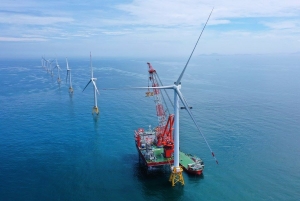
BEIJING, July 20 (Xinhua) -- China's installed renewable energy capacity saw robust growth in the first half (H1) of the year amid the country's efforts to advance its green transition, according to the National Energy Administration (NEA).
By the end of June, the installed capacity of renewable energy reached about 1.32 billion kilowatts, surging 18.2 percent compared with the same period last year, said the NEA.
In breakdown, the installed capacity of wind power expanded 13.7 percent year on year to 390 million kilowatts, while that of solar power stood at about 470 million kilowatts, representing a yearly increase of 39.8 percent.
The country's installed power generation capacity totaled about 2.71 billion kilowatts, rising 10.8 percent year on year, the NEA said.
China has enhanced its renewable energy investment over the years as part of its pursuit of green development.
In the first six months of 2023, the total investment of China's major power companies in solar energy soared 113.6 percent year on year to 134.9 billion yuan (about 18.88 billion U.S. dollars), the data showed. ■
China's coastal bulk freight index down in June
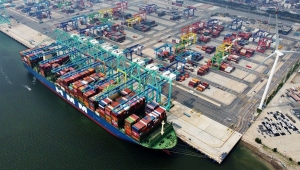
SHANGHAI, July 18 (Xinhua) -- China's coastal bulk freight index went down 4.3 percent month on month in June, data from the Shanghai Shipping Exchange (SSE) showed.
Last month, the composite index for coastal bulk freight, which measures transportation costs in the coastal shipping market, stood at 960.49, according to the SSE.
In this period, the sub-index for grain logged the most notable decrease of 9.6 percent, followed by that for coal and metal ore, according to the data.
The sub-index for refined oil fell 1.7 percent over the previous month, while that for crude oil remained flat month on month.
In 2022, the composite index for coastal bulk freight averaged 1,124.52, SSE data showed.
The SSE initiated the index in 2001 under the guidance of the Ministry of Transport to fully reflect fluctuations in the Chinese coastal transport market. ■

Powered by  © Μaritimes 2019