

-
Home

-
Maritimes NEWS
-
Ports
- maritimes


maritimes
Update: Xi calls for striving to realize economic goals in 2023

BEIJING, July 24 (Xinhua) -- Xi Jinping, general secretary of the Communist Party of China (CPC) Central Committee, has called for striving to realize economic development goals in 2023 at a meeting recently.
The CPC Central Committee held the symposium with non-CPC personages on July 21 to seek opinions and suggestions on the country's current economic situation and economic work for the second half of the year. Xi presided over the symposium and delivered an important speech.
To do the economic work well for the second half of the year, the general principle of pursuing progress while ensuring stability should continue to be followed, Xi said.
Efforts should be made to fully and faithfully apply the new development philosophy on all fronts, accelerate the building of a new pattern of development, comprehensively deepen reform and opening up, intensify macro regulation, expand domestic demand, boost confidence and prevent risks, he said.
He also stressed pushing for the continued improvement of the economic performance, endogenous driving force and social expectations, continuously defusing risks and hidden dangers, and effectively upgrading and appropriately expanding China's economic output.
Li Qiang, Cai Qi and Ding Xuexiang, members of the Standing Committee of the Political Bureau of the CPC Central Committee, attended the meeting. Li briefed on the economic work in the first half of the year and the planning for the second half.
Leaders of eight non-CPC parties, head of the All-China Federation of Industry and Commerce, and a representative of personages without party affiliation made remarks respectively at the meeting, raising suggestions on topics such as promoting high-level opening-up, accelerating the development of artificial intelligence, speeding up the development of biomedicine, and promoting new-type consumption.
Xi said that under the CPC leadership, the Chinese economy continued to recover in the first half of the year, with solid progress made in high-quality development.
China's economic recovery speed took the lead among major economies, with sound economic fundamentals unchanged in the long run and a bright prospect, he said.
To cope with prominent challenges in the economic operation, efforts should be made to strengthen macro-control and expand demand, Xi said.
He called for pushing forward industrial upgrades and optimization, deepening reform and high-level opening up, preventing and defusing risks in key areas, and ensuring and improving people's wellbeing, so as to realize continuous economic growth and development goals in 2023.
Xi expressed gratitude to the non-CPC parties and personages as their proposals and suggestions on major issues, such as restoring and expanding consumption, accelerating high-quality development of digital economy, and promoting the optimization and upgrading of key industrial chains of manufacturing industry, had provided important references for the scientific decision-making of the CPC Central Committee.
He expressed the hope that they will continue to comprehensively understand and accurately grasp the policies and arrangements made by the CPC Central Committee, make research and offer suggestions on major issues including infrastructure construction, modernization of the industrial system, and reforms in key areas, and build consensus and confidence to further stimulate vitality of business entities. ■
Update: CPC leadership maps out priorities for China's economic development in H2

BEIJING, July 24 (Xinhua) -- The Political Bureau of the Communist Party of China (CPC) Central Committee on Monday held a meeting to analyze the current economic situation and make arrangements for economic work in the second half of the year (H2).
Xi Jinping, general secretary of the CPC Central Committee, presided over the meeting.
The meeting called for carrying out macroeconomic regulation with precision and force, strengthening counter-cyclical regulation, and making more policy options available.
Currently, China's economy is facing new difficulties and challenges, which mainly arise from insufficient domestic demand, difficulties in the operation of some enterprises, risks and hidden dangers in key areas, as well as a grim and complex external environment, it said.
It is necessary to stick to a proactive fiscal policy and a prudent monetary policy, extend, optimize, improve and ensure the implementation of tax and fee reductions, and give full play to the role of quantitative and structural monetary tools, it said.
Strong support will be given to scientific and technological innovation, the real economy, and the development of micro, small and medium-sized enterprises, according to the meeting.
The RMB exchange rate shall be kept generally stable at an appropriate and balanced level, the meeting noted, pledging efforts to invigorate the capital market and boost investor confidence.
The meeting demanded efforts to actively expand domestic demand and give play to the fundamental role of consumption in driving economic growth.
Consumption of major items including automobiles, electronic products and household items should be boosted, and spending on services such as sports, leisure and cultural and tourist services should be encouraged, according to the meeting.
Government investment should better play the role of driving overall investment, with faster issuance and use of local government special-purpose bonds.
More policies should be formulated and rolled out to spur private investment, while multiple measures should be taken to keep the country's foreign trade and investment stable, according to the meeting.
The number of international flights should be increased, the meeting demanded, while calling for efforts to keep China-Europe freight train services stable and unimpeded.
It also urged accelerated steps to foster and expand strategic emerging industries and develop more mainstay industries, as well as moves to promote the in-depth integration of digital economy with advanced manufacturing and modern services and to advance the safe and sound development of artificial intelligence.
Efforts should be made to promote the well-regulated, healthy and sustained development of platform enterprises, said the meeting.
Authorities should establish and improve regular communication and exchange mechanisms with enterprises, which will be encouraged to venture, invest and take risks to actively explore new markets, according to the meeting.
It called for supporting pilot free trade zones and free trade ports that are eligible in aligning with high-standard international economic and trade rules and trying out reforms and opening-up measures.
The meeting also urged meticulous efforts to host the third Belt and Road Forum for International Cooperation successfully.
The meeting called for concrete efforts in preventing and defusing risks in key areas, and adapting to the new situation that major changes have taken place in the relationship between supply and demand in China's real estate market.
Real-estate policies should be adjusted and optimized in a timely manner, the meeting said, adding that the policy toolkit should be well utilized with city-specific measures to better meet residents' essential housing demand and their needs for better housing, and advance the stable and sound development of the real estate market.
The meeting also urged expanding the supply of government-subsidized housing, preventing and defusing local government debt risks, strengthening financial regulation and steadily encouraging high-risk small and medium-sized financial institutions to defuse risks through reform.
It stressed that stabilizing employment should be considered from a strategic and overall perspective, and that the scale of the middle-income group should be expanded.
Efforts should be made to resolutely prevent major and serious accidents from occurring as well as to ensure power supply in summer. ■
World Insights: America's lies are endless, but it can't fool all the people all the time
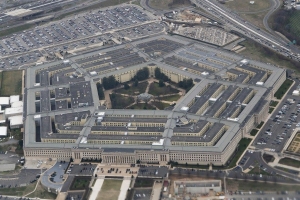
"Concealment, deception, and outright lies have characterized U.S. national security policy for decades. Lies are an integral part of national security operations."
BEIJING, July 24 (Xinhua) -- Just when America is in the middle of a grave opioid crisis leading to more accidental deaths across the country than ever before, Washington has begun arresting and indicting Chinese individuals and companies on fentanyl-related charges, spinning anti-China lies and blaming China for its own inadequate supervision.
But lying and buck-passing won't make those problems disappear, nor can they fool all the people all the time. The truth is, the more lies America piles up, the less credibility it holds on the world stage.
NATIONAL SECURITY POLICY FEATURES DECEPTION
Over the years, under the banner of "freedom, democracy, and human rights," the United States has wantonly slandered countries and stoked wars and disturbances. They beautified aggression and interference as promoting so-called "democracy" and glorified looting and killing as "upholding justice" and "protecting human rights." Examples abound.
In 1964, the U.S. government claimed that U.S. warships were attacked by torpedo boats from the Democratic Republic of Vietnam in the Gulf of Tonkin. The U.S. Congress then passed the so-called "Tonkin Gulf Resolution," approving the government's full involvement in the Vietnam War. In 2005, the U.S. National Security Agency released a report acknowledging a "high probability" that there were no Vietnamese ships in the U.S. warships' vicinity at the time.
In 2003, the United States launched a war against Iraq on the grounds it possessed weapons of mass destruction. Now, 20 years have passed, and no such weapons have turned up. In Sudan, a U.S. missile attack destroyed a pharmaceutical factory on claims that it was "producing chemical weapons." One employee was killed and eleven others wounded in the attacked factory, which was later found to be producing medicines for the local Sudanese people.
"Concealment, deception and outright lies have characterized U.S. national security policy for decades. Lies are an integral part of national security operations. They seek credibility for government policy. They mislead adversaries, cover up mistakes and failures," said an article published on the Australian website The Conversation.

Security fences are set up outside the White House as U.S. President Donald Trump plans to deliver his Republican National Convention (RNC) acceptance speech at the White House, in Washington, D.C., the United States, on Aug. 27, 2020. (Photo by Ting Shen/Xinhua)
TEACHING LYING
"I was the CIA director. We lied, we cheated, we stole ... we had entire training courses. It reminds you of the glory of the American experiment." This is a line from a speech by former U.S. Secretary of State Mike Pompeo in Texas in 2019.
That is probably the most truthful sentence uttered in his career.
The U.S. government may be diligent, but it seems to struggle with the art of deception.
From "forced labor" claims, "COVID-19 origins tracing," a "spy balloon" to "fentanyl," none of these "assignments" were proven rigorous, even by U.S. standards. These lies fabricated by the U.S. side have proven untenable.
In 2020, Pompeo launched his China-free 5G network plan, baselessly alleging some Chinese enterprises, especially Huawei, threatened the data privacy of U.S. citizens and businesses. He toured several EU countries to get buy-in.
His pitch failed to convince America's allies. The Spanish and German governments bashed the spy claim, confirming Huawei's devices are safe and reliable. Britain gave in to pressure and banned Huawei, which "had nothing to do with national security," simply "because the Americans told us we should do it," a former minister admitted.
European leaders have good reason to be doubtful. Former German Chancellor Angela Merkel and other senior European officials have painfully learned that their data privacy is not a priority for their trans-Atlantic ally, after all.
The United States blamed China for its fentanyl epidemic, which kills 70,000 Americans every year. The reality is a handful of life-saving bills have been smothered amidst electoral politics and partisan strife over four administrations and two decades.
The intended learning outcome? As Nicaraguan Foreign Minister Denis Moncada once pointed out, the United States "uses human rights as part of a strategy to perpetuate its hegemony and cut off the independent development paths chosen by different peoples around the world."
LOST CREDIBILITY
"I worry about the country a lot because what we're seeing -- and I think anybody who just takes a deep breath and looks at what's going on -- that we are in an arena, an era, of what I call the normalization of untruths," former White House chief medical adviser Anthony Fauci said in July.
"There are so many misrepresentations and distortions of reality and conspiracy theory that it almost becomes normalized," Fauci said.
In recent years, the domestic economic growth of the United States has been sluggish, middle-class incomes have stagnated, and the gap between the rich and the poor has been increasing. Faced with its own structural problems, the U.S. government has chosen to blame other countries and seek scapegoats.
"For most ordinary people in the Western world, but especially in the United States, China is a great distraction -- a mental abstraction -- from the very real, serious and concrete day-to-day problems confronting their societies today," South China Morning Post said in a report published in June.
But lies are counterproductive, and America's international credibility continues to decline.
Moncada said in June that the United States has double standards on human rights and lacks respect for other states' sovereignty. The international community should be united in solidarity to defend the Charter of the United Nations, address hegemonism and other acts, and build a just world with shared common interests.■
China's energy output maintains steady growth

BEIJING, July 24 (Xinhua) -- China's production of coal, crude oil and natural gas maintained steady expansion in the first half of the year, official data showed.
Miners in the country churned out 390 million tonnes of coal in June, up 2.5 percent year on year. Coal output during the first half of the year reached 2.3 billion tonnes, 4.4 percent higher than the same period last year, according to the National Bureau of Statistics (NBS).
During the January-June period, the country imported a total of 220 million tonnes of coal, up 93 percent from a year earlier.
The country's crude oil output climbed 2.1 percent year on year during the period to 105.05 million tonnes while its crude oil imports gained 11.7 percent to 282.08 million tonnes.
Production of natural gas rose 5.4 percent in the first half of the year to 115.5 billion cubic meters, while that of imports expanded 5.8 percent to 56.63 million cubic meters, according to the NBS data. ■
GLOBALink | China's Guangxi sees surging China-Europe freight train trips in Jan-July
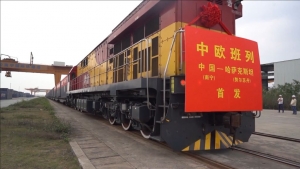
NANNING, July 24 (Xinhua) -- Nanning, capital of south China's Guangxi Zhuang Autonomous Region has launched 22 China-Europe freight trains this year, delivering 2,420 20-foot equivalent units (TEU) of goods, up by 214 percent and 261 percent respectively compared with last year.
Produced by Xinhua Global Service
Xinhua Photo Daily | July 24, 2023

BEIJING, July 24 (Xinhua) -- A selection of the best press photos from Xinhua.

A Long March-2D carrier rocket carrying four satellites blasts off from the Taiyuan Satellite Launch Center in north China's Shanxi Province, July 23, 2023. The rocket lifted off at 10:50 a.m. (Beijing Time), and all satellites successfully entered the preset orbit. Three of the satellites will be used to obtain remote sensing observation data and provide commercial remote sensing services, while the other satellite will be used for satellite communications technology verification. This was the 479th flight mission of the Long March rocket series. (Photo by Zheng Bin/Xinhua)

A staff member works at a workshop of PowerChina Synohydro Engineering Bureau No. 4 Co., Ltd in Tacheng, northwest China's Xinjiang Uygur Autonomous Region, July 22, 2023. Located on the border of China and Kazakhstan, Tacheng has focused on constructing a 40-square-kilometer pilot zone to vigorously develop industries such as new energy equipment manufacturing, import and export of agricultural and sideline products, and other related sectors. Up to now, 63 enterprises have signed agreements to settle in the pilot zone with several projects already in operation. (Xinhua/Ding Lei)

Staff members work at a production control center of Shougang Jingtang United Iron & Steel Co., Ltd. in Tangshan, north China's Hebei Province, July 22, 2023. Tangshan has continued to promote the optimization of the steel industry in recent years, contributing to the high-quality development of the economy. (Xinhua/Zhu Xudong)

A tourist poses for photos with Rongbao, the mascot of the Chengdu Universiade, in Chengdu, southwest China's Sichuan province, July 19, 2023. The 31st International University Sports Federation (FISU) Summer World University Games will be held in Chengdu from July 28 to August 8. (Xinhua/Jiang Hongjing)

This aerial photo taken on July 19, 2023 shows wild Asian elephants foraging at a paddy rice field in Jiangcheng County, southwest China's Yunnan Province. Thanks to uncompromising environmental and wildlife protection efforts, the population of wild Asian elephants in Yunnan has been growing in recent years. Feeling much safer than before, some of these elephants have become increasingly "rampant," and a daring "group tour" of an elephant family in the province even made a great scene in global cyberspace back in 2021. Jiangcheng County, which boasts a noticeable number of wild elephants, has inaugurated a special squad to monitor their movements. Once an elephant is found near a village, members of the squad would rush in, and deter it in a non-violent manner. But if they fail to do so, cordon signs would be placed on site and warning messages would be sent to the villagers. While staying indoors to avoid confrontation with these naughty giants, villagers do not have to worry about their crops in the field. An insurance plan is in place to cover possible damages, and generous compensations would be made in accordance to the amount of crops consumed or affected by the unaware invaders. The Asian elephant, the continent's largest land animal, is under top-level protection in China. The species is mainly scattered in Yunnan's Xishuangbanna, Pu'er, and Lincang. (Xinhua/Chen Xinbo)

This stitched aerial photo taken on July 22, 2023 shows the Rituo Temple on the north shore of Yumzhog Yumco Lake in southwest China's Tibet Autonomous Region. (Xinhua/Nie Yi)

Giant panda Mei Xiang is seen at the Smithsonian's National Zoo in Washington, D.C., the United States, on July 22, 2023. Giant panda Mei Xiang celebrated her 25th birthday here on Saturday. The zoo organized a special party to celebrate the occasion with her fans. (Xinhua/Liu Jie)

Protesters against the Israeli government's judicial overhaul march along a highway on the outskirts of Jerusalem during a march from Tel Aviv to Jerusalem on July 22, 2023. Thousands of Israelis continue their march to Jerusalem on Saturday to protest against the government's plan to overhaul the judicial system. (JINI via Xinhua)

This photo taken on July 22, 2023 shows smoke caused by a massive wildfire on the Rhodes island in Greece. At least 2,000 residents and holidaymakers were evacuated by sea in the fire-stricken areas of Rhodes island in Greece on Saturday evening, authorities said. (Photo by Argiris Mantikos/Xinhua)

Aircraft perform aerobatics during the El-Alamein Air Show 2023 in New Alamein City, Egypt, July 23, 2023. Aircraft from Egypt and the United Arab Emirates (UAE) on Sunday jointly staged the El-Alamein Air Show 2023 at the Mediterranean coastal city of New Alamein. (Xinhua/Ahmed Gomaa)

Fireworks launched by team Australia are seen at English Bay in Vancouver, British Columbia, Canada, on July 22, 2023. An off-shore fireworks competition kicked off here with the performance by team Australia on Saturday, followed by team Mexico on July 26 and team Philippines on July 29. (Photo by Liang Sen/Xinhua)

Bronze medalists Yang Junxuan, Zhang Yufei, Wu Qingfeng, and Cheng Yujie (R to L) of China pose for photos after the women's 4x100m freestyle final at the World Aquatics Championships in Fukuoka, Japan, July 23, 2023. (Xinhua/Zhang Xiaoyu)

Racers compete in Men U-23 race during the BMX Indonesia Cup 2023 round 3 at Jakarta International BMX track, Indonesia on July 23, 2023. (Agung Kuncahya B./Xinhua)
Xinhua Commentary: Washington abusing "national security" concept leads to insecurity for all

By groundlessly slinging mud at China, certain U.S. politicians are trying to convey an absurd idea that when America talks of national security, it is a national security concern, but when others mention security, it is not.
BEIJING, July 23 (Xinhua) -- When it comes to manipulating the "national security" concept, no country can rival the United States, an undeniable pro who plays well the victim card.
For quite some time, China hawks in Washington have been mounting a comprehensive smear campaign against Chinese personnel, tech giants, and the broader Chinese economy. The typical disinformation combo includes a "systemic rip-off by China," "a threat to our national security," and "rightful sanctions from the White House."
Lately, while singing the blues about the Chinese economy, certain U.S. politicians compared the Chinese market to a potential minefield for foreign firms, sourly grumbling about China's legitimate moves to combat espionage and defend national security.
What they were hinting at, is China's recent sales ban on a U.S. memory chipmaker, which had failed a security review by China's cyberspace regulator and was found to pose serious risks to China's critical information infrastructure supply chains.
By groundlessly slinging mud at China, they are trying to convey an absurd idea that when America talks of national security, it is a national security concern, but when others mention security, it is not.
Ironically, it is the United States which has long been manipulating the concept of national security. The de-facto chief of economic coercion has repeatedly over-stretched this term as a pretext for abusing state power, having put more than 1,200 Chinese companies and individuals on various lists and subjected them to broad range of restrictions without any solid evidence of wrongdoing.
In recent years, the U.S. has been blurring the lines of national security with economic coercion so that it can invent excuses to rip others off. The U.S. sizable toolkit to hammer others includes such tactics as economic sanctions, market denials, asset freeze, government investigations and technology bans.
Now Washington's fixation on manipulating this concept is getting acute. America's list of national security threats seems to be getting uncontrollably longer. The White House is also actively coercing its allies to expand their sheets of security concerns in line with that of Washington's.
Such national security maximalism of Washington has two features: one is that it can define what is a national security problem for the United States without any reliable evidence; the other is that it is increasingly ready to use those fabricated security concerns as a pretext for acts of containment against other countries.
While playing the victim, Washington has been cashing in on everyday scruples as national security to politicize or instrumentalize trade and tech issues, and to pressure and blackmail others to serve its geopolitical agendas. By leveraging its economic and technological clout, Washington can effectively coerce foreign companies into complying with its demands.

Protesters gather during the anti-war demonstration in Washington, D.C., the United States, March 18, 2023. (Xinhua/Liu Jie)
In fact, for America's decision makers, any perceived potential challenge to the U.S. global dominance is a national security concern. China's rise in the tech realm is naturally an eyesore.
The U.S. logic on China goes like this: I want your market, but you need to slow down tech development. Under the pretext of "national security," Washington has blacklisted Chinese tech firms and imposed broad limits on selling advanced chip technologies to Chinese firms, coercing many of its allies into the tech blockade binge.
Such discriminatory and bullying practice seriously hampers normal trade, economic exchanges and cooperation, violates market rules and the international trade order, and disrupts global industrial and supply chain stability.
And now this "omnipresent" national security narrative is also biting on the U.S. economy. Business insiders have repeatedly warned that by abusing the tactic, the U.S. government may potentially hurt the industry, which it is seeking to protect, by effectively isolating it from global markets.
Committed to quality opening-up, China has been opening its door ever wider to global businesses as it walks a hard-won yet fine line between development and national security. China's legitimate cybersecurity review does not target any particular countries or regions, nor does it seek to exclude technologies or products from any specific country.
The measures China recently rolled out are aimed at bolstering national security and creating a secure and stable environment necessary for its sustainable development, which would not only galvanize the growth of foreign companies but also optimize the overall business environment, while better safeguarding the lawful rights and interests of enterprises from all countries operating in China.
Numbers talk. The UN Conference on Trade and Development said in its World Investment Report 2023 that global foreign direct investment fell by 12 percent last year, while inflows to China rose by 5 percent to a record 189 billion U.S. dollars, mainly in manufacturing and high-tech industries.
And in the first half of this year, China saw a rapid increase of newly established foreign-invested enterprises. Some 24,000 new foreign firms were started in China during that period of time, marking a 35.7 percent rise year on year. Investments from developed countries like France, Britain and Germany went up by 173.3 percent.
However naysayers paint China, one thing is certain: China has been and will continue to be a growth engine and an attractive market that global investors cannot ignore. It has always been open to law-abiding foreign businesses who play fair.
Tainting the global economic and technological playing field does good to nobody. ■
UAE Ministry of Infrastructure & Energy and DNV to Establish Maritime Decarbonization Centre
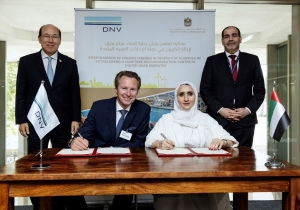
London, 20 July 2023. At a ceremony at the IMO headquarters in London, H.E Suhail Al Mazrouei, United Arab Emirates (UAE) Minister of Energy and Infrastructure, and Knut Ørbeck-Nilssen, CEO DNV Maritime, representing the Foundation Det Norske Veritas, signed a Memorandum of Understanding (MOU) on establishing a new UAE Decarbonization Centre.
The Marine Environment Protection Committee’s (MEPC) 80th session this month showed that shipping is now on an accelerating path towards full decarbonization. However, the challenge of realizing this goal is complex and can only be achieved through a cooperative cross-industry effort.
The new UAE Maritime Decarbonization Centre, the new joint initiative from the Ministry of Energy and Infrastructure of the United Arab Emirates and Foundation Det Norske Veritas (DNV), is designed to put this collaborative focus at the centre of sustainable decarbonization. It will work to connect stakeholders from across the maritime industry and beyond, to become a driving force for reducing green-house gas (GHG) emissions globally.
"The establishment of the UAE Maritime Decarbonization Centre reflects our unwavering commitment to addressing climate change and promoting sustainable practices within the maritime industry,” said H.E Suhail Al Mazrouei, the UAE Minister of Energy. “By collaborating with DNV, we aim to leverage their expertise and global network to drive innovation and accelerate the adoption of decarbonization technologies. The Centre will play a pivotal role in advancing our national and regional sustainability goals, while contributing to the global efforts in combating climate change."
“The Foundation Det Norske Veritas is driven by a desire to help society tackle major global transformations,” said Remi Eriksen, President and CEO of the Foundation Det Norske Veritas and DNV. “The recent IMO decision to greatly strengthen international shipping’s emissions targets will spur the maritime industry to accelerate its transition. At DNV we deeply believe that cross-industry collaboration is vital to realizing this goal and are working to share our deep and broad industry expertise through maritime decarbonization centres in key regions of the world. The founding of the UAE Decarbonization Centre, in cooperation with the Ministry, is another significant milestone for the industry and we look forward to welcoming new partners in the future.”
The Centre will take a multi-faceted approach, working on leading joint industry research programmes, collaboration with governmental, industry, and academic stakeholders, and attracting and developing new talent to the industry. In addition, the Centre will focus on programmes that incubate and accelerate the development of new technologies and provide a centralized hub for information on decarbonization solutions.
“We are very pleased to collaborate with the UAE’s Ministry of Infrastructure & Energy to establish the Maritime Decarbonization Centre,” said Knut Ørbeck-Nilssen, CEO of DNV Maritime. “Initiatives like the Centre are essential as we look to accelerate towards a decarbonized future. We need to build via cooperation, foster innovation, and scale local strengths into global leadership. With its strategic location and strong support from industry leaders, the Centre is poised to become a hub for maritime decarbonization efforts.”
The partners are planning to launch the Centre at the beginning of 2024.
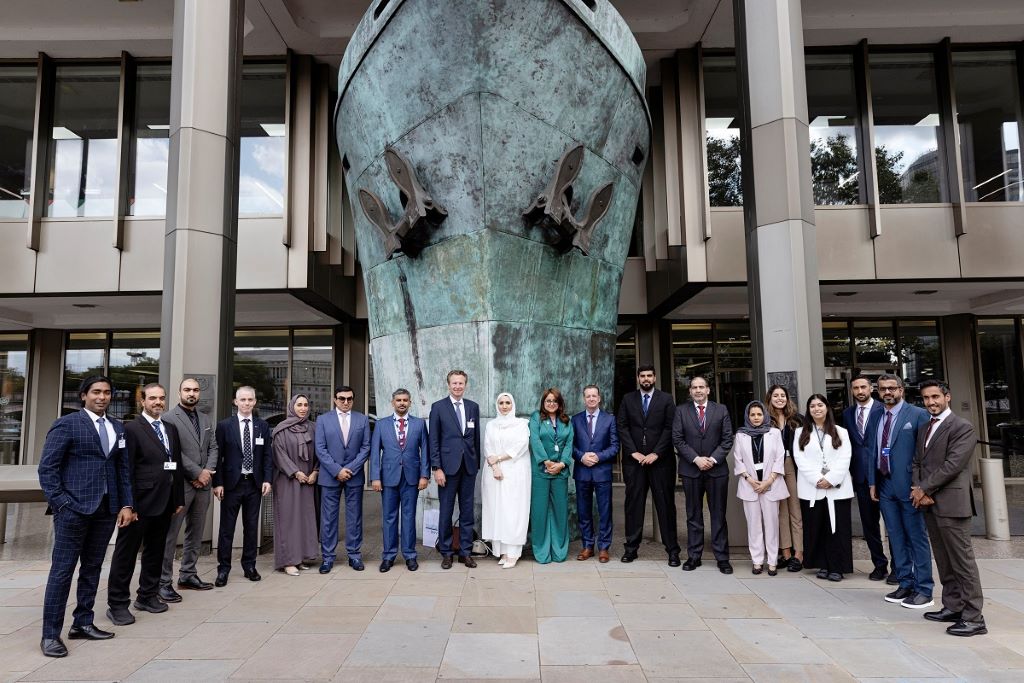
About Foundation Det Norske Veritas (DNV):
Foundation Det Norske Veritas (DNV) is a renowned foundation that owns DNV Group, a leading provider of risk management and quality assurance services. With a rich heritage and expertise in various industries, DNV Group is committed to driving sustainable development and supporting initiatives that contribute to a low-carbon economy.
About DNV
We are the independent expert in risk management and quality assurance. Driven by our purpose, to safeguard life, property and the environment, we empower our customers and their stakeholders with facts and reliable insights so that critical decisions can be made with confidence. As a trusted voice for many of the world’s most successful organizations, we use our knowledge to advance safety and performance, set industry benchmarks, and inspire and invent solutions to tackle global transformations.
DNV in the maritime industry
DNV is the world’s leading classification society and a recognized advisor for the maritime industry. We enhance safety, quality, energy efficiency and environmental performance of the global shipping industry – across all vessel types and offshore structures. We invest heavily in research and development to find solutions, together with the industry, that address strategic, operational or regulatory challenges. For more information visit: www.dnv.com/maritime
INSB Class and BKI signed a Memorandum of Understanding
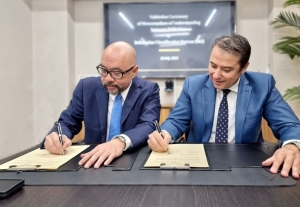
On 20 July 2023, INSB Class and BKI (Biro Klasifikasi Indonesia) (PERSERO) signed a Memorandum of Understanding establishing a comprehensive framework for collaboration activities between the two classification societies.
BKI was represented at the signing event at the #INSBClass headquarters in Piraeus by its President Director Mr. Arisudono Soerono.
This mutual collaboration framework aims to improve ship safety and marine innovation by increasing dexterity, sharing technical resources, adopting best practices, developing cooperative regulations, and developing research development programs.
Pantelis Chinakis-Glaras, President and Managing Director of INSB Class, added:
"This achievement represents an important step forward in strengthening Greek-Indonesian relations within the context of the global maritime domain. It exemplifies the way #INSBClass and BKI can work together on behalf of both organizations to promote ship safety and address marine technological concerns. We are excited to work closely with BKI to promote ship safety, marine technology, and innovation, and we look forward to doing so with trust and integrity.”
Arisudono Solerono, President-Director of PT Biro Klasifikasi Indonesia (PERSERO), added further:
"We are delighted to have concluded a joint collaboration MoU with #INSBClass for long-term cooperation and synergy that will allow BKI to strengthen its maritime prospects, expand its reach, and boost BKI's marine regulatory context and corporate accessibility. BKI views this collaboration as a high-value initiative that can assist both organisations meet business challenges and and fostering cooperative talent development and technical programs "
Both PT Biro Klasifikasi Indonesia (PERSERO) and #INSBClass have declared their commitment to strive to achieve the highest levels of service outputs across the board in line with the areas of mutual collaboration.
Capital Gas Ship Management Corp. announces the order of the two first-ever 22,000cbm liquid CO2 (LCO2) carrier newbuildings.

Piraeus, Greece, July 20, 2023. Capital Gas Ship Management Corp. announces the order of the two first-ever state-of-the-art 22,000-cbm liquid CO2 (LCO2) carriers at Hyundai Mipo Dockyard, S.Korea to be delivered in 2025-2026.
The order of two state-of-the-art, largest CO2 carriers ever contracted constitutes not only a historical milestone for the Capital Group (‘Capital), but for the industry as a whole. It also underscores the company’s commitment to playing a leading role in the global decarbonization efforts, as actions always speak louder than words. The company expects the maritime transportation of CO2 to become a rapidly growing market, in which it aims to hold the premier position.
These trailblazing vessels are designed to carry up to 22,000 cubic meters of liquified CO2 at -55 degrees Celsius, making them unparalleled in terms of capacity and functionality, while also boasting the capability to transport ammonia and LPG, setting a new standard in trading flexibility. They are also equipped with numerous energy-saving devices and have been prepared among others for LNG and other alternative propulsion fuels, while they are carbon capture and AMP (cold ironing) ready.
The specification of these vessels is the outcome of meticulous planning and innovative execution of the company’s technical team, embodying the company's commitment to in-house expertise and progressive thinking. In choosing Hyundai Mipo Dockyard for this ambitious project, the company reaffirms the importance Capital assigns in aligning with top-tier partners, who reflect its own commitment to excellence.
This investment in state-of-the-art technology marks another landmark in Capital’s strategic commitment to building a futureproof “energy transition” fleet, as Capital controls a fleet of 18 latest generation dual fuel (DF) LNG carriers equipped with two-stroke engines and a fleet of six DF/LNG Suezmaxes and six DF/LNG Aframaxes/LR2s.

Powered by  © Μaritimes 2019