
-
Home

-
Maritimes NEWS
-
Ports
- maritimes


maritimes
Ellaktor records 125% increase in net profits in renewables and 57% in concessions
Ellaktor recorded a 125% increase in profitability in Renewable Energy Sources (RES) and 57% in Concessions, compared to 2018, while the financial performance in Construction showed a decrease both in turnover and in results after taxes. The financial results that were announced today, confirm the strategy that was presented by Management, and foresees, among others, focus on Concessions and RES - with ongoing increase of the wind farms’ installed capacity - and in parallel focus of Construction on Greece and Romania, as well as interruption of operations (stop loss) in countries or projects that were undertaken in the past and produce negative results.
As a result of this strategy as well as of the limited tendering in new projects in Greece in 2019, Construction’s turnover has decreased, leading to a consequential decrease of ELLAKTOR Group’s consolidated revenues for the fiscal year 2019, which amounted to € 1,273.6m, compared to € 1,857.3m in 2018. Consolidated earnings before interest, taxes, depreciation and amortization (EBITDA) were € 80.6m in 2019 ( € 193.9m, if non-recurring losses of € 113.3m arising from photovoltaic projects abroad and mainly in Australia where construction has been completed, are excluded) versus € 142.9m in 2018. With regards to results before taxes, the Group recorded losses of € 84.0m compared to losses of € 25.8 m in 2018 and the results after taxes were losses of € 105.7m compared to losses of € 95.6m in the previous year.
The Group has now significantly reduced its activity abroad, either by completing the projects it had undertaken (e.g. Australia, Albania, Serbia) or by withdrawing from loss-making activities (stop loss), as part of the Construction restructuring. In addition, within the context of rationalizing the balance sheet and better depicting the financial overview of the Group, Management has consciously selected to proceed to a total impairment of goodwill from past acquisitions in Construction, a fact that burdened further the financial results of the specific Segment and subsequently the results of the Group with losses of € 41.8 m.
Commenting on the financial results of FY2019, ELLAKTOR Group CEO, Mr. Anastassios Kallitsantsis, stated: "The performance of 2019 is the result of the Group’s strategy to focus on the segments of RES and Concessions, to reinforce the Environment segment and to restructure the Construction segment. In Construction we took decisive steps, such as the interruption of loss-making projects and the extensive limitation of the operations abroad, focusing on Greece and Romania and on Facility Management services in Qatar. For 2020, the priorities are firstly to utilize all available options to protect the Group and its people from the Covid-19 pandemic, emphasizing in parallel on the minimization of consequences on our segments’ operations, secondly to implement the segments’ investment plans and thirdly to succeed in restructuring Construction."
The corporate net debt of the Group as of 31.12.2019 stood at € 846.0m compared to € 584.1m as of 31.12.2018. It is reminded that ELLAKTOR completed the issue of two international senior notes, the first of a nominal amount of € 600m in December 2019, and the second of a nominal amount of € 70m in January 2020, expanding the Group’s sources of financing and gaining access to the international debt capital markets.
https://www.amna.gr/
Stavros Niarchos Foundation distributes $31 million first round of grants to reach areas hardest hit by COVID-19

The funding is part of the Foundation’s $100 million global COVID-19 relief
April 30, 2020 - The Stavros Niarchos Foundation (SNF) has announced the first round of grants under its $100 million Global Relief Initiative to help alleviate the effects of the COVID-19 pandemic. Thirty-five grants totaling over $31 million focus on food,
“We cannot overstate the impact of the pandemic on society at large, and we owe our deepest gratitude to those who continue, in spite of the immense challenges they face daily, to serve the most vulnerable among us,” said SNF Co-President Andreas Dracopoulos. “Within our lifetimes, the need has never been greater. Our collective response will have to be both swift and forward-looking; these
UNITED STATES
SNF grants totaling $5.93 million, made to both individual nonprofit organizations and collaborative funds, focus on ensuring access to food and other essentials, offering mental health support to populations specially affected, and providing emergency relief to artists.
Mike Dahl, Executive Director of Broad Street Ministry (BSM), one of these organizations, remarked, “BSM’s guests are among the most vulnerable populations during this pandemic. It is hard to shelter at home when you have no home to which to go. The generosity and timeliness of SNF’s support will mean we can continue to provide life-saving services during this unprecedented time.”
Access to Food
As unemployment rises precipitously in areas under
-
Broad Street Ministry, Philadelphia: Providing food and hygiene products to unsheltered populations, as one of few relevant providers remaining open in the city
-
City Harvest, New York City: Rescuing and distributing millions of pounds of food
-
Citymeals on Wheels, New York City: Delivering nutritious meals to tens of thousands of older New Yorkers and checking on their welfare
-
Coalition for the Homeless, New York City: Providing around a thousand meals daily, prepaid cards for personal hygiene supplies, and masks to residents of homeless shelters
-
God’s Love We Deliver, New York City: Delivering nearly 10,000 medically tailored meals a day to New Yorkers with serious illnesses
-
Kingsbridge Heights Community Center, New York City: Offering a food pantry and gift cards for essentials like diapers
-
Safe Horizon, New York City: Providing shelter, food, clothing, and hygiene facilities to young people experiencing homelessness
-
Stanley M. Isaacs
Neighborhood Center, New York City: Delivering and offering food for elderly and low-income residents of the Upper East Side and East Harlem
SNF believes we achieve more when we collaborate, and has also made a $2 million grant to the poverty-fighting organization Robin Hood, which pools resources to assist the low-income New York families and individuals who are being disproportionately affected by the pandemic. The Robin Hood Relief Fund provides assistance related to food, housing, children, immigration, income security, and health. SNF is grateful to Robin Hood’s CEO Wes Moore and his team for their partnership in this rapid response.
Mental Health Support
The deleterious effects of the pandemic on mental health are widespread and will be an ongoing focus of SNF’s relief initiative. In this first round, SNF grants totaling $1.5 million
-
American Cancer Society, United States: Providing accommodation to healthcare staff resting and self-isolating with nearly a thousand rooms across the country
-
Center to Advance Palliative Care, United States: Helping address the strain faced by healthcare providers through free online COVID-19 resources that offer guidance on managing symptoms and improving communication with critically ill patients and their families
-
Fund for Public Health in NYC, New York City: Checking in with elderly and homebound New Yorkers, as well as offering other essential health programs
-
New Alternatives for Children, New York City: Providing mental health support, medical care and other essentials to thousands of children with disabilities, chronic illnesses, and mental health diagnoses, as well as their families
-
Service Program for Older People, New York City: Providing mental health services to thousands of older New Yorkers remotely
Emergency Relief for Artists
With performance venues and cultural institutions abruptly shuttered, artists and arts organizations face sudden precarity at a time when they are called to be agents of community wellbeing. SNF support totaling $800,000 for
-
Dance/NYC, New York City: Supporting hundreds of individual dancers and dance organizations in NYC with emergency funding through the organization’s COVID-19 Dance Relief Fund
-
Swiss Institute, New York City: Sustaining 15 NYC organizations that
support artists, including the Swiss Institute, through a collaborative fund which it helps steward -
United States Artists, United States: Disbursing emergency $5,000 grants for essential needs to individual artists around the U.S. through the Artist Relief fund the organization helps steward
COUNTRIES ACROSS AFRICA
Working in collaboration with Bloomberg Philanthropies, SNF will make a $3 million grant to Vital Strategies’ Resolve to Save Lives initiative. This will enable rapid-response grants to governments across Africa to combat the COVID-19 pandemic, including understanding the impact of social distancing on hunger and communication and dissemination of accurate health information. The grant will also provide support directly to frontline workers throughout Africa, including vital infection control training.
Bloomberg Philanthropies’ public health program lead, Dr. Kelly Henning, said, “The public health and economic impacts of COVID-19 call for a global response. While we are in an unprecedented moment, Vital Strategies has proven time and time again their ability to coordinate and mobilize life-saving public health efforts. The work SNF is expanding support of is needed now more than ever to help frontline workers and governments respond in the fight against this deadly virus.”
EXPANDED GLOBAL RELIEF
To further its immediate efforts
COUNTRIES ACROSS EUROPE
SNF grants totaling more than $13 million focus on helping deliver food, basic necessities, psychological resources, and direct support to people in France, Greece, Italy, Portugal, and Spain.
FRANCE, ITALY, PORTUGAL, SPAIN
Access to Food and Mental Health Support
Grants totaling over $1.35
-
Associazione CasAmica, Italy:
Providing psychological support to the community and supporting emergency relief at its care home in Lecco -
CRESCER, Portugal: Delivering hundreds of meals from a social enterprise restaurant to people on the streets
-
Barça Foundation, Spain/
Catalonia: Offering food and psychosocial support through Red Cross Catalonia, particularly for the elderly and those experiencing homelessness, and through the Government of Catalonia’s food program for vulnerable children -
EMERGENCY, Italy: Running permanent and mobile care clinics in nine regions of Italy, enabling them to continue supporting over 8,000 patients facing Covid-19 who would lack access to information and essential care
-
Enfance et Partage, France: Aiming to prevent child abuse through psychological support
-
Fondazione Progetto Arca, Italy: Providing food, shelter, and essentials to people experiencing homelessness, the elderly, and families in need
-
The French Red Cross, France: Distributing emergency food aid and referrals for psychological support through tens of thousands of staff and volunteers
-
Grandes Amigos, Spain: Offering remote emotional support to nearly a thousand seniors through the efforts of as many volunteers
-
The Italian Red Cross, Italy: Distributing food and hygiene kits to struggling families and offering a 24/7 psychological support phone line that receives
thousands of calls each day -
The Spanish Red Cross, Spain: Distributing food and essentials at the country level
Javier Senent, President of the Spanish Red Cross remarked, "The COVID-19 pandemic has created a situation of vulnerability in all areas of society that requires comprehensive intervention, as well as knowing how to articulate it effectively and efficiently so that it arrives as quickly, in the best way, to as many people as possible, without discrimination. That is why we greatly thank those who join the Red Cross RESPONDE Plan, a plan that belongs to everyone, to overcome this crisis together."
GREECE
Greece has a special place in SNF’s heart and work, being our birthplace. Particularly cognizant of the fact that Greece was in the process of starting to overcome a deep ten-year socioeconomic crisis, SNF has given special care to addressing immediate needs and risks specific to the nation in collaboration with the public sector. SNF grants totaling nearly $11.9 million seek to help address these needs.
Access to Food
-
Central Union of Greek Municipalities (KEDE), Greece: Providing food supplies through Social Food Outlets in municipalities around Greece for the immediate support of people suffering from the socioeconomic effects of the pandemic. The grant will be implemented with the collaboration and supervision of Deloitte to ensure fast, effective, and transparent distribution of the supplies.
-
Boroume, Greece: Implementing a transparent voucher system in coordination with Greek municipalities to provide impacted families with food in the middle term of the crisis, implemented from September to December 2020
Mental Health Support
-
A comprehensive effort with the Greek Ministry of Health to provide psychological support in response to needs engendered by the COVID-19 pandemic
Direct Support for Frontline Greek Hospital Staff
Under the current circumstances, the Foundation is taking the extraordinary step of providing $8.1 million in
Bolstering health infrastructure in Greece through collaboration with the public sector is a longtime and continuing focus for SNF, which is already in the middle of a more than $400 million Health Initiative in the country. As part of this effort, renovation of the second ICU and the ER at Evangelismos Hospital in Athens is underway through a partnership between SNF and Thanasis and Marina Martinos.
LONGER-TERM FOCUS
Getting funds quickly to those who need support most has been the guiding principle of SNF’s first round of grants. As we move forward, the Foundation is looking to assess quickly how
Our ability to track the spread of the disease will be critical to how the coming months take shape. SNF is proud to support Johns Hopkins University with a $3 million grant in the immediate launch of a much-needed COVID-19 Testing Insights Initiative to provide governments, businesses, and the public with comprehensive testing data paired with expert analysis and guidance. The initiative is the outcome of longtime collaboration between SNF and many areas of Johns Hopkins University, including the Berman Institute of Bioethics, and will provide efficient access to the information needed to make crucial decisions moving forward.
These grants join a $3 million grant to The Rockefeller University in New York City that was announced with the launch of SNF’s pandemic relief initiative. Expanding on a longstanding partnership for research and medicine, the grant bolsters round-the-clock research related to COVID-19 and the SARS-CoV-2 virus that causes it underway in 18 Rockefeller labs.
A pandemic, global by definition, requires a truly global response. SNF is committed to doing our part to help move this massive effort forward with speed and transparency, and to
About the Stavros Niarchos Foundation (SNF)
The Stavros Niarchos Foundation (SNF) is one of the world’s leading private, international philanthropic organizations, making grants to nonprofit organizations in the areas of arts and culture, education, health and sports and social welfare. SNF funds organizations and projects worldwide that aim to achieve a broad, lasting, and positive impact for society at large and exhibit strong leadership and sound management. The Foundation also supports projects that facilitate the formation of public-private partnerships as an effective means for serving public welfare.
Since 1996, the Foundation has committed more than $3 billion through more than 4,600 grants to nonprofit organizations in 126 nations around the world.
See more at SNF.org.
In the following link you can download the video with the information in relation to the first round of grants
Liquidity of 120 million euro in the energy market from the proportional compensation to DEPA’s customers, following the retrospective price cuts by BOTAS

DEPA returns today to its customers the proportional amount yielded by the retrospective price cuts by BOTAS. The total amount of 120 million euro is considered a significant boost of the domestic energy market’s liquidity, amid a difficult period due to the impact of the Covid-19 pandemic.
On March 5, BOTAS compensated DEPA for all retrospective price cuts, as per the ruling of the Stockholm International Chamber of Commerce (ICC). ICC ruled on January 10th 2020, in favor of DEPA in the legal dispute with the Turkish gas company, regarding the request of the former for a price reduction.
Along with the boost of liquidity in the Greek energy market, the increase of DEPA’s available funds comes in a very crucial period during which the corporate transformation is fully deployed. Full utilization of cash liquidity is already under way, by DEPA Trade for the completion of its investment plan, by DEDA for the acceleration of network expansion plan to connect more areas of the Greek region to the natural gas network, as well as by DEPA International Projects which – among other things – will undertake the implementation of the studies concerning the EastMed pipeline.
DEPA’s CEO, Mr. Konstantinos Xifaras, stated in this regard: “Over recent months we have been engaged in a race to reduce the cost of gas supply, for the benefit of the Greek economy. Our efforts have already yielded significant results, as DEPA has been implementing lower pricing since January. In addition, we are now pleased to return to our customers a large amount that will help them deal with the effects of the pandemic. With a profound sense of responsibility, DEPA – even in the midst of this unprecedented situation – continues to safeguard the country’s uninterrupted gas supply and to support our economy”.
The Deputy Minister of Environment and Energy, Mr. Gerasimos Thomas, highlighted that: “The Ministry proceeds steadily and methodically with the implementation of measures that support the energy sector and industry, amid the Covid-19 crisis. Today’s move by DEPA follows the initiatives already taken by the Ministry for the seamless operation of the energy market, with the latest example being the regulations included in yesterday’s Legislative Content Act. I would like to congratulate the management of DEPA, which reached an agreement with all its customers timely and, thus, further increases market liquidity through payments before Easter. The compensation, deriving from BOTAS’ retroactive price reduction, leaves DEPA with high liquidity that will be used for the support of its subsidiaries’ business plans, in the transition period until the private investors’ funds enter DEPA Infrastructure and DEPA Trade”.
IGI POSEIDON S.A. picks up the pace in the development of the EastMed Pipeline

IGI Poseidon, the consortium that develops the EastMed pipeline, in which DEPA holds a 50% stake, proceeded with an open tender invitation, initiating the pre-selection process of the two candidate contractors that will implement the detailed planning, supply, construction, transport, installation and pre-commissioning (EPCI) regarding the four offshore sections of the pipeline, with a total length of 1,470 km and a budget of approximately € 3 billion.
Following the pre-selection of the contractors, the preparatory services of the project will begin, namely: the review and adoption of the Application Studies (FEED) for the offshore sections and the Detailed Subsea Research and Mapping (DMS), which are in the stage of completion of the assignment, as well as conducting new studies, if necessary.
The EastMed Pipeline will provide a secure export route from the new gas fields in the Levantine Basin (East Mediterranean) to Western-european markets, via Greece and Cyprus. The pipeline has been included in the European Union’s Projects of Common Interest (PCIs) and all of its studies and research are funded by the EU. In addition, IGI Poseidon decided recently to invest € 70 million in order to complete the remaining stages of the project’s development and maturity, until the final investment decision (FID).
On this occasion, the Minister of Environment and Energy, Mr. K. Hatzidakis, stated:
“EastMed is a pipeline of strategic importance, not only for Greece but for the entire Europe, which is why we are closely monitoring its development. The new tender invitation makes us very happy, as it proves that the project’s development is on track, despite the turbulence in the economy and the global energy market due to the COVID-19 pandemic. The Greek Government and our Ministry have prepared and implement a comprehensive plan that safeguards the diversification of energy sources and routes and ultimately, our country’s energy security. “
In turn, the CEO of DEPA, Mr. K. Xifaras, noted:
“A few months ago we signed the first supply agreement with one of the largest producers of natural gas in the East Mediterranean, ensuring the commercial and economic viability of EastMed. Now, we are making the necessary investments for the rapid maturity of the project and proceeding to an open tender invitation for the selection of the candidate contractors that will develop it, starting from the preparatory services. So each day, we come closer to realizing this strategic project.
In recent months, DEPA systematically expands its commercial activities and strengthens its participation in international projects, leading the energy developments in Southeast Europe.”
Three out of five converted VLOCs are no longer operating
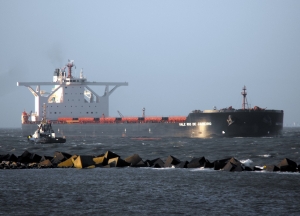
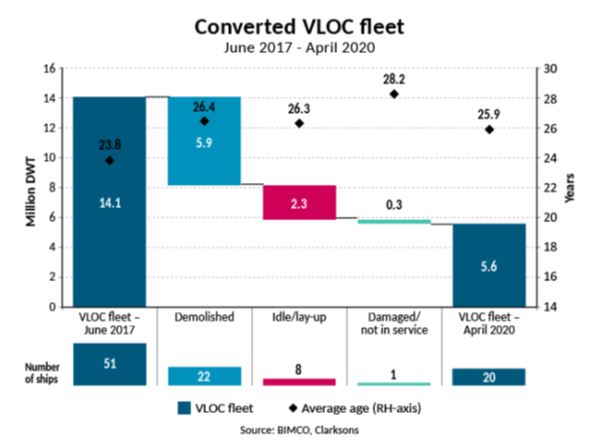
Converted Very Large Ore Carriers (VLOC) are increasingly becoming a thing of the past with the long-term freight contracts coming to an end as newer and more reliable ships replace them in the market. Since June 2017, 43% of the VLOC fleet have been sent to the scrapyards, while 18% of the fleet is idled or damaged.
“The tragic Stellar Daisy accident brought the safety aspect of VLOCs into question. Now, three years on, three out of five VLOCs are no longer in operation as their long-term charters have now expired. Going forward, the obsolete VLOCs will be phased out of the market and replaced with technologically superior and more reliable ships,” says BIMCO’s Chief Shipping Analyst, Peter Sand.
The VLOCs were converted from single-hull Very Large Crude Carriers (VLCC) towards the end of 2000 as an innovative result of the dry bulk super cycle and the IMO regulation which mandated that all single hull tankers should be phased out by 2010. With cheap and obsolete tanker tonnage in the market, investors eyed an opportunity to convert the ships into VLOCs and deploy them on long-term contracts of affreightment, often with a duration of 10 years.
The economic rationale of keeping the old VLOC tonnage afloat
In June 2017, BIMCO analyzed the VLOC fleet which at the time consisted of 51 ships with an average age of 23.8 years, not far from the average demolition age of 24.2 years. Back then, we argued that the ships on long-term contracts still made solid economic sense, given a second-hand price equal to the scrap value and stable earnings.
Arguably, the maintenance and repair costs are significantly higher than younger tonnage, but the statement from 2017 still holds true, granted the condition that the ships have employment under long-term contract. Once the VLOCs no longer have to fulfil obligations under long-term contracts, the economic incentive to keep the ships afloat evaporates.
At face value, during their time as ore carriers, these ships have provided a solid return on investment, even when accounting for higher maintenance cost. Although the conversion from tanker to dry bulker came at an estimated price of USD 12-15m, plus the cost of the actual ship, the freight revenue from the long-term contracts for carrying ore from Brazil to China have exceeded the cost by a fair margin.
Since the last analysis, the fleet has undergone a massive trimming with 28 ships remaining in the fleet, eight of which are lying idle in Labuan, a dedicated lay-up site. Since June 2017, 22 ships have been scrapped while one is damaged and not in service. Therefore, it seems likely that converted VLOCs will soon be a memory of the past.
Converted VLOCs are phased out as substitutes are brought in
The investment strategy of converting cheap tanker tonnage to dry bulk carriers seems unlikely to be replicated any time soon. With economic growth and prosperity comes opportunities. The VLOCs were acquired and contracted for conversion during the dry bulk bull run in 2007-2008, but many of the conversions were only complete after the financial crisis put an end to the bull market.
The ships entered a market, which never recovered to previous highs, but nonetheless remained a profitable one in the initial years. In 2009 and 2010, the Baltic dry index (BDI) averaged 2,616 and 2,758 index points respectively, well below the 6,390 index points seen in 2008, but a substantial margin above the averages from 2011-2019, which never exceeded 1,600 index points.
Many of the ships are approaching the average age of demolition, and these ships are set to be phased out as soon as the long-term contracts under which they are employed expire. However, new VLOCs and even larger ships, such as the Valemaxes, have already been supplied to the market. For this reason, the scrapping of converted VLOCs will not create a shortage of tonnage in the market.
Perhaps even the contrary holds true. From June 2017 to April 2020, the Capesize (+100k DWT) fleet grew by 29.6m DWT (9.2%). From 2017 to 2019, seaborne trade of iron ore declined by 17m tonnes (-1.2%).
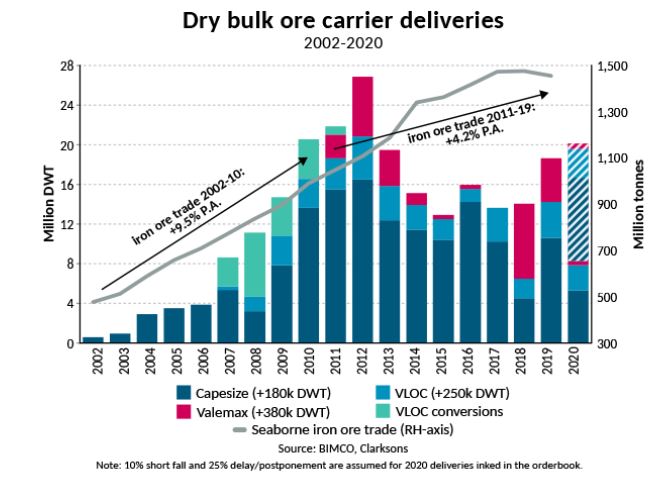
“A shortage of tonnage will not arise because the converted VLOCs are now phased out. New and even larger ships have already been delivered to the dry bulk market, more than covering the transportation needs,“ Sand says.
RINA launches Biosafety Trust Certification, the first certification to mitigate of the spread of infections in public places

In the wake of the Covid-19 pandemic and to help restart economic activity RINA has devised the Biosafety Trust Certification, the first management system certification aimed at the prevention and mitigation of the spread of infections in public places and to provide greater health safety.
The new management system provides a set of best practices to help minimize the risks of spreading epidemics in crowded places such as public transport, entertainment and sporting venues (restaurants, theaters, gyms, museums, swimming pools), accommodation facilities (hotels, congress centers, cruise ships) and healthcare structures like retirement and care homes.
The Biosafety Trust Certification is based on the ISO’s systematic approach to management systems combined with scientific best practices against the spread of infections together with the principles of organizational behavior management (OBM) to effectively control and prevent a contagion in a work context.
The success of health safety management systems also depends on human behavior. To comply with strict hygiene rules the system also requires staff to undergo ad hoc training courses for specific situations. The system also requires that individual users are made aware of and follow the recommended preventative measures.
The requirements of this new tool can be integrated into common existing management systems such as ISO 45001 supplementing these systems with specific procedures focused on the prevention and control of infections.
All certificates issued by the Biosafety Trust Certification will also be made available on public blockchain to allow for inspection and verification.
One of the objectives of the certification is to instill confidence in the stakeholders, a principle that is ever valid in this specific context of emergency. RINA immediately started the accreditation process of the scheme with ACCREDIA, to guarantee its reliability and respect by part of RINA of the requirements of competence, independence and impartiality required by international standards in carrying out the activity.
Nello Sulfaro, CEO of RINA Services, commented: “We firmly believe that now is the time to start thinking about how to deal with the second phase of this health emergency. By bringing together a number of our core competences, RINA has been able to offer a new preemptive scheme that can help tourism and entertainment companies to improve the health and safety of its workers and customers and to minimize the risks posed by the spread infections”.
The Biosafety Trust Certification is designed for the entertainment and tourism sectors but can also be applied to many other sectors.
RINA provides a wide range of services across the Energy, Marine, Certification, Transport & Infrastructure and Industry sectors. With an expected turnover in 2019 of 465 million Euros, over 3,900 employees and 200 offices in 70 countries worldwide, RINA is a member of key international organizations and an important contributor to the development of new legislative standards.
COVID-19 emergency: Senfluga allocates €500,000 to Greek health and non-profit sectors
Senfluga, the company owned by Italy’s Snam (54%), Spain’s Enagas (18%), Belgium’s Fluxys (18%) and Coupelouzos Group’s DAMCO ENERGY SA (10%), which is the largest shareholder of the Greek TSO (Transmission System Operator) DESFA, is close to the people of Greece in the COVID-19 emergency. In this regard, it has decided to allocate €500,000 for the Greek health system and non-profit sector.
The funds and relations of Senfluga enabled the purchase of 90,000 isolation suits from a Chinese supplier. The medical material will be shipped to Greece in the next few days.
The donation is also aimed at supporting social initiatives advanced by foundations. In this regard, funds have already been allocated for ActionAid Ελλάς, Γιατροί του Κόσμου και ΙΑΣΙΣ which together have activated a helpline for the population to support the Greek Government in this service.
China’s New Export Orders index at 33.5 – container shipping demand in free fall
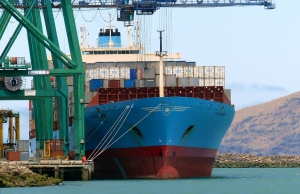
Global economic activity continues to suffer as the coronavirus runs rampant and manufacturing PMI readings for April indicate a massive weakening of global manufacturing. While flash readings in the US and Eurozone composites declined to 36.9 and 33.6 index points respectively, the flash reading in Japan showed surprising resilience, declining only 1.1 points to 43.7 index points in April. Nonetheless, the readings reveal deep contraction which will result in choppy seas in the coming months, particularly for container shipping.
China’s manufacturing PMIs in April highlighted sluggish recovery from March. The PMI figure from Caixin highlighted a contraction to 49.4 index points, while the figure from the National Bureau of Statistics China (NBS) showed an expansion to 50.8 index points.
The common denominator between the two was the New Export Orders sub index (at 33.5 points), which in both cases plummeted amid slowing demand from the rest of the world.
US retail sales at clothing stores halved in March
Global manufacturing activity is slowing on the back of the constrained labour force and faltering demand, and data from the US Census Bureau highlight how US retail sales effectively slammed into a brick wall in March 2020. As the US entered a state of lockdown in March, clothing and clothing accessories stores saw retail sales drop 50% from February 2020 as well as year-on-year.
Similarly, sales in furniture stores dropped 26.8% from February, while motor vehicle and parts dealers had their sales slashed by 25.6%, also compared with February. The products and parts sold in these types of stores constitute a significant fraction of all seaborne containerised goods, and such dramatic drops in US retail sales are indicative of the calamity that container carriers face.
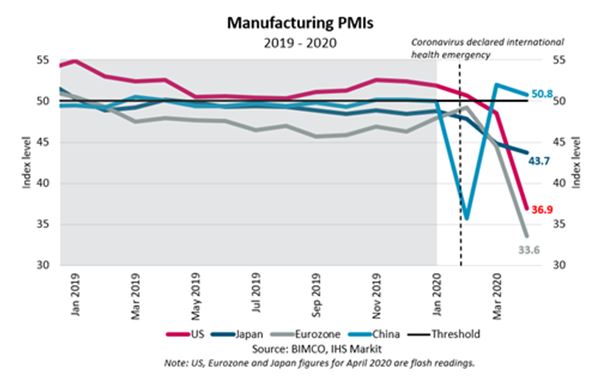
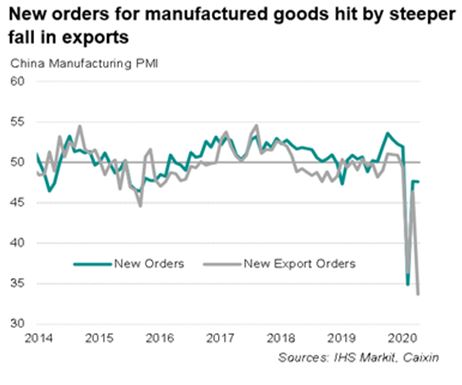
Manufacturing PMIs slide into unparalleled contraction
In Japan and the Eurozone, the manufacturing PMIs have been in contraction since February 2019, while the US remained in expansion until March 2020. With all the readings now in unprecedented contractionary territory, and the US and Eurozone seeing the largest declines on record, dwarfing the impact of the financial crisis, a gloomy path lies ahead. The slowing new orders domestically, as well as for exports and diminishing backlogs, amplifies the bleak outlook for the foreseeable future.
While PMI readings could quickly be back above 50 index points, it does not imply a return to pre-crisis conditions, but rather, a slight improvement from last month’s activity level. It is important to note that structural damage has already been inflicted on economies around the world, including massive rises in unemployment which will protract any recovery to normal conditions.
Container carriers will be stress-tested in the coming months
Manufacturing PMI readings serve as a bellwether for container shipping volumes for the months ahead, and recent data suggest that 2020 will be a stress-test for container carriers, perhaps on an unprecedented scale.
Idle container ship capacity ticked up when Chinese lockdowns created export disruptions in February, and idle container capacity remain around 10% of the total fleet as demand for containerised goods in advanced economies fade. Supply chain disruptions are on retreat, which is certainly a positive development, but with slowing consumer demand for finished goods, seaborne container volumes are set to remain low and outright decline in 2020.
In recent years, the container shipping industry has been battling challenging market conditions, squeezing container carriers’ operating margins. 2019 marked, for a change, a full year of profitability judged by the average operating margins for main carriers (source: Alphaliner). Yet, faced with the greatest economic downturn since the Great Depression during the 1930s, any profits of recent years could be wiped out in a matter of months.
bimco.org
DNV GL approves carbon capture technology

DNV GL has approved as qualified, technology for a full-scale demonstration project in Norway to remove carbon emissions at a cement plant. Gassnova, the Norwegian state’s agency for implementation of carbon capture and storage projects, initiated the project which will apply carbon capture technology developed by Aker Solutions at Norcem’s cement plant in Brevik, Norway.
Globally, the cement industry accounts for 5-7% of total CO2 emissions – from all industries and sectors. Aker Solutions’ post-combustion technology is intended to capture and liquefy 400,000 tons per year of the released carbon dioxide at the Norcem plant. Once the technology is applied this will contribute to Norway’s target of becoming a low-emission society by 2050.
DNV GL engaged with Norcem and Aker Solutions to verify the application of DNV GL’s recommended practices DNVGL-RP-A203 Technology qualification and DNVGL-RP-J201 Qualification procedures for carbon dioxide capture technology at the plant.
Novel elements of Aker Solutions’ carbon capture technology and potential technological risks were evaluated and mitigation identified. Documentation was reviewed to provide a better understanding of the technology and the specific application and conditions at Norcem’s plant.
Arve Johan Kalleklev, Regional Manager, Norway and Eurasia, DNV GL – Oil & Gas said: “Carbon capture, and subsequent storage, is currently the only technology that can achieve significant reductions in CO2 emissions from industrial processes. Carbon capture can play a vital part in decarbonizing our planet. DNV GL’s qualification review of Aker Solutions’ technology is a great example of how we engage to enable implementation of this crucial technology. “
As a result of the qualification procedure review, DNV GL issued a ‘Statement of Qualified Technology’ for Aker Solutions’ carbon capture and heat recovery technology, applicable for the conditions at the Norcem Brevik cement plant.
Per Brevik, Director Sustainability and alternative fuels in HeidelbergCement Northern Europe states: “Aker Solutions have tested their technology at Norcem Brevik for 18 months. Their world class expertise, systematic work and the promising results from pilot testing in Brevik give us confidence that realisation of the full-scale capture plant will be successful.
Based on the third-party technology qualification professionally executed by DNV GL, we trust that the project risk related to novel technology elements is low.” The Norcem Brevik carbon capture plant forms part of Europe’s first industrial demonstration of CO2 capture, transport and storage. The captured CO2 is to be transported and injected into a CO2 storage site offshore Norway, developed by the Equinor-headed Northern Lights consortium.
Oscar Graff, Head of CCUS in Aker Solutions said: “The extensive experience and systematic qualification procedures from DNV GL have been a great support for our engineers in our technology development. The procedure is an excellent tool to identify risk elements and to propose how to solve them. To get a statement of qualified technology from DNV GL, as a recognized third party, has high value for Aker Solutions and our clients.”
About DNV GL
DNV GL is the independent expert in risk management and quality assurance, operating in more than 100 countries. Through its broad experience and deep expertise DNV GL advances safety and sustainable performance, sets industry benchmarks, and inspires and invents solutions.
Whether assessing a new ship design, optimizing the performance of a wind farm, analyzing sensor data from a gas pipeline or certifying a food company’s supply chain, DNV GL enables its customers and their stakeholders to make critical decisions with confidence.
Driven by its purpose, to safeguard life, property, and the environment, DNV GL helps tackle the challenges and global transformations facing its customers and the world today and is a trusted voice for many of the world’s most successful and forward-thinking companies.
DNV GL is the technical advisor to the oil and gas industry. We bring a broader view to complex business and technology risks in global and local markets. Providing a neutral ground for industry cooperation, we create and share knowledge with our customers, setting standards for technology development and implementation. From project initiation to decommissioning, our independent experts enable companies to make the right choices for a safer, smarter and greener future.
About Norcem
Norcem is the leading Norwegian supplier of cement, the main component of concrete. Norcem has a wide distribution network of depots along the Norwegian coast.
Norcem is also the sole producer of cement in Norway, with plants in Brevik and Kjøpsvik. Norcem is a company in HeidelbergCement Group, a global player in cement, aggregates, concrete and downstream activities, making it one of the world's largest manufacturers of building materials. The company employs about 60 000 people in more than 60 countries.
About Aker Solutions
Aker Solutions is a global technology and service company providing solutions and products for the industry. Aker Solutions is offering low carbon solutions such as floating wind power and Carbon Capture, Utilization and Storage (CCUS). Aker Solutions has developed an Advanced Carbon Capture Technology since 2005 and are now offering commercial plants in the market, both modularized and large-scale integrated plants. Aker Solutions is providing technology and products for the entire CCUS value chain, from capture, via transport, injection, storage and Enhanced Oil Recovery (EOR). The company employs about 16 000 people in about 20 countries and 50 locations.
https://www.dnvgl.com/
An interview with bunkerspot
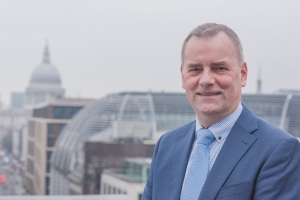
As published by Bunkerspot on 14th April 2020.
KPI Bridge Oil’s CEO talks to Bunkerspot about the rationale behind the link-up with OceanConnect Marine (OCM) and how the bunker sector is navigating the IMO 2020 transition.
In the run-up to the introduction of the 0.50% global sulphur cap on 1 January, one of the key talking points in the bunker industry was that the great fuel ‘switchover’, with its attendant significant price hikes for IMO 2020-compliant fuel, would put smaller and medium-sized suppliers – traders and physicals – under increasing financial pressure. This, it was suggested, could be the catalyst for a burst of more intense M&A activity in the sector, as smaller players with strong client lists perhaps begin to feel the credit squeeze and thus become attractive acquisition targets for some of the financially stronger and larger bunkering names.
In the event, the first headline acquisition news in the sector in 2020 was not a David and Goliath alliance but the merger of two of the industry’s biggest and long-established bunker companies, KPI Bridge Oil and OceanConnect Marine, to form a new 170-strong company operating across 15 locations globally. As the deal announcement noted, the new entity, branded as KPI OceanConnect, ‘will have an established foothold in every major maritime hub and time zone.’
News of a change of ownership for the Glencore-owned OCM was perhaps not the biggest surprise – there has been much speculation over the years that the global commodity trader, which acquired OCM through its purchase of Chemoil, was seeking a buyer for the firm. Chemoil itself had bought the OceanConnect marine fuel business in 2011 for a reported $25 million.
In the days ahead of the merger announcement, which came during IP Week in late February, the Bunker Holding group had been widely touted as OCM’s buyer but the disclosure that an individual company in the Bunker Holding stable would be taking over OCM had not been foreseen.
Søren Høll, the current CEO of KPI Bridge Oil, is expected to lead the merged operation and he emphasises that his company led the negotiations over OCM from the beginning. The synergies between the two companies are clear, according to Høll, in terms of office locations and commercial approach. ‘We speak more or less the same language,’ he says.
Clear operational synergies
The new alliance also adds four new locations to the KPI Bridge Oil existing line-up – Dubai, Hamburg, Hong Kong and Japan.
OCM has certainly been building its footprint in the Asian market over the past couple of years. In February 2018 a Singapore-based Korean supply team joined the company and in January 2019 a move to new offices in Singapore signalled OCM’s growth ambitions.
‘Singapore will be the hub of our Asian operation and we intend to expand aggressively with additional talented people,’ OCM’s Global Managing Director, S.I. Shim, said at the time. One year on, and Høll says he continues to see growth opportunities for the expanded business in Asia.
In terms of the rationale behind the purchase of OCM, bringing together two ‘very mature brands and employers’ makes sound commercial sense, he says.
‘Where we crossed paths with OCM in the past we saw that there was a good match in the type of customer profiles,’ he notes.
‘There is also a good match in how [OCM] would like to approach the market for a more partnership-based business in the long term.’
The proposed merger is still waiting for the green light from the regulatory authorities, which could take a few months. Once the go-ahead is received, the integration of the two businesses will begin and while the details of this remain to be hammered out Høll is keen to stress that the interests of the employees in both companies are paramount.
‘Our people are our strongest asset, and all the team members in each company will have an important role to play in this merger,’ he stresses.
‘It is important for us to keep the focus on employees – for them to develop and succeed – so that is our approach going forward.’
He continues: ‘We have such experienced teams that once they are integrated then we can develop and expand the existing partnerships that we have with clients, and I also expect – and that is my ambition going forward – that with the combined great knowledge that we will have within our group that we can establish new partnerships with our clients.’
While the integration of the two companies is still in the planning stage, Høll also emphasises that ‘the current OCM management will play a very important role in the new management going forward.’
Firm message on invoice pledging
Although Høll is unwilling to put a figure on the annual bunker volumes of the new entity or to be drawn on the price paid for OCM (most industry experts suggest it was significantly below the $25 million price tag of the Chemoil deal), he did confirm that KPI OceanConnect will not be pledging its invoices to its banks – which has been the clear message from Bunker Holding trading companies since the demise of OW Bunker in November 2014.
‘We will merge and create a new company, KPI Ocean Connect, and the business will be as KPI has been in the past, so business as usual – no pledging,’ he says.
What OCM is also bringing to the table is its AuctionConnect fuel purchasing platform. Developed some 20 years ago, the site was updated in July 2019 to become ‘IMO 2020-ready’. At the announcement of the platform’s revamp, OCM highlighted new features such as proxy bidding, mobile compatibility, split deliveries and delivery barge vetting – upgrades which were said to be in response to requests from existing users.
Last October, Per Funch-Nielsen also joined OCM from 20|20 Marine Energy and his remit includes the promotion of the AuctionConnect platform.
Høll says it is not yet decided how the platform will evolve under the new ownership structure.
‘It is a little bit too early to jump to any conclusions,’ he says. ‘I find it quite interesting and it is definitely something that we will explore and see how we can position it going forward.
‘That’s the best answer I can give at the moment, but it will remain in our company, KPI OceanConnect.’
In terms of sourcing fuel for clients, Høll says KPI Bridge Oil uses Bunker Holding’s physical supply arm, Bunker One, in some locations – when it makes commercial sense.
‘[Bunker One] fits in the same category as our other external partners, and that will continue with the new company.
‘We have to bring the right competitive offer to our clients, and the main issue for us is to attract the deal and get the deal, whether that is with Bunker One or any other external partner.’
Weathering the credit squeeze
Turning the questions away from the OCM acquisition to how KPI Bridge Oil has weathered the IMO 2020 ‘storm’ and Høll says the company’s preparations ahead of 1 January appear to have served it well.
‘During most of 2019 we have been communicating that we would see an increase in prices between 30%-50% and, looking at some of the financing we have done so far, it has turned out that we have had increases of between 35%-40%.’
He agrees that the market has seen shortages of both high and low sulphur fuels, on a regional and port basis, across the IMO 2020 transition.
‘We knew that would happen, but we didn’t know exactly in what terms, but I think it came as a surprise to a lot in the industry how tight the avails were.’
He also says that expectations of an increased demand for credit from owners and operators have been borne out – across all types of vessel segments and clients – and he sees the potential for more M&A activity in the bunker sector.
‘I definitely think there will be more consolidation in the market – it’s just a question of when and with whom,’ he says.
‘We have seen a support to owners and buyers with lower prices in the last few days and the premiums have come down as well, but there is no doubt that increased prices will put pressure on less funded players in the industry.’
Looking ahead, he believes there may continue to be a shortfall in credit availability. As such, ‘the strongest and the fittest will survive in that game,’ he says.
He suggests that a lot of buyers have been reluctant to close contracts over the past 4-6 months and their focus has been on fuel availability as much as price. He also suggests that price volatility will begin to ease off during the second quarter of the year.
‘The market has had to find its own feet again with premiums, etc., but I think we will see an increased demand for contracts once the buyers feel confident that this is the new norm for the market.
With the IMO 2020 hurdle crossed, the shipping industry is now faced with the bigger challenge of meeting the IMO’s 2050 greenhouse gas emission reduction targets, so how does Høll see the new KPI OceanConnect positioning itself in the alternative fuels sector?
‘We definitely don’t close our eyes to the future, but our main focus is definitely on the market and the industry as it looks right now,’ he comments.
‘We have a very good platform with the merger, and I am very, very confident about the future – I am looking forward to it both as an employer and for the company itself.’

Powered by  © Μaritimes 2019