

-
Home

-
Maritimes NEWS
-
Ports
- maritimes


maritimes
Interview: China's top epidemiologist urges int'l effort against pandemic
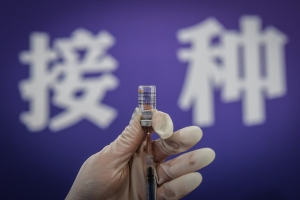
BEIJING, May 18 (Xinhua) -- China's top epidemiologist Zhong Nanshan has called for global solidarity and cooperation to fight against COVID-19 and prevent the next pandemic.
Zhong, a member of the Independent Panel for Pandemic Preparedness and Response (IPPPR), made the comments during a recent exclusive interview with Xinhua.
He said that, in July 2020, the World Health Organization (WHO) announced the establishment of the IPPPR to evaluate the global response to the COVID-19 pandemic under the organization's leadership.
The COVID-19 pandemic could have been prevented, said Zhong, adding that the IPPPR aims to learn lessons from the global health emergency and make suggestions for the future.
On May 12, the panel released a report, pointing out the existing gaps and possible solutions for priority areas in pandemic prevention and response.
Building herd immunity through widespread vaccination is an important link in current epidemic control, said Zhong, but vaccines are not currently distributed fairly.
The report urges making COVID-19 vaccines a global public good. High-income countries should contribute to the COVAX facility, which aims to provide equitable access to COVID-19 vaccines to low-to-middle-income countries, according to the report.
The report also urges vaccine producing countries to provide vaccine licenses and technology transfers to ensure adequate and fair vaccine supplies.
To ensure that mankind can prevent the next pandemic, the IPPPR put forward a series of long-term suggestions, including enhancing political leadership on pandemic prevention and response, advancing global financing and investment for epidemic prevention, improving monitoring and early warning systems, and establishing a tool and supply platform.
Zhong highlighted the proposal of setting up a Global Health Threats Council. "Only by getting the attention of the highest-level political leaders can we ensure that pandemic preparedness and response will not be forgotten or ignored in the future," he said.
He also called for providing sufficient financial support for epidemic prevention and control, establishing a global fair-distribution plan for vaccines, and giving the WHO greater authority.
The report is objective and scientific, Zhong said, noting that global solidarity and cooperation are required to turn the report's suggestions into actions.
Zhong said he hopes the goal of the IPPPR can be achieved, that is, making COVID-19 the last pandemic outbreak faced by mankind. ■
China's satellite navigation industry sees sound recovery in 2020
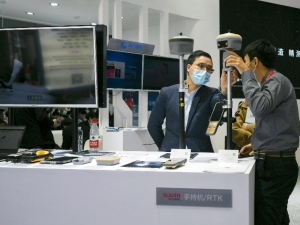
BEIJING, May 18 (Xinhua) -- The total output value of China's satellite navigation and location services industry reached 403.3 billion yuan (about 62.75 billion U.S. dollars) in 2020, up 16.9 percent from the previous year, according to an annual report.
The data was published in the White Paper on the Development of China's Satellite Navigation and Location Services Industry (2021), which was released by the GNSS (global navigation satellite system) & LBS (location-based service) Association of China on Tuesday.
The industry's core sectors, which are directly related to the development and application of satellite navigation technology, include chip, device, algorithm, software, navigation data, terminal equipment and infrastructure.
These sectors reported 129.5 billion yuan in output value, a year-on-year increase of 11 percent, accounting for 32.11 percent of the industry's total.
The related output value of satellite navigation applications and services increased by 19.9 percent year on year to 273.8 billion yuan, accounting for 67.89 percent of the total, according to the white paper. ■
Jordan, Greece stress two-state solution to Israeli-Palestinian conflict

AMMAN, May 18 (Xinhua) -- Jordan and Greece on Tuesday agreed that there is no alternative to the two-state solution as the only way to resolve the Israeli-Palestinian conflict.
The two sides reached the agreement at a meeting between Jordanian Foreign Minister Ayman Safadi and his visiting Greek counterpart Nikos Dendias.
Safadi held Israel responsible for the recent escalation in the occupied Palestinian territories, which has pushed the whole region toward more tension and violence, according to a statement issued by the Jordanian Foreign Ministry.
Safadi added that de-escalation requires an end to the Israeli aggression on the Gaza Strip, including Israel's unilateral and provocative steps such as building and expanding settlements and forcibly displacing Palestinians residents from their homes.
These moves have undermined the two-state solution, he said.
Safadi also received a phone call on Tuesday from his Dutch counterpart Stef Blok to review the efforts made to stop the deadly Israeli attacks in Jerusalem, Gaza, and the rest of the occupied Palestinian territories. ■
China successfully launches new ocean observation satellite
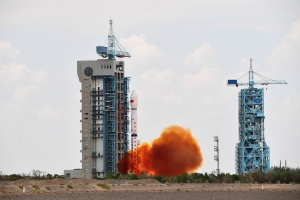
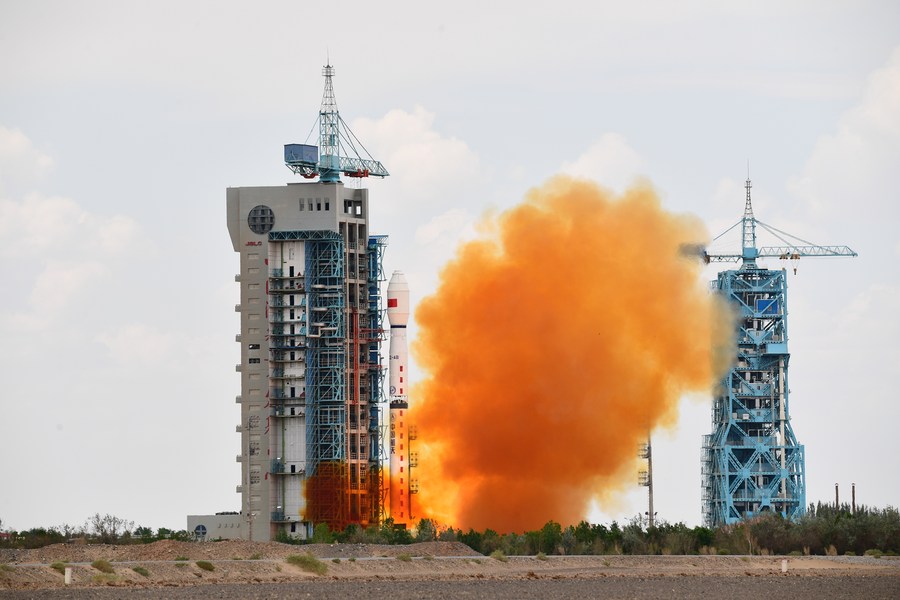
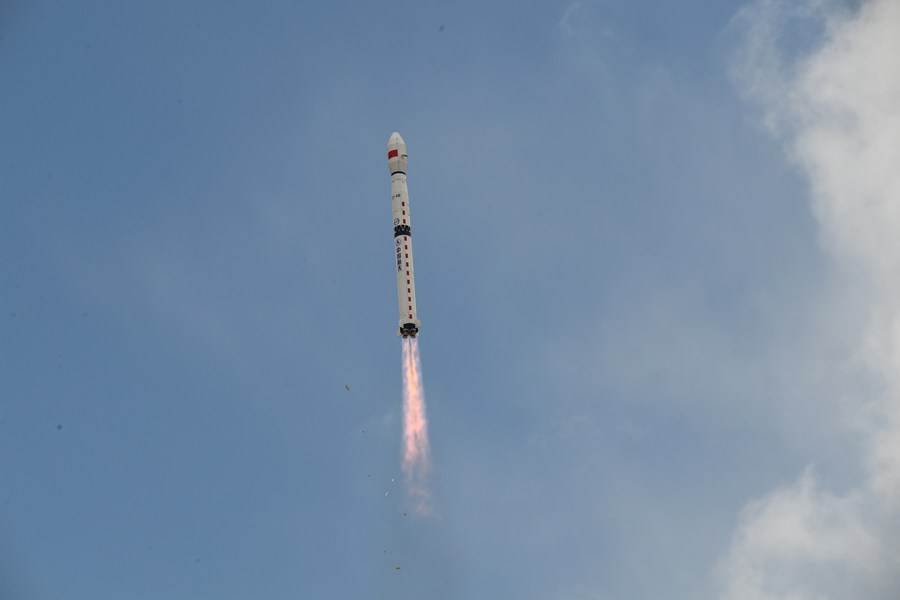
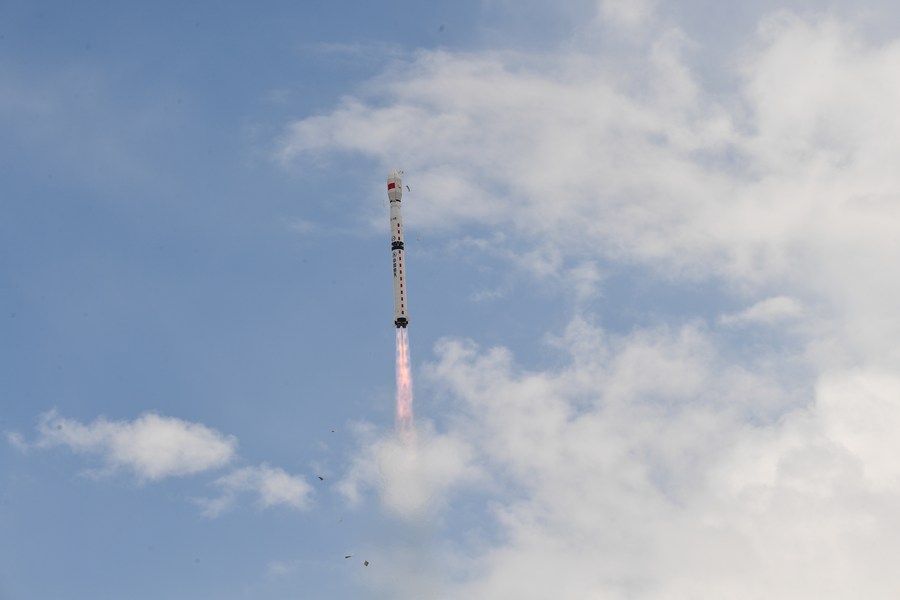
JIUQUAN, May 19 (Xinhua) -- China sent a new ocean-monitoring satellite on Wednesday into orbit from the Jiuquan Satellite Launch Center in northwest China.
A Long March-4B rocket carrying the Haiyang-2D (HY-2D) satellite took off at 12:03 a.m. (Beijing Time), according to the launch center.
U.S. companies take brunt of elevated tariffs in U.S.-China trade war: Moody's
"A majority of the cost of tariffs have been passed on to U.S. importers," Moody's said, adding "if the tariffs remain in place, pressure on U.S. retailers will likely rise, leading to a greater pass-through to consumer prices."
WASHINGTON, May 19 (Xinhua) -- U.S. businesses are bearing most of the tariff burden from the U.S.-China trade war, rating agency Moody's Investors Service has said.
In a report on Monday, Moody's said that U.S. importers absorbed more than 90 percent of the additional costs caused by the increased U.S. tariffs on Chinese goods.
"A majority of the cost of tariffs have been passed on to U.S. importers," it said, adding "if the tariffs remain in place, pressure on U.S. retailers will likely rise, leading to a greater pass-through to consumer prices."
Meanwhile, U.S. exporters also absorbed a large part of the costs from retaliatory tariffs imposed by China, because some of the exports targeted by the retaliatory tariffs are products that may be sourced from other places, such as agricultural goods, according to Moody's.
Higher trade tariffs were introduced during the previous U.S. administration, and most of them are still in place and affect half of the trade flows between the United States and China, the rating agency said. ■
A China-Europe freight train departs from Liuzhou in south China's Guangxi Zhuang Autonomous Region for the Russian capital Moscow, May 18, 2021. (China Railway Nanning Group/Handout via Xinhua)
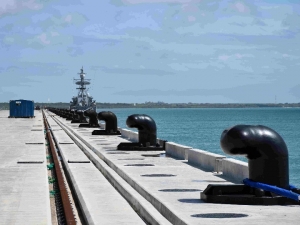
Kenya's Lamu seaport built by a Chinese firm that is set to be launched Thursday will pave way for seamless movement of goods in the greater Horn of Africa region, officials said Tuesday.
NAIROBI, May 19 (Xinhua) -- Kenya's Lamu seaport built by a Chinese firm that is set to be launched on Thursday will pave way for seamless movement of goods in the greater Horn of Africa region, officials said Tuesday.
The first phase of the Lamu port project consisting of three berths, constructed by the China Communications Construction Company, is located in the coastal county of Lamu in northeast Kenya.
Rashid Salim, acting managing director of Kenya Ports Authority (KPA), said the ultra-modern port that is part of Lamu Port-South Sudan-Ethiopia Transport Corridor is ready for major shipping operations.
"The new port has a huge potential for business since it sits right in the middle of major shipping routes for global trade," Salim told Xinhua during a recent interview.
President Uhuru Kenyatta is expected to receive the first large cargo ship to dock at the completed Lamu port's Berth One on Thursday amid a quest to elevate Kenya's status as a regional transport and logistics hub.
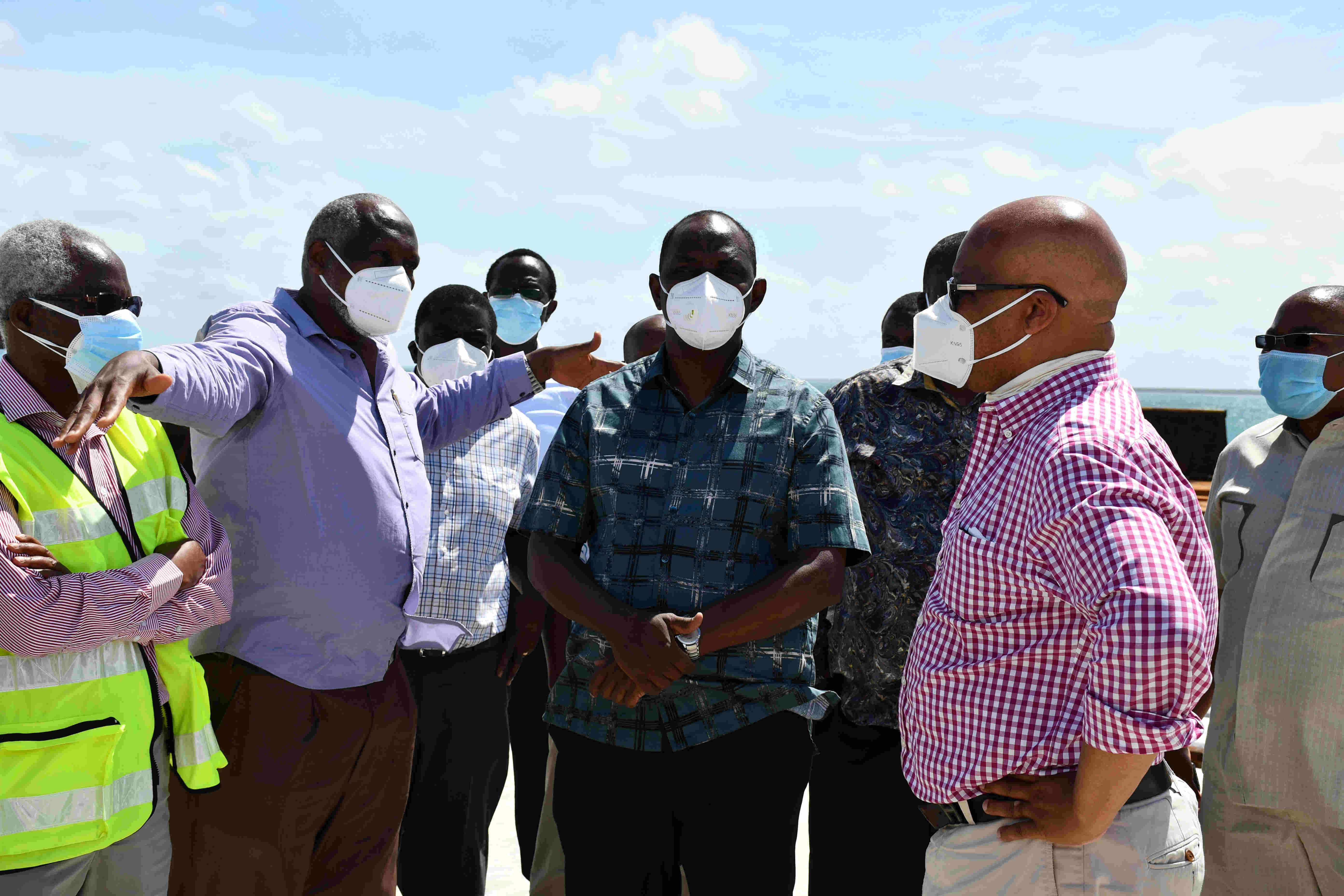
Salim said that operationalization of Lamu port, which is a Vision 2030 flagship project in the country, will transform regional economies through increased trade, integration and connectivity.
He said that Kenya's second commercial seaport will facilitate the transportation of bulk cargo to landlocked South Sudan and Ethiopia besides stimulating the growth of the local manufacturing sector.
KPA has already dispatched crucial equipment like cranes, tag boats, trailers, forklifts and rail chains to Lamu port to support cargo transfer from large vessels to trucks for transportation to the mainland, said Salim.
He clarified there will be no competition or duplication of roles between Lamu port and the country's Mombasa port since each will be serving a different trade route.
Salim said that Lamu port will have the capacity to handle large vessels from international shipping lines that ply the Indian Ocean, the Mediterranean Sea, and the Red Sea.
He said that state agencies were working on modalities of rolling out fiscal incentives to international shipping lines keen on utilizing the Lamu port.
Abdullahi Samatar, general manager of Lamu port, said it is expected to attract bulk cargo transport business from Ethiopia and South Sudan, generate new jobs, and spur the growth of local start-ups.
Samatar said the Lamu seaport can handle large vessels with a carrying capacity ranging from 12,000 to 18,000 twenty-foot equivalent units (TEUs).
Samatar said the port will also open up the vast northern Kenyan region for investments in key sectors like livestock, tourism, and fisheries.
Omudho Awitta, board chairman of Kenya Railways Corporation, said that operationalization of Lamu port will be accompanied by the construction of an oil refinery, a modern railway line, and resort cities in northern Kenyan counties of Isiolo and Turkana. ■
China city launches new China-Europe freight train service
NANNING, May 18 (Xinhua) -- A direct China-Europe freight-train route has been launched linking the city of Liuzhou in south China's Guangxi Zhuang Autonomous Region and the Russian capital Moscow.
The maiden train on this route departed on Tuesday from Liuzhou for Moscow, carrying 57 loaders and four motor graders.
It is scheduled to arrive in Moscow in 20 days after traveling about 11,000 km, slashing the transport time by more than two weeks, according to Luo Guobing, vice president of Liugong Machinery Co., Ltd., a Liuzhou-headquartered machinery manufacturer.
The route is the first China-Europe freight-train service connecting Guangxi directly with Europe.
The route will operate once or twice every month, according to the China Railway Nanning Group.
Data released on Tuesday by the National Development and Reform Commission showed that the total number of China-Europe freight train trips has so far reached 38,000, and they have transported 3.4 million twenty-foot equivalent unit containers of goods. ■
Update: Xi, Putin witness ground-breaking ceremony of nuclear energy cooperation project via video link
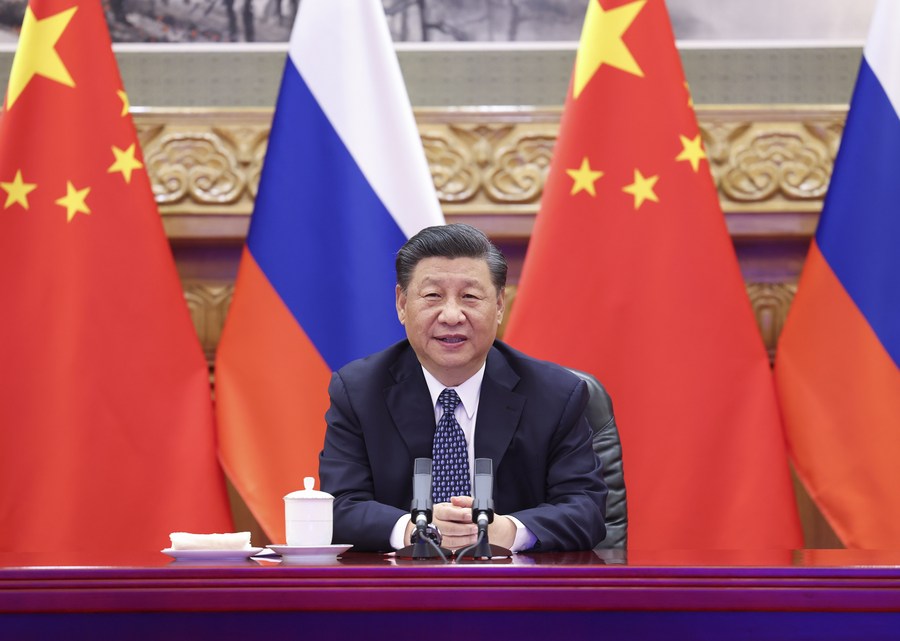
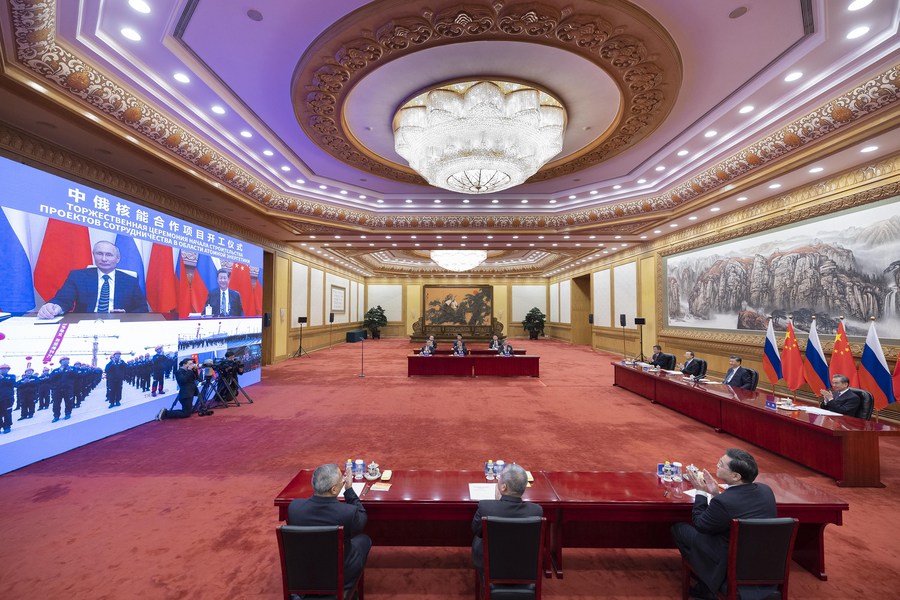
BEIJING, May 19 (Xinhua) -- Chinese President Xi Jinping and his Russian counterpart Vladimir Putin on Wednesday witnessed the ground-breaking ceremony of a bilateral nuclear energy cooperation project, Tianwan nuclear power plant and Xudapu nuclear power plant, via video link.
Xi arrived at the main venue of the Great Hall of the People at around 5:00 p.m. Beijing time and waved to Putin, who had joined in from the main venue of the Kremlin.
He Lifeng, vice chairman of the National Committee of the Chinese People's Political Consultative Conference and head of the National Development and Reform Commission, co-chaired the ceremony with Russian Deputy Prime Minister Alexander Novak.
Heads of relevant departments, local officials and constructor representatives of China and Russia attended the ceremony from the sub-venue of Tianwan nuclear power plant in Lianyungang City, east China's Jiangsu Province, sub-venue of Xudapu nuclear power plant in Huludao City, northeast China's Liaoning Province, and two Russian sub-venues. The heads of the companies of both countries reported on the progress of the project to the two heads of state.
Xi and Putin delivered their speeches respectively.
Speaking at the ceremony, Xi extended congratulations on the launch of the China-Russia nuclear energy cooperation project and paid high respect to the constructors from the two countries.
Noting that this year marks the 20th anniversary of the signing of the China-Russia Treaty of Good-Neighborliness and Friendly Cooperation, Xi said that he and President Putin have agreed to advance the development of bilateral relations to a higher level and expand the ties to broader fields.
In the face of the COVID-19 pandemic unseen in a century, China and Russia have firmly supported each other and cooperated closely and effectively, which is a vivid demonstration of the China-Russia comprehensive strategic partnership of coordination for a new era, he said.
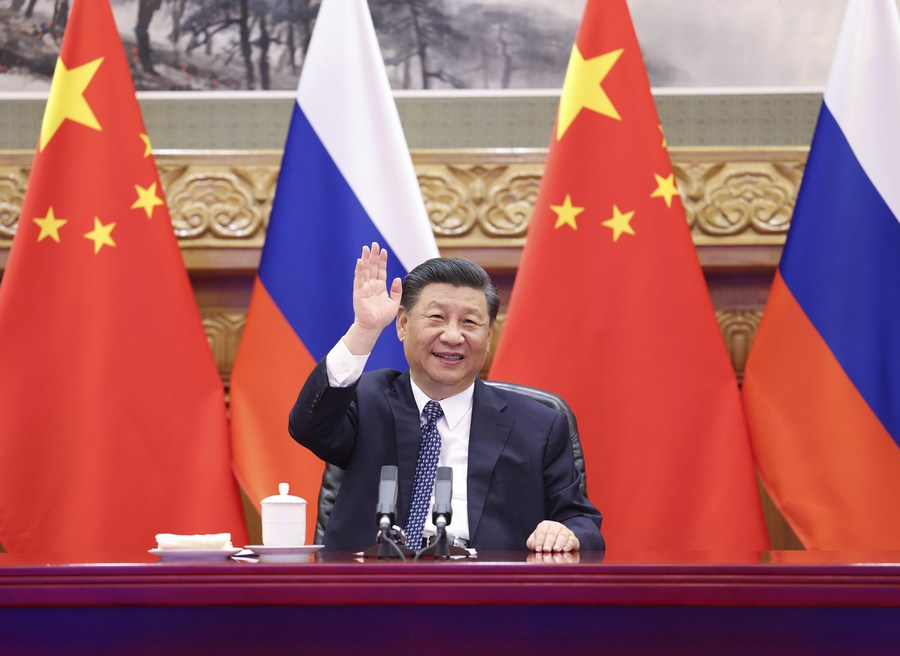
Xi stressed that energy cooperation has always been the most important area of practical cooperation which generates the largest achievement and covers the widest scope between the two countries.
Noting that nuclear energy is the strategic priority for bilateral cooperation and a series of major projects have been completed and put into operation, Xi said the four nuclear power units that kicked off construction on Wednesday mark another major landmark in China-Russia nuclear energy cooperation.
Xi put forward a three-point proposal at the ceremony. First, he called on both sides to adhere to the principle of safety first and set a model for global nuclear energy cooperation.
It is necessary to construct and operate the four units with high quality and high standards, create a global benchmark in nuclear safety, give full play to complementary advantages, expand and deepen bilateral and multilateral cooperation on nuclear energy, and contribute more to the development of the global nuclear energy industry, he said.
Second, Xi suggested the two countries deepen scientific and technological cooperation on nuclear energy by sticking to the driving force of innovation.
He urged deepened cooperation on the basic research, key technology research and development, and transformation of innovative achievements in the field of nuclear energy, such as nuclear environmental protection, nuclear medicine, nuclear fuel and advanced nuclear power technology, so as to promote the deep integration of the nuclear energy industry and the new generation of digital technology, and contribute more wisdom to the innovative development of nuclear energy globally.
Third, he called for adherence to strategic collaboration to promote the coordinated development of the governance system of the global energy industry. He said that it is necessary to promote the building of a global energy governance system featuring justice, equity, balance, inclusiveness, openness and shared benefits, and contribute more solutions to global energy governance.
"Responding to climate change is a common task for all countries," Xi said, adding that China and Russia should promote more low-carbon cooperation projects and play a constructive role in achieving global sustainable development goals. ■
U.S.-China trade frictions need resolving for global well-being: analyst
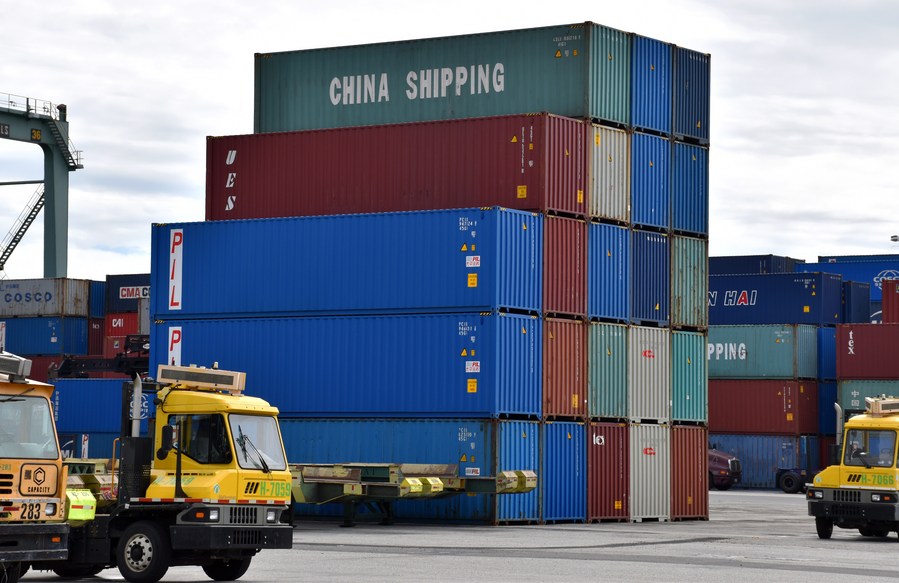
"The past few years of trade frictions between Washington and Beijing have been to the detriment of global well-being and this needs resolving as soon as possible," said David Brown, chief executive of New View Economics.
BEIJING, May 20 (Xinhua) -- The trade disputes between the United States and China in the past few years have harmed global well-being and should be resolved as soon as possible, said David Brown, chief executive of New View Economics.
"The past few years of trade frictions between Washington and Beijing have been to the detriment of global well-being and this needs resolving as soon as possible," he said in an article published on the website of the South China Morning Post on Tuesday.
"After the world has been through in recent years, it's time for rapprochement between the U.S. and China to ensure global recovery is given the highest priority," the analyst said in the article calling for ending the U.S.-China trade frictions for the sake of the pandemic-stricken world.
Faster trade growth between the two countries could bring enormous benefits for the rest of the world, he said, hoping both countries can work together to reach a better deal for stronger global growth. ■
Business insiders upbeat about investment prospects in China: U.S. media
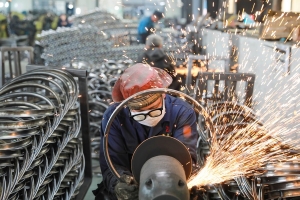
"Their (China's) GDP growth was through the roof. Everything is growing out there," Mark Lasry, chairman of Avenue Capital Group, said of China's growing strength.
NEW YORK, May 20 (Xinhua) -- China's expanding economic largesse is creating new opportunities for businesses, U.S. business magazine Forbes quoted business insiders as saying in a recent article.
"Their (China's) GDP growth was through the roof. Everything is growing out there," Mark Lasry, chairman of Avenue Capital Group, said of China's growing strength.
China's relative success in combatting the COVID-19 pandemic has given its economy a boost, expanding by 18.3 percent from a year earlier in the first quarter of 2021, one of the best-ever performances by an economy that now stands as the world's second-largest, Lasry said, when addressing at an online forum on U.S.-China relations.
"So for what we're looking at, I think now is a great time to be investing in China," said Lasry, who is upbeat about business prospects in China.
Echoing Lasry's remarks, Joyce Chang, chair of global research at JP Morgan, said that China is moving up in its global position in industries such as solar energy and electric vehicles. ■

Powered by  © Μaritimes 2019