
-
Home

-
Maritimes NEWS
-
Ports
- maritimes


maritimes
Cruise global majors at Posidonia Sea Tourism forum set the tone and pace for the rebirth of tourism in post-pandemic Europe
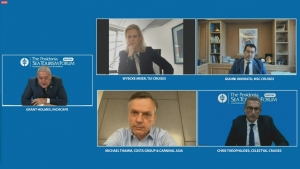
Europe’s biggest cruise companies have already deployed 18 vessels in the East Med and other European destinations and plan to ramp up their operations with 28 ships in June and 50 in July, before reaching this summer’s maximum target of 60 operational cruise ships in August.
More than half of these vessels will be deployed in Greek waters according to Ioannis Plakiotakis, Minister of Maritime Affairs and Insular Policy whose speech marked the official opening of this year’s digital Posidonia Sea Tourism Forum.
“Forty cruise ships are expected to operate in Greek waters and 45 ports have their own contingency plans developed in a way to facilitate cruise ships without affecting the experience of passengers, crews or the local communities,” he said.
“Thanks to our national blue freedom vaccination programme which prioritises tourism destinations and cruise hotspots, we are optimistic that this year will be substantially better than the previous,” he said in his opening remarks.
Greece has been lauded for its efforts to develop a tourism product capable of instilling a sense of trust as a safe destination that is fully prepared to weather the consequences of the pandemic and this view was also echoed by Pierfrancesco Vago, CLIA Global Chairman and Executive Chairman, MSC Cruises, who also addressed the 500 delegates attending this year’s PSTF on their computer screens from around the world.
“Greece is one of the countries to achieve early resumption of operations. Now more than ever feels like the time of renewal as the industry emerges from the dark winter of Covid,” he said.
“Challenges will remain, but we are building back better and can be optimistic now, as we have worked with governments, terminals and destinations to develop protocols for a safe and responsible return to service,” he said.
Already, more than 200,000 passengers have taken a cruise safely since the end of last summer, and this year the East Med shows the way with an early start which may help Greece become a permanent country of embarkation, according to Vago.
But uncertainty as to when cruise operations can recommence at a viable level to sustain the industry is one of those challenges.
TUI restarted operations last week from Crete and its plan for this summer is to purely offer Greece cruises from Iraklion with two different itineraries. “If more travel restrictions are lifted, we will return to other itineraries. But between May to October Greece is the only destination we are offering,” said Wybcke Meier, CEO, TUI Cruises.
According to MSC Cruises, certain regions such as Asia and North America are still off limits for the cruise sector, however CEO Gianni Onorato predicts that more Europeans will turn to cruising the region this summer as they are cut off from intercontinental destinations due to airlift restrictions and travel protocols. He said: “The Green certificate will allow more Europeans to focus on Europe, and Greece will be one of the main destinations for them.”
Michael Thamm, Group CEO, Costa Group and Carnival Asia, agrees: “Greece is a pilar for Germans, Italians and French due to its beauty and the natural desire to see the country, and cruising is the best way to do that. We want to extend our presence in Greece beyond the season even to December. Both our brands have resumed operations in Greece and there will be more ships coming to Greece.”
But popularity may present some challenges according to Chris Theofilides CEO, Celestyal Cruises, the company which uses Greece as its homeporting base and knows the market better than any other operator.
“High concentration of ships at any particular point in time may be a challenge especially in Greek ports due to infrastructure issues. We need to avoid any high volume of guests at any given point. It’s not only the responsible thing to do but it is also the right thing to do, both from a guests’ experience point of view as well as for the local communities.”
Meier shares the concerns: “Over-tourism may be over in a post pandemic world, but we should make sure we don’t have too many ships at the same time in the same ports. Islands need to have a plan on the number of ships they can accept at the same time. And port operators need to have the infrastructure to accept bigger ships.”
Building back better, or just coming back, in a staggered and responsible way is the right thing to do and cruise companies are firmly focused on all Covid-related prevention and reaction protocols to ensure the path to normality is a short and sustained one.
There are two aspects in it; Enforcing, supervising and respecting the current protocols for passengers, crew and destinations is one, standardisation and uniformity of such protocols is the other.
According to Onorato, the passenger locator form is not yet fully adopted on a pan-European level in equal measures, and there is no clear guideline of how to use it. “Every country is asking for the form every time we arrive to a different country. As long as uniformity is not properly reached as soon as possible between different countries, we may face unnecessary issues for our guests, and this may render cruising uncompetitive compared to other forms of tourism. Protocols are working but we need greater uniformity.”
This lack of uniformity gives leeway to operators who wish to enforce stricter precautionary measures with Norwegian Cruise Line being one the companies that have decided to allow only fully vaccinated passengers and crews on board their vessels, according to Kevin Bubolz, Managing Director Europe, who also participated at PSTF 2021 in a panel discussion focusing on the Impact of the new health protocols on shore excursions and destination management. Adam Sharp, Director, International Destination Development, Royal Caribbean Group confirmed that Royal Caribbean Cruises is also cooperating with NCL to standardise health protocols for the US market.
The pace to normality may be agonisingly slow, however this is also due to the very regimental protocols the cruise sector stakeholders decided to impose on their operations in order to bulwark themselves against the risk of Covid-19.
“We were first to mandate 100% testing for all passengers and crew setting standards for other industries, and we are optimistic that we will achieve a return to pre-Covid levels by 2022-2023,” said Vago.
With a programme of thought-provoking panel discussions and 21 exhibitors showcasing their offering on the interactive and engaging digital platform, PSTF 2021 was the first cruise industry event to gather the key decision makers of the sector since the mid-May resumption of cruising in the East Med.
The 2021 Posidonia Sea Tourism Forum was sponsored by Gold sponsors Greek National Tourism Organisation and This is Athens, Silver Sponsors Heraklion Port Authority, Indev Software, MedCruise and Piraeus Port Authority and Bronze sponsors Alba Graduate Business School, Celestyal Cruises, Inchcape Shipping Services and Thessaloniki Port Authority. The Posidonia Sea Tourism Forum is organised under the auspices of the Ministry of Maritime Affairs & Insular Policy and the Ministry of Tourism and is supported by the Hellenic Chamber of Shipping, Cruise Lines International Association (CLIA), the Association of Mediterranean Cruise Ports and the Union of Cruise Ship Owners & Associated Members.
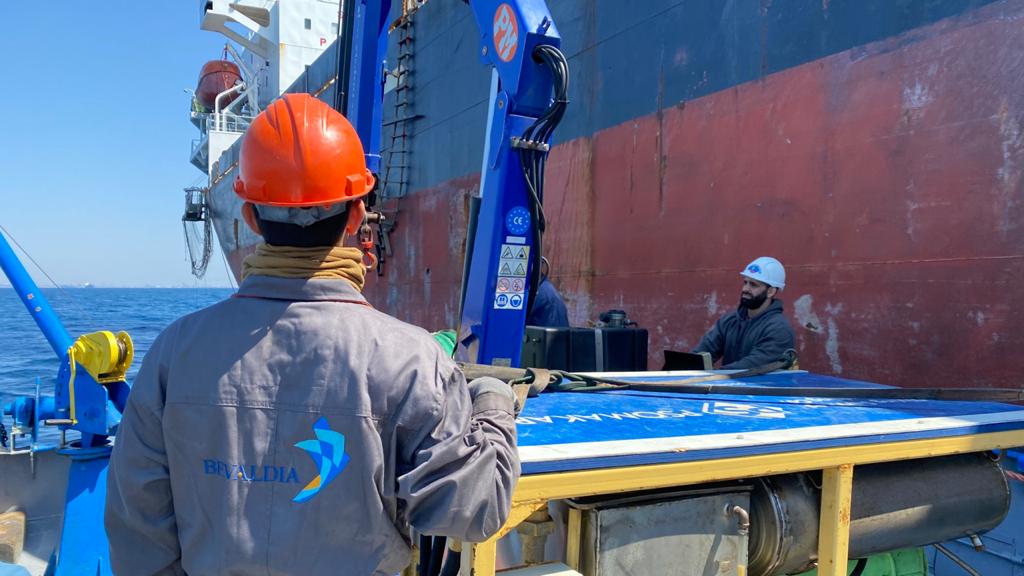
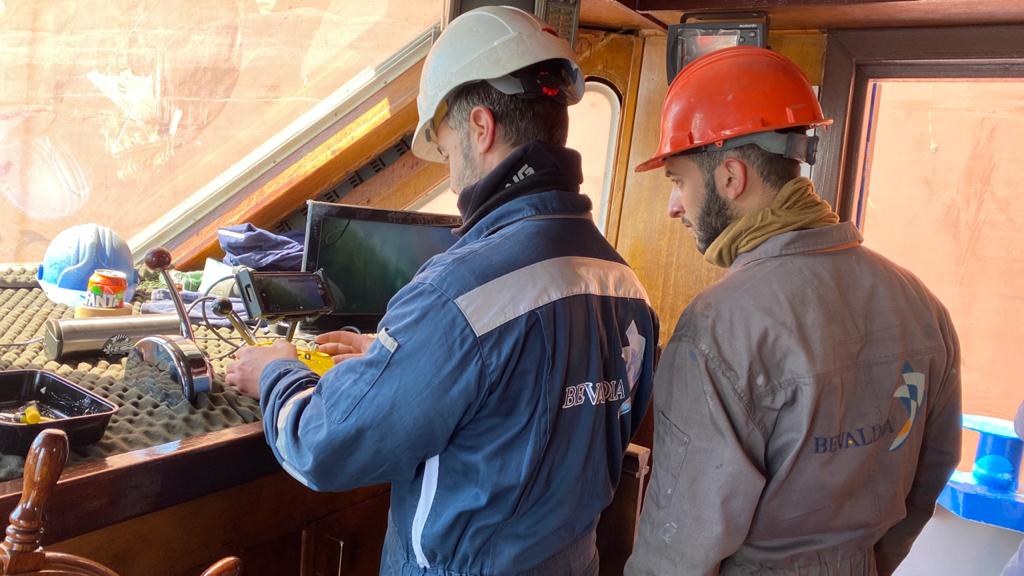
BEVALDIA: Reopening of all diving stations worldwide

After a difficult time due to the pandemic that we all went through, we were forced to seize operations in some of our diving stations for health reasons.
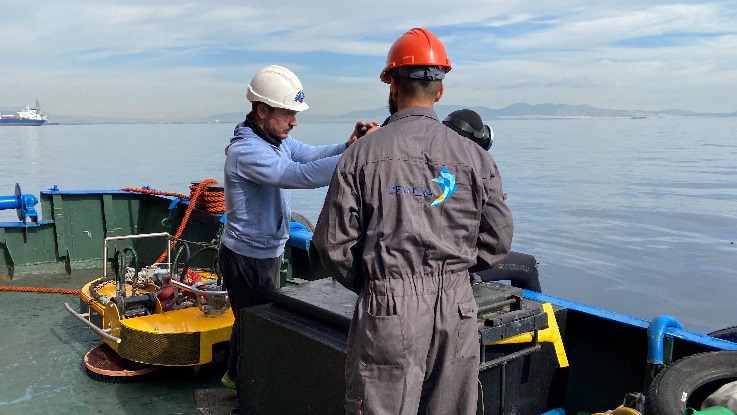
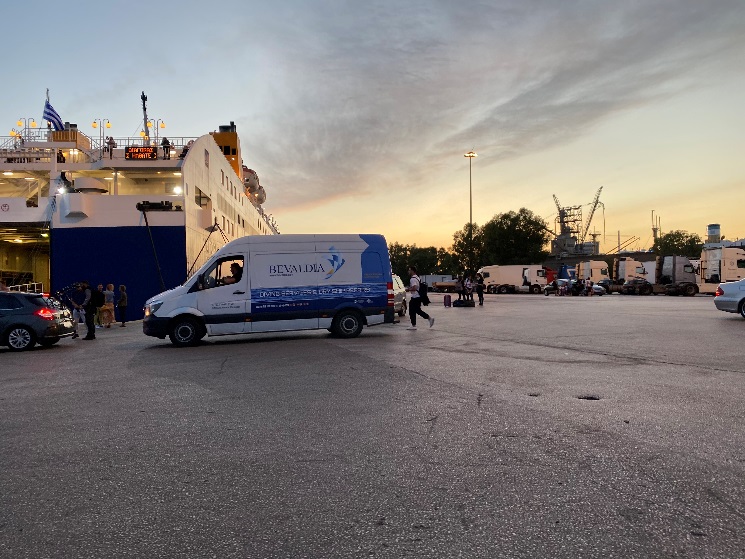
Our company BEVALDIA is particularly pleased to inform its customers that it has proceeded in the reopening of all its fully manned and equipped diving stations in more than 22 countries where we are active.
Service Stations: Greece, Togo, Turkey, Ivory Coast, Cyprus, Spain, Indonesia, Guinea, Mexico, China, S. Korea, Albania, Benin, Congo, Djibouti, Egypt, France, Ghana, Singapore, Senegal, Tunisia, Panama
Castor Maritime Inc. Announces Deliveries of the M/V Magic Nebula, the M/T Wonder Vega, and the M/V Magic Starlight
Limassol, Cyprus, May 25, 2021 – Castor Maritime Inc. (NASDAQ: CTRM), (“Castor”, or the “Company”), a diversified global shipping company, announces that:
• On May 20, 2021, Castor took delivery of the M/V Magic Nebula, the 2010 Korean-built Kamsarmax dry bulk carrier, it had agreed to acquire as previously announced on March 10, 2021;
• On May 21, 2021, Castor took delivery of the M/T Wonder Vega, the 2005 Korean-built Aframax tanker, it had agreed to acquire as previously announced on April 16, 2021. The M/T Wonder Vega has been entered in an unaffiliated tanker pool specializing in the employment of Aframax tanker vessels; and
• On May 23, 2021, Castor took delivery of the M/V Magic Starlight, the 2015 Chinese-built
Kamsarmax dry bulk carrier it had agreed to acquire as previously announced on April 19, 2021. The M/V Magic Starlight was delivered to the Company with a time charter contract attached with a reputable charterer, at a daily gross charter rate equal to 114% of the Baltic Panamax Index, and with an estimated remaining term of about 17 to 21 months. All three acquisitions were financed in their entirety with cash on hand.
About Castor Maritime Inc.
Castor Maritime Inc. is an international provider of shipping transportation services through its ownership of oceangoing cargo vessels.
On a fully delivered basis, Castor will own a fleet of 26 vessels, with an aggregate capacity of 2.2 million dwt, consisting of 1 Capesize, 7 Kamsarmax and 10 Panamax dry bulk vessels, as well as 1 Aframax, 5 Aframax/LR2 and 2 MR1 tankers. Where we refer to information on a “fully delivered basis”, we are referring to such information after giving effect to the successful consummation of our recent vessel acquisitions.
Norwegian Cruise Line Announces Plans for Highly Anticipated Return to Cruising from the U.S.
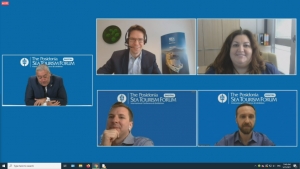
Cruise Line Will Return to Alaska with 11 Week-Long Voyages from Seattle beginning Aug. 7, 2021 Pending CDC Authorization
Responsible resumption and importance of cruise activity in Greece highlighted during NCL’s participation in Posidonia Sea Tourism Forum
ATHENS, 25 MAY 2021 – The dynamic comeback of cruise travel with Norwegian Cruise Line (NCL), the innovator in global cruise travel with a 54-year history of breaking boundaries, continues as the brand announced that it expects to resume cruise operations from the U.S. beginning Aug. 7, 2021 with week-long voyages from Seattle to Alaska, one of the top cruise destinations among its guests.
The news follows the temporary waiver of the Passenger Vessel Services Act, allowing cruising to Alaska to resume upon obtaining the pending Conditional Sailing Certificate from the U.S. Centers for Disease Control and Prevention ("CDC”). In partnership with local governments and guided by the robust protocols of the SailSAFE™ health and safety program, which at its cornerstone includes that all crew and guests must be fully vaccinated to embark, travelers will once again be able to explore the "Last Frontier" and all its beauty with NCL.
"Seattle has always been our second home, and we are beyond excited to return to this incredible homeport and to once again bring our guests to Alaska," said Harry Sommer, President and Chief Executive Officer of Norwegian Cruise Line. This summer, travelers will be able to recommence their cruise adventures to Alaska with week-long voyages aboard Norwegian Bliss that will sail revised itineraries from Aug. 7, 2021 through Oct. 16, 2021, offering seven to 13 hours of port time in Skagway, Juneau, Ketchikan and Icy Strait Point, Alaska. On select sailings, guests will also have the chance to take in the serene views of Glacier Bay National Park or the Holkham Bay Glacier Fjord.
NCL’s return to Alaska follows the announcement of the redeployment of 5 of the brand’s 17 ships beginning from July, sailing new and revised itineraries in Europe and The Caribbean, as part of its return to service plans. As of July 25, 2021 guests will be able to cruise the Greek Isles with seven-night itineraries on Norwegian Jade from Athens (Piraeus), highlighting the importance of Greece as a cruise destination for NCL as well as the cruise industry in total.
Kevin Bubolz, Managing Director Europe of NCL, laid emphasis on the brand’s cruise activity in Greece during his participation to the 6th Posidonia Sea Tourism Forum, the international Conference & Exhibition dedicated to cruising and sea tourism in the East Mediterranean, that took place on Tuesday 25 May 2021, in a digital environment. Mr. Bubolz also stressed that NCL will continue with its thoughtful approach to redeploying its fleet, working with destination partners and the leading experts of the SailSAFE Global Health and Wellness Council. The Council will regularly evaluate the robust protocols of the SailSAFE health and safety program and make science-based decisions to protect guests, crew and the destinations the NCL fleet visits.
For more information about the Company's award-winning 17-ship fleet and worldwide itineraries, or to book a cruise, please visit www.ncl.com.
About Norwegian Cruise Line
As the innovator in global cruise travel, Norwegian Cruise Line has been breaking the boundaries of traditional cruising for 54 years. Most notably, the cruise line revolutionized the industry by offering guests the freedom and flexibility to design their ideal vacation on their preferred schedule with no assigned dining and entertainment times and no formal dress codes. Today, its fleet of 17 contemporary ships sail to over 300 of the world’s most desirable destinations, including Great Stirrup Cay, the company’s private island in the Bahamas and its resort destination Harvest Caye in Belize. Norwegian Cruise Line not only provides superior guest service from land to sea, but also offers a wide variety of award-winning entertainment and dining options as well as a range of accommodations across the fleet, including solo-traveler staterooms, mini-suites, spa-suites and The Haven by Norwegian®, the company’s ship-within-a-ship concept. For additional information or to book a cruise, contact a travel professional, call 888-NCL-CRUISE (625-2784) or visit www.ncl.com. For the latest news and exclusive content, visit the media center and follow Norwegian Cruise line on Facebook, Instagram and YouTube @NorwegianCruiseLine; and Twitter and Snapchat @CruiseNorwegian.
1st Global Conference for Seafarer Mental Health and Wellbeing
Taking a practical approach to improving seafarer mental health and wellbeing
About this event
The 1st Global Conference for Seafarer Mental Health and Wellbeing will bring together global leaders and key stakeholders from the maritime sector who are actively involved and have a keen interest in discussing practical solutions to improving seafarer mental health and wellbeing. The focus will be on interventions and exploring best practice of implementation, monitoring results and identifying what more can be done.
In 2020 an industry-wide survey on seafarer wellbeing showed that 54% of seafarers felt they were not being actively helped to manage stress and fatigue. This is with the backdrop of a significant crew-change crisis impacting both seafarers and their families during a tumultuous year. But seafarer mental health and well-being has been an area of concern well before the pandemic, with issues such as isolation, fatigue, and stress being commonly reported.
In 2019 the Institution of Occupational Safety and Health found that “significantly more seafarers report being happy or very happy at home than report being happy or very happy on board”. In the same study 55% of employer respondents stated that their companies had not introduced any policies or practices aimed at addressing issues of seafarers’ mental health in the last 10 years. In contrast, the latest The Mission to Seafarer’s Happiness Index highlighted the positive impact that small scale solutions and investments with regard to connectivity, food and social activities have made to life on board. This conference will look at practical approaches and highlight solutions that can be implemented to tackle ongoing issues.
Conference Committee
Co-Chair: Capt Panos Stavrakakis MBA, MSc, PhD, CEng, FIMarEST, Champion of IMarEST Mental Health & Wellbeing Initiative and Head of Centre of Organizational Health & Wellbeing, Health & Safety Executive
Co-Chair: Stephanie McLay MSc MBPsS, Senior Human Factors Consultant, Lloyd's Register
Chrissie Clarke, Programme Manager Diversity and Skills, Maritime UK
Hazel Lewis, Seafarer Safety and Human Element Policy Manager, Maritime & Coastguard Agency
Pav Hart-Premkumar, Human Element Policy Specialist, Maritime & Coastguard Agency
Richard Graham CEng CMarEng FIMarEST, Chair of IMarEST Professional Affairs & Education Committee
Developing a sustainable blue economy in the European Union

The Waterborne Technology Platform welcomes the new approach for a sustainable blue economy in the EU
On 17 May, the European Commission proposed a new approach for a sustainable blue economy, essential to achieving the objectives of the European Green Deal and ensuring a green and inclusive recovery from the pandemic.
The communication underlines that all blue economy sectors including fisheries, aquaculture, coastal tourism, maritime transport, port activities and shipbuilding will have to reduce their environmental and climate impact. Tackling the climate and biodiversity crises requires healthy seas and a sustainable use of their resources to create alternatives to fossil fuels and traditional food production. This, in accordance with the communication, requires investing in innovative technologies.
The Communication sets out a detailed agenda for the blue economy to 1) achieve the objectives of climate neutrality and zero pollution; 2) switch to a circular economy and reduce pollution; 3) preserve biodiversity and invest in nature; 4) support climate adaptation and coastal resilience; 5) ensure sustainable food production; and 6) improve management of space at sea. All topics are in line with the missions and visions of the Waterborne Technology Platform.
In a first reaction, the Chairman of the Waterborne Technology Platform, Henk Prins, said “The communication published by the European Commission clearly supports the missions and visions of the Waterborne Technology Platform, as published in January 2019. The approach underpins the need for research, development and innovation for and by the European waterborne sector. The Waterborne Technology Platform is focussing on a various range of topics regarding Blue Growth and Ports and Logistics, which are linked to achieving the objectives laid down in the Communication. Amongst these topics are: seas and oceans for CO2 neutrality, sustainable use and management of marine resources (including offshore aquaculture, deep-sea mining and planning and managing sea use) as well as persistent monitoring and digitalisation of seas and oceans. In addition, the co-Programmed Partnership on Zero-Emission Waterborne Transport in the framework of Horizon Europe will significantly contribute to these objectives as well. Since the Waterborne TP, and the Partnership, are not only focussed on eliminating GHG emissions, but also all other forms of pollution to air and water (including underwater noise). Thereby, the Waterborne Technology Platform is committed to develop and demonstrate solutions, which will ensure the achievement of the objectives laid down”.
WATERBORNE TP WATERBORNE TP has been set up as an industry-oriented Technology Platform to establish a continuous dialogue between all waterborne stakeholders, such as classification societies, shipbuilders, shipowners, maritime equipment manufacturers, infrastructure and service providers, universities or research institutes, and with the EU Institutions, including Member States (www.waterborne.eu). The members of waterborne TP comprise members as well as associated members from both maritime and inland navigation countries, representing about 17 Member States. In addition, the Associations member of the Waterborne Technology Platform represent the broader waterborne sector throughout the entire EU.
Enquiries concerning how to join and become more closely involved in the “Zero-Emission Waterborne Transport” partnership or other activities of the Waterborne TP can be sent to: Jaap Gebraad, Executive-director Waterborne TP, This email address is being protected from spambots. You need JavaScript enabled to view it., tel: +32 493 835 626
A meeting on the Cruise restart at the PPA S.A.
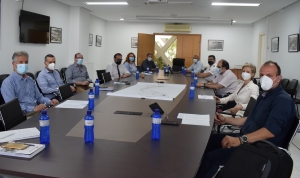
A cooperation and coordination meeting with subject the safe cruise restart and the optimal implementation of the passengers’ reception procedures, was held today in the presence of the General Secretary of Ports & Port Policy Mr. Evangelos Kyriazopoulos, the Piraeus Harbormaster, Commodore Mr. Georgios Skandalis, the EU HEALTHY GATEWAYS Joint Action Coordinator, Professor of Hygiene and Epidemiology Christos Hadjichristodoulou, the Associate Professor of Hygiene and Epidemiology Ms. Varvara Mouchtouri, the Director at Region of Attica Piraeus Health Port Authority, Mr. Charalampos Vasiliou and executives of PPA S.A.
During the meeting, a visit took place to the Cruise passenger terminals and were discussed in detail all issues related to the protocols’ implementation for the safest passengers flows and the compliance with the sanitary measures.
The port of Piraeus is a crucial hub for the successful Cruise restart in Greece and the Eastern Mediterranean. For 2021, 453 arrivals have been planned, from which 251 are boarding arrivals (40 homeport ships), 190 transit arrivals (33 transit ships) and 12 arrivals for supply.
G.S.C.C.:It has worked closely with every Greek Government

Ιn view of recent statements made by individual members of the shipping fraternity, which do not reflect the views of the vast majority of the Greek shipping community, the G.S.C.C. would like to place on record that it has worked closely with every Greek Government over the many decades since its inception, and in particular with the Ministry of Mercantile Marine and the Hellenic Coast Guard in order to further the development of the Greek shipping industry.
Without the Greek Government, the Greek flag, Greek seafarers and our offices in Greece, what we today call the Greek shipping miracle would not have occurred.
It is imperative to continue this close cooperation in order to safeguard one of Greece's most important export industries and retain its place as Europe's most prominent maritime state.
In the international arena, we strongly believe that without the I.M.O modern shipping would not have reached the great heights of safety and progress in all areas. The I.M.O. is the leading global maritime legislative body and its work has always been acknowledged, supported and admired by the Greek shipping industry.
We also realize, as Europeans, the importance of the E.U. in playing a very significant role in driving safety and environmental awareness, assisting world trade and enhancing the technological strength of Europe's place as a global shipping service provider.
Seanergy Maritime Holdings Corp. Announces Agreement to Acquire its 16th Capesize Vessel and New Time Charter
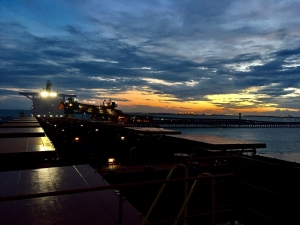
May 24, 2021 - Glyfada, Greece - Seanergy Maritime Holdings Corp. (the “Company”) (NASDAQ: SHIP) announced today that it has entered into a definitive agreement with an unaffiliated third party to purchase a Capesize vessel (the “Vessel”).
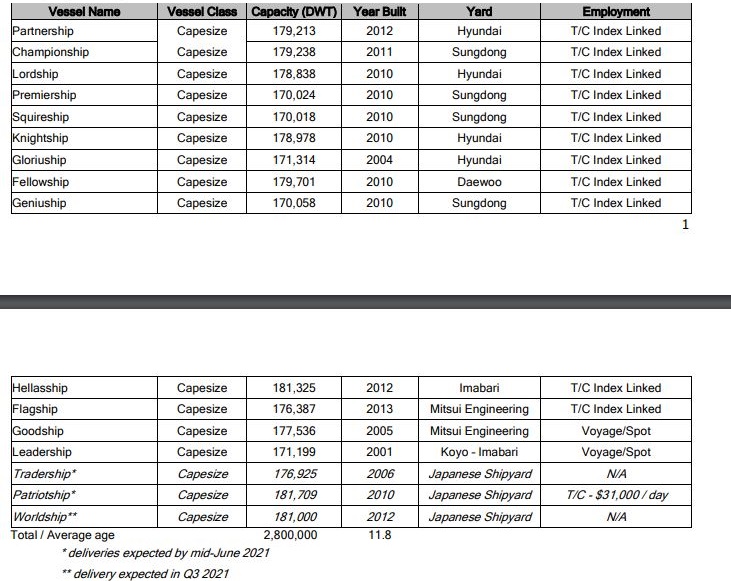
The Vessel was built in 2012 at a reputable shipyard in Japan, has a cargo-carrying capacity of approximately 181,000 deadweight tons (“dwt”) and will be renamed M/V Worldship. The Worldship is expected to be delivered within the third quarter of 2021, subject to the satisfaction of certain customary closing conditions. Following her delivery, Seanergy’s fleet will increase to 16 Capesize vessels with an aggregate cargo capacity of approximately 2,800,000 dwt.
The Vessel is fitted with a scrubber and a ballast water treatment system, while the special survey will be completed by the current owner prior to the delivery and, therefore, the Company does not anticipate incurring any off-hire or capital expenditure for this Vessel at least for the next two years.
The purchase price of $33.7 million is expected to be funded with cash on hand and debt financing.
In addition, taking advantage of the current strong market conditions, Seanergy has fixed one of its Capesize vessels, the M/V Patriotship, at $31,000 per day for a period employment of 12-18 months with a major European cargo operator. The contract is expected to commence upon the Patriotship’s upcoming delivery to the Company, which is anticipated in the beginning of June 2021.
Stamatis Tsantanis, the Company’s Chairman & Chief Executive Officer, stated: “I am very pleased to announce another timely acquisition of a high-quality Capesize vessel built by a renowned shipyard in Japan. The addition of the M/V Worldship to our fleet will further enhance our operating leverage as a leading pure-play Capesize company.
This should be a highly accretive transaction for our shareholders as it will be funded by Seanergy’s strong liquidity, consisting of cash on hand and loan facilities at competitive terms.
Our fleet is currently operating in a decade-high freight environment, where the Capesize forward freight contracts (“FFA”) for the second half of 2021 exceed $30,000 per day. Based on the anticipated delivery of the Vessel in the mid of the third quarter of 2021, the incremental gross revenue from this acquisition may exceed $4 million for the remainder of the year.”
About Seanergy Maritime Holdings Corp.
Seanergy Maritime Holdings Corp. is the only pure-play Capesize ship-owner publicly listed in the US.
Seanergy provides marine dry bulk transportation services through a modern fleet of Capesize vessels.
On a ‘fully-delivered’ basis, the Company's fleet will consist of 16 Capesize vessels with average age of 11.8 years and aggregate cargo carrying capacity of above 2,800,000 dwt.
The Company is incorporated in the Marshall Islands and has executive offices in Glyfada, Greece. The Company's common shares trade on the Nasdaq Capital Market under the symbol “SHIP”, its Class A warrants under “SHIPW” and its Class B warrants under “SHIPZ”.
seanergymaritime.com.
EastGate Report | Dry bulk commodities and asset values steely resolve
Since the advent of the pandemic in early 2020 and following the initial shock causing a deep dive in economic output worldwide, after China’s successful handing of the health crisis, two buzzwords have been in market participants’ lips: “vaccines rollout” and “post-pandemic economic recovery”, with a third one appearing in 1Q21 in the name of “supercycle” referring to commodities’ bullish sentiment.
Thus, market expectations of 2021 economic bounce back were blended with commodities rapacious ascent driving projections of 4.3-5.0% GDP growth (following last year’s contraction of 3.8%) which, if realised, will propel global GDP to pre-pandemic levels up to 6 months sooner than some analysts had initially expected.
Roaring commodities, rampant steel production
Mining commodities, especially iron ore and copper, have skyrocketed with iron ore to have hit a record high shy of US$230/t by mid-May, before retreating to sub US$200/t levels, albeit with fundamentals on its bench. Iron ore June contracts are also trading at below US$200/t lately as China stepped up to cool surging commodity prices by intensifying inspections on spot and futures markets.
Moreover, regulators in Shanghai and Tangshan have been warning mills against price collusion and price-distorting market practices in order to put under control its burgeoning iron ore import bill and restore discipline in the country’s upended 2021 steel production.
As for crude steel, China’s output of same registered an all-time high in April 2021 with 97.85 mt against 85.03 mt April 2020 sending total steel production for the first four months of the year climbing to 374.56 mt, up 16% y/y. For the first ten days of May, official data showed an average daily output at 2.4 mt of crude steel, a 17.8% y/y growth, sending steel inventories to 14.68mt, a 9.4% increase over previous ten days’ period.
Rising shipbuilding costs amidst dry bulk berths scarcity
With soaring commodity prices feeding into steel prices (over US$1,000/t with rumours for further increases ahead before Chinese authorities stepped up to curb surging steel prices) passing on into shipbuilding costs, with steel representing close to 40% of current inflated NB prices and also being a component in much of the material and equipment of a newbuilding vessel, vessels’ values have been inflated. Newcastlemax NB values have been propelled at very high US$50’s million levels and Japanese built Kamsarmax is rising from high US$20’s mill to topping US$32.5 mill.
Nevertheless, the situation is posing significant headaches for the yards which are not able to hedge their steel cost successfully and, in any case, are being forced to temporize new marketing slots since they have no pressure to sign loss making business unless quote prices that are advancing to levels that really bite so as to cover the incorporated steel cost component of final price.
Furthermore, container overordering and high margins enjoyed by yard in container, tanker and LNG segments make dry bulk available berths prior 2024 a forlorn hope for most Owners. Same trend seems to be exacerbated by recent news that liner company MSC is considering to convert some of its big containerships ordered into LNG dual-fuel, keeping more berths busy for longer time.
Steady unabated secondhand S&P activity
With fluctuating spot and forward freight rates moving shipbuilding and commodity prices, the secondhand S&P market is proving a pillar of stability in terms of continued high levels of activity which absorb buyers’ unabated interest in order to expand their positions in the current strong dry bulk market. In said respect, they find allies in Japanese sellers which have continued providing market with tonnage for sale.
On the Cape front, last week showed rumours emerging that freshly docked M/V Australia Maru (181,415 dwt built 2012 Koyo, SS Aug 2021, DD May 2023 BWTS & scrubber-fitted) fetched US$33.3/4 mill compared to mid/late March sale of BWTS-fitted M/V United Breeze (181,325 dwt built 2012 Imabari, SS/DD Jan 2022) at excess of US$29 mill and month-old sale of M/V Eibhlin (182,307 dwt built 2011 Universal, SS Jan 2026/DD Dec 2022 BWTS & scrubber-fitted) reported at US$30.2 mill.
The Kamsarmax segment has kept the strong sales momentum with rumours emerging (which remain to be confirmed) that BWTS-fitted eco M/V Ioanna L (81,837 dwt built 2017 Tsuneishi, SS/DD Sep 2022, BWTS-fitted) fetched a price of very high US$28’s mill with Tess82 M/V Twinkle Island (82,265 dwt built 2012 Tsuneishi, SS/DD/BWTS April 2022) committed at region US$21 mill, while in the previous week BWTS-fitted M/V Spring Aeolian (83,478 dwt built 2012 Sanoyas, SS/DD Jan 2022) was reported at region US$21.3 mill, with Tier I Tess82 M/V Tangerine Island (82,265 dwt built 2012 Tsuneishi, SS/DD Jan 2022) rumoured at US$20.9 mill and BWTS-fitted Tess82 Kamsarmax M/V Jaigarh (82,166 dwt built 2010 Tsuneishi) at region US$19 mill basis delivery Nov/Dec 2021. In comparison back in Feb 2021, M/V Navios Marco Polo (80,647 dwt built 2011 Universal, DD passed & BWTS-fitted) and M/V Nord Venus (80,655 dwt built 2011 Universal, SS/DD June 2021) were reported committed at region US$16.5 mill each.
On the Panamax front, M/V Wisdom Diva (76,606 dwt built 2009 Shin Kasado, SS Jun 2024/DD Jul 2022) is rumoured to have committed at region US$17-17.3 mill compared to M/V Pantera Rosa (78,844 dwt built 2009, Sanoyas) at US$13.2 mill back in January.
eastgate.gr

Powered by  © Μaritimes 2019