

-
Home

-
Maritimes NEWS
-
Ports
- maritimes


maritimes
China's renewable energy capacity rises
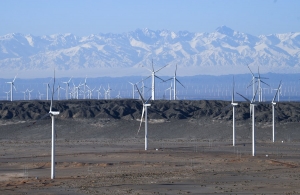
BEIJING, May 23 (Xinhua) -- China saw steady growth in renewable energy capacity in the first four months of the year, data from the National Energy Administration showed.
As of the end of April, the country's installed power generation capacity totaled 2.23 billion kilowatts, increasing 9.5 percent year on year, the data showed.
Wind and solar farms saw capacity reach 290 million kilowatts and 260 million kilowatts, respectively, up 34.6 percent and 24.3 percent.
China is forging ahead in renewable energy development amid its transition to a low-carbon economy.
The country has announced that it would strive to peak carbon dioxide emissions by 2030 and achieve carbon neutrality by 2060. ■
Xinhua Commentary: EU should join China in promoting common interests
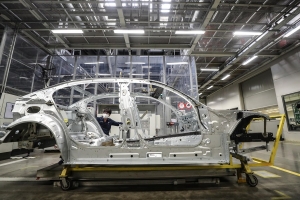
The past seven years have clearly demonstrated that it is possible for the two sides to navigate difficulties via candid dialogue, and come to agreements on their shared interests. The two sides should summon similar political wisdom and courage to bring the treaty back to the right course.
by Xinhua writers Ma Qian, Zhang Xin
BEIJING, May 21 (Xinhua) -- A politically motivated decision made by the European Parliament on Thursday to freeze the ratification of a bilateral investment treaty with Beijing does not conform to their shared interests, and once again exposes some European politicians' deep-seated prejudice towards China.
However, the European Union (EU) should join China in making sure that their mutually beneficial cooperation can always move forward in the right direction, instead of being consumed by ego and bigotry.
First and foremost, media reports said the decision demands that China lift its sanctions on several European individuals and entities.
The truth is that China took those moves as legitimate and necessary countermeasures. Brussels first imposed sanctions against the Chinese side based on unwarranted accusations over the so-called human rights issue in Xinjiang. China has to act.
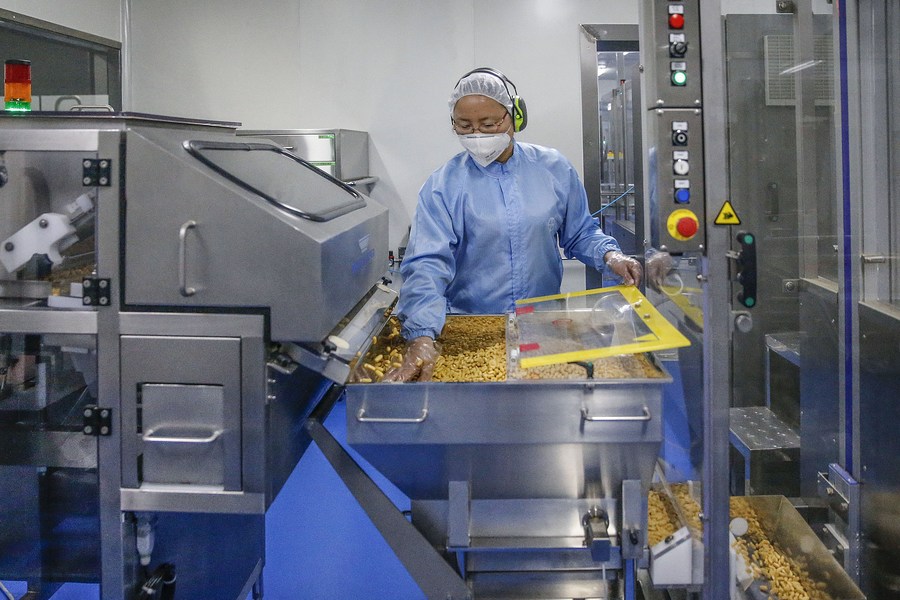
Reaching the landmark China-EU investment pact is no easy feat. It has taken seven long years and 35 rounds of talks for the two sides to complete its negotiations late last year. It is fairly unfortunate for the hard-won progress to come to a sudden halt.
Also, the treaty is not a "gift" given by one party to the other. The deal will benefit both sides, not just China. For the record, the treaty has promised European businesses broader market access in sectors like financial services, and a fairer investment environment in China.
The uncertain future of the pact will simply disappoint those in Europe who eagerly want a share of the business opportunities available in the ever-opening Chinese market.
Over the years, China and the EU have always been each other's important partner for practical cooperation. Moreover, since the establishment of their diplomatic ties, the two sides have faced all sorts of challenges, yet their relationship has always managed to move forward.
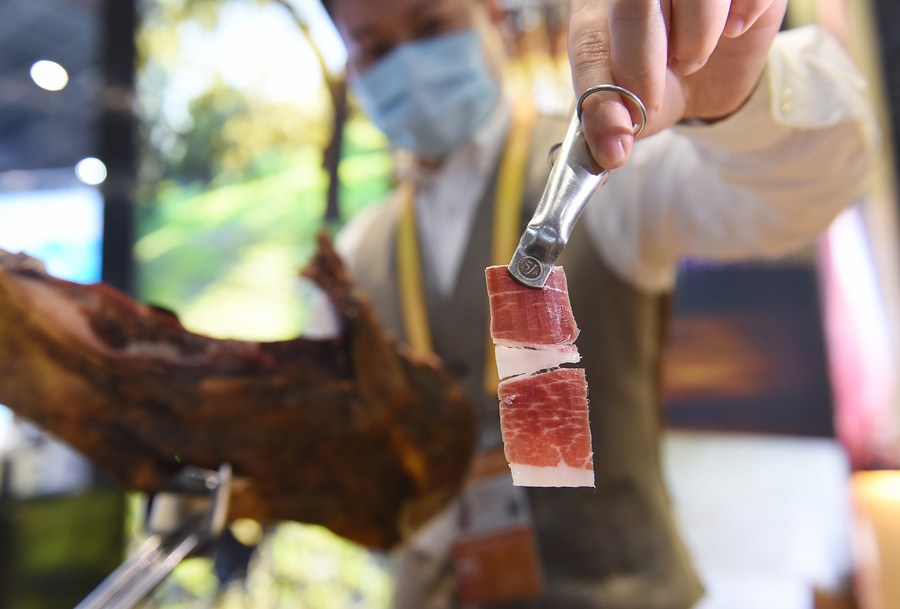
For the moment, the two sides must work together to overcome all kinds of obstacles in the treaty's ratification process, given the complex international political landscape. The good news is that there are still many rational voices supporting the treaty.
China, as always, has the sincerity and willingness to enhance win-win cooperation with the EU. It is hoped that Brussels can discard its political prejudice towards China, gain a clear understanding of the mutually beneficial nature of bilateral cooperation, and properly manage its differences with Beijing.
The past seven years have clearly demonstrated that it is possible for the two sides to navigate difficulties via candid dialogue, and come to agreements on their shared interests. The two sides should summon similar political wisdom and courage to bring the treaty back to the right course. ■
China moves to keep commodity prices stable
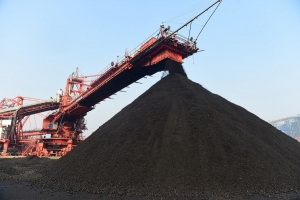
BEIJING, May 24 (Xinhua) -- Chinese authorities have admonished key enterprises in the bulk commodity sector to rein in market irregularities and keep commodity prices stable, according to the National Development and Reform Commission (NDRC).
The NDRC, together with other four relevant government departments, reminded enterprises with market influence in sectors such as iron ore, steel, copper and aluminum at a Sunday meeting to run in accordance with laws and regulations and keep the market prices in order.
Industry associations such as the China Iron and Steel Association and the China Nonferrous Metals Industry Association also attended the meeting.
The recent price rally in commodities is partly driven by the transmission of global price rises, but excessive speculation in the market has also pushed up the prices, said the meeting.
Key enterprises should move to promote the coordinated development of upstream and downstream industries and keep the industrial ecology healthy, it said.
The meeting also urged the enterprises against irregularities such as price manipulation, the making and spreading of false information on price hikes, price gouging and hoarding.
For the next stage, authorities will closely monitor the trend in commodity prices, strengthen regulation over the co-movement between the futures market and spot market of bulk commodities and adopt a zero-tolerance attitude on irregularities, according to the meeting.
Enterprises and industry associations at the meeting pledged to regulate production activities and operate in keeping with the law to keep the market and prices stable.
Facing commodity price hikes, a State Council executive meeting last week outlined measures to better ensure the supply and stable pricing of commodities, including higher export tariffs on some iron and steel products, provisional zero import taxes on pig iron and scrap steel, and doing away with export tax rebates on some steel products. ■
GLOBALink | Powering a nation of 1.4 billion

GUANGZHOU, May 25 (Xinhua) -- A strong economic bounce-back from the pandemic and the coming of summer have spiked power use in China, propelling governments to come up with various measures to ensure the power supply for the vast nation of 1.4 billion people.
According to data from China Southern Power Grid Corporation (CSG), which supplies power to five provinces in south China, as of May 21, the maximum load of the entire network reached 198.6 million kW, up 11.7 percent year on year. The cumulative power generation and reception capacity is 473.6 billion kWh, up 24.6 percent year on year.
Data from the State Grid Corporation of China (SGCC), which provides power to the other parts of China, indicated that the electricity consumption of the 27 provincial-level power grids posted positive growth from January to April, summing up to 2.019 trillion kWh, an increase of 18.6 percent year on year.
The recovering economy was the leading driver of electricity demand.
Produced by Xinhua Global Service
China expects bumper grain harvest this summer

BEIJING, May 26 (Xinhua) -- China is expected to see a bumper summer grain harvest this year thanks to increasing yields of harvested crops and better crop conditions, an official said Tuesday.
Currently, more than half of the wheat in the southwest part of China has been harvested, and the trend of increasing output is obvious, said Tang Renjian, Minister of Agriculture and Rural Affairs.
The crops in the alluvial plains along the Yellow, Huaihe and Haihe rivers also grew better than last year and during normal years, he said.
The total area devoted to growing winter wheat has increased by more than 3 million mu (200,000 hectares) this year, reversing the downward trend seen over the past four years, Tang said.
A total of over 600,000 combine harvesters will be deployed to harvest the wheat this year, he said, adding that the country should make full use of agricultural machinery to harvest its 335 million mu (22.33 million hectares) of wheat in around 30 days.
As China has limited land for cultivation and faces difficulty in increasing its arable land coverage, the country should reduce the amount of grain lost during harvesting, Tang said.
Major wheat-growing regions should strengthen technical training for farmers and guide them in harvesting the crops at the proper time and with suitable machines, he added. ■
GLOBALink | U.S. investors eye partnership opportunities in central China: business leader
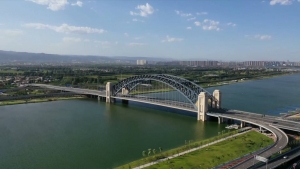
TAIYUAN, May 23 (Xinhua) -- Provinces in central China are on the path of strong economic recovery through industrial transformation and further opening up while adopting effective COVID-19 prevention and control measures.
Central China, including the six provinces of Shanxi, Henan, Anhui, Hubei, Hunan and Jiangxi, is one of the fastest growing regions in the country.
At the ongoing 12th Central China Investment and Trade Exposition (Expo Central China 2021) in Shanxi Province, investors are seeing great opportunities.
"Companies increasingly are looking to the opportunities here, there's a great potential in central China," said Matthew Margulies, vice president of China operations for the U.S.-China Business Council, adding that "we really look forward to participating and contributing to that development here."
The expo, scheduled from May 21 to 23, includes 71 exhibitions, forums and project matchmaking activities.
Produced by Xinhua Global Service
GLOBALink | Italy, China could expand cooperation in culture, tourism, sports: CICC CFO Lorenzo Riccardi

Italy and China could expand cooperation in culture, tourism and sports, said Lorenzo Riccardi, CFO of the China-Italy Chamber of Commerce (CICC).
He made the remarks in an interview with Xinhua while attending the 12th Central China Investment and Trade Exposition in Taiyuan, capital of north China's Shanxi Province.
Riccardi said he has traveled to all the 34 provincial-level administrative regions across China.
He said China is opening up wider and embracing foreign investment at a higher level by holding investment fairs and exhibitions and establishing free trade zones.
Produced by Xinhua Global Service
Shanghai remains attractive to foreign investment
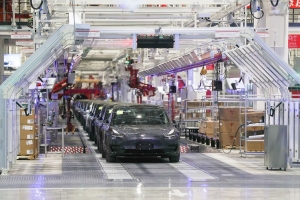
SHANGHAI, May 25 (Xinhua) -- As China's economy continues to recover rapidly, the country's financial hub Shanghai remains attractive to foreign investment.
The total foreign direct investment (FDI) into Shanghai rose 20.3 percent year on year to 7.77 billion U.S. dollars in the first four months of 2021, the municipal government said on Monday.
During the period, 20 regional headquarters of foreign-funded multinational companies were established, raising the total to 791 in Shanghai. Seven foreign-funded research and development (R&D) centers were established in the same period, raising Shanghai's total to 488.
Shanghai will continue to unswervingly promote all-round opening up and improve its business environment to support foreign enterprises in achieving greater and better development in Shanghai, Zong Ming, vice mayor of Shanghai, told a ceremony on Monday.
The Shanghai municipal government held the ceremony to issue certificates to regional headquarters and R&D centers of multinational companies. The participating companies were mainly in advanced industries such as biomedicine, smart manufacturing and high-end services.
At the ceremony, leading lubricant manufacturer Fuchs, headquartered in Germany, received certification for its R&D center in Shanghai.
The company currently has three R&D centers globally. Its center in Shanghai focuses on developing clean energy and improving energy efficiency.
"The automobile market is increasing in China and the demand is changing from the traditional combustion engine to the electric engine," said Kris Van Gasse, CTO of Fuchs Lubricants (China) Ltd.
To cater to market demand, Fuchs has developed product lines in China such as BluEV for new-energy automobiles, and established cooperation with Chinese carmakers such as Geely and Chery. ■
All eyes on US gasoline today; will demand exceed 9.2m bpd?
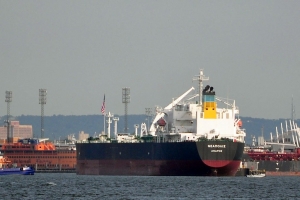
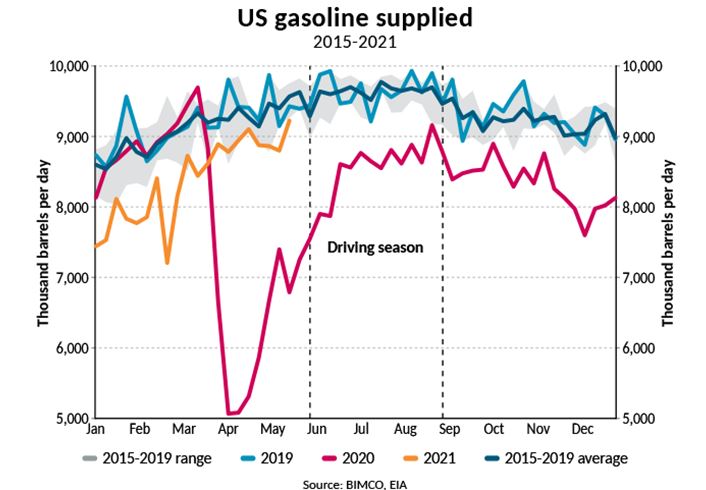
“Fill her up son, unleaded; I need a full tank of gas where I'm headed,” former Police-front man, Sting, sang back in 1999 on his solo album: “Brand New Day”. This country-inspired song could be the anthem for what is coming around next week, as Monday 31 May is Memorial Day in the US; the day that kicks off “the US driving season”. The season runs for about three months from Memorial Day to Labor Day on 6 September, during which the Americans take to the road, and demand for motor gasoline reaches a seasonal peak.
On 26 May, the US department of Energy (EIA) releases its estimate for the week ending 21 May. Will last weeks’ sharp uptick in ‘gasoline supplied’ – a proxy for demand – go even higher? ‘Gasoline supplied’ climbed from 8.8m barrels per day (bpd) on 7 May to 9.224m bpd on 14 May (source: EIA); the highest number of barrels per day since 13 March 2020.
Closing the gap?
Daily Covid-19 cases in the US have declined from the early January peak when 300,000 people were infected, to slightly above 20,000 case on 25 May. In combination with the fast-tracked vaccine rollout, the road is paved for what could very well become a seasonal peak for motor gasoline demand like the ones we used to know.
“We know that the US consumers are loaded with cash, following several stimulus packages that have rapidly and considerably increased the disposable personal income.
We also know that a lot of the money has been spent on goods – but far from all of them,” says Peter Sand, BIMCO’s Chief Shipping Analyst.
“BIMCO expects a strong driving season, one that could exceed the 2019 level of gasoline supplied and prove that the recovery for motor gasoline is accomplished,” says Sand.
What about jet fuel demand?
On 25 May, the accumulated year-to-date US flight passengers so far in 2021, exceeded that of 2020, while remaining 47% below that of 2019. Primarily international flights are falling short. This means that levels of supplied jet fuel remain quite depressed, which tell us that the recovery of total oil demand is still waiting further down the road.
For the week ending 14 May, 1.19m bdp of jet fuel was supplied, according to the EIA, much lower that the pre-pandemic level of 1.77m bpd estimated for 10 May 2019.
Total oil products supplied on 15 May came in at a 4-week average of 19.2m bdp, 4.4% below the pre-pandemic level of 20.1m bdp on 10 May 2019, but sharply up from 16.1m bdp estimated mid-pandemic on 15 May 2020.
bimco.org
Signal Maritime launches MR Pool

Commercial ship manager Signal Maritime is expanding its services and launching a new pool for MR product tankers. The move follows the success of its Aframax pool, which has been running since 2018 and consistently delivering above market returns to its members.
The new MR pool will benefit from Signal Maritime’s experience of managing clean tankers as well as utilising its cutting edge technology platform Signal Ocean.
Signal Maritime CEO Panos Dimitracopoulos said: “The clean tanker market has always been a highly competitive environment with the presence of many experienced owners and pools. We believe that our new MR pool is good for a market that may see more players combining efforts to achieve benefits of scale, optimise their commercial management and address the demanding environmental requirements ahead.
The Signal team has a unique set of capabilities, driven by diversified backgrounds, with a strong track record in the Aframax and MR universe. This makes us very confident about the success of this new initiative.”
The new endeavor will replicate Signal’s success in the Aframax market by bringing together shipping best practices with internet-age advanced analytics and management methods.
The Signal Maritime MR Pool will deliver owners increased flexibility, best-in-class performance and simplicity while protecting the fairness of earnings distribution.
Building a critical mass of vessels whilst staying focused on outperforming the market and maintaining the highest level of quality service for pool partners are Signal Maritime’s main goals for the next two years.
Established in 2014 The Signal Group is a diversified shipping services group with offices in London and Athens. The Signal Group offers commercial ship management services to a pool of Aframax class oil tankers. In addition, The Signal Group develops and invests in next generation shipping related software technologies. It is led by an executive team who has more than 65 years of collective experience in ship management at the highest level. The leadership team is supported by a world-class mix of commercial shipping professionals, finance professionals, strategists, energy market analysts, data scientists and developers.

Powered by  © Μaritimes 2019