
-
Home

-
Maritimes NEWS
-
Ports
- maritimes


maritimes
Update: China's industrial profits maintain rapid growth in first four months
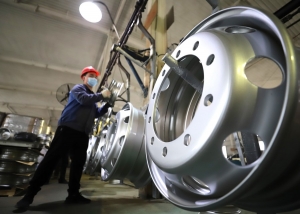
BEIJING, May 27 (Xinhua) -- Profits of China's major industrial companies saw accelerated growth in the first four months of this year as the country's economic recovery is further consolidated, official data showed on Thursday.
Industrial firms with an annual business revenue of at least 20 million yuan (about 3.12 million U.S. dollars) saw their combined profits surge 106 percent year on year in the January-April period to over 2.59 trillion yuan, data from the National Bureau of Statistics (NBS) showed.
When compared with the first four months of 2019, the figure represented a rise of 49.6 percent. The average growth rate over the past two years stood at 22.3 percent, NBS data showed.
The accelerated growth in industrial profits came as market demand continued to improve and major industrial firms had seen improved operations since the beginning of this year, said senior NBS statistician Zhu Hong.
In April alone, the profits of major industrial firms increased 57 percent year on year to 768.63 billion yuan.
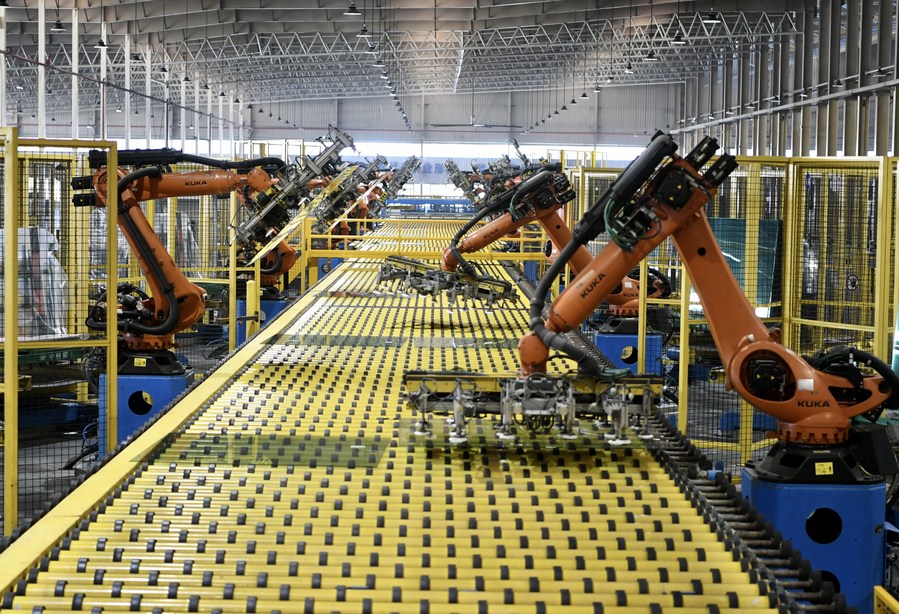
All 41 industrial sectors saw increasing profits during the January-April period, with the profits of 10 sectors more than doubling, said Zhu.
Compared with the first four months of 2019, a total of 30 industrial sectors logged profit increases, according to Zhu.
During the January-April period, profits of the equipment and high-tech manufacturing sectors respectively jumped 90.8 percent and 88.5 percent year on year, while those of the auto manufacturing industry surged 158 percent.
The consumer goods manufacturing sector also saw improved profits, which rose 45.3 percent from the same period of last year, said Zhu.
Due to improving market demand and the rising prices of bulk commodities, the mining and raw materials manufacturing sectors saw faster profit growth, respectively rising 103 percent and 366 percent year on year.
The operations of industrial firms were further optimized, with rising profitability, declining costs and faster inventory turnovers, according to Zhu.
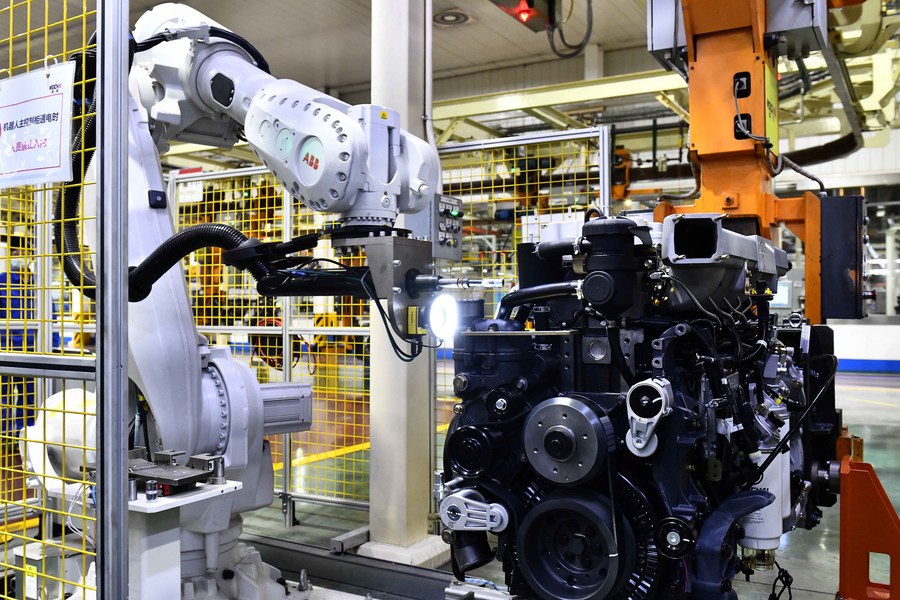
Though major industrial firms have sustained their growth momentum, Zhu noted that the recovery of the industrial economy needs to be further consolidated, taking into consideration the uncertainties of the external environment and the pressures on companies caused by rising commodity prices.
Efforts should be made to adopt targeted macro policies, increase the supply of bulk commodities and stabilize their prices to propel the sound development of the industrial sector, said Zhu. ■
GLOBALink | What global role does New International Land-Sea Trade Corridor play
The New International Land-Sea Trade Corridor has been operational for four years. What is it and how has it been globally beneficial? Check more details here.
Produced by Xinhua Global Service■
GLOBALink: China's business environment through the eyes of a foreign entrepreneur
Sylvain Laurent, executive vice president of Dassault Systemes, a prominent industrial software provider, has been working and living in Shanghai for ten years. He speaks about his business and life experiences in China, and more. Worth the watch!
Update: Chinese inactivated vaccines effective against COVID-19 in phase-3 human trials: study

BEIJING, May 27 (Xinhua) -- Two inactivated vaccines developed by the Chinese pharmaceutical giant Sinopharm have shown to be safe and effective against COVID-19 in phase-3 human trials, according to a study published this week in The Journal of the American Medical Association.
The randomized, double-blind and placebo-controlled trials were designed by the Wuhan Institute of Biological Products Co, Ltd, and the Beijing Institute of Biological Products Co, Ltd, both of which belong to the China National Biotec Group(CNBG), affiliated with Sinopharm.
The two inactivated vaccines showed efficacy of 72.8 percent and 78.1 percent, respectively, against symptomatic COVID-19 cases, with rare serious adverse effects reported, according to the interim analysis of the ongoing trials.
It is the world's first published phase-3 study results of inactivated COVID-19 vaccines, the CNBG said in a statement on Thursday.
According to the study, more than 40,000 people in the United Arab Emirates and Bahrain aged 18 and above without known history of COVID-19 participated in the trials. Study enrollment began on July 16, 2020. Data sets used in the study were locked on December 31, 2020.
The virus strains in the study were isolated from two patients in Wuhan's designated coronavirus-treating Jinyintan Hospital and separately used to develop the two inactivated vaccines.
The vaccination procedure required two intramuscular injections with an interval of 21 days.
Fourteen days after inoculation, all vaccine receivers produced high titers of antibodies, and the seroconversion rate of neutralizing antibodies was higher than 99 percent in both vaccine groups, indicating strong immune responses induced by the two vaccines, the study said.
The trials are still ongoing overseas, and long-term efficacy of the two Chinese vaccines for COVID-19 prevention needs to be further evaluated, the study noted.
China has several self-developed COVID-19 vaccines undergoing advance-stage clinical trials, and this study is the first to publish the phase-3 trial results of such vaccines. ■
GLOBALink | China-developed mega container ship delivered to French company

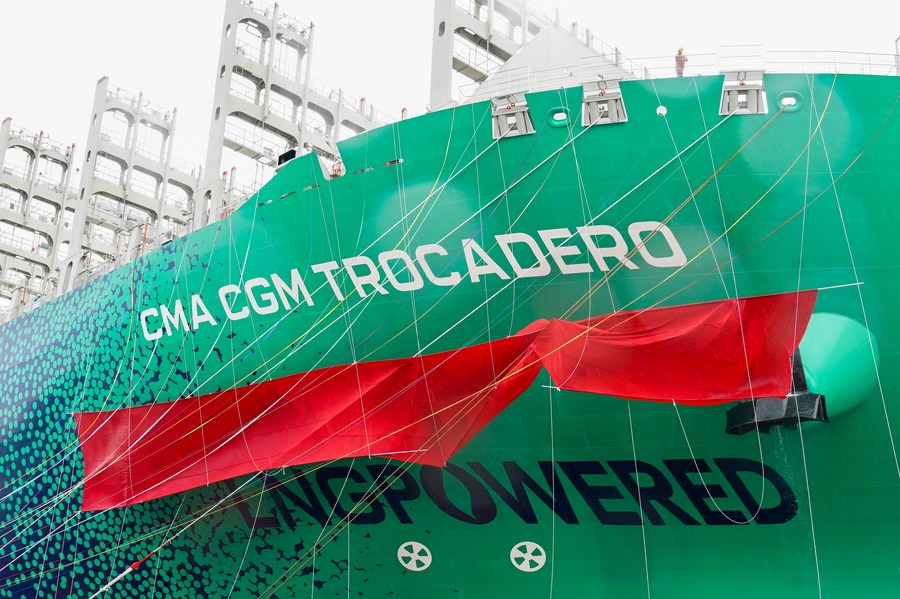
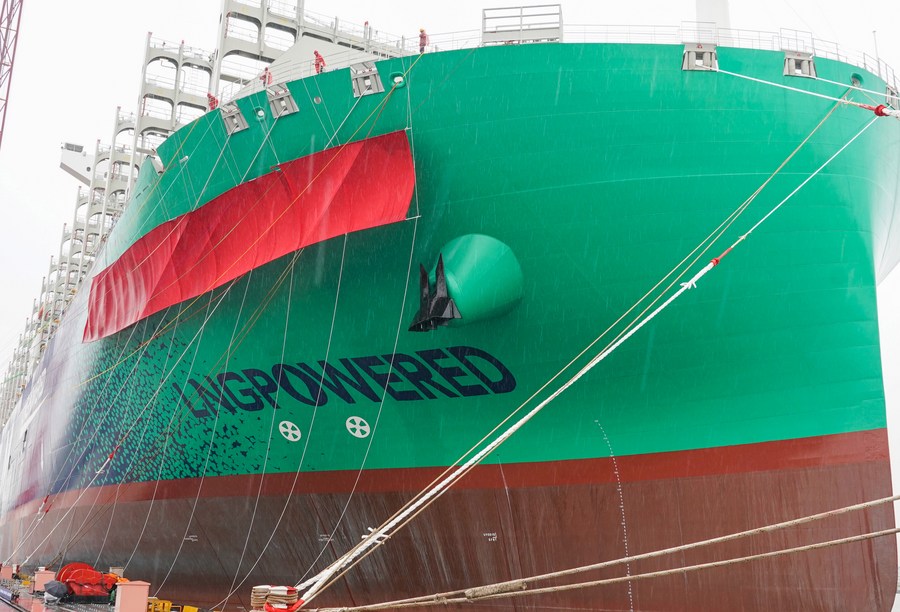
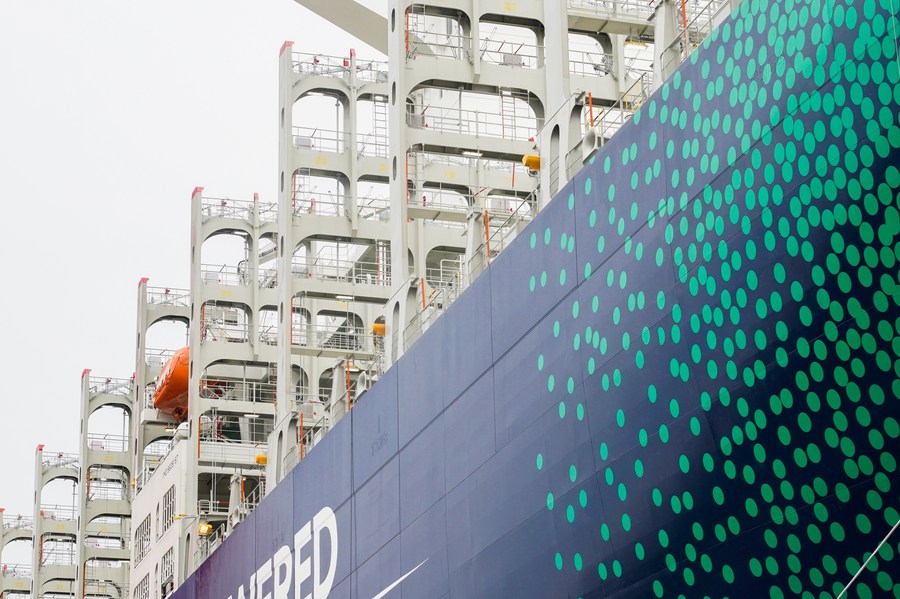
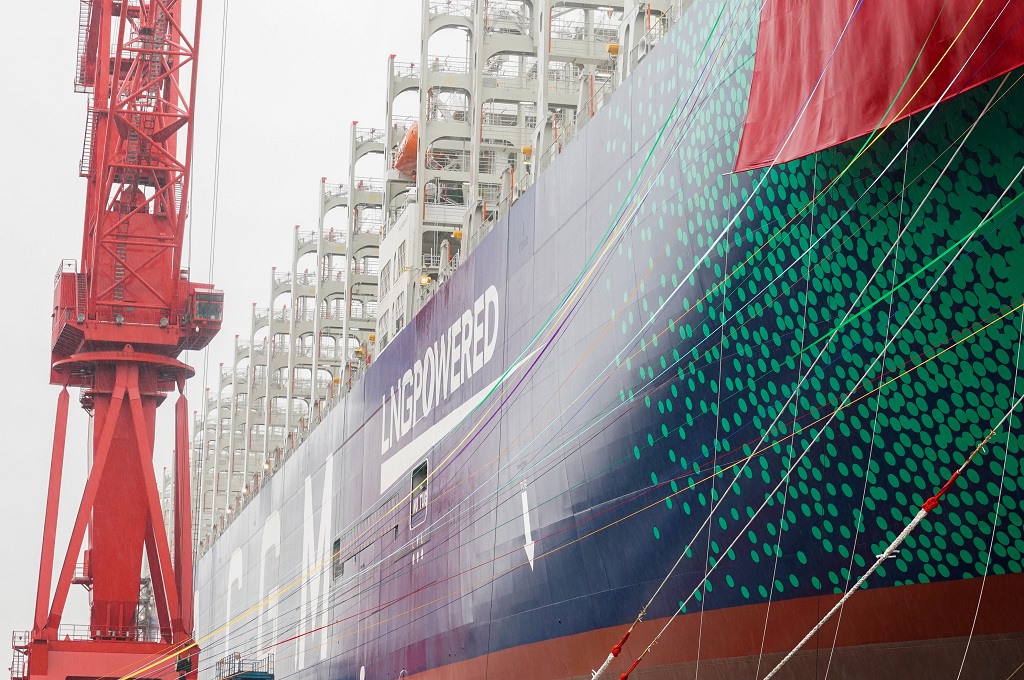
SHANGHAI, May 26 (Xinhua) -- French maritime transport company CMA CGM Group on Wednesday took delivery of a mega dual-powered container ship manufactured by China's Jiangnan Shipyard in Shanghai.
The container ship named CMA CGM Trocadero measures 399.9 meters in length and 61.3 meters in width and comes with a maximum capacity of 23,000 twenty-foot equivalent units (TEU). It boasts a speed of 22 knots and can transport nearly 220,000 tonnes of goods.
Xi Focus: Xi calls on China Daily to promote exchange between China and world

BEIJING, May 27 (Xinhua) -- President Xi Jinping has called on China Daily to present a true, multi-dimensional and panoramic view of China and make new contributions to the exchange and communication between China and the world.
Xi, also general secretary of the Communist Party of China Central Committee and chairman of the Central Military Commission, made the remarks in a congratulatory letter on the 40th anniversary of the newspaper's launch.
In his letter, Xi extended warm and cordial greetings to all staff members, foreign experts and friends at the newspaper.
Over the past 40 years, China Daily has used its advantages to present China's reform and development, playing an important role in telling China's stories well and making China's voice heard, said Xi.
He called on China Daily to take the 40th anniversary as a new starting point, innovate its approach to better communicate with international readers, establish an all-media communication framework and build a high-caliber team, so as to expand its global influence and better introduce China's development philosophy, path and achievements.
China Daily, established on June 1, 1981, is the first national English-language daily newspaper in the People's Republic of China, serving a global audience. After 40 years, it has developed into a global, multi-language, multi-media information platform, with its newspaper circulation reaching 700,000 and the number of its multi-media product users exceeding 350 million. ■
What the global bunkering industry should expect in 2021
This time last year VLSFO prices stood at highs not seen in many years. There were more than a couple of industry experts who believed that the IMO’s global sulphur cap might have enduringly created large HSFO-VLSFO spreads. If that wasn’t enough, rumours about quality management, fuel incompatibility, and adequate availability – mainly concerning low sulphur blends – heightened the industry’s nerves during those first two months in 2020.
This economic blow created by Covid-19 dominated the entire shipping industry, but no two bunkering hubs experienced it exactly the same. An example of this can be seen in Panama which has seen VLSFO sales increase since October 2020, but it hadn’t yet reached the pre-pandemic levels seen in January 2020. Whereas Singapore remains the world’s top bunkering port with sales amounting to just under 50 million tonnes in 2020 – its biggest gain in the last four years.
Expectations for 2021 and beyond
There were concerns that some regions wouldn’t have the capacity to supply enough distillate fuels to meet both domestic and maritime demand when IMO 2020 was first introduced. However, there’s been plenty of compliant fuels, as many of the usual major consumers of distillates on land suffered huge demand drops due to Covid-19.
Within OPEC+ there’s no reliable consensus over oil production. We therefore believe latent supply is likely to exceed actual demand for some time to come. In addition, numerous major oil producers, such as Venezuela, Iran, and Libya, remain functionally offline. Some agreements have now been made to reign in on oil production – including Saudi Arabia’s planned 1m bpd cut – but we’re unlikely to see three-figure Brent prices soon.
Nevertheless, it’s becoming increasingly important for the industry to prepare for some of the risks highlighted back in 2019, which may surface in the coming months. Although we believe the severest predictions from those early weeks in 2020 are unlikely to come to pass, there will be consequences if oil prices climb. Many financial institutions have already predicted this situation, and with the huge volatility in bunker prices last year, we’re already seeing prices gradually rise. For example, VLSFO dropped to $150 per tonne in May 2020, but has since risen to the $400s and continues to increase.
There have been fewer quality issues than many analysts predicted, but this may have been partly masked by the pandemic and the depressed oil price. These challenges may rear their head once the world starts to recover from Covid-19, distillate demand increases in other industries, and if unscrupulous suppliers start using cheaper components for blending. As we saw in early 2018 from ships bunkering in Houston, these fuels might be ISO 8217 compliant, but they can still cause mechanical and safety issues.
Accelerating decarbonisation with consolidation
Our industry’s being presented with multiple pathways towards decarbonisation – all of which have unique challenges. What we do know is that over the next few decades, the marine energy supply chain will transform immensely. The shift towards future fuels and alternative sources is growing, and KPI OceanConnect will be alongside its partners during the transition, and ready to provide the industry with the energy it needs to run its fleets sustainably.
However, the transition won’t be easy. In 2020, we saw the increased costs of the new VLSFO blends, with smaller firms’ credit lines often struggling to cope with the higher costs. Although many predicted that IMO 2020 would drive a wave of consolidation, so far this is only part way, but there’s no shortage of M&A rumours.
At a structural level, the industry has also seen a decline in capital availability for all but the strongest players. Primarily this is due to many large banks, such as ABN AMRO and BNP Paribas, pulling out of commodity trade finance altogether. This has created additional costs, liquidity and transaction complexities for shipowners, as well as bunkering companies.
The role of the broker and trader is well placed here to help facilitate the marine energy transition. As traders, we provide not just fuels but also solutions and intelligence and we have a responsibility to help guide our partners through the transition to sustainable shipping and all associated challenges along the way. Implementing a comprehensive bunker procurement strategy to manage risks is crucial as we continue to endure price volatility in the immediate, if not long term.
https://kpioceanconnect.com/
Fuel quality issues may confront bunker market in wake of covid-19

The prospect of rising oil prices points to a rising rate of risks to marine fuel quality, says CEO Søren Høll.
Bunker traders, suppliers, and buyers may need to be more careful in assessing who they do business with as the industry faces mounting pressure on credit, Høll said.
“With the lower prices, we see less tendency to go to the limits when you [manufacture] the blends,” he said. In a higher cost environment, there is greater pressure to squeeze value from blends and this can mean going for cheaper and possibly less suitable feedstock. As such, expected gains in the oil complex, and therefore in marine fuel costs, may present some risks.
“We feel very well positioned with the knowledge that we have about the different qualities and I think when you see increases in prices you see, I think, a correlation between increasing prices and quality issues,” Høll said.
The oil complex has been met with conflicting signals but sees ongoing support from a bullish view of the supply balance, the prospects for US fiscal stimulus and progress in COVID-19 vaccination.
A multi-tier market
There has been a multi-tiered marine fuel supply market for a number of years but the industry players are now facing increasingly stringent credit checks and are making more of a point of doing business with only those who meet tougher standards of financial health, Høll said.
“It is just getting more and more clear who in the industry is able to survive and who will not,” he said.
The lower price environment of 2020, when prices for 0.5% sulfur fuel oil at Rotterdam fell to $154/mt in April 2020, having reached $591/mt in January of that year, was a reprieve for some market players and a market shake-out has been duly delayed.
“I think the industry, especially the less funded players, in a way, been saved by the bell, with lower prices … but going forward there is no doubt, when you see increasing prices, it will be even more important to look at who you are actually dealing with,” Høll said.
Additionally, there is less credit available from financial providers, Høll said.
Turbulent times
The price volatility in 2020 and the expected price rises in 2021 and 2022 have not increased the appetite for hedging in the bunker industry, Høll said.
Market players are not hedging their positions any more than they were previously. “Most of what we are doing on hedging is primarily based on clients who follow their [own] hedging strategy, so some will have a hedging strategy and will always hedge X amount of [their] exposure,” he said.
Disclaimer: Article original published by Bunkerworld on January 20, 2021.
Approaching 2030-2050 with transparency and consolidation in our eyes

Brian Coyne, Managing Director, Americas at KPI OceanConnect shares his insights with gCaptain on the global bunkering market, and the importance of building transparent, trusted partnerships in bunkering.
At the beginning of 2020, compliance, quality, availability and compatibility of marine fuels were major concerns for the shipping industry. Once the Covid-19 pandemic began, unforeseen risks increased across the supply chain and created further complexities for maritime and offshore businesses.
In hindsight, perhaps the biggest long-term change will be the withdrawal of many commodity-focused banks from the market. This is mainly due to the losses they sustained in recent years from the financial malpractice of certain infamous marine fuels players, as well as a perceived need to reduce their exposure to cyclical markets that are facing increased regulation and greater capital requirements.
The departure of well-known names, such as ABN AMRO, Rabobank and BNP Paribas, has led to a decline in capital availability for all but the most trustworthy and well-run players. For shipowners and operators, this has created additional costs, as well as liquidity and transactional complexities. For fuel buyers, it has reinforced their understanding of why they need trusted, expert marine fuel counterparties.
Moving towards 2030
There are exciting years to come in terms of looking at different pathways for shipping. IMO 2020 has once again changed the way that ships manage differing fuel products, and created an inherently more complex procurement landscape.
Safety, compatibility, and compliance have become more interlinked than ever before. Finding the right fuel, at the right time, for the right vessel has become substantially more challenging – especially outside the major hubs. Price is still fundamental, but there are more considerations beyond the cost of the fuel, for example, how does the counterparty resolve disputes?
We have not seen as many quality claims as some analysts expected, but some of the issues on quality and availability that sparked concerns in 2019 may surface in the coming months as the world starts to recover from Covid-19. Distillate demand and price increases in non-maritime industries may also create challenges, especially if unscrupulous suppliers start using cheaper components for blending.
As oil prices have been predicted to increase further this year by ourselves and other financial institutions, we can expect higher bunker prices and increased volatility. April 2020 had the lows of the Covid-19 market with monthly averages close to $225 MT in the primary ports. By March 2021, the market experienced more than a 100% increase in the monthly averages for VLSFO with averages closer to $500 MT. With higher cost, there is greater incentive for unscrupulous suppliers to use cheaper and potentially less suitable blend components that can have a catastrophic impact on ships’ safety and operations.
When I speak to our clients, those who have worked in partnership with reputable marine fuels suppliers have managed the risks and successfully handled the compliance challenges of IMO 2020. For the vast majority of our clients, once we get to the other side of Covid-19, their biggest challenge going forward will be the IMO’s 2030 and 2050 ambitions. We will be with them every step of the way to ensure their vessels have the energy they need and the necessary compliance measures in place. We have recently concluded our first carbon offset transaction, and expect to be able to formally launch this service globally soon.
At KPI OceanConnect, we have the technical and local expertise, global experience, as well as financial and organizational strength required to support shipowners and operators. As traders, we provide not only fuels but also solutions and intelligence. For the immediate term, we continue to follow the development of different fuels, and fully expect our energy mix to be very different in 2031.
We hold a prime position in helping to facilitate the energy transition and have a responsibility to help guide our customers through these transitionary periods. Naturally, the industry will call for more transparency, so having closer, partnership-based relationships with suppliers built on trust will unlock greater opportunities for all stakeholders. Through greater regulation, quality assurance, and enforcement, we can ensure a smooth transition for 2030 and 2050.
Disclaimer: Article original published by gCaptain on May 7, 2021.
Bulker Segment Chooses ME-GI as Standard
Dual-fuel engines to power EPS vessels chartered by Rio Tinto Group
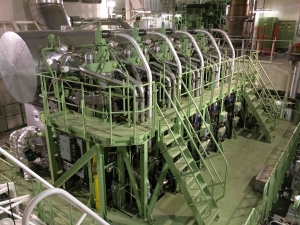
New Times Shipbuilding Co. Ltd., located in Jiangsu Province, China, has ordered 3 × MAN B&W 6G70ME-GI engines in connection with the construction of 3 × 210,000 dwt bulkcarriers for Eastern Pacific (EPS), the Singapore-based shipping company. CSSC-MES Diesel (CMD) will build the engines in China, while Rio Tinto – the metals and mining multinational – will charter the vessels upon their entering service. The contract includes an option for three further vessels.
The new order comes shortly after MAN Energy Solutions received an order for 5 × 6G70ME-GI Mk 10.5 dual-fuel engines in October 2020 in connection with the construction of 5 × 210,000-dwt Newcastlemax bulkcarriers, again for EPS, which will subsequently be chartered to Australian mining giant, BHP, for a period of five years.
Thomas S. Hansen, Head of Promotion and Customer Support, MAN Energy Solutions, said: “The ME-GI engine is now the market standard for large, dual-fuel bulk carriers as the value chain in the segment has further increased its focus on decarbonisation. Here, this mature technology’s negligible methane-slip and the inherent potential of alternative fuels, such as LNG, are significant advantages and demonstrate to the industry that viable options for lowering carbon footprints exist. These vessels will be among the cleanest and most efficient in their segment, as well as being IMO 2030-compliant well in advance of the legislation.”
MAN Energy Solutions states that its low-speed, dual-fuel references now exceed 374 units, with the ME-GI recording over 1.6 million operating hours on LNG alone.
About EPS
With a history spanning 60 years, Eastern Pacific Shipping Pte. Ltd. (EPS) is a leading shipping company that is committed to the green and technology-driven growth of the industry. Headquartered in Singapore for the past 30 years, EPS is driven by its mission to be the safe and efficient transportation provider of choice to the shipping industry. Empowering that mission is a 5,000 strong and growing workforce across sea and shore. They oversee a versatile fleet of 17 million deadweight-tonnes across three core segments of containership, dry bulk, and tanker vessels. EPS’ shore team is fully integrated with in-house commercial, finance, innovation, IT, legal, manning, operations, and technical departments.
MAN Energy Solutions enables its customers to achieve sustainable value creation in the transition towards a carbon neutral future. Addressing tomorrow’s challenges within the marine, energy and industrial sectors, we improve efficiency and performance at a systemic level. Leading the way in advanced engineering for more than 250 years, we provide a unique portfolio of technologies.
Headquartered in Germany, MAN Energy Solutions employs some 14,000 people at over 120 sites globally. Our after-sales brand, MAN PrimeServ, offers a vast network of service centres to our customers all over the world.

Powered by  © Μaritimes 2019