


Yildirim to Sell CMA CGM Stake as Plans to Buy Ports America
Yildirim mandated China Citic Bank Corp. to find investors from Asia or the Persian Gulf for its 24 percent interest in CMA CGM SA, Chairman Yuksel Yildirim said in an interview in Istanbul on Monday. Investment banks have valued the holding, which Yildirim bought for $600 million over a period spanning 2010 and 2011, at $2.5 billion to $3 billion based on recent deals in the industry, he said.
“We will either exit our investment completely or remain as an ordinary shareholder,” Yildirim said. A plan to sell the stake in the French company back to its majority owners failed in 2015, he said.
Yildirim is seeking a financial investor to join a bid by its Yilport Holding AS unit for Ports America as part of a plan to be among the 10 biggest container-terminal operators in the world by 2025, the chairman said. Ports America, the largest independent maritime terminal operator on the U.S. Atlantic and Gulf Coasts with 42 locations, is owned by Oaktree Capital Group’s private-equity unit, Highstar Capital.
Facing Challenges
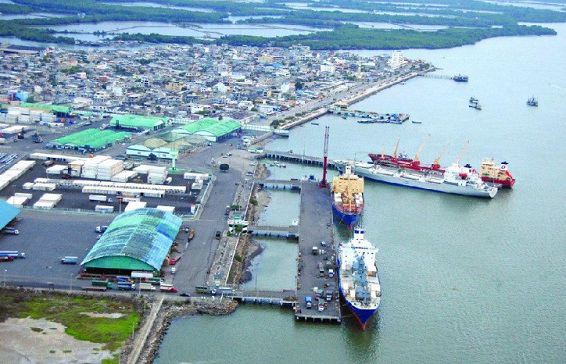
Yilport, which has $1.7 billion including bank loans and equity to finance its share of the acquisition, is facing difficulties in finding a financial partner for the New Jersey-based operator, Yildirim said. Yilport operates 26 maritime terminals in Turkey, Portugal, Ecuador, Sweden and Malta, among others.
“Alliances and consolidations in the container-shipping industry in the past year have widened the difference between what buyers expect and what sellers are ready to pay,” reducing returns for financial investors, he said. Yilport has an exclusivity agreement signed in April with Oaktree that will expire at the end of July, and aims to complete the acquisition by the end of this year, Yildirim said.
Yildirim said he will also hold talks soon with six strategic investor groups in China to sell half of its stake in a $5 billion project to develop a coal mine, build a railway link and a port in Colombia after his Best Coal Co., a unit of Yilmaden Holding AS, bought the assets from CCX Carvao da Colombia SA in 2014.
Best Coal has a lifespan of about 35 years and the coal could be sold to buyers in Turkey, China, Taiwan, Japan and South Korea, he said. “We can even sell a majority stake to the investor if we get a good price for this project.”
A series of talks with private-equity firms including companies from the U.S., Europe and China to sell a minority stake at Yilport failed after potential investors adapted a “wait-and-see” policy toward Turkey because of political uncertainty in the country, Yildirim said. JPMorgan Chase & Co., which managed the process of negotiations, is still mandated should a “new window of opportunity opens up,” he said.
Yildirim Holding aims to achieve $2.2 billion of sales this year from $1.6 billion a year ago, while its earnings before interest, tax, depreciation and amortization, or Ebitda, is expected to rise to $719 million from $465 million in 2016, Yildirim said. Yilport’s revenue is forecast to reach $650 million with Ebitda rising to $208 million this year from $560 million and $140 million, last year, he said.
source:bloomberg.com
Celestyal Cruises annnounces one-year extension of the Thomson Spirit Charter to Thomson Cruises
 |
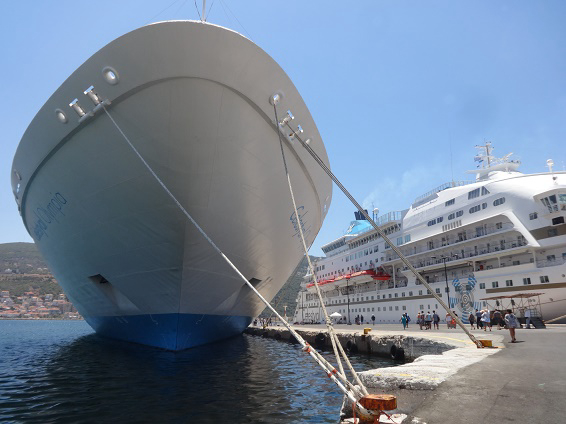
“The extension of the Thomson Spirit charter is yet another endorsement of the quality of services and a testament to the trust TUI Travel plc and other global tourism leaders have in Celestyal Cruises,” said Celestyal Cruises CEO Kyriakos Anastassiadis. “We’re pleased that the Spirit is so popular with passengers in the UK market. Thomson Cruises has been a trusted, valued partner for over 2 decades, and we look forward to extending our relationship further."
About Celestyal Cruises
Celestyal Cruises is the only home-porting cruise operator in Greece and the preeminent cruise line serving the Greek Islands and circumnavigating the island of Cuba, year-round. The company operates five mid-sized vessels; each one being cosy enough to provide genuine and highly-personalized services. The foundation of the company’s philosophy is the ‘destination.’ Every cruise focuses on true cultural immersion, offering authentic, lifetime experiences both on board and onshore wherever its vessels sail.
Corporate Responsibility
Celestyal Cruises is deeply committed to sustainability and ethical business practices. The company actively supports the local communities in the destinations it visits, particularly in the field of education. Since 2015, more than 1,200 students on the Greek islands of Milos, Patmos and Ios have enjoyed a ‘journey to knowledge’, by attending specialized educational programs, initiated by Celestyal Cruises. Additionally, Celestyal Cruises supports cultural NGOs; while promoting youth entrepreneurship, marine student development and child welfare.
ISO Certification
The entire spectrum of Celestyal Cruises’ ship management, including technical, hotel and crew management, and offices, are certified in accordance with ISO 9001/14001 standards. The certifying authority is DNV-GL, which is by widely recognized as the biggest and most respected rating agency in the marine industry.
Awards & Recognition
In 2017, Celestyal Cruises received four Cruisers’ Choice Awards from Cruise Critic, the world’s largest online cruise community, being voted ‘Best’ in the mid-sized category, for ‘Embarkation’, ‘Entertainment’, ‘Shore Excursions’ and ‘Value’. At the Greek Tourism Awards 2017, the company won five awards, as an indication of its dynamic presence in the cruise sector, as well as its great value offered. More specifically, the company won the gold award in the following categories: ‘Tourism Season Expanding Initiatives-Greek Tourism Product Enrichment’, ‘Guest Service Excellence’, ‘Gastronomic Tourism’ and ‘Corporate Identity-Corporate Reputation Management- Branding’; while also receiving a silver award in the ‘Integrated Marketing Campaign’ category.
Connect with Celestyal Cruises:
Facebook, Instagram, Twitter, LinkedIn
The first fleet to be entirely MRV compliant is d’Amico Group and verified by RINA
 |
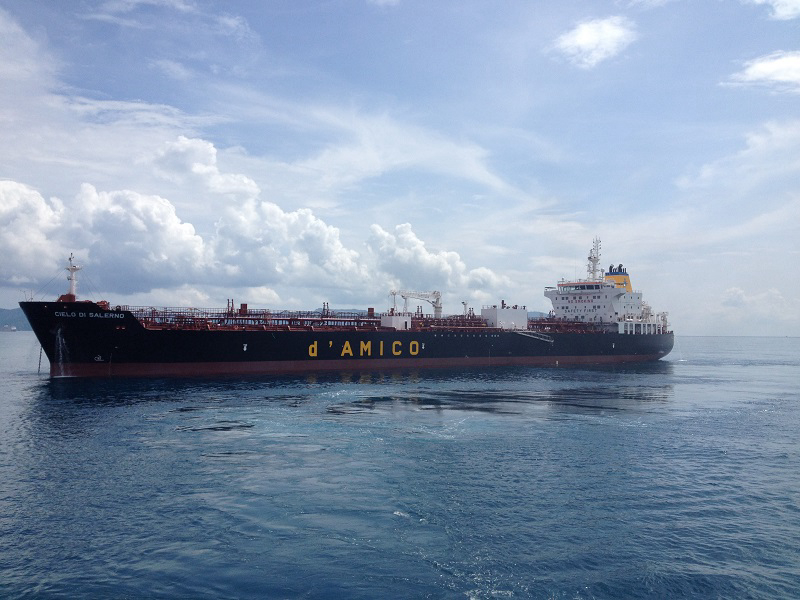
The fleet comprises 36 vessels which are managed by d’Amico Società di Navigazione and 35 vessels managed by its subsidiary Ishima Pte. Ltd.
This new regulation was developed in response to the challenge of reducing greenhouse gases in European territories to the 2050 targets set by EU. By 2030 GHG must be reduced at least by 40\% below 1990 levels. The EU Commission strategy suggests that the CO2 emissions from maritime transport should be cut by at least 40\% from 2005 levels by 2050.
MRV is compulsory and is applicable to ships greater than 5000 GT, which undertake one or more commercial voyages (cargo or passengers) into, or out of, EU ports.
By August 2017, ship owners must submit to their verifier the CO2 Monitoring Plan of each ship of their fleet and, from 2018 onwards, they will have to monitor the emissions, fuel consumption and other parameters, which will have to be yearly reported and verified.
“We created the Fleet Performance Monitoring department more than five years ago. We were among the first ones in Europe to do so and this allowed us to gain a significant competitive advantage on MRV compliance. We recognised the environmental and commercial benefits of meeting the new regulations and we are pleased to have worked with RINA on this initiative” said Salvatore d’Amico, Fleet Director of d’Amico Group.
d’Amico’s Monitoring Plan consists of a complete and transparent documentation of the monitoring methods, contains all the ships’ relevant information and a description of the procedures, systems used for determining, recording and storing all measurements required by the Regulation.
“We are particularly pleased to have worked with d’Amico on this task. They are the first company to have the entire fleet MRV verified by RINA. We have been accredited by ACCREDIA for this activity and we are also a designated operational entity (DOE) accredited by UNFCCC (United Nations Framework Convention on Climate Change) for the validation and verification of CDM projects. We have all the credentials and the experience to assist the maritime industry in contributing to the global greenhouse gas emissions reduction” said Paolo Moretti, CCO Marine & Transport, RINA Services.
d’Amico Group is a leading Italian family-run shipping company operating on a global scale. The core business is focused on the management and operation of dry cargo and product tankers vessels, also providing international shipping services.
d’Amico has an advanced technical department made up of highly qualified personnel. Thanks to this, a wide range of in-house technical management services are provided for the Groups’ ships and, on request, for third party clients, guaranteeing 24/7 early assistance. d’Amico Group carries out audits and inspections on board ships to ensure that the highest standards of international compliance are respected, aiming to exceed client expectations. Every on board inspection is used as an opportunity to understand the crew’s company culture, including their vision, mission and policy. d’Amico also offers maintenance services on the ships thanks to a specialized team which is renowned in the shipping sector.
d’Amico Group has always been committed client needs and operational safety and concern for the environment represent its core values, with the continuing professional development of the team and investment in a substantial state of the art and eco-friendly fleet amongst the top priorities.
RINA Services S.p.A. is the RINA company active in classification, certification, inspection and testing services.
RINA is a multi-national Group which delivers verification, certification, conformity assessment, marine classification, environmental enhancement, product testing, site supervision & vendor inspection, training and engineering consultancy across a wide range of industries and services. RINA operates through a network of companies covering Energy, Marine, Infrastructure & Construction, Transport & Logistics, Food & Agriculture, Environment & Sustainability, Finance & Public Institutions and Business Governance. With a turnover of over 450 million Euros in 2016, about 3,700 employees and 170 offices in 65 countries worldwide, RINA is recognised as an authoritative member of key international organizations and an important contributor to the development of new legislative standards.
 |
A visit - tour at Perama Ship Repair Zone took place today
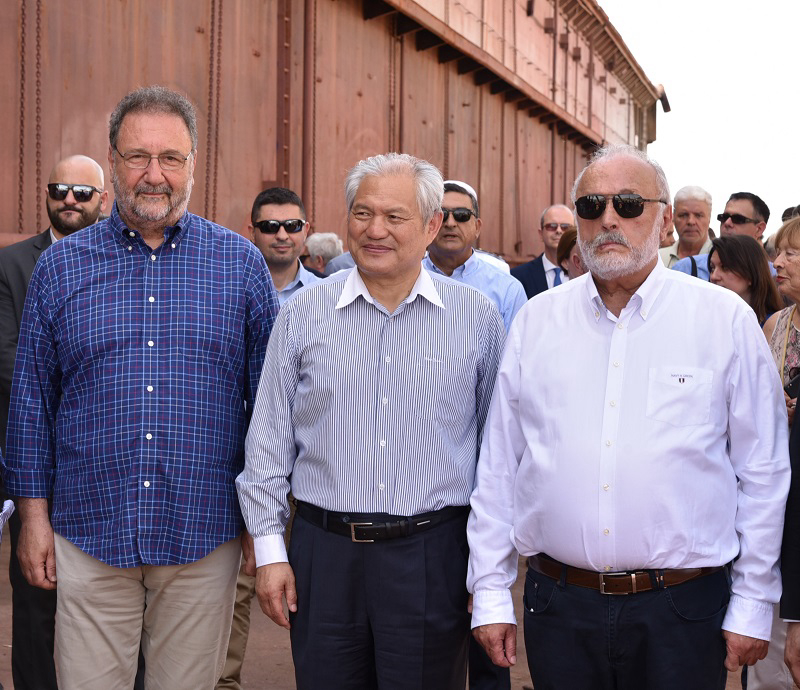
the Mayor of Perama, Mr. I. Lagoudakis, the Secretary General Mr. Ch. Lampridis, Mr. I. Angelopoulos, Chairman of Regulatory Authority for Ports (RAL), Piraeus Members of Parliament, took place today Friday, June 30 2017 at Perama Ship Repair Zone, an informative meeting of the shipping industry unions and associations, on the occasion of the dock maintenance works completion and in view of the arrival of a new floating dock in November 2017.
 |
Capt. Fu, opening the event, mentioned that the investments provided by the concession agreement begin from the ship repair sector. The new dock that will arrive by the end of the year will create new jobs and working positions. In this effort, we shall have the support of the government and local authorities.
The Minister of Shipping and Insular Policy, Mr. P. Kouroumplis, noted that the completion of the docks extensive repairs lay the foundation for the ship repair sector efforts, which will contribute to the country's development and highlighted that "the Ministry is open for a mutual understanding and cooperation between the Greek State and COSCO SHIPPING. We are prepared to contribute to the solution of problems that arise during efforts of COSCO SHIPPING's investments development at the port but also determined to defend the interests of the Greek government. The leadership of the Ministry of Shipping & Insular Policy aims at the development of the port as a major shipping center".
Mr. Pitsiorlas, Deputy Minister of Economy and Development, addressed to Captain Fu and expressed his gratitude for the consistency and cooperation in the plan implementation, stating that: "We believe that Piraeus opens the road of development in Greece. In our country’s history, wealth has come mainly from the sea and we aim to make it happen again. We believe that by working together we can do something really great, to emerge Piraeus as the largest port in the Mediterranean, one of the largest ones in the world, to revive ship repair and also the building of new big boats".
The Mayor of Perama Mr. I. Lagoudakis stated among others that the rapid implementation of the already planned investments is an immediate necessity and stressed that it will bring new jobs to the city that needs it and will contribute significantly to the growth of the Greek economy.
He also thanked Minister of Shipping Mr. Kouroumplis, Deputy Minister of Economy and Development Mr. Pitsiorlas, Capt. Fu, the Deputy CEO of PPA SA Mr. Angelos Karakostas as well as the Executive Management Consultant and Member of PPA BoD Mr. Thanassis Liagkos for the good, clear cooperation they had and have over the years and noted that the implementation of the concession agreement can have significant benefits through the investments for the city of Perama, which hosts most of the port's activities.
Designing the roadmap for the use of electrification for sustainable marine transportation in Eastern Mediterranean
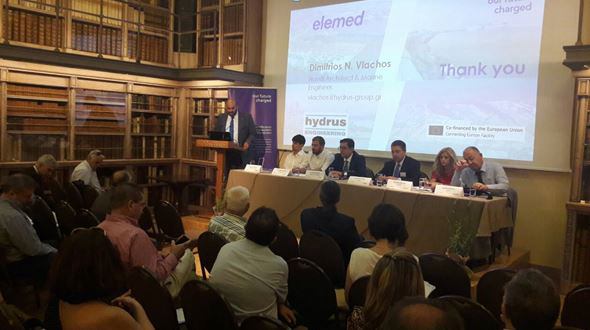
The event became the commonplace and raised discussion among shipping and energy stakeholders, public bodies’ representatives, regulatory and port authorities as well as partners of the EU project Elemed. During his welcome address, Dr Dionysios Papachristou, Press & Public Relations Manager of the Regulatory Authority for Energy (RAE) underlined that “RAE’s role is to contribute to the formation of a regulatory framework that will facilitate entrepreneurship in the field of energy for marine transportation, while serving the common good and financial prosperity”.
In the cadre of the forum, an open consultation took place on Elemed’s key policy recommendations for the development of a complete regulatory framework that will support the implementation of electrification technology in ports and will introduce the idea of sustainable ship. Specific emphasis was given to the inclusion of electric energy in the list of marine fuels, with equivalent or event more favourable terms than conventional fuels.
Main aspects of the Elemed project were also presented, as well as international applications of innovative technologies of electrification in ports and ships. The prospects of the use of the above technology in Piraeus port, were also highlighted.
Panayiotis Mitrou, Technology & Innovation Manager, Marine & Offshore, Lloyd’s Register South Europe added: “The fastest developing technology in shipping globally with Greece appearing as ideal implementation field. It offers a unique opportunity to capitalise Greece’s insularity and turn shipping and port infrastructure towards a sustainable future”.
About elemed
Elemed (Electrification in the Eastern Mediterranean) prepares the ground for the introduction of cold ironing, electric bunkering and hybrid ships across the Eastern Mediterranean Sea corridor, aiming at eliminating emissions & noise in ports and surrounding urban area. It is a co-funded by European Union project, studying all technical, regulatory and financial issues related to the establishment of cold-ironing infrastructure, in four ports (Piraeus, Killini, Lemesos, Koper), involving three countries. Within elemed framework, the first pilot cold-ironing infrastructure in Eastern Mediterranean will be established in Killini Port.
Follow elemed on
Twitter: https://twitter.com/elemedproject
Facebook: https://www.facebook.com/elemedproject
Linkedin: https://www.linkedin.com/company-beta/11062068/

elemed event hosted at Laskarides Foundation

Dr Dionysios Papachristou, Head of Press Office & Public Relations Department at RAE, during his welcome speech at elemed event

Active participation from the audience during public consultation at elemed event

Active participation from the audience during public consultation at elemed event

Mr Panayiotis Mitrou, Lloyd’s Register Technology & Innovation Manager, Marine & Offrshore, presenting at elemed event

Ms Chrysanthi Kontogiorgi, Head of Environmental Department, Piraeus Port Authority, presenting at Elemed event
 |
| Mr Dimitris Spyrou, Consultant, Piraeus Port Authority, speaking at Elemed event |
 |
| Professor Dimitris Lyridis, National Technical University of Athens, presenting at elemed event |
 |
| Mr Dimosthenis Spathis, Electrical-Engineer at Protasis, presenting at elemed event |
 |
| Mr Dimitris Vlachos, Naval Architect & Marine Engineer, Hydrus Engineering, presenting at elemed event |
 |
| Mr Emmanuel Vergetis, Senior Consultant, Marine & Offshore, Piraeus Business Development at Lloyd’s Register, presenting, elemed event |
 |
| Lloyd’s Register team coordinates open consultation on Regulatory Framework (from left to right: Emannuel Vergetis, Senior Consultant, Marine & Offshore, Piraeus Business Development; Panayiotis Mitrou, Technology & Innovation Manager, Marine & Offshore, South Europe; Theodoros Kourmpelis, Project Service Delivery Manager, Marine & Offshore) |
Global Industry Alliance launched to support low carbon shipping
 |
Together, the GIA partners will collectively identify and develop innovative solutions to address common barriers to the uptake and implementation of energy efficiency technologies and operational measures. Focusing on a number of priority areas including energy efficiency technologies and operational best practices, alternative fuels, and digitalization, activities likely to be undertaken or promoted by the Alliance will include, inter alia: research and development; showcasing of advances in technology development and positive initiatives by the maritime sector; industry fora to encourage a global industry dialogue; and the implementation of capacity building and information exchange activities.
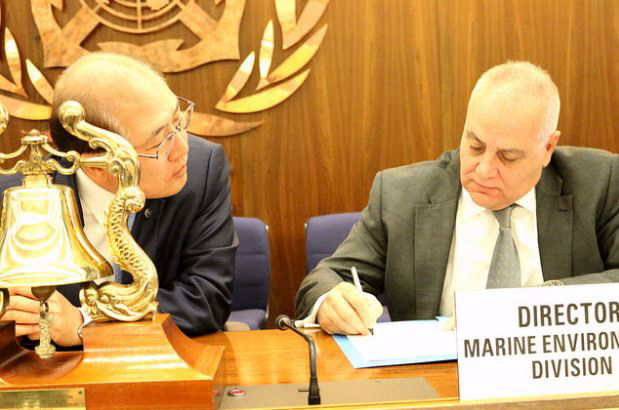
The GIA was officially inaugurated today (29 June) at a launch ceremony held at the headquarters of the IMO, the United Nations specialized agency with responsibility for safety and security of shipping and the prevention of pollution from ships. The launch was held at the margins of the first meeting of the IMO Intersessional Working Group on Reduction of GHG emissions from ships.
In his GIA launch speech, IMO Secretary-General Kitack Lim said the new alliance would help shipping to make its contribution towards greenhouse gas reduction and the mitigation of climate change, a key target for the United Nations under its Sustainable Development Goals (SDGs).
“What we are witnessing today is the formal start of a tried and tested partnership concept which has the potential to boost still further our efforts to kick-start the change that society demands and create a firm, tangible basis to transform the shipping sector for the better,” Mr Lim said.
“Under this new public-private partnership initiative, these 'industry champions', which come from different sectors of the industry and may have different business strategies within the same sector, are coming together to contribute to tackling the challenges of decarbonizing the shipping sector.”
Following the announcement by the GloMEEP Project of its intention to establish the GIA, thirteen companies have agreed to become the founding members of the GIA, although it is expected that more companies may join the GIA even after the launch. The thirteen members that have formally committed to joining the alliance are:
ABB Engineering (Shanghai) Ltd.;
DNV GL SE;
Lloyd's Register EMEA;
MarineTraffic;
MSC Mediterranean Shipping Company S.A.;
Ricardo UK Ltd;
Royal Caribbean Cruises Ltd.;
Shell International Trading and Shipping Company Limited;
Silverstream Technologies;
Stena AB;
Total Marine Fuels Pte Ltd;
Wärtsilä Corporation; and
Winterthur Gas & Diesel Ltd.
T
hese companies are supporting the overall goals of the GIA by providing their expertise and know-how in the area of maritime fuel efficiency, as well as contributing financially towards the GIA Fund from which GIA activities will be funded.
Following the official GIA launch, the first GIA Task Force meeting was convened to discuss work modalities and kick-off the GIA work.
GloMEEP: http://glomeep.imo.org/
DNV GL opens fleet performance centres to improve vessel efficiency
 |
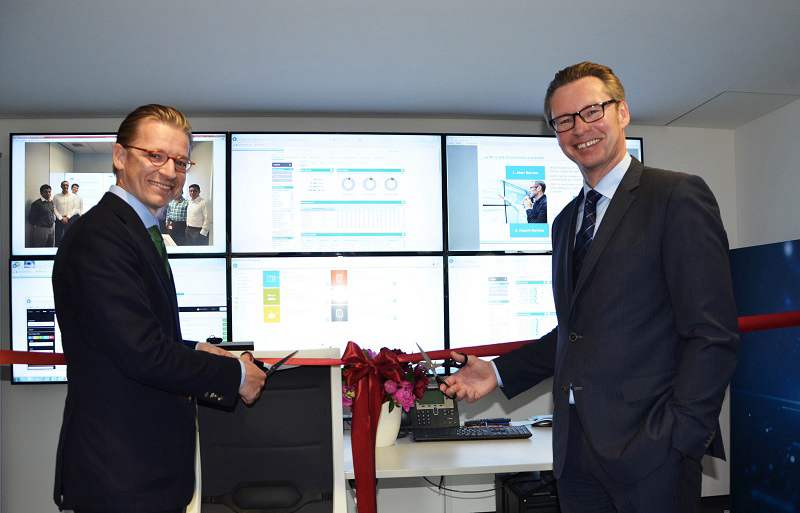
| Christian Rychly, Managing Director of Leonhardt & Blumberg (left) and Knut Ørbeck-Nilssen, CEO of DNV GL – Maritime (right) cut the ribbon |
Expert systems at the fleet performance centres are able to check incoming vessel data from customers using the ECO Insight platform, providing quality control of the data and offering suggestions on potential improvement levers for both individual vessels and fleets, such as identifying speed loitering and over-usage of auxiliary engines or boilers.
The performance centre provides comprehensive and customizable fleet monitoring. In development and in operational trials for the last nine months, it is already supporting pilot clients in Asia and Europe daily with data quality and performance alerts, performance reviews, and ad-hoc investigations into performance issues and claims cases, among others. In addition to machine-learning systems, dedicated DNV GL performance managers verify the validity of performance alerts before they are being send to customers. They also look at why performance is different between vessels of the same fleet and propose actions.
“We are very glad to have partnered with DNV GL. It is of great value to us when performance experts provide a ‘second pair of eyes‘ on our fleet and give us real-time warnings if vessels are not being operated in the most efficient manner,” said Christian Rychly, managing director of the German shipping company Leonhardt & Blumberg, during the opening and ribbon cutting ceremony of the new fleet centre in Hamburg. “To mitigate the market pressure, we exactly need those tools which enhance our efficiency and help us to comply with the ever more challenging environmental regulations,” he added. As one of the pilot customers the concept has been developed with, Leonhardt & Blumberg has installed the ECO Insight tool already on 35 of its vessels, with more than 20 planned to follow soon.
“The fleet performance centres are just one of the ways we are working to use digitalization to help our customers enhance their competitiveness through improved efficiency, greater safety, and increased margins,” said Knut Ørbeck-Nilssen, CEO of DNV GL – Maritime. “Without the valuable contribution of pilot customers such as Leonhardt & Blumberg, we wouldn’t have been able to develop this innovative solution. By working together, we can now truly see the benefits of ‘big data’ in shipping – and giving ship managers a direct line to our trusted expert advice, makes taking these gains even easier.”
The launch of the fleet performance centres is the first building block of the new ECO Insight 2.0, to be released in August 2017. Only two and a half years after its launch, ECO Insight is already the market leader, with 1.400 vessels from 80 customers around the globe. ECO Insight provides a comprehensive and easily accessible way to manage the performance of a fleet by combining vessel reported data with industry information, including voyage, hull and propeller, engine and systems, and fuel quality performance.
Image caption:
1: Christian Rychly, Managing Director of Leonhardt & Blumberg (left) and Knut Ørbeck-Nilssen, CEO of DNV GL – Maritime (right) cut the ribbon.
About DNV GL
Driven by our purpose of safeguarding life, property and the environment, DNV GL enables organizations to advance the safety and sustainability of their business. We provide classification, technical assurance, software and independent expert advisory services to the maritime, oil & gas and energy industries. We also provide certification services to customers across a wide range of industries. Operating in more than 100 countries, our professionals are dedicated to helping our customers make the world safer, smarter and greener.
About DNV GL – Maritime
DNV GL is the world’s leading classification society and a recognized advisor for the maritime industry. We enhance safety, quality, energy efficiency and environmental performance of the global shipping industry – across all vessel types and offshore structures. We invest heavily in research and development to find solutions, together with the industry, that address strategic, operational or regulatory challenges. For more information visit www.dnvgl.com/maritime
Angelicoussis remains top of Greek shipowner tonne millionaires
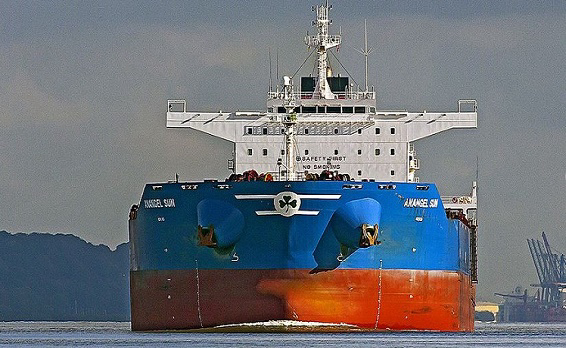
Greek publication Naftiliaki has now added to the mountain of statistics, confirming the country's largest owners have mainly stood their ground, while others have crumbled.
There are presently 69 fleets under Greek control which top 1m dwt, three fewer than mid-2016, but the smaller number of owning companies control more ships and carrying capacity than ever. Further, there are a couple of companies a vessel or so short of the 1m dwt.
Naftiliaki's 30th annual survey of Greece's largest operators reveals, the 69 tonne millionaires, between them run 2,838 ships of just over 289.8m dwt, some 58 ships and 16.9m dwt more than 12 months ago. In 2016 the fleet grew by 153 ships on 2015 as newbuildings were streaming in but the 12 months saw an increase of just 15m dwt.
At the end of May the tonne millionaires' operated about 70\% of the Greek-owned fleet and around 86\% of its tonnage. Still, with some 500 shipping companies in all in the Greek clusters, it's clear shipowning is in the Greek DNA, and is seen as a career with many small players earning a living from it. Indeed, there are 62 fleets of 20 ships or more, seven of them not among the 1m dwt-plus group.
John Angelicoussis' diversified fleet of bulkers, tankers and gas carriers has consolidated its position at the top of the “tonne millionaires” with a fleet of 120 ships of 24.9m dwt, up 15 ships and 4.33m dwt on 12 months ago.
The Athens-based owner has been expanding through taking delivery of newbuildings having in 2016 grown by 10 vessels and 2.15m dwt on 2015. Further, Angelicoussis¹ tankers have often been in the news for their part in innovative projects working with companies developing technology, as it's well known for its practical approach to the transportation of goods by sea.
The privately owned Angelicoussis fleet leads a cluster of companies which have grown backed by investors through being listed in New York 16 in all - and indeed, the next truly private operator is Angelicoussis' sister, Anna. Her group has decreased its tonnage by just over 1m dwt since last year while adding four vessels to the fleet and is at number eight on the list down a place, with 8.88m dwt comprising 20 tankers, 31 bulkers, and an LNG carrier.
Two women are among the top eight as Angeliki Frangou's Navios stable retains second position overall with 16.76m dwt and 167 ships up 1.22m dwt and a whopping 19 ships, making Navios by some way the largest fleet shipwise. And that does not include several deals now in progress, nor her South American operation.
Fast restructuring George Economou's Cardiff / TMS / DryShips stable remains in third place, the fleet some six ships larger at 101 and 12.99m dwt - 858,523dwt up on 2016 -- taking the group back to the level it was in 2015. George Procopiou, 12.62m dwt / 100 ships (up 500,000dwt / and four vessels) is in fourth, and though Peter G Livanos is no longer a major stakeholder in Euronav Hellas, 11.28m dwt / 46 vessels (down 190,000dwt / two vessels) the company is included in the list and remains at five, ahead of the growing fleet run by Peter Pappas (Star Bulk / Oceanbulk / Product Tankers) which comprises 10.809m dwt and 107 ships, up 1.57m dwt and 13 ships. Livanos'
GasLog is in 39 th spot, with 2.24m dwt and 27 gas carriers, four spot behind the Vafis family's StealthGas (55 LPG carriers) 18 tankers and eight bulk carriers.
Led by middle brother, Dinos the Martinos dynasty of Thanassis / Eastern Mediterranean and Andreas / Minerva Marine control between them 206 units of 22.05m dwt , up seven ships and 2.28m dwt.
Out of the list are Hellespont / Papachristidis, Quintana Shipmanagement, Paragon / Box Ships / Michael Bodouroglou and Polys L Haji-Ioannou, the first time in 30 years the late king of the tankers' Loucas Haji-Ioannou's family is not represented in the list.
Seatrade (UBM (UK) Ltd)
David Glass
Greece Correspondent, Seatrade Maritime
A New Coat of Paint Is Rocking the Global Shipping Industry
 |
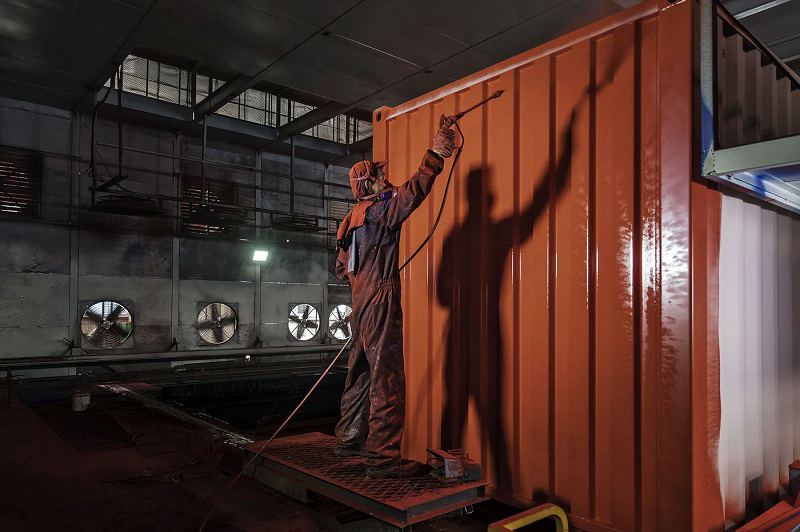
A move by China to save the planet has delivered a price shock to the global shipping industry just as it was starting to emerge from its worst slump in almost a decade.
China manufacturers make 90 percent of all containers used on ships to carry all manner of finished products and commodities around the world. They’re the workhorses of the global economy. As part of their pledge to cut emissions by 70 percent by the end of this year, these companies are coating containers with water-borne paints that release less toxic fumes than oil-based varieties before China starts levying a green tax in January 2018.
Big Data and Digital Transformation on the Shipping Industry’s Meny over the next Five Years according to Survey
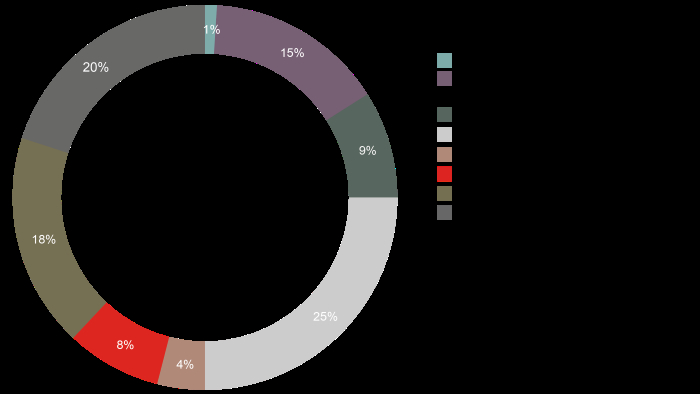
What is the optimal investment opportunity currently for the shipping industry?
When asked to consider the optimal investment opportunity currently for the shipping industry, 25 percent of respondents favour investment in new technology, up from 14 percent in 2016. Consolidation remains a continuing theme for the shipping industry – 38 percent believe a merger or acquisition or the formation of a joint venture, pool or alliance would be the best investment for the industry today, although this is down from 47 percent in 2016.
 |
Aside from fuel efficient and low carbon technology, what form of technology will be the most significant driver of change in the shipping industry over the next five years?
While it is generally accepted throughout the industry that the development of fuel efficient and low carbon technology will bring about wholesale changes to the industry by assisting operators to comply with increasingly stringent environmental regulation, big data and predictive analytics are also expected to be a significant driver of change over the next five years. The ability to anticipate repairs and maintenance and better understand and to forecast consumer behaviour through big data is expected to act as the biggest catalyst for change, as selected by 46 percent, while 19 percent believe that software supporting Transport as a Service, which allows for the development of tailored end-to-end supply chains, has the greatest potential to transform the industry.
 |
What form of infrastructure investment would benefit the shipping industry the most over the next five years?
Respondents return to the theme of Transport as a Service when asked what form of infrastructure investment would benefit shipping most over the next five years. 43 percent believe that integration with other forms of transport services to deliver bespoke supply chains would be most helpful to the industry. A further 28 percent favour the development of new port capacity in emerging markets, and 15 percent the development of intelligent ports, where various port infrastructure is connected by the Internet of Things.
 |
Which three countries offer the best investment opportunities for shipping over the next two to five years?
In common with the aviation industry, respondents from the shipping industry view China, India and the US as the markets offering the most attractive investment opportunities over the next two to five years, by 18 percent, 12 percent and 11 percent respectively. Asia Pacific is the region thought to offer the best investment opportunities overall, by 45 percent.
Are current market conditions generally positive for the shipping industry?
Confidence in the shipping industry appears to be improving. This year, 37 percent report that current market conditions are positive for the shipping industry, compared with 15 percent in 2016, 33 percent in 2015, and 69 percent in 2014.
While sentiment has fluctuated over the past four years, the problem of overcapacity has been an enduring theme – 65 percent of the 63 percent who do not consider current conditions to be positive blame overcapacity. In fact, 35 percent of all respondents from the shipping industry believe that supply and demand imbalances pose the greatest challenge to the operational efficiency of the shipping industry, although this is down from 47 percent in 2016.
Of the 37 percent who believe current conditions are positive, 36 percent cite improved economic conditions, while 19 percent report that overcapacity issues have been largely resolved. Continued lower oil prices are also assisting the industry, according to 16 percent.
What do you believe will happen over the next five years in the shipping industry?
Another recurring concern for the shipping industry is the ability to secure finance. Looking ahead to the next five years, just 22 percent believe that the availability of funds will increase, while 41 percent fear that funding will become more unobtainable, a considerably higher proportion than respondents from the aviation, rail or logistics industries. In addition, respondents from the shipping industry are expecting lenders to take a tougher stance on problem loans, with 54 percent anticipating that enforcement actions will increase between now and 2022.
The availability of funds will
 |
 |
The number of enforcement actions will
What will be the primary source of funding for the shipping industry over the next two years?
While funding is forecast to become more difficult to access, bank debt is expected to remain the industry’s primary source of funding, according to 23 percent, followed by private equity and shareholders, selected by 15 percent and 14 percent respectively. One respondent pointed to private debt and direct lending as an alternative source of funding for shipowners.
While overcapacity continues to weigh heavily on the shipping industry, respondents are less concerned about an increase in competition – 51 percent expect competition to increase over the next five years, compared with 74 percent of respondents from the aviation industry, 71 percent from the rail industry and 59 percent from the logistics industry, indicating that respondents believe that some headway will have been made in resolving the problem of overcapacity between now and 2022. While 57 percent forecast that fuel costs will rise over the next five years, 61 percent predict that freight costs and fares will also increase.
 |
What is the greatest challenge to the operational efficiency of the shipping industry?
While 35 percent believe that overcapacity poses the greatest challenge to the operational efficiency of the shipping industry, 14 percent point to a lack of suitably qualified people and 13 percent to emission controls.
 |
What do you see as the greatest threat to the shipping industry over the next five years?
Global political uncertainty, a global recession, and protectionism pose the greatest threats to the shipping industry over the next five years, according to 28 percent, 25 percent, and 22 percent respectively.
Aside from infrastructure investment, which of the following forms of government support would help the shipping industry most?
Against a backdrop of political and economic uncertainty, greater transparency as to the introduction of proposed regulation and in the application and enforcement of new regulation is seen as the most helpful form of government support for the industry, by 35 percent. A further 18 percent would favour deregulation, followed by 12 percent who favour fiscal incentives and a further 12 percent who call for the removal of barriers to foreign investment.
 |
Which regulation has had the greatest impact on the shipping industry over the past decade?
When asked which regulation has had the greatest impact on the shipping industry over the past decade, 43 percent pointed to increased environmental regulation, followed by 18 percent who highlight the impact of trade and financial sanctions, and 12 percent who point to fragmented global regulation.
 |
Source: Norton Rose Fulbright

Powered by  © Μaritimes 2019