


Nakilat wins second consecutive CIO 100 Awards
 |
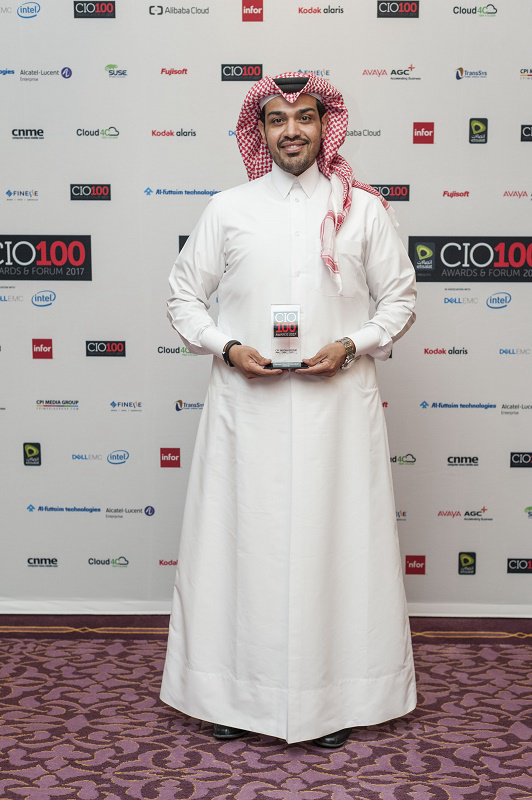
| Abdullah Al-Sulaiti, Nakilat Managing Director |
The CIO 100 Awards honor companies that demonstrate excellence and achievement in IT (Information Technology) ensuring functional efficiency, security and digital transformation as strategic business partners.
The award came in recognition of the company’s successful planning and implementation of a Unified Ship Management System V-Shape onboard Nakilat-operated vessels. This is the second consecutive year that Nakilat has been conferred the CIO 100 award for its successful undertaking of setting the standard for innovation and creativity with regards to their IT department.
Organised by Computer News Middle East (CNME), the awards are held annually to celebrate technology innovation and service excellence in the regional IT sector, with winners being selected through a judging panel.
With this award, Nakilat has once again established a new benchmark for success since it launched its consolidation project that was initiated to address sundry problems associated with existing technologies, data centers and its IT department, as well as implement new systems and technologies across the corporation. The award further highlights the organization’s commitment towards using information technology in innovative ways to deliver business value through optimization of business processes.
Eng. Abdullah Al-Sulaiti, Nakilat Managing Director said: “We are grateful to be recognized for our efforts and contributions to the IT sector, as well as to all our partners for their support and co-operation throughout the journey. This awards serves as a great acknowledgement of Nakilat’s impressive journey. This award is a testament to the skill, ingenuity, and vision of our employees. Our IT team members have distinguished themselves by creating business value through the innovative use of information by providing insight into business technology leadership for unique practices and substantial results.”
About Nakilat
Nakilat is a Qatari LNG transport company providing an essential transportation link in the State of Qatar’s LNG supply chain. Its LNG shipping fleet is the largest in the world, comprising of 63 LNG vessels. Nakilat also owns and manages four large LPG carriers. Nakilat operates the ship repair and construction facilities at Erhama Bin Jaber Al Jalahma Shipyard in Ras Laffan Industrial City via two strategic joint ventures: N-KOM and NDSQ. Nakilat also offers a full range of marine support services to vessels operating in Qatari waters. For more information visit: www.nakilat.com.qa
Aegean Shipping Management appoints Apostolos Poulovassilis as new CEO
 |
Mr. George Melissanidis, Chairman of Aegean Shipping Management said: “We are very pleased to be appointing someone of Mr. Poulovassilis’ caliber and experience to Aegean Shipping. He has demonstrated throughout his career the ability to develop and lead successful teams and deliver impressive results. I look forward to working with him to create the next chapter of Aegean Shipping’s success story.”
Mr. Poulovassilis brings to the role more than 27 years of experience in the marine industry with an impressive track record of leadership and management at the highest level, firstly with Lloyd’s Register reaching the level of Regional Manager for Europe, Middle East & Africa, and most recently with Eletson Corporation as Chief Operating Officer.
“My first priority is to lead Aegean Shipping into the next phase of its sustainable development and expansion of the “Green Fleet”. Coming into the company at this critical point is a huge responsibility, but I am very happy to have been given the opportunity to play a part in Aegean Shipping’s evolution.” Mr. Poulovassilis said.
China’s Australia Coal Deal Boosts Link to Fuel-Hungry World

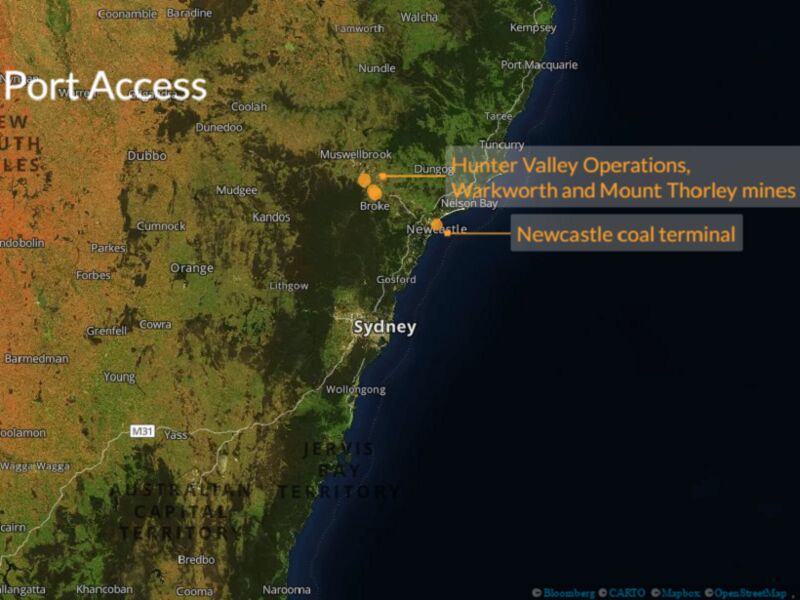
Yancoal Australia Ltd.’s $2.45 billion purchase of the biggest slice of Rio Tinto Group’s coal operations will double the Chinese-owned miner’s output in the country. The deal also includes a 36.5 percent stake in Port Waratah Coal Services Ltd., the owner of two terminals at the port of Newcastle, Australia’s main conduit for thermal coal. The amount Yancoal will be permitted to ship will double.
Container shipping lines earned $42 less per TEU in 2016
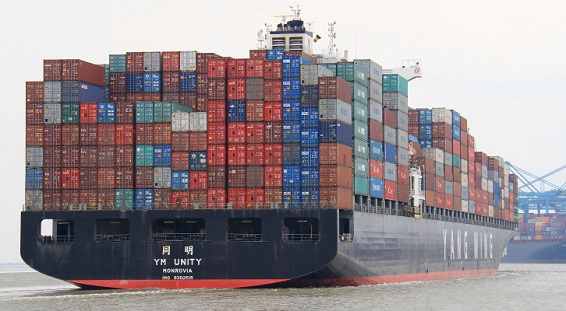
This has primarily been due to the devastating low rates received in the first half of 2016, as the average rate received in H2 2016 was 22\% higher than the rate received in H2 2015.
The freight rates managed to gain momentum through second half of 2016, due to measures taken from the shipping lines in terms of network optimisation, scrapping and more careful deployment around the peak season.
As the freight rates increased through second half of 2016, 2/3 of the trades on the SCFI closed 2016 at a higher rate than in 2015 and three trade routes hit the highest USD per TEU for a week 52 in more than five years, those where trades from Shanghai to Santos, Durban and Australia/New Zealand.

China Containerised Freight Index (CCFI) reflecting China’s nationwide export of containers, is showing a 19\% drop from 2015 to 2016. The short-lived spikes in spot rates during H2 2016, is not included in the CCFI compared to the SCFI and thereby the CCFI achieves a higher negative growth in 2016.
The CCFI includes both spot and long-term rates based on the actual transactions within a two weeks periods, while the SCFI focuses on the average spot booking price for one week. By that, the CCFI reflects the real progress in container shipping rates on a short-term basis. Thereby, the CCFI convey the current tendency in the container freight development and the SCFI indicate the current market development.
Furthermore, the SCFI concentrates on export containers from Shanghai Port only, while the CCFI covers the 10 major ports in China.
BIMCO’s Chief Shipping Analyst Peter Sand comments:
Despite the average rate for 2016 is lower than 2015, 2016 might stand out for something positive, where the container shipping lines took some of the measures needed to adapt to the new normal, where the growth in demand is equal to the GDP.
The container shipping lines achieved a lower growth rate in supply higher than the demand growth for the first time since 2010, by using the tools they had at hand and consolidated, scrapped and postponed deliveries.
If the Trade-to-GDP-Multiplier stays at the current level and the International Monetary Fund is correct with their projection, the container shipping industry will be status quo in 2017 and the freight rates will most likely stay at the same level as last half of 2016. However, the container shipping lines will increasingly focus on reaping the benefits of consolidation and we will most certainly see their profits go up.
US earnings are the main driver for a lower average rate
The container shipping lines operating from Shanghai to Europe earned 66.56 USD more per TEU transported in 2016 compared to 2015. The average freight rate for Europe in 2016 was thereby the only of the major trade routes to surpass 2015 level.
For the US East Coast bound containers from Shanghai, the container shipping lines earned an average of 1,051.5 USD less per transported FEU in 2016 compared to 2015. It is the biggest decline in USD for any of the trades on the SCFI and as it weighs 20\% in the index, similar to Europe, it is the main driver for a lower average freight rate in 2016 compared to 2015. For the containers exported to the US West Coast, the container shipping lines earned an average of 223.5 USD less per FEU in 2016.
Container freights rates in second half of 2016 does not revive intra-Asia
Container shipping lines operating trade routes from Shanghai to South Korea, Taiwan, Hong Kong and Singapore all achieved a lower average rate for 2016 compared to 2015. The four trades did not experience similar increases in the rates, as the main trades during H2 2016 and remained on par with the poor H1 2016 level.
With the mergers and newly established alliances entering into force and the supply side handled with care, the container shipping industry will hopefully see better profits and fleet utilisation.
Our most recent shipping market overview and outlook reports on related issues:
The shipping market in 2016 and looking forward
- demolition activity slowly but steadily grows…yet again
- container shipping: Severe overcapacity in the market and recently agreed contract rates
- lowest level of newbuilding contracts in 20 years
- substantial demolition of panamax containerships.
Source: Peter Sand, Chief Shipping Analyst; BIMCO
EU politicians need to realise Greek shipping is a 'European asset'
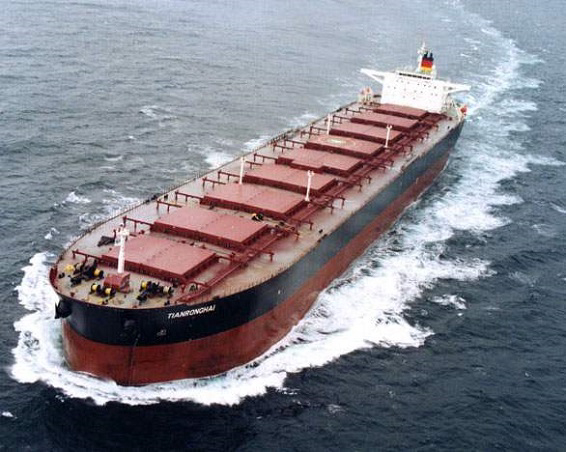
"At the highest political level we must make Europeans understand Greek shipping is not only Greek but is a proven European asset and we will do all we can to make Europeans understand this," the country’s Shipping & Island Policy Minister, Panagiotis Kouroumblis, has once again vowed,
Addressing a maritime conference in Athens last week Kouroumblis said trust in shipping is needed for it to face the challenges of our time. “Europeans must understand Greek shipping is a powerful weapon for Europe,” said the minister talking about Greek and European shipping and the industry's competitiveness and prospects in these uncertain times.
Union of Greek Shipowners' president, Theodore Veniamis, also underlined the importance of shipping to Europe. He mentioned the European generated issue over Greece's approach to shipping tax stressing the need for shipping to remain competitive, saying the competition does not come from within Europe but from the shipping clusters rapidly being developed in the Far East.
He noted EU Transport commissioner Violeta Bulc understands this, noting the European shipowners body ECSA will be in Brussels the first week of March under the umbrella of the 'European Shipping Week' as part of the effort to make the law makers and wider public more aware of the EU shipping clusters and the social and economic advantages they give.
Veniamis described shipping as "a national treasure" for Greece, without having political party affiliations, and this enables the shipping community and the state to share a common aim, especially when it comes to increasing the direct links with the country's economy and overall welfare.
Addressing the conference, Bimco chairman, Philippe Louis-Dreyfus, expressed admiration for the ability of Greek shipowners and said he was jealous that Greece has a special Ministry for Shipping.
He called on the EU and IMO "”to work together to ensure the European owner does not leave EU, which would be disastrous for Europe". He said: "If Europe does not want to lose ground in international competitiveness, it should support sectors such as shipping which has a leading role on the world's economic stage."
However, he warned shipping must take proactive action over the environment otherwise EU bodies and politicians will. He also predicted financing will become scarcer and more expensive.
Greek shipowner Panos Laskaridis also spoke of the growth of clusters in the Far East and said European shipping should strive for more unity. "If the EU does not give motives to shipping, I'm afraid European shipping will be lost to outside centres just as the shipbuilding industry was."
However, he feared the International Chamber of Shipping (ICS) and IMO are expressing views “not liked by the EU”.
On the homefront, he said Greek shipping is disciplined and the 250,000 people working in it can give a lead to the rest of the country.
David Glash Greece Correspondent, Seatrade Maritime
Copyright 2017 Seatrade (UBM (UK) Ltd).
Ballast Water Management - Beyond Type Approval
 |
In December 2016, the Coast Guard type approved three BWMSs, and we expect to see more systems submitted for type approval early this year. The type approved systems currently available treat ballast water with filtration and either chlorination (EC) or ultraviolet light (UV) to reduce the number of living organisms to less than the regulatory limits. Information on the U.S. type approved systems is available at the Coast Guard “Maritime Commons” blog, Maritime Information Exchange (CGMIX), and Homeport internet portal.
The Coast Guard recognizes that a range of BWM options are necessary for the global fleet to manage ballast water effectively, including a range of BWMS sizes and treatment types. Even as we continue to focus on type approving additional BWMS, vessel owners and operators need to look beyond type approval to the challenges associated with fitting and operating the systems and planning for compliance with U.S. and International standards.
Understand the Type Approval Certificate. BWMS type approvals are not the same as type approvals for more passive and less complex systems, such as life saving or firefighting equipments. BWMS type approvals are highly technical and very complex. System requirements such as flow rates, power level, water temperature and hold time vary greatly, not only between system type (i.e. between UV and EC), but also between systems of the same type produced by different manufacturers. An approved system will be compliant with the discharge standard only if it is operated as specified in the type approval. Most often the type approval will reference the manufactures operating manual for the system. It is incumbent on owner/operators to evaluate the technical specifications of each BWMS to ensure the system they intend to install fits the operating profile of the vessel on which it is intended to be installed.
In order to assist owner/operators with this decision, the Coast Guard lists key system parameters on the U.S. Coast Guard Certificate of Approval. Other key parameters such as power consumption, system dimension and space requirements can be found in the system specific operations manuals. I strongly urge vessel owners/operators to work closely with system manufacturers to evaluate potential BWMSs to ensure the system they choose adequately fits their needs and the needs of their fleet.
Understand the new compliance date extension process. There are now type approved systems available and, accordingly, the Coast Guard has transitioned to a post-type approval extension regime. It is important for the vessel owner/operator to understand the new extension request requirements. Previously, it was relatively simple for a vessel owner/operator to document that, despite all efforts, compliance with one of the accepted ballast water management methods, including installation of a Coast Guard type approved BWMS, was not possible. Now that three BWMSs have been type approved, it changes the way we approach these requests. Operators can no longer request an extension simply citing there is no Coast Guard type approved system available. Each extension request requires an explicit statement supported by documentary evidence that one of the accepted methods in the regulations, including installation of a Coast Guard type approved system, is not possible for purposes of compliance with the regulatory implementation schedule.
Other factors that we consider when evaluating an extension request include the lead time required to contract and install a U.S. type approved system, issues related to limited market and manufacturing capabilities, and limited shipyard capacity. The Coast Guard will no longer accept batch applications for extensions; instead, each vessel must be evaluated individually. Lastly, vessels equipped with a foreign type approved BWMS that has been accepted as an Alternate Management System (AMS) will likely not receive an extension because the vessel is already considered to be in compliance. As per our regulations, vessels may use an AMS for up to 5 years past the vessel’s compliance date.
To date, we have received over 13,000 requests for extensions to vessel compliance dates, granted just under 12,000 requests, and recently denied 9 requests. Due to the volume of these requests and time that it takes to review them, it is extremely important for vessel owners/operators to pay close attention to the extension requirements. An extension request must be submitted at least 12 months prior to the vessel’s compliance date, and supplemental requests must be filed 90 days before the termination date specified in the previous extension. Supplemental requests will be granted only for delays caused by unforeseen circumstances or situations beyond the control of the owner or operator.
Plan for compliance. It is imperative that vessel owners/operators review and update vessel Ballast Water Management plans routinely and especially now that type approved systems are available. Ballast water exchange and the use of Coast Guard accepted AMS are being phased out as compliance options. This means that vessel owners/operators must understand the accepted BWM method(s) that will be used, train the crew in proper procedures and use of any BWM equipment, and incorporate ballast water management into the vessel’s Safety Management System. The core of this approach is the BWM plan (BWMP).
A comprehensive plan addresses a broad spectrum of items. Here are some general issues that must be addressed in detail in a ship-specific BWMP.
- Training requirements for the crew;
- Safety procedures related to ballast water management methods, equipment and practices, including incorporation of BWM into Safety Management Systems;
- Specific actions for meeting the BWM requirements, documentation procedures, crew training requirements, contingency plans for the failure or inoperability of intended ballast water management methods and corrective action plans and procedures, and inclusion or specific reference to any information necessary to conduct ballast water management in accordance with the plan, taking into account any conditions and factors specific to the vessel;
- Detailed fouling maintenance and sediment removal procedures;
- Procedures for coordinating the shipboard BWM strategy with Coast Guard authorities including procedures for informing the Coast Guard of any problems in managing ballast water intended for discharge into U.S. waters;
- Identification of the designated officer in charge of BWM;
- Detailed procedures for meeting the reporting requirements for ports and places in the U.S. visited by the vessel (different reporting procedures exist for Great Lakes, upper Hudson River, and other locations).
Ballast water management compliance is being actively enforced in the U.S. Every domestic vessel inspection or Port State Control examination includes an assessment of compliance with the BWM requirements. U.S. Coast Guard inspectors will follow the existing compliance approach where they certify documents and records, crew knowledge, equipment condition and operation, and sample BW discharge for analysis if warranted. Failure to comply with the applicable requirements may result in penalties.
Plan for contingencies. Vessels that have reached their compliance date will not be allowed to discharge unmanaged ballast water into U.S. waters. The ballast water management plan should address what the vessel will do if the intended method of BWM is unex
pectedly unavailable (e.g. the BWMS stops operating, a reception facility or PWS is temporarily unavailable, etc). This plan is critical to the safe and efficient operation of the vessel.
This year, the Coast Guard will publish more guidance on the ballast water management program. Specifically, we will continue to clarify details with regard to our compliance program and compliance date extensions. All of the outreach and guidance documents developed will be posted on the Homeport website. I look forward to continued dialogue between the Coast Guard and industry as we work to reduce the threats of ballast-mediated biological invasions in U.S. waters.
RADM Paul F. Thomas
Assistant Commandant for Prevention Policy
U.S. Coast Guard
Lloyd’s Register Group Review 2016: Shaping the future, delivering solutions today
 |
At the same time, rapid developments in technology and the digital economy, the backbone of the fourth industrial revolution, are transforming the way we live and work, creating enormous opportunities and challenges for society and business. The global trade in goods and services relies on economic stability and the safe, secure and sustainable operation of the critical infrastructure and systems in our ever-more complex global supply chain.
LR has an increasingly important role to play. Our strategy is to strengthen our current business and extend our portfolio of professional services into new markets created by these global challenges impacting complex critical infrastructure. Our leading safety culture and expertise in managing risk will enable LR to offer client value from our compliance, assurance and performance solutions. This will deliver resilient financial performance and sustainable growth.
Highlights of our year 2015/16 include our work involving the convergence of physical and cyber, sensors and automation technologies to enable their safe and secure development for the benefit of our clients:
• cyber-enabled shipping and autonomous ships
• additive manufacturing – including the third-party certification of AM parts and components
• deployment of unmanned aircraft systems (UAS)
• remote auditing in the assurance arena.
Chairman Thomas Thune Andersen reports that the continued slump in oil prices throughout 2015/16 combined with the slowdown in new construction orders in marine and uncertainty as a result of Brexit, created challenging economic conditions.
Alastair Marsh, Chief Executive says: “When I look back over the year, we’ve achieved a huge amount despite very difficult trading conditions. 2016 was the year we put the foundation blocks in place for a new LR that is better equipped to support our clients’ challenges and opportunities. Looking ahead there are very real grounds for optimism in 2017.
“I’m immensely proud that through our efforts we were able to contribute £20.2 million to the Lloyd’s Register Foundation to support the important work that it funds in research into emerging technologies, science and education.”
The Lloyd’s Register Foundation’s 2016 Annual Review outlines the impact it’s making in becoming one of the world’s leading engineering research and education charities.
Source: Lloyd’s Register
SetelHellas and Cisco fruitful collaboration during the 3rd Naftemporiki Conference
 |
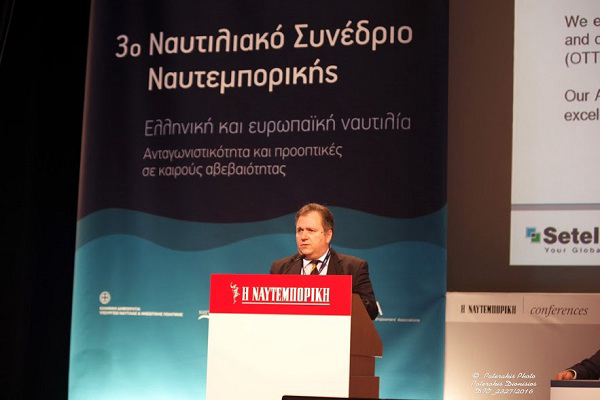
During the Conference, SetelHellas and Cisco presence, was perceived as significant. At their collaborative stand executives from both companies had the opportunity to discuss and share opinions with more than 500 CEOs and Shipping Executives from the top Global and Greek Shipping companies,demonstrating innovative anddisruptive maritime IoT solutions and technologies.
In the second session of the Conference, Mr. Gregory Yovanof, Managing Director of STRATEGIS maritime center of excellence, the firstICT maritime cluster,where SetelHellas and Cisco are among the founding members, noted the need of the shipping industry with regard to the existence of an ICT maritime cluster as a catalyst of growth.
In the third Session, Mr. Efthymios Chaldeakis, Sr. Strategic Accounts Manager at SetelHellas, made a detailed presentation of how shipping companies can "Convert Digital Value into Revenue" and how to make good use of all opportunities offered by the IoT technology, based on Cisco Greece systems.
For both SetelHellas and Cisco, it has been a pleasure to meet all participants and attendees and share with them how the challenges that the maritime business is facing can be addressed through disruptive technology that will transfer the shipping industry to and through the “Smart Shipping” era.
Photographs from the event are available at the following link:
https://www.facebook.com/pg/SetelHellas/photos/?tab=album&album_id=439819859475422
New JIP aims to develop LNG fuelled Capesize concept for the Australia-China trade
 |
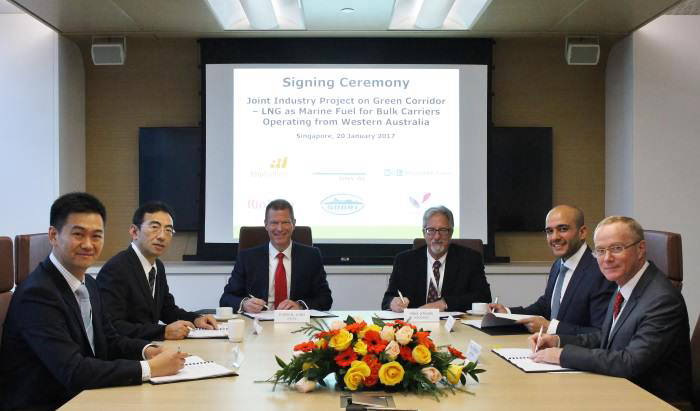
| The signing ceremony. From left to right: Chen Gang, Technical Manager from SDARI, Toshiaki Tanaka, Executive Officer, Deputy Director General, Dry Bulk Business Unit from Mitsui O.S.K. Lines, Steen Lund, Regional Manager South East Asia, India and Pacific from DNV GL – Maritime, Mike Utsler, Chief Operating Officer from Woodside Energy, Abdes Karimi, Freight Operations Manager from BHP Billiton, and David O’Brien, Freight Manager from Rio Tinto Marine, at the signing ceremony. |
A new joint industry project (JIP) signed recently in Singapore between BHP Billiton, Mitsui O.S.K. Lines, Rio Tinto, SDARI, Woodside, and DNV GL, looks to capitalize on this opportunity to drive the development of the market. The JIP is named “Green Corridor” and will assess the commercial potential of LNG fuelled vessels in a “green corridor” between Australian and China, culminating in the creation of a next generation Capesize design that will undergo Approval in Principle (AiP) under the new DNV GL rules.
“As we approach the entry into force date for sulphur emissions, we are seeing interest in LNG as a ship fuel start to climb again,” says Morten Lovstad, DNV GL – Maritime Business Director Bulk Carriers. “As one of the largest LNG exporters in the world and with bunkering infrastructure coming online, Australia is well placed to support the bulk trade on the west coast with LNG as fuel. By working together with some of the industry’s technology leaders we are confident this new project has the potential to deliver a competitive, compliant and safe vessel and the business case to back it up.”
Woodside COO Mike Utsler said Woodside was excited to be a part of this joint industry project to be led by DNV GL: “We recognise that LNG as a transport fuel option presents opportunities, both in a commercial sense and as a low-emissions alternative to other marine fuels. This JIP importantly is bringing together mining companies, a shipowner and supplier, a ship designer and LNG producer and led by DNV GL to explore how we can develop the LNG fuelled ‘Green Corridor’. Woodside is this year taking delivery of the first LNG fuelled marine support vessel in the Southern Hemisphere and we look forward to the findings from this joint industry project on the potential for LNG fuel use by bulk carriers,” he said.
The JIP has two main objectives – building and assessing the business case of LNG as fuel for Capesize bulkers operating in the trade between Australia-China, and developing an efficient LNG fuelled Capesize concept design. These activities will be run together, with the immediate results generated from one project fed into the other.
The financial and technical feasibility study examines a LNG fuelled Capesize bulker operating from Australia. It will look at a wide range of factors including the capital costs, operational costs and price sensitivities in terms of LNG and low sulphur marine fuel oils, in comparison to both a conventionally fuelled vessel and a LNG retrofit, as well as undertaking a high level bunker supply chain assessment to identify the key issues affecting the vessel design and business case.
The project partners will also work to develop a concept design for an efficient LNG fuelled Capesize vessel. The ship will be optimized for operations from and to Australia, and will be developed to a technical stage so that it may achieve an Approval in Principle (AiP) in compliance with the new DNV GL rules. An Approval in Principle is an independent assessment of a concept within an agreed framework, confirming that the design is feasible and no significant obstacles exist to prevent the concept from being realized.
Source: DNV GL
Five weeks to go until European Shipping Week
 |
The Flagship Conference will be followed by a Gala Dinner, featuring a keynote address by Anthony Luzzatto Gardner, former US Ambassador to the European Union and Visiting Fellow at the College of Europe. Ambassador Gardner, who has dedicated more than 20 years of his career to US-European affairs, will speak on the timely subject of ‘US-EU Relations: Looking Back, Looking Forward’.
On Thursday 2 March, an all-day excursion to the port of Antwerp is organised for EU officials, to experience a diverse range of shipping-related activities in real time.
Lots of other events will be happening throughout the week. An overview can be found on the ESW events calendar, which is continuously updated.
In short, if you haven’t registered yet for European Shipping Week: now is the time! Full practical details are available from www.europeanshippingweek.com

Powered by  © Μaritimes 2019