


INTERNATIONAL MARITIME RESCUE FEDERATION CALLS FOR DIALOGUE TO DISCUSS UNSUBSTANTIATED CLAIMS OF MISCONDUCT
Ten maritime search and rescue non-governmental organisations (NGOs) have met with representatives of the European Parliament in Brussels. The meeting which took place with the support of MEP Miguel Urban, discussed the on-going humanitarian crisis on Europe’s southern borders, and the Search and Rescue (SAR) NGOs' on-going essential efforts to save life at sea.
The main focus was understanding and agreeing the means and methods of addressing unsubstantiated accusations of unlawful conduct by SAR NGOs in the Mediterranean region, which, if allowed to continue unchecked, will endanger lawful SAR activities.
International Maritime Rescue Federation (IMRF) CEO, Bruce Reid said "We were disappointed that the representatives from the European security institutions did not attend the planned closed door meeting on the first day as there is an urgent need to increase dialogue between the NGOs and these organisations.”
He continued; “Recent unsubstantiated media reports of SAR NGO’s misconduct, need to be addressed, not through the media, but through constructive open dialogue. We don’t know of any maritime SAR NGO’s who are operating outside the SAR rules and regulations and we share the security agencies concerns if this is indeed the case. We hope that with the assistance of the EU parliament we can start an effective dialogue to resolve these concerns, so that the focus can return to saving people in distress.”
During the two days of co-ordinated meetings and discussions, the attending SAR NGOs (Sea-Watch, Proem-Aid, ProActiva Open Arms, SOS Mediterranee, Hellenic Rescue, Jugend Rettet, Humanitarian Pilots Initiative, SMHumanitario) and their representatives, alongside the independent maritime human rights charity Human Rights at Sea (HRAS) and the International Maritime Rescue Federation (IMRF) rejected all of the unsubstantiated claims or commentaries that alleged or suggested illegal direct cooperation by SAR NGOs with criminal networks.
Furthermore in order to develop and refine professional SAR NGO operations, all of the attendees and representatives agreed the objective and intent of the First Edition of the voluntary ‘Code of Conduct for Search and Rescue Operations undertaken by civil society Non-Governmental Organisations in the Mediterranean Sea’. This was agreed on the basis that the Code aligns with the three core areas for undertaking lawful SAR operations, those being; following accepted international humanitarian principles, defending fundamental human rights and the professionalisation of operational conduct. The attendees agreed to further refine the First Edition.
The attendees united in requesting that
(1) unsubstantiated accusations of unlawful conduct by SAR NGOs without the presentation of clear evidence cease immediately, and
(2) SAR NGOs have free, fair and open dialogue going forwards with all applicable European institutions on the positive integration of civil society SAR NGOs into humanitarian rescues efforts at sea.
These aims support the attendees' overall goal of encouraging international, governmental and non-governmental organisations to remain focused on the humanitarian task of ensuring that all people in distress in the waters of the Mediterranean can be saved.
Download the First Edition of the Code of Conduct: https://www.humanrightsatsea.org/wp-content/uploads/2017/03/20170302-NGO-Code-of-Conduct-FINAL-SECURED.pdf
Download the Volunteer Maritime Rescuer publication: https://www.humanrightsatsea.org/wp-content/uploads/2015/05/HRAS-Voluntary-Maritime-Rescuers-Awareness-of-Criminalisation_2016-SP-LRSecured-.pdf
Click on the link to read the speech delivered at the meeting by Bruce Reid, CEO IMRF: https://www.international-maritime-rescue.org/newscentralmed/178-central-mediterranean/2441-european-parliamentary-hearing-29-march-2017
Click here to download Bruce Reid's speech delivered as a pdf; https://www.international-maritime-rescue.org/component/phocadownload/file/1457-european-parliamentary-hearing-29-march-2017
Picture available on request
International Maritime Rescue Federation (IMRF)
The International Maritime Rescue Federation (IMRF) brings the world's maritime search and rescue organisations together in one global and growing family. IMRF's member organisations share their lifesaving ideas, technologies and experiences and freely cooperate with one another to achieve their common humanitarian aim: "Preventing loss of life in the world's waters".
The International Maritime Rescue Federation was founded (as the International Lifeboat Federation) in 1924. In 1985 it was granted non-governmental consultative status with the International Maritime Organization (IMO) in recognition of the good work being undertaken and the growing need for an organisation to act as a global focal point for maritime search and rescue. In 2003 it was registered as an independent charity and in 2007 the organisation was renamed the International Maritime Rescue Federation (IMRF), reflecting the broader scope of modern maritime search and rescue activity.
China-owned fleet’s brisk growth
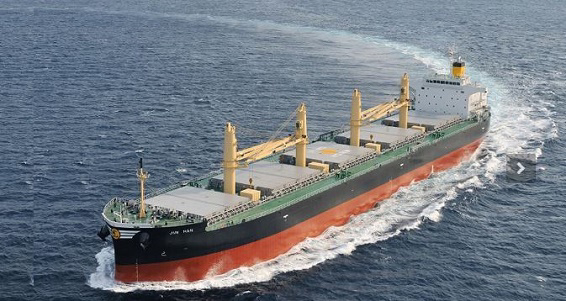
Large numbers of new tankers, bulk carriers, container ships and other vessels are scheduled to begin operating. While some fleet growth drivers are hard to predict, a strong upwards trend seems likely.
Organisational changes are accompanying enlargement of the fleet’s carrying capacity. Reorganising Chinese state-owned shipping companies has progressed. Consolidation into much bigger businesses aims to facilitate efficiency improvements and enhance competitiveness, boosting financial performance.
Resuming a powerful wave
Stronger fleet expansion has returned. In 2016 the China-owned merchant ship fleet grew by an estimated 7 percent for the second consecutive year, after decelerating quite dramatically over several years to only 2 percent growth in 2014, according to Clarksons Research figures. During last year, although newbuilding deliveries were lower than seen in the previous twelve months, reduced scrapping and other changes contributed.
At the end of 2016 the entire China-owned fleet, excluding Hong Kong-owned tonnage, reached 139.3 million gross tonnes, a three-fold expansion over one decade. This volume still comprises the world’s third largest by owner nationality, at 11 percent of the global total. Greece is in the top position, and number two is Japan.
The bulk carrier fleet, China’s largest segment, has seen relatively slow 0-3 percent increases in the past few years, reaching a total of just over 75m gt at the end of last year. Meanwhile growth in tanker capacity has rebounded after slowing to almost nil in 2014, growing by 8-10 percent annually to 25m gt at end-2016.
In the container segment, the past three years have seen remarkably fast expansion. This included 16 percent growth last year to 21m gt following a 26 percent rise in the preceding twelve months. Among other notable changes, the gas carrier fleet of liquefied natural gas (LNG) and liquefied petroleum gas (LPG) vessels has almost doubled over the past three years, reaching 2.2m gt.
Ship’s cargo carrying capacity (or, more correctly, total lifting capacity) is expressed here in gross tonnes, because this is a common measurement. Usually, bulk carriers and tankers are measured by deadweight tonnes, container ships by the teu (twenty-foot equivalent unit) and gas carriers by cubic metres. Another statistical point is that vessel ownership is defined by the country where the parent owning company is located.
Notable fleet features
Last year, based on the figures already discussed, the entire China-owned merchant ship fleet’s tonnage growth was almost 9m gt, compared with growth of 8.3m gt in the previous twelve months. This sequence enabled the percentage rate of increase to remain stable at 7 percent. But changes in key influences varied.
In 2015 overall fleet expansion accelerated, reflecting higher newbuilding deliveries and second-hand purchases than seen in the preceding year, coupled with lower scrapping and lower second-hand sales. In 2016 all components fell, according to Clarksons Research provisional calculations. Newbuilding deliveries, scrapping and second-hand purchases and sales declined at varying rates, the result of which was a larger net tonnage growth figure.
Figures for second-hand purchases and sales by owners based in China appear to mainly reflect transactions with foreign owners. However, some transactions may represent deals between domestic Chinese owners.
Coupled with rising capacity, the number of individual ships in the China-owned fleet has risen, although not proportionately. A decade ago at the end of 2006 there were 4,304 ships, with an average size of 10,987 gt. Ten years later, at the end of last year, there were 6,985 ships with an average size of 19,941 gt. This 81 percent growth in the average ship size, over a relatively short period, emphasises the effects of introducing many more huge tankers, bulk carriers and container ships.
Observed employment patterns confirm that the largest part of this fleet participates in international trade. Cargoes are carried to or from China, or in cross trades between other countries. A substantial number of ships, the remainder, is employed partly or often wholly in the Chinese coastal trade, a massive protected market restricted mainly to Chinese registered, owned and operated tonnage.
Just over half of the entire fleet operates under foreign flags, mostly open registries. The latest, end-2015, breakdown published by the United Nations Conference on Trade and Development (UNCTAD) shows 53 percent flagged out, although this percentage (which has remained stable in the past few years) includes a large volume registered under the Hong Kong flag. Advantages of foreign flag registration include greater operational, financial and regulatory flexibility compared with the Chinese flag.
Consolidation and upgrading
The impact of government policy initiatives on the Chinese fleet’s organisation and development over the past twelve months has been pervasive. Mergers among the big state-owned shipping companies were completed. Scrapping subsidies continued, providing benefits for fleet renewal.
Consolidation on a vast scale occurred when COSCO merged with China Shipping Group in the first quarter of 2016. Both state-owned groups operated extensive fleets involved in many sectors, and provided many maritime services. Consequently it was a complex task. Later in 2016 there was another rearrangement between state-owned shipping companies. China Merchants Group completed its acquisition of Sinotrans & CSC Holdings. A further amalgamation last year was a merger of the valemax operations of China Merchants and ICBC Leasing.
These dramatic upheavals among the companies with the largest Chinese shipping operations have changed the China-owned fleet’s profile. Amid difficult global circumstances in many sectors, the aim is reorganisation to increase efficiency, reduce costs, improve competitiveness and boost financial performance, benefiting from greater economies of scale in the world marketplace.
Fleet renewal has been assisted by the government’s continuing shipping subsidy scheme, which was extended until the end of this year. Only China-flagged ships are eligible for inclusion. Shipowners participating in the scheme are required to place newbuilding orders at Chinese shipbuilders with a tonnage at least equivalent to the tonnage being scrapped in domestic recycling yards.
Becoming more prominent: the players
The China-owned fleet is dominated by the two new groupings, COSCO and China Merchants. Numerous other companies also own ships, some of which are leasing and financing businesses connected with Chinese and foreign operators. A number of companies expanded their fleets during the past twelve months.
Some especially large fleets of specific vessel types, owned by individual companies or groups, are prominent. The largest existing at the end of last year were COSCO’s 206 bulk carriers totalling 10.6m gt, and 140 container ships totalling 10.5m gt (based on figures derived from Clarksons Research data). Other big tonnages were COSCO’s 7.9m gt tankers, and the tanker fleet owned by China Merchants subsidiary China VLCC, at 6.2m gt. BoCom Leasing, a subsidiary of the Bank of Communications owned a container ship fleet totalling 3.2m gt.
Among expanding categories, the fleet of China-owned 400,000 deadweight capacity valemax ore carriers increased last year. In June Industrial and Commercial Bank of China (ICBC) purchased a further three valemaxes from Brazilian mining company Vale, to join the four it had already bought. Two other shipowners – COSCO subsidiary China Ore Shipping, and China Merchants subsidiary China VLOC – had also each bought four valemaxes during 2015. In a preceding deal, Shandong Shipping leased four.
As a result, the number of valemaxes operated by Chinese owners has reached 19, over half the total 35 ships of this type operating. All vessels acquired have been chartered back to Vale on long term charters extending over twenty years or more. Acquisitions followed settlement of a dispute with the Chinese authorities which had prevented valemaxes entering discharge ports in China. The iron ore trade from Brazil to China is the main emphasis of employment.
Many newbuildings on order
Clear potential for future growth in China’s merchant ship fleet, over the next couple of years, is visible in the listings of new vessels which have been ordered from shipyards. The actual timing of newbuilding deliveries may differ from that reported, however.
As calculated at the beginning of this year, orders placed by China-based owners, for all vessel types and sizes, comprised 485 ships amounting to 28.8m gt. The total was equivalent to just over one-fifth of China’s 139.2m gt existing fleet, according to Clarksons Research. Within the 28.8m gt total, 13.0m gt or 45 percent was scheduled for delivery in 2017 and a similar 46 percent next year.
Compared with other leading shipowning countries, Chinese owners’ orderbook was the biggest. It exceeded that of Japan, 25.8m gt, and Greece, 18.5m gt.
The table shows newbuilding orders for larger ships only, scheduled for completion in 2017 and next year. Among notable highlights, container ships in the 19-21,000 teu ULBC (ultra-large box carrier) size group number 18. In the container ship size groups between 9,400 teu and 14,500 teu, a large number of the 36 vessels seem to be financing arrangements destined for charter to foreign container service operators.
Tanker newbuilding orders for the China-owned fleet are also prominent. In particular, VLCC (very large crude carrier) orders for 300-319,000 dwt ships number 30. Almost half, 14 ships, have been ordered by the China VLCC company (China Merchants).
Another notable category is the valemax 400,000 dwt ore carriers, a further 30 of which have been ordered by Chinese shipowners. Next year 18 are scheduled for delivery, followed by 12 in the next twelve months. A large part of this tonnage may directly replace older vessels currently employed in the Brazil to China iron ore trade, many of which are ore carriers converted several years ago from single-hull tankers. In addition, bulk carriers in the capesize category on order for China-based owners number 21, including 8 standard size ships, 9 newcastlemax and 3 larger wozmax vessels.
Continued growth in the China-owned merchant ship fleet over the next couple of years at least is likely, based on current indications. Yet, although the direction of the trend seems clear, many uncertainties surround estimates of the pace.
One question arising is whether vessels now on order will be mainly delivered on time, according to reported schedules, or how much ‘slippage’ will occur. Also, orderbooks could be augmented by additional new contracts. These are hard to predict except in general terms, a comment applicable as well to sales of existing ships for scrapping. Moreover, second-hand purchases from and sales to foreign shipowners are not usually accurately predictable.
Nevertheless, despite such imponderable aspects, an underlying theme reinforces expectations of possible robust future fleet expansion. A long-stated Chinese government aim is to see a greater proportion of the country’s vast seaborne trade transported in ships owned and controlled by companies based in China. The extensive VLCC and valemax newbuilding programmes are consistent with this objective.
Another broad theme is China’s ‘One Belt, One Road’ (OBOR) gigantic scheme of integrated transport and infrastructure projects. Port developments link elements of the Belt’s land routes with the Road’s sea routes. The ‘Road’ part of the title represents the concept of the twenty-first century Maritime Silk Road, a sea route stretching from the South China Sea and South East Asia, through the Indian Ocean and Middle East area, into the Eastern Mediterranean. Some of China’s fleet developments can be related to this grand plan.
While there is inevitably great uncertainty about the longer term trend, in the shorter-term, perhaps more predictable future, the China-owned fleet of merchant ships seems set to experience solid expansion. During the current Year of the Rooster, another large increase is foreseeable.
Source: Article by Richard Scott, associate, China Centre (Maritime), Southampton Solent University and managing director, Bulk Shipping Analysis
Laros by Prisma Electronics participates in the conference SUPPORT THE LOCAL MARITIME IINDUSTRY SUMMIT.

 |
The Maritime Standard Awards 2017 aims to set the bar higher still
 |
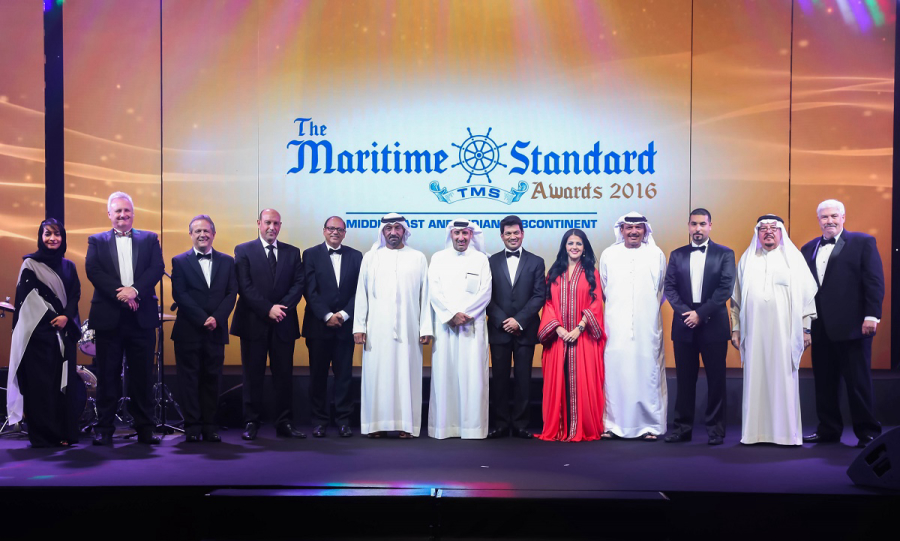
They will celebrate and reward the achievements of the best and brightest stars in the industry across the Middle East and the Indian Subcontinent, from the shipping, ports and related maritime sectors, at a glamorous, high quality gala dinner in Dubai
30th March 2017, Dubai, UAE: The Maritime Standard Awards (TMS Awards) 2017 will take place at the Atlantis Ballroom, Atlantis, The Palm on 23rd October this year. This is the fourth year in succession that the Awards and gala dinner, now established as the leading event of its type in the region, returns to this impressive, iconic venue, aiming to set the bar higher still.
Trevor Pereira, managing director, says, “We have earned a deserved reputation for offering the very best in terms of the value and profile of the Awards and for the integrity of the judging process itself. But we cannot rest on our laurels. So this year we are planning to make the Awards even bigger, bolder and grander than ever before, to ensure we add real value to the industry in this part of The world."
The glittering event recognises and rewards achievement at the highest level and will be attended by around 700 top maritime executives and decision-makers not only from across the region, but also worldwide. A total of 30 Awards will be presented on the night, including a new one for Superyacht and Passenger Shipbuilder of the Year, reflecting the growing influence of the region in this particular market segment. Of these 22 will be selected by an elite panel of judges, handpicked for their knowledge and experience, while 8 will be chosen by The Maritime Standard team to mark exceptional individual achievements.
Winning an award gives companies and individuals a chance to significantly raise their profile. As Sheikh Daij Bin Salman Al Khalifa, chairman of Bahrain shipyard, ASRY, who won The Maritime Standard Editor’s Choice of the Year Award, says "The high quality of the guests and the audience was truly impressive. I would like to congratulate TMS for the professional manner in which the event was organised, which made it both valuable and enjoyable."
A host of leading companies from the region's shipping and maritime related industries have already confirmed their attendance and sponsorship. Those organisations supporting the Maritime Standard Awards 2017 include: Abu Dhabi Ports, Bahri, DNV GL, DP World, Islamic P & I Club, Kuwait Oil Tanker Company, Mercantile Marine Management, Oman Shipping Company and Safeen. Supporting Associations for the event include: UAE Shipping Association (UAESA); The Organisation of Islamic Shipowners Association (OISA); The Dubai Council for Marine and Maritime Industries (DCMMI); Mission to Seafarers UAE; Women's International Shipping & Trading Association (WISTA), UAE Branch; Indian National Shipowner's Association (INSA); Pakistan Ship’s Agents Association; Ceylon Association of Ship Agents; World Freight Network; Specialist Freight Network; The Cooperative Logistics Network; Conqueror Freight Network; Globalia Logistics Network.
Entries for the Awards should be submitted by a deadline of August 10th. For information about how companies can nominate themselves for an Award can be access via the website www.tmsawards.com. Table bookings are also now being taken. For more details contact This email address is being protected from spambots. You need JavaScript enabled to view it.
Nakilat holds 5th Fleet Officers Meeting
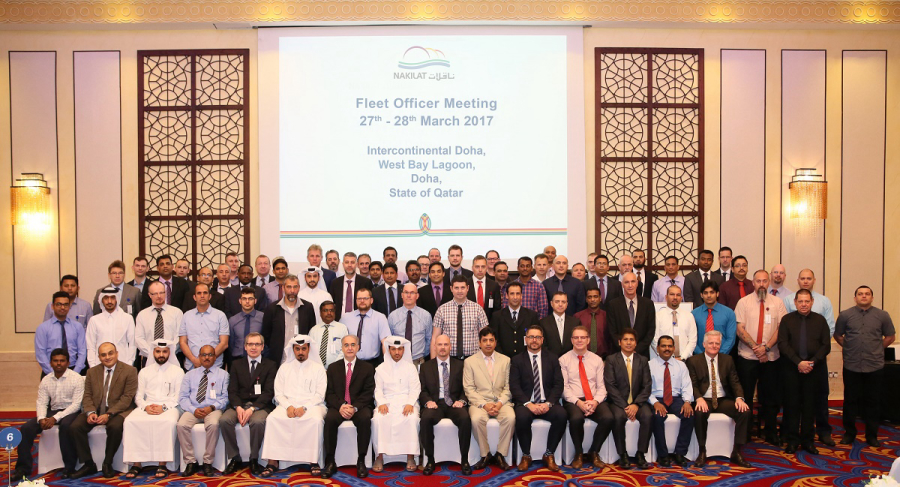
 |
Held in Qatar for the first time, the event was attended by about 50 Officers from Nakilat’s LNG and LPG fleets, including those working onboard the vessels newly transitioned to Nakilat-management. The event provided them with the opportunity to interact with one another and share their knowledge and experience on various topics pertaining to ship operations, with a distinct focus on safety. In its fifth edition, the FOM is an integral part of Nakilat’s continuous commitment to safely, reliably and efficiently provide shipping and maritime services.
The two-day forum kicked off with a keynote address by Nakilat Managing Director Eng. Abdullah Fadhalah Al Sulaiti, followed by a series of insightful presentations to keep the Officers abreast of developments at Nakilat’s headquarters, as well as group activities to foster teamwork and camaraderie.
Nakilat Managing Director Eng. Abdullah Fadhalah Al Sulaiti said: “Having the FOM in Doha for the first time since we began transitioning our wholly-owned vessels to in-house management last year, makes this event exceptionally significant. The event not only serves as a welcome to the Nakilat family but also allows more members of the management and Fleet team to meet and interact with our Officers, thus strengthening the working relationship between them leading to greater synergy and more effective communications. It is an important platform through which we can meet with those working on the frontline and thank them for their efforts, as well obtain feedback on areas that require further improvement, so as to ensure we continue to be an employer of choice and support Nakilat vision to be a global leader and provider of choice for energy transportation and maritime services.”
Valletta Declaration casts important foundation for future EU shipping strategy
Addressing the conference on Tuesday via a video statement, ECSA President Niels Smedegaard congratulated the Maltese Presidency for the initiative and welcomed the Valletta Declaration as an important foundation to prepare the EU shipping strategy for the next decade. "Digitalisation is rightly identified as a key priority", said Niels Smedegaard, "From a technological point of view it should be very easy to establish a genuine European Single Window. We just need the political will to do it. Let's not lose the momentum we now have by backtracking on the level of ambition".
Referring to the Monitor Deloitte study that ECSA presented during European Shipping Week, Niels Smedegaard also emphasised the need for a global orientation: "The good news is that EU shipping policy as outlined in the current maritime strategy provides an excellent basis. But more maritime growth can be achieved with a more globally-oriented approach, which recognises that shipping activities form the core of the maritime cluster."
The ECSA President concluded his statement by reaching out to policy-makers and stakeholders: "We want to work together on an ambitious shipping strategy for the period 2019-2028. We are ready to share our ideas in a constructive and open-minded spirit, using the opportunity of the European maritime year to the fullest extent possible."
The Maltese Presidency communication on the topic.
DRYSHIPS INC. Αnnounces acquisition of four modern newcastlemax vessels

 |
Two of the vessels will be employed under time charter contracts, while the other two will trade in the spot market.
George Economou, Chairman and Chief Executive Officer commented:
“We are very pleased to have increased the size of our drybulk fleet by acquiring four modern sister vessels at historical low prices. Spot rates for drybulk vessels have continued to improve since the beginning of the year and our outlook for drybulk is positive given the modest order-book and the continued strength of the Chinese economy that generates demand for raw commodities. We continue to look at opportunities to diversify and grow our fleet with high quality tonnage and significant operating leverage.”
About DryShips
The Company is a diversified owner of ocean going cargo vessels that operate worldwide. The Company owns a fleet of (i) 13 Panamax drybulk carriers, which have a combined deadweight tonnage of approximately 1.0 million dwt, (ii) one Very Large Crude Carrier and one Aframax tanker newbuilding, each of which are expected to be delivered in the second quarter of 2017, (iii) 2 Very Large Gas Carrier newbuildings which are expected to be delivered in the second and third quarter of 2017, respectively, and (iv) six offshore support vessels, comprising two platform supply and four oil spill recovery vessels.
DryShips’ common stock is listed on the NASDAQ Capital Market where it trades under the symbol “DRYS.”
www.dryships.com.
If Brexit must be, make it shipping-friendly
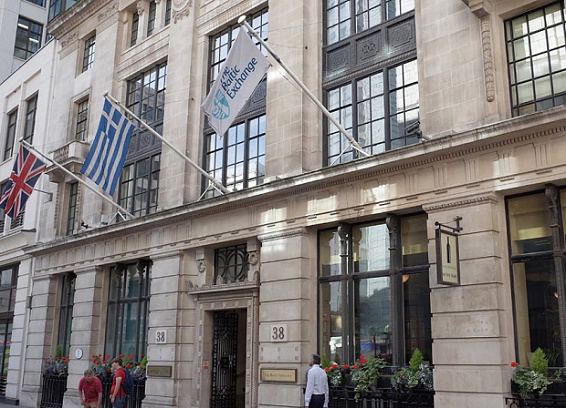
But whichever way you slice it, Britain on Wednesday formally triggered Article 50 of the Lisbon Treaty, thereby tendering two years’ formal notice of its intention to terminate membership of the European Union.
Barring unforeseen developments — and admittedly there have been multiple unforeseen developments in politics of late — the UK will in 24 months become the first country ever to quit the world’s largest trading bloc.
Lloyd’s List said at the time of the referendum last June, which committed the government to this course of action, that decampment will ultimately reveal itself as a retrograde step.
Nothing that has happened since has given us reason to reconsider or reassess. Indeed, should the consequences lead to the break-up of Britain and the return of a hard border to Ireland, the fallout will prove many times more grim than even the most ardent Remainer could have anticipated.
The charitable assumption — and worryingly, perhaps now the best hope? — must be that Brexit will indeed one day deliver the thorough-going and stupendously felicitous benefits its advocates have long promised. While we remain intellectually unpersuaded of that proposition, a verdict will only be possible in five, 10, or perhaps even 20-30 years from now.
However, as the popular American political aphorism has, the voters have spoken. What is important now is that this country negotiates the best possible departure terms, for citizens and businesses alike. And here, shipping appears to have cause for concern.
A leaked government document obtained by The Times in February ranked UK industries by how much assistance they are likely to be accorded during the Article 50 process, listing them as ‘high priority’, ‘medium priority’ and ‘low priority’. Do not bother asking to which category shipping was assigned; it did not even make the list. Thanks, guys.
So while we know and accept that we do not occupy any considerable proportion of Prime Minister Theresa May’s bandwidth on this score, might we have the temerity to voice our vital interests here?
First, Brexit needs to be shipping-friendly on the matter of trade. Some 44\% of current UK trade is with the EU, and the vast majority of it spends at least some time on a ship. Mrs May has explicitly ruled out continued membership of the single market, and made clear that she is seeking to replace it with the best possible bespoke free trade agreement.
For the future prosperity of UK shipping — not to mention the future prosperity of UK residents — this must top the list of key deliverables. In particular, cabotage rights for UK owners must not be lost.
Second, Brexit needs to be shipping-friendly from the viewpoint of insurance and other white-collar shipping services. Concretely, it is essential that passporting rights for Lloyd’s insurance and other marine insurance segments be secured.
Perhaps most essential of all, Brexit needs to be shipping-friendly when it comes to customs clearance. The potential denouement of falling at this hurdle was graphically outlined in a recent panel discussion at Westminster, led by ports bosses themselves.
The spectre of Britain’s ports coming to a standstill after the restoration of the bad old pre-Maastricht days is both real and frightening. Let us not go there, because many of us will remember that the T-shirt is not a good look.
Perhaps the nightmare can best be averted by upholding membership of the EU customs union, which is open to non-members. Failing that, customs clearance must be as close to frictionless as is humanly possible.
After the hand delivery of the Article 50 letter to European Council president Donald Tusk, so conveniently timed for the midday news broadcasts, matters are now in the hands of the UK’s negotiating team in Brussels. Let them avoid a crash-and-burn Brexit, at all costs.
View all Lloyd's List Brexit news, views and analysis here.
Watch our Lloyd's List Brexit webinar here.
lloydslist.com
Hellenic Exchanges – Athens Stock Exchange (ATHEX) 2016 financial results
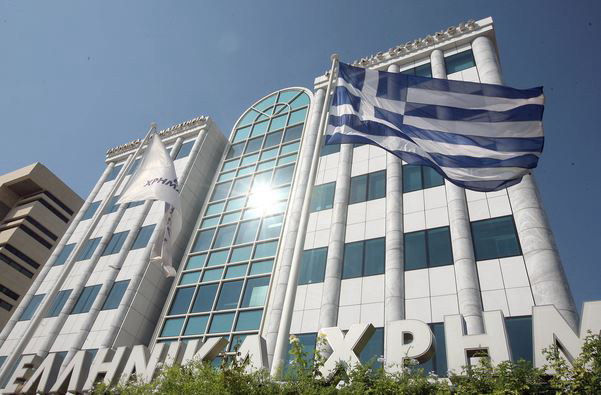
The Board of Directors of Hellenic Exchanges-Athens Stock Exchange (ATHEX), at its meeting today, approved the Annual Financial Report for 2016 (1.1.2016 to 31.12.2016), and decided to propose to the next Annual General Meeting of shareholders, which will take place on May 24th 2017, the distribution of €0.06 per share as dividend. In addition, the BoD of the Company decided to propose a special dividend (share capital return) of €0.24 per share. The record date and payment date of the special dividend will be decided by the General Meeting of the Company’s shareholders. The Company will inform investors about the exact dates, as soon as they are determined.
The consolidated net after tax profits of the Group amounted to €1.4m vs. €9.0m in 2015, reduced by 84\%. The net profits per share in 2016, after taxes and securities valuation losses were €0.03 vs. €0.14 in 2015.
The turnover of the Group amounted to €27.0m in 2016 vs. €35.0m in 2015, reduced by 23\%; after subtracting the Hellenic Capital Market Commission fee, total consolidated revenue was €25.9m vs. €33.7m, reduced by 23\%.
Total consolidated revenue is reduced mainly due to a drop in trading activity and the capitalization of the Cash Market, as well as due to the drop in the value of corporate actions (rights issues, IPOs). In particular, in 2016 the average daily traded value was €60.5m, compared to €85.7m, a 29\% reduction. The average capitalization of the Greek capital market dropped by 5.7\% compared to 2015 (€41.3bn vs. €43.8bn).
The Athens Exchange General Index closed on 30.12.2016 at 643.6 points, up 1.9\% compared to the close at the end of 2015 (631.4 points). Market liquidity, as measured by turnover velocity, decreased to 36.5\% in 2016 from 43.7\% in 2015, while average daily volume was 96.4m shares compared to 192.9m shares in 2015.
In the derivatives market, the average daily number of contracts dropped by 7.5\% (63.5 thousand vs. 68.6 thousand), while the corresponding trading and clearing revenue dropped by 40\% due to the drop in the prices of the underlying securities and the change in the product mix in the market.
The operating expenses of the Group were reduced by 7\% compared to 2015 (€15.3m vs. €16.3m), while total operating expenses including new activities were reduced by 5\% compared to 2015 (€17.8m vs. €18.7m). 2016 results include a provision for bad debts of €0.8m, and a €2.2m provision for securities valuation loss, in accordance with IFRS9.
Lastly, consolidated Earnings Before Tax (EBT) in 2016 amounted to €3,4m vs. €13.45m in 2015.
The financial statements of the Group and the Company are posted on the Company’s website (www.athexgroup.gr).
Danaos Shipping announces the completion of the optimization 10100s
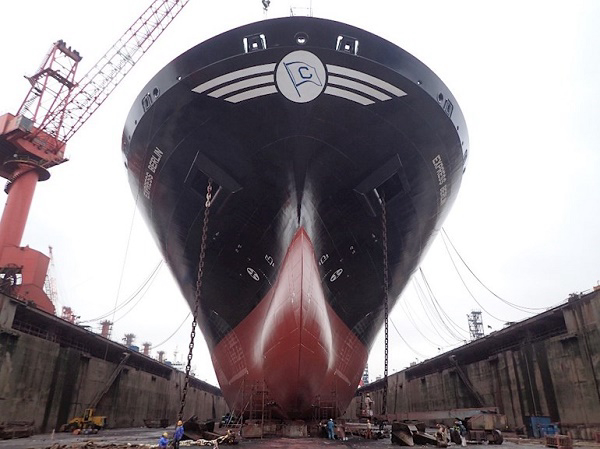
It was a combined effort that resulted to fuel and energy savings of more than 10\%. Following the R&D department’s studies and extensive model tests, the fleet engineers materialized theoretical ideas and completed modification work within March 2017.
 |
After studying a number of bulbous bow models, produced by CFD analysis, the R&D Department selected the most suitable for the needs of this specific vessel. Model tests were, then, carried out at a recognized Institute and the modification work took place at a Chinese shipyard.
 |
In parallel, top quality Low Friction (LF) paints were applied, achieving smooth hull surface roughness of less than 80 microns, contributing to fuel savings maximization, whilst main engine was tuned for optimum SFOC.
 |
Danaos R&D Department designed and uploaded to WAVES new intelligent algorithms to monitor closely ships’ performance and take full advantage of the above mentioned optimization methods, enabling contractual speed range consumptions commitment.
Last but not least, during dry docking, modification work was completed in order to meet new Panama Canal requirements, preparing ships for canal’s crossing.
www.danaosshipping.gr

Powered by  © Μaritimes 2019