


Qatar accedes to Ballast Water Management Convention
 |
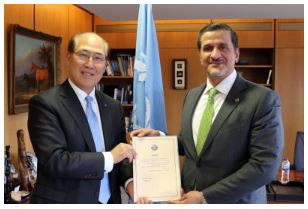
H.E. Mr. Yousef Ali Al-Khater, Ambassador of Qatar to the United Kingdom, met IMO Secretary-General Kitack Lim at IMO Headquarters, London (8 February) to deposit the instrument of accession.
Find out more about the Ballast Water Management Convention, including FAQs, videos, infographics and more, here.
imo.org
Dryships inc. Announces filing of form f-1 registration statement for planned spin off of its gas carrier business
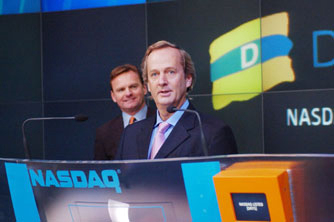
as Ships Limited Inc., (“Gas Ships Limited”) has filed a registration statement on Form F-1 with the U.S. Securities & Exchange Commission. The filing relates to the Company’s spin off of its gas carrier business from the Company. In the spin-off, DryShips will distribute to holders of its common stock 49\% of the issued and outstanding shares of Gas Ships Limited’s common stock. Following the spin-off, Gas Ships Limited will be a publicly-traded company, and DryShips will retain a 51\% ownership interest in Gas Ships Limited.
Mr. George Economou, the Company’s Chairman and Chief Executive Officer, commented:
"The filing of the Form F-1 Registration Statement is an important step in the process of establishing Gas Ships Limited as a new, stand-alone company with its own strategic focus, independence and priorities. We believe that this business is well-positioned for success as a separate company."
A copy of Gas Ships Limited’s initial Form F-1 Registration Statement, which contains financial and other information regarding Gas Ships Limited and the spin-off, is available at www.sec.gov. The initial Form F-1 Registration Statement may be subsequently amended to provide further information regarding Gas Ships Limited and the spin-off prior to its completion.
The spin-off is subject to certain conditions, including the effectiveness of Gas Ships Limited’s Form F-1 registration statement and final approval and declaration of the distribution by DryShips’ Board of Directors. DryShips may, at any time until the closing of the spin-off, decide to abandon, modify or change the terms of the spin-off.
About DryShips Inc.
The Company is a diversified owner of ocean going cargo vessels that operate worldwide. The Company owns a fleet of 35 vessels comprising of (i) 12 Panamax drybulk vessels; (ii) 4 Newcastlemax drybulk vessels; (iii) 5 Kamsarmax drybulk vessels; (iv) 1 Very Large Crude Carrier; (v) 2 Aframax tankers; (vi) 1 Suezmax tanker; (vii) 4 Very Large Gas Carriers and (viii) 6 offshore support vessels, including 2 platform supply and 4 oil spill recovery vessels.
DryShips’ common stock is listed on the NASDAQ Capital Market where it trades under the symbol “DRYS.”
Visit the Company’s website at www.dryships.com
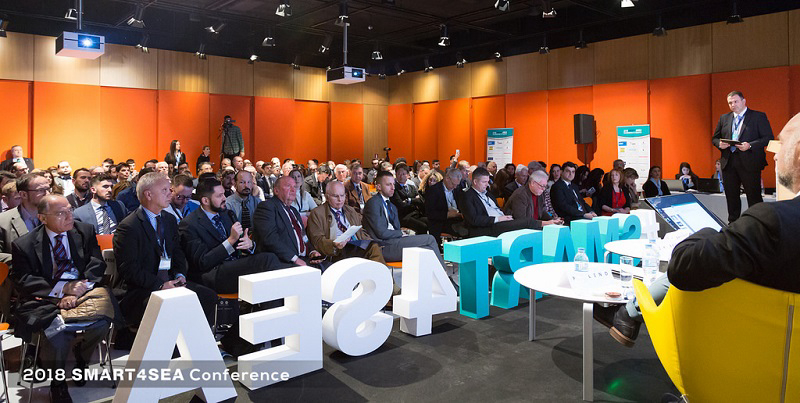
SMART4SEA Conference addressed barriers & drivers to digital transformation in shipping
 |
The event was organized by SAFETY4SEA and sponsored by ABS, Arcadia Shipmanagement Co Ltd, Consolidated Marine Management, DNV GL, Dorian LPG, Hudson Analytix, ILJIN AND CO., MacGregor, Marine Traffic, Navarino, OCEANKING, Palau International Ship Registry, Propulsion Analytics, RINA, SQE ACADEMY, SQE MARINE, STM Validation, Tototheo Group and Transas.
The event brought together experts who discussed issues concerning Energy Efficiency, Big Data, Cyber Security as well as E-Navigation, Internet Onboard and Smart Shipping Financing. Inspiring presentations and panel discussions highlighted the importance of embracing change and focusing on smart shipping developments towards a more sustainable future. Experts shared their views on the impact of autonomous shipping on human element, cyber risk security and the emerging trends regarding the training of existing and future generations, all of which are challenging topics for the industry. In addition, latest technological developments that prove steps towards further digitalization were discussed. Presentations were given in six panels as follows:
Panel No. 1 – Conference Opening
Apostolos Belokas, Managing Editor, SAFETY4SEA, presented an overview of the developments over the last 12 months in the areas of Big Data, Connectivity Onboard, 3D printing, Drones, Blockchain tech, Cryptocurrency, Virtual Reality, Cyber Security and Autonomous Shipping. He finally briefly outlined the current and future drivers and barriers to change with respect to adoption of smart shipping, stressing the fact that regulators are way behind technological developments and the need to apply lessons learned from other industries. He expressed his reservations towards the immediate adoption of autonomous shipping concept and concluded that we should expect more change over the course of the next 10-20 years than what we have seen over the last 100 years.
Frank Coles, Transas, CEO, described the maritime constituency as ‘Citizens Against Virtually Everything’ (CAVE) when it came to connectivity advances. He castigated shipping for an intransigence he attributed to its ‘ASS’ (Archaic Spaghetti Structure) and summed up its operational dynamism in the acronym FOSSIL (Fleet Operations Services Stuck in Limbo). Mr. Coles believes more change will be achieved in the next 10 years than has been possible in the preceding 40, as “the cultural roadblocks and attitude dinosaurs” are removed. “We need well-trained maritime professionals working in a modern environment. Fortunately, as time has passed, the combination of a new generation and technology will remove those who refuse to see, cannot see or don’t care enough to see. Change is coming from within but also from outside. We must keep talking about it, so we can see the sea,” said Mr. Coles.
Giampiero Soncini, Senior Advisor, Marine Innovation, RINA, noted that digital revolution to industry is normal considering the use and impact that technology has already had on our lives. Google maps, smart phones, emails, internet, Amazon, the way we fly and in the future, the way we will drive cars are some of the examples that showcase further developments are expected to come into shipping in the future. The digitalization process is happening in the industry and new sets of risks, treats and opportunities have emerged, introducing new challenges. Nowadays, data has value and when processed, interpreted and managed efficiently, it will allow operators to manage their fleet efficiently. At the same time, they need to be aware of cybercrime, which is the easiest form of crime in the planet and does not concern only very large companies. Mr. Soncini concluded that going digital is the only way to save money and be competitive, in condition that ship management is working in a very organized way, where data is being collected to allow manage your fleet in a very efficient way.
Panel No. 2 – Smart Shipping Perspectives
Jason Stefanatos, Senior Research Engineer, DNV GL, noted that the maritime industry is moving rapidly towards digitalization and the increased capacity for transfer of data from ship to shore has enabled remote monitoring of ship functions and operations. Mr. Stefanatos referred to industry’s examples that prove steps towards remotely operated and autonomous vessels highlighting that there is need for a parallel process in adapting regulations for unmanned operations. Changes to regulations need to be approved by a multitude of stakeholders and actors within the IMO organisation and it usually requires many years only to make minor adjustments to these regulations, he commented.
Marcus Ejdersten, Director, Strategic Marketing , MacGregor, focused on the need for new solutions that increase the cargo system performance for both new and sailing vessels, increasing their actual cargo intake and lowering emissions further per tonne mile. In the race for larger and lower initial cost vessels the industry lost focus on details that set the limit for the cargo system performance and vessels lifetime earnings capability. Mr. Ejdersten noted that such solutions are already being used today and can be deployed for thousands of more vessels in the future.
Panel No. 3 – Big Data
In his presentation, Daniel Shirley, Product Marketing Manager, MarineTraffic, questioned, in an age of data abundance, how do you decide what information to bring into your organisation. He emphasised the importance of always asking “is this information useful?” when assessing any new data source or technology. Mr. Shirley then went on to demonstrate how the aggregation and analysis of large datasets can help to understand the wider maritime ecosystem and, in turn, generate actionable intelligence.
Ji Hun Seo, Sales Manager , ILJIN and Co, talked about the demand for marine satellite communication. Considering that e-navigation, smart ship, unmanned ship, autonomous ship are the current market trends, there is need for transmitting big volume of data. In his presentation, he mentioned how to overcome the problem of limited bandwidth in order to become able to transmit big data from ship to shore.
Mikael Lind, Associate professor and research manager, RISE Viktoria, acknowledged that the maritime sector is showing great interest in achieving enhanced safety, efficiency, and environmental sustainability. Taking the scope of berth-to-berth sea transports, the Sea Traffic Management (STM) concept with its sub concepts have been brought forward for integrated performance between sea and port operations. The purpose is to reflect the needs of the industry for bringing sea transports as an integral part of a sustainable transport system, he explained. Empowered by digitalization this brings new business opportunities both for existing actors and new actors. In his presentation, Mr. Lind focused on the Port Collaborative Decision Making (PortCDM) as one of the STM concepts and emerging business opportunities.
Panel No. 4 – Energy Efficiency
Nikolaos Kakalis, Technology & Projects Manager, Consolidated Marine Management Inc, gave an overview of the issue of energy efficiency from the shipowner’s perspective. Energy efficiency, he mentioned, is of significant importance for the competitiveness of shipping companies. A key enabler for energy-efficient operations is thorough performance monitoring of the existing fleet which provides deeper understanding of hull, machinery and systems condition leading to better control of fuel consumption, improved vessels management and costs optimisation. Such insights also provide input to the new designs leading to better and more attractive ships. Technological developments in sensors, data acquisition systems and analytics, as well as advanced computer-based decision support tools are a core element of the picture. The industry needs to continuously seek for the development of new solutions and technologies that are moving higher the state-of-the-art while being reliable and techno-economically feasible, Mr. Kakalis concluded.
In his presentation, Anthony Vourdachas, Engineer OEP, ABS, mentioned that international regulations and operational costs are key drivers in today’s shipping industry in terms of vessel performance. Increasing regulatory compliance requirements add complexity to an already challenged market, while the volume of the data to satisfy such regulatory reporting is increasing. In parallel, the proliferation of low cost sensor technology and the interlinking of systems onboard a vessel have further increased the volume of data being collected and needing to be analyzed. Effective data handling is of prime importance, as it can have an immediate effect on the performance analysis and the results, he concluded.
Dr. Panos Theodossopoulos, CEO Propulsion Analytics, talked about the application of machine learning techniques for energy efficiency, fault diagnostics and predictive maintenance in vessel/engine performance monitoring. Machine learning, already widely spread in numerous areas of digital life, the financial sector and science, is also finding its way into industrial and shipping applications. Dr. Theodossopoulos emphasized that machine learning should always go hand in hand with core engineering principles and human expertise in order to bring out optimum value and he also presented two areas in which Propulsion Analytics has applied machine learning, namely vessel Main Engine fault diagnostics and predictive maintenance.
Panel No. 5 – Energy Efficiency
Cynthia Hudson, CEO, Hudson Analytix, acknowledged that maritime industry is a target to cyber risk for many reasons and as a result, action is needed from top management. Managing Directors, CEOs and Board Members are increasingly being held accountable for their organization’s cybersecurity. Cyber risk management must be owned by leadership rather than be delegated to the IT Director, Mrs. Hudson highlighted. Cyber risk can affect an organization’s balance sheet, legal exposure, operational; effectiveness, reputation, vendors, partners, employees. Therefore, there is need for a plan which should use outputs from the baseline assessment to inform cyber risk management planning, investments earmarks and resource allocations.
Speaking in the afternoon cyber security session, Christian Vakarelis, VP Media Communications, Navarino, described how, as the industry’s leading maritime technology company, Navarino witnesses first hand the way cyber criminals become smarter almost every month. In his presentation, he described how Navarino helps its customers stay one step ahead of the cyber threat through a combination of guidance at the human, management and network levels. He emphasised the importance of training crews, the power the maritime industry can hold by working as a community to combat cybercrime , and showed how Angel, the first cyber solution designed for the maritime sector, can keep vessels protected from cyber-attack.
Concluding the last session of the event, Mr. Howard Hughes, CTO Tototheo, referred to the important role that the human element plays to cyber security analysis. With the recent interest in Cyber Security for the Maritime industry, much focus has been put on solutions that will offer protection. However, there is still the human element to consider. ‘You’re only as strong as your weakest link’ Mr. Hughes said, adding that human action by design or by accident can still cause a breach to some of the strongest systems.
All sessions ended with a round table discussion in which the audience exchanged ideas with high level experts of international repute on technological developments. Finally, Apostolos Belokas as the Forum Chairman thanked the delegates for their participation, the sponsors for their support and the speakers for their excellent presentations and also the organizing team of the event for their contribution towards forum objectives.
www.safety4sea.com
Successfull completion of conference “Security and Safety at the EU Ports”
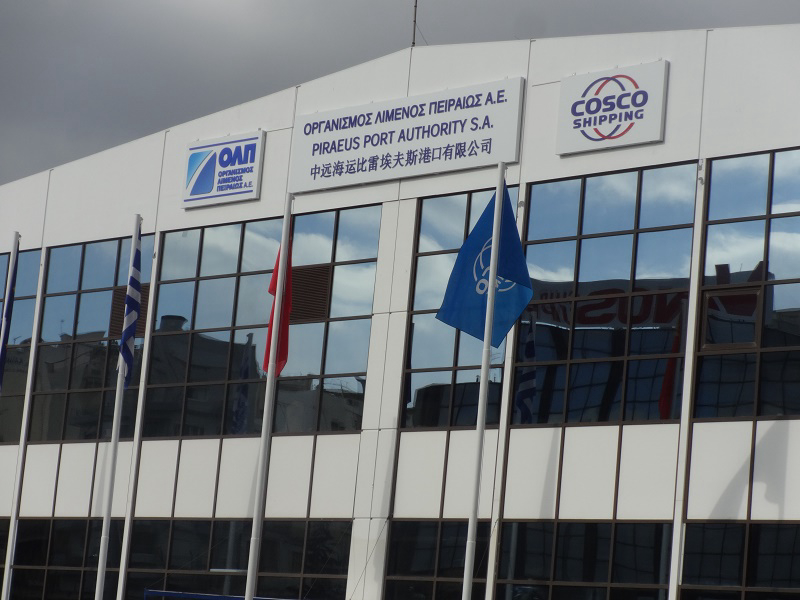
The Minister of Maritime Affairs and Island Policy, Mr. Panagiotis Kouroumplis, Ministry officials, representatives of the project partners and representatives of port companies and operators participated in the conference proceedings. The Issues discussed were: European Ports Security Policies, Port Security Management Policies and presentation of the EU projects at the port of Piraeus (Mitigate, Auggmed, Proteus). Also, issues related to the existing legislation, European and Greek, personal data as well as what is envisaged for the Greek port system in the framework of the proposed EU regulation were developed, the port market and Law 4150/13 as well as the implementation of ISPS / Law 725-2004.
At the start of the event, Mr. Ioannis Papayannopoulos, DManager / PFSO/ DPSO Security / Safety / Environment Department of PPA, stressed that "port security remains of the utmost importance for Europe, both because of the immediate threat to life and property, but also for the huge economic damages that arise from the impact on the supply chain."
What is Sauron;
The SAURON project addresses the topic CIP-01-2016-2017: Prevention, detection, response and mitigation of the combination of physical and cyber threats to the critical infrastructure of Europe and put the focus on protection of EU Ports under Transport Infrastructure and means of transportation type of CI. SAURON proposes to ensure an adequate level of protection and resilience against physical, cyber and a combined threat for the EU ports and limiting, as far as possible, the detrimental effects for the society and citizens of a declared attack. The vision of SAURON is to provide a multidimensional yet installation-specific Situational Awareness (SA) platform to help port operators anticipate and withstand potential cyber, physical or combined threats to their freight and cargo business and to the safety of their employees, visitors, passengers and citizens in the vicinity.
Greece owns world's most valuable fleet at 100 billion USD
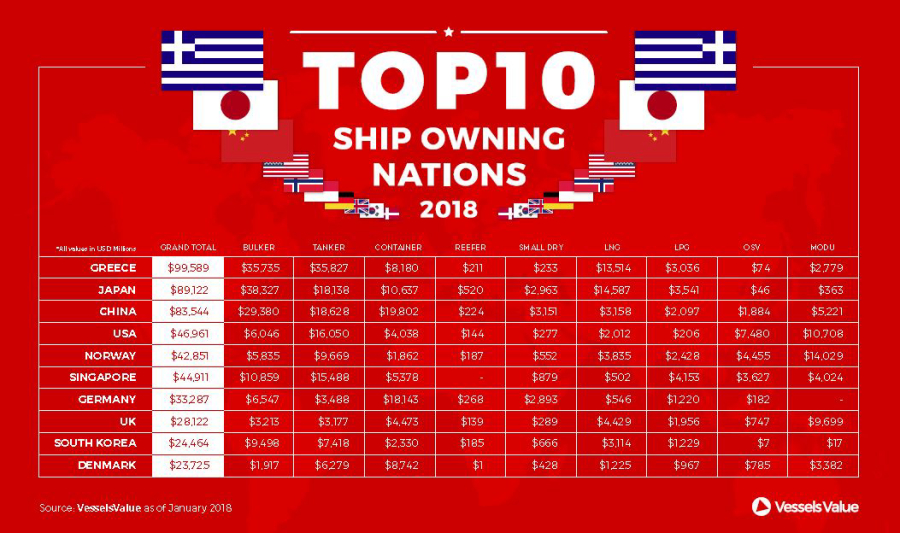
The value is concentrated in the Tanker ($36bn), Bulker ($35.75bn), and LNG ($13.5) vessel types. Hellenic control of these markets stands at about 19\% of the total worth of the fleets.
The strong commitment of Greek owners to the global shipping markets looks unlikely to change as others, such as Germany, are liquidating assets. The trend in Chinese ownership is rising, as state owned companies are consolidating and placing new orders. This is a reminder that there are always new challengers for the throne of peak market value. Greek owners, with their sharp focus on commercial results, should continue to lead the pack for the foreseeable future.
 |
Greece
Greek owners remain the dominant force in global shipping. The current value of their owned fleet stands at almost exactly $100bn, putting the country at the top of the table. The value is concentrated in the Tanker ($36bn), Bulker ($35.75bn), and LNG ($13.5) vessel types. Hellenic control of these markets stands at about 19\% of the total worth of the fleets.
The strong commitment of Greek owners to the global shipping markets looks unlikely to change as others, such as Germany, are liquidating assets. The trend in Chinese ownership is rising, as state owned companies are consolidating and placing new orders. This is a reminder that there are always new challengers for the throne of peak market value. Greek owners, with their sharp focus on commercial results, should continue to lead the pack for the foreseeable future.
Japan
Japanese companies are the second largest group of shipowners by value but remain in the same league as Greece. The country’s interests in the Dry Bulk and LNG segments are on par with the leader, but it does not have as much exposure to the tanker markets. Japanese refinery capacity has been falling since the late 2000’s, a trend that will continue as the country faces stiff competition from other Asian refiners. Japanese tanker owners continue to trade in the global markets, but growth will not come from domestic demand.
Japan is the top owner of LNG vessels by value, which is a strong strategic fit for its energy needs. Nuclear power remains under high scrutiny, and additional plants may shutter in the years ahead. This leaves natural gas and coal as the top alternatives for power generation. The high ownership of Dry Bulk and LNG vessels make the trading fleet well suited to match domestic consumption.
China
China is nipping at the heels of the two countries that place above it in terms of total owned value. The stratospheric rise of the country’s economy since 2000 has had impacts on all shipping and commodity markets. The growth trajectory has slowed recently but remains a positive force for ton mile demand across all vessel types.
The Chinese share of global ownership should continue to move upwards over the next decade across all markets. The large amount of crude oil that is imported into the country is moving on an increasingly national fleet. This trend, combined with rising product exports should boost the number of tankers that come under owner’s umbrellas.
2018 VesselsValue
Baltic Exchange applies changes to BDI
From 1 March 2018 the BDI will be re-weighted to the following ratios of timecharter assessments: 40\% Capesize, 30\% Panamax and 30\% Supramax and will no longer include the Handysize timecharter average.
Commenting on the modifications, Baltic Exchange Chief Executive Mark Jackson said:
"The Baltic Exchange has been publishing the Baltic Dry Index (BDI) in various forms since 1985 when it started life as the Baltic Freight Index (BFI). Like any aggregate index, its composition has changed over the years to reflect changes to the underlying market. In our case this means ensuring that the BDI broadly reflects dry bulk global trading patterns. The new weightings are simply the next phase of development in this process. We have listened carefully to feedback from Baltic Exchange members and the majority were enthusiastic about the changes and the opportunities it offers."
Stefan Albertijn, Chair of the Baltic Index Council (BIC) commented:
"Over the years there has been considerable interest from the commodity and financial community in trading the BDI. We're excited by the prospect of exchange traded funds based on the BDI and are confident that the BDI will remain an accurate general measure of the health of the dry bulk shipping markets."
External research concluded that the contribution of the various dry bulk vessel types to the dry bulk market was 40\% Capesize, 25\% Panamax, 25\% Supramax and 10\% Handysize. This analysis was based on the fleet composition, vessel utilisation including ballasting and total cargo moved – based on import/export reports and AIS data, the BDI weightings will be reviewed on an annual basis. The decision to not include Handysize contributions makes no statistical difference to the calculation of the BDI, based on the above weightings.
The Baltic Exchange will continue to report the Handysize vessel market and in November, as part of the ongoing review of its indices, launched a trial of a new Handysize Imabari 38 benchmark vessel and seven timecharter routes.
“Cold Ironing in Port of Koper & Shipping Electrification in the Eastern Mediterranean”
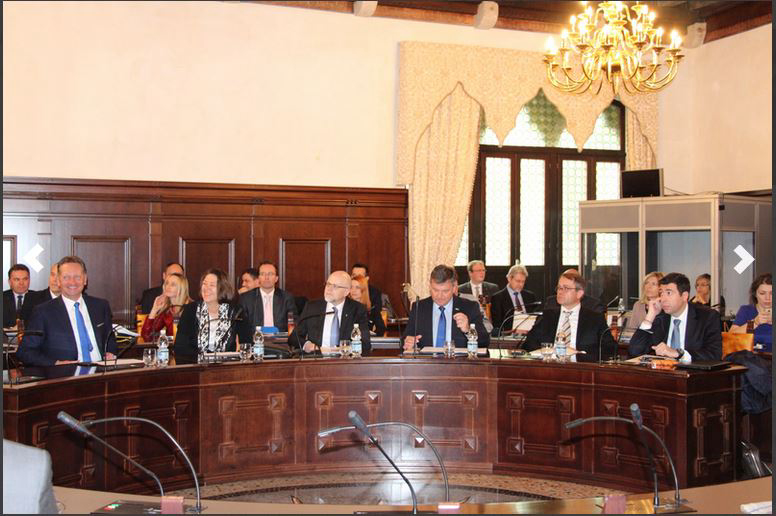
The EU Commissioner for Transport Violeta Bulc, during the event opening, underlined European Commission’s plans to offer additional funds to ports who seek investments in applying technologies promoting alternative energy sources.
Discount and financial incentives for vessels using electrification technologies was the focus of Nikolas Paterakis’ presentation, Chief Operating Officer at Neptune Lines, who expressed the shipowner’s voice. The elemed work on formulating an effective regulatory framework promoting electricity as marine fuel and available funding opportunities and schemes that could be valuable for attracting the necessary investments for ports were also presented by elemed project partners. Specific emphasis was given to Slovenia, focusing on the potential of exploiting marine renewables, as well as the outcomes of the technical studies, developed within the project framework, for the application of cold-ironing technologies at Port of Koper. “Slovenia has a clear vision to become one of the greenest countries in terms of transport by 2030”, concluded Peter Gasperic, Slovenian Minister of Infrastructure.
The next rendez-vous will be on 27th February 2018 in Athens were the 1st elemed Grand Conference will take place at Stavros Niarchos Foundation Cultural Centre.
About elemed
Elemed (Electrification in the Eastern Mediterranean) prepares the ground for the introduction of cold ironing, electric bunkering and hybrid ships across the Eastern Mediterranean Sea corridor, aiming at eliminating emissions & noise in ports and surrounding urban area. It is a co-funded by European Union project, studying all technical, regulatory and financial issues related to the establishment of cold-ironing infrastructure, in four ports (Piraeus, Killini, Lemesos, Koper), involving three countries. Within elemed framework, the first pilot cold-ironing infrastructure in Eastern Mediterranean will be established in Killini Port.

Snapshot of panel discussion (from left to right) Boris Popovič, Mayor of the City Municipality of Koper; Violeta Bulc, EU Commissioner for Mobility and Transport, Dimitrij Zadel, President of the Managament Board of Luka Koper; Peter Gašperšič, Minister of Infrastructure of the Republic of Slovenia; Nikolas Paterakis, Chief Operating Officer, Neptune Lines

Panayiotis Mitrou, Technology & Innovation Manager, Marine & Offshore, South Europe, Lloyd’s Register

Dimitris Lyridis, Associate Professor, Department of Naval Architecture & Marine Engineering, National Technical University of Athens

Dr. Takvor Soukissian, Research Director, Hellenic Centre for Marine Research
Dr. Takvor Soukissian, Research Director, Hellenic Centre for Marine Research
The World Fleet In 2017: Keeping An Eye On The Trends
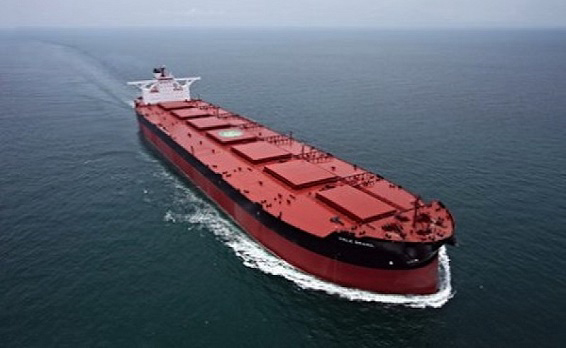
Whilst overall fleet growth reached 3.3\% in tonnage terms, up slightly from the previous year, there was significant variation in how quickly shipowners’ fleets expanded across different sectors and countries.
Surveying The Sectors
After slowing in 2016, fleet growth increased marginally in 2017 to 3.3\%, with the global fleet reaching 1,300m GT at the end of the year. This uptick was driven in part by 4.6\% growth in the tanker sector in tonnage terms, despite an increase in tanker demolition activity to 6.2m GT. The gas carrier fleet also grew significantly in 2017, up 7.0\% to 72.2m GT, with deliveries remaining firm following strong ordering in 2013-14. Containership fleet growth increased year-on-year, reaching 3.4\% in GT terms in 2017, due primarily to a 40\% decline in demolition volumes from record levels in 2016. Elsewhere, annual bulker fleet growth reached 2.9\% in 2017, with bulker scrapping also down significantly year-on-year.
Owners Seeing Clearly?
Firm growth in the Greek owned fleet supported a 4.2\% year-on-year increase in the volume of European-owned tonnage in 2017. This was slightly above the 3.8\% rate of growth in the Asia/Pacific owned fleet, and European owners continued to account for the largest volume of tonnage of any region (582.5m GT, or 45\% of the global total).
The Greek-owned fleet reached 216.1m GT at the end of the year, up by 6.3\% year-on-year and accounting for 17\% of the global fleet, in GT terms. This was supported by both deliveries and firm secondhand purchases, which reached a reported 12.0m GT, almost double the volume of buying activity of any other owner country. Japanese owners still held the second largest share of global tonnage (13\% at the end of the year), but fleet growth remained slow, due in part to significant secondhand sales activity. In the five years to end 2017, the Japanese owned fleet grew by 4.1\% in GT terms, compared to 34.8\% growth in the Chinese owned fleet. In 2017, firm deliveries of 9.8m supported 8.8\% growth in the Chinese owned fleet, which reached 152.9m GT at the end of the year.
Class And Flag In Focus
There was little change in 2017 to the shares of the global fleet classed by the major IACS member societies. DNV GL, NKK and ABS classed the largest fleets, representing a combined 57\% of global tonnage as of the end of the year. Of these, the ABS classed fleet grew fastest in 2017, up 4.0\% to reach 225.6m GT.
Meanwhile, the Marshall Islands became the second largest flag state globally in terms of tonnage flagged, with its fleet growing by 9.9\% in 2017 to reach 147.5m GT at the end of the year. The Panamanian flagged fleet remained the largest globally at 219.1m GT, despite declining slightly by 1.9\% during the year.
Looking Out To 2018
While fleet growth increased slightly in 2017 to 3.3\%, it remained at a much lower level than in many recent years, with trends across sectors and owner countries varying significantly. Greek and Chinese owners continued to grow their fleets rapidly, in comparison to limited change in the Japanese owned fleet. With global fleet growth expected to slow further in the short-term, market watchers will be keeping an eye on whether these trends continue into 2018.
Source: Clarkson Research Services Limited
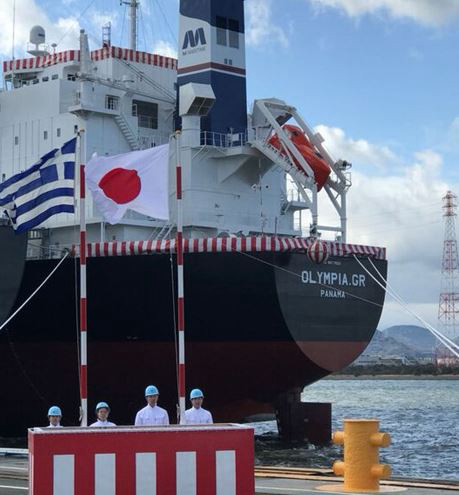
M/Maritime announces delivery of Olympia.gr and three new orders with Japanese yards
 |
Her full management has been entrusted to M/MARITIME CORP.
We wish her calm seas and safe voyages.
On 22nd December 2017 clients of M/Maritime Corp. signed two shipbuilding contracts for the acquisition of two 60,200 DWT bulk carriers to be built at Mitsui Engineering & Shipbuilding Co., Ltd.
Both vessels, under Hull No. 1961 and Hull No. 1962 are scheduled to be delivered to their Owners between second half of 2019 and first half of 2020.
Their full management will be entrusted to M/Maritime Corp.
On 23rd January 2018 clients of M/Maritime Corp. signed a shipbuilding contract for the acquisition of one 37,000 DWT bulk carrier to be built at Saiki Heavy Industries, Onomichi dockyard.
The vessel, under Hull No. 745 is scheduled to be delivered to her Owners in the first quarter of 2020.
Her full management will be entrusted to M/Maritime Corp.
http://m-maritime.com
Ten (10) investment schemes submitted Expressions of Interest for Alimos Marina
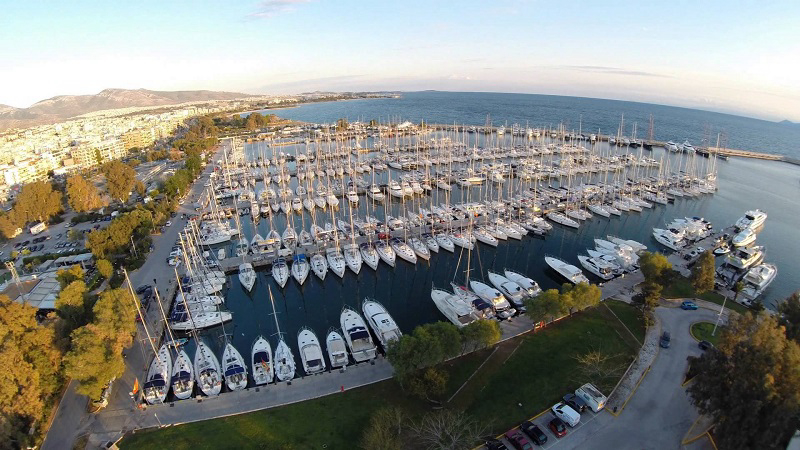
In particular, Expressions of Interest were submitted by:
1. KASOS SA
2. AKTOR CONCESSIOS SA and TEK – ART CALAMIS VE FENERBAHCE MARMARA TURIZM TELESISLERI A.S
3. INTRAKAT SA
4. ATESE SA (ENGINEERING COMMERCIAL CONSULTING SOCIETE ANONYME - PRIVATE SECURITY SERVICES COMPANY)
5. PORTO CARRAS SA
6. HELLENIC BASE YACHTING SA
7. CONSORTIOUM PORT ADHOC SAS- DREAM YACHT METITERRANΕE - J&P AVAX S.A
8. AVIAREPS- COSMOS CONSORTIOUM
9. CONSORTIOUM ARCHIRODON GROUP NV - A1 YACHT TRADE CONSORTIUM AE – STIRIXIS TECHNIKI SA
10. LAMDA DOGUS MARINA INVESTMENTS SA
HRADF’s advisors will evaluate the aforementioned Expressions of Interest and submit to HRADF’s Board of Directors their recommendation regarding the candidates that qualify for the next phase of the tender.
www.hradf.com

Powered by  © Μaritimes 2019