


92\% profit increase before tax in 2017 for PPA S.A.
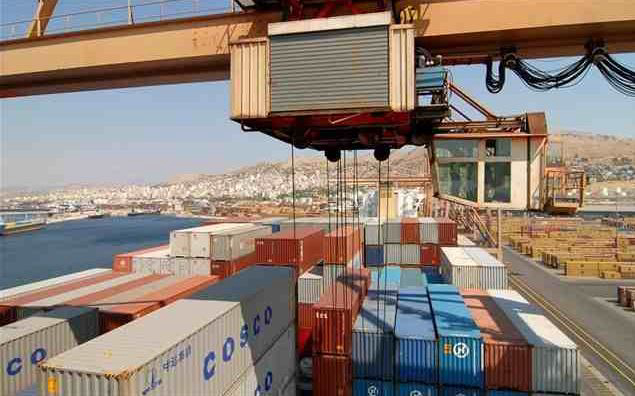
The turnover amounted to € 111.5 million compared to € 103.5 million in the corresponding period of 2016, showing an increase of 7.7\%.
The operations at the Container Terminal showed significant increase in revenue by € 7million (53.1\%), where container throughput increased by 70.6\%, meaning 453.264 TEU compared to 265.716 TEU in 2016, while the income from the concession fee of the Pier II and Pier III increased approximately by € 3.4 million (8.4\%).
The profits before tax amounted to € 21.2 million compared to € 11.0 million in the year 2016, showing an increase of 92\% and the net result is improved by 68.6\% to € 11.3 million compared to € 6.7 million of the year 2016.
The operating expenses showed a small increase by 2\% to € 94.8 million compared to € 92.8 million in 2016, while the staff wages increased by 17.2\% compared to the previous year, due to the payment of two additional salaries (Christmas bonus, Easter bonus, holiday allowance), after the privatization of the company.
PPA SA will pay € 4.1 million concession fee to the Greek State for the year 2017, compared to 3 million in 2016 and 2 million in 2015.
The proposed dividend per share is € 0.1712 compared to € 0.0892 in 2016 (92\% increase).
As the Chairman and CEO of PPA SA Captain Fu Chengqiu stated: "The first full year of the new Management in the port of Piraeus was marked by very positive results which are mainly attributed to the employees of the company. We believe that in the coming years, with the implementation of our investment plan which is already in progress, we will further improve both the business operation and the economic efficiency of PPA S.A.".
Posidonia 2018 on track to become the biggest ever
 |
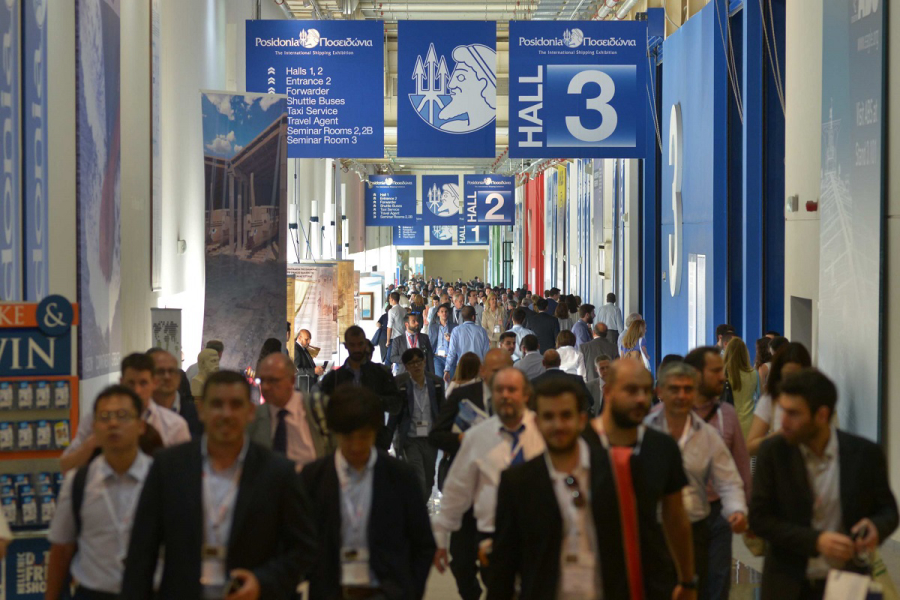
Organisers project that over 1,850 companies will exhibit their products and services at this year’s event and visitor numbers will rise to 22,000.
The increased demand for participation at the world’s most prestigious shipping trade event has resulted in the addition of 1,000sqm of exhibitor floor space just to keep up with increased demand, which is derived from a strong Greek order book for newbuildings and upgrades of the existing fleet to modernise ICT standards and meet ever stringent environmental regulations.
“Posidonia’s strength and appeal is drawn by the collective quality and reputation of its exhibitors, delegates and visitors, debutants or repeaters, who commit funds and resources every two years to be part of a signature industry event that is a true celebration of everything shipping stands for,” said Theodore Vokos, Executive Director, Posidonia Exhibitions S.A., the biennial event’s organiser.
“A key attraction remains the strong presence of the powerful Greek shipowning community at every Posidonia, which is leading global newbuilding activity with 61 Greek companies having ships on order worth an estimated US$16bn.” said Vokos.
Over 260 ships built to high specs, with many of them Tier II and Tier III compliant are on order for Greek interests at the dawn of 2018, 105 of them contracted in 2017. The spending spree is also regulation driven and stems from the recent ratification of the ballast water treatment treaty and type approvals by the US Coast Guard, as well as new regulations regarding SOX and NOX emissions and Monitoring, Reporting and verification (MRV) requirements, which have speeded up investment in scrubbers, LNG fueled ships and digitalisation of operations. With Greek interests currently running the most modern fleet globally and operating all across the globe, compliance with new environmental regulations is a must for Greek shipowners.
Some shipping companies, such as Capital Maritime & Trading, predict that new environmental regulations will make a quarter of today’s global fleet obsolete, giving them reason to invest $1,1 billion in upgrading 71 ships and ordering new ones. This flurry in newbuilding orders and fleet upgrades is drawing the world’s maritime industry to Posidonia 2018 in bigger numbers than ever before with space bookings or expressions of interest surpassing any previously set event record.
Once more the Posidonia exhibition space will be dominated by some 20 national pavilions and especially the leading shipbuilding nations, such as the traditional Far Eastern power houses of China, Japan and South Korea. Maritime Centres such as Hong Kong, Singapore, Dubai and many others will once more present their wide range of services to the global shipping industry and long-standing exhibitors such as the USA, UK, Denmark and Holland will field greater participations than before. But national participation is not reserved only for traditional maritime nations, as Posidonia welcomes newcomers such as landlocked Luxembourg and agricultural economies like Georgia, while Poland will also make its debut. The majority of flag states will also be present at Posidonia, with Panama, Liberia, the Marshall Islands, Malta, Cyprus, the Bahamas, the Cayman Islands and Palau amongst others returning once more to the heartbeat of global shipping.
Among the new highlights we count the Greek pavilion organised by HEMEXPO, the association of Hellenic Marine Equipment Manufacturers and Exporters, which will span over 400 sqm of exhibition space with the mission to promote Greek engineering and experienced maritime solutions for the global shipping industry and looking to further expand its offerings on the makers lists of the most important shipyards worldwide.
The Greek presence is complemented by a second Greek pavilion, organised by the Worldwide Industrial & Marine Association (WIMA), representing Greek companies active in the fields of ship construction, ship spare parts & supplies, ship technical and general services and marine equipment manufacturing.
Another important new participant is the Greek utility company Gastrade, backed by Gaslog Ltd, which will manage the Alexandroupolis Independent Natural Gas System (INGS), a modern, cutting edge technology project which comprises an offshore floating unit for the reception, storage and re-gasification of LNG and a system of a subsea and an onshore gas transmission pipeline through which the natural gas is shipped into the Greek National Natural Gas System (NNGS) and onwards to the final consumers.
Furthermore, Saudi Arabia’s state oil company Saudi Aramco, and its partners Lamprell, the National Shipping Company of Saudi Arabia (Bahri) and Hyundai Heavy Industries, have chosen Posidonia 2018 for the global unveiling of its International Maritime Industries (IMI) joint venture, created to develop one of the world’s largest full-service maritime facilities which will include a new shipyard focused on the offshore sector. The new project has already received orders for more than 20 rigs and 52 ships over the next decade.
And while oil continues to fuel humanity’s universal transportation needs, data is fast becoming the new oil spinning out a whole new brave world where artificial intelligence and smart shipping will dominate. The drive for digitalisation, the increased needs for smart shipping solutions and high demand for constant fleet connectivity has led to an impressive Posidonia outing by the ICT sector, with over 30 companies confirming their participation in order to compete for a bigger slice of the ever-growing needs of the most modern fleet the world has ever seen.
The Posidonia conference and seminars programme has started filling up and will once more include over 30 conferences, product presentations, technical seminars and press conferences, all taking place at the Metropolitan Expo. The conference programme will start with the prestigious Tradewinds Shipowners Forum which will tackle current issues facing shipping.
An important new event will be the HEMEXPO powered “SUPPORT THE LOCAL MARITIME INDUSTRY SUMMIT”, organised by Newsfront - Naftiliaki and to take place under the auspices of the Marine Technical Managers Association (MARTECMA), which will give Greek shipping companies the opportunity to familiarize themselves with the state of the art HEMEXPO products and services. This conference will enable them to make educated decisions on future investments going forward and will also further promote the Greek maritime cluster, which is on track to contributing an ever-growing part of the national GDP.
A new feature of the Posidonia Conference and Seminar programme will be the 4th Energy & Shipping Seminar, organised by the Institute of Energy for South East Europe (IENE), which will provide an in-depth analysis of the Global Oil and Gas Markets and analyse the factors that define the correlation between energy cargoes and shipping.
Posidonia is organised under the auspices of the Ministry of Maritime Affairs & Insular Policy, the Union of Greek Shipowners and the Hellenic Chamber of Shipping and with the support of the Municipality of Piraeus and the Greek Shipping Co-operation Committee.
ISO 9001:2015 standard INSB_Class February 2nd, 2018 0 comments
During the last quarter of year 2017, our dedicated quality experts advanced further the Quality Management System context to complete the transformation under the updated ISO standard requirements with particular focus towards leadership, management commitment and risk assessment, being focal areas in the new 9001:2015 standard.
The successful shifting from ISO 9001:2008 to the latest ISO 9001:2015 version highlights our non-stop dedication to pursue excellence, employs high efficiency during the realisation of INSB Class services and promotes our customer-centric approach across our multinational client base.
insb.gr
DNV GL in Greece: Showcasing new tools and services at the cutting edge of digitalization
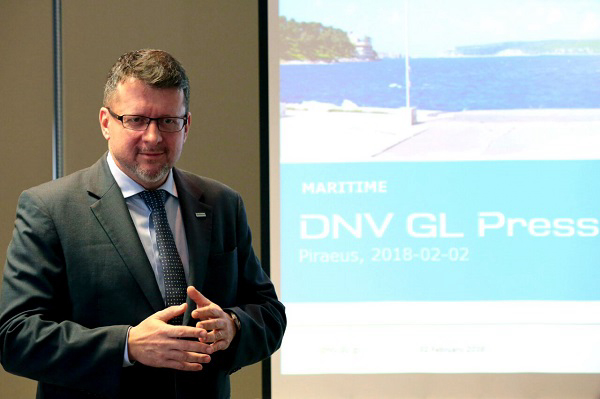
“We are proud that our organization has become a pioneer in the delivery of digital classification and certification services,” said Mr Ioannis Chiotopoulos, Regional Manager South East Europe, Middle East & Africa. “We have already implemented a number of pilot and full-scale programs that have proven that with effective tactics and targeted efforts we are able to achieve significant, tangible benefits not only for our customer but also for the shipping industry.” Drones, electronic certificates, and smart survey booking are only some of the advanced technologies DNV GL is deploying for the benefit of our customers, he noted, enabling them to face the shipping challenges of this new digitalized era.
With these new digital tools, DNV GL is working to ensure the efficiency and quality of its services, utilizing data-based analytics, and is addressing new risks related to complex systems and cyber security. Even with the new digital tools on offer, personnel remains the key to success highlighted Jason Stefanatos, Senior Research Engineer at DNV GL - Maritime, in his presentation: “Highly skilled surveyors and auditors will enhance their abilities by taking advantage of the new opportunities this digital world provides,”
In addition, the new VERACITY platform was launched in 2017 to improve data quality and manage the ownership, security, sharing and use of data. By creating frictionless connections between data owners and users, Veracity will open up new opportunities for improving ship performance and safety, while at the same time reducing operational costs.
Greece as third home market: An update
Two years after the launch of DNV GL’s “Greece as third home market” initiative, DNV GL is continuing to strengthen responsibilities and capabilities in the Region, with the Piraeus office now responsible for the African region: “The confidence of our headquarters in the Piraeus office and the realization of Piraeus as the third home for the organization is demonstrated by the extension of responsibilities,” said Chiotopoulos.
The Business Development team in the regional had also been strengthened by the addition of three new colleagues, he noted. Nikolaos Michas, who joins the team after spending 11 years in China, will be the single point of contact for Chinese yards. Ioannis Sergis, as the new Regional Segment Manager for Bulk Carriers, and Leonidas Karystios, the Regional Segment Manager for Gas and Tankers.
“We are more than pleased to be able to add these outstanding executives to the team, who have proven their value in key positions and during many years of service abroad,” said Chiotopoulos. “Deepening the local skill and competence pool available to our Greek customers, most notably by the location of Greek segment directors for Bulk and Gas carriers in Piraeus, fulfills the promise we made to our local maritime community with the third home market initiative. And we look forward to expanding on this promise in the years ahead.”
About DNV GL
DNV GL is a global quality assurance and risk management company. Driven by our purpose of safeguarding life, property and the environment, we enable our customers to advance the safety and sustainability of their business. Operating in more than 100 countries, our professionals are dedicated to helping customers in the maritime, oil & gas, power and renewables and other industries to make the world safer, smarter and greener.
About DNV GL – Maritime
DNV GL is the world’s leading classification society and a recognized advisor for the maritime industry. We enhance safety, quality, energy efficiency and environmental performance of the global shipping industry – across all vessel types and offshore structures. We invest heavily in research and development to find solutions, together with the industry, that address strategic, operational or regulatory challenges. For more information visit www.dnvgl.com/maritime

Mr Ioannis Chiotopoulos

Jason Stefanatos

George Teriakidis,Regional Business Development Manager, DNV GL

Blue Star Ferries’ educational and cultural initiative for primary school children from the Aegean islands

As part of its “With You as Our Destination” social responsibility programme, Blue Star Ferries is investing in culture and education, launching an initiative of two-day educational visits by 5th and 6th grade primary school children from the Aegean islands to cultural centres and institutions in Athens. The programme began on Tuesday 6 and Wednesday 7 February 2018 with a visit by children from primary schools in Amorgos.
During their stay in Athens, the 31 pupils and their adult supervisors had the opportunity to visit the Stavros Niarchos Foundation Cultural Centre, to go on a tour of Stavros Niarchos Park, and to attend a robotics workshop on “Solar energy and a world in constant motion”. They were also given a guided tour of the Acropolis Museum and attended an educational programme at the Planetarium.
The children, along with their parents, guardians and teachers, were also given a tour of one of the company’s vessels, where they were allowed onto the bridge and got a close-up view of the state-of-the-art navigational and operational systems used by vessels in the Attica Group fleet. Before the children boarded the vessel for their return, the popular Blue Star Ferries character “Bluestarino” gave them a send-off full of smiles and best wishes – as well as souvenirs!
Blue Star Ferries organised and covered the cost of the entire programme, choosing the places of interest that the party would visit, arranging transportation and guided tours, and booking accommodation and meals for the children, parents, guardians and teachers.
For several years, Attica Group has supported the development of young people, putting particular emphasis on its contribution to school and student communities. For example, in 2015 and 2016, it welcomed 1,483 pupils and students to its facilities and supported the education of 350 trainees at the officers’ academies for the merchant navy and the coast guard. It should also be noted that for 2015 and 2016, the Group’s social contribution through social actions, donations, sponsorship and ticket reductions was in excess of €3.5 million (http://bit.ly/2EQpIB6).
Attica Group engages in passenger shipping via the SUPERFAST FERRIES, BLUE STAR FERRIES and AFRICA MOROCO LINKS (AML) companies, operating a total of 15 vessels that provide modern, high quality transportation services in Greece and abroad. ATTICA GROUP is a member of the Marfin Investment Group (MIG) with controlling stakes in a number of leading companies.
 |
 |
Matching Shipping Interests with Finance Opportunities
 |
The Slide2Open Shipping Finance Conference 2018 aims at producing tangible results, while providing delegates with valuable financial and commercial insight into activities, offerings, best practices and trends.
Organized by Slide2Open, in association with Boussias Communications under the Auspices of the Ministry of Maritime Affairs and Insular Policy and the Hellenic Chamber of Shipping and With the Support of A.M.M.I.T.E.C., the Hellenic Management Centre, the Institute of Chartered Shipbrokers and I.M.E.S., it will take place on 22 February 2018, in Athenaeum InterContinental Hotel, in Athens.
High caliber international speakers have committed to participate and a few more are expected in the following days. Confirmed speakers include the Minister of Maritime Affairs and Insular Policy, Panagiotis Kouroumplis, the incoming chairman of the Baltic Exchange, Duncan Dunn, the president of Standard Bulk Transport Corp., Dr. George Α. Gratsos, the chairman of Intercargo and managing director of Anangel Maritime Services Inc., John Platsidakis, the principal of Tsavliris Salvage Group, George Α. Tsavliris, the president of ICC-Hellas, Nicolas A. Vernicos, Dr. Martin Stopford of Clarkson Research, Dr. Kirsi Tikka of ABS, Yves Kallina of HSH Nordbank, Joseph Cipolla of Wafra Capital Partners Inc., Cruise Chi of Bocomm Shipping Leasing (Bank of Communications Finance Leasing), Paulo Almeida of Tufton Oceanic, Morten Arntzen of Macquarie Bank, and more.
For additional information, please visit the conference website
Transport Secretary urges shipping to feed into 'radical' Maritime 2050 vision
“We need a clear path for the future, we need a strong partnership between this industry and government – and we’re calling it Maritime 2050,” he said of the concept, which was launched in September at London International Shipping Week.
“Maritime 2050 is going to be a blueprint that will harness our strengths as a nation, that will help us understand how we reach our full potential, and how we demonstrate our ambition to be a world maritime leader,” Grayling said.
“This is the opportunity for us to position the industry to meet the challenges ahead, and to create a sustainable long-term future for UK maritime.”
The Government will engage with existing industry bodies and businesses, and will soon publish a call for evidence that will provide a framework for engagement, Grayling said. An expert panel will be appointed, consisting of “people who are probably sitting in this room today,” he told the dinner.
"We’re going to challenge ourselves to think differently and radically, taking views from outside the sector talking to the industries that use our services, and through that independent advisory panel, we will work to shape the right strategy for the future of an industry that is of fundamental importance to our country.”
Trade; technology, infrastructure, the environment, skills, safety and regulation, security and resilience have all been identified as key areas around which the Maritime 2050 strategy should be based.
Grayling assured the dinner that the Government will secure a Brexit deal that keeps trade with the EU “as frictionless as possible”. The shipping industry, he said, would be an important part of the UK’s future success after leaving the European Union.
The transport secretary also used his speech to recognise the contribution of UK seafarers to the nation's economy, and the Royal Navy’s role in maintaining maritime security and protecting world trade.
Grayling said the UK needs to drastically increase the number of young people choosing a career at sea, if the nation’s maritime sector is to have the skilled workforce it will need in the future.
www.ukchamberofshipping.com
MAN Diesel & Turbo to Cooperate with Hyundai on Development of LPG Dual-Fuel Engine
 |
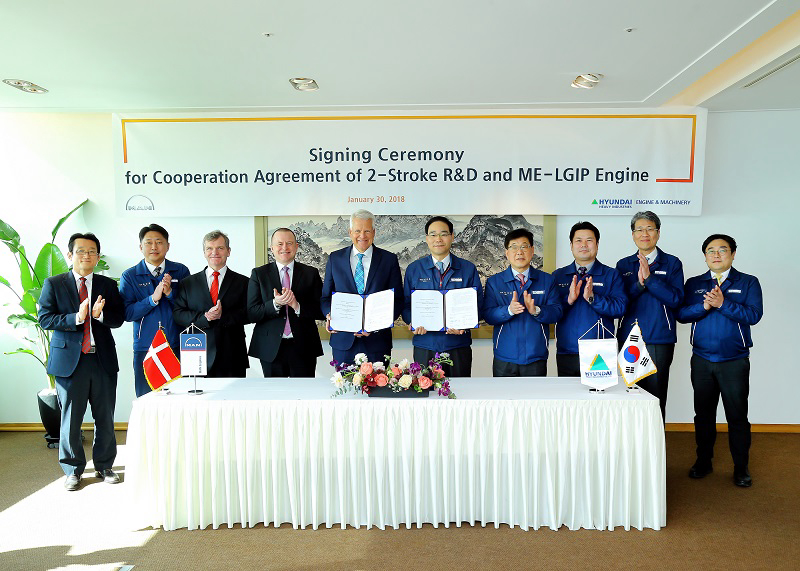
| Pictured at the MoU signing ceremony (from left, HHI-EMD unless stated): S.B. Cha – Head of MAN Diesel & Turbo, Korea Marketing Diesel; C.L. Lyu – Senior Vice President, Sales; Tommy Rasmussen – Head of MAN Diesel & Turbo, Korea; Bjarne Foldager – Vice President Sales & Promotion, MAN Diesel & Turbo, Two-Stroke Business; Klaus Engberg – Senior Vice President, Licensing, MAN Diesel & Turbo; K.D. Chang – Senior Executive Vice President, Chief Operating Officer; K.D. Lee – Executive Vice President, Sales and Design; J.S. Han – Senior Vice President, Design; J.D. Yu – General Manager, Head of Two-Stroke Engine Design Department, W.S. Jeong – Deputy General Manager, Head of Marine Engine & Machinery Sales Department II |
MAN Diesel & Turbo has signed a Memorandum of Understanding (MoU) with Hyundai Heavy Industries Engine & Machinery Division (HHI-EMD) regarding the development and production of MAN B&W ME-LGIP dual-fuel engines. Upon completion, HHI-EMD will be able to deliver liquefied petroleum gas (LPG) –fuelled, two-stroke-propulsion engines.
Bjarne Foldager – Vice President Sales & Promotion, Two-Stroke Business at MAN Diesel & Turbo – said: “MAN Diesel & Turbo has previously experienced strong market interest in using LPG as a fuel aboard LPG carriers, but other shipping segments have also begun investigating this option, a general tendency that is growing.”
He added: “LPG holds great potential as a fuel since it contains no sulphur, is widely available, and easy to bunker. It is therefore becoming an increasingly attractive alternative to other, low-sulphur fuel types. We have a long tradition of technical cooperation with our licensees and we are looking forward to working with Hyundai on this exciting project.”
With the MoU, LPG joins the list of liquid, environmentally-friendly fuels that can power MAN Diesel & Turbo’s portfolio of two-stroke, dual-fuel engines, which are available from all licensees. MAN Diesel & Turbo further reports that it expects the ME-LGIP installation aboard a merchant ship to be extremely competitive price-wise, compared to other, dual-fuel-burning engine types.
Background
Due to ever more stringent emission limits, many LPG carrier operators called for MAN Diesel & Turbo to develop an LPG-fuelled engine that could power LPG carriers in the most viable, convenient and economical way using a fraction of the LPG cargo already onboard.
LPG is an eminently environmentally-friendly fuel, in much the same class as liquefied natural gas (LNG), and an LPG-fuelled engine will significantly reduce emissions, enabling vessels to meet the stringent IMO SOx emission regulations due to come into force globally from 2020.
LPG’s future as a viable fuel for marine transportation looks promising as it will not require as large an investment in infrastructure – such as bunkering facilities – in contrast to other, gaseous fuels. Accordingly, MAN Diesel & Turbo expects a strong demand for LGIP engines for very large gas carriers (VLGCs) and coastal vessels from their introduction.
http://greece.mandieselturbo.com
Zero-Emission Vessels 2030. How do we get there?
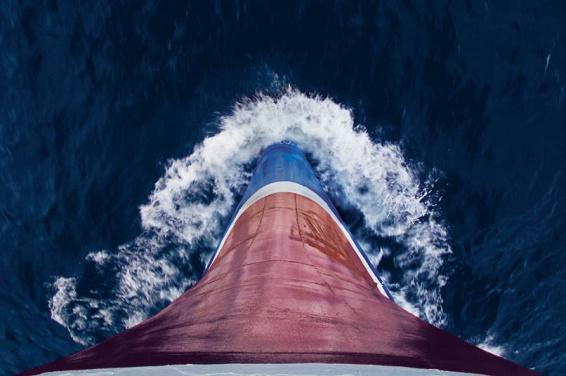
The first milestone in the IMO greenhouse gas (GHG) Roadmap is approaching: MEPC 72 in April 2018. The world is watching to see if an ambitious reduction strategy in line with the Paris Agreement can be delivered. To achieve this ambition, ZEVs will need to be entering the fleet in 2030 and form a significant proportion of newbuilds from then on.
Although none of the ZEVs are estimated to be more competitive than conventional shipping by 2030, the technology options are evolving rapidly and it’s possible that over the next 10 years the gap could reduce even further than this study estimates. If this gap does not close then there may be a need for regulatory intervention in the near future, to drive the viability compared to conventional fossil fuels.
This new report assesses seven technology options for ZEVs, applied to five different case study ship types across three different regulatory and economic scenarios. These options consist of various combinations of battery, synthetic fuels and biofuel for the onboard storage of energy, coupled with either a fuel cell and motor, internal combustion engine; or a motor for the conversion of that energy store into the mechanical and electrical energy required for propulsion and auxiliary services.
The costs of some of the components considered: fuel cells, batteries and hydrogen storage could all reduce significantly, especially if they become important components of another sector’s decarbonisation, or if action taken during shipping’s transition assists with the technology’s development.
For those in shipping with niche access to a low-cost supply of zero-emission fuel or energy sources, or an ability to pass on a voyage cost premium to a supply chain that values zero-emission services, the gap may already be closed.
From preliminary conversations with shipowners, it was clear that the key considerations would be around wanting options that were viable at a moderate carbon price (e.g. $50/tonne CO2) and without too great an increase to the capital cost of the ship. It was also clear that the impact of the CO2 emissions must not just be moved upstream, to the electricity generation or fuel production process.
None of the zero-emission options in their current specifications completely satisfy the shipowner requirements, with the most significant gap identified being on voyage (fuel) costs.
Katharine Palmer, LR’s Global Sustainability Manager, said: “There is no doubt that decarbonisation is a huge challenge for our sector and that we all have a clear responsibility to ensure actions are taken to drive our operational emissions to zero at a pace matching actions taken across the rest of the world and other industry sectors. By assessing different decarbonisation options for different ship types, we identify the drivers that need to be in place to make them a competitive solution and we aim to show the opportunity for a successful and low-cost decarbonisation pathway for shipping.”
Tristan Smith, Reader at UCL, added: “This report demonstrates the potential solutions for shipping’s zero emissions transition. By sharing the findings, we hope it can provide inspiration and focus for shipping’s collective efforts to ensure zero emissions happen swiftly and with minimal cost and disruption to trade.”
Zero-Emission Vessels 2030 is the latest in LR’s series of reports looking at fuel and technology trends for the marine industry, aimed at developing new knowledge and tools that can contribute to policy debate. Previous reports include Global Marine Trends 2030, Global Marine Fuel Trends 2030 and Global Marine Technology Trends 2030 and Low Carbon Pathways 2050.
Source: Lloyd’s Register
Implementing the 2020 sulphur limit

Ensuring consistent implementation of the 0.50\% requirement is a key item on the agenda of IMO’s Sub-committee on Pollution Prevention and Response (PPR) which meets this week (5-9 February) at IMO headquarters, London. The meeting will also continue to look at how to measure black carbon emissions from shipping.
Other matters on the agenda include the development of further guidance to support the implementation of the Ballast Water Management Convention, including ballast water sampling and analysis. Revised guidelines for the use of dispersants for combating oil pollution at sea, which take into account experience from the Deepwater Horizon incident, are expected to be finalised.
The ongoing revision of the product lists and index in the international code for carriage of chemicals in bulk will continue, as well as consideration of requirements to address the discharge of high-viscosity solidifying and persistent floating products (such as certain vegetable oils). The meeting will also consider including new controls on the biocide cybutryne in the convention for the Control of Harmful Anti-fouling Systems on Ships (AFS Convention).
The meeting was opened by IMO Secretary-General Kitack Lim and is being chaired by Mr Sveinung Oftedal (Norway).

Powered by  © Μaritimes 2019