


THE EUROPEAN DEPOSIT INSURANCE SCHEME PROPOSAL

European shipping should remain the enabler of free movement of goods and persons even after Brexit
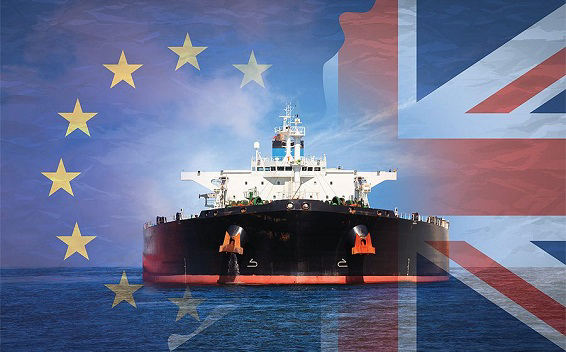
“European shipowners strongly believe that to the extent possible, EU and UK should aim for conformity in legislation relating to maritime affairs”, said ECSA Secretary General Patrick Verhoeven, “It should really be recognised as a guiding objective for the Brexit negotiations”, he added.
An overall concern of EU shipowners relates to their competitiveness, among others in the fiscal area. With a possible new, attractive shipping centre just across the Channel, there is ever more reason to look at the EU’s shipping policy and ensure the EU remains a competitive location for shipping companies to do business.
In the short term, EU shipowners have three immediate priorities that should be given due attention throughout the process: 1) frictionless traffic by sea between the UK and the EU, 2) free movement of seafarers, onshore staff and passengers and 3) continued market access to the domestic trades and the offshore sector.
Around half of UK exports and imports are to and from the EU and most of it is done through ships. Since the removal of customs and health controls at the start of 1993 at UK and EU ports, traffic volumes across, both over and under, the Dover Strait rose from 1 million lorries in 1992 to 4 million in 2015 (a 300\% increase). Returning to the situation previous to the Customs Union and imposing extensive border procedures would cause heavy congestion in these ports that have simply no free space for lorries or trailers to be held pending clearance.
Another key priority for EU shipowners is the free movement of their seafarers and their company staff. Seafarers of third countries employed on EU or UK vessels should be granted easy access to the UK. EU or UK citizens that wish to travel by sea should be allowed to continue to do so in a smooth way, without adding any heavy procedures such as visa applications.
“Concerning market access, the UK’s domestic and offshore market is open. Likewise, EU markets are fully open. This reciprocal market access should be preserved”, Verhoeven concluded.
ecsa.eu
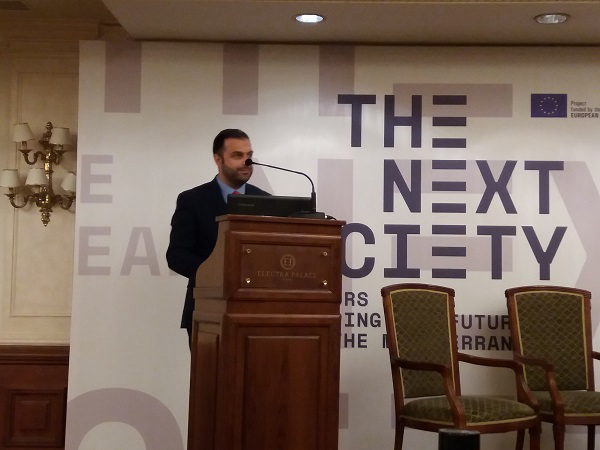
Prisma Electronics SA at the official event "THE NEXT SOCIETY"
 |
 |
Gdynia Maritime School and Seagull Maritime, partnering on new assessment centre.
 |
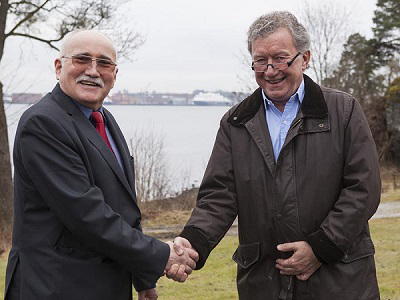
| Capt. Alfred Naskret (left), principal Gdynia Maritime School and Oscar Johansen, Chairman and founder Seagull Maritime AS agreeing on new collaboration for seafarer assessment centre. |
The leader in maritime e-learning and competence management, Seagull Maritime, is delighted to announce the creation of a new assessment centre in Gdynia, Poland. Strengthening their professional relationship with long time collaborators Gdynia Maritime School (GMS), this partnership offers seafarers an easy way to complete Distance Courses on-site, allowing them to be assessed and receive their approved course diploma all on the same day!
"Being a privately owned maritime college with rights to educate and assess seafarers on all levels, GMS is a valuable partner for our company,” said Oscar Johansen, Chairman and Founder of Seagull Maritime. “Since our two organisations were introduced in 1998, GMS have used all training content from Seagull, while providing expert assistance for the assessment of seafarers and the development of training materials”.
For years Seagull Maritime have received requests of setting up approved assessment centres in key areas throughout the world where high volumes of seafarers are based. This is a first initiative in a strategic decision made by the board to further strengthen Seagull’s position as the world leader in maritime training and competence building. “Going forward with GMS as the first approved assessment centre was a natural choice for us”, states Mr Johansen. “With GMS implementing the use of Seagull’s Learning Management System to keep track of student activities, assessments and certificates, we are very proud of this initiative and we have great expectations going forward.”
 |
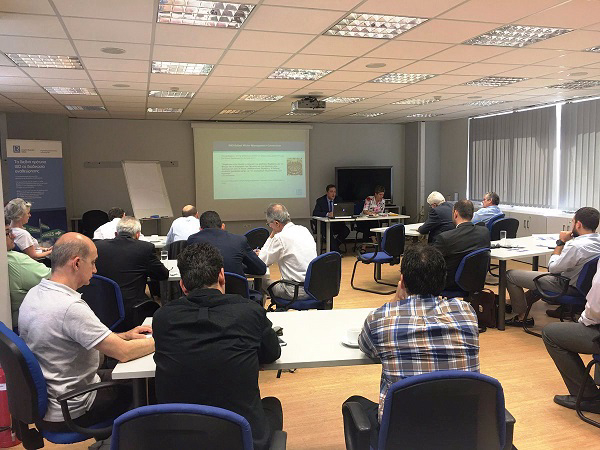
Lloyd’s Register holds Ballast Water Management Systems Workshop as action from last Hellenic Technical Committee & Environmental Sub-committee
 |
The scope of the workshop was to allow the Committee members and Lloyd’s Register to share their experience on BWMS including any issues faced during installation, commissioning and regular operation of such systems on board vessels. The methodology used to capture feedback involved the completion of a questionnaire by the members, who enthusiastically responded to the request, and further analysis of the findings by LR.
During the workshop Charalampos Anastasakis, LR Senior Specialist at Piraeus Technical Support Office, provided a regulatory update and presented the results of the survey. Furthermore, Stamatis Agelopoulos, LR Lead Specialist at Piraeus Technical Support Office, addressed the LR experience on installation and approval of BWTS. In-depth discussion followed among the members, chaired by Minerva’s Vayia Hatziyianni.
The outcome of this workshop will also be used to identify areas where a technical intervention may be required from the designers, manufacturers, owners and class rules.
DRYSHIPS INC. Announces successful delivery of its second aframax tanker
Since the commencement of our acquisition program, in addition to the above, we have successfully taken delivery of a total of three vessels as follows:
On May 10, 2017, one Kamsarmax drybulk vessel built in 2014 of 81,918 deadweight tons.
On May 2, 2017, one Newcastlemax drybulk vessel built in 2014 of 205,855 deadweight tons.
On April 27, 2017, one Aframax newbuilding tanker of 113,644 deadweight tons.
Mr. George Economou, Chairman and Chief Executive Officer commented:
“We are very excited to have taken delivery of four newly acquired vessels at historical low prices. DryShips continue to execute the plan to diversify its fleet and can now begin to generate cash flows with high quality operations and services to its charterers.”
About DryShips Inc.
The Company is a diversified owner of ocean going cargo vessels that operate worldwide. The Company owns a fleet of (i) 13 Panamax drybulk vessels; (ii) 4 Newcastlemax drybulk vessels, 3 of which are expected to be delivered in the second quarter of 2017; (iii) 5 Kamsarmax drybulk vessels, 4 of which are expected to be delivered in the second quarter of 2017; (iv) 1 very large crude carrier, which is expected to be delivered in the second quarter of 2017; (v) 2 Aframax tankers;(vi) 1 Suezmax tanker expected to be delivered in the second quarter of 2017; (vii) 4 VLGCs which are expected to be delivered in June, September October and December of 2017; and (viii) 6 offshore support vessels, comprising 2 platform supply and 4 oil spill recovery vessels. DryShips’ common stock is listed on the NASDAQ Capital Market where it trades under the symbol “DRYS.”
www.dryships.com
The Great Race: Bulkers And Boxships Battle For The Lead
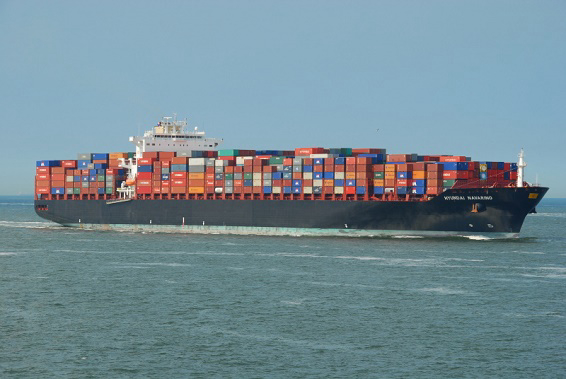
This has been particularly notable in the bulkcarrier and containership sectors, and in the case of the Capesizes and the ‘Old Panamax’ boxships, it has been a bit like the famous race between the tortoise and the hare but with even more changes in leadership…
At The Start
Back in 2012, Capesize demolition was on the up with the market having softened substantially in 2011 on the back of elevated levels of deliveries. Meanwhile, ‘Old Panamax’ containership demolition (let’s simply call them Panamaxes here)was also on the rise with earnings under pressure. Across full year 2012, 4.7\% of the start year Capesize fleet was sold for scrap (11.7m dwt) and 2.6\% of the Panamax boxship fleet (0.10m TEU). In both cases this was working from the base of a fairly young fleet, with an average age at start 2012 of 8.2 years for the Capes and 8.9 years for the Panamax boxships.
 |
Hare Today…
But by 2015, Cape scrapping was surging once more, regaining the lead from the Panamax boxships. By May-15 the cumulative share of the start 2012 fleet scrapped in the Capesize sector was 13.7\% compared to 13.4\% for the Panamax boxships. Iron ore trade growth slowed dramatically in 2015, whilst the Panamaxes appeared to be enjoying a resurgence with improved earnings in the first half of the year ensuing from fresh intra-regional trading opportunities.
…Gone Tomorrow
But the result of the race was still not yet clear. Today the Panamaxes are back in front again, thanks to record levels of boxship scrapping in 2016, including 71 Panamaxes (0.30m TEU) on the back of falling earnings, ongoing financial distress and the threat of obsolescence from the new locks in Panama. Despite a huge run of Capesize scrapping in Q1 2016 (7.5m dwt), the cumulative figure today for Capes stands at 22.3\% of start 2012 capacity, compared to 25.4\% for Panamax boxships, remarkably similar levels.
Where’s The Line?
So, today the old Panamax boxships are back in the lead, but who knows how the great race will end? Capesize recycling has slowed with improved markets, but Panamax boxships have seen some upside too, even if the future looks very uncertain. Hopefully they’ll both get there in the end but no-one really knows where the finish actually is. That’s one thing even the tortoise and the hare didn’t have to contend with. Have a nice day.
Source: Clarksons
OOCL reaches milestone with the christening of the OOCL Hong Kong
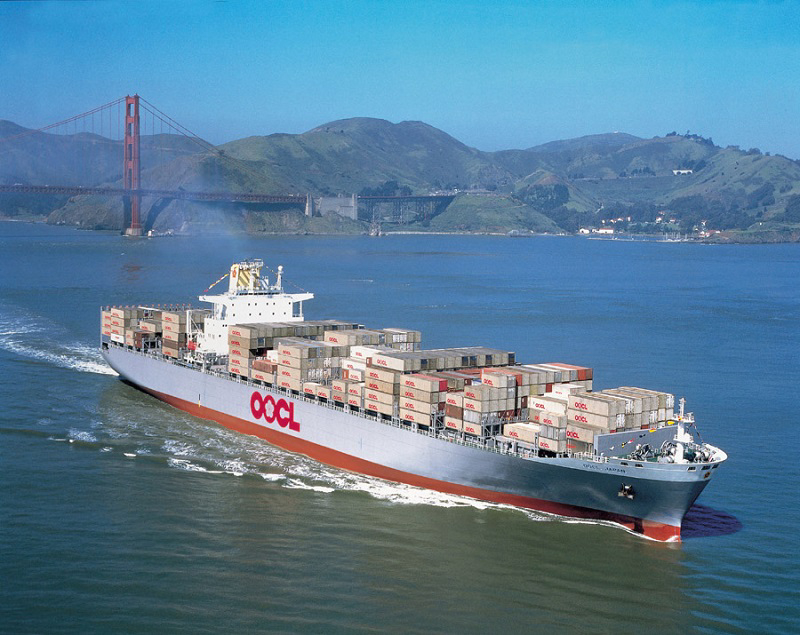
The OOCL Hong Kong was also celebrated as one of the largest containerships in the world by carrying capacity, and will be a welcome addition to strengthening the OOCL fleet this year.
In his ceremonial remarks, Mr. C. C. Tung, Chairman of Orient Overseas (International) Limited addressed the importance of this occasion for the company. “This is a very exciting time for all of us because today marks the first time that OOCL is receiving newbuildings in the 21 thousand TEU size. In fact, the OOCL Hong Kong will be a titan among containerships at sea, with a carrying capacity at 21,413 TEU. An important milestone for us at OOCL indeed.”
“While our industry seems to have the knack to ‘out do’ one another in building larger containerships relatively quickly these days, this project is nonetheless an important moment for us. Faced with increasing competition and un-ending pressure on costs, we need to take the bold step in operating larger size ships of quality and high efficiency in order to stay relevant and compete effectively as a major container shipping company.”
 |
The last time that OOCL set the world record for the largest containership was back in April 2003 with the OOCL Shenzhen, an 8,063 TEU vessel, also built at the SHI shipyard.
In thanking the shipbuilder and commenting on the business partnership over the years, Mr. Tung said: “We are very delighted to be on this journey together with our long-time partner and key shipbuilder of our large size ship fleet. Over the years, we have always appreciated the high quality and reliability of your products, which is absolutely essential for us to providing a top quality service. This is a major undertaking for us to build a containership of this size, requiring a lot of effort, commitment and coordination.”
Among our distinguished guests at the ceremony we were very honored to have with us our Vessel Sponsor, Mrs. Mylene Seah, her husband as our Guest of Honor, Mr. Peter Seah, Chairman of DBS Bank, as well as his colleagues representing the bank.
Three years ago, the support that DBS provided towards the financing of our ships marked a wonderful expansion in our work with the bank, and we are very grateful that we could once again continue our collaboration through the financing work for the OOCL Hong Kong.
“Your recognition and faith in OOCL as a business partner is a huge encouragement to us as the company continues to build the business from strength to strength by delivering exceptional products and services to customers, maintaining a healthy financial position and building a world class fleet,” said Mr. Tung in expressing his gratitude to DBS Bank.
In his remarks at the ceremony, Mr. Seah also thanked OOCL for the collaboration over the years and for the invitation to the celebration. “Mylene, my colleagues and I are honored to be invited today for the launching and naming of OOCL’s latest vessel, OOCL Hong Kong. This marvelous 21,413 TEU containership, the first vessel in the world to cross the 21,000 TEU mark, will further strengthen OOCL’s fleet of vessels that place them among the world’s most successful shipping companies. I wish OOCL continued success in all your business endeavours, and for OOCL Hong Kong, I wish you smooth sailing and full loading for every single voyage!”
The OOCL Hong Kong will be serving the Asia-Europe trade lane on the LL1 service and her port rotation is: Shanghai / Ningbo / Xiamen / Yantian / Singapore / via Suez Canal / Felixstowe / Rotterdam / Gdansk / Wilhelmshaven / Felixstowe / via Suez Canal / Singapore / Yantian / Shanghai in a 77-day round trip.
Source: OOCL
Setel Hellas’ International Maritime Conference (video)

10th of May 2017, Library Aikaterini Laskaridis Foundation Piraeus-Greece
#Welcome Address
SetelHellas’ Managing Director, Mr. George Marinakis
#Connected World & Disruptive Sustainability
- Founder of Aephoria & Bluegrowth, Mr. Petros Kokkalis: “Blue Economy, Bluegrowth & Sustainability”
- Director of Strategis Maritime ICT Cluster, Mr. Gregory Yovanof: “Innovation Networks & Maritime Clusters as Catalysts of Growth”
- Program Manager, at Intrasoft, Mr. Aggelos Argyropoulos: “Maritime Single Window”
#Unlock the Business Value of Digital Ship
- SetelHellas R&D Manager, Mr. Alexandros Kaouris: “New Features – New Capabilities”
- SetelHellas Sr. Strategic Accounts Manager, Mr. Eythimios Chaldeakis: “Convert Digital Value into Revenue”
- SetelHellas Sr. Customer Solutions Manager Mr. George Christakos: “Information Visualization: Bring the data to the experts, not the experts to the data”
#Coffee Break
#Innovation Through Strong Partnership
- Systems Engineer, at CISCO Greece, Mr. Alkis Zoupas: “Accelerate Teamwork and Collaboration with Cisco Spark”
- Head of Solutions Development at Endress+Hauser Flowtec AG, Mr. Stephan Natter: “Holistic approach on fuel and energy management”
#IoT Case Study
- Presentation of Hyundai Hope Case Study
#Closing Remarks Mr. Charis Daskalakis, BCA College owner awarded with two scholarships for the online master programme, two participant companies in the event, Celestyal Cruises and Quintana Ship Management
Government of Canada introduces Oil Tanker Moratorium Act
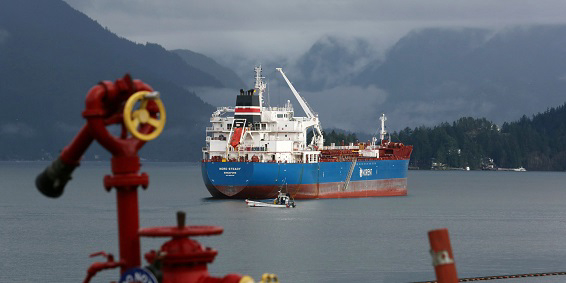
Today, the Government of Canada introduced C-48, the proposed Oil Tanker Moratorium Act in Parliament. This Act will deliver on the Prime Minister's commitment to Canadians to formalize a crude oil tanker moratorium on British Columbia's north coast. This legislation will prohibit oil tankers carrying crude and persistent oils as cargo from stopping, loading or unloading at ports or marine installations in northern British Columbia. It will provide a high level of protection for the coastline around Dixon Entrance, Hecate Strait and Queen Charlotte Sound.
The proposed moratorium area extends from the Canada/United States border in the north, down to the point on British Columbia's mainland adjacent to the northern tip of Vancouver Island, and also includes Haida Gwaii. Vessels carrying less than 12,500 metric tonnes of crude or persistent oil as cargo will continue to be permitted in the moratorium area to ensure northern communities can receive critical shipments of heating oils and other products.
The legislation proposes strong penalty provisions for contravention that could reach up to $5 million. The legislation also proposes flexibility for amendments. Further refined petroleum products can be removed from the list on the basis of science and environmental safety. Products may also be added on this basis.
The proposed Oil Tanker Moratorium Act is another action that the Government of Canada is taking as part of the $1.5 billion Oceans Protection Plan (OPP). The OPP is a national strategy to create a world-leading marine safety system that provides economic opportunities for Canadians today, while protecting our coastlines and ensuring clean water for our kids and grandkids. The largest investment ever made in our oceans and waterways, the Ocean Protection Plan involves new measures to improve marine safety and responsible shipping; protect Canada's marine environment; and create new partnerships with Indigenous and coastal communities.
Quotes
"The Government of Canada is committed to demonstrating a clean environment and a strong economy can go hand-in-hand. Tabling this legislation is another step towards fulfilling our promise to formalize the tanker moratorium on British Columbia's north coast. This, and other actions we are taking to improve marine safety through the Oceans Protection Plan, will protect the coasts and waterways that Canadians depend on for generations to come."
The Honourable Marc Garneau, Minister of Transport
Quick Facts
- Since January 2016, the Government of Canada has held approximately 75 engagement sessions to discuss improvements to marine safety and formalizing the oil tanker moratorium. The Government has consulted extensively with Indigenous groups, and has also consulted with industry stakeholders and communities across Canada
- The proposed legislation applies to the shipment of crude oils defined by the International Convention for the Prevention of Pollution from Ships. It also applies to related oil products that are heavier and, when spilled, break up and dissipate slowly. A complete list of these persistent products included in the moratorium is outlined in a schedule to the proposed Act.
- The proposed legislation complements the existing voluntary Tanker Exclusion Zone, which has been in place since 1985.
- The Government of Canada is continuing to engage Indigenous groups, as well as coastal communities and Canadians across the country, to share their ideas on how we can work together through the Ocean Protection Plan to create a stronger marine safety system and better protect our coasts.
Related Products
- Backgrounder
- Amendment Protocol
- Oceans Protection Plan website
- Infographic: $1.5 Billion National Oceans Protection Plan
Transport Canada is online at www.tc.gc.ca. Subscribe to e-news or stay connected through RSS, Twitter, Facebook, YouTube and Flickr to keep up to date on the latest from Transport Canada.
This news release may be made available in alternative formats for persons living with visual disabilities.
SOURCE Transport Canada

Powered by  © Μaritimes 2019