



A twist in the tail: DNV GL adds asymmetric stern to ECO Lines hull optimization service

The idea emerged in the 1960s, but due to the difficulty of manually developing the optimal shape, this design failed to make a large impact at the time. DNV GL has revisited the idea and, using high-fidelity computer fluid dynamics (CFD) in combination with parametric formal optimization, the classification society can now offer ship owners the option of incorporating an asymmetric stern into their new vessels.
“Basically, what we are now able to do is model an aft shape that acts as a propulsion improving device, without the vibration and fatigue strength concerns that come with fins and nozzles,” says Karsten Hochkirch, Head of Department, Fluid Engineering at DNV GL – Maritime. “Using our in-house formal parametric optimization procedure, we can assess hundreds of options until we find a design that strikes an optimal balance between pre-swirl and resistance, while meeting the design requirements of the customer.”
In a recent project, a 3,000 TEU container ship was tuned to achieve minimum power consumption. Starting from a well-optimized symmetric baseline design, the asymmetric design achieved a propulsion power reduction of more than 3\%, a result that was confirmed in tank testing. In another project, the ECO Lines team was asked to find propulsion efficiencies in a 38,000 DWT tanker. The CFD optimization generated a design promising a 3.5\% percent decrease in propulsion power compared to the symmetrical design.
“This is another instance where advances in computing power and software sophistication are enabling us to unlock efficiencies in ship design. By accurately simulating the performance of these complex hull forms, we are achieving propulsion power improvements of up to 5\%, with greater structural robustness,” says Karsten Hochkirch. “And because yards are now able to utilise advanced CAD/CAM techniques and modern, CNC-controlled fabrication methods, they can bring these designs into production much more easily and economically.”
About DNV GL
Driven by our purpose of safeguarding life, property and the environment, DNV GL enables organizations to advance the safety and sustainability of their business. We provide classification, technical assurance, software and independent expert advisory services to the maritime, oil & gas and energy industries. We also provide certification services to customers across a wide range of industries. Operating in more than 100 countries, our professionals are dedicated to helping our customers make the world safer, smarter and greener.
About DNV GL – Maritime
DNV GL is the world’s leading classification society and a recognized advisor for the maritime industry. We enhance safety, quality, energy efficiency and environmental performance of the global shipping industry – across all vessel types and offshore structures. We invest heavily in research and development to find solutions, together with the industry, that address strategic, operational or regulatory challenges. For more information visit www.dnvgl.com/maritime
 |
| Computational fluid dynamics (CFD) allow the details of the flow to be assessed. The colors denote the pressure distribution on the hull. |
 |
 |
Setel Hellas’ International Maritime Conference
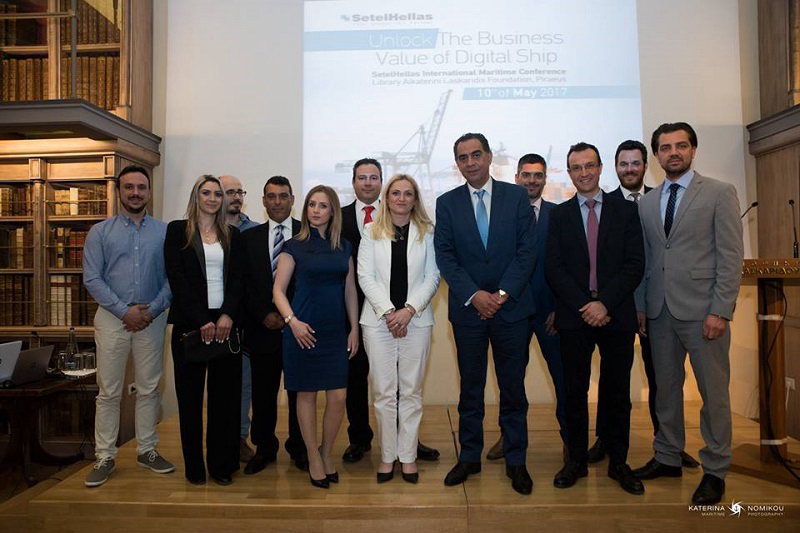
The International Maritime Conference of SetelHellas successfully concluded on Wednesday,10th of May at Aikaterini Laskaridis Foundation, in collaboration with its strategic partners Cisco Hellas, and Endress+Hauser and Helica Maritime.
Among the more than 100 attendees were Mrs. Christine Konstantinidou, adviser of the Secretary General of the Minister for the Aegean and Greek Island Policy, Technical and IT Managers from prospects and existing customers, representatives from the Attica Region, as well as rectors from the universities of Aegean and Piraeus, BCA College, New York College University, Metropolitan College and maritime journalists.
The event was introduced by the Managing Director of SetelHellas, Mr. George Marinakis, who stressed the need for digital transformation as well as the importance of synergies and successful partnerships for a sustainable business growth.
In the first session titled “Connected World and Disruptive Sustainability”, Mr. Petros Kokkalis, Founder of Aephoria and Bluegrowth, Executive City Councillor for the local economic growth and entrepreneurship of the City of Piraeus, presented Blue Economy sectors related with Piraeus and Blue Growth initiative as an umbrella of actions and stakeholders seeking to deliver innovative sustainable business ideas for solutions and services.
Mr. Gregory Yovanof, PhD Professor at Athens Information Technology University and Director of Strategis, the first Maritime ICT Cluster, presented how innovative networks and maritime clusters could be catalysts of growth in conjunction with the private and public Sector as well as the Academic-Research Community.
Mr. Aggelos Argyropoulos, Program Manager at Intrasoft International presented the advantages and the benefits of the MSWG (Maritime Single Window Gateway) deployment showing off demonstrating how the accurate data acquisition through innovative platforms such as SetelHellas suite, could contribute to a more efficient and smooth vessels’ operation.
During the second session, Mr. Efthymios Chaldeakis, Strategic Accounts Manager at SetelHellas, presented how to convert digital value into revenue utilizing the sensor-based «SeeMBox-V©» technology. An innovative telemetry solution that ensures a sustainable energy efficiency planning, enables information accuracy by eliminating human intervention, complies with statutory requirements and maintains a unified fleet-wide view.
Mr. Alexandros Kaouris, R&D Manager at SetelHellas, presented the new advanced features and capabilities of the next generation «SmartBox-V™». The solution offers a wide range of administrative and operational benefits, through an intuitive interface. The network intelligent device incorporates among others a rich functionality including data synchronization, broadcast messaging and crew welfare features.
Mr. George Christakos, SetelHellas’ Customer Solutions Manager, presented the latest developments of SetelHellas regarding the Information Visualization of the complete IoT portfolio of the company through an advanced digital dashboard. Mr. Christakos described how a shipping company can its digital potential solutions, supports its decision making and analyze information on the fly.
During the third session, distinguished partners of SetelHellas presented how innovation can be accelerated through strong partnership. Mr. Alkis Zoupas, Systems Engineer, at CISCO Greece, shared the numerous benefits to the maritime community through powerful partnerships. During his presentation, Mr. Zoupas gave a live demo of Cisco Spark collaborative capabilities.
Mr. Stephan Natter, head of Solutions Development at Endress+Hauser Flowtec AG, presented the new holistic approach on fuel and energy management and the “key factors” provided, which enable Shipping Companies to achieve accuracy, transparency and efficiency, by putting precise and reliable fuel consumption data into perspective. SetelHellas’ SeeMBox-V© and Endress+Hauser Mass flowmeters, that are globally offered also as a common solution, provide meaningful KPIs to the demanding maritime environment.
The International Maritime Conference concluded with a fourth session, where Mr. Efthymios Chaldeakis presented, officially, for the first time the Hyundai case study. A project funded by S. Korean government and delivered for Hyundai Merchant Marine group where SetelHellas and SeeMBox-V© participated in an International consortium with companies such as, Hyundai Ocean Service, WNI, the Japanese weather forecast group, MECys, a new aggressive S. Korean ECDIS manufacturer, Jotun, ABB and others. The first phase of the project, where all readings from vessel are acquired by SeeMBox-V© and transferred ashore, has been successfully completed and Hyundai awarded an official appreciation letter for to SetelHellas acknowledging its contribution.
Closing remarks had a little surprise for our participants with a lottery involving all guests. The two lucky winners won an online master’s degree in shipping, sponsored by Mr. Charis Daskalakis, owner of the BCA College.
find photographs from the event in the below link:
https://www.facebook.com/pg/SetelHellas/photos/?tab=album&album_id=497190560405018
 |
 |
 |
 |
The Greek Minister of Digital Policy at Prisma Electronics
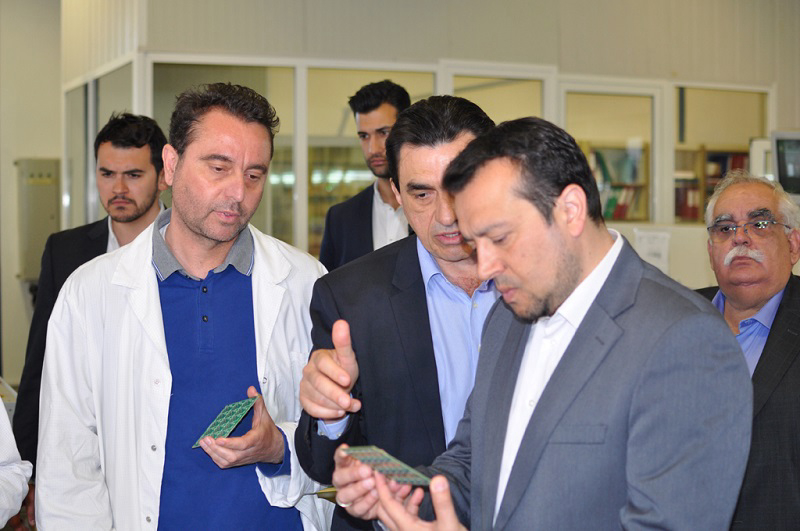
On his departure, the minister stated: "Prisma Electronics is the proof that Greece does not lack the scientific potential, entrepreneurship, ideas and willingness to progress."
 |
Cruises Could Be Big Winners in Cuba
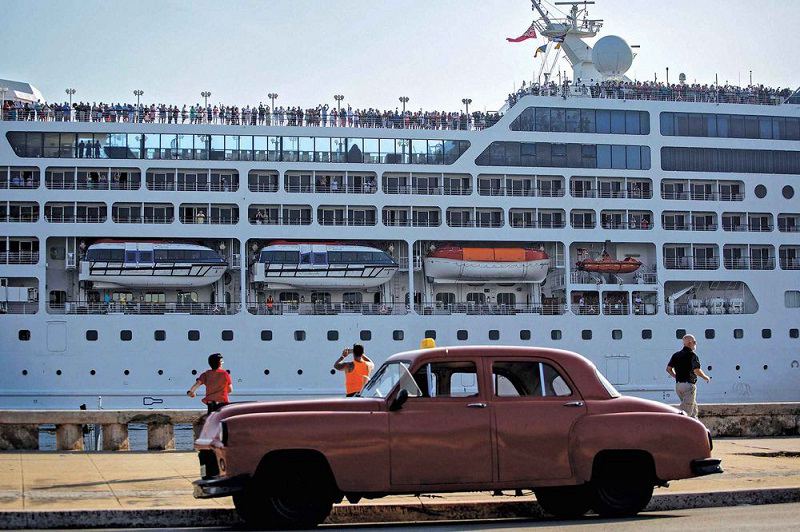
But they quickly learned that fewer passengers than expected wanted to fly to a poor nation with a paucity of first-class hotel rooms, very high prices for even modest lodgings, food shortages at restaurants, and the occasional lack of creature comforts (think toilet paper). Now another part of the travel industry figures it has the ideal solution for Cuba’s dearth of luxury: the cruise ship.
Carnival, Royal Caribbean Cruises, and Norwegian Cruise Line Holdings, the world’s three largest carriers, have added dozens of voyages to the island nation between now and 2019, betting that their floating resorts are perfectly suited to introduce tourists to the underdeveloped isle. “The airlines overestimated by a long shot how much demand there was,” says Norwegian Chief Executive Officer Frank Del Rio. “We bring our own infrastructure, all the comforts of America. The imbalance the airlines found is not at work for the cruise industry.”
The prospect of sailing to Cuba—right in the middle of the world’s largest cruising region—has had ship operators salivating for decades. Havana, with its nightclubs, cobblestone streets, cigar factories, and Hemingway hangouts, could someday be the busiest cruise destination in the Caribbean, ahead of the Bahamas and Mexico’s Cozumel, predicts Del Rio, who was born in Cuba before his family fled the island in 1961. “Havana is a brand,” he says. “Like all superstar brands, people are just naturally attracted to it.”
A couple of things could spoil the party. One is that the sudden surge in sailings could flood the market with available cabins, pushing prices down. At least nine cruise lines will be charting a course to Cuba this year. That’s even as air carriers including American Airlines Group and JetBlue Airways reduce the sizes of their planes serving the island and Frontier Airlines Holdings, Spirit Airlines, and Silver Airways have announced that they’ll stop flying there altogether.
There’s also uncertainty about U.S. relations with the island. On the campaign trail, Donald Trump said he’d reverse Obama’s easing of restrictions, and the National Security Council is conducting a review of Cuba policy. Del Rio and his industry colleagues are pressing ahead with their voyages to build a base of business, customers, and jobs. A lucrative start might make it unpalatable for the president to demolish his predecessor’s policy, says Robert Muse, a Washington attorney who’s advised companies on Cuban issues. “I think they’re trying to create a reality that may be sustained by the Trump administration,” he says.
Like the vintage automobiles that are part of Cuba’s appeal, some of the island’s tourism infrastructure remains stuck in the past. Hotels often lack things Americans have become accustomed to, such as internet access and hot water, says Lauren Vikander, marketing manager at InsightCuba, a tour operator that’s run educational trips to the country for 17 years. Because of the shortage of quality hotels, a room in a three-star property in Havana could sell for hundreds of dollars a night, she says, and it’s not unusual for even the nicest ones to run out of toilet paper and bottled water.
The average cost of a hotel room in Cuba has almost doubled since 2014, to $206 a night, according to the Havana Consulting Group & Tech. The average rate for a so-called five-star lodging is $362 this year. “Hotel rates went up because there wasn’t enough supply to meet demand,” says Collin Laverty, owner of Cuba Educational Travel. “You’re paying Hong Kong or New York City prices.”
Unlike airlines, cruise operators will actually benefit from such infrastructure challenges, according to Mike Boyd, an aviation consultant. “The cruise business is the only one that’s going to have a bonanza in Cuba,” he says. “They’re going to have a field day because of the way cruises work. You can walk the Malecón, go look at Hemingway’s house, and at the end of the day have a nice place to sleep, clean water, and good food. You don’t have that in Cuba.”
Yet it hasn’t always been smooth sailing. Not quite knowing when their companies would get approval to begin service to Cuba, cruise executives mustered whatever vessels they could. Royal Caribbean Cruises Ltd. pulled a ship from a Spanish affiliate last year, only to have it sail around the Caribbean for months waiting for the Cuban government’s go-ahead to start regular visits. That ship, the Empress of the Seas, took its first voyage to Cuba in April, with salsa lessons, staff wearing guayabera shirts, and an onboard lecturer who offered such advice as, “If you want to leave a waiter a gratuity, wrap it in a napkin and hand it to him directly,” according to CruiseCritic.com, an industry website.
Carnival Corp. was the first to offer Cuban voyages last year, with its relatively small, 700-passenger Adonia, a vessel lacking a casino and other amenities. The company promoted the Adonia as part of its socially conscious Fathom brand. That line—which mixed humanitarian service projects with vacation—didn’t catch on with consumers, so its parent company plans to offer Cuban stops on traditional ships such as the Carnival Paradise, which starts sailing to the island in June.
Del Rio has his own opinion of why the “voluntourism” approach didn’t work: “There’s something called the Peace Corps for that,” he says. Instead, the first voyage for a Norwegian-branded vessel was a party ship, the 2,000-passenger Sky, which made its maiden trip to Havana in early May. Rates on that ship started at $549 a person, including drinks and an overnight docking in Havana for guests to enjoy the city’s nightlife into the wee hours. Norwegian’s four-day excursions are among the shortest of the cruise industry’s Cuba itineraries, and it’s spicing up the onboard meals with local dishes such as sweet guava chicken and fried malanga, a root vegetable.
Still, Cuba and the cruise lines may have a way to go to please U.S. travelers used to more sophisticated experiences. Baltimore retiree Janine Dowdle says she and her husband were on the first Cuban voyage of Norwegian’s higher-end Oceania Cruises line in March. A tour of Old Havana was “really lame,” she says. A stop at a market lasted too long—45 minutes—and a lunch at a paladar, a privately operated restaurant, that was supposed to be included never happened. (She got reimbursed.)
Dowdle says she was charged on the island 13 percent to exchange her U.S. dollars into Cuban currency after she was told local merchants don’t take credit cards. And postcards she sent to the U.S. from Havana never arrived. “The old cars are cool,” she says. “The buildings are crumbling, it’s a shame.”
Del Rio says Cuba’s travel industry is improving, with the historic office building where his mother once worked as a secretary set to open June 9 as a five-star Kempinski hotel. And port facilities could be upgraded much faster if the U.S. embargo were lifted. “All the major cruise lines would be fighting to invest in Cuban infrastructure if we were allowed to do so,” Del Rio says.
The bottom line: Tourists have been discouraged by Cuba’s lack of first-class hotels and restaurants. Cruise lines say they’ll just ship in the solution.
bloomberg.com
Tankers: Growth in Chinese Crude Imports Falls from Record High in March
This was largely due to unusually heavy refinery maintenance which predominantly took place at state-owned refineries, as well as a slowdown in demand from teapot refineries after their March buying binge. Around 1.4 mmb/d of refining capacity in China was shut for maintenance in April (up by 47\% m-o-m), leading to an expected fall in crude throughput and placing a dent in crude imports.
However, Chinese crude imports in April still saw y-o-y growth of 5.6\% albeit lower than Q1’s average double-digit growth rate of 16.8\%. China’s crude imports have surged this year so far on the back of rapidly declining domestic production as well as robust stockpiling demand ahead of an expected rise in crude prices later in the year. We expect the y-o-y growth in Chinese crude imports to continue to ease in Q2 as the teapot refineries use up their first batch of crude import quotas. Continued heavy refinery maintenance in May is likely to weigh on Chinese crude import growth as well. China’s total product exports touched a three-month low at 3.5 mmt, down by 22.6\% m-o-m and 4.9\% y-o-y. This marks the first y-o-y decline in Chinese product exports in more than two years, which can be attributed to a likely drop in overall crude throughput as well as lower oil product export quotas released by the government.
As part of a wider mandate to curb pollution, the Chinese government has slashed the second batch of oil product export quotas to 3.34 mmt. After including general trade quotas amounting to 1.3 mmt, the total stands at 4.63 mmt which is still 62\% lower than the first batch of quotas in 2017 and 67\% down from last year’s second batch of quotas. The drop in Chinese product exports has weighed heavily on Medium Range (MR) tanker rates as discussed in our Asia Clean Tanker Market Outlook Q2 2017. Rates for the South Korea-Singapore route basis 40 kt plunged to a multi-month low of $240,000 on 27 April, down by 40\% from the beginning of 2017. Chinese product exports are expected to continue declining over Q2 due to the lower product export quotas, rumored upcoming consumption tax on mixed aromatics and light cycle oil imports as well as heavy refining turnarounds in May.
Source: OFE Insights
Navios Maritime Partners L.P. Provides Update for Acquisition of 14-Vessel Container Fleet from Rickmers Maritime
(“NMCI”), an affiliate, the 14-vessel container fleet (the “Fleet”) that Navios Partners agreed to acquire from Rickmers Maritime (the “Trust”).
It is expected that Navios Partners will (a) transfer the Fleet to NMCI at Navios Partners’ cost plus $5.0 million and (b) invest $30.0 million in return for equity. Navios Partners will also receive a warrant, with a five-year term, exercisable for an additional 6.8\% equity interest in NMCI. It is also expected that Navios Maritime Holdings Inc. (“Navios Holdings”) will invest $5.0 million in exchange for equity. Navios Holdings will also receive a warrant, with a five-year term, exercisable for an additional 1.7\% equity interest in NMCI.
The Fleet vessels are expected to be delivered starting the week of May 15, 2017. The acquisition is subject to a number of conditions, and no assurance can be provided that the acquisition will close at all or in part.
Source: Navios Maritime Partners L.P.
Maersk Line Sees Demand for Container Shipping Improving
Bulk carriers’ freight rates plunge 40\% in a month
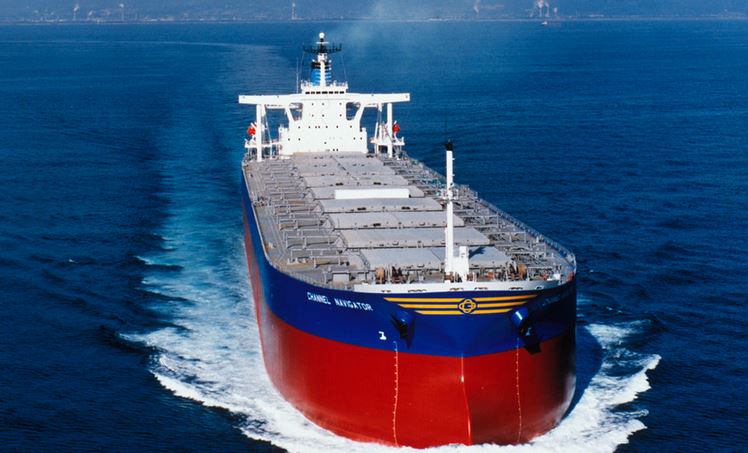
The index for capesize vessels, the largest dry cargo ships, is hovering around $12,000. This is a sharp decline from the over $20,000 reading at the end of March.
Downward pressure quickly grew over April as demand from China, iron ore’s major importer, drooped. Chinese steel producers had earlier rushed to import the raw material when prices of steel products were recovering. As producers accelerated imports in the hope of exporting steel products at higher prices, Chinese ports’ combined iron ore stockpiles shot up to a record 130 million tons.
Then the market shifted, steel product prices began declining and Chinese steelmakers became less enthusiastic about importing iron ore.
With demand for chartered carriers expected to weaken ahead, more shipping companies are signing cut-rate contracts.
Iron ore is not the only material suffering from wavering Chinese demand. Caution reigns over the coal market as well.
Global coal producers had enjoyed increasing demand from China, where the central government clamped down on production. But government policies in China could change anytime.
“Freight rates of midsize carriers will face downward pressure if the government decides to increase production and cut imports,” according to a report from Tokyo-based Tramp Data Service.
Even demand along the South America-China route is in decline. The reason? China’s imports of soy beans and other crops from countries like Brazil have peaked. As a result, average charter costs for panamax-size vessels — the largest boats that can squeeze through the Panama Canal — have declined to around $8,100, 38\% below the most recent high, in mid-April.
The shipping market faces a bleak outlook. Many companies suffered from record low rates last year. And today demand remains weak, according to Mariko Semetko, vice president of credit rating agency Moody’s Japan.
As China sits on plenty of iron ore and soy beans, vessels stay in port.
Worse yet, companies waited until this year to start using new vessels in the hope that rates would recover. They did not, and the supply of ships exceeds demand for them. Although Moody’s sees a “stable” outlook for the global shipping industry, Semetko said “downside risks remain high.”
Source: Nikkei
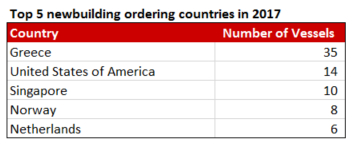
Greek newbuidling orders dominate in 2017 so far
 |
Here are the Greek owners who have ordered newbuildings so far this year by number of vessels and the market value of these newbuilding contracts on the day of the order. This measure of value differs to the order value spent at the yard.
 |
Many in the shipping industry are worried that there is an imbalance of supply and demand between the number vessels currently on the water and the amount of cargoes. This situation does not look to improve in the near future as there is just under 66 million DWT of tankers and bulkers to be delivered during the rest of 2017, representing 47\% of the current bulker and tanker order book:
 |
Over the last 5 years, a major source of finance & investment in the newbuilding market came from the private equity sector who invested heavily to capitalise in the post-crash market downturn.
Today the preference from the private equity sector is to invest in tonnage already delivered and on the water so that an immediate return on their investment can be realised.
This led to a lack of newbuilding finance available and resulted in a gap in deliveries at the major shipyards and therefore increased appetite from them to take orders.
In early 2017 the cash rich Greek community took advantage of this, securing a number of orders at competitive prices.
As we progress through 2017, yard capacity has reduced but continued buying demand from the private sector remains. This is one of the major factors that has led to the increase in newbuilding prices over the past 5 months.
VesselsValue.com
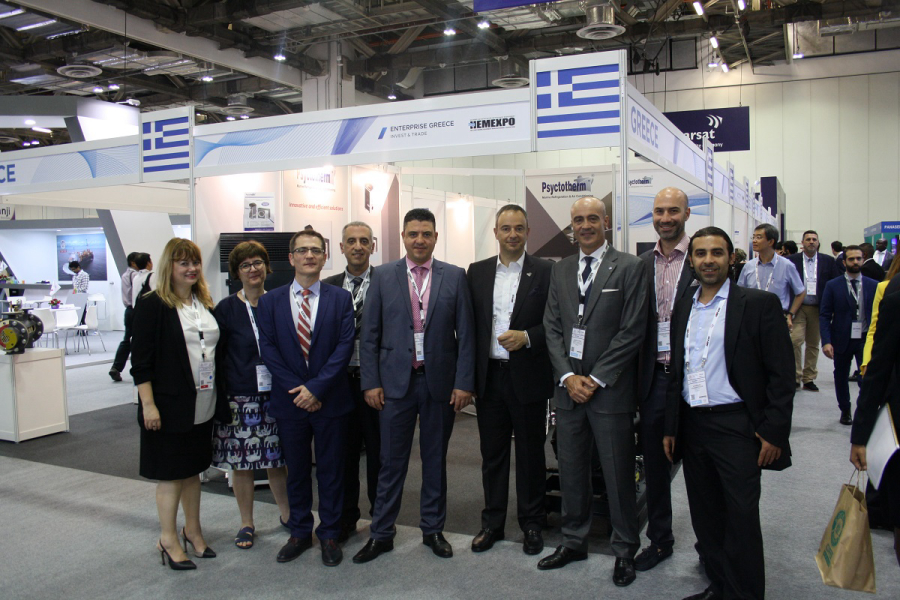
HEMEXPO companies at SEA Asia 2017
 |
Sea Asia was held on 25 – 27 April 2017 at the Marina Bay Sands, Singapore and co-organised by Seatrade and the Singapore Maritime Foundation. Sea Asia is well-attended by trade professionals and some of the most influential and respected leaders in the industry, delivering an unparalleled reach of key decision-makers.
This year, fifteen companies took part to SEA Asia. Specifically the companies that presented their state-of-the-art products were CAPTAIN NEMO, D. KORONAKIS, ENVIRONMENTAL PROTECTION ENGINEERING, ERMA FIRST, FARAD, SEABRIGHT, NANOPHOS, OLYMPIA ELECTRONICS, PRISMA ELECTRONICS, PSYCTOTHERM, SELMA, UTECO, WIMA, J&E PAPADOPOULOS and MARINE TRAFFIC.

Powered by  © Μaritimes 2019