



Capital Product Partners L.P. Announces Charter Rate Reduction of Five of the Partnership's Vessels
As part of the various agreements that HMM reached with its creditors and vessel owners under its voluntary debt restructuring, the owners of the HMM Vessels entered into a charter restructuring agreement on July 15, 2016. This agreement provides for the reduction of the charter rate payable under the respective charter parties by 20\% to $23,480 per day (from $29,350 gross per day) for a three-year period starting in July 2016 and ending in December 2019 (the "Charter Reduction Period"). The total charter rate reduction for the Charter Reduction Period for the HMM Vessels aggregates to approximately $37.0 million (the "Charter Reduction Amount"). The charter restructuring agreement further provides that at the end of the Charter Reduction Period, the charter rate under the respective charter parties will be restored to the original daily rate of $29,350 until the expiry of each charter in 2025.
In exchange for the Charter Reduction, the Partnership will receive shares in HMM that are expected to be freely tradable on the Stock Market Division of the Korean Exchange (at a share price reflecting a discount subject to a floor under a pre-agreed formula) and/or an unsecured loan to HMM (accruing interest at 3\% p.a.), in an aggregate amount initially equal to the Charter Reduction Amount and in proportions still to be determined (the "Charter Reduction Compensation"). The Charter Reduction Compensation is expected to be delivered by July 23, 2016.
Management Commentary
Mr. Jerry Kalogiratos, Chief Executive and Chief Financial Officer of the Partnership's General Partner, commented:
"We are pleased to see that the out-of-court restructuring of HMM -- one of the largest charterers of the Partnership in terms of revenues -- has been successfully agreed with the participation of HMM's key financial creditors together with the announcement that HMM intends to join the '2M Alliance' -- the world's largest container shipping alliance, which comprises Maersk Line and Mediterranean Shipping Co. ('MSC'). While the impact of the HMM Vessels charter rate reduction will adversely affect our cash flows until the end of 2019, when the charter rate under the respective charter parties is expected to be restored to the original rate, we believe that the reduced charter rate and the Charter Reduction Compensation that we expect to receive represents a more favorable outcome given the alternative employment opportunities in the current depressed container charter market."
About Capital Product Partners L.P.
Capital Product Partners L.P. (NASDAQ: CPLP), a Marshall Islands master limited partnership, is an international owner of modern tanker, container and drybulk vessels. The Partnership currently owns 35 vessels, including twenty modern MR (Medium Range) product tankers, four Suezmax crude oil tankers, ten Post Panamax container vessels and one Capesize bulk carrier. All of its vessels are under period charters to BP Shipping Limited, Cargill International S.A., CMA-CGM S.A., Cosco Bulk Carrier Co. Ltd., CSSA S.A. (Total S.A.), Flota Petrolera Ecuatoriana ("Flopec"), Hyundai Merchant Marine Co. Ltd., Overseas Shipholding Group Inc., Pacific International Lines (Pte) Ltd, Petróleo Brasileiro S.A. ("Petrobras"), Repsol Trading S.A., Stena Bulk A.B., and Capital Maritime.
www.capitalpplp.com
APICORP And Bahri To Launch US$1.5 Billion Shipping Fund
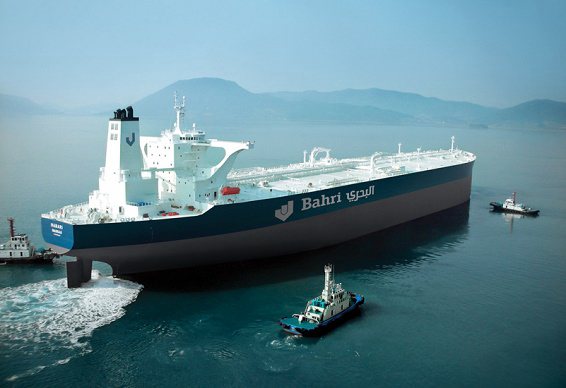
An agreement to establish the APICORP Bahri Oil Shipping Fund (ABOSF) between APICORP and Bahri was formally signed at a ceremony held yesterday 17 July in Riyadh, in the presence of His Excellency Khalid Al-Falih, Minister of Energy, Industry and Mineral Resources for the Kingdom of Saudi Arabia and Chairman of Saudi Aramco. The ceremony was attended by Dr. Aabed Bin Abdulla Al Saadoun, Chairman of APICORP, Abdulrahman Mohammed Al Mofadhi, Chairman of Bahri, Dr. Raed Al Rayes, Deputy CEO & General Manager of APICORP, Ibrahim Al Omar, CEO of Bahri and Naser Al-Abdulkareem President of Bahri Oil Transportation. Other senior officials and advisers from both organizations were also present.
The Fund’s target is to acquire approximately 15 Very Large Crude Carriers (VLCCs) over three phases with total investments of up to $1.5 billion composed of debt and equity. APICORP will be the main investor and fund manager, whilst Bahri will be the exclusive commercial and technical manager. APICORP will invest 85\% in the Fund with Bahri investing the remaining 15\%. The Fund will be a closed-end fund with a 10 years life period, and will deliver returns derived from the commercial employment of the VLCCs.
Dr. Aabed Bin Abdulla Al Saadoun, Chairman of APICORP said: “We are delighted to be launching this fund in partnership with an esteemed organization like Bahri, a leader in the shipping industry. APICORP continues to support the transformation of the energy industry and seek to raise the profile, both locally and internationally, of the sector through such investments."
Abdulrahman Mohammed Al Mofadhi, Chairman of Bahri said, “Bahri is committed to upholding its leadership position in the Kingdom of Saudi Arabia and the establishment of this fund in partnership with an extremely well-entrenched financial institution such as APICORP, is another step in that direction. This fund will not only reduce Saudi Arabia’s dependence on external crude carriers but also its earnings will be reinvested in the local economy. As with any other initiative, our growth strategy for this investment, firmly falls in line with Saudi Arabia’s plans for future development as laid out in the Kingdom’s Vision 2030.”
This agreement is in line with Saudi Arabia’s long term economic diversification plan, support economic growth and creating employment opportunities. The project is a step in the right direction to enhance maritime sector awareness and augment growth of this industry in the country. APICORP and Bahri have developed a unique structure that assists Bahri in increasing its VLCC fleet. This will also make Bahri the biggest VLCCs operator in the international VLCC market segment.
Dr. Raed Al Rayes, Deputy CEO & General Manager of APICORP commented: “The launch of this fund is a further example of APICORP's unrivalled ability to provide innovative financing solutions that meet the demands of the energy sector. A mechanism such as this not only helps the energy industry to meet the logistical challenges presented by the current dynamics, but also has the potential to deliver attractive returns."
Ibrahim Al Omar, CEO of Bahri said: “At Bahri we remain steadfast in our efforts to contribute to our national vision and goals, and are committed to playing an integral role in further developing and transforming the maritime industry in the Kingdom to strengthen its position as a leading regional logistics hub, thereby creating more employment opportunities for Saudis while continuing to play our part in the economic development of Saudi Arabia. With a current fleet of 36 VLCC’s and 10 new build orders scheduled for delivery in 2017-18, the 15 crude carriers proposed for acquisition under this fund will propel Bahri into becoming the largest operator of VLCC’s in the world.”
Dr. Al Rayes continued: "This fund is APICORP’s second shipping fund. The first shipping fund, APICORP Petroleum Shipping Fund (APSF), was launched as a five year closed-end fund in February 2013 and till today yields attractive returns by leveraging growth opportunities in the petroleum products tanker charter market. The Fund we are launching today will capture a unique opportunity thrown open by the recent changes in the maritime oil logistics market of the region.”
Dr. Al Rayes concluded: "On behalf of APICORP, I would like to thank the Ministry of Energy, Industry and Mineral Resources and His Excellency Khalid Al-Falih for their support, without which this Fund would not have been possible.”
BAHRI.SA
Global ship lending steady at $398 billion, despite world’s fleet growth says Petrofin Research
It’s worth noting though, that during the same period, the global fleet rose by 1.76\%, from 89,676 to 91,526 vessels, which is a clear testament that this growth was achieved through alternative finances, other than banking sources, like private equity funds, or enhanced equity by owners. Of course, this isn’t something new, as Petrofin’s data supports the view that bank ship finance in relation to the world fleet has been contracting as a source of shipping funding for the past eight years.

The Top 40 banks have a total of $397.84bn exposure to shipping.
Decade to Wind Down Faulty Shipping Loans

The bad bank created by the German states of Schleswig-Holstein and Hamburg will publish terms on the loans, granted during the pre-crisis shipping boom, in the third or fourth quarter of 2016, Philipp Nimmermann, deputy finance minister of the state of Schleswig-Holstein, said in an interview. It plans to increase the number of employees overseeing the process to as many as 50 by the end of the year from about 10 now, he said.
Overcapacity in the shipping industry is exacerbating the slump that drove HSH to tap state aid in the aftermath of the crisis, sparking an almost three-year review by the European Union that ended with the bank’s owners agreeing to set up the bad bank and sell a restructured HSH by 2018. With no end to the downturn in container and bulk shipping in sight, the EU has set the price for the loan package on 256 vessels at 2.4 billion euros, about half the book value on the bank’s accounts.
Entry Price
“We don’t know how the market will develop,” said Nimmermann, who previously worked as chief economist at BHF Bank AG in Frankfurt. “I don’t see why we should sell below our entry price of 2.4 billion euros.”
The EU has also ordered HSH to sell an additional 3.2 billion euros in soured loans to the shipping, real estate and aviation industries directly on the market by mid-2017 as part of the move to shift 8.2 billion euros of distressed assets off its balance sheet.
Under the stewardship of new co-head Ulrike Helfer, a former DVB Bank shipping banker who joined on Monday, the bad bank will rely on HSH’s industry expertise to manage the loans until it selects an investment bank to advise on the sales, said Nimmermann, declining to provide a timeline.
The special entity has all the credit-restructuring tools of a professional bank, allowing for prolongation and deferral of payments if discounts demanded by the market are deemed too high, Nimmermann said.
Assume Ownership
“If the market for shipping loans declines, we’ll take this into account and if it’s more efficient for us to keep a loan running by way of restructuring it, then that’s what we’ll do,” he said. In the case of insolvencies, the states may even assume ownership of vessels for a transition period, he said.
German lenders hold about one-quarter of global shipping loans, measuring about 400 billion euros. Under pressure to unwind legacy assets that went sour after the financial crisis, banks including Norddeutsche Landesbank and Commerzbank AG are also endeavoring to shrink their loan books, increasing the supply pool.
Further complicating shipping-loan sales is the trend by distressed-asset investors to turn their attention to other crisis-hit markets in the hunt for yield, according to Michail Zekyrgias, managing director of Global Credit & Special Situations at Bank of America Merrill Lynch.
“It’s not only shipping that is at a certain point in the cycle, but the whole commodities sector, oil and gas, the offshore sector, the entire U.S. high-yield market,” Zekyrgias said. “There are fewer players to buy those shipping loans now than was the case two or three years ago.”
source:bloomberg.com
RBS receives bids for Greek shipping business – sources
They told Reuters that the operation was worth about $3 billion although sources in the shipping business said that problems with lending to the industry, much of which is in a deep downturn, would affect the value of what could be recouped via a sale.
Credit Suisse and China Merchants were among the suitors bidding, the sources said.
RBS and Credit Suisse declined to comment, while China Merchants did not immediately respond to an emailed request for comment.
The British bank, which was rescued with a 46 billion-pound government bailout during the financial crisis, had previously been a top lender to the global shipping industry and its Greek office played a pivotal role. The business also includes a banking licence as well as about 40 staff, the sources said.
“RBS has held preliminary discussions with a number of interested parties,” one source said. “The big difference here is they are not selling a portfolio of loans but a business, with staff in it able to do the debt collection stuff.”
RBS, which is 73-percent state-owned, is in the midst of a restructuring aimed at returning the bank to profit after eight straight years of losses. In July 2015, Reuters reported it was winding down its Greek operation and putting its shipping loans portfolio up for sale.
While the oil tanker trade has picked up, the container and dry bulk shipping industries are struggling with a glut of ships, a faltering global economy and weaker consumer demand.
One shipping industry source said part of the RBS portfolio included non-performing loans due to the worsening conditions in some sectors.
“RBS has tried to put this sale together for some time. In the past two quarters, conditions in shipping have got worse and that has had some effect on the portfolio,” the source said. “That will mean that there will have to be some price-adjustment for whatever is on offer.”
Other sources said the loans could carry a 30 percent discount in order to attract interest, adding that some buyers may be interested only in parts of the business.
“It depends on the level of interest and also how quick a sale they want,” a ship finance source said.
The bank’s total shipping exposure reached 7.1 billion pounds ($10.4 billion) in the first quarter of this year, down from 7.5 billion pounds at the end of last year.
Non-performing loans to the industry – those on which repayments are significantly in arrears – increased to 827 million pounds in the first quarter of this year from 434 million at the end of 2015, RBS said in its quarterly results.
Reuters reported earlier this week that the European Central Bank has launched a review of banks’ lending to the shipping sector. This has raised concerns among lenders that they may be required to set aside more capital and make higher loss provisions against loans to the industry.
CHINESE INTEREST
China Merchants, one of the country’s biggest conglomerates, has been looking for cheap shipping and commodities-related assets in Europe, hoping to take advantage of the market downturn.
In March sources told Reuters that China Merchants had made an informal bid to buy London’s Baltic Exchange, which has been at the heart of global shipping for centuries.
Greece agreed in April to sell a 67 percent stake in Piraeus port to Chinese shipping giant COSCO for 368.5 million euros ($416 million).
“For a Chinese bank, buying RBS’s Greek business is an inroad into Europe. For others like Credit Suisse, RBSwill have to offer something more as Credit Suisse is already a big player now in Greece,” another ship finance source said.
A separate banking source added: “It is not clear if Credit Suisse’s capital position would allow them to strike a deal, especially if Chinese players are competing for the asset.”
($1 = 0.6816 pounds)
($1 = 0.8850 euros)
Copyright 2016 Reuters.
MRV regulations in the EU – another challenge for ship operators
Although approval of the ship-specific plans in a one-off exercise, compliance will have to be validated on an annual basis.
Lloyd Register’s (LR) environmental manager Kathrin Palmer believes up to 15,000 ships may be affected by the regulations. But, she says, few owners have even started to make the necessary preparations. Such ships represent about 55\% of all vessels calling in EU ports, according to LR estimates.
The regulations represent unilateral action by the EU and come as the IMO prepares its own set of similar emission monitoring requirements. Although much the same information on fuel usage and cargo carried will be required by both, the EU requires ships to have a document of compliance issued by an accredited verifier while the IMO regulations will be flag state-driven. For a period of time, there is likely to be an unavoidable period of overlap, Palmer believes.
The situation is further complicated by the fact that EU regulators have not yet approved any accredited verifiers because the relevant criteria have not been defined. The criteria, Palmer said, are currently being drawn up by the EU but are unlikely to be established before the end of this year. This will leave just a few months in which ship operators can have ship-specific MRV plans prepared, approved and submitted in time for the August 2017 deadline.
Ships without documents of compliance will be allowed to call once in EU ports from January 2018, but on subsequent port calls, they will be required to have valid documentation in place. LR has already carried out pilot projects with some ship operators including Tsakos Columbia Shipmanagement which is believed to be the first company to have a sign-off from the class society. The pilot study focused on the reliability of data reported from the vessel, the accuracy of calculations made by the company’s personnel ashore, and the risks relating to the MRV process.
source:http://www.seatrade-maritime.com/
Paragon Shipping: Moving forward
To our shareholders:
Now that we are half way through 2016 I want to update you on recent events, explain the actions we are taking at this difficult time, and give you my thoughts moving forward.
The famous inventor Thomas Edison once said, “Genius is one percent inspiration and 99 percent perspiration.”
I find that steering Paragon through a long, cyclical downturn is just that: a lot of hard work. We need to continue to work hard, stick to our plans, and ultimately get through these hard times.
Like you, I have watched as maritime shipping has been mired in a down cycle. The entire dry bulk shipping sector has suffered and, along with the container and LNG sectors, we are at cyclical lows.
I have seen these times before. I have been in marine shipping, as a shipping company founder, executive and technical superintendent supervising vessels for other shipping companies, for more than 35 years. These highs and lows are a part of life and we understand the classically cyclical nature of the business. Times like these are not only financially difficult, they are humbling as well.
At Paragon, we are doing the prudent thing. We are managing through the downturn, working closely with our lenders, and positioning ourselves to be able to capitalize when times change—which they will.
In recent months we have taken important steps to:
Substantially reduce our costs;
Significantly improve our balance sheet by entering settlement agreements with all lenders;
Extinguish $135 million in debt through sale of vessels which have been cash flow negative;
Preserve cash liquidity by raising $1 million through a series of convertible notes;
Extend the delivery of three Kamsarmax newbuilding drybulk carriers to the third and fourth quarter of 2016;
In exchange for 550,000 shares of Paragon common stock, entered into an agreement with Allseas Marine S.A. to write off debt, waive fees while Allseas Marine S.A. assumed all contractual shipbuilding obligations related to the construction of two new Ultramax carriers.
It’s difficult to predict exactly when the cycle will turn. The analysts who follow shipping are quite often wrong. Experience tells us that change often comes when you least expect it. And when it comes, things can change quickly.
We believe that better days are coming. The Baltic Dry Index has been gaining traction even after the recent Brexit vote. Market sentiment has clearly shifted in recent months, away from the depressed views back in January and February.
I can promise you we will be ready when the dry bulk sector begins to rebound. If I didn’t think this was a battle we could win, I wouldn’t be in the fight. I am a significant Paragon shareholder myself. Our interests are aligned.
We are optimistic about the future and are positioned to exploit any opportunities. We appreciate your ongoing support and trust, and hope you will continue to have faith in our leadership throughout the remaining months of 2016 and into the future.
Sincerely,
Michael Bodouroglou
Founder, Chairman and Chief Executive Officer
Paragon Shipping Inc.
Exclusive: Deutsche Bank to sell $1 billion of shipping debt to boost capital - sources

While the oil tanker trade has picked up, the container and dry bulk shipping industries are struggling with their worst downturn due to a glut of ships, a faltering global economy and weaker consumer demand.
Banking and finance sources familiar with the matter said Germany's biggest lender was initially looking to offload at least $1 billion.
"They are looking to lighten their portfolio and this includes toxic debt. It makes commercial sense to try and sell off some of their book," one finance source said. "They are not looking to exit shipping."
Deutsche Bank, which has around $5 billion to $6 billion worth of total exposure to the shipping sector, declined to comment.
Germany was one of the world's main centers of global ship finance before the 2008 financial crisis, and lenders there still have around 80 billion euros ($88.62 billion) on loan to the sector.
Deutsche Bank's ratio of non-performing loans stands at about 5 percent, compared with 10 to 15 percent among competitors, one banking source estimated.
Reuters reported last month that the European Central Bank has launched a review of banks' lending to the shipping sector. This has raised concerns among lenders that they may be required to set aside more capital and make higher loss provisions against loans to the industry.
"Every bank with a significant amount of shipping loans is evaluating options to sell some of them. The ECB probe has encouraged banks even more to pursue sales," another banking source said.
"However, it is difficult to agree with buyers on the mix of the portfolio such as performing, less performing, non-performing loans and different types of ships."
Deutsche Bank's global head of ship finance Klaus Stoltenberg said last month that banks would be forced to mark down their loans and adjust portfolios to market values over the next two years.
Deutsche will join other German banks, including state-owned lender HSH Nordbank [HSH.UL] and NordLB [NDLG.UL], who are trying to sell off shipping loans.
Royal Bank of Scotland (RBS.L) is also looking to divest its Greek ship finance business, which is worth around $3 billion, Reuters reported in June.
"It is going to become a more crowded market place and any buyers for these portfolios will want a bigger discount now," another finance source said.
NordLB as well as HSH, Commerzbank (CBKG.DE), DVB (DVBG.F) and KFW [KFW.UL], have set aside more capital and made higher loss provisions against loans to the industry.
Deutsche Bank has embarked on an overhaul of its overall business. The International Monetary Fund said last week the bank's links to the world's largest lenders made it a bigger potential risk to the wider financial system than any other bank.
reuters
(Editing by Rachel Armstrong and Louise Heavens)
Main themes for European Shipping Week 2017
 |
Digitisation and modernisation of the policy framework are indispensable for the maritime sector to become even more quality oriented, sustainable and competitive in the years ahead. These are also the policy priorities outlined by the European Commission in view of recent developments in the sector and of progress in the implementation of the 2009 EU Maritime Transport Strategy.
Next year’s European Shipping Week, to be held in Brussels from Monday February 27th to Friday March 3, will offer the ideal platform for both industry and regulators to come together to debate and agree a pathway of these and other issues moving forward.
ESW17 will fall under the Maltese Presidency of the European Union and Valetta has already announced that it will focus its maritime agenda on migration and the Mediterranean. Decarbonisation of shipping will also come under discussion during the week, either in the context of the flagship conference to be held on Wednesday March 1st or through a dedicated event.
Welcoming the announcement of the week’s theme, Patrick Verhoeven, Secretary General of the European Community Shipowners’ Associations (ECSA), said representatives from the European Commission, European Council of Ministers and the European Parliament together with senior representatives from the European and global ship owning, chartering, ship management, legal, banking and maritime services sectors would be present in force.
“It is not often industry gets the chance to discuss such key issues with such high level law-makers. To accommodate both the short and longer term agenda for EU shipping policy, it is proposed that the main conference works around a format that alternates plenary sessions on major political questions with break-out sessions that go more in-depth into the concrete topics of the EU shipping policy framework that is taking shape as a result of the mid-term review of the EU Maritime Transport Strategy. The breakout sessions will especially emphasise the strategic angle and the overall policy objectives,” he stressed.
The European Commission, through DG MOVE, has endorsed European Shipping Week 2017 and formal patronage is already being sought from it as well as the European Parliament and the Council of Ministers.
The initiative, which was started in 2015 by the European Community Shipowners’ Associations (ECSA), will be run by a Steering Group made up of Europe’s main shipping organisations as well as the European Commission and Shipping Innovation. The shipping organisations involved on the Steering Group include: ECSA; Cruise Lines International Association (CLIA) Europe; European Community Association of Ship Brokers and Agents (ECASBA); Interferry; the European Dredging Association (EuDA); the World Shipping Council (WSC), the European Transport Workers’ Federation (ETF), the European Tugowners’ Association (ETA) as well as the European Maritime Pilots Association (EMPA). Other European shipping associations may also be invited to support the initiative and hold relevant events during the week.
European Shipping Week will be held in Brussels during the week of February 27th – March 3, 2017 when shipping industry leaders from Europe and around the world will descend on Brussels to meet and network with top legislators from the European Commission, European Parliament and the Council of Ministers.
The week‐long series of high level events will bring together the major players in the shipping industry. More information about European Shipping Week 2017 is available at www.europeanshippingweek.com
ESW is organised by Shipping Innovation – the driving force behind the highly successful London International Shipping Week (LISW).
ECSA
AlixPartners sees more dry bulk firms going bust
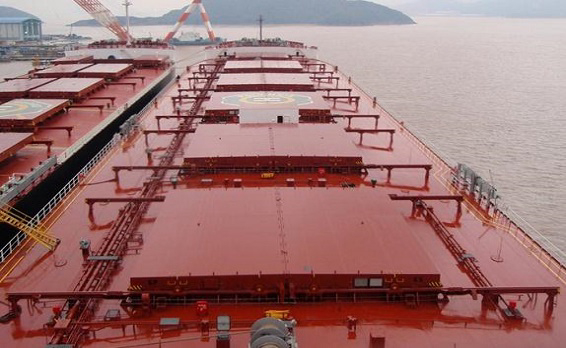
The study found that industry revenues fell 18\% from 2014 to 2015. while earnings before interest, taxes, depreciation, and amortization (EBITDA) plunged 168\% from $169m to losses of $115m.
"Conditions are likely to worsen in 2016," the study warned. Factors causing this include China’s economic slowdown continuing to depress demand for basic materials with coal imports in particular down 30\% from 2014 to 2015.
Exacerbating the problem is the perennial problem that industry consolidation and vessel scrapping remain well below the levels needed to lead to a significant rebound in pricing, especially as easy funding and desperate shipbuilders continue to push the building new vessels.
"Even companies that restructured a few years ago are struggling, and at this point, the majority of companies in our 2016 Dry Bulk Shipping Outlook are at risk of bankruptcy," the study concluded.
Supporting its position, AlixPartners found that almost every company in its study is in distress, according to the Altman-Z score, an indicator of potential bankruptcy, with the average score for the sector already dropping below 1.00. A score below 1.80 is generally accepted as indicating a high probability of financial distress.
According to the global business advisory firm, the 2015 average was 0.46 compared with the 2013 average of 1.91. "Leverage is common in the industry; indeed, it usually forms part of a company’s operating model. However, as their performance faltered, companies found themselves struggling to generate the cash flow needed to sustain their leveraged models," AlixPartners explained.
"With substantial restructuring activity already in process in 2016, it’s expected the industry will see even more activity as the year proceeds," it predicted.
Remedial action suggested includes working proactively and forming close alliances with all company stakeholders to preserve cash and sustain a range of options instead of waiting until liquidity runs out; minimising costs by improving both operating performance and applications of working capital; stop newbuildings while also continuing to scrap or idle older or less efficient vessels to more aggressively manage supply; and finally seek opportunities to consolidate through M&As, alliances or pools to more effectively manage fleet utilization.
Looking ahead AlixPartners concluded that "three years from now, demand may come back, but shipowners should focus on the next 36 months and act as though depressed demand is here to stay".
www.seatrade-maritime.com

Powered by  © Μaritimes 2019