



Celestyal Cruises to add new destinations by 2018

 |
He said that a total of 17,000 Greeks chose to have a sea cruise holiday this year, up from 13,000 in 2015 and stressed that home porting growth was based on two legs: first, the development of basic infrastructure in six ports to be able to accomodate new generation sea cruise vessels and the second, a long-term leasing and developing of specific port operations with sea cruise companies based on an offset measures agreement. He noted that Celestyal Cruises has recommended this alternative model to Hellenic Republic Asset Development Fund for the port of Lavrio, but without any developments on the issue so far. Commenting on the official take over of management of Piraeus port by Chinese COSCO, Anastasiadis said a "tested and successful model" of large European ports should be followed and to have a closer cooperation with municipal authorities to resolve any problems in the accomodation of sea cruise passengers.
He noted that Celestyal Cruises' top priority was to preserve job positions despite a prevailing difficult economic environment and particularly to preserve the quality of services. "The crisis has forced us to be very careful with what we do but at the same time it gave us an excellent opportunity to promote our product right and focusing on each passenger needs," he said, adding that in order to maintain a stable pricing policy, the company chose instead of offering a menu with 30 different food to offer a menu of 20 food plates of high quality.
"Greeks have finally realized that sea cruise is one of the most affordable and comfortable ways for holidays," Anastasiadis said.
He stressed that geopolitical developments in the eastern borders of Greece negatively affected sea cruise and tourism in general as foreign visitors -particularly from far away countries such as Americans, Canadians, Australians and Asians- are reluctant to buy a holiday package that will also include Turkey. "We have strong messages that in 2017, tourists from the US market wishing to visit Greece will be able to buy alternative tourist packages without any Turkish destinations," he said. He noted that most airlines should re-examine their ticket policy to Greece to boost tourism in the country.
Celestyal Cruises will include Nafplio and Chania in its schedule for 2017 and for 2018 the company plans to offer three- and four-day cruises also in the Ionian Sea, with possible new destinations the ports of Pylos, Kalamata, Zakynthos, Cephalonia, Igoumenitsa, Corfu, Sarande in Albania and Kotor in Montenegro.
Anastasiadis said a Greek sea cruise commission, bringing together municipal authorities, port managements and representatives of sea cruise companies, could contribute to resolve several issues related with sea cruise industry in the country. Commenting on home porting, he said that a national sea cruise commission must draft a strategic plan to determine which six ports should develop infrastructure -beyond Piraeus- capable of accomodating new generation sea cruise vessels. Anastasiadis said there were two choices on how to invest in port infrastructure. Either the state secured these funds through European programs, or to sign concession contracts with sea cruise companies. "We have recommended this model for the port of Lavrio and I believe that other companies will also follow. As a sea cruise company we will develop the necessary infrastructure on a part of the port, using our own money, in the form of long-term leasing, while the property will remain at the hands of the state," he said.
China’s One Belt One Road initiative backs shipping growth in longer term
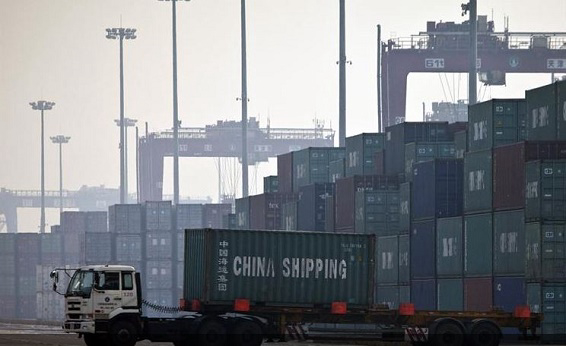
The economic development strategy and framework, proposed by China under president Xi Jinping, has gotten countries in the region gearing up to take advantage of the widening trades from China, both inland and at sea, with a particular push to infrastructural developments.
David Mann, chief economist Asia at Standard Chartered Bank, said the OBOR initiative has reinforced and expanded the existing trades between China and Asean in particular, be it on the ‘belt’ side leading to Europe or on the maritime lane.
“China has been finding destinations to invest in, and the OBOR initiative is expected to gain even more traction... give it another year or two,” Mann told delegates at the Marine Money conference held in Singapore on Tuesday.
Over at Hong Kong and Singapore, the two key maritime cities have established their respective OBOR offices to facilitate the expansion of Chinese trade.
“We have (OBOR) office in Singapore under the ministry of trade and industry, looking at how we can bring Chinese investment into Southeast Asia,” said Chay Yiowmin, partner, corporate finance, BDO Advisory.
“Singapore is considered a financial centre of this region, and a lot of money from China are parked here for investment to build up infrastructure in neighbouring countries, for example, Indonesia,” Chay said. He added that funds are also channeled into developing second-tier Asian ports for them to cater to increasing shipments of commodities to energy-starved China.
Hong Kong also has an OBOR office to give suggestions and recommendations on strategic and trade growth to the Hong Kong chief executive, according to Benjamin Wong, head of transport and industrial, InvestHK.
“We are very upbeat on the OBOR initiative. On the finance side, the monetary authority has established the infrastructure financing office as a platform for stakeholders,” Wong said, adding that Hong Kong’s strengths in finance, logistics and trade would play a key role in promoting the OBOR inititative.
In the much longer term say over the next 10-20 years, according to Standard Chartered’s Mann, the OBOR may see linkages to South Asia, primarily to India, to aid infrastructural developments in that region and to promote the establishment of new industries.
http://www.seatrade-maritime.com/
Navios Maritime Acquisition Corporation Provides a Secured Loan of $70 Million to Navios Holdings Inc.
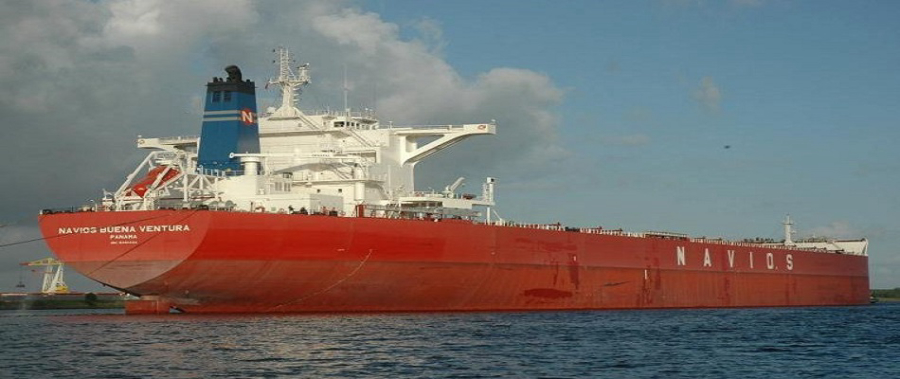
The Loan Facility bears interest of 8.75\%, compounded semi-annually and is secured by (1) all of Navios Holdings’ interest in Navios Acquisition, composed of 65,301,220 shares of common stock and 1,000 preferred shares (convertible into 7,676,000 shares of common stock) and (2) 78.5\% of Navios Holdings’ interest in Navios South American Logistics, Inc. (“Navios Logistics”) composed of 10,021 shares representing a majority of the shares outstanding of Navios Logistics. Interest will accrue and be payable upon the maturity of the loan.
A 1\% fee was payable on the closing.
A Special Committee comprised of independent directors of Navios Acquisition negotiated and approved the terms of the Loan Facility with the assistance of the Special Committee’s outside financial and legal advisors. In approving the Loan Facility, the Special Committee determined that the Loan Facility was fair to Navios Acquisition and in the best interest of Navios Acquisition and its shareholders.
Duff & Phelps, LLC served as financial advisor, and Gibson Dunn & Crutcher, LLP and Ince & Co., served as legal counsel, to the Special Committee.
Source: Navios Maritime Acquisition Corporation
Greek government aims to 're-shape shipping' in the country
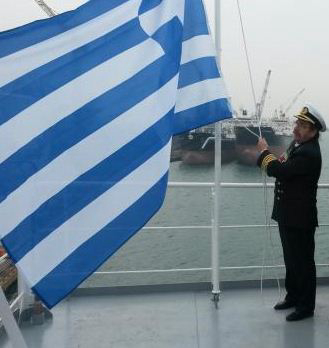
Dritsas, an MP for Piraeus, called on the Union of Greek Shipowners (UGS) and the Panhellenic Seamens Federation (PNO) to sign a new collective agreement, which has been on the shelf for months.
Indeed, Greece could be heading for an even more turbulent time on the labour front as the leftist government is set to tell the country’s creditors it cannot comply with labour reforms demanded by the IMF as condition of its support for the country’s third bailout. The government considers the IMF’s demands as a ban on the right for workers to negotiate wages and conditions on a collective basis.
Labour Minister George Katrougalos says the government will fight to preserve collective bargaining, describing the IMF as “an extreme player”. Katrougalos said: “We want to reinstate collective bargaining because it is the core of the European social model.”
Both the EU and the IMF say an inflexible labour force has helped to make Greece uncompetitive, contributing to its economic malaise, but the IMF is seen as especially opposed to any effort to restore collective bargaining.
Shipping’s Dritsas says the Ministry, the UGS and the PNO have been working towards this goal, saying, "I hope we are at the beginning of the end" and a new agreement "will not only regulate salary issues, but set a minimum, to dramatically increase the complement of Greek seamen working on Greek ships".
Dritsas said "the sea, seamanship, and Greek sailors are more than a professional and productive activity, not just from the foreign currency and economic perspective, but also as culture".
He noted Greece has not got many “firsts” in areas of economic productive dynamism, but "it is the first global maritime power” added "Greek shipping is mainly about sailors".
UGS president, Theodore Veniamis says a collective agreement has to be based on realism. Veniamis reiterated the position of Greek shipowners saying: "At a time when our country and our society is plagued by unemployment, particularly among young people, we have expressed our desire many times to revive Greek seamanship, which the Greek owners appreciate and trust. At the same time competitiveness has always been, and still is, a decisive factor for the survival of the Greek ship in the international maritime arena so that it will remain a strategic pillar and growth driver of the Greek economy.
“Therefore, a prerequisite for signing the collective labour agreement is that it would be based on new realistic terms, taking into account the conditions in the Greek and international maritime labour market.”
PNO secretary general, John Halas, scoffed at Dritsas and Veniamis, saying he “could not see go” for the proposed -framework to increase employment in Greek vessels.
In a statement Halas noted the position of seafarers’ unions is contrary to the government's intentions and the shipowners proposals on the table.
Indeed, Halas said the “proposal raises a serious issue regarding Greek legislation” noting that in countries like Greece, where there is a collective agreement providing better terms than the international norm, these conditions are not to be tampered with and weakened. Further, Halas maintains the MLC [Maritime Labour Convention] is “clear in its preamble and its text indicating local agreements cannot be changed for the worse”.
Halas said the PNO has referred the whole matter to lawyers.
By David Glass from Athens
www.seatrade-maritime.com
German banks count cost of global shipping crisis
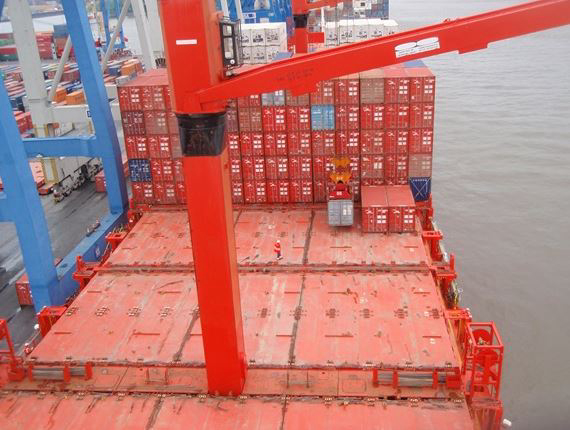
The lenders - among the biggest backers of shipowners over the past 20 years - are behind up to a quarter of the world's $400 billion of outstanding shipping loans, three shipping financiers told Reuters.
This would make them collectively more exposed than banks from any other single country in terms of outstanding debt to the sector.
These institutions are now grappling with a near decade-long slump of parts of the shipping sector since the 2008 financial crisis that is also hurting European peers, such as Britain's Royal Bank of Scotland (RBS.L).
"German banks account for close to $100 billion of shipping debt out of a world total of around $400 billion," said Dagfinn Lunde, who spent more than a decade as head of shipping at Germany's DVB Bank until the end of 2013.
The same estimates of German bank exposure and total sector debt were made by two other shipping finance executives, who declined to be named, citing the confidentiality of their business dealings.
Lunde, now a board member of Norway's Maritime and Merchant Bank, said German lenders had been "throwing money" at the sector when shipping business was brisk. "When the values tumbled, they were left with massive exposure to toxic debt."
As worsening conditions in the shipping sector leave some shipowners unable to meet payments, it is unlikely that many banks will see a full return on their investments. This could leave them having to sell down their debt at a discount to distressed buyers or to write off some of their loans.
The shipping difficulties come at a time when European banks are already bogged down by a sluggish economy and face tough capital demands from regulators which are eroding profitability.
SHIPPING 'IMPLODING'
Segments of the shipping industry are suffering their deepest downturn ever as international trade slows. Around 90 percent of world trade is transported by sea.
South Korean container line Hanjin, which filed for receivership on Aug. 31, is the latest casualty in a crisis exacerbated by a glut of ships, many of which were built before the financial crisis when the global economy was healthier.
"It seems like the shipbuilding and ship finance sectors are ... imploding," Anthony Gurnee, chief executive of ship operator Ardmore Shipping Corp (ASC.N), told an industry conference in London last week.
His comments echo remarks made by Stefan Ermisch, the chief executive of shipping finance specialist HSH Nordbank [HSH.UL], who recently described the shipping sector as "on the floor".
Before the financial crisis, when a dry bulk ship or oil tanker could earn over $200,000 a day, German banks were among the most prominent financing players. Such vessels now command around $10,000-$15,000 a day.
Banks' exposure varies widely across German lenders such as Deutsche Bank (DBKGn.DE), Commerzbank (CBKG.DE) and state-backed lender NordLB [NDLG.UL]. Part of the risk stems from exposure to closed investment funds - called KG houses - which bought ships and leased them to big shipping companies.
Commerzbank and Deutsche Bank declined to comment on its shipping finance activities and plans.
"For German shipowners, Hanjin is bad news as for them a large company falls away with which they can charter their ships," Oliver Faak, global head ship and aircraft finance at NordLB, told Reuters.
He warned the outlook for the oil tanker market was worsening. "Many shipping companies have ordered tankers that are now being delivered. Supply is rising but the demand hasn't changed."
OFFLOAD DEBT
Bankers said the scale of the lenders' potential losses from the loans now depended on how strict the European Central Bank would be in forcing them to tackle the problem.
In June, people familiar with the matter said the ECB had launched a review of banks' shipping finance, raising concerns among lenders that they may be required to set aside more capital to cover possible losses.
A regulatory source familiar with ECB policy said the review was an initial step. The ECB is currently analysing the data and will likely take further measures afterwards, said the source, adding: "The ECB suspects some European banks use too optimistic models to calculate the value of shipping loans and ships."
The ECB declined to comment.
In the meantime, banks are trying to offload some debt.
Sources have told Reuters RBS is trying to sell its Greek shipping business, which is valued at around $3 billion, as well as up to $500 million of a separate portfolio of Turkish shipping loans.
NordLB said in August it was selling a $1.5 billion portfolio of shipping loans to KKR Credit, part of private equity firm KKR (KKR.N), and a sovereign wealth fund.
But one of the three shipping financiers said there were few buyers. "The market is awash with distressed debt. Once again the banks will be stuck."
Nicholas Tsevdos, managing director of Ocean Way Navigation, a London-based shipping investor and asset manager, said the outcome of RBS efforts to sell off its shipping exposure was among the test cases being watched.
"If they fail to get buyers for the full books, it is not a great incentive for others to do the same," said Tsevdos, whose firm has advised on bank financing deals in recent months.
NordLB said earlier this year it aimed to cut its overall shipping exposure to 12 to 14 billion euros ($16 billion) within the next three years from 19 billion euros at the end of 2015.
NordLB's Faak said the banks would achieve "reduction targets because they have to reach them".
"The only question is, at what price?"
www.reuters.gr
Loss of hire insurance – back to basics
loss of freight and any other form of income that is lost as a direct consequence of loss of time. Its principal role as a risk management tool is to protect cash flow, and it is often demanded by banks to ensure owners will be able to meet loan repayments in the event of an incident that deprives the vessel of income.
Two key premises
The loss of time must be due to damage that is in principle covered under the relevant hull & machinery (H&M) policy, or one of four special circumstances mentioned in clause 16-1 of the Nordic Plan (the Plan).
The assured must show that the loss of time resulted in an actual loss of income.
Relationship to the hull & machinery policy
The basic principle is that if damage arises which is recoverable under the conditions of the Plan, the loss of hire policy will respond. If the H&M insurance is written on conditions other than the Plan, and these have been accepted in writing by the loss of hire insurer, then those conditions will determine the recoverability of the underlying hull damage and so the loss of hire.
It is important to note that in all other aspects, it will be the conditions in the Plan that govern the cover. One example is the timing of loss. The loss of hire insurers are not bound by the H&M adjustment as to which policy the claim falls under. If, for example, an H&M adjustment under English conditions apportions the claim over all the policies in force since last dry-docking, it may be that the loss of hire claim is deemed to fall 100 per cent on the last policy pursuant to the Plan’s provisions dealing with the timing of the loss. If the assured wishes to have consistency across its policies with respect to timing, this must be specifically agreed in the wording of the loss of hire policy.
Protecting actual loss of income
As for all property insurance, the basic premise is that the assured has an economic interest in the subject-matter insured. Shipowners clearly have an economic interest in their vessels both in terms of capital and usually as a source of income. However, weak shipping markets and correspondingly high levels of layups and scrapping can prove a challenge for assureds seeking to recover under a loss of hire policy in the event of damage.
Scrapping voyages
At one end of the spectrum, a vessel en route to a breakers yard clearly has no value as a source of regular income. The only economic interest is its scrap value minus costs. If the vessel is damaged before reaching the yard and requires temporary repairs in order to complete the journey, the time lost will not deprive the assured of any loss of income. In fact, any loss of hire policy should be cancelled once the scrapping voyage has been fixed and no future earnings will accrue.
Awaiting orders
At the other end of the spectrum, a vessel awaiting orders off port in a weak but otherwise active market where vessels of a similar size and specification are being fixed on a regular basis, clearly has value as a source of income. Should the vessel sustain damage resulting in being taken out of the market for a period to perform repairs, the assured will have a valid claim under its loss of hire policy.
The threshold of proof in such cases is very low. The commentary to the Plan describes it as a reasonable chance of obtaining employment. In practice, this means that as long as the vessel is in an active market, no further proof of loss is necessary.
Layups
Vessels in layup are a challenge from a risk management perspective. The primary objective of any layup is to save running costs, including insurance premiums. Many owners will choose to reduce the daily amount under the loss to hire policy to zero, avoiding premium payments but keeping the policy active on paper. This is generally a sensible option if there are no foreseeable prospects for the vessel. Should damage occur that requires removal and repair, no income will be lost. However, once it becomes clear that the market is picking up and there may be a chance of re-activating the vessel within the next few months, the owner should increase the daily amount under its loss of hire policy to protect potential future income. If left until the day the vessel is due to start a new charter, the owner risks being without cover should an incident occur the week before, which, in a worst case scenario, causes cancellation of the charterparty.
Fixed and agreed
Additional clauses in loss of hire policies to the effect that the daily amount is fixed and agreed whether chartered or unchartered often create confusion, and in reality do not alter the cover provided by the standard wording of the Plan. One common misconception is that such clauses remove the requirement of showing a reasonable chance of employment – they do not. Even where such a clause is incorporated into the policy, a vessel en route to a scrap yard for example, will not have a valid loss of hire claim. Interestingly, the origins of the chartered or unchartered term is the English AB Stewart conditions, where the policy would be automatically cancelled upon termination of the charter in the absence of such a clause.
The second common misconception is that such clauses set aside the second paragraph of clause 16-14 of the Plan regarding repairs carried out after the expiry of the insurance period. The basic principle is that loss of hire, which accrues after the expiry of the insurance period, is compensated by a daily amount that is equivalent to the vessel’s actual earnings, up to a maximum of the agreed daily amount. This is essentially because after the insurance period has expired, there is no mechanism by which the insurer or the assured can demand a change in the daily amount if the market rates have changed significantly. Nevertheless, the total sum insured will still be applicable, and in cases where the market rate has fallen compared to the agreed daily amount, the duration of the cover will of course be proportionately longer.
Concluding remarks
Depressed markets can pose a challenge for owners looking to manage their income risk. If you are unsure of your position under your current policies, please get in touch with your usual Gard contact to discuss your options.
Source: Gard
BIMCO supports shipowners with concise, practical ballast water management guidance

BIMCO and Fathom Maritime Intelligence have published an updated 2016 edition of their practical, step-by-step guidance publication that helps shipowners understand ballast water management requirements.
This guide, originally published in December 2013 with Fathom, provides holistic practical guidance that covers all facets of ballast water management compliance. In addition, it outlines the systems available to the market with specific regard to the treatment technology and their type approval status.
The International Convention for the Control and Management of Ships' Ballast Water and Sediments (BWM Convention) will enter into force on 8 September 2017, requiring ships to be fitted with approved treatment systems to prevent the spread of invasive species via ballast water.
It is imperative that shipowners act upon ensuring compliance with the convention’s rules immediately and this updated guide will serve to equip them with all the necessary information and tools to navigate through regulatory demands and practical challenges with confidence.
Captain Peter Lundahl Rasmussen, who is Senior Marine Technical Officer at BIMCO, commented:
“One of the biggest challenges for owners is how to ensure a smooth transition to compliance with the upcoming Ballast Water Management Convention – and to see continued profitability in trade for their fleets”.
“They can do this by selecting adequate and compliant ballast water management systems suitable for the individual ships and trades – or other alternative means”.
“The Shipowner’s Guide provides unbiased and comprehensive information on the options for compliance with the new regulations”.
Catherine Austin, Executive Director, Fathom Maritime Intelligence commented:
“Since the release of the 2013 guide, the ballast water treatment technology market has evolved significantly. With the significant investment required by owners in order to ensure compliance, it is more important than ever that concise and independently sourced information is available to owners and operators so they can steer through regulatory challenges with confidence”.
Ballast Water Management: The Shipowner’s Guide is available to pre-order now and save 25\% via Fathom Maritime Intelligence.
About Ballast Water Management: The Shipowner’s Guide
The guide gives shipowners and operators full understanding of how ballast water management regulations and options affect their operations. It provides full insight, comprehensive guidance and practical tools for decision-making and implementation, including:
- regulatory requirements and what they mean
- a technical breakdown of all available ballast water treatment technology
- key practical considerations - planning for compliance
- installation considerations (newbuilding and retrofit)
- step-by-step guide to complying with the convention
- a review of all providers and system, with their type approval status.
About BIMCO
- BIMCO is the world’s largest international shipping association, with 2,200 members globally.
- We provide a wide range of services to our global membership – which includes shipowners, operators, managers, brokers and agents.
- BIMCO’s core objective is to facilitate the commercial operations of our members by developing standard contracts and clauses, and providing quality information, advice and education.
- BIMCO promotes fair business practices, free trade and open access to markets and we are a strong advocate for the harmonisation and standardisation of all shipping related activity.
- BIMCO actively promotes the application of globally agreed regulatory instruments – we are accredited as a Non-Governmental Organisation (NGO) with all relevant United Nations agencies and other regulatory entities.
ECSA appoints Director Social, Legal and Fiscal Affairs and a Policy Advisor in Shipping and Trade Policy
Originally from Malta, Claudia worked for the Permanent Representation of Malta to the EU in Brussels for close to ten years as Employment and Social Affairs Attaché. Prior that, she worked for the College of Europe as a Legal Expert and Researcher and Project Manager for two years. She has a Masters’ degree in law.
For ECSA she will look after the Social Affairs files and be responsible for organising social dialogue with ECSA’s trade union counterpart, European Transport Workers’ Federation, ETF. In addition, she will be coordinating the work of ECSA’s Legal Advisory Committee and the Taxation Working Group.
Ms. Eirini Tsakona who joined ECSA in March 2016 works now as a Policy Advisor in ECSA’s Shipping and Trade policy team. Eirini has a Master’s degree in law and is originally from Greece. Before joining ECSA she worked for a law office in Greece followed by a five month traineeship at the European Commission in the European Antifraud Office, OLAF.
Lloyd’s Register plays crucial role in oil and gas development strategies to help strengthen the oil and gas industry in Cyprus.

Cyprus Hydrocarbons Company (CHC), the National Oil and Gas Company of Cyprus, has named Lloyd's Register as independent commercial advisor for its commercial exploitation of hydrocarbons in the Exclusive Economic Zone (EEZ) of the Republic of Cyprus.
Phil Edwards, Consulting Director of Lloyd’s Register’s energy business says: “We are delighted to be working with CHC and the emerging Cyprus oil and gas industry on this prestigious and critical development. Our work includes a number of activities such as assisting CHC in realising its options and strategies for successful development of the EEZ, and crucially assisting in hydrocarbon sale discussions and agreements with upstream operators and partners active in the Cyprus EEZ.”
The three year contract, with possible extension options, was awarded to Lloyds Register based on its strong track record and commercial and technical understanding of offshore oil and gas developments. The contract commenced in August 2016.
As a state-owned company established in 2012, CHC has the mandate to act as the commercial arm of the Government of Cyprus on matters relating to development, production and monetisation of oil and gas resources from Cyprus’s EEZ.
Currently, Cyprus’s 15,000- square kilometre EEZ has 13 exploration blocks located to the south of the island. Some estimates suggest that that Cyprus could be sitting on 60 trillion cubic feet (Tcf) of gas. It is most likely that a significant portion of energy will be exported, drawing revenue and fostering growth.
In addition, Cyprus’s strategic geographical location at the crossroads of Europe, Asia and Africa makes it ideally placed to serve as an energy supplier to the Eastern Mediterranean region.
Demetris Fessas, Executive Manager of CHC says: “As we continue our journey towards developing Cyprus’ offshore natural resources, our focus is on ensuring we apply the right strategic approach and effectively contribute with all stakeholders towards common objectives. Following a rigorous public procurement tendering process with worldwide interest, we are very pleased to have Lloyd’s Register on-board as independent commercial advisors to assist us in delivering on our objectives.”
This latest contract follows on from Lloyd’s Register’s recently-awarded Oil and Gas Authority (OGA) contracts in the UK, essentially underpinning the company’s ability as a trusted independent technical and commercial advisor in support of government and industry plans for sustainable and safe energy provision.
About Lloyd’s Register
Lloyd’s Register (LR) is a global engineering, technical and business services organisation wholly owned by the Lloyd’s Register Foundation, a UK charity dedicated to research and education in science and engineering. Founded in 1760 as a marine classification society, LR now operates across many energy industry sectors, with around 9,000 employees in the Group across 78 countries.
LR has a long-standing reputation for integrity, impartiality and technical excellence. Our compliance, risk and technical consultancy services give clients confidence that their assets and businesses are safe, sustainable and dependable. Through our global technology centres and research network, LR is at the forefront of understanding the application of new science and technology to future-proof our clients’ businesses.
Three ships chartered to troubled Hanjin Shipping sold
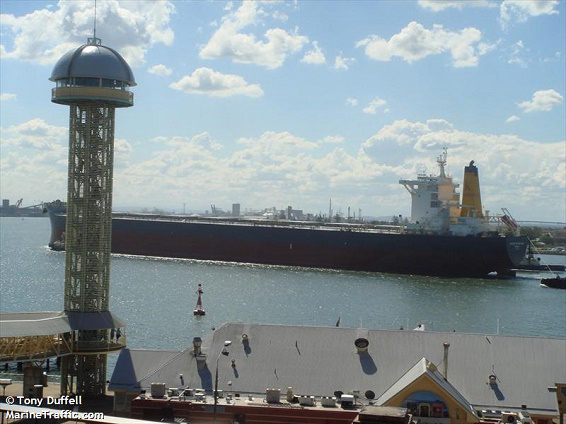
Around $14 billion of cargo has been tied up globally as ports, tugboat operators and cargo handling firms worried about not being paid refuse to work for Hanjin, which filed for receivership in a Seoul court on Aug 31.
Three bulk carriers, used for carrying commodities such as iron ore, coal and grain, have been sold for a total of almost $39 million, according to data from ship valuation firm VesselsValue.
The largest, the 180,000 deadweight tonne (DWT) capesize Hanjin Matsuyama, was bought by Singapore-based Winning Shipping for $22.75 million, according to the data.
A man who identified himself as the head of the purchasing department in the Qingdao branch of Winning Shipping but declined to give his name said the deal had been agreed but not yet completed.
"We began talking about the deal before the news about Hanjin began emerging, we were already in the process of buying it."
The five-year old ship was sold charter-free, meaning it is no longer chartered by Hanjin Shipping, a sale and purchase broker told Reuters.
The two smaller 37,000 DWT handyside vessels have been sold to Greek buyers.
"After news of (Hanjin's) collapse they were redelivered early to financiers and sold charter free," the broker added.
With ship prices already depressed by over-capacity, the values achieved were in line with recent similar sales and estimates from shipping services firm Clarkson.
Shipbrokers expect more Hanjin ships to be put on the market although uncertainty about the company's future could delay progress.
OVER-CAPACITY TO REMAIN
While uncertainty around Hanjin Shipping has caused a spike in freight prices, few expect it to last.
Cargo ships of around 257.8 million DWT, equal to about 14.6 percent of the global fleet, are due for delivery from now to around 2019 and global seaborne trade growth is just 2.4 percent, Clarkson data shows.
That points to little short-term improvement in the shipping markets with no real return to profitability until 2019-2020, at least, analysts say.
Low scrap values and freight rates higher than operating costs mean there is little incentive for owners to scrap.
"The industry needs to break the trend of halting demolition activity as soon as the Baltic Dry Index (a basket of freight rates) improves marginally," said Peter Sand, chief shipping analyst at shipping lobby group BIMCO.
The fleet of 63 ships Hanjin owns is worth around $1.76 billion, VesselsValue estimates, well short of the $5.5 billion in debt the company reported as at the end of June, 2016. It charters a further 78 vessels.
Around two-thirds of the total are not operating properly, including vessels seized, barred entry to ports or terminals, denied services or moving slowly, according to Hanjin Shipping data on Monday.
The chairman and former chairwoman of parent company Hanjin Group on Tuesday transferred around $45 million to help unload cargo stranded on the troubled shipper's vessels.
However, Hanjin estimates at least $100 million more is needed to clear the cargo and regulators have warned securing further funds from Hanjin Shipping shareholders could take "considerable time."
South Korea has said no government or central bank money would be directly injected into the firms restructuring in the ailing shipping and shipbuilding industries, though it is helping small-to-medium sized businesses hit by the restructuring.
REUTERS.COM

Powered by  © Μaritimes 2019