


World Maritime Day 2016 – Shipping: indispensable to the world
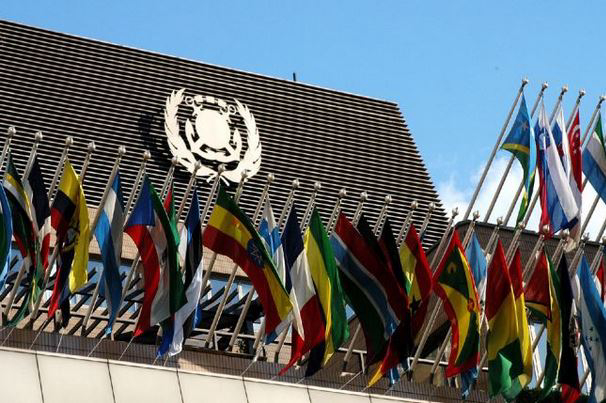
World Maritime Day is an official United Nations day. Every year, it provides an opportunity to focus attention on the importance of shipping and other maritime activities and to emphasize a particular aspect of IMO’s work.
Each World Maritime Day has its own theme. For 2016, the theme is “Shipping: indispensable to the world” – chosen to focus on the critical link between shipping and the everyday lives of people all over the planet, and to raise awareness of the role of IMO as the global regulatory body for international shipping. The importance of shipping in supporting and sustaining today’s global society gives IMO’s work a significance that reaches far beyond the industry itself.
According to the United Nations Conference on Trade and Development (UNCTAD), around 80\% of global trade by volume and over 70\% of global trade by value are carried by sea and are handled by ports worldwide. These shares are even higher in the case of most developing countries.
A single ship can carry enough grain to feed nearly four million people for a month; another, enough oil to heat an entire city for a year, and others can carry the same amount of finished goods as nearly 20,000 heavy trucks on the road. Ships are among the engineering wonders of the modern world.
Shipping is the only truly cost-effective and sustainable delivery mechanism for international trade and the global economy. People all over the world rely on ships to transport the commodities, fuel, foodstuffs, goods and products that are so vital in their everyday lives.
“As the World Maritime Day theme for 2016 so rightly acknowledges, shipping is indispensable to the world – and is set to remain central to world economic growth as we make the inevitable transition towards an era of clean and sustainable development,” said IMO Secretary-General Kitack Lim in his annual World Maritime Day Message.
“This is a message that needs, and deserves, a wider audience. Almost everyone in the world today relies on shipping to some extent – but very few are aware of it,” Mr. Lim said, urging all all those involved in shipping to take the opportunity to highlight this vital industry, on which so many depend.
United Nations Secretary-General Ban Ki-moon also issued a message for World Maritime Day,
“The importance of shipping in supporting and sustaining today’s global society makes it indispensable to the world, and to meeting the challenge of the 2030 Agenda for Sustainable Development,” Mr. Ban said.
Individual governments are encouraged to mark the World Maritime Day, on a date of their choosing but usually in the last week of September.
World Maritime Day Forum 2016
IMO is hosting a debate on global shipping’s future challenge, at IMO Headquarters on 29 September. The event will be livestreamed from 3:15 p.m. local time.
Online participants are encouraged to take part via Twitter using the following handle and hashtag: @IMOHQ #WorldMaritimeDay
Social Media
Governments, organizations, companies and training institutes, as well as individuals, are encouraged to let IMO know how World Maritime Day is being celebrated, using the hashtag #WorldMaritimeDay @IMOHQ
Downloads
A full package of resources is available from the IMO website.
World Maritime Day Parallel Event
The World Maritime Day Parallel Event will be held in Turkey in November 2016.
Source: IMO
Vard Engineering receives DNV GL Approval in Principle for new LNG bunker vessel design
 |
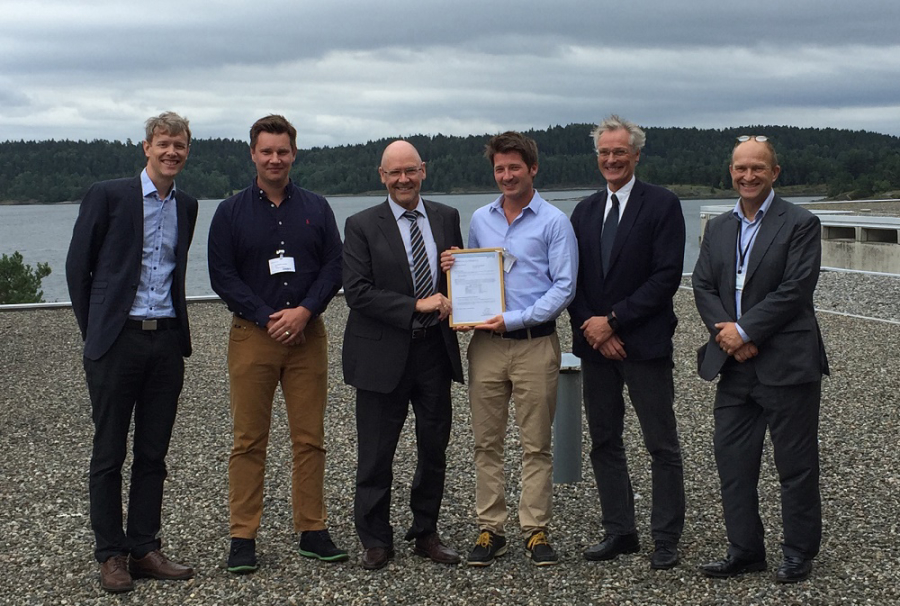
| Presentation of the AiP. From left: Pål Spilleth (DNV GL), Marius Øverland (Vard), Johan P. Tutturen (DNV GL), Andreas Buskop (Vard), Roald Vårheim and Magnus Lindgren (both DNV GL) |
"The excellent cooperation between DNV GL and Vard resulted in a development enabling flexibility and quality assurance of our design. We are proud of our joint efforts and strongly believe that the cooperation between DNV GL and Vard results in first class designs for shipowners and operators", says Øystein Kristoffersen Sæther, Managing Director for Vard Engineering Brevik.
The AiP is a continuation of the successful GASA (General Approval of Ship Application) of Vard and Brevik Technology's new IMO Type-B LNG cargo containment system which was granted by DNV GL at the end of 2015.
“With the continuing rise in interest in LNG as a ship fuel, both from an environmental and economic perspective, it is essential that we continue to develop the infrastructure which will allow this technology to thrive,” says Johan Petter Tutturen, Business Director for Gas Carriers at DNV GL. “We are very pleased to have been able to build on this excellent cooperation with Vard and support their interest and dedication in developing this new concept.”
An Approval in Principle is an independent assessment of a concept within an agreed framework, confirming that the design is feasible and no significant obstacles exist to prevent the concept from being realized. The AiP is typically carried out at an early stage of a project to confirm its feasibility for the project team itself, company management, external investors or regulators.
The bunker vessel will be given the following class notation: 1A tanker for liquefied gas (-163˚C, 500 kg/m3, 0.7 bar) Gas Bunker.
About DNV GL
Driven by its purpose of safeguarding life, property and the environment, DNV GL enables organizations to advance the safety and sustainability of their business. Operating in more than 100 countries, the company’s 15,000 professionals are dedicated to helping their customers in the maritime, oil & gas, energy and other industries to make the world safer, smarter and greener. For more information visit www.dnvgl.com/maritime
About VARD
Vard Holdings Limited (“Vard”), together with its subsidiaries (the “Group”), is one of the major global designers and shipbuilders of specialized vessels. Headquartered in Norway and with approximately 10,000 employees, Vard operates nine strategically located shipbuilding facilities, including five in Norway, two in Romania, one in Brazil and one in Vietnam. Through its specialized subsidiaries, Vard develops power and automation systems, deck handling equipment, and vessel accommodation solutions, and provides design and engineering services to the global maritime industry.
“Establishing safety” technical workshop on LNG Bunkering operations ends in Piraeus Port
 |
Piraeus workshop began with an overview of the state of the relevant studies developed during the first phase of the project (Poseidon Med I). 32 workshop attendees participated to a boat tour to the car, container, cruise & passenger terminals in Piraeus port, observing the proposed sites for LNG bunkering operations.
Ioannis Papagiannopoulos, Director, PFSO, PSO, Head of Port Security Department of Piraeus Port, commented: “Poseidon Med II project sets the starting point for Piraeus to undertake a leading role in Eastern Mediterranean area as hub port for LNG bunkering operations. Port’s competitiveness and enhanced environmental profile are among the key benefits that Piraeus community will gain, through the implementation of this pioneering project for our region”.
The workshop participants, during the Risk Assessment and Operability study, contributed to calculation estimations of the LNG fuel requirements based on comprehensive insights on current and future trades in Piraeus Port.
“Poseidon Med II technical workshops defined all the necessary steps towards the development of LNG bunkering operations in the involved ports, ensuring port safety, emergency planning and staff competence. Particular focus was given to help the involved ports to develop strategic planning regarding their future commercial role, forecasting demand in LNG bunkering services”, highlighted Anna Apostolopoulou, Poseidon Med II Project Manager on behalf of Lloyd’s Register.
Since May 2016, Poseidon Med II project has organised five technical workshops in Igoumenitsa, Patras, Heraklion, Limassol and Piraeus ports, applying a thorough risk assessment methodology in order to identify potential hazards and operability aspects for vessels, ports and their interaction during LNG bunkering operation. Various bunkering scenarios –such as ship to ship or truck to ship-, different proposed locations, specific safeguards as well as lists with further actions were being developed for each port with the active contribution of all involved stakeholders.
What is Poseidon Med II project?
Poseidon Med II project is a practical roadmap which aims to bring about the wide adoption of LNG as a safe, environmentally efficient and viable alternative fuel for shipping and help the East Mediterranean marine transportation propel towards a low-carbon future. The project, which is co-funded by the European Union, involves three countries Greece, Italy and Cyprus, six European ports (Piraeus, Patras, Limassol, Venice, Heraklion, Igoumenitsa) as well as the Revithoussa LNG terminal. The project brings together top experts from the marine, energy and financial sectors to design an integrated LNG value chain and establish a well-functioning and sustainable LNG market.

Technical workshop in Piraeus, 19-20/9/2016


Snapshots from on-site survey, Piraeus 19-20/9/2016
Cruising To New Horizons: Days In the Sun, And The Snow!
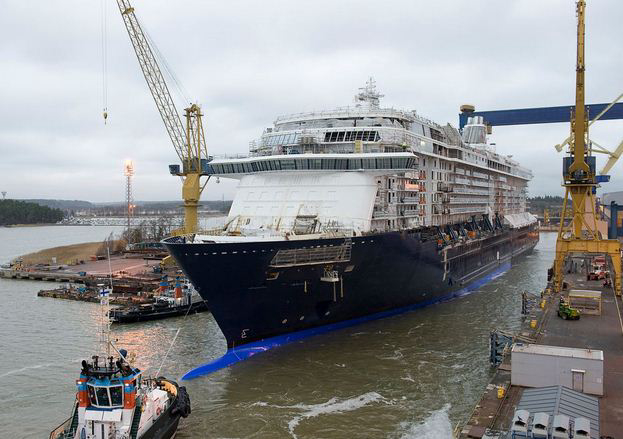
The cruise industry is continuing to expand its horizons, and has seen strong newbuilding investment this year. Whilst many of the new ‘mega-ships’ will likely be heading to sunny climes, there have been developments at the small end of the sector too, for ships venturing forth to remote and often chilly destinations.
Look North…
 Arctic navigation was once the preserve of intrepid explorers. In 1848, British explorer Sir John Franklin set out on an ultimately doomed attempt to navigate the Northwest Passage. His abandoned ship, HMS Terror, was finally discovered this month in near-pristine condition in 80 feet of water off Canada’s King William Island. Today, Arctic navigation is potentially less hazardous, and while many modern cruise passengers are not always seen as the most adventurous of folk, rising demand for ‘expedition’ ships has been an interesting feature of cruise ship ordering this year. Nine such orders have been placed in 2016 to date, including some for voyages to the Poles, with other contracts for small vessels catering for the high-end, luxury market. Overall, vessels with less than 1,000 berths have accounted for half of the 26 cruise ship orders placed so far this year.
Look Big…
However, it has been the rapid expansion in the ‘mega-ship’ sizes that has recently pushed the cruise fleet over its new milestone, and underpinned the expansion in the cruise ship orderbook to a record 60 units of 142,922 berths at the start of September. Around 70\% of berth capacity ordered this year has been accounted for by ships of 4,000 berths and above, with many of the major brands confirming contracts. Having expanded robustly by a CAGR of 4.3\% p.a. in 2006-15, growth in the cruise fleet is now likely to accelerate in the next few years, as more ‘mega-ships’ are delivered. Cruise operators retain a positive market outlook, with increased passenger volumes in Asia expected to be a key driver of global cruise passenger growth. Some experts expect Chinese cruise passenger numbers to reach 3-4 million by 2020.
Look Helpful…
Overall, 2016 is a record year for investment in the cruise ship sector, with estimated investment in the year to date at $8.9 billion, already up nearly 50\% on the previous high reached last year. A large number of orders are also in the pipeline and are likely to be confirmed in the coming years, which could add at least another 65,000 berths to the orderbook (nearly half of the current size of the orderbook). Given the extremely subdued level of ordering in other vessel sectors, the cruise sector has accounted for almost 50\% of the total estimated value of newbuilding investment in the year to date, and provided support to the European yards who dominate in this sector.
So, despite weak conditions prevailing in many of the major volume markets, at least the sun is still shining on one part of the shipping industry. Whether you’re looking for a trip to some warmer latitudes or a voyage to a more bracing environment, the next phase for the cruise sector might not be plain sailing but it should be an adventure.
Source: Clarksons
HMM share price jumps on Hanjin fleet fire sale speculation
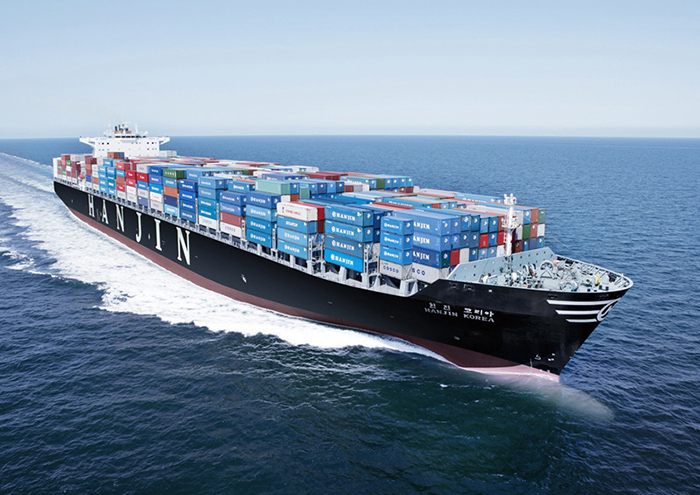
As Hanjin moves to pare back its fleet it is looking to sell its largest boxships – five 13,000 teu ships will be sold with HMM rumoured to have first right of refusal on them. All the ships are young, delivered in 2012 and 2013.
Hanjin, which entered court receivership at the end of August, is trying to reposition itself as an intra-Asia container player when it submits its restructuring plan in December.
The five ships would see HMM’s fleet cross the 500,000 teu mark for the first time. It would also surpass Nippon Yusen Kaisha (NYK) to become the 14th largest containerline in the world, while also helping its admission into 2M, the vessel sharing agreement between Maersk and MSC, which HMM could join next April if negotiations with the European liners proceed well.
HMM, which has only just come out restructuring itself, will need to find somewhere close to $450m if it is to seal the deal for the boxship quintet. The ships are believed to be worth $90m each, far off the $170m Hanjin paid per unit when it ordered them six years ago. One of them, Hanjin Green Earth, suffered a fire while transiting the Suez Canal last year.
Any deal will of course have to wait until the ships are freed from their current impasse. As it stands 39 of Hanjin’s 97-strong containership fleet have been unloaded – the rest have remained in international waters for fear of being arrested. Splash understands another four Hanjin ships were arrested in China over the weekend.
In addition, 36 of the 44 Hanjin bulk carriers have completed their cargo delivery.
Now however the South Korean government is saying all of the funds recently handed over to Hanjin – from its parent Hanjin Group, its chairman, its former chairman, sister firm Korean Airlines and the Korea Development Bank (KDB) – is enough to get all remaining ships offloaded.
The news will be welcomed by Hanjin’s stranded crews around the world with images emerging of seafarers having to fish for food (see video below) as supplies dwindle. The South Korean government yesterday pledged to reinforce its supply of rations to Hanjin vessels. There are still 518 Korean and 720 overseas employees onboard stranded Hanjin ships.
“If the ships continue to be blocked from entering port, there could be a welfare crisis for these seafarers, as vessels will quickly run out of food, fuel and essential provisions,” the Revd Ken Peters from the Mission to Seafarers warned last week.
splash247.com
Poseidon Med II discussion on “LNG fuelling the future of the Eastern Mediterranean” in Limassol Cyprus
 |
The scope of the event was to provide an update of Poseidon Med II project as well as to keep the public abreast on the developments regarding the energy supplies of Cyprus, upcoming regulations and the hydrocarbons exploration activities in the area. Poseidon Med II project partners presented the current status and the progress up today regarding the technical studies for the installations at Limassol port and the vessels involved. The global experience and commercial aspects of bunkering operations as well as the financial instruments to attract investments were also discussed.
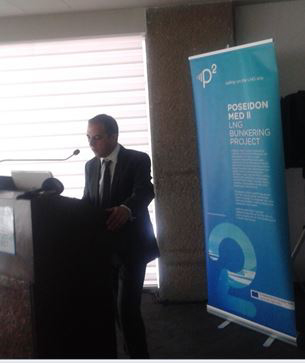
In his welcome speech, the Minister of Transport, Communication & Works, Mr Marios Demetriades expressed his pleasure and satisfaction at the involvement of the Cyprus Ports Authority and private Cypriot companies in the Project. Mr Demetriades underlined the great potential of LNG as ship fuel, and noted that it could provide a solution for meeting environmental requirements as its cleaner burning meets all current and future emission standards. He also made specific reference to the regulatory drivers and expertise gained from current projects across Europe.
The Stakeholders’ discussion followed a technical workshop on LNG Bunkering at the Port of Limassol on 15-16 September aiming to assess the prospects and consider safety matters related to LNG bunkering operations in this port. Workshop participants, under the facilitation of Thanos Koliopulos, Global Special Projects Manager of Lloyd’s Register, actively contributed to open group discussions on operability issues surrounding LNG bunkering, technology, safety provisions and regulations. A forecasting model for LNG capacity trade used a specific calculation tool in order to estimate the LNG fuel requirements based on the ship types and associated trade routes at Limassol Port.
Next on the Poseidon Med II events calendar is the Hazard Identification technical workshop, to be held on 19-20 September in Piraeus Port.
Presentations/ Speeches from the Stakeholders’ discussion will be shortly available at: www.poseidonmed.eu
What is Poseidon Med II project?
Poseidon Med II project is a practical roadmap which aims to bring about the wide adoption of LNG as a safe, environmentally efficient and viable alternative fuel for shipping and help the East Mediterranean marine transportation propel towards a low-carbon future. The project, which is co-funded by the European Union, involves three countries Greece, Italy and Cyprus, six European ports (Piraeus, Patras, Limassol, Venice, Heraklion, Igoumenitsa) as well as the Revithoussa LNG terminal. The project brings together top experts from the marine, energy and financial sectors to design an integrated LNG value chain and establish a well-functioning and sustainable LNG market.
 |
| Cypriot Minister of Transport Mr Demetriades, during his welcome address, Poseidon Med II Stakeholders’ Discussion, Limassol |
 |
| Snapshot of panel discussion, Poseidon Med II Stakeholders’ Discussion, Limassol |
 |
| Snapshot of panel discussion, Poseidon Med II Stakeholders’ Discussion, Limassol |
Maersk to Split Group Into Separate Transport, Energy Companies
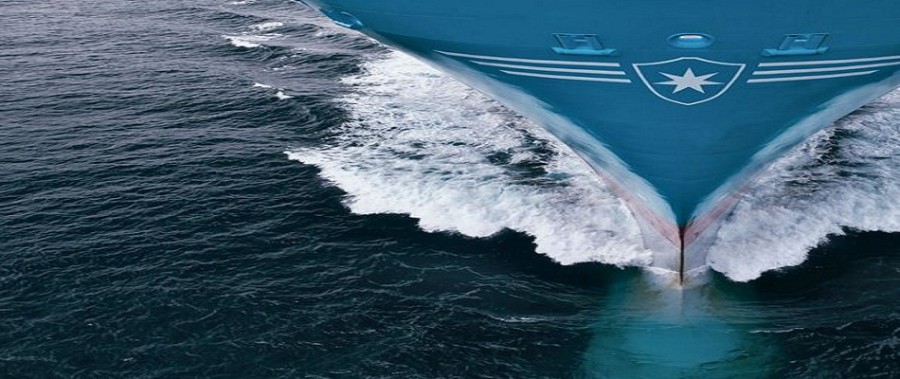
Maersk, owner of the world’s biggest shipping company, “will become an integrated transport and logistics company,” the Copenhagen-based group said on Thursday. “Oil and oil related businesses, either individually or in combination, to be separated from” the group and “will focus on optimizing and strengthening its strong position in the Danish, British and Norwegian parts of the North Sea.”
 |
The shares rose as much as 4.2 percent and traded 3 percent higher at 10,200 kroner as of 9:05 a.m. in Copenhagen, bringing this year’s gains to 14 percent. Maersk also said its chief financial officer, Trond Westlie, will be replaced by Jakob Stausholm, who’s currently in charge of strategy at Maersk Line. Jakob Thomasen, who had headed the oil unit, will also leave, together with Kim Fejfer, who had run the group’s APM Terminals business.
Chairman Michael Pram Rasmussen first revealedMaersk was assessing the merits of splitting up the group on June 23, the same day he dismissed Nils Smedegaard Andersen as chief executive officer. The prospect of a structural reorganization sent the shares up as much as 12 percent on the day, as most investors expect the company to be worth more once its different parts are freed from the conglomerate structure.
Maersk’s board expects the oil and oil related businesses “will require different solutions for future development including separation of entities individually or in combination from A.P. Moeller-Maersk in the form of joint-ventures, mergers or listing.” A solution is expected to be found within 24 months, it said.
Under Andersen, the 112-year-old group sold off a number of units that weren’t related to oil or shipping, including a stake in Danske Bank A/S and shares in a supermarket chain. But he had repeatedly defended the conglomerate structure, arguing the various business units benefited from the synergies that the group structure brought with it.
Soren Skou, who replaced Andersen, said both businesses have “strategies positioning them for growth and strategic agility.”
source:www.blomberg.com
COSCO Shipping sees better 2017 as Hanjin collapse pushes up rates
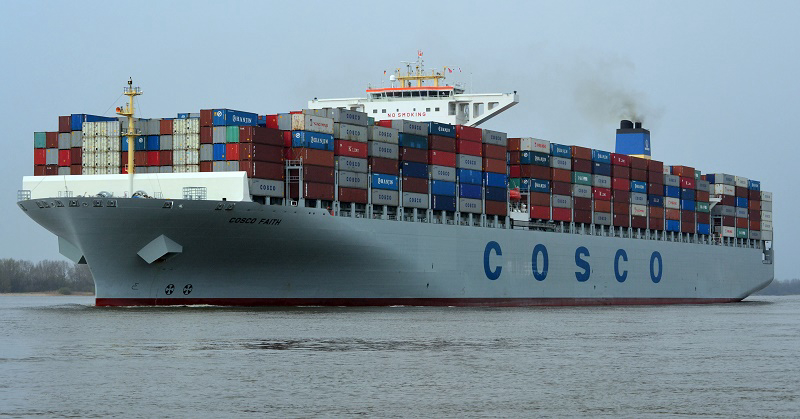
Sun Jiakang, executive vice president of China's biggest shipping company, told Reuters on Monday that rates had risen in the last month - a boost that should lift the state firm's fourth quarter and continue into next year.
"Shippers are now more keen to choose shipping companies with good credit that can provide stable services, and they may shun companies with poor credit. In this respect, our group is one of the beneficiaries," he said.
Hanjin, the world's seventh-largest container line, filed for receivership last month, leaving more than 100 ships and their cargo at sea.
Formed through the merger of China's two largest shipping companies in February, COSCO Shipping owns the world's fourth-largest container shipping fleet by capacity, run by its flagship listed unit, China COSCO Holdings.
COSCO Shipping itself is among the most indebted of the global shipping firms, according to Thomson Reuters data, but it is also one of China's largest state-owned firms, employing 330,000 people. Sun said its finances are improving.
Last month, China COSCO posted a first-half loss of 7.2 billion yuan ($1.08 billion), which it blamed mainly on the sale of its bulk shipping business and a dearth of government subsidies.
"Our fourth quarter will be better than our first or second quarters, and because of obvious changes in the industry, I think next year will be better than this year," Sun said.
He warned that without an improvement in global trade and the economy, other smaller rivals could go the same way as Hanjin.
Overcapacity in the broader shipping industry remains a persistent problem, Sun said, noting that since 2008, global shipping capacity has grown 55 percent, with that in the container segment doubling in just over nine years.
TANGLED ALLIANCES
The collapse of Hanjin has also thrown the current container shipping alliance network into upheaval.
The Korean shipper and its rivals had formed teams in recent years to share vessels and routes to cope with a prolonged slump in freight rates. Now, Hanjin's partners are scrambling to fill the gaps.
Hanjin's membership of the CKYHE alliance, which COSCO Shipping is also part of, was suspended on Sept. 2. It had been due to join a new alliance with German container shipping line Hapag-Lloyd and four other firms next year.
Sun said he did not expect Hanjin's collapse to impact COSCO Shipping's own plans for a new alliance with France's CMA CGM [CMACG.UL], Taiwan's Evergreen Line and Hong Kong-based Orient Overseas Container Line, which is due to start in April.
"A lot of work goes into constructing a new alliance. It requires about a year of preparation," he said. "So these dates won't be adjusted, they won't change because of Hanjin, the alliance won't make any adjustments."
The U.S. Federal Maritime Commission was still analyzing the planned new alliance, and COSCO Shipping was confident it met anti-monopoly requirements, Sun added.
COSCO Shipping, with interests ranging from ports to oil tankers, plans to complete its merger with former rival China Shipping Group by the end of this year, with its logistics and social services businesses among units still to be reorganized, Sun said.
Continued shifts in the global shipping market also continue to provide opportunities for potential acquisitions, he said, citing his firm's deal last month to buy a majority stake in Piraeus, Greece's largest port.
reuters.com
Preparing For The MRV Regulation
DNV GL has prepared an overview of how MRV will affect the maritime industry and what shipping companies need to do to achieve compliance. This is an update of the T&R News, No. 19, 2015.
The regulation in a nutshell
The European Commission (EC) is bringing emissions from shipping into its 2009 climate and energy package. MRV is designed to progressively integrate maritime emissions into the EU’s policy for reducing domestic greenhouse gas emis-sions (EU regulation 2015/757). MRV requires ship owners and operators to annually monitor, report and verify CO2 emissions for vessels larger than 5,000 GT and which call at any EU port. The results will be published on a regular basis. Entered into force on 1 July 2015, the regulation will become fully effective on 1 January 2018. Shipping companies will need to prepare a monitoring plan by 31 August 2017 at the latest for each of their ships that falls under the jurisdiction of the regulation. They will have to monitor and report the verified amount of CO2 emitted by their vessels on voyages to, from and between EU ports and will also be required to provide information on energy efficiency parameters (see below).
Data collection on a per-voyage basis will commence on 1 January 2018. Once the data is verified by a third-party organization and sent to a central database, presumably managed by the European Maritime Safety Agency (EMSA), the aggregated ship emission and efficiency data will be published by the European Commission by 30 June 2019 and then every consecutive year.
Timeline
31 August 2017 – Companies are to submit ship-specific monitoring plans to verifiers for approval
1 January 2018 – Per-voyage monitoring to start
30 April 2019 – Verified annual emission reports submitted to the EC
30 June 2019 – Emission data made publicly available by the EC
This cycle will then repeat for subsequent years.
Monitoring and reporting
Ship owners will have to monitor the following parameters on a per-voyage basis:
Port of departure and port of arrival, including the date and hour of departure and arrival
Amount and emission factor for each type of fuel consumed in total CO2 emitted
Distance travelled
Time spent at sea
Cargo carried
Transport work
In addition to the companies reporting annually aggregated figures for the parameters, the data is to be used to calculate and report average energy efficiency.
The basis for the calculation of CO2 emissions will be the fuel consumption for voyages starting or terminating at any EU port. Fuel consumption shall be determined and calculated using one of the following methods:
Bunker Delivery Note (BDN) and periodic stock takes of fuel tanks
Bunker fuel tank monitoring on board
Flow meters for applicable combustion processes
Direct CO2 emission measurements
Verification
Accredited verifiers will have three key tasks:
1. To verify ship-specific monitoring plans (completeness, accuracy, relevance and conformity)
2. To verify that the annual ship-specific emission reports comply with the monitoring plans
3. To verify that the figures contained in the annual ship-specific emission reports are accurate
Presently, no companies have been granted accreditation, as criteria remain under development by the EC. DNV GL, along with other companies, is in the process of becoming an accredited verifier for the EU MRV regulation.
Outstanding issues
At the end of July, the EU published the legal documents, i.e. implementing and delegated acts for the public hearing process. These documents contain most of the practical details necessary for the regulation to work. They include, for example, the content of the electronic templates for monitoring plans and emission reports, and practical information on implementation that vessels and verifiers will have to fulfil.
Final versions are expected to be published towards the end of the year. You will find updated information on our EU-MRV webpages.As the legal documents do not cover all practicalities, the EC will also work on additional guidelines (within the ESSF) to clarify the remaining issues in the period up to summer 2017. Industry stakeholders, including DNV GL, have been providing feedback to the EC through the European Sustainable Ship-ping Forum (ESSF) and will continue to do so as the guidelines are developed.
What about the IMO?
This spring the IMO agreed to implement a global system for fuel consumption data that will provide global CO2 emissions data. Monitoring and reporting on a per-ship basis is expected to start on 1 January 2019. While detailed technical development is still ongoing, the system and the date of its entry into force is expected to be agreed to in October of this year. The IMO system has many similarities to the EU system and may trigger an EU review of the MRV regulation, conceivably leading to changes aimed at aligning the EU MRV with the IMO systems. This process is politically complicated and will take time; we expect to see both systems operating in parallel, at least for some years.
Recommended actions for our customers
The practical impact of the MRV regulation on owners and operators is becoming clearer with the publication of the EU legal documents. However, some issues are not yet fully clear and will likely not be so before summer 2017. Nevertheless, it would be advisable for ship owners and operators to prepare for MRV ahead of time and start considering how to best fulfil the forthcoming monitoring and reporting obligations for their own ship as well as their shore systems and routines. Steps such as developing the mandated monitoring plan (due at the end of August 2017), as well as examining how to best collect, aggregate and report fuel consumption and transport work data, are particularly important.
Source: DNV GL
Mega-Ships May Be Too Big Not to Fail
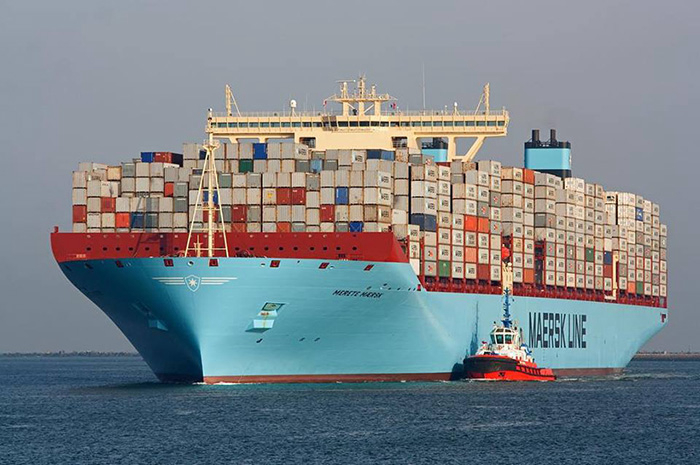
What has made it a whole lot tougher is that, not long before trade peaked as a share of global gross domestic product in 2008, container shippers began adding capacity at an even faster pace than they had before. Container traffic has actually held up better than bulk shipping (which is heavy on raw materials like iron ore) and oil tankers, with volume still growing in the low single digits annually. But capacity growth has far outstripped demand.
SOURCE: INTERNATIONAL TRANSPORT FORUM
This is from a 2015 report by the Organization for Economic Cooperation and Development's International Transport Forum on "The Impact of Mega-Ships." It makes for fascinating (if pretty wonky) reading now. The gist is that the move to giant ships, with capacities now approaching 21,000 TEUs (for twenty-foot equivalent units, the standard measure of container volume), adds all sorts of costs to the global transport system that may end up outweighing the per-TEU energy and staffing savings from bigger boats. My Bloomberg View colleague Adam Minter already wrote a whole column about these problems; I'll address them briefly in a moment. But the big question for me is why shippers kept adding capacity even as demand slowed.
One answer is simply that, a decade ago, demand for container shipping seemed to be accelerating. Global container traffic grew 17 percent from 2006 to 2007, up from 11 percent the year before. Big new ships aren't built overnight, so it's understandable that the container lines did a bit of over-ordering back in those days. Still, that doesn't explain why they kept adding capacity even after that demand acceleration didn't pan out.
Another answer is that adding capacity is just what container shippers do. Here's a fun observation from a 2012 Boston Consulting Group study that urged shippers to stop adding capacity already:
Traditionally, the industry and key industry observers have measured carriers' market share on the basis of capacity rather than the freight volumes they actually transport. Therefore, carriers have typically expanded their capacity to strengthen their market position.
A final answer is that the biggest container shipping line, Copenhagen-based Maersk, thought that ordering a set of new 18,000 TEU mega-ships in 2010 could change the dynamics of the industry. In an essay published last week, Olaf Merk, ports and shipping expert at the International Transport Forum and co-author of the mega-ship report cited above, took a stab at explaining Maersk's reasoning:
For a weekly container service between Asia and Europe -- the route on which the largest ships are deployed -- ten to eleven ships are needed; a lot of capital that smaller companies would not be able to collect. As the order for the new mega-ships was placed while the global economic crisis was still unfolding, banks were unwilling to lend much to a risky business like shipping, especially the smaller ones with high risk profiles. Timing was excellent, with ship prices low due to overcapacity in shipbuilding yards. The new mega-ships were smartly marketed as "Triple E" ships, providing economies of scale, energy efficiency and environmental performance. They also provided a once in a lifetime opportunity "for the market consolidation that big players hoped for."
Basically, industry leader Maersk was making a bet that by pioneering giant, super-efficient ships it could take market share from smaller rivals and force some to shut down or sell out. That didn't work quite as planned. Maersk got its mega-ships, but so did rivals, thanks to new alliances that allow shipping lines to share capacity and government aid. Now, with the Korean container lineHanjin in bankruptcy, some of the consolidation that Maersk and others wanted to see may happen. But it's happening in an environment of tremendous overcapacity, falling prices and big losses for the shipping companies -- which are reacting in part by trying to push their per-TEU operating costs even lower by shifting to ... bigger ships.
I really don't know how this is going to play out. Airlines face similar dynamics, and tend to alternate between periods of stability and crisis. Airlines do seem to have figured out, though, that ever-bigger planes aren't really the answer.
For the shipping companies, the logic of size is that stuffing more containers onto a ship means lower running costs per container. An added cost-saver is that the mega-ships are designed for "slow steaming" -- traveling at about 17 knots instead of 20 to save on fuel and engine capacity.
For ports, and for the companies moving their goods in the containers, ship size is more of a mixed blessing. For one thing, the ships are just too big for some ports and shipping routes -- the newly expanded Panama Canal can only handle container ships of up toabout 13,000 TEUs, while the Port of Newark, New Jersey, where container-shipping began, maxes out at 9,200 TEUs. For another, they make shipping, well, lumpier, by reducing the frequency of port calls and increasing the amount of loading and unloading that needs to be done on each call. Part of the genius of container shipping, as Marc Levinson wrote in his wonderful history "The Box," was that:
as container shipping became intermodal, with a seamless shifting of containers among ships and trucks and trains, goods could move in a never-ending stream from Asian factories directly to the stockrooms of retail stores in North America or Europe.
Slow-moving mega-ships risk reducing the seamlessness and interrupting the never-ending stream. In fact, they already have interrupted it, if you pin some of the blame for the Hanjin bankruptcy on them. And while the shipping industry will eventually work its way through these troubles, and maybe even start ordering smaller ships, even a temporary increase in the friction involved in shipping things around the world has got to have broader economic consequences.
www.bloomberg.com

Powered by  © Μaritimes 2019