





Friday, May 01, 2026

Holman Fenwick Willan won the Maritime Lawyer of the Year 2016 at the Lloyd’s List Global Awards, held at the National Maritime Museum in Greenwich on 28 September. The awards were attended by 450 industry professionals and were hosted by Fiona Bruce.

The Maritime Lawyer of the Year Award, as sponsored by i-Law, celebrates the very best in the legal profession who have offered the highest quality service to the maritime industry over the past 12 months.

Holman Fenwick Willan stood out for our continued work at the forefront of legal developments  – in particular advising Cargill International in its successful Supreme Court application, developing the laws surrounding off-hire provision in an amended NYPE form,  and our work advising a range of owners who were affected by the high profile bankruptcy of OW bunkers.

In addition, Daniel Martin was highlighted in regards to his work with the firm’s export controls and sanctions practice, particularly concerning Iran, North Korea, Sudan, Libya, Syria, Ukraine and Russia which continues to be a fast paced area of law with significant opportunities.

In his opening speech, Richard Meade, managing editor of Lloyd’s List said ‘The Lloyd’s List award series are about bringing our business community together. It’s about celebrating our combined achievements, but it’s also about recognising the transformation that is happening across our businesses. At Lloyd’s List we think that the future belongs to those who can successfully tap into the opportunities that this transformation presents.’

Recipients are chosen from entries taken from around the world and adjudicated by a distinguished judging panel which this year included:  Robert Ashdown, Secretary-General, International Association of Classification Societies; Andreas Chrysostomou, Director, Department of Shipping, Cyprus; Angus Frew, CEO, Bimco; Lars Green, CEO, Green Consulting Group; Helle Hammer, Managing Director, Cefor9The Nordic Association of Marine Insurers); David Hammond, CEO, Human Rights at Sea; Esben Poulsson, President, Singapore Shipping Association; Katharina Stanzel, Managing Director, Intertanko; Katy Ware, Permanent Representative of the UK, Maritime and Coastguard Agency; Chris Welsh MBE, Secretary-General, Global Shippers’ Forum; Niko Wijnolst, Professor (emeritus), Eramus University, Rotterdam.

http://www.maritimelondon.com

Saturday, 01 October 2016 15:44

“Bridge to Success”

Open forum by Project Connect “Opportunities at Sea for a successful career in Shipping”

Following the "Meet the Shipping Community" event of March 9th and the kind invitation of Tsakos Group of Companies to continue with a Forum at his premises; we are glad to inform you that this Forum, "Opportunities at Sea" will take place on the 6th of October 2016 at 18:30 at the premises of Tsakos Group of Companies Auditorium (367 Sygrou Ave, P. Faliro), who are kindly supporting the efforts of Project Connect. Catering will be sponsored by Mr Nicky Pappadakis, Project Connect Life Member, whilst support on the event design & organization is kindly offered by Katerina Panoussi, All About Events.

The Project Connect team, continuing to support the youth of Greece with confidence and tangible opportunities, is organizing this forum and inviting young & ambitious people to attend and explore their Opportunities of attaining a successful career in the shipping industry while principals and professionals will share their vast shipping experience with them.

Working at sea entails an exciting international career in one of the world's most important and dynamic industries, comprised of people with all manner of backgrounds, ranging from recent graduates to experienced professionals. The job variety is huge, and so are the opportunities.

During the seminar, shipping professionals will share their knowledge and views, will reveal all these multiple opportunities of building a successful career in the sea and provide specialized guidance, enabling young people to find out the tools needed to achieve a truly international job that can take them all over the world – or bring the world to them!

Saturday, 01 October 2016 15:15

Post-Brexit opportunities for UK shipping

The adverse effects of Brexit on the international shipping industry could turn out to be “not very much”, according to Harry Theochari,

global head of transport for law firm Norton Rose Fulbright (NFB), which hosted a half-day conference entitled “Shipping in times of Brexit – business opportunities with less regulation?” at its London headquarters this week.
Neither the rights of UK shipping to call EU ports nor that of EU ships to call UK ports would be impeded by Britain leaving the European Union, Theochari pointed out. Rather the real change will be in respect of “taxes, duties and tariffs,” he said, depending on the UK’s exact exit scenario.

As regards any change to the availability of ship finance and related services in the UK, again Theochari said he thought the effect would be minimal with most banks and insurance companies still able to provide cross-border services via overseas subsidiaries. Few institutions would choose to quit London, he believed, because of the city’s centuries-old maritime tradition and leading expertise in areas such as ship brokerage, law, accounting, insurance and maritime education.

Possible opportunities resulting from Brexit would include the fact that “for the first time in a generation the country would be able to negotiate its own trade agreements outside the constraints of EU State Aid restrictions,” he continued.

Also there would be the opportunity to review the UK’s Tonnage Tax regime, he added, which is currently “not the best in the world” and could do with revamping to attract more owner/operators.

However, NFB’s Brussels-based partner Michael Jürgen Werner cautioned that any new UK assistance to the maritime sector would need to comply with international trade law and with EU anti-dumping rules, and would only be possible in the event of a “hard” exit where the UK eschewed the Norwegian (EEA, EFTA membership) or Swiss (EFTA only) models, leaving itself without access to the Single Market and reliant on WTO trade tariffs.

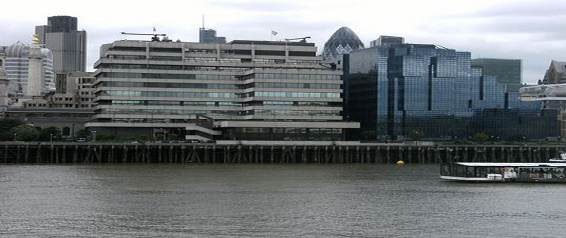
Already moves are afoot to upgrade the UK Ship Register to make it more responsive and client focused, informed Doug Barrow, chief executive of professional services’ body Maritime London, which co-organised the seminar. This will include greater delegation of inspections to Recognised Organisations in the form of leading classification societies, and appointment of a new commercial team, he said.

seatrade-maritime.com

Thursday, 29 September 2016 20:37

The Human Element & New Technologies on board

The Lloyd’s Register Human Element and New Technologies event aims to provide the attendees with insight on the Human Element factor and how it can be addressed, especially with regard to statutorily-required systems;

it will pinpoint the need for a balanced approach to introducing new technologies and the design, operating procedures, maintenance and management of new systems.

28 September 2016 Venue: Lloyd’s Register

Main Speaker: Dr Jonathan Earthy, LR Human Factors Coordinator, Engineering Systems, Group Technology Centre (GTC), Southampton

The Human Element and New Technologies on board

Issue-40_centrespread


Shipping was the main mode of goods transportation in a majority of EU member states in 2015, according to Eurostat.

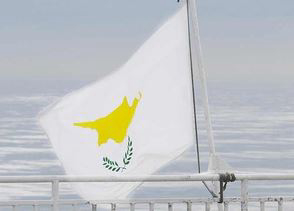
Cyprus ranked second from 28 countries in its dependence on shipping for the transportation of goods at 80 per cent after Portugal at 81 per cent.

Greece followed Cyprus at 77 per cent, Spain 74 per cent, Malta 67 per cent, Italy 61 per cent and Finland (60 per cent).

Shares of over 50 per cent were also reported by the Netherlands, Romania, Bulgaria, Denmark and Germany.

At the opposite end of the scale, maritime transport was less significant in the Czech Republic with 12 per cent, Luxembourg 19 per cent, followed by Ireland and Latvia both 27 per cent, Austria 31 per cent and Croatia 35 per cent.

In 2015 some 53 per cent of EU imports entered the bloc by sea, while shipping represented 48 per cent of EU exports to third countries.

The use of maritime transport for EU trade in goods has slightly increased over the past ten years: in 2006, less than half – 47 per cent – of the EU trade in goods with third countries was conducted by sea.

Rotterdam, Antwerp and Hamburg, all located on the North Sea coast, were the top three EU cargo ports in 2014, accounting together for almost a fifth of the gross weight of goods handled in EU ports.

Source: Cyprus Mail


Stellar Acquisition III Inc. announced that it has consummated the sale of an additional 400,610 units pursuant to the partial exercise of the underwriters’ over-allotment option in connection with the Company’s initial public offering.

The additional units were sold at $10.00 per unit, generating additional gross proceeds of $4,006,100 to the Company and bringing the total gross proceeds of the initial public offering to approximately $69 million.

Of the proceeds received from the consummation of the over-allotment option exercise of units and a simultaneous private placement of warrants to Dominium Investments Inc. and Firmus Investments Inc., the Company’s sponsors, $4,086,222 was placed in trust, increasing the amount in trust from $66,300,000 to a total of $70,386,222 (or $10.20 per unit sold in the public offering). A pro forma balance sheet of the Company as of September 28, 2016 reflecting receipt of the proceeds upon consummation of the partial exercise of the over-allotment option and the private placement will be included as an exhibit to a Current Report on Form 8-K to be filed by the Company with the Securities and Exchange Commission.

A registration statement relating to these units and the underlying securities has been declared effective by the Securities and Exchange Commission on August 18, 2016. This press release shall not constitute an offer to sell or the solicitation of an offer to buy, nor shall there be any sale of these securities in any state or jurisdiction in which such offer, solicitation, or sale would be unlawful prior to registration or qualification under the securities laws of any such state or jurisdiction.

Maxim Group LLC served as sole book-running manager for the offering. Chardan Capital Markets, LLC and EarlyBirdCapital, Inc. served as co-managers for the offering.

Stellar is a blank check company, also commonly referred to as a Special Purpose Acquisition Company (commonly known as ‘SPAC’), formed for the purpose of entering into a merger, capital stock exchange, asset acquisition, stock purchase, reorganization or similar business combination with one or more businesses or entities. The Company’s efforts to identify a target business will not be limited to a particular industry or geographic region, although it intends to focus efforts on seeking a business combination with a company or companies in the international oil and gas logistics, land and maritime oil and gas transportation, terminal and energy storage industries.

Stellar completed its IPO on August 24, 2016. Our units trade on the NASDAQ Capital Market under the symbol “STLRU”. The common stock and warrants comprising the Units will begin separate trading on October 10, 2016. We will have 12 months from the closing of our IPO to consummate our initial business combination, however, we may extend the period of time to consummate a business combination up to three times, each by an additional three months.

Source: Stellar Acquisition III Inc.

What role did the London Greeks shipping community play in the sale of the Baltic Exchange to the Singapore Exchange (SGX)? Market buzz points to a considerable one.

London Greeks have long been supporters of the Baltic Exchange and have traditionally had a close relationship with it, especially the Greek Shipping Co-operation Committee (GSCC) which sees the exchange as home.

Around 95\% of Baltic shareholders voted this week in favour of a takeover deal, valued at SGD87m ($112.87m). A considerable weight of that vote likely came from Greek shareholders, who account for just over 20\% of the shares.

The market is presently brutal and the deal is going to benefit the sellers, whether they be shipbrokers or ship operators, cashwise as well as probably offering a more developed market information service as indicated by SGX.

With the shipping industry suffering a deep downturn, as international trade slows and freight rates fall in an over-supplied market there was a feeling the Baltic needed a non-shipping force to push it into the 21st century. The SGX is largely non-shipping but does have a dominant position in the dry freight derivatives clearing market, and simlilarly in iron ore.

As outgoing ceo Jeremy Penn told Reuters: "In terms of a deal, the possibility arose when it became clear that the Baltic was worth substantially more than the shares were trading for and that there was interest out there in an acquisition.”

There were other buyer candidates including the London Metal Exchange (LME), CME Group, state-run conglomerate China Merchants Group and Platts.

The LME first proposed a jv in 2010 to launch an exchange for freight derivatives trading but this ran into opposition from ship brokers, who are members and shareholders of the Baltic, fearing they could lose business.

For Greek ship owners, who had been in London for decades Britain's move to scrap special tax breaks for long-term residents so-called "non-doms" status was a motivating factor helping the deal. New ‘non-dom’ regulations, are due to take effect from April 2017. They have caused controversy for years, allowing some people who live in Britain but declare their permanent home to be elsewhere to avoid tax on most of their earnings from abroad.

"It's not the same as it was in the past and the non-dom issue has been a serious factor for the London Greeks – many of whom are moving out of London," one source close to Greek shipowners told Reuters.

For its part the GSCC has been quiet, but it known to have discussed the fall-out of the UK vote to leave the European Union at length.

Anyway the new set will retain quite a Greek character. The new chairman is Lambros Varnavides, who before his retirement mid-2014 as RBS’ head of shipping, during a 40-year career lent about $100bn to the international shipping community ,a fair slice of it to Greek operators making RBS the long-time leading lender to Greek shipping. He is active in various organisations including Lloyd's Register Foundation (LRF), the largest charity in the UK and owner of the Lloyd's Register Group. LRF is also involved in several Greek charities including Helmepa, The Maria Tsakos Trust and a scholarship scheme with the Union of Greek Shipowners.

The Baltic's new ceo Mark Jackson, is a director of AM Nomikos & Son (UK) and chief commercial officer for the Athens-based AM Nomikos group.

By David Glass from Athens

www.seatrade-maritime.com

Cosco Shipping Co., a unit of China’s biggest shipping group, agreed to build and operate a new container terminal in Abu Dhabi, securing a foothold in the Gulf with a $738 million deal that would more than double cargo-handling capacity at Khalifa port.

The company signed an accord with state-run Abu Dhabi Ports Co. on Wednesday to invest in a planned second terminal at Khalifa, boosting the port’s capacity to about 6 million 20-foot containers from 2.5 million currently. The 35-year agreement will boost Abu Dhabi’s role in regional logistics, Abu Dhabi Ports Chairman Sultan Al Jaber said at a news conference at Khalifa. 

The concession is valued at about $738 million, Cosco Shipping said in a statement to the Hong Kong stock exchange. It’s the Chinese company’s first such deal in the Gulf, Abu Dhabi Ports Chief Executive Officer Mohamed Al Shamsi said in an interview.

 
“It’s important because Khalifa port will be the hub for Cosco within the region, and this is part of the initiative of the Silk Road,” Al Shamsi said, referring to China’s effort to establish a maritime equivalent of the fabled Asian overland trade route.“We are confident that Cosco will bring big volumes into Khalifa port.”

Largest Fleet

Cosco Shipping is the world’s fourth-largest container liner with a market share of 7.5 percent as of September, according to shipping data provider Alphaliner, and it has the world’s largest dry bulk fleet, used to transport commodities. Abu Dhabi, the capital and largest sheikhdom in the United Arab Emirates, is seeking to expand its trading facilities as part of a strategy to diversify its oil-based economy. Abu Dhabi holds 6 percent of global crude reserves.

The agreement with Cosco Shipping “will significantly expand trade between China, the U.A.E. and the broader region,” said Al Jaber, who is also a national minister of state.

Khalifa port’s existing terminal will handle 1.65 million containers this year, he said. By 2030, the emirate expects the port to move 15 million containers and 55 million metric tons of cargo, Ali Majed Al Mansoori, head of the Abu Dhabi Department of Economic Development, said in a speech last October.

bloomberg.com

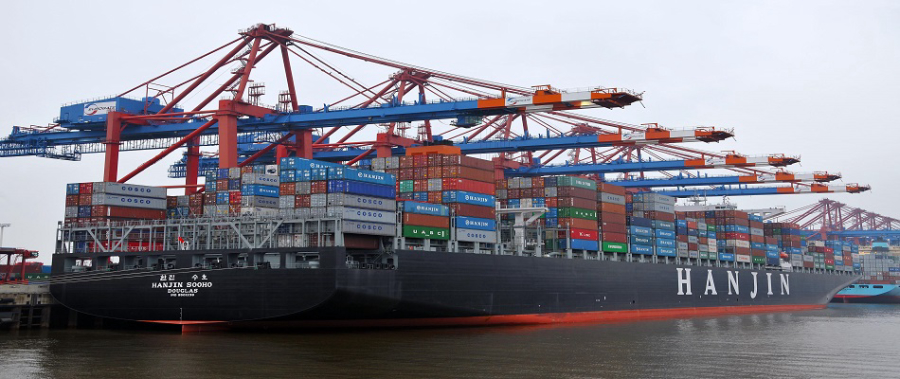
Seafarers’ labour union the International Transport Workers’ Federation (ITF) said on Wednesday it will report to authorities in Washington D.C. about sailors on Hanjin Shipping vessels being denied shore leave at US ports.

The ITF says that US Customs and Border Patrol (CBP) is refusing to allow crew from ships of the bankrupt South Korean container giant to come ashore for fear that those sailors may not return to their vessels.

It cites the example of this happening with the Hanjin Marine while it was docked at the Port of Seattle on Monday, even though the crew members had valid visas.

Claiming that denying shore leave amounts to a human rights violation, the ITF says it will report the problem to relevant agencies in Washington and to committees on Capitol Hill.

Hanjin Shipping filed for bankruptcy protection in a Seoul court in late August.

And early this month a US bankruptcy judge in Newark, New Jersey granted an order protecting Hanjin vessels and cargo from asset seizure by creditors while they are in US ports.

splash247.com

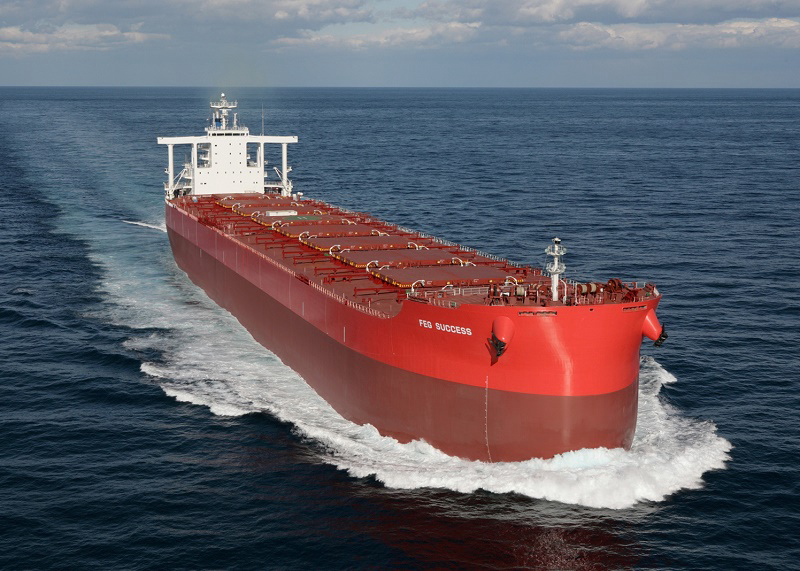
Depressed dry bulk market conditions have put severe financial pressure on owners in recent times, triggering a slump in bulkcarrier contracting.

This has helped drive a significant contraction in the bulkcarrier orderbook, which hit a nine year low at the start of September. On the back of the newly slim orderbook, bulkcarrier fleet expansion is expected to ease in the coming years…

A Dry Foreword

2016-09-28_upload_4421482_DBTO1609A dearth in ordering has seen the bulkcarrier orderbook shrink fairly consistently since mid-2014. By September 2016, the bulker orderbook had shrunk to 108.4m dwt, down 19\% since the start of the year. This was equivalent to 13.8\% of the fleet, down from 17.2\% at the start of 2016. Overall, the bulker orderbook is at its slimmest for almost a decade (see graph), despite a ‘non-delivery’ rate of over 50\% in the year to date. Let us take a closer look at the full story.
A Concise Chapter

Capesize contracting had been in fairly steady decline since the start of 2014, until 30 ‘Valemax’ 400,000 dwt orders were placed in early 2016; these units currently account for 11\% of the total bulker orderbook in terms of capacity. Nevertheless, by the start of September 2016 the Capesize orderbook had contracted to a three year low of 47.1m dwt, also supported by a 10\% y-o-y rise in Capesize deliveries in January-August 2016.
Writer’s Block

Meanwhile, by the start of September, the Panamax orderbook shrank to a nine year low of 21.4m dwt, driven by the consistent slide in contracting activity in the sector, including for Kamsarmax designs, in recent years. In 2015, Panamax ordering totalled 6.6m dwt, down 49\% y-o-y. This was followed by a near total collapse in reported Panamax orders in the first eight months of 2016. Similarly, newbuild contracting activity has slumped in the smaller Handymax and Handysize sectors, in recent years, before dropping to an almost standstill in January-August 2016. This saw the Handymax and Handysize orderbooks shrink to 28.4m and 11.5m dwt respectively by the start of September 2016, representing a 10 year low in both cases.
A Shorter Ending

A closer look at the latest reported bulkcarrier delivery schedule also indicates how much thinner the orderbook now looks for the coming years. At the start of September, only 60m dwt, or 55\% of the bulkcarrier orderbook, was scheduled to be delivered after the close of the current calendar year. This compares to 67\% in September 2015. The slim orderbook is currently expected to contribute to bulker fleet growth of 2.0\% in full year 2016 followed by around 0.8\% in 2017; this compares to average annual growth of around 9\% in the period 2010-15.

So, it appears that ongoing supply-side trends, not just in terms of demolition but also in terms of the orderbook, contracting and deliveries, are helping to reduce the potential for bulkcarrier fleet expansion. That’s all part of the ‘market mechanism’ trying to re-balance supply with demand. However, it all takes time, so don’t forget to keep reading the story…
Source: Clarksons

 

Page 72 of 354

logo

Subscribe to our Newsletter