


30 transport associations call on the European Parliament and the Council to approve the Commission proposal for the review of the Multi-Annual Financial Framework
 |
The proposal foresees an increase of EUR 1.4 billion for the Connecting Europe Facility (CEF) budget. The current proposal would contribute to enhancing the role of transport as an enabler of economic growth and job creation,which at the moment employs directly and indirectly 20 million people (10\% of total EU employment)[1].
Nonetheless, the transport sector warns that this cannot be considered sufficient to complete the Trans-European Network for Transport (TEN-T).The Connecting Europe Facility (CEF) is the financial lifeline of the TEN-T network. From a CEF total budget of 31 billion euros (2.8\% of the overall MFF), only EUR 2 billion are left to co-fund transport projects of high European added-value until 2020. Due to an insufficient EU budget for transport and a significant reduction in national public investments, a large number of high-quality projects in the transport sector had to be, and will continue to be, rejected.
European citizens and customers require safer, ever more secure, reliable, efficient, green, multimodal and smart mobility but also better connectivity between nodes and modes of transport. This can be made possible by modernising the transport sector and completing the TEN-T network. The TEN-T completion will create 10 million additional jobs and lead to 1.8\% GDP growth by 2030[2]. The Commission and the Member States estimate that the development of the TEN-T network during the period 2014–2020 would require about 500 billion EUR of investments. These huge investment requirements in the transport sector should be taken into account by the current review of the MFF and by the future EU budget 2021-2027, in view of the review of the TEN-T Core Network implementation by 31st December 2023.
We, providers and users of transport services and infrastructures, representing the public and private spheres of the sector, are ready to actively address these challenges but this requires a predictable and stable regulatory framework for investment and funding. Many high-quality projects are already benefiting from co-funding under the Connecting Europe Facility (CEF) calls and from financial blending programmes, but many other projects that are essential for the completion of TEN-T are lacking financial support.
Completing the TEN-T network will provide Europe with a smart, overarching and climate-friendly infrastructure plan. We, the representatives of the transport sector, are fully committed to making that plan a reality and we call on the necessary means to achieve it. There is not a moment to lose if we want to preserve and boost the competitiveness of European economy.
For more information, have a look at our campaign !
[1] European Commission, 2013, Employment in the EU transport sector
[2] Fraunhofer ISI, 2015, Cost of non-completion of the TEN-T
The 30 European Transport Associations:
A4E – Airlines for Europe; ACI EUROPE - Airports Council International Europe; ASECAP – Association Européenne des Concessionnaires d’Autoroutes et d’Ouvrage à Péage; CER - Community of European Railways and Infrastructure Managers; CLECAT - European Association for Forwarding, Transport, Logistics and Customs Services; CLIA EUROPE - Cruise Lines International Association; EBA – European Boatmen’s Association - EBU - European Barge Union; ECASBA - European Community Association of Shipbrokers and Agents; ECF - European Cyclists’ Federation; ECG - The Association of European Vehicle Logistics; ECSA - European Community Shipowners’ Associations; EFIP - European Federation of Inland Ports; EIM - European Rail Infrastructure Managers; ERFA - European Rail Freight Association; ESC - European Shippers’ Council; ESO - European Skippers’ Organisation; ESPO - European Sea Ports Organisation; ETA - European Tugowners Association; EuDA - European Dredging Association; EUROPLATFORMS E.E.I.G - The European Association of Logistics Platforms; EUTMETNET - European National Meteorological Services Network; FEPORT - The Federation of European Private Port Operators and Terminals; FTA - Freight Transport Association; INE - Inland Navigation Europe; IRU - International Road Transport Union;POLIS - European Cities and Regions Networking for Innovative Transport Solutions; UIP - International Union of Wagon Keepers; UIRR - International Union for Road-Rail Combined Transport; UNIFE - The Association of the European Rail Industry
ESPO
RMI Understands and is Engaging with the Greek Shipping Industry with Respect to their Major Concerns Over the Ballast Water Management Convention Implementation
 |
The RMI, although having ratified the BWMC, recognized the difficulties and possible complications caused by its introduction, both in the implementation process as well as commercially. In the light of this fact and by reference to the BWMC requirements, the RMI’s main position on the implementation of the BWMC is the harmonization of all processes required in order for all relevant parties to smoothly and safely adapt to the new requirements. More specifically, the RMI will support proposals for bringing revised Guidelines for Approval of Ballast Water Management Systems (G8) in line with the United States (US) Environmental Technology Verification (ETV), so that a system approved for the US Coast Guard (USCG) can be approved for the BWMC, and vice-versa. The RMI will not object to early renewal of the International Oil Pollution Prevention (IOPP) Certificate, and note this can be a method of allowing time for harmonizing of the revised G8 Guidelines and US ETV. As currently drafted, the proposed amendment to the BWMC is linked to the renewal survey associated with the IOPP Certificate. Therefore, if this is the actual amendment, then the early renewal of the IOPP Certificate will allow five (5) years from the point of renewal for Ballast Water Management System (BWMS) installation. The RMI considers the trial period, which will commence at entry into force of the BWMC, as vital to ensuring the implementation is practical, it does not penalize ships that installed BWMS in good faith (“early movers”) and continues to maintain and operate these in line with the manufacturer’s guidance. The RMI fully supports the non-penalization of early movers during and after the trial period.
“The RMI Registry has qualified and experienced technical personnel across the globe, in order to support workable solutions for the industry, and has established a Ballast Water Management team,” said Theofilos Xenakoudis, Director, Worldwide Business Operations of International Registries, Inc. (IRI), which provides administrative and technical support to the RMI Maritime and Corporate Registries. “This MARTECMA meeting has provided the Hellenic technical community an opportunity to listen to the RMI Registry’s position and exchange positive and productive feedback ahead of MEPC 70,” continued Mr. Xenakoudis.
Thanos Theocharis, Regulatory Affairs, European Liaison for IRI thanked MARTECMA and its Board of Directors for accepting the RMI Registry’s participation to discuss the important issues and concerns surrounding the BWMC. “The BWMC has been ratified by 52 contracting Parties that brings the combined tonnage of contracting States to 35.14\% of world tonnage,” said Mr. Theocharis. “In light of the upcoming MEPC 70, which both RADM North and I will be attending, it is important to note that the RMI Registry is working towards the best guidance for industry stakeholders, providing them with technical advice, recommendations, and suggestions that will promote the best practical solutions to the BWMC requirements,” he continued.
Mr. Dimitrios Heliotis, Chairman of the MARTECMA Council, said, “we express our great appreciation to the RMI for enlightening us regarding their position ahead of the upcoming MEPC 70 and to all our members for participating in this productive discussion on a subject of such an importance for all of us.” “The implementation of the BWMC will be a great challenge for our industry; therefore, we must have in place the appropriate tools and procedures in order to mitigate the risks involved in the technical operations and vessel’s commercial performance,” he continued. “We support a comprehensive postponement of the implementation schedule for all existing ships by at least five (5) years after September 2017 as the only sustainable way forward to achieve cost effective and safe solutions with full commitment to the protection of the environment,” he concluded.
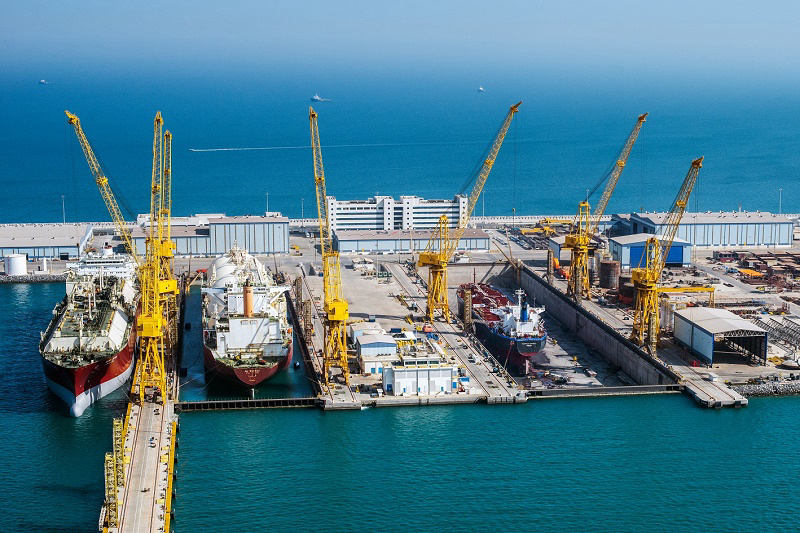
Nakilat concludes third quarter with positive results
 |
| Nakilat Managing Director Eng. Abdullah Fadhalah Al Sulaiti |
Nakilat Managing Director Eng. Abdullah Fadhalah Al Sulaiti said: “Nakilat’s resilient financial performance, despite the current economic climate, is attributed to the prudence and effectiveness of our long-term business strategies. We are actively seeking out new business opportunities to grow our business portfolio and maximize returns for our shareholders.”
Al Sulaiti added: “Our joint ventures continue to value-add to our operations, strengthening our ambition to be a global leader and provider of choice for energy transportation and maritime services.”
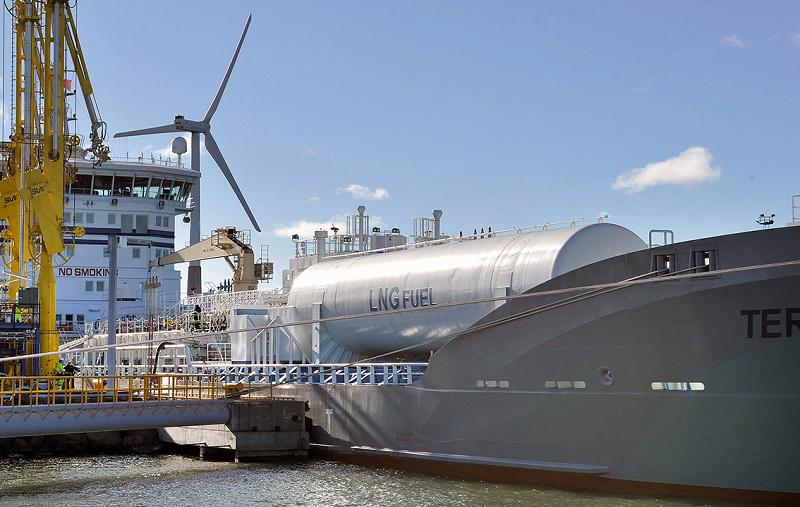
First LNG bunkering operation completed at Skangas terminal in Pori
 |
The Skangas LNG terminal in Finland is strategically well positioned for ship bunkering and designed for multipurpose use from the beginning. It supplies LNG to a gas connection pipeline and offers truck loading as well as terminal-to-ship bunkering operations.
This is the only place in the Gulf of Bothnia where ships can bunker directly from a terminal. The introduction of bunkering at the Pori terminal marks the start of a new era of marine bunkering in Finland. In addition, truck-to-ship bunkering is increasing throughout the country, which will further help shipowners reach their environmental goals.
“The Skangas terminal in Pori was officially opened three weeks ago. This marks a milestone in our development of the Finnish market. Now we do yet another first when making the first bunkering directly from the terminal,” says Tor Morten Osmundsen, CEO at Skangas, and continues, “I’m very proud to be able to offer customers like NEOT a bunkering service directly at the terminal.”
Ternsund is the first of four new LNG-fueled vessels owned by the shipowner Terntank and operated by the Finnish company North European Oil Trade (NEOT).
“We’re very satisfied that we now have the opportunity to bunker LNG in Finland right beside one of our terminals,” says Satu Mattila, Chartering Manager at NEOT. “We will run Ternsund both along the Finnish and the Norwegian coast as well as in the Gothenburg area. It’s advantageous for us that our LNG supplier can offer bunkering at several locations where we trade. This fits well with our trading pattern for the vessels Ternsund and Tern Sea.”
LNG is the most environmentally friendly shipping fuel and meets the requirements set by the Sulphur Directive for shipping as well as the stricter future limits set for emissions such as NOx, particulates and CO2.
About NEOT
NEOT (North European Oil Trade Oy) specializes in oil and bio products wholesale. We supply fuels to large service station chains in Finland; more than 150,000 Finnish homes and companies are heated by fuel oil delivered by NEOT. www.neot.fi
Abu Dhabi to Merge Shipping Units After Offshore Energy Combined
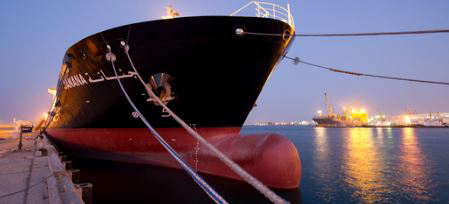
Abu Dhabi National Tanker Co., Petroleum Services Co. and Abu Dhabi Petroleum Ports Operating Co. will be combined, effective by the end of 2017, government-run Adnoc said Tuesday in a statement. Adnoc said it expects the consolidation to lead to improved efficiency and savings, which it didn’t specify.
Abu Dhabi, holder of about 6 percent of global oil reserves, is reining in spending as a drop in oil prices to about half of 2014 levels slows economic growth. The Gulf emirate plans to cut costs by combining its two biggest banks and unifying two of its largest sovereign investment funds, International Petroleum Investment Co. and Mubadala Development Company PJSC. It’s also consolidating offshore energy businesses Abu Dhabi Marine Operating Co. and Zakum Development Co.
The new shipping company will operate more than 165 vessels, including vessels to carry liquefied natural gas, chemicals and bulk cargo, Adnoc said. Abu Dhabi is the largest sheikhdom in the United Arab Emirates.
source:bloomberg.com
Genco Shipping & Trading Limited Announces Resignation of Peter C. Georgiopoulos as Chairman
Mr. Georgiopoulos commented, “With the proposed bank refinancing and equity commitment from major shareholders, I believe Genco is well positioned in a challenging drybulk market. As the Company begins this new chapter, I have decided to pursue other opportunities. I am proud of what our team has accomplished and wish Genco every success in the future.”
Arthur L. Regan has served as a director of Genco since February 17, 2016. Mr. Regan is currently an Operating Partner with Apollo Investment Consulting LLC (together with Apollo Global Management, LLC and its other subsidiaries, “Apollo”). Since 2010, Mr. Regan has been the President, Chief Executive Officer, and a Director of Principal Maritime Management, LLC, a portfolio company of certain funds affiliated with Apollo. Mr. Regan has more than 30 years of experience in the shipping industry in executive roles, including as President and Chief Executive Officer of New York Stock Exchange-listed Arlington Tankers Ltd. from 2004 to 2008. Mr. Regan is a graduate of the State University of New York Maritime College at Fort Schuyler with a Bachelor of Science degree in Marine Transportation and Management.
Mr. Regan commented, “On behalf of the Board, I would like to thank Peter for his leadership since Genco’s founding. I look forward to working with management and the Board to position the Company to create long term value.”
John C. Wobensmith, President, commented, “Genco has taken important steps to enhance its financial flexibility and strengthen its ability to operate in a challenging drybulk environment. Genco’s success at achieving this important milestone, combined with its sizeable platform and experienced team, strengthens the Company’s position for capitalizing on long-term trends in the drybulk market.”
About Genco Shipping & Trading Limited
Genco Shipping & Trading Limited transports iron ore, coal, grain, steel products and other drybulk cargoes along worldwide shipping routes. Genco Shipping & Trading Limited’s current fleet consists of 13 Capesize, eight Panamax, four Ultramax, 21 Supramax, five Handymax and 18 Handysize vessels with an aggregate capacity of approximately 5,113,000 dwt.
Globus Maritime Limited Announces Reverse Stock Split
At the Company's annual general meeting of shareholders on September 8, 2016, the Company's shareholders approved the reverse stock split and granted the Board the authority to determine the exact reverse split ratio and proceed with the reverse stock split.
The reverse stock split will take effect, and the Company's common stock will begin trading on a split-adjusted basis on the Nasdaq Capital Market, as of the opening of trading on October 20, 2016 under the existing trading symbol "GLBS." The new CUSIP number for the common stock following the reverse stock split is Y27265308.
When the reverse stock split becomes effective, every four shares of the Company's issued and outstanding common stock will be automatically combined into one issued and outstanding share of common stock, with no adjustment in par value or the number of authorized shares. This will reduce the number of outstanding common shares from 10,510,741 to approximately 2,627,685 shares (subject to further adjustment based on fractional shares).
No fractional shares will be issued in connection with the reverse split of the issued and outstanding common stock. Shareholders who would otherwise hold a fractional share of the Company's common stock will receive a cash payment in lieu thereof at a price equal to that fraction to which the shareholder would otherwise be entitled multiplied by the closing price of the Company's common stock on the Nasdaq Capital Market on October 19, 2016;
Shareholders with shares held in book entry form or through a bank, broker, or other nominee are not required to take any action and will see the impact of the reverse stock split reflected in their accounts on or after October 20, 2016. Such beneficial holders may contact their bank, broker or nominee for more information.
Shareholders with shares held in certificated form, if any, will receive explicit instructions from the Company's transfer agent, Computershare LLC, for exchanging their stock certificates for new shares of common stock resulting from the reverse split.
For further information about the reverse stock split please look into Company's proxy statement furnished to the Securities and Exchange Commission on August 2, 2016, a copy of which is available on the Commission's website at www.sec.gov., and also on Company's website at www.globusmaritime.gr.
About Globus Maritime Limited
Globus is an integrated dry bulk shipping company that provides marine transportation services worldwide and presently owns, operates and manages a fleet of five dry bulk vessels that transport iron ore, coal, grain, steel products, cement, alumina and other dry bulk cargoes internationally. Globus' subsidiaries own and operate seven vessels with a total carrying capacity of 300,571 Dwt and a weighted average age of 8.5 years as of September 30, 2016.
Tsakos Energy Navigation Declares Dividend
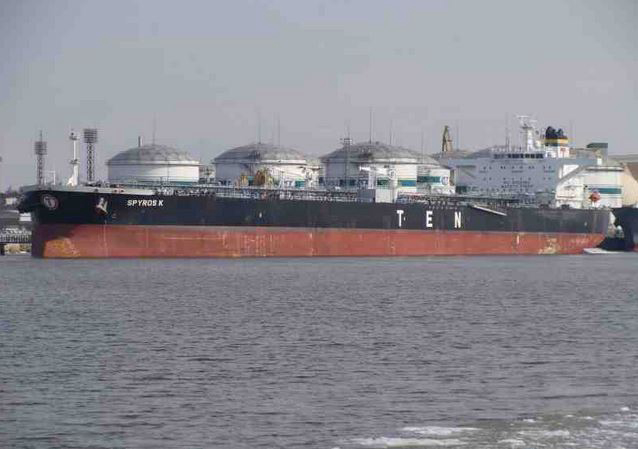
Series B Cumulative Redeemable Perpetual Preferred Shares (the “Series B Preferred Shares”; NYSE; TNPPRB) and approximately $0.5547 per share for its 8.875\% Series C Cumulative Redeemable Perpetual Preferred Shares (the “Series C Preferred Shares”; NYSE; TNPPRC).
Each dividend is for the period from the most recent dividend payment date on July 30, 2016 through October 29, 2016.
The dividend on the Series B Preferred Shares will be paid on October 31, 2016 to all holders of record of Series B Preferred Shares as of October 28, 2016. The dividend on the Series C Preferred Shares will be paid on October 31, 2016 to all holders of record of Series C Preferred Shares as of October 26, 2016.
Dividends on the Series B and C Preferred Shares are payable quarterly in arrears on the 30th day (unless the 30th falls on a weekend or public holiday, in which case the payment date is moved to the next business day) of January, April, July and October of each year, when, as and if declared by TEN’s board of directors. This is the 14th dividend on the Series B and the 12th dividend on the Series C since their commencement of trading on the New York Stock Exchange.
TEN has 2,000,000 Series B Preferred Shares and 2,000,000 Series C Preferred Shares outstanding as of the date of this press release.
ABOUT TSAKOS ENERGY NAVIGATION
TEN, founded in 1993, is one of the first and most established public shipping companies in the world today. The Company’s pro-forma fleet, including one VLCC, one LNG carrier, seven Aframax tankers and a Suezmax DP2 shuttle tanker all under construction, consists of 65 doublehull vessels, constituting a mix of crude tankers, product tankers and LNG carriers, totaling 7.2 million dwt. Of these, 45 vessels trade in crude, 15 in products, three are shuttle tankers and two are LNG carriers. All of TEN’s tanker newbuildings except the one remaining VLCC Hercules and the LNG carrier Maria Energy are fixed on long-term project businesses.
tenn.gr
“Opportunities at Sea for a successful career in Shipping”
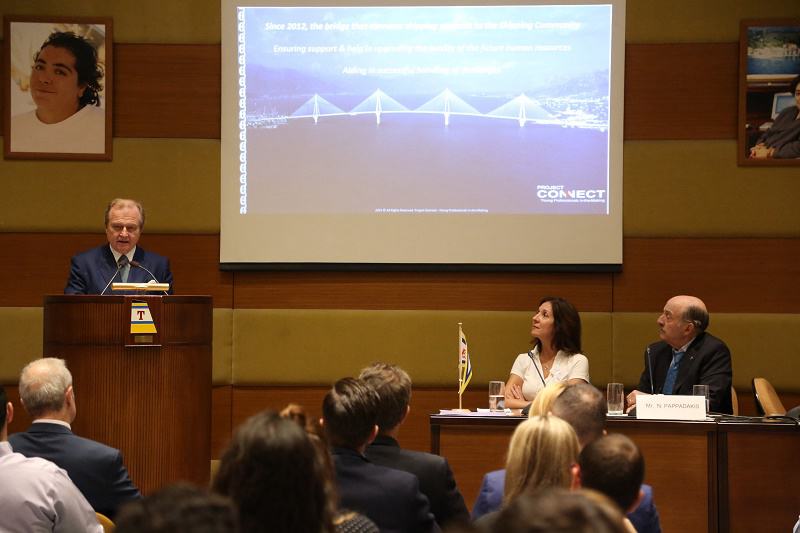
Tsakos Group of Companies always supports the efforts of Project Connect. This special event offered students interested in shipping a chance to hear at first-hand what the industry expects of them and what sea career means, from principals of some very distinguished shipping companies. Project Connect is an organization that provides concrete guidance and assistance to the new generation that wishes to enter the shipping industry.
The speakers at the event, Captain Panagiotis Tsakos, Mr George A. Tsavliris and Mr Nicky Pappadakis, participated in an interactive and informative communication with a counselling flavour. Their key messages, for the next generation of shipping, were the importance of gaining sea and vessel experience, to be alert and care about the ship.
The outcome of the evening was that young people received information on “how to” meet the requirements and criteria for career at sea. Τhe need for income is real and also the fact, that in order to achieve success, expertise and recognition in work, anyone needs to start having first priority gaining experience and step by step (most times from ground-zero) to reach its potential.
Working at sea entails an exciting international career in one of the world's most important and dynamic industries, comprised of people with all manner of backgrounds, ranging from recent graduates to experienced professionals. The job variety is tremendous, and so are the opportunities.
Mr. G. Tsavliris mentioned that an intern should not be faced as a threat for the company’s employees as its role is to supplement the existing personnel and not to substitute.
Project Connect continues encouraging young people to find out the tools needed to achieve a truly international job that can take them all over the world – or bring the world to them!
 |
 |
 |
 |
New European Border and Coast Guard Agency to strengthen EU’s maritime borders
ECSA supports the creation of this new Agency allowing efficient European border management as the merchant fleet has in the past years met increasingly demanding security and safety challenges in the Mediterranean Sea. The merchant ships have rescued thousands of people at sea despite great risks for the safety and security of the immigrants on board, crews and ships.
“The European Border and Coast Guard Agency will provide a missing link in strengthening Europe’s maritime borders. We believe that the increased sharing of coast guard capacities and information will certainly help to identify and respond to any potential security threats and indeed free merchant fleet from the rescue operations,” commented Patrick Verhoeven, ECSA Secretary General.
“Shipowners will always continue to live up to the legal and moral duty of helping people in distress at sea. However, merchant ships are neither built, nor equipped for these large-scale search and rescue operations. Seafarers are not trained for this, so both the migrants and the ships’ crew are exposed to security risks, health risks, tensions, physical strain and psychological impact. The rescue operations moreover include serious concerns with regard to responsibilities in cases of accidents, deaths, maritime pollution, disease as well as the safe disembarkation of immigrants. The fact that there will better cooperation and support from Member States thanks to the support of the new Agency is particularly welcomed”, he concluded.
The cooperation between the EU’s three competent agencies will be strengthened, namely the European Maritime Safety Agency, the European Fisheries Control Agency, and Frontex. It will allow the agencies, each within their mandate, to better support authorities carrying out coast guard functions at national, European and, where appropriate, international level. This will be done in many ways, including: sharing and fusing data from ship reporting systems and other relevant systems; providing surveillance and communication services, including space and ground-based infrastructure; establishing best practices and training staff; exchanging information on coast guard functions and analysing operational challenges and emerging risks in the maritime domain and engaging in multipurpose operations.
ECSA

Powered by  © Μaritimes 2019