


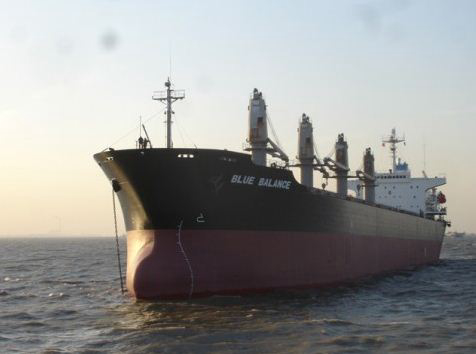
Gearbulk and Grieg Star combine forces to create 130-ship fleet
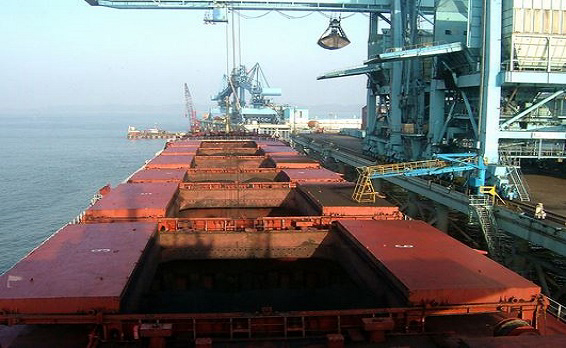
The JV will be jointly controlled by Gearbulk and Grieg Star, with Gearbulk owning 65\% and Grieg Star owning 35\%. The board of directors will be composed of five members; three appointed by Gearbulk and two appointed by Grieg Star. Chair of the board of directors will be Kristian Jebsen, with Grieg Star holding the vice chair.
“This agreement represents the firm intention of both companies to build an improved range of services for our customers. The combined number of vessels and trades will make it easier for our customers to find services that fit their needs,” said Kristian Jebsen, chairman and CEO of Gearbulk.
“The talks and cooperation throughout this process have built an invaluable trust and confidence between the parties. The two companies both have strong corporate cultures and values, and we aim to take the best from the two, and merge them into one strong, customer-oriented culture,” said the chair of Grieg Star, Elisabeth Grieg.
The name of the open hatch specialist joint venture is yet to be decided, but it will be established as an independent Norwegian company with headquarters in Bergen. The ceo will be Rune Birkeland, and the cco will be Arthur English. The JV is expected to be fully operational in the first half of 2017.
“In an increasingly competitive market, we believe this new entity will have the size to build and sustain a versatile and independent shipping service,” said Camilla Grieg, CEO of Grieg Star.
The two parties will retain their independent technical shipmanagement and ownership in the vessels.
Further, the scope of the joint venture excludes activities and vessels operated by Gearbulk in association with other third parties, as well as terminal business, transhipment activities, operation of liquid pitch tankers and caustic bulk vessels. For Grieg Star, their terminal businesses will also remain outside the scope of the new JV.
splash247.com
Qatargas ink 5 year LNG supply contract extension with Petronas
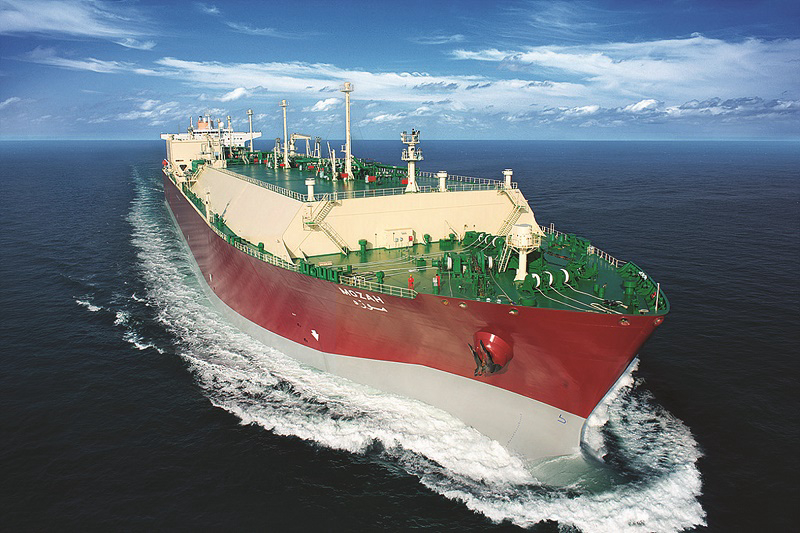
The new sales and purchase agreement sees Qatargas’ contract to supply gas from Qatargas 4 (Train 7) to Dragon LNG terminal at Milford Haven in the UK extended to a decade long deal expiring 31 December 2023.
A total of 1.1m tonnes per annum will be delivered via Q-Flex LNG vessels when the current deal expires in December 2018 from Qatargas 4, a joint venture between Qatar Petroleum and Shell which started production in January 2011.
“This extension will enhance Qatar’s leading position in the LNG market, and will further reinforce Qatargas’ commitment to meeting the needs of its customers of this clean energy source,” Qatargas chairman Saad Sherida Al-Kaabi said.
PLUK is the Atlantic basin-focused LNG trading subsidiary of Petronas, the national oil and gas company of Malaysia. PLUK is also responsible for securing LNG supplies into Dragon LNG terminal where Petronas owns 50\% equity and capacity stake.
http://www.seatrade-maritime.com/
WISTA Cyprus has recently organised a Training Course for its members with the title “Energy Economics and Shipping”

Professor Tamvakis presented, over a full day, topics related to the Energy Industry, starting from fundamentals and building onto the particulars of Upstream, Midstream and Downstream sectors. The training touched upon the growing importance of natural gas, the economics and export routes surrounding recent gas discoveries in the Eastern Mediterranean.
Professor Tamvakis explored particular commodity trading patterns, energy commodities’ pricing, the role and different forms of shipping, as well as risk management tools and various derivatives. The session was rounded up with a presentation on the growing sector of renewable energy sources. Interest was attracted from the shipping industry considering some vessels are deployed to support offshore wind farm developments.
It was an excellent opportunity for learning and networking, being two of the building blocks of WISTA.
WISTA is a networking organization for women at management level in the maritime industry.
WISTA aims to:
· Facilitate the exchange of contacts, information and experiences among its members
· Promote and facilitate the education of its members
· Provide liaison with other related institutions and organizations worldwide
For more information, please contact:
Despina Panayiotou Theodosiou, WISTA Cyprus President
Tel: 25569155
Email: This email address is being protected from spambots. You need JavaScript enabled to view it.

Professor Tamvakis with WISTA Cyprus members

Professor Tamvakis with WISTA Cyprus Vice-President, Victoria Kostic-Nola and WISTA Cyprus Acting Secretary General, Yvonne Tsanos Photo Credit: Whiteleaf Pictures
Aegean Marine Petroleum Network Inc. Downgraded by Zacks Investment Research to Hold
According to Zacks, “AEGEAN MARINE PETROLEUM is a marine fuel logistics company that physically supplies and markets refined marine fuel and lubricants to ships in port and at sea. They intends to focus on growing its fleet of double hull bunkering tankers and expanding its service centers in strategic locations worldwide to further enhance the Companys extensive customer relationships and leading industry position. “
Separately, Jefferies Group reiterated a “buy” rating on shares of Aegean Marine Petroleum Network in a report on Monday, August 1st.
The company’s stock had a trading volume of 148,598 shares. The firm’s 50-day moving average price is $9.92 and its 200-day moving average price is $7.78. The company has a market capitalization of $485.15 million, a price-to-earnings ratio of 11.39 and a beta of 2.60. Aegean Marine Petroleum Network has a one year low of $5.00 and a one year high of $11.41.
Aegean Marine Petroleum Network (NYSE:ANW) last released its earnings results on Wednesday, August 10th. The company reported $0.32 earnings per share (EPS) for the quarter, beating the Thomson Reuters’ consensus estimate of $0.23 by $0.09. Aegean Marine Petroleum Network had a net margin of 1.11\% and a return on equity of 8.36\%. The firm earned $987.60 million during the quarter, compared to analyst estimates of $870.85 million. During the same period last year, the business earned $0.15 earnings per share. The business’s revenue was down 18.2\% on a year-over-year basis. On average, equities analysts anticipate that Aegean Marine Petroleum Network will post $1.24 earnings per share for the current year.

Institutional investors have recently made changes to their positions in the company. BB&T Securities LLC raised its position in shares of Aegean Marine Petroleum Network by 186.9\% in the second quarter. BB&T Securities LLC now owns 155,523 shares of the company’s stock worth $855,000 after buying an additional 101,320 shares during the last quarter. BlackRock Institutional Trust Company N.A. purchased a new position in shares of Aegean Marine Petroleum Network during the first quarter worth $160,000. Systematic Financial Management LP raised its position in shares of Aegean Marine Petroleum Network by 72.1\% in the second quarter. Systematic Financial Management LP now owns 266,345 shares of the company’s stock worth $1,464,000 after buying an additional 111,560 shares during the last quarter. Nomura Holdings Inc. purchased a new position in shares of Aegean Marine Petroleum Network during the second quarter worth $144,000. Finally, GSA Capital Partners LLP raised its position in shares of Aegean Marine Petroleum Network by 6.1\% in the second quarter. GSA Capital Partners LLP now owns 342,402 shares of the company’s stock worth $1,883,000 after buying an additional 19,565 shares during the last quarter. Institutional investors own 69.07\% of the company’s stock.
Source: BBNS
Shipping: Fourth successive year of decline in operating costs
On a year-on-year basis, the tanker index was down by 4 points, or 2.2\%, while the bulker index fell by 6 points, or 3.6\%. The container ship index, meanwhile, was also down by 6 points, or 3.7\%. The corresponding figures in last year’s OpCost study showed falls of 2 points in both the tanker and container ship index, and of 1 point in the bulker index.
There was a 1.2\% overall average fall in 2015 crew costs, compared to the 2014 figure, which itself was 0.1\% down on 2013. By way of comparison, the 2008 report revealed a 21\% increase in this category. Tankers overall experienced a fall in crew costs of 1.3\% on average, compared to the 0.4\% fall recorded in 2014. All categories of tankers reported a reduction in crew costs for 2015 with the exception of Panamaxes and VLCCs, which recorded increases of 1.4\% and 1.2\% respectively, compared to reductions for 2014 of 2.2\% and 0.6\%. The most significant reduction in tanker crew costs for 2015 was the 3.6\% recorded by Product Tankers.
For bulkers, meanwhile, the overall average fall in crew costs in 2015 was 1.1\%, having stabilised 12 months ago at 2013 levels. The operators of Handysize Bulkers paid 2.3\% more on crew costs than in 2014, but the operators of other categories of bulker paid less, in the case of Panamax Bulkers to the tune of 3.2\%.
Expenditure on crew costs was down 3.3\% in the container ship sector, having stabilised in 2014 at the previous year’s level. The biggest fall in crew costs in this category was the 3.6\% reduction recorded for vessels of between 2,000 and 6,000 teu.
Expenditure on stores was down by 4.3\% overall, compared to the fall of 2.4\% in 2014. The biggest fall in such costs was the 8.5\% recorded by operators of Capesize Bulkers, with Panamax Bulkers (8.2\%) not far behind. Other significant reductions included 2,000-6,000 teu Container Ships (8.0\%) and Handymax Bulkers (7.5\%). For bulk carriers overall, stores costs fell by an average of 7.7\%, compared to a fall of 3.7\% in 2014, while in the tanker and container ship sectors the overall reductions in stores costs were 4.3\% and 5.5\% respectively, compared to the corresponding figures of 0.7\% and 3.0\% for 2014. The only rise in stores expenditure by any category of vessel was the 1.5\% increase recorded by Tankers 5,000 to 10,000 dwt.
There was an overall fall in repairs and maintenance costs of 4.3\%, compared to the 0.6\% reduction recorded for 2014. Only VLCCs and Container Ships of between 1,000 and 2,000 teu recorded increased expenditure on repairs and maintenance, of 0.1\% and 1.3\% respectively. Otherwise it was a case of reduced spending everywhere, the most significant example being the 7.9\% fall recorded for Coastal Dry Cargo ships.
The overall drop in costs of 3.2\% recorded for insurance compares to the 0.4\% fall recorded for 2014. No vessels in the bulker category paid more for their insurance in 2015 than in 2014. Handysize Bulkers paid considerably less (5.7\%) as did Panamax Bulkers (5.3\%). Product Tankers and Tankers 5,000 to10,000 dwt were the only vessels in the tanker category to pay more for their insurance in 2015 than in the previous year, to the tune of 1.3\% and 0.6\% respectively. The biggest increase in insurance costs, however, was the 2.6\% recorded by LPG carriers in the 10,000 to 40,000 cbm range. Perversely, gas carriers are historically regarded as among the safest vessels afloat, perhaps reflecting the effect on premium levels of the cost of potential claims rather than the legacy of claims records.
Richard Greiner, Shipping & Transport Partner, says: “This is the fourth successive year-on-year reduction in overall ship operating costs. The reduction is three times that recorded 12 months ago, and a reduction at this level had not been widely anticipated. The fall in operating costs is likely to be due in part to continuing good husbandry in a difficult operating environment for many, and partly to an extremely difficult market and wider economic climate.
“The biggest cost reductions were predictably those in the Stores and Repairs and Maintenance categories. Falling world oil prices continued to have a knock-on effect on lube oil costs in 2015, while increasing numbers of owners were looking to strategic short-term lay-up rather than spending on maintenance and repair.
“The fall in crew costs arguably came as more of a surprise to an industry which has over the years absorbed increases of this type in excess of 20\% and lived to tell the tale, but it was doubtless largely a consequence of reduced levels of trading. The fall in insurance costs, meanwhile, will come as no surprise to anybody in the light of warnings from the London market that hull rates for many major fleets continue to reach new lows.
“Last year was a particularly difficult one for shipping. Confidence reached its lowest level for seven years, according to the Moore Shipping Confidence Survey. Operators were not overly optimistic about making new investments in the short-term, while finance costs were predicted to rise. Nobody was expecting good news on dry bulk freight rates, and the outlook for tanker and container ship earnings was little better. The Baltic Dry Index, meanwhile, was getting ready to plumb the depths. It was not an auspicious time to be planning new ventures; rather, it was a time for taking stock. In short, for many, it was a time for keeping operating costs to a minimum.
“Against a background of declining confidence in 2015, oil prices were on a steady downward trend, and the slowdown in the Chinese economy was becoming increasingly evident. Neither of these factors was wholly good news for shipping and both, in different ways, served as a brake on 2015 operating costs.
“A fall in operating costs is good news for shipping, particularly at a time when earnings from the freight market, for many, are so disappointing. But the portents are not so encouraging. Oil prices are predicted to start recovering significantly in the second half of 2017, while the price of steel, the bedrock of the shipbuilding industry, could increase much sooner. The cost of manpower, meanwhile, is only likely to move in an upward direction under the terms of the Maritime Labour Convention 2006.
“While the Ballast Water Management Convention still seemed a long way away from entering into force in 2015, it wasn’t! Now the convention has been ratified, the cost of trying to achieve compliance should become clearer over the next 12 months, as should the cost of making shipping safer and more secure against threats from the likes of cyber-attacks and fraud.
“In conclusion, shipping can draw some comfort from a fourth successive annual fall in operating costs. But it should remember that costs can move both ways. OpCost records that, at year-end 2001, for example, the average daily operating cost for a Handymax Bulk Carrier was US$3,578. In 2015, it was US$ 5,604. For a Suezmax Tanker, the comparable figures are US$4,916 and US$9,170.
“The indications from the freight markets are that shipping is still selling itself too cheaply. Inflationary pressures on operating costs will remain, so maintaining the status quo will not be a viable option. For many, the freight markets will remain challenging and so to remain competitive, shipowners need to continue to improve efficiency, innovate with new technology and harness the considerable benefits of ‘big’ data without delay.”
Source: Moore Stephens
Container shipping market has bottomed out
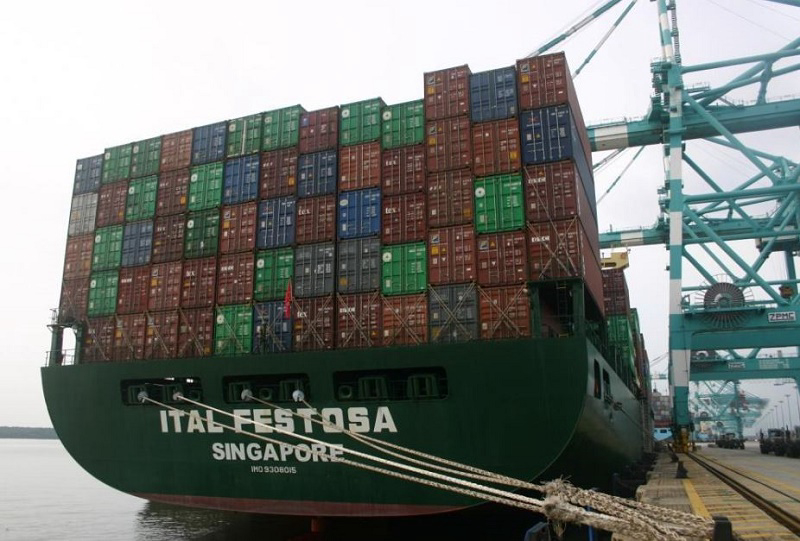
Worse than expected second quarter financial results will be followed by a better second half-year. But Drewry still expects container carriers to record a collective operating loss of $5 billion this year. We forecast industry profitability to recover next year, thanks to improving freight rates and slightly higher cargo volumes, and so record a modest operating profit of $2.5 billion in 2017.
However, this anticipated recovery needs to be put into perspective. While average freight rates are expected to improve next year, this will follow several years of negative returns and will still leave pricing well below the average for 2015. A key unknown remains carrier commercial behaviour which has proven unpredictable and counterintuitive. Hanjin’s demise may mark a watershed in this regard, but liner complacency on the risks of insolvency may challenge this notion.
Fuel prices are also on the increase and carriers are extremely wary of costs. This may support higher freight rates via the bunker surcharge mechanism, but it also increases operational costs.
The fact that the orderbook is at a virtual standstill is a major positive as is rapidly increased scrapping. But even so, the next two years will still be very challenging on the supply side with annual fleet growth of between 5\% and 6\% and many more ultra large container vessels (ULCVs) to be delivered.
In reaction, the industry is rapidly consolidating by necessity rather than by design. Those carriers who can weather this prolonged storm have a chance of emerging the strongest in 2019/20.
Drewry has highlighted for some time that carriers have not focused on revenue and with increasing debt this is a genuine issue for the industry in view of Hanjin’s failure. Drewry estimates that revenue for 2016 may reach $143 billion, but this compares to $218 billion back in 2012.
Neil Dekker, Drewry’s director of container research, commented: “Hanjin’s failure is the culmination of several years of poor commercial decisions and mismanagement, not just by Hanjin, but the industry as a whole. But it did not necessarily signal a major tipping point for the industry. It was more a side-show as freight rates had crucially already turned a corner at the mid-year point. More consolidation is likely, but is not necessarily the route to the promised land. Senior company executives talk about synergy savings of hundreds of millions of dollars, but this means nothing when it is all too easily given away in weak contract negotiations and the desire to maintain precious market share. The answer lies with fully addressing the revenue side of the equation and thankfully there are signs that the spot market is being addressed to some degree. The acid test for 2017 will be how the lines approach BCO contract negotiations.”
Source: Drewry
GasLog Ltd. Announces A Charter To Centrica For Seven Years And Places A Newbuilding Order At Samsung Heavy Industries
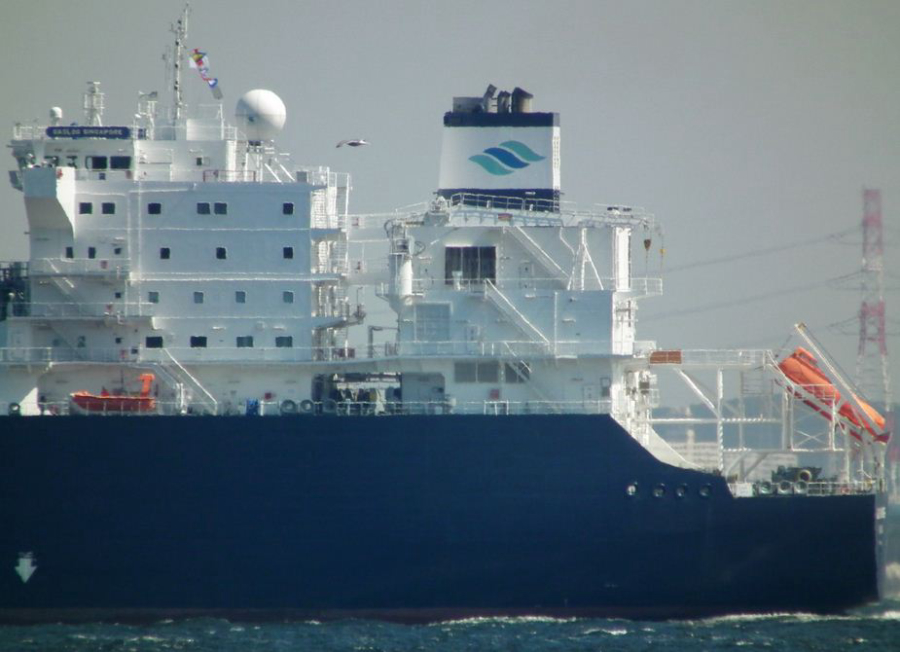
The vessel, a 180,000 cubic meter LNG carrier with XDF propulsion, has been ordered from Samsung Heavy Industries (“Samsung”) in South Korea. Centrica will charter the vessel from GasLog for a period of seven years commencing in the second half of 2019.
The daily charter rate is in line with GasLog’s average long-term charter rate.
GasLog Partners LP has the right to acquire the vessel pursuant to the omnibus agreement between GasLog and GasLog Partners. Securing a seven-year charter on this vessel extends GasLog Partners’ dropdown pipeline of future vessels from thirteen to fourteen.
Paul Wogan, Chief Executive Officer of GasLog Ltd., commented, “I am delighted to secure a new charter with Centrica, one of the leading European energy companies. This new charter is consistent with GasLog’s strategy of securing long-term contracts with high quality counterparties and further extends the dropdown pipeline to GasLog Partners.
Centrica is an important new customer for GasLog and we look forward to providing them with first class LNG shipping services as they continue to expand their LNG activities.
Following this charter, GasLog has five newbuildings with contracts of between 7 and 10 years, which deliver over the next three years providing significant inbuilt revenue and EBITDA growth.”
Source: GasLog Ltd.
Celestyal Cruises’ CEO Takes up CLIA Europe’s helm

 |
| Kerry Anastassiadis, CEO, Celestyal Cruises |
First appointed to the European Executive Committee of the Cruise Lines International Association three years ago, Anastassiadis takes over the role from Pierfrancesco Vago, Executive Chairman of MSC Cruises, who has been the organisation’s chairman for the last three years. Anastassiadis takes on the crucial role of representing the views of the smaller CLIA Europe Cruise Line Members like Celestyal, as well as all of its other members when he takes up the role on 1 January 2017. The members of CLIA Europe’s General Assembly also unanimously thanked Pierfrancesco Vago for the work he has undertaken over the last three years and asked him to remain on the organisation’s board.
The remaining members of the Executive Committee, as confirmed by the General Assembly, are: David Dingle, Chairman of Carnival UK and CLIA Europe Vice Chairman; Manfredi Lefebvre d'Ovidio, Chairman of Silversea Cruises; Gavin Smith, Senior Vice President International, Royal Caribbean; Michael Thamm, CEO of the Costa Group and Pierfrancesco Vago.
Anastassiadis, CEO of Celestyal Cruises, said: “I feel honoured and humbled by the General Assembly’s decision to trust me as CLIA Europe Chair and I look forward to continuing the work and effectiveness of CLIA Europe in representing all of its Members and ensuring the future success of the cruise industry. We have an effective team of professionals working at CLIA and are developing a stronger presence in Europe. I remain fully committed to matching my peers’ trust with my outmost dedication during the upcoming years.”
Raphael von Heereman, Secretary General of CLIA Europe, said: “I would like to welcome the appointment of Kyriakos and I look forward to working with him. I also thank Pierfrancesco for his restless support and help in expanding our effectiveness in Brussels and other European capitals, in terms of government affairs, communication and business development. As a result, we have notably increased the value that we bring to our Cruise Line Members and Executive Partners.”
1. About Cruise Lines International Association (CLIA) – One Industry, One Voice
Cruise Lines International Association (CLIA) is the world’s largest cruise industry trade association, providing a unified voice and leading authority of the global cruise community. The association has 15 offices globally with representation in North and South America, Europe, Asia and Australasia. CLIA supports policies and practices that foster a safe, secure, healthy and sustainable cruise ship environment for the more than 23 million passengers who cruise annually and is dedicated to promote the cruise travel experience. Members are comprised of the world's most prestigious ocean, river and specialty cruise lines; a highly trained and certified travel agent community; and cruise line suppliers and partners, including ports and destinations, ship development, suppliers and business services. The organisation’s mission is to be the unified global organisation that helps its members succeed by advocating, educating and promoting for the common interests of the cruise community. For more information, visit www.cruising.org or follow Cruise Lines International Association on CLIA Facebook and Twitter pages (@CLIAGlobal and @CLIAEurope).
2. Kerry Anastassiadis, CEO, Celestyal Cruises - Kyriakos (Kerry) Anastassiadis is the CEO of Celestyal Cruises and also a member of the Executive Committee of CLIA (Cruise Lines International Association) Europe. Prior to joining Celestyal Cruises, Kerry distinguished himself as General Manager, CEO and President at renowned corporations such as The Coca-Cola Company, Procter & Gamble, Polaroid and Aujan Industries. With Greek and English being his mother tongues, Mr. Anastassiadis is also fluent in French, Italian and Portuguese. Born in the Democratic Republic of Congo and raised in Southern Africa, Kerry studied Commerce at the University of Witwatersrand and obtained a postgraduate title in Market Research and Advertising.
Nakilat and Shell agree on LNG carrier management transition
 |
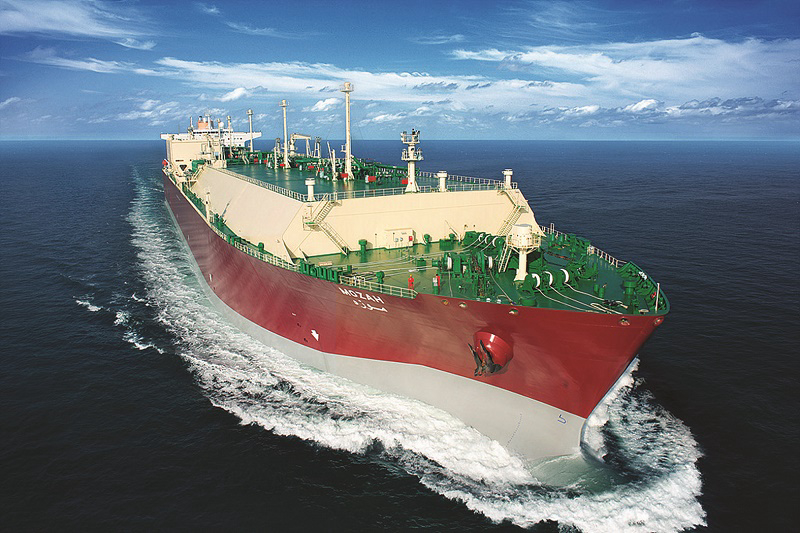
Shell has provided a range of shipping services to Nakilat’s LNG fleet since it was established in 2006. These included the ship management of 14 Q-Max and 11 Q-Flex LNG carriers and the sharing of Shell’s Shipping & Maritime expertise. The vessels will be transitioned in three phases starting this year and shall be managed by Nakilat’s in-house ship management arm, NSQL, which currently manages four large LPG carriers and four Q-Flex LNG carriers.
Nakilat has carried out extensive studies and comprehensive preparations and planning to ensure the successful management of these essential assets to Qatar’s gas supply chain from Qatar to the world, which plays a major role in the national economic growth in alignment with the National Vision 2030
Nakilat Managing Director Eng. Abdullah Fadhalah Al Sulaiti said: “Today marks a milestone in Nakilat’s history as we embark on consolidating a fully-fledged ship operation for our wholly-owned vessels. It is a pivotal strategic milestone towards Nakilat’s ambition of establishing an integrated maritime industry in Qatar. We are grateful to Shell for their professional management of our vessels over the last eight years and are confident of NSQL upholding the same excellent standards for our vessels, ensuring the safety and integrity of cargo from Qatar to the rest of the world.”
Dr Grahaeme Henderson, Vice President of Shell Shipping & Maritime, said: “We are proud to be a partner with Nakilat and to continue to support Qatar’s vision of building a world-class shipping business. This world-leading fleet includes some of the largest and most technically advanced vessels of their type and their cargo helps ensure energy security for millions of people around the world.”
This will be the world's largest transition of an LNG fleet operation. The 25 vessels have so far delivered over 320 million cubic meters of Qatar’s LNG to over 20 countries and have travelled 17 million nautical miles- the equivalent of over 780 trips around the equator’s circumference.
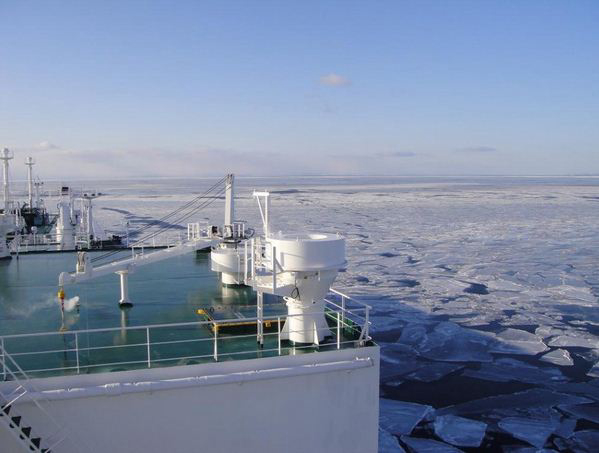
The Polar Code will protect the environment of the Arctic
It covers the various environmental requirements and recommendations relating to oil, sewage, garbage, chemicals and invasive species providing for safe ship operation and protecting the environment.
A documentary to be shown in the European Parliament today called “Sea Blind – The Price of Shipping our Stuff” discusses the impact of the estimated increase of traffic on the Northern Sea Route or the Arctic Ocean. European shipowners will participate in the roundtable discussion after the screening of the film.
Commenting on the claimed increase in the traffic and the future of the Northern Sea Route, ECSA’s Secretary General Patrick Verhoeven said: “It is unrealistic to believe that the Arctic will be immediately accessible as the sea ice disappears. Firstly, an ice-free Arctic Ocean year-round is false, as sea ice will always re-form during winter and ice properties and coverage will vary greatly within the region. There are also many other challenges that shipowners encounter such as polar darkness, poor charts, lack of critical infrastructure and navigation control systems and low search and rescue capability”.
“However, we do expect polar shipping to grow in volume in the coming years and are indeed pleased that precautions have been taken to ensure safety of life at sea and the sustainability of these highly sensitive environments is not compromised. The Polar Code of the International Maritime Organisation entering into force on January 2017 is mandatory and uniform regulation which ensures a level playing field. It will boost the level of confidence in the safety and environmental performance of shipping”, he concluded.
An IMO infographic illustrating how the Polar Code will protect the environment.

Powered by  © Μaritimes 2019