



Dry Bulk’s Biggest Spenders: Aggelikousis tops the tables
but not at the same rate and are still at historically low levels. In the last 12 months, contrarian owners have taken advantage of the low values and have been buying cheap tonnage. With hindsight, this looks to have paid off with many values having increased above the purchase price. The purpose of this article is to look at which dry bulk owners have been buying the most in the last year.


ANANGEL MARITIME SERVICES
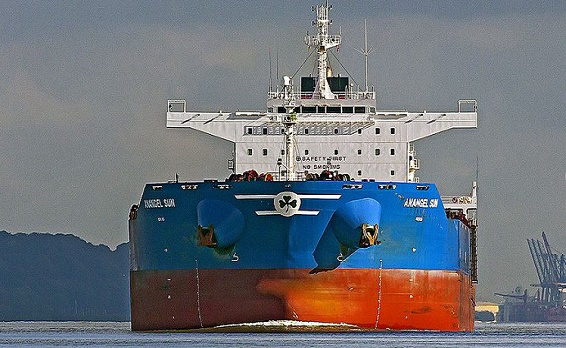
In January of this year Anangel purchased seven Capes (four resales from Star Bulk and three 1 year old vessels from Scorpio Bulkers) at USD 247m. Current VV market value is USD 230m. John Angelicoussis, principal at Anangel, has a reputation at picking the bottom of the market. For example, following the supercycle in 2007-8 he bought the cape resale Anangel Argonaut (177,800 DWT, 2009 Blt, SWS) at USD 63.50m. Following this he bought three more resale capes from Scorpio also at a market bottom in April 2015. Fig. 4 illustrates the timing of these purchases Vs the market.

ZODIAC MARITIME
Eyal Ofer’s operation was buying steadily throughout 2015 and closed the year off with a mammoth acquisition from Scorpio. Following two lone purchases in December 2015 (PRT Future) and March 2016 (Grand Future), Zodiac began scrapping, shedding nearly 1.5 million DWT. This brought Zodiac’s fleet back to the similar level it was at in 2015, shrinking the fleet by 57,800 DWT year-on-year. Following a spend of USD 246m (todays equivalent price: USD 236m), new additions to the fleet have a VV value of USD 235m.
WINNING SHIPPING
Winning begun the year scrapping some of their older tonnage as the rates and asset prices slumped. Winning’s first purchase was the acquisition of the Golden Hope (176,900 DWT, 2009 Blt, Namura) at USD 18.5m. Winning focused on buying throughout the rest of 2016, also purchasing two Capes with its management arm, Winning Alliance. Winning has grown their fleet by 49\% with a spend of USD 197m. The current value of acquisitions is USD 192m.
OLDENDORFF CARRIERS
Oldendorff has been more active in S&P in weaker markets and the last 12 months have been very busy for the shipowner (see fig. 5). Overall fleet growth in the period was 23\% adding 1.1m DWT to the fleet. Oldendorff’s first purchase was a bank sale of Paragon Shipping’s distressed assets. The shipowner’s purchases have predominantly been distressed transactions and cheap Chinese ships adding good value to the acquisitions. In the early months of 2016, a spate of scrapping removed some of the fleet’s older assets and a further sale of a 2005 laid up Supramax in March saw the fleet at its smallest in year. From then on Henning Oldendorff has been active in bulker S&P. Oldendorff spent USD 181m and the acquisitions now have a VV Value of USD 216m, a 19\% increase in asset prices.

CELSIUS SHIPPING
Prior to the dry bulk crash Celsius were exclusively in the small chemical tanker sector. Backed by Breakwater Capital (UK) and Bayside Capital (US), Celsius purchased an Ultramax resale at Hantong SHI in May. Their appetite was for Chinese-built, modern ships, snapping up a number of resales, many direct from the yards including Huangpu and Yangfan Zhoushan. Over the course of 2016 their fleet grew by 688,000 DWT (newbuilds included) with a spend of USD 167m. They now operate a fleet of 4 Ultramaxes and Supramaxes with 3 vessels still to be delivered. As it stands Celsius’ fleet of bulkers now has a market value of USD 196m which equals a rise in values of 17\% from the purchase price.
Source: William Bennett, Senior Analyst, VesselsValue
Dry Bulk Shipping – The overweight on Dry Bulk is paying off handsomely
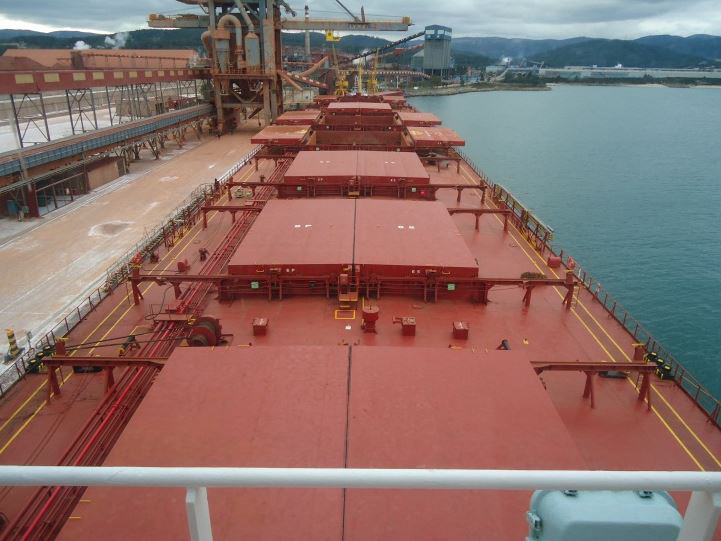
With the market bottoming out, we place our bets on the dry bulk names with high operating leverage and considerable exposure to the spot market. We expect the uptrend in freight rates to mirror in asset prices, which in turn, will have an amplified effect on stock prices. For existing players and asset markets, valuations have very little downside in our view. Bankruptcy risk which was being priced across stocks has significantly eased as key players raised equity and continue to restructure debt and balance sheets.

We expect freight markets to recover gradually in the remaining months of the year as Chinese stimulus flows through the industrial economy, providing opportunities to add exposure to dry bulk on correction as we believe the worst is behind us.”
Apart from the normalisation trade, one key pillar of our thesis was the investor under ownership. We were rightly positioned since early summer on capturing the delta in stock prices as normalisation took hold. We see the left out feeling to be evident and expect investors to start giving a relook to the sector and dig deeper into the fundamentals and available opportunities.
Price Performance

Source: DFRS, Bloomberg
Angelicoussis wants growth, favours VLCCs

 |
| Greek shipowner John Angelicoussis (left) speaks with Poten & Partners chairman Michael Tusiani at the Marine Money Ship Finance Forum. Photo: Eric Martin |
And though he identified opportunities across the gas, dry-bulk and tanker sectors, the three vessel segments in which his Angelicoussis Shipping Group specialises, he says VLCCs are "my favourite area".
In an on-stage interview in New York with Poten & Partners chairman Michael Tusiani, he said the large tankers are the easiest ships to operate and to fix on charters.
He acknowledged that the VLCC sector's orderbook is large, though not as bad as he has seen in other sectors.
"One of the beauties of orderbooks is self corrections," he said, noting that shipowners may cancel or delay newbuildings.
And he said new routes for VLCCs (pictured) bring better tonne-miles.
On the sidelines of the Marine Money Ship Finance Forum, he told TradeWinds that his company wants to grow and "does not want to stay static".
The shipowner is interested in ordering ships if the right opportunity opens up.
Still, he sees opportunity in the LNG carrier business because they are part of a more environmentally friendly industry, have higher barriers to entry and attract higher-quality charterers.
"It is an area where, because of the price, it is difficult for too many people to break in," he said.
Bulkers are the engine
Angelicoussis also has hope for dry bulk. He said it will be the engine of the world economy as several governments, including the administration of US President-elect Donald Trump, pursue much needed infrastructure upgrades.
"If one believes the new president, he is going to be very friendly to the dry cargo vessels. He needs a lot of imports to correct infrastructure problems of this country," he said.
Angelicoussis says he favours capesize vessels, as part of his preference for bigger ships.
Newbuildings favoured
The shipowner also said he prefers growing through newbuildings because he can build ships to his company's more exacting technical standards.
"If you have good relationships with first class yards and then you have clout, you can always find ways to correct mistakes," he said.
www.tradewindsnews.com
Bremenports wins ESPO Award 2016!

The ESPO Award was handed out by DG MOVE’s Director General, Henrik Hololei, during a ceremony at the Egmont Palace in Brussels on Wednesday night.

Looking back at the selection process in this 8th edition of the ESPO Award, the Chairman of the Jury, Pat Cox, said: “All the projects are good examples of port development combined with an ecological consciousness. In the jury's assessment process of the nature conservation and enhancement programmes of the competing ports we looked to law and regulation for guidance but beyond the law also for a deeper sense of conviction, values and commitment.” He further said that every port entry is a winner when a port commits to combining economic and operational activities with the protection of its natural environment and the opening up of that resource to its host society and users.
The theme of this year’s ESPO Award was ‘Nature in Ports’. Bremenports GmbH & Co. KG won the 2016 Award for its project, Luneplate, which is the first project to implement large and varied tidal habitats behind the main dyke in connection with a special flood barrage. The project is an excellent example of an integrated approach combining economy and ecology, bringing world port development requests together with the needs of a very sensitive environment, i.e. the UNESCO World Heritage Area “Wadden Sea”. On the basis of intensive stakeholder communications, a sustainable solution has been created that will also be successful under the conditions of climate change. Intensive monitoring stated the effective implementation. The comprehensive visitors’ concept opens the area to the public and provides transparent information. Last but not least, the Luneplate project is an example of organisational changes to a better societal integration of ports.
Reflecting more specifically on the bremenports project, the Chairman of the Jury said: “The Luneplate project has managed to turn the negative environmental impact caused by several former port extensions and infrastructure projects in Bremerhaven into actions ensuring both environmental aspects and social needs. In the Port of Bremen, nature protection goes hand in hand with the economic development.”
The ESPO Award 2016 saw 11 projects from ports from all over Europe compete for the prize. Bremenports GmbH & Co. KG beat shortlisted projects from the ports of Cartagena, Dunkirk, Guadeloupe and Riga.
 |
| Picture caption (from left to right): Robert Howe, Managing Director bremenport; Isabelle Ryckbost, ESPO Secretary General; Uwe von Bargen, Environemental Director bremenports; Henrik Hololei, Director General DG MOVE; Eamonn O'Reilly, ESPO President and Pat Cox, Chairman of the Award Jury. |
ESPO
DryShips posts net loss of $5.2 million for the third quarter
Protectionist Trump the next US President - view on shipping impact from New York

Trump’s run for the top job was remarkably short on specifics of what he might do if elected, so analysts can only conjecture about impacts on the maritime sector.
Political analysts and media pundits, mostly predicting an easy win for Clinton, were proven wrong as a populist current, evoking the “Silent Majority” of the late 1960’s, flowed throughout the middle of the country.
Trump is regarded as protectionist; his administration - supported by Republican majorities in both the House and the Senate - will try to roll back existing trade deals which, he argued, had the impact of exporting jobs abroad. The “re-shoring” movement will gain new currency under a Trump regime. Incrementally, such moves might have the effect of shifting, if not necessarily reducing, trade flows.
However, speaking at the Marine Money Forum in New York, the day after the election, noted investor Wilbur Ross, best known for his Diamond S tanker outfit, an advisor to the President-elect, stressed that economic gains in the US could lead to a trade stimulating environment. Ross added that Trump's energy-friendly views may stimulate addition licensing, and eventual export of LNG- plentiful in the US.
The “dangers”, if any, would lie in the reactions of other countries; pro-Clinton supporters had warned that a trade war might be triggered. The impacts, if the dire predictions come to pass - and the word “if” should be stressed - might extend beyond liner shipping; in recent years; the US had seen a resurgence of agricultural exports. However, on the world scene, cargoes may come from other origins, with impacts on ton-miles not readily possible to forecast.
Trump will likely be a supporter of the US domestic energy markets, which would benefit fossil fuels producers, including the miners of steam coal. Again, impacts on shipping will depend on shifts occurring in a global matrix of origins and destinations.
At a high level, more US oil production could auger for an incremental widening of the Brent- WTI spreads, and the resultant impacts on arbitrages for refined products. However, pricing is determined on world markets, and take into account the actions of buyers and sellers worldwide.
One perennial question for shipping observers is the impact on “The Jones Act”, the U.S. version of cabotage, which restricts coastal trades to US owned/ built/ and crewed vessels. The shipyard and related businesses have been powerful politically. Organised labour interests generally backed Clinton, and it is unclear how the shipbuilding industry might be treated by a Trump administration.
There are also considerable uncertainties about how a Trump policy apparatus would regard the “national security” aspects of shipping, including programs from the Bill Clinton years that allow US flagged (but not necessarily US built) liner vessels in foreign trades to gain annual subsidies. Likewise, a US tanker fleet in coastal trades, an important visage of the Jones Act, may be regarded as a bulwark for U.S. national security by a Trump administration- we don’t know yet.
One barometer to watch will be the upcoming split of the large tanker owner OSG into an international and domestic components; the Jones Act entity, to keep the OSG name, will be listed as will the “International Seaways” foreign flag unit, and its performance will provide an insight into investor views on the likely prospects for the Jones Act.
© Copyright 2016 Seatrade (UBM (UK) Ltd).
Does A Shipowner Have To Sell Its Ship In Order To Mitigate Its Loss?
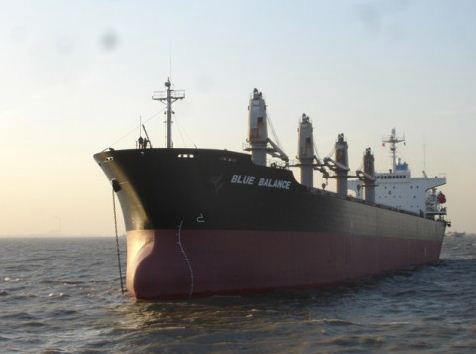
The decision will address principles of mitigation and the assessment of damages for repudiatory breach of a time charterparty. In particular, it will consider whether an owner that sells its vessel following such a breach must give credit for any benefit flowing from such a sale.
A brief recap of the facts
By a charterparty on an NYPE form and subsequent addenda, the cruise ship, the New Flamenco was time chartered for a period of over five years from 2004. The Charterers redelivered the vessel in October 2007 but the Owners’ position was that the earliest redelivery date under the charterparty was in November 2009. The Owners treated the Charterers as being in anticipatory repudiatory breach and accepted such repudiation as terminating the charterparty. In late October 2007, the Owners entered into an MOA for the sale of the vessel for US$23,765,000.
The arbitrator found that the minimum redelivery date under the charterparty was in November 2009 and that the value of the vessel in November 2009 was US$7,000,000. The arbitrator further found that Owners’ sale of the vessel in October 2007 was caused by the Charterers’ early redelivery and was in reasonable mitigation of loss. It was not in dispute that there was no available market for a substitute charter at the time of the Charterers’ breach.
The arbitrator declared that the Charterers were entitled to a credit of US$16,765,000; the difference between the value of the vessel in October 2007 and November 2009. This would be set off against the Owners’ claim for damages. That is, the Charterers were entitled to a credit in the assessment of the Owners’ damages claim for the ‘benefit’ that accrued to the Owners by selling the vessel for more in October 2007 than what it would have been worth at the end of the charter period in November 2009.
The Owners appealed. A fundamental part of their appeal was that the benefit they had obtained was not sufficiently causally linked to the Charterers’ early redelivery such that it should be taken into account when assessing damages. The Owners argued that the capital value of a vessel is different in kind from the type of loss for which they were claiming (i.e. loss of an income stream).
On the Owners’ appeal to the High Court, Mr Justice Popplewell held that the Owners’ decision to sell the vessel was independent of the Charterers’ breach in redelivering the vessel two years early and, therefore, the difference in value could not be taken into account to reduce the loss recoverable. The Charterers successfully appealed to the Court of Appeal.
The law of damages and mitigation
The general rule for damages is that they should place the claimant in the same position that it would have been in if the contract had been properly performed. It is often said that the claimant has a ‘duty to mitigate’. Put another way, a claimant is not entitled to recover in respect of loss which could have reasonably been avoided. Moreover, if a claimant takes steps to mitigate and the loss is thereby avoided, the claimant cannot recover in respect of that avoided loss.
Court of Appeal Decision
Overturning the High Court decision at first instance, the Court of Appeal held that the owners of a vessel claiming damages for the repudiation of a time charterparty must give credit to the charterers for the ‘benefit’ accrued following the sale of the vessel. That is, the owners must give credit for the difference in value between when the vessel was sold and when it would have been sold had the charterers performed the contract. In the present case, there had been a finding of fact that the sale had been caused by the early redelivery of the vessel by the Charterers and that such sale was a reasonable mitigation of the Owners’ loss.
One of the key statements made by Lord Justice Longmore was that the assessment of damages should be based upon the following principle:
“[I]f a claimant adopts by way of mitigation a measure which arises out of the consequences of the breach and is in the ordinary course of business and such measure benefits the claimant, that benefit is normally to be brought into account in assessing the claimant’s loss unless the measure is wholly independent of the relationship of the claimant and the defendant.”
The question then arises: does it follow that shipowners may be required to sell their vessel in mitigation of their loss? Put another way, if a charterer breaches the terms of a chaterparty by redelivering the vessel early, and there is no available market for re-chartering, are the owners required to realise the capital value of that asset rather than wait until the market recovers? Will the owners’ recovery be reduced if they choose not to sell the ship but instead to wait until the market recovers?
Lord Justice Longmore further stated that:
“The doctrine of mitigation may, indeed, sometimes require an owner to sell the vessel he has hired out to a hirer or a charterer if the relevant chattel is returned early.”
The tree or the fruit?
Should the capital value of an asset be used when determining the compensation a party may recover for being unable to obtain income? Does a shipowner have to consider selling its ship in order to mitigate loss following a wrongful early redelivery under a charterparty? The law on this subject is unclear and requires clarification.
As was argued on behalf of the Owners, the capital value of the vessel is different in kind from the loss recoverable for a charterer’s breach of a time charter; namely the loss of income. The former is the tree, whereas the latter is the fruit. If an owner decides that it wishes to retain the vessel, being its investment that will bear fruit in the future, will the owner receive less in damages for failing to mitigate?
What’s next?
The decision of the Court of Appeal has been appealed to the Supreme Court, which will readdress these issues. This will be heard between 21 and 24 November 2016.
Without a doubt, the Supreme Court’s judgment will be greatly anticipated by the shipping industry. If the Court upholds the decision made by the Court of Appeal it may have a significant impact on the way damages are assessed and the ‘reasonable’ steps shipowners will be required to take in order to mitigate their losses – even, ultimately, to sell their vessels.
Source: Reed Smith (Article by Dr. George Panagopoulos)
Dry bulk shipping to recover on muted vessel supply
Drewry forecasts that Capesize one-year time charter rates will double over the next five years from the lows of 2016 (see chart below). The reasons for a sharp contraction in the supply and demand gap are improving demand outlook coupled with a slowdown in vessel supply due to high scrapping and continued low deliveries along with scarce new-orders.
 |
The impending additional cost of installing Ballast Water Treatment Systems (BWTS) will force owners to keep sending younger tonnages to scrapyards. Owners have hardly been able to cover their operating costs and the additional cost will mean increasing losses.
The continued scarcity of private equity has controlled new orders this year and investors are expected to keep shying away from the dry bulk market, thinning the orderbook even further over the next two years. This will ensure that deliveries remain low which in turn will limit supply growth.
By contrast, demand for dry bulk shipping is expected to grow strongly, as Brazil’s increasing share of Chinese iron ore imports drives higher tonne mile demand. Even if the Chinese iron ore trade does not rise as anticipated, a shift of sourcing towards Brazil will mean that the demand for ships will increase many fold.
Asian countries, including Vietnam, Korea and Taiwan are expected to ramp up coal imports as they open more coal-powered generating plants to support their growing demand for energy. Drewry is expecting coal demand to keep increasing over the next five years.
“Dry bulk shipping has bottomed out and a market recovery is underway, albeit a slow one. Rising demand for ships to cater for increasing raw material consumption, together with the effect of shifting trade routes will help increase tonne miles. With investment remaining out of reach from dry bulk owners, even a modest growth in demand will help support market recovery. Meanwhile, the increasing cost of running an old ship will mean more vessels go to scrapyards, tightening supply over the next five years,” commented Rahul Sharan, Drewry’s lead analyst for dry bulk shipping.
Source: Drewry
Nakilat showcases maritime strength at ‘Made in Qatar’ exhibition

 |
This is the first time the Qatari shipping company is participating in the event, as an exhibitor and one of the key event sponsors. “Made in Qatar” aims to enhance development of the local industry sector by promoting bilateral trade between Qatar and regional markets.
Now in its fifth cycle, the exhibition organised by Qatar Chamber of Commerce features various companies from across industries in Qatar, with a focus on promoting Qatari-manufactured goods to the extensive Saudi market.
Nakilat Managing Director Eng. Abdullah Fadhalah Al-Sulaiti said, “Nakilat is proud to be part of the first international edition of this event as it presents us with an excellent platform to promote our spectrum of services to the wider regional market. We look forward to developing stronger relations in the region and further our vision to be a global leader and provider of choice for energy transportation and maritime services, in line with the aims of National Vision 2030.”
Via its joint-ventures, Nakilat-Keppel Offshore & Marine (N-KOM) and Nakilat Damen Shipyards Qatar (NDSQ), Nakilat offers a comprehensive range of ship repair and construction services for a variety of marine and offshore vessels at the world-class Erhama Bin Jaber Al Jalahma Shipyard in Ras Laffan Industrial City, strategically situated at the heart of the Arabian Gulf.
Greek newbuild orders slow but shipowners taking advantage of resale deals
By mid-October Greek shipping interests had a confirmed 303 ships on order, research into Greek shipping orderbook by Naftiliaki / Newsfront revealed. The contracted newbuilding projects was likely larger as a handful of the 72 companies believed to have ships on order would not confirm, or more interestingly deny, they had ships inked to be delivered over the next three years.
At the same time, at least three mayor projects were known to be under negotiation, involving up to a dozen more ships.
As drivers of the world shipping industry Greek owners presently control the largest commercial armada ever, which is powering ahead on a strengthening foundation of modern tonnage.
Greeks are major customers of shipyards around the globe and in October 2016 some 33m dwt was on order in China, Japan, South Korea, Finland, Philippines, Romania and Vietnam, worth an estimated $22.6bn to the shipbuilders, with more in the pipeline. By comparison at the same stage of 2010, 127 companies had 698 ships on order of a total 61.2m dwt worth an estimated $55bn.
Continuing the fleet’s diversification, the orderbook included all ship types; VLCC, suezmax, aframax, LNG and LPG carriers, dry bulk carriers, multi-purpose vessels and container ships, drillships, offshore supply vessels and ro-pax units.
At the same time Greeks are leaders in the sale and purchase market as they upgrade and expand their fleets through the purchase of newbuilding re-sales. In 2016 to beginning of November some 23 vessels had been purchased off the berth from VLCCs downwards for delivery in 2016 and 2017.
In the same period the potential Greek orderbook has been stripped of 16 newbuildings which have been sold before, or on, delivery. Another four ships have been sold by the Greek contracting company to another company under the same controlling owner.
This is particularly in the case of companies listed in the US, with interests of 14 of the 32 Greek US quoted companies involved in new ship projects, with 19 VLGC obvious drop-down candidates.
Reflecting the needs of the marketplace plus the demands of the regulators, it is hardly surprising energy carrying ships dominate this orderbook. There are 132 tankers of various types on order, plus 32 LNG carriers and 21 LPG carriers. In the past bulkers have been the vessel of choice, but today there are just 119 on order.
There are 31 container ships, from the maxi to the mini-size,18 offshore supply vessels, three drillships and two vehicle carriers also on the orderbook.
© Copyright 2016 Seatrade (UBM (UK) Ltd).

Powered by  © Μaritimes 2019