


Genco Shipping & Trading Limited Announces Closing of $400 Million Credit Facility and $125 million Sale of Series A Preferred Stock

Genco Shipping & Trading Limited (NYSE:GNK) (“Genco” or the “Company”) announced today that it has closed on a previously announced $400 million credit facility and certain amendments to the Company’s existing $98 Million Credit Facility and its 2014 Term Loan Facilities with ABN AMRO. Genco also announced that it has completed the sale of an aggregate of $125 million of Series A Preferred Stock of the Company.
Proceeds from the new $400 million credit facility will be used to refinance all of the Company’s existing credit facilities into one facility with the exception of the $98 Million Credit Facility and the 2014 Term Loan Facilities.
The new $400 million facility has improved the terms and covenants across all of the Company’s refinanced facilities and simplified its capital structure. The Company further improved its liquidity and balance sheet with the completion of the $125 million capital raise.
The terms of the $400 million credit facility include the following:
An improved repayment structure with no significant fixed amortization payments until 2019
The elimination of collateral maintenance covenants through the first half of 2018
The elimination of the maximum leverage covenant
The reduction of the minimum liquidity requirement
The facility has a final maturity date of November 15, 2021, and borrowings, which are available for working capital purposes, will bear interest at LIBOR plus 375 basis points with an option to convert 150 basis points of this to principal through December 31, 2018. The syndicate of banks for this facility includes Nordea Bank Finland plc, New York Branch, Skandinaviska Enskilda Banken AB (publ), DVB Bank SE, ABN AMRO Capital USA LLC, Crédit Agricole Corporate and Investment Bank, Deutsche Bank AG Filiale Deutschlandgeschäft, Crédit Industriel et Commercial, and BNP Paribas.
The Company also completed the sale of an aggregate of $125 million of Series A Preferred Stock of the Company. The Series A Preferred Stock sale consists of the purchase of $86.4 million of Genco’s Series A Preferred Stock by funds or related entities managed by affiliates of Centerbridge Partners, L.P., funds or related entities managed by Strategic Value Partners, LLC or its affiliates, and funds managed by affiliates of Apollo Global Management, LLC, representing the Company’s three largest shareholders, at a price of $4.85 per share. An additional $38.6 million in Series A Preferred Stock was purchased by certain investors at a price of $4.85 per share in an equity private placement. Such investors include affiliates of the Company’s three largest shareholders as well as a number of other investors. The Series A Preferred Stock has a liquidation preference of $4.85 per share and will mandatorily convert into shares of the Company’s common stock at a conversion price of $4.85 per share, subject to certain adjustments, upon receipt of approval of such conversion by the Company’s shareholders. An additional $6.25 million of Series A Preferred Stock was issued to the investors in the $86.4 million purchase as a commitment fee.
John C. Wobensmith, President, commented, “Genco’s recent steps to strengthen its balance sheet represent a significant milestone for the Company. We have significantly enhanced our financial flexibility and bolstered our ability to manage the current market downturn. Importantly, we have also repositioned Genco to thrive in a recovery and capitalize on the Company’s leading drybulk platform. Genco’s focus remains on achieving the highest operational standards for our customers, while maintaining cost-efficient operations for the benefit of our shareholders. We appreciate the strong and continued support we have received from our investors and our banking group, which we believe underscores the Company’s industry leadership and strong future prospects.”
About Genco Shipping & Trading Limited
Genco Shipping & Trading Limited transports iron ore, coal, grain, steel products and other drybulk cargoes along worldwide shipping routes. As of November 15, 2016, Genco Shipping & Trading Limited’s fleet consists of 13 Capesize, seven Panamax, four Ultramax, 21 Supramax, five Handymax and 16 Handysize vessels with an aggregate capacity of approximately 4,979,000 dwt.
Cruise lines and European shipowners welcome the revision of port reception facilities directive
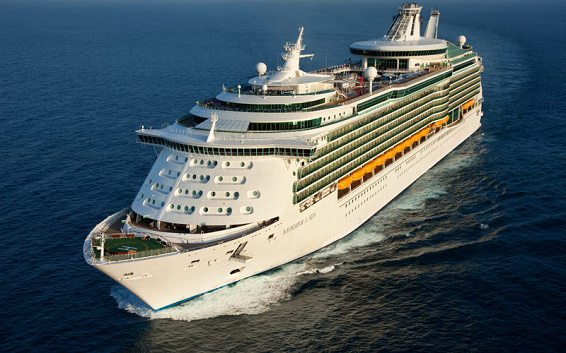
Whereas the directive has produced positive effects since its entry into force, there are however a number of shortcomings that need to be addressed. The evaluation of the Port Reception Facilities Directive is therefore essential. In the recently concluded public consultation launched by the European Commission, ECSA and CLIA raised a number of issues in their joint statement.
“A timely review and full implementation of the Port Reception Facilities Directive is urgently needed to make sure adequate facilities are made available to ships whenever they are required. This will allow our industry to keep operating in Europe contributing to jobs and growth”, said Raphael von Heereman, CLIA Secretary General. “In line with the circular economy, waste is more and more considered to be a valuable resource. The directive should also facilitate and encourage the segregation of waste and recycling via the port reception facilities”, he added.
ECSA Secretary General Patrick Verhoeven added: “What is needed is adequate port reception facilities including the development of facilities to cover new types of waste, a reasonable and harmonised fee system and proper enforcement of the directive”.
What is also needed is a pragmatic approach on exceptions and exemptions regime. In order to support efficient waste management processes and avoid undue delay at berth, the discharging requirement at port reception facilities should be correlated to the vessel’s self-sufficiency to carry waste on board and continue to the next port of call without delivering waste.
There are a number of shortcomings related to the interpretation and implementation of key elements of the directive. We need now to ensure harmonisation and transparency as the directive is revised. Whether it relates to the fee system, the proper handling of waste, the exemption regime, waste reception and handling plans or to the administrative procedures. “We remain engaged in contributing to the revision process of the directive in order to identify its shortcomings and we look forward to the revised proposal expected in 2017”, Patrick Verhoeven concluded.
2nd CSSF Members’ Meeting in 2016 in Pissouri, Cyprus
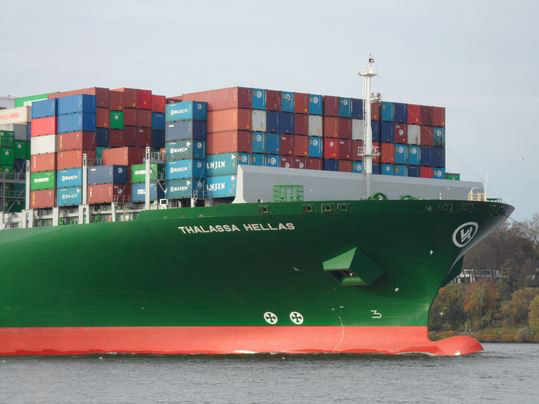
Ahrenkiel Steamship from Hamburg (Germany) was welcomed during the meeting as the fourteenth member of the Forum. Since the foundation in May 2014 the number of members has now doubled.
The meeting agenda focused mainly on sharing best practices and experiences on firefighting, mooring operations and navigation in confined waters. The CSSF members decided to produce corresponding position papers, beginning with the first two topics. Working groups were established for this purpose. All three topics will also be included into the planned CSSF Standard; work on same is in good progress.
DNV GL supported the meeting with a lecture on the “latest container ship design and safety developments”.
The next meeting of the Forum is planned to take place in Dubai (UAE) in early May 2017 for two days. The meeting will be open again for representatives from container shipping companies to participate as observers.
About CSSF: Launched in 2014, the Container Ship Safety Forum (CSSF) is a global business-to-business network aiming to improve safety performance and management practices in the container shipping industry. To achieve this, CSSF members collaborate through measurement, reporting and benchmarking as well as sharing best practices and engaging with industry stakeholders. As of October 2016, the CSSF represents more than one third of the TEU capacity of the global container ship fleet.
www.cssf.global
V.Group expands in tanker and Asian markets with acquisition of Selandia

Combining the independent operations of Selandia with V.Group’s existing portfolio, V.Group said it now offers the largest ship management fulfillment capability from India and has the widest access to Indian seafarers.
“By joining our portfolio of ship management businesses, we are able to offer Selandia Ship Management Group’s existing clients significant economies of scale and enhanced global responsiveness,” said Clive Richardson, ceo and president, V.Group.
Selandia, founded originally in Mumbai in 1995, will continue to operate as an independent ship management brand within the V.Group portfolio, helping to enhance V.Group’s resources in the tanker sector.
Naren Bhatt and Umesh Thakore, joint chair of Selandia Ship Management Group, commented: “Starting out in 1995 as a ship management joint venture with Acomarit, which was acquired by V.Group in 2001, there’s no surprise that we’ve found alignment in our commitment to assure performance of the assets under our management.”
© Copyright 2016 Seatrade (UBM (UK) Ltd).
Iconic Greek sites captured with VR cameras, drones by Xinhua for first time
 |
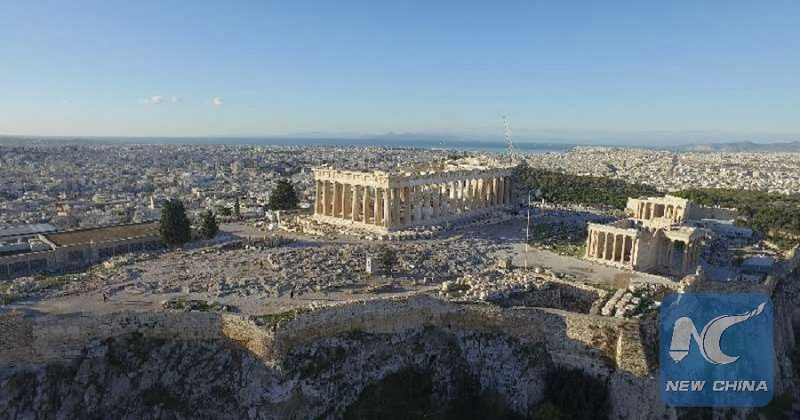
| Screenshot shows the Athens Acropolis on Nov. 10, 2016. A team of Xinhua reporters are now exploring Greece. A highlight of the exploration is to get a panoramic view of some incredible Greek cultural heritages, including the Acropolis and underwater relics, by using virtual reality(VR) technology. According to Greek cultural protection authorities, Xinhua is the first authorized Chinese media outlet to make a VR product out of the country's world famous archaeological sites and relics. (Xinhua) |
ATHENS, Nov. 14 (Xinhua) -- Ascending the Athenian Acropolis, acknowledged by UNESCO as a timeless symbol of the world's cultural heritage, is considered as a must have experience at least once in life. However, the steep rocky hill in the heart of the Greek capital which embodies Classical Greece's ideals remains out of reach for many.
Xinhua News Agency in collaboration with the Greek Culture Ministry embarked this November on an unprecedented mission to capture Greece's unique cultural treasures with Virtual Reality (VR) cameras and drones, allowing people across the globe to take a 360-degree look at the Sacred Rock, as well as a panoramic aerial view of the breathtaking monuments built in the 5th century BC.
Xinhua's team is producing a documentary on Greece's rich ancient civilization relics filming with the latest technological tools the Acropolis, as well as the underwater antiquities discovered at the seabed of south Peloponnese peninsula.
Standing in front of the Parthenon temple on a sunny day, Vassiliki Eleftheriou, director of the Acropolis Restoration Service, which realizes all restoration works on the hill since 2000, spoke to Xinhua about the challenges of the task which is a national priority for Greece despite the current economic difficulties.
Eleftheriou warmly welcomed the use of technology in documenting the site with more accuracy and bringing it closer to wider audiences.
The drones flying around the ruins of Propylaea, Erechtheion and the Athena Nike temple captured from a bird's eye view the cranes, archaeologists and marble technicians operating on the site, as Theodosis Tzavaras, the operator of the VR camera, wearing a robotic arm filmed details in 360 degrees.
"You have everything in your frame," he explained with enthusiasm, as tourists visiting the Sacred Rock were watching the filming, expressing eagerness to see the result.
Angeliki Simosi, head of the Greek Ephorate of Underwater Antiquities, which is responsible for the preservation of ancient relics under sea, also shared their enthusiasm on the new perspectives VR technology and drones offer, while giving a tour to Xinhua's team of the submerged treasures of Navarino Bay off Pylos town.
 |
| A picture taken on Nov. 12, 2016 shows a underwater photographer filming columns on the seabed near Methoni in the southwest Greek municipality of Pylos-Nestoras.The columns are believed to be built by King Herod in Caesarea, Palestine in the 1st Century, AD. (Xinhua) |
Off the coast of Sapienza island, braving the rough seas, Xinhua produced an underwater VR video which will help reveal more details and perhaps solve the mysteries of the two Roman era shipwrecks of the sarcophagi and columns, as well as the modern wreckage of the Greek oil tanker Irene Serenade which sank in the bay in 1980.
In contrast to the monumental complex of the Acropolis of Athens, the greatest and finest example of the beauty and glory of Greek ancient civilization at its peak, the underwater treasures of Navarino traced at a depth of 10-15 meters have still not been fully documented.
Xinhua's production will take audiences for the first time on a virtual reality trip to the site where Greek authorities aim to create underwater archaeological museums and diving parks in the future to promote Greece's cultural heritage.
SOURCE: XINHUA
IMO regulation on Ballast Water Management to trigger further scrapping activity in tanker shipping market
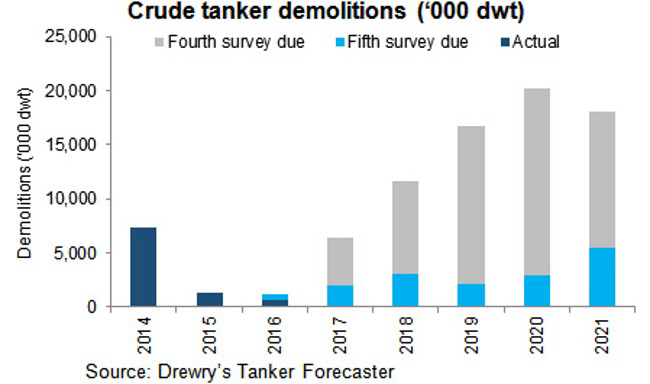
Despite the recent decline in tanker freight rates, demolitions have not yet picked up. Scrapping is expected to increase in the next two years, once owners start feeling the heat of persistent, low freight rates. But as the fleet is relatively young, demolitions will be moderate.
 |
The new International Maritime Organisation (IMO) regulation on Ballast Water Management will require that all vessels going into deep sea have in-built Ballast Water Treatment Systems (BWTS) by September 2017. Existing vessels will have a grace period to carry out the retro-fit during their next special survey if this occurs after the deadline. Some owners are expected to bring forward fourth special surveys, if they fall around the scheduled deadline, in order to delay retrofitting BWTS to the fifth special survey. But vessel owners for which the survey is due after mid-2018 will probably have to either retro-fit BWTS or scrap their tonnage. The additional cost of retrofitting BWTS along with the special survey will force many owners to scrap younger vessels before the next survey is due.
Drewry estimates that about 74 crude tankers (14 million dwt) and 114 product tankers (5.6 million dwt) will have their fourth special survey due between mid-2018 and 2021, making them potential victims of the new regulation.
“We do not expect all these vessels to be scrapped since many of them are on long-term charter at attractive rates, justifying the additional cost of retro-fitting BWTS. As tanker rates will remain well above operating costs during the forecast period, many owners might opt to operate their vessels after incurring this additional cost in anticipation of a recovery in rates,” said Rajesh Verma, Drewry’s lead analyst for tanker shipping.
“However, since the tanker market will be oversupplied, older vessels will find it difficult to get employment, which in turn will force many owners to scrap their tonnage just before their next survey is due,” continued Verma.
Source: Drewry
Danaos Management Consultants launches discounts for Green Award certificate holders
 |
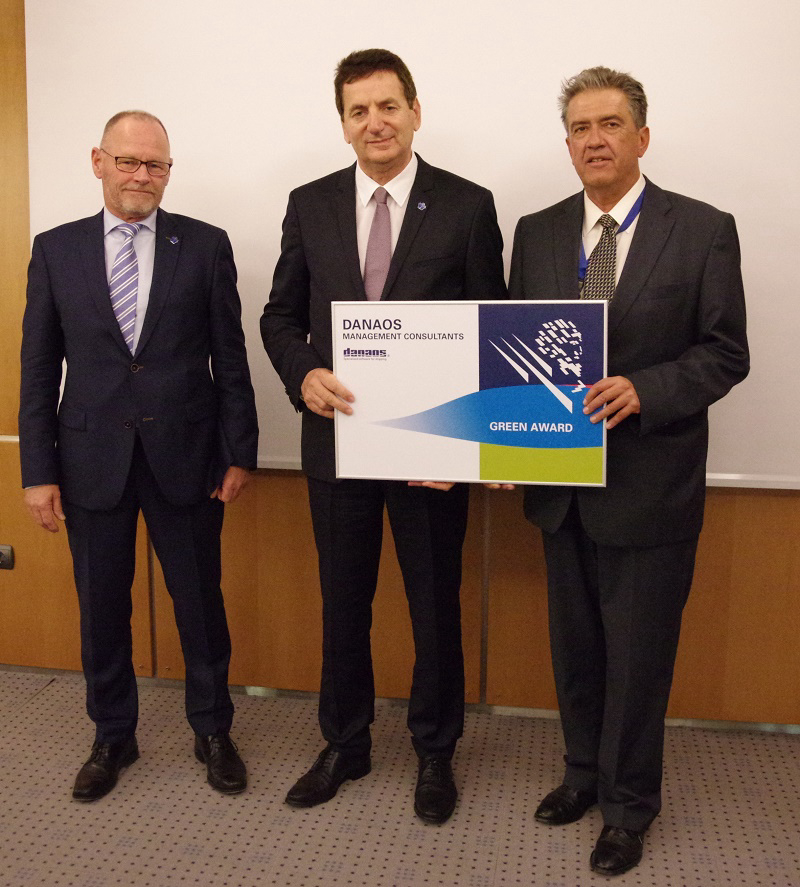
| From left to right: Mr. Jan Fransen, Executive Director of the Green Award Foundation; Mr. Dimitrios Mattheou, Chairman of the Green Award Foundation; Mr. Dimitrios Theodossiou, Managing Director of Danaos Management Consultants |
The cooperation was announced during a welcome ceremony held on 11 November in Athens, Greece. Green Award chairman Mr.DimitriosMattheou handed over the Green Award plaque to Mr. DimitrisTheodossiou, co-founder and Managing Director of DANAOS MANAGEMENT CONSULTANTS S.A (DANAOS), commemorating official acceptance of DANAOS as a new incentive provider.
Green Award is a quality mark for ships and ship managers that go beyond statutory regulations in terms of safety, quality and the environmental awareness. The Green Award scheme links ships with superior performance and technologies with ports and maritime service/products suppliers, who want to encourage excellence in shipping. Maritime companies and ports provide incentives to ships with the Green Award certificate. With the incentive effective 11th November 2016,DANAOS MANAGEMENT CONSULTANTS joins the world-wide network of more than 80 Green Award incentive providers.
With over 30 years of operations, DANAOS pioneers within the maritime industry domain providing well-integrated and easily accessible, secureship managementsoftware solutions that take full account of the operational and technical dimensions of each client. Incorporating streaming analytics, DANAOS, brings big data essence in your current IT solutions.Green Award certificate holders are entitled to a 10\% discount on all DANAOS product licenses and services and to one year free subscription for DanaosONE™ Platform. DanaosONE™ is a professional B2B versatile e-servicing Platform that seamlessly and securely integrates with internal operational, safety systems & compliance policies of users.DanaosONE™ Platform enables collaboration among trusted parties (B2B) without storing any information into cloud and enhancing the Bring Your Own Device concept (mobility).
“I strongly believe on collaboration and incentives like Green Awards. In this essence DANAOS technology can potentially integrate all Green Award members for the mutual benefit in efficiency, economy, quality and seaworthy shipping, says Mr. Theodossiou, Managing Director of DANAOS.
“It is impossible to imagine the shipping industry these days without information technology solutions. Databases and online platforms enhance information and data exchange in the maritime industry, allow making of fast and right decisions and encourage easier cooperation of parties.
They are an integral part of many shipping businesses,” says Mr.Mattheou, chairman of Green Award. “I am glad that DANAOS Management Consultants has joined the Green Award scheme,entitling our certificate holders to favorable prices if they choose to add DanaosONE™ Platform to their IT solutions package.“
Source: DANAOS
DNV GL inks ‘innovation’ agreement with Dubai Maritime City Authority
 |
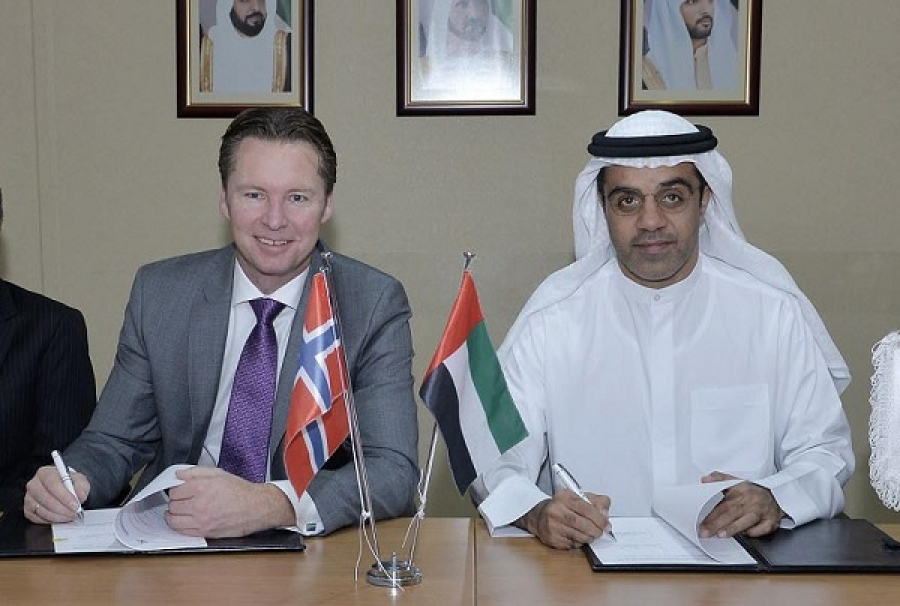
| DNV GL Maritime ceo Knut Ørbeck-Nilssen and DMCA executive director Amer Ali |
The ‘Maritime Innovation Cooperation Agreement’ will draw in local universities, higher education institutes, research organisations and other government bodies across the UAE to identify potential “innovation programs”.
DMCA, the government authority charged with regulating, coordinating and supervising all aspects of Dubai’s maritime sector, says the partnership is designed to not only benefit Dubai but the wider Middle East maritime sector.
“Innovation, research and technology are certainly essential factors for DMCA to provide an internationally recognized maritime cluster and enhance the sector’s efficiency and global competitiveness,” said DMCA executive director Amer Ali.
“In navigating through this path, it is important that DMCA establishes the right tools and methods in order to manage the impact as well as the opportunities that new technologies present to us.”
Ali described the co-operation as the next step in Dubai’s vision to become a “world-class maritime gateway” by “investing in research and innovation and mutually sharing knowledge and experiences on the latest shipping technology, as well as developments in environmental, safety and quality concerns.”
DNV GL Maritime ceo Knut Ørbeck-Nilssen commended DMCA’s efforts to make the local maritime sector a pivotal player in the international maritime arena.
“Dubai Maritime City Authority is taking a major step forward in terms of creating a highly competitive maritime environment with the ability to keep pace with regional and global changes,” Ørbeck-Nilssen said.
“We are confident that our cooperation will yield positive results and further enhance growth and innovation in the local and regional maritime clusters, ensuring the highest standards of safety and quality.”
© Copyright 2016 Seatrade (UBM (UK) Ltd).
German shipping bank DVB confirms to seek capital increase

Reuters reported last week that DVB, which is owned by DZ Bank, was preparing a capital increase due to losses taken on bad loans.
“DVB’s parent company, DZ BANK AG Deutsche Zentral-Genossenschaftsbank, Frankfurt am Main, intends to strengthen DVB’s capitalisation through appropriate measures, also against the background of stricter capital requirements for banks,” DVB said in a statement.
The capital increase is expected to be between 100 million euros and 200 million euros, according to one source familiar with the matter.
DVB also said DZ Bank now plans to buy the roughly 5 percent of outstanding DVB shares it does not already own.
German shipping banks like DVB, already struggling to recoup tens of billions of dollars of loans due to a global shipping industry slump, have also been hit by slowing growth in China and sluggish global trade.
For the first nine months of 2016, DVB posted a consolidated net loss before taxes of 23.6 million euros.
DVB had already warned investors in September it expected a consolidated net loss for 2016 in the double-digit million euro range. It has now predicting the loss to be “in a low negative triple-digit million euro range”.
Source: Reuters (Reporting by Joshua Franklin and Andreas Kroener; Editing by Alexander Smith)
World CO2 emissions stay flat for third year, helped by China falls: study

Carbon dioxide emissions from fossil fuels and industry were set to rise a tiny 0.2 percent in 2016 from 2015 levels to 36.4 billion tonnes, the third consecutive year with negligible change and down from three percent growth rates in the 2000s, it said.
The Global Carbon Project, grouping climate researchers, welcomed the flatlining of emissions amid global economic growth. But it cautioned that the world was not yet firmly on track for a greener economy.
“It’s far too early to say we’ve reached a peak in emissions,” co-author Glen Peters, of the Center for International Climate and Environmental Research in Oslo, told Reuters, referring to the findings issued at U.N. talks on climate change in Marrakesh, Morocco.
“So far the slowdown has been driven by China,” Peters said, adding Beijing’s climate change policies would also be the dominant force in future since it accounts for almost 30 percent of global emissions.
Chinese emissions were on track to dip 0.5 percent this year, depressed by slower economic growth and coal consumption.
U.S. emissions were projected to fall by 1.7 percent in 2016, also driven by declines in coal consumption, according to the study published in the journal Earth System Science Data.
By contrast, emissions in many emerging economies are still rising. Carbon dioxide is the main man-made greenhouse gas blamed for trapping heat, stoking disruptions to world water and food supplies with heat waves, floods, storms and droughts.
The Marrakesh talks among almost 200 governments, between Nov. 7-18, have been dominated by uncertainties about future U.S. policy after Republican Trump’s victory on Tuesday.
Trump has called global warming a hoax and wants to pull out of the Paris Agreement for limiting emissions, reached last year after two decades of negotiations, and instead bolster jobs in the U.S. coal and oil industries.
Still, Peters said natural gas, wind and solar were likely to continue displacing coal in U.S. electricity production, thanks to new technologies and lower prices.
Other scientists welcomed Monday’s findings.
“This could be the turning point we have hoped for,” David Reay, Professor of Carbon Management at the University of Edinburgh, said in a statement. He added: “The real Houdini work of freeing our economies from carbon has only just begun.”
Source: Reuters (Reporting By Alister Doyle; Editing by Andrew Bolton)

Powered by  © Μaritimes 2019