


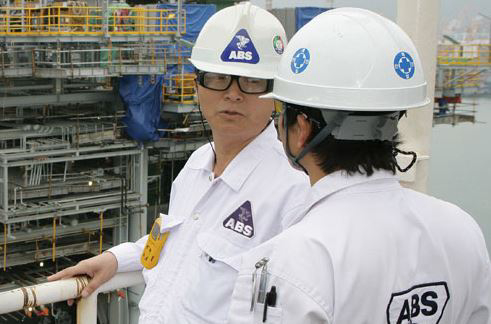
ABS: Highlights of IMO’s Maritime Safety Committee’s 97th session, which met from November 21 to 25, 2016
Survey Harmonization – Resolution MSC.409(97) adopted new SOLAS regulation XI-1/2-1 which revises the SOLAS Safety Construction Renewal Survey period for cargo ships, which are not subject to the Enhanced Survey Program (ESP) Code, so as to be harmonized with the Renewal Survey period under the ESP Code. Accordingly, as of the July 1, 2018 entry into force date, the 3-month survey period to complete the SOLAS Safety Construction Renewal Survey will be expanded to 15 months for cargo ships not subject to the ESP Code. Harmonization of the 6-month SOLAS Safety Construction Intermediate Survey period with the 18-month period provided for in the ESP Code will be addressed under revisions to the Harmonized System of Survey and Certification, HSSC, Guidelines.
• Intact Stability (IS) Code Revisions – Revisions of the mandatory requirements of Part A of the IS Code were adopted by resolutions MSC.413(97) under SOLAS and by resolution MSC.414(97) under the Load Line Convention. The revisions address:
– ships engaged in anchor handling operations (deploying, recovering and repositioning of anchors and associated mooring lines);
– ships engaged in harbor towing of ships and floating structures within sheltered waters;
– ships engaged in coastal or ocean towing of ships and floating structures outside of sheltered waters;
– ships engaged in lifting operation by means of winches, cranes, a-frames or other lifting devices; and
– ships engaged in escort operation in steering, braking and controlling the assisted ship during ordinary or emergency maneuvering.
At MSC 98, in June 2017, revisions of SOLAS II-I and the Load Convention are set to be adopted which will require new ships engaged in the above operation to comply with the IS Code. New ships will be defined as ships:
– for which the building contract is placed on or after January 1, 2020; or
– in the absence of a building contract, the keel of which is laid or which are at a similar stage of construction on or after July 1, 2020; or
– regardless of the above, the delivery of which is on or after January 1, 2024.
Additionally, new resolution MSC.415(97) revises Part B of the IS Code by providing recommended criteria for ships engaged in the above-mentioned operations.
• Foam-type fire extinguishers – Resolution MSC.409(97) contains amendments to SOLAS II-2, regulation 10.5.1.2.2, which specifies that, for all ships, the 135 liter wheeled foam-type extinguishers is not required in machinery spaces of category A containing oil-fired boilers which are protected by a fixed water-based local application fire extinguishing system. This takes into account that such a fixed system provides for a safety performance level that is equivalent to the 135 liter wheeled foam-type extinguisher.
• IGC Code – Fire Rating of Wheelhouse Windows – Resolution MSC.411(97) revises paragraph 3.2.5 of the IGC Code so as to remove the fire-rating requirement for clear view screen windows arranged in the wheelhouse that face the cargo area on gas carriers and thereby provides alignment with that required already required for tankers in SOLAS II-2. Taking into account the lack of availability of such windows meeting A-0 fire-rating under the current paragraph 3.2.5 of the IGC Code (resolution MSC.370(93)), which applies to new gas carries constructed on/after 1 July 2016, the Committee also approved MSC.1/Circ.1549 which invites Member States to take appropriate action on resolution MSC.411(97) at this time.
• ESP Code Revisions – Resolution MSC.412(97) revises the Enhanced Survey Program (ESP) Code by clarifying how close-up surveys and thickness measurements are to be performed for oil tankers and bulk carriers.
STCW 1978, Amendments for Polar Operation
The Committee adopted resolution MSC.416(97) which amends the International Convention on Standards of Training, Certification and Watchkeeping for Seafarers, 1978 and resolution MSC.417(97) which amends Part A of the STCW Code, both with respect to Polar operation. As these amendments are scheduled to enter into force on July 1, 2018, new circular STCW.6/Circ. 12 contains recommended provisions for applying these amendments on entry into force of the Polar Code on January 1, 2017. The amendments:
• require masters, chief mates and officers in charge of a navigational watch on ships operating in “open waters” in Arctic waters and/or the Antarctic area (i.e. Polar Waters) to hold a certificate in basic training for ships operating in Polar Waters after satisfactorily completing approved basic training and meet the specified standard of competence.
• require masters and chief mates on ships operating in Polar Waters, to hold a certificate in advanced training for ships operating in Polar Waters, other than “open waters” after satisfactorily:
– meeting requirements for certification in basic training for ships in Polar Waters
– completing at least two months of approved seagoing service in the deck department, at management level or while performing watchkeeping duties at the operational level; and
– completing approved advanced training for ships operating in Polar Waters and meet the specified standard of competence
• provide for transitional provisions which allow seafarers, who commenced approved seagoing service in Polar
Waters prior to 1 July 2018, to meet alternative basic training or advanced requirements by 1 July 2020.
Masters and deck officers on ships operating in Polar Waters are required to demonstrate competence in:
• Contribute to safe operation and maneuvering of vessels operating in Polar Waters
• Monitor and ensure compliance with legislative requirements
• Apply safe working practices, respond to emergencies
• Ensure compliance with pollution- prevention requirements and prevent environmental hazards
• Planning and conducting a voyage in Polar Waters
• Manage the safe operation of vessels operating in Polar Waters
• Maintain safety of the ship’s crew and passengers and the operational condition of life-saving, firefighting and other safety systems
Approved Amendments
The following amendments to SOLAS and associated instruments were approved and, subject to adoption at MSC 98 in June 2017, are expected to enter into force on 1 January 2020.
• IGF Code Revisions – along the lines of the above adopted revisions of the IGC Code, revisions of the International Gas Fuel (IGF) Code were approved which remove the requirement for A-0 class divisions of boundaries, including navigation bridge windows, above the navigation bridge deck.
• Carriage of vehicles – cargo spaces on all ships, which contain vehicles:
• with fuel in their tanks for their own propulsion, that are loaded/unloaded into cargo spaces which do not meet the requirements of SOLAS II-2/20, “Protection of vehicle, special category and ro-ro spaces”; and
• that do not use their own propulsion within the cargo space,
are not required to comply with SOLAS II-2/20 provided the vehicles are carried in compliance with the appropriate requirements of regulation 19 and the IMDG Code, as defined in SOLAS VII/1.1.
• Amendments to the IMSBC Code explicitly assign the shipper with the responsibility to ensure that the test for determining the transportable moisture limit (TML) of a solid bulk cargo has been carried out within six months prior to the date of loading of such bulk cargo. Additionally, the interval between sampling/testing for the moisture content of solid bulk cargo and the commencement of loading is not to be more than seven days so as to ensure that the moisture content of the cargo is less than its TML.
• Amendments to the 1994 and 2000 HSC Codes exempt high speed craft less than 20m in length from carrying a rescue boat provided arrangements are available to allow the craft to maneuver in the worst intended conditions to rescue a person from the water in a near-horizontal body position and that the rescue can be observed from the craft’s navigating bridge.
• LSA Code Revisions provide increased consistency on the application of the static tests and their proof load for launching appliances, including their structural members and winches.
Miscellaneous
• Carriage of liquefied hydrogen – The Committee adopted, by resolution MSC.420(97), Interim recommendations for carriage of liquefied hydrogen in bulk. These interim recommendations are intended to provide the basis for the future minimum requirements for the carriage of this cargo under applicable provisions of the IGC Code. Based on a comparison study of the physical properties of liquefied hydrogen, a class 2.1 dangerous good, and LNG, resolution MSC.420(97) identifies special requirements in the IGC Code for liquefied which include carriage restrictions in “type 2G” tanks, materials to prevent failures due to hydrogen embrittlement, filling limit of cargo tanks, vapor detection, temperature and boiling points of the inert gases during tank purging operations, firefighting systems, firefighters’ outfits and protective equipment.
• Ships Carrying Industrial Personnel – The Committee adopted resolution MSC.418(97) which contains Interim Recommendations on the safe carriage of more than 12 industrial personnel on board vessels engaged on international voyages. The Interim Recommendations define industrial personnel (such as those on board ships engaged in the construction and maintenance of offshore wind farms) as persons who are transported or accommodated on board for the purpose of offshore industrial activities performed on board vessels and/or other offshore facilities.
Industrial personnel should:
– not be considered or treated as passengers under SOLAS;
– be not less than 16 years of age;
– be familiarized with transfer procedures on/off the ship while at sea, as appropriate;
– be provided with the ship’s life-saving equipment;
– be equipped with personal protective clothing and equipment suitable for the safety risks to be encountered both while on board the ship and being transferred at sea; and
– meet appropriate STCW medical standards applicable to engineers.
The Committee agree that these Interim Recommendations should be used as the basis to develop a new Chapter of SOLAS containing new mandatory requirements for the carriage of industrial personnel.
• Goal-Based Standards – The Committee progressed draft revisions of the guidelines for verification of conformity of classification society rules with IMO’s goal-based ship construction standards for bulk carriers and oil tankers. The draft revisions were based on experience gained during the initial implementation and verification audits by IMO which led to MSC 96 concluding that the Rules submitted by each of the 12 IACS Member Societies conform to the goals and functional requirements of the Goal-based Ship Construction Standards.
The revised guidelines are planned to be completed for adoption at MSC 100, in November 2018, and would apply to verifications carried out on or after November 2019 of documentation submitted for initial verification and for rule/documentation submitted as a result of rule revisions.
The revised process of rule verification maintenance is tailored for three categories of rule revisions that are developed due to:
1. application of corrective actions emanating from previous verification audits;
2. continuous improvement process, including revisions addressing observations stemming from previous verification audits; and
3. experience gained and the due consideration by the Administration or the recognized organization of rules which have been verified as conforming to the Standards.
• Alternative Fire Safety Arrangements – The Committee approved MSC.1/Circ.1555 which provides amendments to the Guidelines on alternative design and arrangements for fire safety. A new appendix provides a methodology for the selection of performance criteria used to address the survivability of persons on board when exposed to the effects of heat, smoke, toxicity and reduced visibility.
• Shipboard Escape Route Signs/Markings – the Committee approved MSC.1/Circ.1553 which recommends that shipboard escape route signs and emergency equipment location markings use the symbols from ISO 24409-2:2014. IMO will prepare, in 2017, a MSC resolution that will contain the specific graphical symbols from ISO 24409-2:2014.
• Butterfly Valves – The Committee noted that approved revisions of SOLAS II-1/12 will, upon adoption and entry into force, correct an oversight currently contained in SOLAS II-1/11. That correction will allow for the use of a butterfly valve, suitably supported by a seat or flanges and capable of being operated from above the freeboard deck, in lieu of a screw-down valve in piping on cargo ships which pierces the collision bulkhead for dealing with fluid in the forepeak tank. However, because a decision was not reached on the proposed increase of the survivability index, R, for new passenger ships, adoption of the revision of SOLAS II-1 was held in abeyance until this matter is resolved at MSC 98 where it is expected that the complete set of amendments of SOLAS II-1 will be adopted.
• Watertight Doors on Passenger Ships – The Committee postponed until MSC 98 the approval of a MSC Circular which provides guidance to ensure that the three categories of watertight doors that are permitted to be opened during navigation do not inadvertently provide a flaw in the required damage stability survivability of new passenger ships. Upon approval, the MSC circular will apply to new passenger ships constructed on or after the January 1, 2020 expected entry into force date of the revised SOLAS II-1/22. Factors restricting the operation of these watertight doors are included together with operational instructions, markings and postings of such doors. Criteria for carrying out a floatability assessment of Category B doors; i.e., doors that may be opened during navigation when work in the immediate vicinity of the door requires it to remain open, is included.
Unified Interpretations
• Fire Safety Arrangements – A number of interpretations to SOLAS II-2 are provided in new MSC.1/Circ.1555. Included are clarification of double-hull spaces required to be fitted with suitable connections for the supply of inert gas; control of ventilation fans outside the space being served on passenger ships carrying more than 36 passengers; fire ratings of wheelhouse bulkheads; and application of certified safe type electrical equipment for ships carrying dangerous goods.
• Sprinkler Systems – Guidance to size pumps and pressure tanks for automatic sprinkler systems is provided in new MSC.1/Circ.1556. The Circular clarifies that nominal dimensions, as opposed to actual dimensions, should be applied for the number of sprinklers arranged in the area to be protected.
• Remotely located life rafts – New MSC.1/Circ.1490/Rev. 1 allows for self-contained battery- powered lamps to provide the means of illumination for remotely located life rafts under SOLAS regulation III/16.7. Such lamps should be capable of being recharged from the ship’s main and emergency source of electrical power, and should be stowed, under charge, close to the liferaft and embarkation ladder they are intended to serve.
• IGF Code – Interpretations to the International Code Gas Fueled Ships were approved under MSC.1/Circ.1559. Clarification is provided for arrangements of tank connection spaces (enclosed spaces surrounding all tank connections and tank valves), fuel preparation rooms, emergency shutdown protection for premixed engines using fuel gas mixed with air before the turbocharger, ventilation systems for gas valve unit spaces, purifier’s room, engine-room workshops and stores, location of ventilation inlets for the double wall piping or duct, containment of cryogenic leakages in fuel preparation rooms, sizing of pressure relief valve, special arrangements for bunkering stations.
• Vehicles Carriers – MSC.1/Circ.1555 clarifies that only pure car and truck carriers (i.e. vehicle carriers) should comply with the requirements for the carriage of vehicle carriers carrying motor vehicles with compressed hydrogen or natural gas in their tanks for their own propulsion as cargo described in SOLAS regulation II 2/20-1.
• IGC Code – Interpretations to the International Code for the Construction and Equipment of Ships Carrying
Liquefied Gases in Bulk (IGC Code), were approved under MSC.1/Circ.1560. Clarifications are provided for the following paragraphs of the IGC Code:
– Closing devices for air intakes (paragraph 3.2.6)
– Cargo machinery spaces and turret compartments – fire safety (paragraphs 3.3.1 and 11.1.1)
– Cargo tank clearances (paragraphs 3.5.3.1.2 and 3.5.3.1.3)
– Pump Vents in Machinery Spaces (paragraph 3.7.5)
– External tank surface area to determine the size of pressure relief valve (paragraph 8.4.1.2)
– Back-flushing of the water-spray system (paragraph 11.3.6)
– Safe means of emergency isolation in the event of a failure of a cargo tank-installed PRV
• Fixed fire detection and fire alarm systems – To provide for a uniform approach to sizing the emergency power source for the fire detection and fire alarm system, the Committee approved MSC.1/Circ.1554. The FSS Code’s 30 minute duration for the emergency power source to maintain the operation of the fire detection and fire alarm system, including all the means of visual and audible alarms, is interpreted to be the last 30 minutes of the periods required under SOLAS regulations II-1/42 and II-1/43 (18 hours for cargo ships and 36 hours for passenger ships).
• Hazardous Area Classification – The Committee approved MSC.1/Circ.1557 which clarifies that where the prescriptive requirements for the selection of electrical equipment, cables and wiring and positioning of openings and air intakes within SOLAS and related Codes (IBC and IGC Codes) do not aligned with the standards published by the International Electrotechnical Commission (IEC), the prescriptive requirements in SOLAS and other relevant IMO instruments prevail and are to be applied.
• Portable Atmosphere Testing Instruments – MSC.1/Circ1562 clarifies that the SOLAS requirement for a suitable means of calibration of all portable atmosphere testing instruments may be achieved on board or ashore in accordance with the manufacturer’s instructions. The calibration is not to be based on any instructions that include pre-operational accuracy tests as recommended by the manufacturer.
• Polar Code Certification– MSC.1/Circ1563 provides specific guidance on the timing of surveys as required under the provisions of the Polar Code. The guidance links the Polar Code surveys with the surveys required under the Cargo Ship Safety Certificate.
• Materials containing asbestos – MSC.1/Circ.1426/Rev. 1 clarifies that materials containing asbestos means asbestos present in the product/material that is above the threshold value recommended in resolution MEPC.269(68). That threshold is 0.1\% or, if agreed by the flag State, 1.0\%.
• Fire Pump Capacity – The Committee approved MSC.1/Circ.1558 which clarifies the means to determine the fire pump capacity required by SOLAS for ships designed to carry five or more tiers of containers on or above the weather deck. MSC.1/Circ.1558 addresses three cases:
1. mobile water monitors are supplied by separate pumps
2. mobile water monitors are supplied by the main fire pumps
3. mobile water monitors and the fixed water spray system (as per SOLAS II-2/19.3.1.3) are both supplied by the main fire pumps
Source: ABS
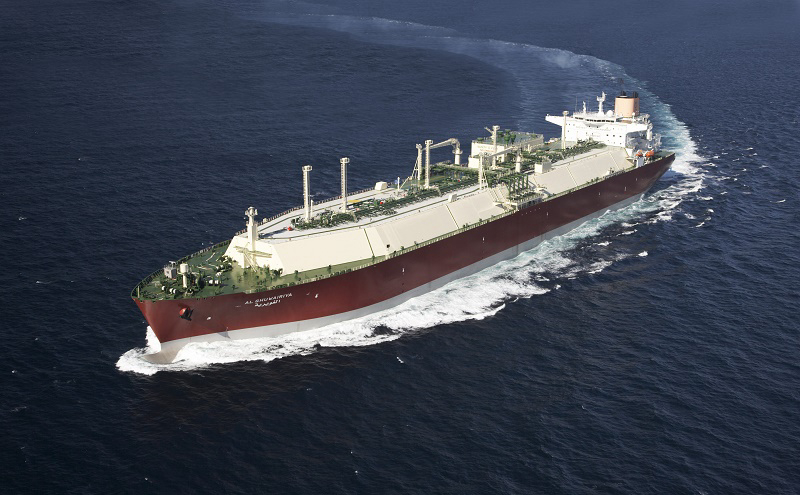
Nakilat transitions LNG Al Ghuwairiya to in-house management
 |
With a cargo carrying capacity of 263,300 cubic meters, Al Ghuwairiya is wholly-owned by Nakilat and chartered by Qatargas. The vessel built in South Korea by Daewoo Shipbuilding & Marine Engineering was delivered in December 2008 and has been in service ever since.
Al Ghuwairiya is the fourth Q-Max vessel that will come under the management of Nakilat Shipping Qatar Ltd. (NSQL) this year, bringing the total number of vessels managed by NSQL to 12, comprising of 8 LNG and 4 LPG carriers.
UNCTAD releases review of maritime transport 2016

In one of its sections – Chapter 4, Review of Maritime Transport 2016 sets out to describe the work of UNCTAD in helping developing countries improve port performance in order to lower transport costs and achieve better integration into global trade. The Review explores new datasets in port statistics and presents an overview of what these reveal about the port industry in 2015.
The overall port industry, including the container sector, experienced significant declines in growth, with growth rates for the largest ports only just remaining positive. The 20 leading ports by volume experienced an 85 per cent decline in growth, from 6.3 per cent in 2014 to 0.9 per cent in 2015. Of the seven largest ports to have recorded declines in throughput, Singapore was the only one not located in China. Nonetheless, with 14 of the top 20 ports located in China, some ports posted impressive growth, and one (Suzhou) even grew by double digits. The top 20 container ports, which usually account for about half of the world’s container port throughput and provide a straightforward overview of the industry in any year, showed a 95 per cent decline in growth, from 5.6 per cent in 2014 to 0.5 per cent in 2015.
You might freely download the publication : Review of Maritime Transport 2016
Maersk Line to buy Hamburg Süd
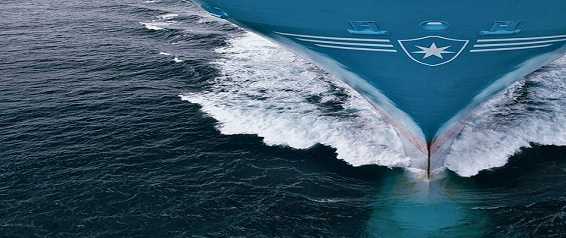
The deal follows a week of speculation about the future of Hamburg headquartered-line owned 100\% by the Oekter Group.
“Today is a new milestone in Maersk Line’s history. I am very pleased that we have reached an agreement with the Oetker Group to acquire Hamburg Süd,” said Søren Skou, ceo of Maersk Line and the Maersk Group.
“Hamburg Süd is a very well-run and highly respected company with strong brands, dedicated employees and loyal customers. Hamburg Süd complements Maersk Line and together we can offer our customers the best of two worlds, first of all in the North - South trades.”
The German line has 130 vessels with a total capacity of 625,000 teu.
Financial details of the deal were not disclosed. The acquisition is subject to final agreement, due diligence and regulatory approvals.
"The acquisition of Hamburg Süd is in line with our growth strategy and will increase the volumes of both Maersk Line and APM Terminals," Skou said.
Hamburg Süd and Aliança, which Oetker Group acquired in 1998, will continue as separate brands and continue to serve customers through their local offices.
Upon combining their network, the two lines will have access to dedicated end-to-end services provided by Hamburg Süd in the North-South trades, as well as the flexibility and reach offered by Maersk Line's global network.
With the acquisition, Maersk Line will have container capacity of around 3.8m teu and an 18.6\% global capacity share. The combined fleet will consist of 741 container vessels with an average age of 8.7 years.
© Copyright 2016 Seatrade (UBM (UK) Ltd).
“Poseidon Med II calls at Piraeus” on 8 December 2016
This year’s conference will be organised around three sessions addressing key challenges regarding the environmental, societal, technical and economic aspects of LNG as a marine fuel and Greece’s emergence as a distribution and bunkering hub for South East Europe.
The Conference will bring together key stakeholders and experts of the marine and energy sectors, representing international institutions, industry as well as local and national authorities, providing an excellent platform for exchanging views, networking and synergy building.
This is an open event, subject to registration and it will be live-streamed.
To see the Conference agenda & to register, click here
Media sponsor: Naftemporiki
Online media sponsors: naftemporiki.gr energypress.gr www.maritimes.gr
What is Poseidon Med II project?
Poseidon Med II project is a practical roadmap which aims to bring about the wide adoption of LNG as a safe, environmentally efficient and viable alternative fuel for shipping and help the East Mediterranean marine transportation propel towards a low-carbon future. The project, which is co-funded by the European Union, involves three countries Greece, Italy and Cyprus, six European ports (Piraeus, Patras, Limassol, Venice, Heraklion, Igoumenitsa) as well as the Revithoussa LNG terminal. The project brings together top experts from the marine, energy and financial sectors to design an integrated LNG value chain and establish a well-functioning and sustainable LNG market.
The sole responsibility of this publication lies with the author. The European Union is not responsible for any use that may be made of the information contained therein.
Havila Shipping Fends Off Bankruptcy as Bondholders Accept Deal
 |
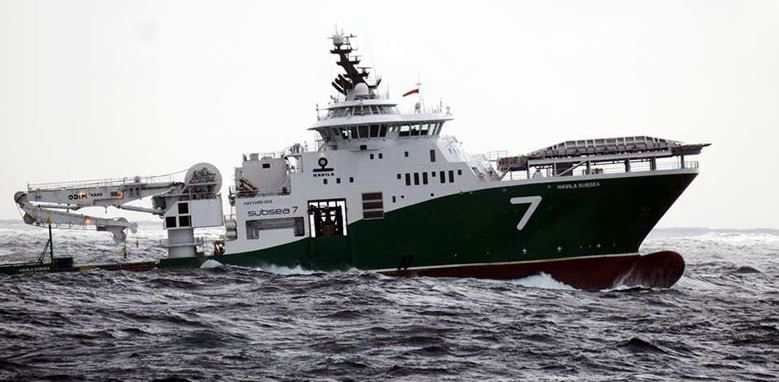
The Norwegian operator of oil-rig support vessels won support from holders of two-thirds of its bonds, according to a statement. The company said last week it would probably seek court protection if there was no agreement on Monday.
Havila lenders had announced plans to call in borrowings after bondholders failed to support a debt reorganization. Norwegian oil-service providers are suffering because crude prices below $50 a barrel have damped drilling, while competition has surged due to a flood of vessels ordered before the market collapse.
Havila’s shares surged as much as 87 percent to 1.78 kroner in Oslo trading. Its 500 million kroner ($58 million) of August 2017 bonds are quoted at 15 percent of face value, according to data compiled by Bloomberg.
The company has been working on a restructuring agreement for about a year, as well as mothballing vessels and shedding staff to cut costs. Under the plan announced earlier this month, Havila will get new investment from its main shareholder and support from banks, while its 5.2 billion kroner of net debt will be cut by almost 30 percent.
source:www.bloomberg.com
Cruise ports expand activities caring about performance, economic impact and users satisfaction
 |
Celebrating 20 years of MedCruise surveyed the practices applied by MedCruise port members to further advance their cruise businesses. As detailed in the celebratory publication ‘Ports Together’, these strategies are associated extensively with measuring port performance, completing economic impact studies, and measuring and sharing cruise port users’ satisfaction levels. Cruise activities in the Mediterranean are growing and the supply chain associated with cruise ports is expanding. Adaptation to demands goes hand-in-hand with social responsibility, and MedCruise provides a platform to share and further improve these strategies.
PortEconomics member Thanos Pallis comments on Mediterranean cruise port authorities caring about performance, measuring economic impact and sharing users’ satisfaction – in a viewpoint that has been originally published at the 49th issue of International Cruise and Ferry Review (link):
The Article:
Caring about performance, economic impact and users satisfaction
Cruise ports in the Mediterranean and its adjoining seas continue to adapt to new levels of demand, hosting bigger cruise vessels and seeking ways to accompany the contribution of cruising to port-cities and local communities with positive experiences for all their users.
Celebrating 20 years of MedCruise, our association surveyed the practices applied by MedCruise port members to further advance their cruise businesses. As detailed in the celebratory publication ‘Ports Together’, these strategies are associated extensively measuring port performance, completing economic impact studies, and measuring and sharing cruise port users’ satisfaction levels.
Cruise activities in the Mediterranean are growing and the supply chain associated with cruise ports is expanding. Adaptation to demands goes hand-in-hand with social responsibility, and MedCruise provides a platform to share and further improve these strategies.
When MedCruise members are looking to measure port performance, security tops the list as the most influential determinant, and the turbulence existing in many places around the world makes this justifiable. Not surprisingly, security performance in cruise ports in the Mediterranean and its adjoining seas is second to none.
Passenger satisfaction is the second most important criterion, with cost considerations, efficiency of operations and quality of infrastructure concluding the top five performance criteria.
Ports also perform economic impact studies, aiming to highlight and understand the precise impact that cruise growth brings to local communities and destinations. Some 85\% of Mediterranean cruise ports develop such studies. Plenty of them do so internally, using the expertise of their own personnel, whereas 21\% of them outsource to third parties.
Notably, almost four out of ten cruise ports conduct economic impact studies in cooperation with other entities such as local authorities and chambers of commerce. This enables them to conduct more comprehensive exercises with increased credibility.
Cruise ports in the Mediterranean and its adjoining seas – the second biggest cruise region of the world – have gone a long way in measuring the perspectives and levels of satisfaction of their users. The measurement of users’ satisfaction has become a standard practice for most cruise ports. 72,9\% cruise ports conduct regular users’ satisfaction surveys. Around 56\% receive feedback from the passengers, 71\% from the cruise lines, 62\% from shipping agents, 50\% from travel agents and 25\% from service providers. Whereas 80\% discuss the findings of these exercises internally, six out of ten share them with external stakeholders. One out of three cruise ports make these results available to the general public.
Performance measurement has always been a key issue for all types of ports. Port managers, whether port authorities or terminal operators, need to organise complex processes in an efficient and effective way to find the best ways to capture value for their customers and address the concerns of stakeholders.
For many, port performance is associated with operational efficiency alone. Physical quantities of items used, levels of effort expended, scale or scope of activities, and efficiency in converting resources into port services have always captured centre stage. Several indicators are used to benchmark current performance against prior year performance and against competitor performance, so as to deliver efficiency objectives.
However, competitiveness is also a product of effectiveness in delivering desired services to both customers and users. Stakeholders’ perceptions and satisfaction are increasingly vital for correcting flaws that the port’s network might experience.
Users’ Perspectives
Measuring users’ perspectives helps managers to understand the current situation and eventually address issues to improve experiences with the port. Insights into users’ perspectives assists cruise ports in setting priorities, such as pointing out areas needing the greatest investment for improvement, and identifying the areas where a cruise port already delivers value. In the latter case, the port could benefit from marketing initiatives to raise awareness.
Not surprisingly, Mediterranean cruise port authorities increasingly acknowledge the importance of measuring user satisfaction levels. Still, there is room for improvement in many respects.
First, there is scope to expand these exercises to involve all stakeholders, and spread the concept of measuring users’ perspectives in all respects. Second, it is important to identify the right indicators that allow meaningful insights on users’ experiences with port services.
Third, it is worth becoming more sophisticated. For instance, this could entail measuring the gap between the importance of certain port features and the performance of the cruise port as regards the particular feature, so that the cruise port management team understands the meaning of what respondents said and can develop strategic plans for investment and marketing.
All these – along with better economic impact studies and performance measurements – can be achieved by sharing best practices and increasing the awareness of the cruise community on the importance of such exercises. Cruise ports associations like MedCruise provide ports with efficient and effective platforms to achieve them.
MedCruise port members survey: key facts
- 85\% of Mediterranean cruise ports develop economic impact studies – 27\% internally, 21\% outsourced, 37\% in cooperation with public bodies
- 72,9\% cruise ports conduct regular user satisfaction surveys – 80\% discuss them internally, 60\% share with external stakeholders, 31\% share with the general public
- Security is the most influential port performance criterion – Passenger satisfaction, cost considerations, efficiency of operations and quality of infrastructure make up the top five
Final Implementing Regulations adopted by European Commission
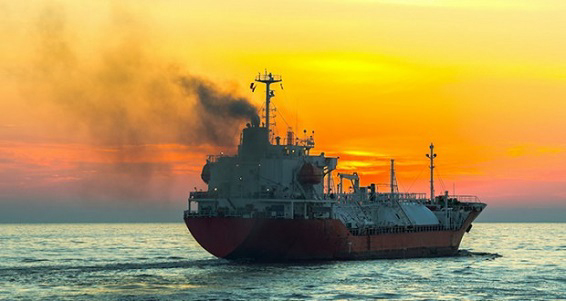
Regulation 2016/1927 sets out the templates for developing monitoring plans, emissions reports and documents of compliance, and Regulation 2016/1928 sets out the parameters to determine cargo carried for categories of ship others than passengers, ro-ro, and container ships.
Implementing Regulation adopted by European Commission are:
- The Implementing Regulation on Emissions Templates, which includes the draft templates for the Monitoring Plan, the Emissions Report and the Document of Compliance (DoC)
- The Implementing Regulation on Cargo Carried, which presents the parameters to be used to monitor the cargo carried on-board ship types other than passenger ships, containerships and ro-ro ships.
Implementing Regulation on Emissions Templates
This Regulation lays down templates and technical rules for the submission of monitoring plans, emissions reports and documents of compliance pursuant to Regulation (EU) 2015/757.
Template of the monitoring plan
- Companies shall draw up the monitoring plan referred to in Article 6 of Regulation (EU) 2015/757 using a template corresponding to the model set out in Annex I of Implementing Regulation on Emission Templates.
- Companies may split the monitoring plan into a company-specific part and a ship-specific part, provided that all elements set out in Annex I are covered.
Electronic template of the emissions report
- For the purposes of submitting the emissions report pursuant to Article 11(1) of Regulation (EU) 2015/757, companies shall use the electronic version of the template available in the Thetis MRV automated Union information system operated by the European Maritime Safety Agency (hereinafter referred to as ‘Thetis MRV’).
- The electronic version of the template of the emissions report referred to in paragraph 1 shall contain the information set out in Annex II of Implementing Regulation on Emission Templates.
Electronic template of document of compliance
- For the purposes of issuing a document of compliance pursuant to Article 17(4) of Regulation (EU) 2015/757, the verifier shall provide relevant data using the electronic version of the template available in Thetis MRV.
- The electronic version of the template of the document of compliance referred to in paragraph 1 shall contain the information set out in Annex III of Implementing Regulation on Emission Templates.
Implementing Regulation on Cargo Carried
This Regulation lays down rules specifying the parameters applicable to the determination of cargo carried for categories of ships other than passenger ships, ro-ro ships and container ships for the purposes of monitoring of other relevant information on a per-voyage basis pursuant to Article 9(1) of Regulation (EU) 2015/757.
Parameters to determine the 'cargo carried' per ship category
‘Cargo carried’ for the purpose of monitoring of other relevant information on a per-voyage basis pursuant to Article 9(1) of Regulation (EU) 2015/757, shall be determined as follows:
- for oil tankers, as the mass of the cargo on board;
- for chemical tankers, as the mass of the cargo on board;
- for LNG carriers, as the volume of the cargo on discharge, or if the cargo is discharged at several occasions during a voyage, the sum of the cargo discharged during a voyage and the cargo discharged at all subsequent ports of call until new cargo is loaded;
- for gas carriers, as the mass of the cargo on board; (e) for bulk carriers, as the mass of the cargo on board;
- for general cargo ships, as deadweight carried for laden voyages and as zero for ballast voyages.
To view rest of the parameters determined in the Implementation Regulation on Cargo Carried, please click here
Brexit: Threat And Opportunities For The Shipping Industry
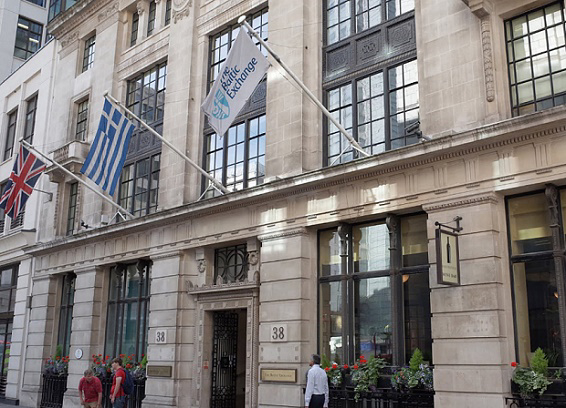
The Brexit referendum and rivals such as Singapore are seriously threatening Londons status in the industry. It is however to be specified that London position was suffering even before the referendum, but the uncertainty stemming from a possible post-brexit environment could mean London will lose its top position.
As suggested by David Balston, director of policy at the UK Chamber of Shipping, Londons main concern would be to make the city as competitive as possible in maritime terms as to make the UK offering on all sectors and industries as attractive as possible in a post-Brexit scenario.
For instance, Singapore, who has historically looked up at London as the leading city for the shipping industry, has offered lucrative tax breaks for companies who decide to relocate there, in order to steal Londons top position, which proved to the be a catalyst for the industry development.
The industry has however drafted a host of requests for the government to implement promptly. Namely, the industry expects the government to ensure that maritime services operate according to new free trade agreement, while also ensuring that quitting the EU will result into the UK being able to offer much more attractive tax breaks for shipping firms and investments. The government is also expected to provide additional support in the industry promotion and to establish a shipping register. If promptly addressed, these requests could help London maintain its status.
Brexit could also allow the UK to significantly cut red tape, while, reportedly, EU state aid rules have hindered the implementation of the British tonnage tax regime, which offered a lower tax environment that could be reinstated in a post-Brexit scenario.
Source: Giambrone Law ILP
DMCA and Lloyd’s Register sign MOU on joint Research & Development and Commercialization activities
 |
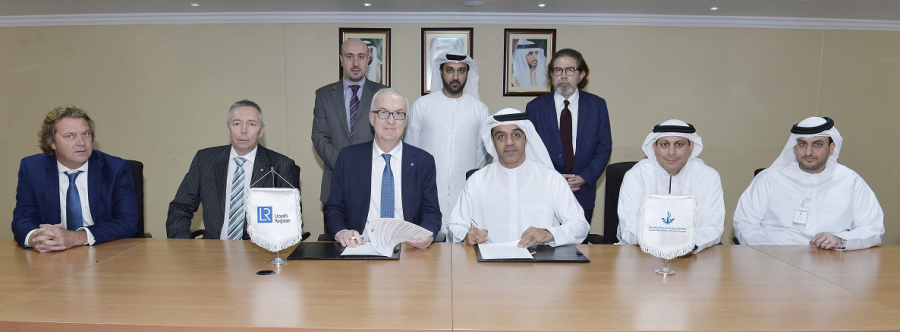
the global engineering, technical and business services organisation, to jointly undertake Research & Development and Commercialization activities. Amer Ali, Executive Director of the DMCA, and Tom Boardley, LR’s Executive Vice President and Global Head of Corporate and External Affairs, signed the MoU.
Amer Ali, Executive Director, Dubai Maritime City Authority, said: “Our MoU with LR falls in line with our total commitment to supporting the Dubai Maritime Sector Strategy and Dubai Industrial Strategy, to plan and establish a dynamic and safe maritime sector over the next decades in step with Dubai’s growth into a leading global maritime gateway. LR is an excellent partner in this regard given its outstanding reputation for integrity, impartiality and technical excellence. The passion our organizations share for ensuring that the interests of our clients are safe, sustainable and dependable will enable us to jointly set new benchmarks for maritime excellence particularly in R&D and commercialization locally and across the region.”
Under the terms of the MoU, both parties will set up a joint applied technology cluster to drive research and accelerate the development of mid to high level technology readiness areas that support current and future maritime industry needs. They will also organize and participate in regular workshops aimed at identifying subject areas with the potential to become significant joint research and development prospects. Moreover, the signatories will pursue opportunities for the commercialization of technology and organize and participate in joint academic and scientific activities such as conferences and knowledge exchanges with industry.
LR’s Tom Boardley added: “Dubai Maritime City Authority has extensive expertise in maritime development and is thus an excellent partner for us to seek new avenues for growth and expansion in the region and deliver better and more innovative services to our customers. For our part, we are committed to exchanging knowledge and best practices to help accelerate Dubai’s transformation into a premier global maritime centre. The axis of our Singapore and Southampton Global Technology Centres will be used to drive through the collaboration”
Since its inception in 2007, DMCA has been pursuing effective and strategic partnerships with renowned international organizations and major industry players. The recent MOU with LR is the latest in a series of global agreements signed by the DMCA to advance the development of a safe and vibrant maritime sector that fully supports the sustained economic growth of the emirate of Dubai.
dmca

Powered by  © Μaritimes 2019