


Operation Atalanta continues to keep the coast of Somalia safe

 |
The EU, together with other international partners and industry, has done an important and efficient job in preventing the piracy attacks, strengthening security, local governance and the rule of law along the coast of Somalia. The EU NAVFOR operation Atalanta is one of the important contributors to the dramatic decrease in piracy attacks in this region. “However, before a long term solutions on land, such as a stable political situation, job opportunities and social rest are not well established, piracy will remain an attractive business model for criminal networks”, Verhoeven concluded. The Somali pirates used to take control of vessels transiting the high risk area in the region, hold hostages and ask huge ransoms for their release.
The shipping industry will continue to cooperate with the EU NAVFOR commanders to ensure that Somali-based piracy stays suppressed.
ECSA
ASEAN: A Complex Beast With Growth Potential
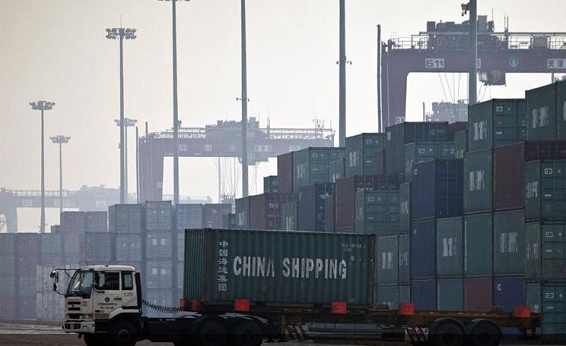
Import growth is also expected to remain firm in the coming years. However, while the outlook for ASEAN dry bulk imports is positive, recent cuts to dry bulk exports from the region make the overall picture more complex.
Feeding The Beast
ASEAN dry bulk imports rose 19\% between 2013 and 2015, hitting 233mt last year, driven by growth in the region’s steam coal imports, even if this was largely sourced from Indonesia. ASEAN coal fired power generation reached an estimated 400 TWh in 2015, up from 250 TWh in 2013, while the region’s steam coal imports rose 12\% y-o-y to 71mt in 2015. In 2016, continued firm steam coal imports and a rise in steel products and grain volumes to record levels are expected to drive a 7\% increase in total ASEAN dry bulk imports to 250mt, or 5\% of global seaborne dry bulk imports. This is expected to account for around 25\% of total dry bulk trade growth this year.

A Waking Dragon?
While volumes of dry bulk shipments into ASEAN are overshadowed by those into China, India and the EU, the outlook for demand in these major regions is uncertain. In contrast, there is a consensus for continued ASEAN dry bulk import growth, supported by urbanization and rising demand for energy. 26 GW of additional ASEAN coal fired power capacity (47\% in Vietnam) is set to come online by 2020, while a further 55 GW of capacity additions has also been announced. This will more than double ASEAN coal fired power capacity, supporting steam coal import growth. Vietnamese steam coal imports are expected to rise 32\% to 13mt in 2016, while some project total annual ASEAN steam coal imports to hit 125mt by 2020. Furthermore, an emerging middle class and a growing manufacturing sector are also set to boost future ASEAN grain and minor bulk imports.
Export Growth Shackled
However, ASEAN is a net exporter of dry bulk commodities, with an estimated total of 482mt, or 10\% of global seaborne dry bulk exports shipped in 2015. ASEAN dry bulk exports have been in constant decline since reaching a high of 643mt in 2013. This has been driven by events in Indonesia, especially the introduction of an unprocessed mineral export ban in 2014 and cuts in the country’s steam coal exports, which hit a four year low of 366mt in 2015. This year, total ASEAN steam coal exports are projected to drop a further 5\% to 355mt. Furthermore, ASEAN minor bulk exports are expected to fall 25\% to 85mt in 2016, driven by bauxite and nickel ore mining bans in Malaysia and the Philippines respectively. Overall, current projections indicate a 4\% drop in total ASEAN dry bulk exports to 439mt in 2016.
So, while ASEAN dry bulk imports have recently grown healthily, the overall picture has been complicated by the region’s declining exports. However, given that the import outlook remains positive, fewer disruptions and easing downward pressure on ASEAN steam coal exports could see the region provide a growing net positive contribution to global seaborne dry bulk trade in the coming years.
Source: Clarkson
Tsakos Energy Navigation linked to BP Shipping aframax pair
The sale first showed up last week, then linked to an unidentified Greek owners, and now several sources link the New York-listed outfit to the purchase.
TEN has grabbed the thirteen-year-old 114,800-dwt British Merlin and the one year younger British Curlew for $14.65m each, the brokers note.
Some days back TEN reported a third-quarter loss but said in a statement that the strong fourth quarter rebound in rates is a cause for optimism in the tanker market.
“Following our long term strategy of responsible growth on the back of solid employment, 2017 will be the springboard year that will boost the fleet’s profitability and elevate TEN’s valuation to levels that reflect the true value of our company,” Tsakos added.
splash247.com
Fitch: Deals, Defaults Ahead as Shipping Outlook Stays Negative
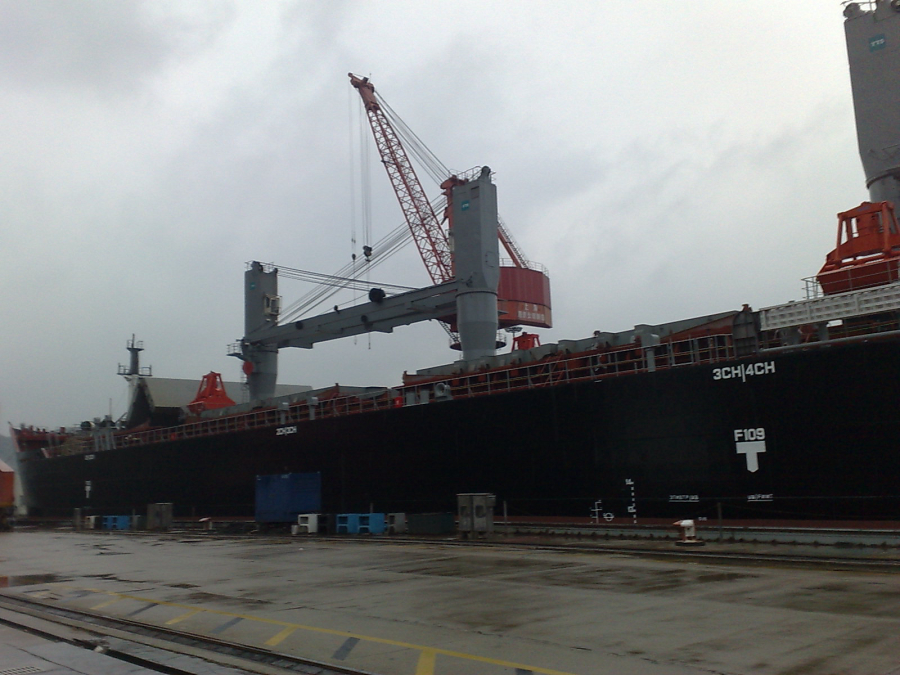
We expect performance in all segments to be under pressure and have therefore maintained our negative sector outlook. However, tanker shipping will face slightly less stress than dry bulk and container shipping.
Many container shipping and tanker shipping companies had sufficient cash to cover short-term maturities at their most recent reporting date, but they are still reliant on uninterrupted access to bank funding to cover negative free cash flow. This funding is even more critical for companies that are not able to cover their upcoming maturities.
Therefore, the filing for receivership in August by Korea-based Hanjin Shipping, the seventh-largest container shipping company in the world, may have far-reaching ramifications. In particular, creditors’ withdrawal of support may indicate a reassessment of the financing landscape, where secured bank funding for new vessels has remained relatively accessible even as market conditions have deteriorated.
We expect more M&A activity and defaults in the short and medium term. But these will only restore equilibrium and boost freight rates if they prompt capacity reduction. In container shipping we expect consolidation to affect companies across the entire segment, with smaller operators focusing on survival through increasing scale while market leaders such as Maersk Line defend their market position through M&A. Defaults are likely to be concentrated among companies with weak liquidity and challenges with access to bank funding.
For more details on our expectation for the sector, see the report “2017 Outlook: Global Shipping – Consolidation, Costs and Capacity High on Agenda” available at www.fitchratings.com.
Source: Fitch Ratings
STEALTHGAS Increase revenues for the nine months
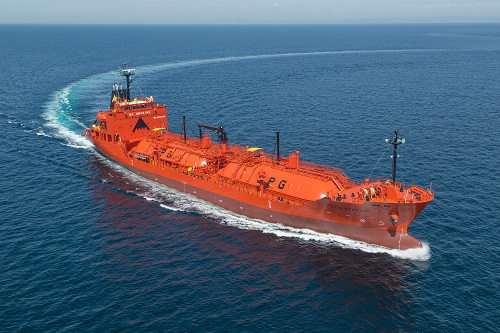

OPERATIONAL AND FINANCIAL HIGHLIGHTS
• 12.4\% increase in vessel calendar days in 9M 2016 compared to 9M 2015, surpassing 15,000 days.
• Operational utilization of 88.1\% in Q3 2016 (94.4\% in Q3 2015).
• 87\% of fleet days secured on period charters for the remainder of 2016, with a total of $175 million in contracted revenues.
• Average fleet age of 9.4 years (12 years market average).
• Deferral of the deliveries for our four 22,000 cbm semi refrigerated newbuildings.
• Revenues in Q3 2016 of $ 34.4 million decreased by 4\% compared to Q3 2015- in a challenging market environment.
• EBITDA in Q3 2016 of $11.2 million ($13.4 million in Q3 2015).
• Cash on hand of $60.7 million with operating cashflow of $25.2 million for 9M 2016.
Nine Months 2016 Results:
Revenues for the nine months ended September 30, 2016, amounted to $106.7 million, an increase of $2.8 million, or 2.7\%, compared to revenues of $103.9 million for the nine months ended September 30, 2015, primarily due to the higher number of vessels in our fleet in the 2016 period.
Voyage expenses and vessels’ operating expenses for the nine months ended September 30, 2016 were $11.7 million and $44.3 million, respectively, compared to $13.4 million and $36.5 million for the nine months ended September 30, 2015. The $1.7 million decrease in voyage expenses was mainly due to the lower bunker prices prevailing in the first nine months of 2016 compared to the same period of 2015. The increase in operating expenses, was mainly driven by our fleet expansion and the two vessels coming off bareboat compared to the same period of 2015.
Drydocking Costs for the nine months ended September 30, 2016 and 2015 were $3.2 million and $1.0 million, respectively. In the first nine months of 2016 we had nine vessels drydocked compared to two vessels in the same period of 2015.
Depreciation for the nine months ended September 30, 2016, was $29.2 million, a $3.0 million increase from $26.2 million for the same period of last year. This increase was due to the higher number of vessels in our fleet in the 2016 period.
Included in the first nine months of 2016 results are net losses from interest rate derivative instruments of $0.6 million. Interest paid on interest rate swap arrangements amounted to $0.9 million and gains from change in fair value of the same interest rate derivative instruments amounted to $0.3 million.
The Company realized a $0.3 million gain on sale of vessel in the first nine months of 2016.
As a result of the above, for the nine months ended September 30 2016, the Company reported a net loss of $3.4 million, compared to net income of $5.6 million for the nine months ended September 30, 2015. The average number of shares outstanding for the nine months ended September 30, 2016 decreased to 39.8 million compared to 41.6 million for the same period of last year, mainly due to the repurchase of 3.0 million shares from the beginning of 2015 to September 30, 2016. Loss per share for the nine months ended September 30, 2016 amounted to $0.09 compared to earnings per share of $0.13 for the same period of last year.
Adjusted net loss was $3.8 million or $0.09 per share for the nine months ended September 30, 2016 compared to adjusted net income of $9.1 million or $0.22 per share for the same period last year.
EBITDA for the nine months ended September 30, 2016 amounted to $36.9 million. Reconciliations of Adjusted Net Income/(Loss), EBITDA and Adjusted EBITDA to Net Income/(Loss) are set forth below.
An average of 53.3 vessels were owned by the Company during the nine months ended September 30, 2016, compared to 47.4 vessels for the same period of 2015.
As of September 30, 2016, cash and cash equivalents amounted to $60.7 million and total debt amounted to $410.0 million. During the nine months ended September 30, 2016 debt repayments amounted to $43.4 million.
Share Repurchase Program
Since December 1, 2014 to date, the Company has repurchased a total of 3,872,232 shares at an average price of $5.24 per share for a total consideration of $20.3 million, under its $30.0 million buyback program.
Fleet Update Since Previous Announcement
The Company announced the conclusion of the following chartering arrangements:
• A one year time charter for its 2001 built chartered in LPG carrier, the Gas Cathar, to an international LPG trader until November 2017.
• A two months’ time charter for its 2006 built LPG carrier, the Gas Enchanted, to an international trading house, until December 2016.
• A four months’ time charter for its 1995 built LPG carrier, the Gas Marathon to a Middle East based energy trader, until January 2017.
• A one year time charter extension for its 1994 built LPG carrier, the Gas Emperor to an international trading house, up until January 2018.
• A one to three months’ time charter for its 1996 built LPG carrier, the Gas Nirvana, to an international petchem trader until Dec 2016 – Feb 2017.
• A six months’ time charter extension for its 1994 built LPG carrier, the Gas Icon to an Asian petchem producer until July 2017.
• A one year time charter for its 2015 built LPG vessel, the Eco Lucidity to an international LPG trader up until December 2017.
• A six months’ time charter extension for its 2014 built LPG carrier, the Eco Corsair to an international trading house up until June 2017.
• A one year time charter for its 2003 built LPG carrier, the Gas Prodigy to an international LPG trader up until September 2017.
• A five months’ time charter for its 1997 built LPG carrier, the Gas Monarch to an international trading house up until January 2017.
• A one month time charter for its 2006 built LPG carrier, the Gas Alice to an international LPG operator until December 2017.
• A one month time charter extension for its 2014 built LPG carrier, the Eco Invictus to an international trading house until December 2016.
• A two months’ time charter for its 1996 built LPG carrier, the Gas Evoluzione to an international LPG operator until January 2017.
• A one year time charter extension for its 2015 built LPG carrier, the Eco Nemesis to an international trading house until February 2018.
With these charters the Company has contracted revenues of about $175 million. Total anticipated voyage days of our fleet are 87\% covered for the remainder of 2016 and 58\% covered for 2017.
Board Chairman Michael Jolliffe Commented
The third quarter of 2016 was quite a difficult one. Although broader LPG demand was strong, this quarter we faced lower day rates and extended idle time due to seasonal factors which suppressed our bottom line even further. In this poor market environment, particularly a very weak spot market, our earnings potential was affected. Despite the bleak outlook we succeeded to lock in nine new period contracts, and extended five existing ones. Our period coverage up until the end of the year increased to 87\% while our secured revenues are in the order of $ 175 million.
In terms of our operations, we continue to manage closely our costs, trying to contain our operating cost base, and our G&A costs. Moreover, and following our Board’s decision, we- in
STEALTHGAS INC.
The consolidated net after tax profits of the Hellenic Exchanges-Athens Stock Exchange Group amounted to €1.9m
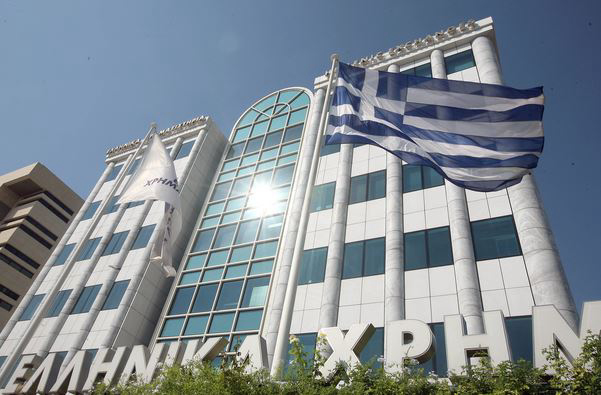
The turnover of the Group amounted to €20.6m in 9M 2016 vs. €23.1m in the corresponding period last year, while after subtracting the Hellenic Capital Market Commission fee, total consolidated revenue amounted to €19.7m vs. €22.1m, reduced by 11\%.
Total consolidated revenue is reduced mainly due to a drop in both trading activity and the capitalization of the Cash Market. In particular, in 9M 2016 the average daily traded value was €63m, compared to €84.2m, a 25\% reduction. The average capitalization of the Greek capital market dropped by 10\% compared to 9M 2015 (€40.8bn vs. €45.2bn).
The Athens Exchange General Index closed on 30.9.2016 at 565.5 points, down 14\% compared to the closing at the end of the nine months of 2015 (654.2 points). Market liquidity, as measured by turnover velocity, decreased to 38.7\% in 9M 2016 from 46.6\% in 9M 2015, while the average daily volume was 103m shares compared to 177m shares in the corresponding period last year.
In the derivatives market, the average daily number of contracts decreased by 25.5\% (62.6 thousand vs. 83.8 thousand), while the corresponding trading and clearing revenue dropped by 47\% due to the drop in the prices of the underlying securities and the change in the product mix in the market.
Total operating expenses including new activities was €12.7m vs. €13.7m in the corresponding period last year, reduced by 7\%. A securities valuation provision of €2.2m is included in the 9M 2016 results.
The consolidated Earnings Before Tax (EBT) in 9M 2016 amounted to €3.1m vs. €7.9m in the corresponding nine months of 2015.
The financial statements of the Group and the Company are posted on the Company’s website (www.athexgroup.gr).
Report: Woori Bank Disposes of Four Hanjin Tankers
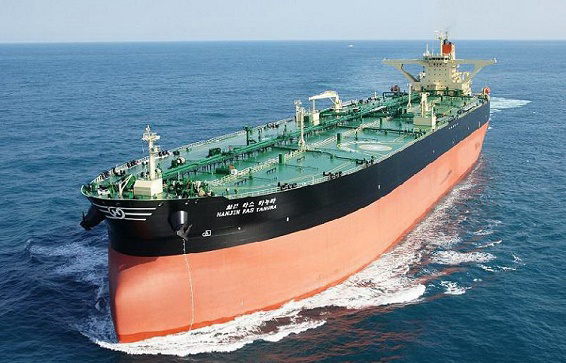
The ailing shipping company filed for court receivership on August 31, 2016, after its creditors said they would no longer financially support Hanjin.
Following Hanjin’s filing for court protection, the company handed over its 44 vessels, acquired with the help of the borrowed money, to the creditors.
The four ships, between eight and nine years old, are the first among the 44 vessels to be disposed of, The Korea Herald cited the bank as saying.
The tankers were put on sale in September on public bidding and the bank selected a Hong Kong-based shipping company as the final buyer.
Subsequently, the sales agreement between the two parties was reached on November 24, 2016.
The four tankers are expected to be delivered to the buyer by the end of December.
World Maritime News Staff
Hanjin Collapse Points to State of Shipping Industry
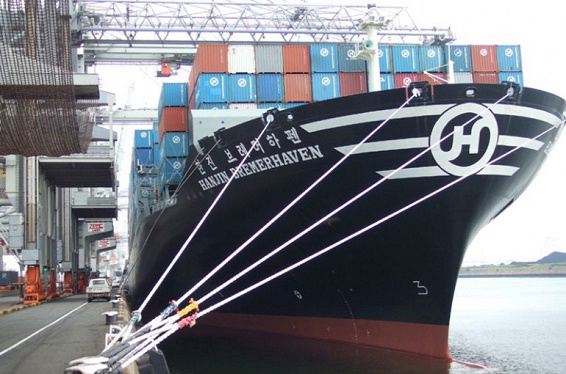
Amid numerous warning signs, a few facts in particular spelled bad news:
- The percentage of the global gross domestic product made up by exports of goods and services fell from 30.7\% in 2012 to 29.3\% in 2015, according to World Bank data. At the same time, new ships, ordered before the cooling of Chinese and Asian trade in consumer goods, were still entering the market.
- This year alone, container shipping capacity is forecast to increase by 3.6\% even as estimates for global demand growth range from just 1\% to 3\%. Although a record 150 container vessels are expected to be scrapped by the end of 2016, the shipping industry still suffers from overcapacity, according to Drewry, a maritime consulting firm.
- The ensuing mismatch between supply and demand could be seen this spring when Alphaliner, a shipping industry data provider, reported 7.4\% of container ships were sitting idle across the globe.
- Excess capacity is, in turn, responsible for the drastic dip in shipping rates that continue to batter company profits. In only six months last year (from mid-February to late August), the cost of hauling a container across the Pacific fell an astounding 49\%, from $2,265 to $1,153, according to Shanghai Containerized Freight.
In light of these issues, Hanjin was, as analysts have pointed out, an inevitable casualty of the many ills that plague the global shipping industry.
And the downfall of Hanjin – the world’s seventh-largest container line with 3\% market share – continues to play out as port operator PSA Singapore.recently announced shippers would have until Monday, November 28, to claim goods sitting in Hanjin containers in Singapore terminals and facilities.
Despite the worldwide supply chain disruption, the lesson of Hanjin has spurred the start of a much-needed restructuring of the shipping industry. The three bigwigs of Japanese shipping, for example, will merge their container businesses to create the world’s sixth-largest fleet. Smaller lines are likely to be swallowed up as the industry keeps consolidating, putting the control of as much as 77\% to 80\% of the world container fleet into the hands of the top 10 companies.
Will Bennett, senior analyst at shipping data company Vessels Value, summed up the situation in an interview with CNBC:
I think it is most likely Hanjin's vessels will be reabsorbed into the market and its cargoes reallocated. Overcapacity is likely to remain a problem, however, Hanjin's competitors' strategies of consolidation and finding further efficiencies may lessen the effect of this, and we may find this was the 'blood-letting' the industry needed.
What do you think are the most pressing challenges that the shipping industry needs to tackle?
http://www.ebnonline.com
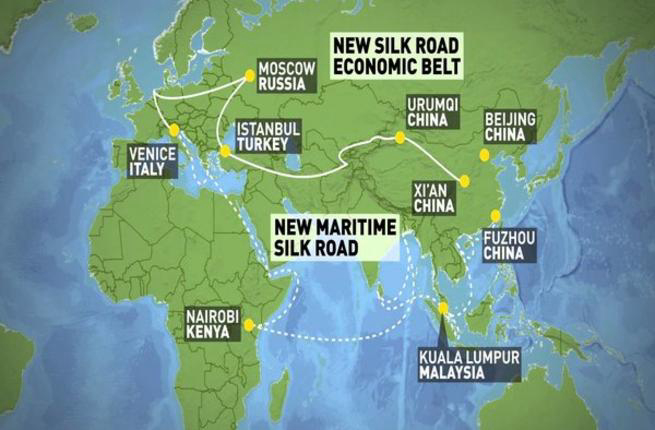
China’s Silk Road initiative will be the world’s largest project for global and regional trade collaboration
 |
Reflecting on DP World’s global network with over 77 marine and inland terminals in 40 countries, Bin Sulayem pinpointed three keys to OBOR’s success during a panel discussion entitled ‘China’s Grand Initiatives: Where are the Opportunities?"
Bin Sulayem said: “We believe in China’s One Belt One Road initiative and see huge potential in it, but it is essential that there is a focus on funding, collaboration between nations and innovation for it to be truly successful.
“The resources required to develop OBOR are vast, with estimates between $2 trillion and $3 trillion per year. While government backed financial institutions have been created, there is a need to address the gap between public and private funding. At the same time, collaboration is key to harmonise customs processes, develop multimodal connectivity and remove complexities from the global supply chain with policies and procedures that promote cross-border trade and investment.
“Finally, opening up the ancient trade routes of the Silk Road will require creativity, entrepreneurship and an open mind. Solutions to enable trade will push the boundaries of what’s possible and this is why we’ve invested in the Hyperloop One,” he said.
Following a multi-million dollar investment in US-based Hyperloop One for research and development of Hyperloop technology, Bin Sulayem was recently elected to its board of directors.
DP World and Hyperloop One are conducting a feasibility study on moving containers from ships docked at DP World’s flagship Jebel Ali Port via the Hyperloop system to a new inland container depot in Dubai. The study will also focus on efficient handling of containers, costs, benefits, and demand and volume patterns of moving cargo using the new technology.
DP World’s experience and expertise in markets across the OBOR region spans South Asia, China, Pakistan, India, Kazakhstan and throughout Europe. That multi-national and cultural understanding has enabled the company to become a “knowledge exporter” on trade issues, providing insight and advice to Governments involved.
Bin Sulayem added: “OBOR is a global initiative, one from which we all stand to benefit. Done in the right way, the opportunities from it will be enormous and we look forward to working with China and other nations to realise its goals. China and the UAE are partners in this journey - we are on the same ‘Belt and Road’”.
During his visit, Bin Sulayem met with senior Chinese government officials including Carrie Lam, chief secretary for administration of the Hong Kong SAR government, and Margaret Fong Shun-man, executive director of the Hong Kong Trade Development Council (HKTDC).
http://shipping.einnews.com
VAT exemption in Piraeus Free Zone is now reality!
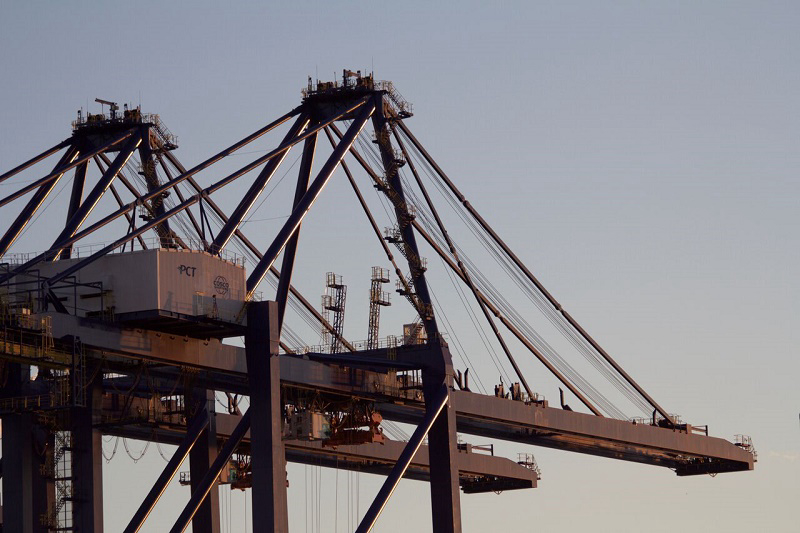
COSCO and Trans-it joins forces to offer Greek ship owners a unique service. An integrated process in combination with new legislation make it possible for ship owners to move ship spares out of Greece without the time consuming and cash flow limitations from earlier days.
For spare parts delivered into the Piraeus Free Zone ship owners will no longer be invoiced VAT. Ship owners must be approved by COSCO to be able to utilise this service but all clients of Trans-it are pre qualified.
Therefore, the challenging processes of the past are no longer applied, offering to ship owners, significant cash-flow benefit and a simplified processes ensure an administrative easy way of handling relevant documentation. A stock can be kept in the Free Zone as long as necessary without having any implications on the VAT exemption.
COSCOs warehouse located in the Piraeus Free Zone (PFZ) have all the amenities one can expect of a highly effective modern warehouse facility such as pick-n-pack, long term and short term storage, integration of services and customised solutions. The COSCO team works hard to develop services and create innovative systems, attracting new customers and promoting the benefits of Piraeus Free Zone.
“We, at Trans-it are very proud to once again being the first in providing new services to our clients. This shows our commitment to continuous developing our services and our long term relationship with Greek shipping” says Igor Narvi, head of business development at Trans-it AS.
 |
 |
 |

Powered by  © Μaritimes 2019