


Euroseas settles yard dispute, receives 38\% discount on latest ultramax
The Greek owner said yesterday it signed an agreement to acquire from Dayang shipyard, Hull DY160, an ultramax drybulk carrier, of 63,500 dwt due for delivery next month. The ship will be named Alexandros P when it delivers.
Aristides Pittas, chairman and CEO of Euroseas, commented: “Alexandros P alongside with our kamsarmax newbuilding, Xenia, which we took delivery of earlier in 2016, spearhead the renewal of our dry bulk fleet in anticipation of a recovery in the dry bulk market. The conclusion of this agreement also settles our claim against the yard in the best possible way and equips us with a solid balance sheet as we look forward to leveraging opportunities in the market.”
Come next month, the Euroseas fleet will swell to 15 ships including one kamsarmax, four panamaxes, one ultramax and one handymax plus eight feeder containerships.
splash247.com
A Mighty Oak Today? Container Trade In The 21st Century
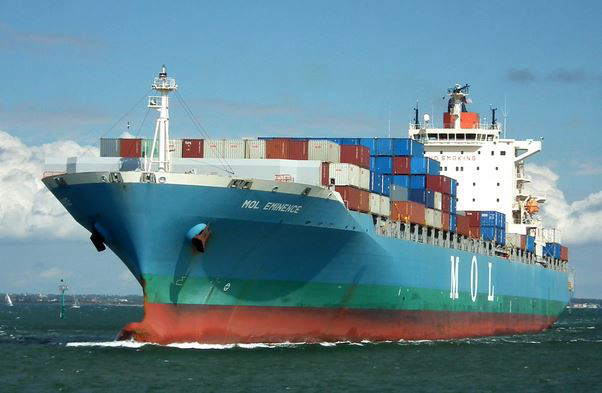
In 2016, box trade is projected to total 181m TEU, almost three times volumes in 2000, having grown by an average 6.4\% p.er annum. However, with an increased focus on Asia, this growth has not been evenly spread across the trade lanes.
Time To Spruce Up?
 This century has seen significant growth in global container trade driven by increased volumes across a range of trade lanes (see graph), though some have seen faster growth than others. Back in 2000, mainlane container trade totalled 25.3m TEU, accounting for the largest proportion of global box trade of the featured groupings. Mainlane trade growth was rapid in the 2000s, supported by outsourcing of manufacturing from the west to Asia, particularly China. However, western demand has struggled since the financial crisis, and Asia-Europe box trade even shrank 3\% in 2015, with only limited volume growth recorded on this route this year. Overall, mainlane trade grew by a compound average rate of 4.7\% p.a. in 2000-16, the slowest of the featured groupings, while its share of global box trade fell from 38\% to 29\%.
Fast Growing…
In contrast, intra-regional trade has gained share in global trade, from 32\% of volumes in 2000 to around 41\% in 2016. This year, intra-regional box trade is projected to total 73.5m TEU, the largest part of the global total. During 2000-16, intra-regional trade grew on average by a rapid 8.1\% p.a., accounting for 46\% of the growth in global volumes. This has been supported by fast expansion in intra-Asian volumes, reflecting both firm economic growth in developing Asian countries and the rise of ‘factory Asia’ and multi-location assembly of manufactures. While economic turbulence in China saw intra-Asian trade growth slow to an estimated 3\% in 2015, expansion has returned to more robust levels in 2016.
Springtime Saplings?
Non-mainlane East-West trade has also expanded rapidly, rising on average by 8.6\% p.a. this century. This growth was the fastest across the featured trade lane groupings, supported by trade with India and the Middle East, although recently low oil prices have limited Middle Eastern imports. Non-mainlane East-West trade is projected to total 23.5m TEU in 2016, around 13\% of global trade.
Meanwhile, North-South trade growth lagged behind in 2000-16, averaging just 5.0\% p.a. Expansion has recently been limited by the severe impact of low commodity prices on economies in South America and Sub-Saharan Africa, with developing countries also struggling with economic difficulties even prior to the recent commodity price downturn.
Wood From The Trees…
So, global container trade has made big leaps forward since the year 2000. Intra-Asian trade has established its position and grown in importance, but trends on other routes have had a major impact too. While volume expansion may be underperforming at present, it is still worth remembering just how far and wide container trade has grown this century.
Source: Clarkson Research Services Limited
2016 “Poseidon Med II calls at Piraeus” Conference successfully concluded on 8th December
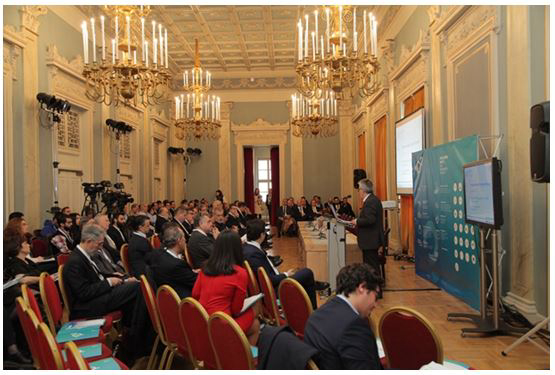
The Conference opening was signified with the announcement of the MoU among Public Gas Corporation (DEPA) and Attica Group who joined forces to examine the use of LNG in the Attica Group fleet, fostering the next step towards the LNG bunkering operations in Mediterranean region.
 |
During the welcome addresses, the Mayor of Piraeus Mr Ioannis Moralis and representatives from the Ministry of Shipping and Energy, among others, endorsed the efforts of Poseidon Med II initiative, highlighting as key envisaged benefits, the protection of the environment and the sustainability of shipping sector.
Safety and societal aspects along with global environmental regulations were set in the microscope of the first panel discussion between delegates from international organisations, local authority representatives and executives from the shipping and energy industry. The costs of vessels conversion to LNG fuelled and the limited LNG bunkering infrastructure in Mediterranean and globally, were underlined as key challenges and contentious areas towards the selection of LNG solution, by shipping companies’ executives, participating in the second panel discussion. Representatives from the European Commission and European Investment Bank presented available EU funding tools and mechanisms promoting investments on LNG infrastructure development. The panel also highlighted interesting running projects on developing designs for LNG retrofits and new buildings by greek shipping companies.
In the final session, delegates from marine equipment manufacturers presented innovative technologies for the adoption of LNG in ships and ports. Specific emphasis was given to high safety standards and risk assessment methodologies as well as to the current works for upgrading the LNG Terminal in Revithoussa, which will support and expedite the establishment of an efficient and safe LNG supply chain.
Media sponsor: Naftemporiki
Online media sponsors: naftemporiki.gr, energypress.gr, www.maritimes.gr
Videos from the conference are available here
Photos from the event attached
What is Poseidon Med II project?
Poseidon Med II project is a practical roadmap which aims to bring about the wide adoption of LNG as a safe, environmentally efficient and viable alternative fuel for shipping and help the East Mediterranean marine transportation propel towards a low-carbon future. The project, which is co-funded by the European Union, involves three countries Greece, Italy and Cyprus, six European ports (Piraeus, Patras, Limassol, Venice, Heraklion, Igoumenitsa) as well as the Revithoussa LNG terminal. The project brings together top experts from the marine, energy and financial sectors to design an integrated LNG value chain and establish a well-functioning and sustainable LNG market.
Tonne-miles from US coal exports halved over 3 years
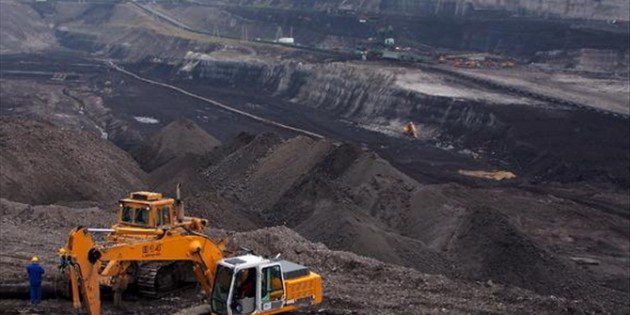
This is due to the long-haul routes carrying coking coal from the US East Coast and US Gulf Coast to East Asia, are not operating to the same extent and the EU is demanding less thermal coal.
When BIMCO first published its story concerning US coal in 2013, US coal exports had the most significant coal trade in the world, measured by tonne-miles.
BIMCO’s Chief Shipping Analyst Peter Sand comments: ”In 2015, US coal exports generated 378 billion tonne-miles. This is only half the level of 2012, where it generated 715 billion tonne-miles.
This decrease in tonne-miles is a contributing reason to the current state of the dry bulk shipping market, as US coal trade was responsible for 14.8\% of the world seaborne coal trade in 2012, but only 7.7\% in 2015.
The tonne-miles multiplier indicating the average distance coal is being travelled, has not changed particularly in that period and levelled around 6, since the peak in 2011. The unchanged multiplier emphasises that the diminishing tonne-miles are solely due to a reduction in volumes across the board.
This means that the long-haul routes from the US East Coast and US Gulf Coast to East Asia still operate, but not to the same extent as in 2012. However, they have decreased at the same amount as the rest of the US coal export trades”.

East Asian buyers accept sailing distance of 14,000 nautical miles
Coking coal to East Asia has had the second lowest decrease of the US seaborne coal trades in transported cargo volumes, dropping 12\% from H1 2015 to H1 2016. Coking coal to East Asia is primarily exported from US East Coast and US Gulf Coast and it is the coal trade route from US with the longest sailing distance and thus generates the highest tonne-miles per tonne transported.
Therefore, any fluctuations in this trade influences the dry bulk shipping market the most. 40\% of all coal exports from the US to East Asia came from the capesize-accommodating port in Baltimore Maryland, which emphasises that the East Asian buyers accept a very long distance of more than 14,000 nautical miles when they import coking coal from the US.
Chinese demand for US coal close to zero
Japan and South Korea are the importers that are keeping the East Asian tonne-miles high, as China has not imported any significant amount of coal from the US in the last two years. The tonne-miles generated from Chinese imported US coal is at its lowest level since 2009.
Peter Sand adds: “In 2012, the spikes in tonne-miles from East Asia was solely generated by Chinese coking coal demand. However, since Q3 2014 the Chinese tonne-miles have been close to zero. This is due to China focusing on its regional suppliers and has, in the first three- quarters of 2016, imported 84.1\% of all coking coal from Australia and Mongolia and next to nothing from the US.
This is a large loss for the dry bulk shipping industry, as the Chinese coking coal demand is now covered by shorter sailing distances from Australia, compared to sourcing from US East Coast and US Gulf Coast, and coal transported by land from Mongolia”.
United Kingdom leads the slide as Europe declines
The European market is the overall main importer of both US thermal coal and coking coal, based on transported cargo volumes. The coal exported from the US to the EU is down 38\% for the first half of 2016 compared to the same period in 2015, but the EU is still claiming a 43\% market share for H1 2016 compared to 47\% in H1 2015. Despite this larger decrease – both measured on transported cargo volumes and percentage compared to East Asia- the effect is not as significant when the demand is measured in tonne-miles. This is due to the European demand for US coal being covered by exports from US East Coast and US Gulf Coast, where the sailing distances are substantially shorter than the coal exported from US to East Asia.
The coal exported from the US to the United Kingdom (UK) dropped by two million tonnes from H1 2015 to H1 2016, a total decrease of 83\%. This is the biggest decline for coal exported from US to a single country. This is primarily due to the doubling of the UK carbon price floor (CPF), which has significantly increased the price of coal-fired energy production in the UK. Therefore, the US thermal coal exports to the UK are down 98\% compared to the coking coal export being down 63\% for H1 2016 compared to H1 2015.
Source: Peter Sand, Chief Shipping Analyst; BIMCO
RBS near to selling $600 million of shipping loans – sources
RBS, which is more than 70 percent state-owned, is still in the throes of a restructuring, which includes asset sales, job cuts and tackling multi-billion dollar charges to settle litigation and pay regulatory fines for past misconduct.
The sources said buyers of the various shipping loan tranches included Japanese financial services firm Orix Corp (8591.T), Germany’s Berenberg Bank, Bank of America Merrill Lynch (BAC.N) and asset manager Davidson Kempner.
Bank of America and Berenberg declined to comment. Orix could not be reached for comment. Davidson Kempner and RBS declined to comment.
The loans, which primarily come from RBS’s Greek shipping business which was valued earlier this year at $3 billion, are being sold in various parcels, one of the sources said.
“Discreet sales talks have been going on for a while,” the source said.
RBS announced in September it had begun winding down its global shipping finance business, abandoning efforts at that time to sell it off during a worsening downturn across the freight industry.
Around 90 percent of world trade is transported by sea but the shipping industry is stuck in its deepest slump on record, as international trade slows and freight rates fall in a market flooded with too many vessels.
German banks, which provide a quarter of the world’s $400 billion of outstanding shipping debt, are struggling to recoup their loans, while many other lenders are looking at ending or reducing their exposure.
Sources had told Reuters earlier this year that Orix and Berenberg were among potential suitors that had looked at RBS’s Greek shipping business.
The Edinburgh-based bank which has had eight years of annual losses was rescued with a more than 45 billion pound bailout at the height of the financial crisis.
Last month, RBS was the biggest failure in the Bank of England’s annual stress test, partly because of a mounting legal bill and the difficulty it has selling off unwanted assets.
RBS’s overall exposure to shipping exposure was 5.514 billion pounds at the end of September, down from 6.765 billion pounds at the end of June and 6.776 billion pounds at the end of 2015, RBS data showed.
RBS had previously been a top lender to the global shipping industry and its Greek office played a pivotal role.
Source: Reuters (Additional reporting by Arno Schuetze in Frankfurt and Taiga Uranaka in Tokyo; Editing by Greg Mahlich and Jane Merriman)
Greek Shipping Hall of Fame announces Induction Ceremony & Dinner 2017
 |
This prestigious event will include an exciting programme of content, including the unveiling of the latest Inductees to the Greek Shipping Hall of Fame. The 2016 Inductees will join 24 ‘Greats’ already inducted into the Greek Shipping Hall of Fame.
The Greek Shipping Hall of Fame is pleased to be an existing supporter of Hellenic Hope and a portion of the event proceeds will be donated to the charity, focused on helping children at risk from the Greek crisis.
We are grateful for the support of a number of leading organisations and companies that have already confirmed as sponsors of the 2017 Induction Ceremony, including ABS, the Liberian Registry and Shanghai Waigaoqiao Shipbuilding Co. Ltd as Co-Lead Sponsors of the event.
Christopher J. Wiernicki, ABS Chairman, President and CEO comments:
“The Greek Shipping Hall of Fame is an institution that reminds us of the deep level of innovation and achievement by the Greek shipping community and the impact it has made in shaping today’s global industry. The outstanding individuals it recognises epitomise the entrepreneurial spirit and inspire innovation that continues to drive shipping worldwide.
“ABS is proud of its long association with Greek shipping and is pleased to support the Greek Shipping Hall of Fame”.
Michalis Pantazopoulos, Senior Vice President and General Manager of the Liberian Registry's Piraeus office, comments:
"The relationship between the Greek shipping community and the Liberian Registry is one of the strongest, most successful and most enduring in the history of international shipping.
“Today, the Liberian flag is the number one choice for the world's number one shipping nation. It is a relationship built on trust, loyalty and successful and innovative co-operation, with both Greece and the Liberian Registry continuing to display the leadership qualities which are essential to safe and successful operation in today's shipping industry. Liberia is proud to endorse its support for the Greek Shipping Hall of Fame."
Wang Qi, Chairman of Shanghai Waigaoqiao Shipbuilding, comments:
“We are very pleased to continue our support of the Greek Shipping Hall of Fame for a third year and to be part of this prestigious annual Induction Ceremony & Dinner.
“Responding to the current difficulties faced by the shipping and shipbuilding industries, SWS is constantly innovating to maintain its position as a builder of first-class ships and offshore equipment for the most discerning international shipowners and oil majors. We pride ourselves on innovating in both green ship design and green shipbuilding. We are happy to announce SWS is entering the cruise ship industry and we look forward to building the first Chinese Vista-class cruise ship.
“SWS remains committed to working with even more Hellenic clients and we are confident of providing excellence across an even broader range of vessels.”
The Induction Ceremony & Dinner at the Athens Concert Hall commences with a Welcome Drinks Reception sponsored by TMS Group, providing a perfect setting for leading personalities in the shipping business to catch up with each other.
American Hellenic Hull Insurance Company is once again a key supporter of the event, as Dinner Sponsor.
Premium Sponsors of the event are Aegean Marine Petroleum, The Baltic Exchange, Bureau Veritas, Moore Stephens and Thomas Miller.
Sponsors so far include China Classification Society, ClassNK, DNV GL, Hellenic War Risks, Korean Register of Shipping, Marine Tours, Marsh, UK Defence Club, UK P&I Club and Vilmar International.
The dinner-event will take place in the Megaron’s Banqueting Suite which has hosted many prestigious events including the Greek Shipping Hall of Fame’s public Inauguration Ceremony in 2013.
Since then the Greek Shipping Hall of Fame has held highly-acclaimed major events in London in 2014 and in Athens in both 2015 and 2016.
The Greek Shipping Hall of Fame resides at www.greekshippinghalloffame.org
Sponsorship enquiries: This email address is being protected from spambots. You need JavaScript enabled to view it.
Table booking and press enquiries: This email address is being protected from spambots. You need JavaScript enabled to view it.
Hellas: Shipping fleet grows by 10.26\% in capacity and by 6.5\% in numbers during 2016 says Petrofin Research
 |
In its annual report on the state of the Hellenic shipping industry (companies and fleet analysis), Petrofin Research said that the overall number of Greek vessels has gone up to 5,230 from 4,909. A summary of the fleet’s composition can be seen below:
2016 – RESEARCH AND ANALYSIS: GREEK SHIPPING COMPANIES 1ST PART OF 2016 PETROFIN RESEARCH
2016 – RESEARCH AND ANALYSIS: GREEK FLEET STATISTICS 2ND PART OF 2016 PETROFIN RESEARCH
When the going gets tough, the tough go partying
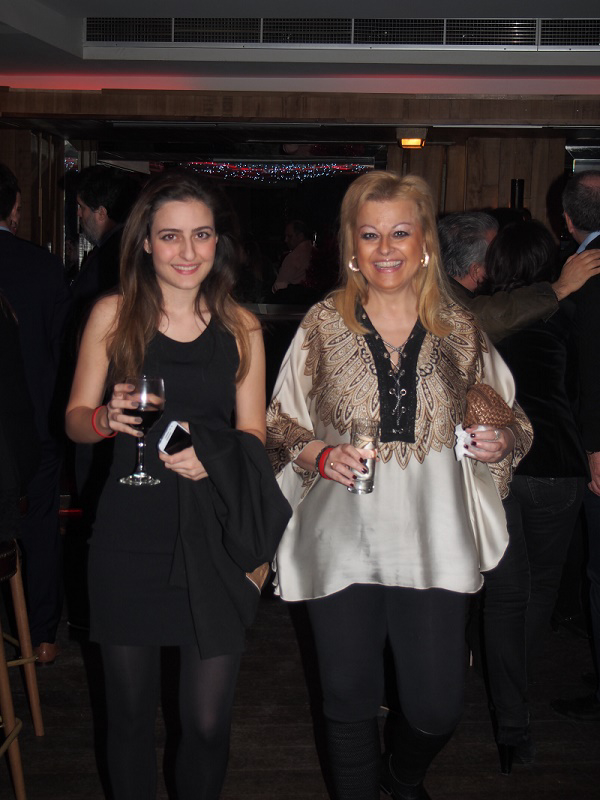
Hence, the “fun-d-raising” party was held on Monday, December 12, 2016 at “Rock & Roll” in Kolonaki, and hosted over 200 smiling people from the Greek shipping community.
Dynamarine, The American P&I Club, Lotus Shipping Co. Ltd., Nilimar Holdings S.A., Empire Navigation Inc., Aegean Protective Coatings S.A., SteelShips, Prime Petroleum Services, Seaven Group and YES Forum plus many other special individuals - were among the great Shipping companies and maritime cluster that joined the festive jubilee. The Rock & Roll Club has never seen such glory. “The place was jam packed and buzzing with excitement and a massive spirit of love, joy and giving! Each person was like a link in a chain which as one IS strength personified!” said guest, Mary Arvaniti, TSAVLIRIS SALVAGE GROUP.
The friends who participated in this party are not part of an organized entity and for the last 14 years gather every 2nd or 3rd Christmas for a get together to have fun while at same time financially assist a worthy cause. These friends are business women & men of the Greek Shipping community: Maria Livanou, Dorothea Ioannou, Irene Notias, Theano Kalapotharakou, Viki Rousso, and attorneys Angeliki Stavropoulou, Georgia Bouchoutsou, with new additions Maria Mavroudi, Zoe Lappa-Papamatthaiou, Popi Lyrintzis, Danae Bezantakou and Katerina Stavropoulou and supporters George Xiradakis, Nikos Marmatsouris. The organizing team is volunteers that work in the industry such as Stephanie Karagianni and Effie Kotika.
This year’s cause was to support paid internships run by Project Connect. Project Connect offers hope, encouragement and tangible work experience for shipping students during crisis.
The organizers and Project Connect extend their warmest gratitude and wishes to the Greek shipping workforce that came out on a Monday night to attend a Christmas party with a purpose -- to give to a project that aims to help make young people more employable.
On behalf of Project Connect, Katia Galouka, extended appreciation to all the individuals who supported this effort, as well as the 15 sponsors of the Raffle prizes: Astypalea’s Kallichoron Art Boutique Hotel, Kefi S.A., the Artist Eva Divari, Blueship, Business Coach, Dr John Kalogerakis, JMK Ltd, Mr Nikos E. Tsakos of Kollias Seafood Bar Restaurant, Tzelalis Furs, Sotiria Legatou Beauty Lab, VASANTA YOGA STUDIO, PLACEBO Pharmacy, ARTWALK, Tomara Plants, Kokkoris Optics and FREE THINKING ZONE Bookstore- Café and to Katerina Panoussis’s crew at All About Events for putting the final touch on the Invite: the symbol of HOPE which is the Christmas Tree designed by chains which is also a symbol of unity & Project Connect’s logo.
The jubilee’s theme was “the birth of LOVE that is Christmas.” This group already has a lot of LOVE … “Love for Shipping” for example, evident with the initiatives taken by the creators of PROJECT CONNECT, YES FORUM & BLUE GROWTH, all worthy initiatives, during tough times, that ultimately support a “LOVE FOR GREECE”.
 |
 |
| Viki Kolopioulou, Thenamaris, AnnaMaria Monogioudi, Aegean Coatings, Maria Mavroudi, The American Club & Kalichoron Hotel |
 |
| Daphne Pappasmatthaios, Swedish Club & Zoe Lappa-Papamatthaios, Danaos Corp. |
 |
| Dimitris Monogioudis, Aegean Coatings, Maria & Markos Tripolitis, PMS |
 |
 |
| Maria Livanou, Nilimar Holdings & Mr George Samaan, Southern Star Shipping |
 |
| Mr.Nikos & John Efthimiaidis, Maria E. Tsakos, Irene Notias & Lotus Shipping Company |
 |
| Nikos Marmatsouris, Katerina Panoussis, Irene Notias, Nigel Lowry |
 |
| Peggy Papastavrpou, Legal Director, Athens Stock Exchange & Chryssas Voulgari, Finance Director, Prime Petroleum Services |
 |
| The Greek Shipping Workforce |
 |
| Yanna Pentheroudakis,, Haris Kiessoglou, Maria Livanou |
 |
| Zoe Lappa-Papamatthaiou, Popi Lyrintzis, Yanna Pavlopoulou |
Angelikoussis comes to DSME’s rescue with LNG-FSRU newbuilding order worth $590 million
 |
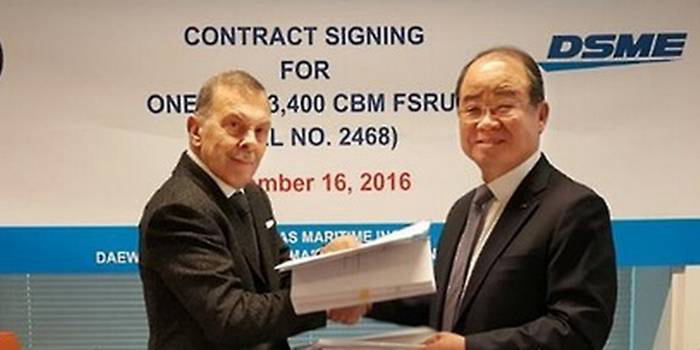
The contract also includes an option to build two more LNG tankers if Angelicoussis Shipping Group satisfies with the first deal to build the LNG-FSRU. The total contract volume including the option amounts to 700 billion won ($589.7 million).
“I would like to express my gratitude to Angelicoussis Shipping Group for choosing DSME in such a critical moment,” said DSME CEO Chung Sung-lip during the contract signing ceremony. “DSME will continue its best to have more contracts to help its financial status.”
The LNG-FSRU is expected to be built at the Okpo Shipyard in Geoje, South Gyeongsang Province, and the scheduled delivery will take place by early 2020.
DSME said the company built the world’s first LNG-regasification Vessel (LNG-RV) in 2005, and will utilize the technologies in building the LNG-FSRU. It is expected to sail maximum 18 knots.
LNG-FSRU supplies natural gas without ground gasification facilities, which usually involve massive investments, so it is often used in areas where demand is sharply increasing but ground gasification facilities are hard to build.
Despite DSME’s crisis in financial status, Angelicoussis Shipping Group ordered two LNG tankers and another two Very Large Crude Carriers (VLCCs) in June.
Angelicoussis Shipping Group has also ordered a total of 89 ships with DSME since its first order took place in 1994. Currently, 20 ships are being built at DSME’s Okpo Shipyard and Romanian shipyard.
This year, DSME has so far clinched a total of $1.55 billion in 12 shipbuilding contracts.
Source: Korea Times
Cruise Lines International Association (CLIA) Releases 2017 State of the Cruise Industry Outlook and Cruise Travel Trends Forecast

Increase in cruise travel is expected to continue throughout 2017, with an estimated 25.3 million passengers expected to sail in 2017, a strong surge from 15.8 million just 10 years prior (2007). More ships will set sail in 2017 as well. CLIA reports that cruise lines are scheduled to debut 26 new ocean, river and specialty ships in 2017 for a total investment of more than $6.8 billion in new vessels*From 2017-2026 the industry is expected to introduce a total of 97 new cruise ships totaling an estimated investment of $53 billionthrough 2026*.
“The cruise industry is responding to global demand and we are highly encouraged by both the short-term and long-term outlook,” said Cindy D’Aoust, president and CEO, CLIA. “From technological advancements and deployment of new ships to new ports and destinations around the world, the industry continues to respond to desires of today’s travelers resulting in steady growth and strong economic impact around the world.”
Cruise industry expenditures generated $117 billion in total output worldwide, supporting 956,597 full-time equivalent employees who earned $38 billion in income in 2015.
As part of the 2017 State of the Cruise Industry Outlook, CLIA has forecasted the top eight cruise travel trends that will have the most impact on the cruise industry this year.
1. New Generation Takes to the Water – A recent study found that younger generations—including Millennials and Generation X — will embrace cruise travel more than ever before, rating it as better than land-based vacations, all-inclusive resorts, tours, vacation house rentals, or camping.
2. Travel Agent Use Increases – According to the American Express Spending & Saving Tracker, consumer use of a travel agent increased nearly eighty percent from 2015 to 2016. Supporting this, CLIA is forecasting that travel agents will continue to be the matchmakers between travelers and cruise lines in 2017. Today, there are more than 25,000 CLIA-member travel agents globallycompared to 12,000 in 2010. CLIA also found that cruisers report high levels of satisfaction with their travel experience when assisted by an agent.
3. River Cruise Demand Increases – River cruises offer travelers a unique and intimate travel experience. Due to demand, CLIA cruise line Members currently deploy 184 river cruise ships with 13 new river cruise ships on order for 2017, an increase of about 7 percent.
4. More Private Islands on Cruise Itineraries – As more cruise lines introduce private island destinations, travellers are responding and booking these itineraries. In 2017, cruise lines offer ports on a total of seven private islands.
5. New Cruisers Will Take to the Sea – Interest in ocean cruising is projected to remain strong in 2017. When asked what kind of vacations might be of interest in the next three years nearly half (48 percent) of non-cruisers expressed interest in taking an ocean cruise while a striking 85 percent of cruisers also expressed interest.
6. Drivable Port Locations in Favor – The cruise industry offers a variety of small and large market port location options across the United States and internationally. Citing the advantages of a myriad of locations seven out of ten (69 percent) non-cruisers believe the greatest benefit is cost savings and three quarters (74 percent) of cruisers like the convenience of driving to a cruise ship.
7. Lure of Celeb Chefs – Cruise travelers are embracing specialty dining and will continue to consider cruise dining experiences based upon celebrity chefs. This year, several cruise lines feature restaurants and dishes created by famous chefs including Guy Fieri, Nobuyuki “Nobu” Matsuhisa and Geoffrey Zakarian.
8. Demand for Expedition Cruises – According to the Adventure Travel Trade Association, adventure travel is growing at a record pace and CLIA is reporting that cruise expeditions are seeing the impact. In fact, itineraries for Antarctica regularly sell out.
For more information on CLIA’s 2017 State of the Cruise Industry Outlook, please visit here.
About Cruise Lines International Association (CLIA) – One Industry, One Voice
Cruise Lines International Association (CLIA) is the world’s largest cruise industry trade association, providing a unified voice and leading authority of the global cruise community. The association has 15 offices globally with representation in North and South America, Europe, Asia and Australasia. CLIA supports policies and practices that foster a safe, secure, healthy and sustainable cruise ship environment for the more than 24 million passengers who cruise annually and is dedicated to promote the cruise travel experience. Members are comprised of the world's most prestigious ocean, river and specialty cruise lines; a highly trained and certified travel agent community; and cruise line suppliers and partners, including ports & destinations, ship development, suppliers and business services. The organization’s mission is to be the unified global organization that helps its members succeed by advocating, educating and promoting for the common interests of the cruise community. For more information, visit www.cruising.org or follow Cruise Lines International Association on CLIA Facebook and Twitter pages.
Research Sources
- 2017 Forecast based upon historical relationship between yearly capacity increase and yearly passenger increase
- J.D. Power 2016 CLIA Consumer Study
- Third Travel Agent Cruise Industry Outlook Report of 2016
- CLIA Cruise Sentiment Survey, Fall 2016
- Adventure Travel Trade Association
- American Express Spending & Saving Tracker

Powered by  © Μaritimes 2019