


Spotlight on hull performance management
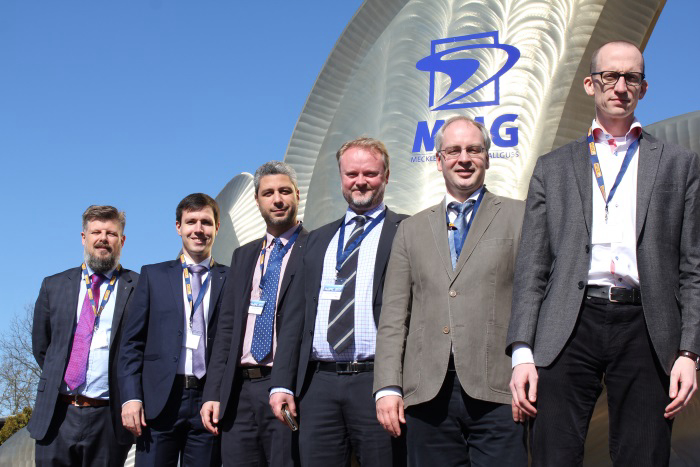
Last week experts and practitioners from around the globe met in Castle Ulrichshusen, Germany, for the second HullPIC. The three-day gathering attracted over 100 industry professionals from the maritime industry. The annual conference, which was jointly organised by Jotun and DNV GL, covered the ISO 19030 standard and common challenges and solutions that can help ship owners realise potential fuel savings.
In his opening address, Geir Axel Oftedahl, Director of Business Development at Jotun Marine, focused on the recently published ISO 19030 standard and shared ideas for further improvement. “The standard delivered on its stated aims, and represents a good starting point to offer a level playing field. It will evolve as experience is gained and ideas are shared for further improvement. Going forward, we need to better highlight the principles and values of the new standard. Also, there are some complexities that need to be simplified and more discussion is needed, for instance, when it concerns improving applicability.”
“The conference brought relevant stakeholders together to exchange experience in the still evolving field of performance management, especially in light of the ISO 19030,” said Volker Bertram, Senior Project Manager, Competence, Learning & Academy at DNV GL – Maritime. “Clearly, the topic strikes a nerve in the industry and the balance between the ship owners and developers at the conference allows for an open exchange where both sides benefit.” The conference presentations covered a variety of technical subjects. For instance, Sergiu Paereli (Jotun HPS) focused on hull and propeller performance on an absolute scale, while Andreas Krapp (Jotun HPS) took a detailed look at the speed-power relation of different vessel types under different loading conditions.
 |
Volker Bertram (DNV GL) shared his thoughts on the ISO 19030 and ways in which the standard procedure could be improved. Daniel Schmode (DNV GL) focused on the influence of noise and bias on the uncertainty of data-based hull performance prediction.
The impact of the EU regulation for Monitoring, Reporting and Verification (EU MRV) on monitoring reporting solutions and verification of the effectiveness of energy saving devices were addressed by Torsten Büssow, Jarle Blomhoff and Jan Wienke (all three from DNV GL).
The conference attracted a wide range of industry stakeholders including ship owners, technology developers, equipment suppliers and data analysts. 36 papers were submitted, reflecting the collaborative approach to exchanging knowledge and best practice.
“Despite the complex, technical challenges involved, the response to the conference topics and level of speakers was very well received by the delegates,” said Volker Bertram. This sentiment was echoed by Geir Axel Oftedahl: “It has been a positive, constructive meeting with industry professionals who are willing to come together to share operational experiences and discuss common challenges. In the spirit of HullPIC, more discussion is needed to further advance hull and propeller performance management, and support the widespread adoption of ISO 19030.”
Source: DNV GL
OCEAN RIG announces over 75\% support for restructuring agreement from holders of the company's consolidated indebtedness
As previously announced, the financial restructuring will be implemented by four separate but interconnected schemes of arrangement under Cayman Islands law (the “Company Scheme,” the “DRH Scheme,” the “DFH Scheme,” the “DOV Scheme” and collectively, the “Schemes”). All but the DRH Scheme are inter-conditional, which means that court sanction of the DRH Scheme is not required for the other Schemes to become effective. In order for any Scheme to be sanctioned, at least 75\% in value and a majority in number of the holders of the claims present and voting at a meeting of creditors must vote to approve the Scheme.
The Company therefore has sufficient support from Supporting Creditors in order to implement the restructuring of the Company, DOV and DFH as contemplated by the terms of the RSA.
Creditors are reminded that:
(i) holders of DRH's senior secured notes who agree to be bound to the terms of RSA in the manner specified therein by no later than 5:00 pm (New York time) on April 11, 2017 shall be entitled to a pro rata share (allocated in accordance with the amount of the senior secured notes held by each consenting holder) of an early consent fee of $2.5 million; and
(ii) lenders under DFH's $1.9 billion credit facility and DOV's $1.3 billion credit facility lenders who agree to be bound to the terms of RSA in the manner specified therein by no later than 5:00 pm (New York time) on April 11, 2017 shall be entitled to a pro rata share (allocated in accordance with the amount of the loans held under the DFH and DOV credit facilities by such each consenting DFH lender and DOV lender) of an early consent fee of $30 million.
About Ocean Rig UDW Inc.
Ocean Rig is an international offshore drilling contractor providing oilfield services for offshore oil and gas exploration, development and production drilling, and specializing in the ultradeepwater
and harsh-environment segment of the offshore drilling industry.
Ocean Rig’s common stock is listed on the NASDAQ Global Select Market where it trades under the symbol “ORIG.”
Our registered office is c/o Maples Corporate Services Limited, PO Box 309, Ugland House, Grand Cayman, KY1-1104, Cayman Islands.
Visit the Company’s website at www.oceanrig.com.
Martin Strube new partner in MARPRO ApS.
 |
Martin Strube has been appointed as Business Development Director and will oversee the development of the global agent network for www.maritimeprofessionals.net
Managing Director and Partner Jakob le Fevre adds “Martin and I have organized Danish Maritime Fair in our previous assignment and he was an invaluable partner in that project. I am both proud and happy that we now will have the opportunity to work together in our own company. Martin and I share the same professionals values – probably shaped by our past in Dansk Supermarked and Mærsk.
MARPRO ApS. headquarter is located on Nordre Strandvej in Hellebæk, Denmark.
Explainer video maritimeprofessionals.net: https://www.youtube.com/watch?v=mc96FkHwKiw&t=5s
Embed code: <iframe width="560" height="315" src="https://www.youtube.com/embed/mc96FkHwKiw" frameborder="0" allowfullscreen></iframe>
Read the story online: http://www.maritimeprofessionals.net/Employment/martin-strube-new-partner-in-marpro-aps-article-101.aspx
For more information:
Maritime Professionals – www.maritimeprofessionals.net
Ecochlor Submits USCG Type Approval Application

Due to a far more stringent set of guidelines, type approval has only been granted to three other BWT Systems worldwide, none of which offer Ecochlor’s unique, patented ClO2 technology. Upon USCG approval, the Ecochlor® BWTS will extend the range of options for shipowners beyond UV and electrochlorination technologies.
Unlike other water treatment technologies, the Ecochlor system is not impaired by variations in water salinity, temperature, turbidity, organics or vibration and does not need neutralization at ballast water discharge. The price and size of a chlorine dioxide generator does not vary greatly based on flow rate. As a result, chlorine dioxide generators are much more economically viable over other systems in the treatment of large volumes of water. Additional advantages are that the Ecochlor system has one of the lowest power consumption technologies, if not the lowest, on the market today.
Tom Perlich, Ecochlor president and founder, commented, “The Ecochlor chemistry works just as effectively now as it did more than 12 years ago with our first installation. The only change was that we reduced the chemical dosage for USCG TA. These fully independent test results clearly indicate that the Ecochlor system will meet and, in most cases, exceed USCG discharge criteria.”
“Based on our extensive knowledge in regulatory compliance and relevant installation project experience for complex tanker retrofits,” adds Perlich, “we are receiving orders from major shipowners who are interested in having their vessels satisfy the highest environmental standards.”
Since the first Ecochlor system was sold in 2004, it has undergone extensive testing for approvals, and has received International Maritime Organization (IMO) Type Approval in 2011, as well as numerous classification society approvals including Lloyd’s Register, American Bureau of Shipping, Class NK, Bureau Veritas, and RMRS. DNV GL was selected as Ecochlor’s Independent Laboratory (IL), in order to secure DNV GL classification society approval simultaneously with USCG Type Approval.
About Ecochlor
Ecochlor, Inc. provides shipowners with cost effective, environmentally safe ballast water treatment solutions that comply with all enacted and proposed standards and regulations. The Ecochlor® BWTS uses a two-step process to treat ballast water – filtration followed by disinfection with the well-known biocide, chlorine dioxide. The system’s effectiveness is not impaired by variations in salinity, temperature, turbidity, organics, or vibration, which can impact other treatment options. Furthermore, there are design options for hazardous zones, and the small size, low power consumption, and low maintenance characteristics of the Ecochlor system make it ideally suited for installation on mid-sized to the largest ships in the world. For more information on the Ecochlor® BWTS, visit the company website at www.ecochlor.com

“Poseidon Med II participated at the AII & EUSAIR Round Table discussion on Transport & Energy Connections”
 |
Developing infrastructures for the deployment of LNG for marine and road transportation, was on the agenda.
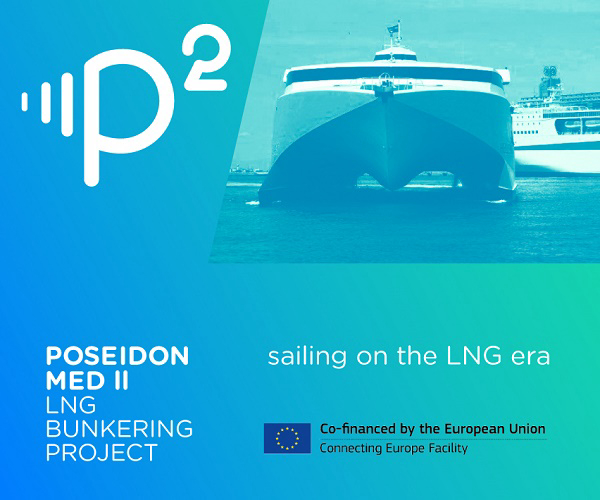
Specific emphasis was given to the Poseidon Med II approach, focusing on the project work on regulatory framework, funding and investment schemes, risk assessment methodologies and safety aspects, port studies and ship designs. Additionally, the shipping industry perspective towards LNG choice and the competitive advantage of Revithoussa terminal on the developing small scale LNG supply chain in the region were also highlighted.
The meeting offered a platform of knowledge exchange and discussion among high-level officials and key stakeholders from the participating countries in Adriatic-Ionian Initiative . The correlation between the Action Plan of EUSAIR and Poseidon Med II project, as well as the benefits that will occur for the region from Poseidon Med II successful implementation, may raise Poseidon MED II, among the credible regional projects and a reliable partner of the Adriatic-Ionian Initiative.
Poseidon Med II activities regarding small scale LNG facilities, as part of the already established large scale LNG network of Greece, actively contribute to the regional connection, one of EUSAIR’s main pillars, while promoting security of supply.
The meeting has set the base for cooperation between Poseidon Med II and key stakeholders, exploring synergies building and opportunities for best practices and policies exchange, defining the way forward.
Poseidon Med II project
Poseidon Med II project is a practical roadmap which aims to bring about the wide adoption of LNG as a safe, environmentally efficient and viable alternative fuel for shipping and help the East Mediterranean marine transportation propel towards a low-carbon future. The project, which is co-funded by the European Union, involves three countries Greece, Italy and Cyprus, six European ports (Piraeus, Patras, Lemesos, Venice, Heraklion, Igoumenitsa) as well as the Revithoussa LNG terminal. The project brings together top experts from the marine, energy and financial sectors to design an integrated LNG value chain and establish a well-functioning and sustainable LNG market.
BE A FOUNDER MEMBER OF PROJECT CONNECT - HR HUB OF SHIPPING YOUTHS
|
|
|
|
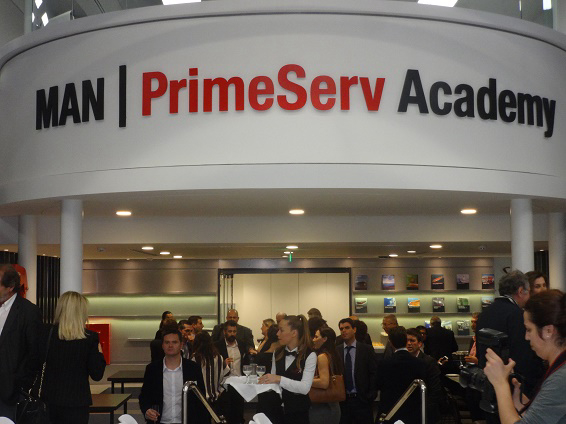
MAN Diesel & Turbo Hellas hosts “1st Technical Workshop 2017”
 |
Over 100 participants with a technical background joined the event which begun in the afternoon with a welcome speech by Mr. Dionissis Christodoulopoulos – Managing Director of MAN Diesel & Turbo Hellas who made a brief introduction on the topics included in the agenda.
Presentations on Cylinder Condition and Cylinder Lubrication took place by both Mr. Jesper Mark Pedersen – Operation Department and Mr. Andreas Togantzis – Head of PrimeServ Academy Piraeus & Technical Department, focused on best practices and lessons learned throughout case studies.
The workshop continued with a short commercial presentation by Mr. Bjarne Foldager – Vice President of Two-Stroke Sales & Promotion and ended with an analysis of Service Experience by Mr. Peter Nerenst – Manager Operation.
Dionissis Christodoulopoulos – Managing Director of MAN Diesel & Turbo Hellas stated “Maintaining sea-going equipment is vital for Shipping Companies. MAN Diesel & Turbo Hellas continuously supports the Greek Market by offering such Technical Workshops that enhance knowledge of end-users and highlight best practices. Such Workshop initiatives will continue within 2017”
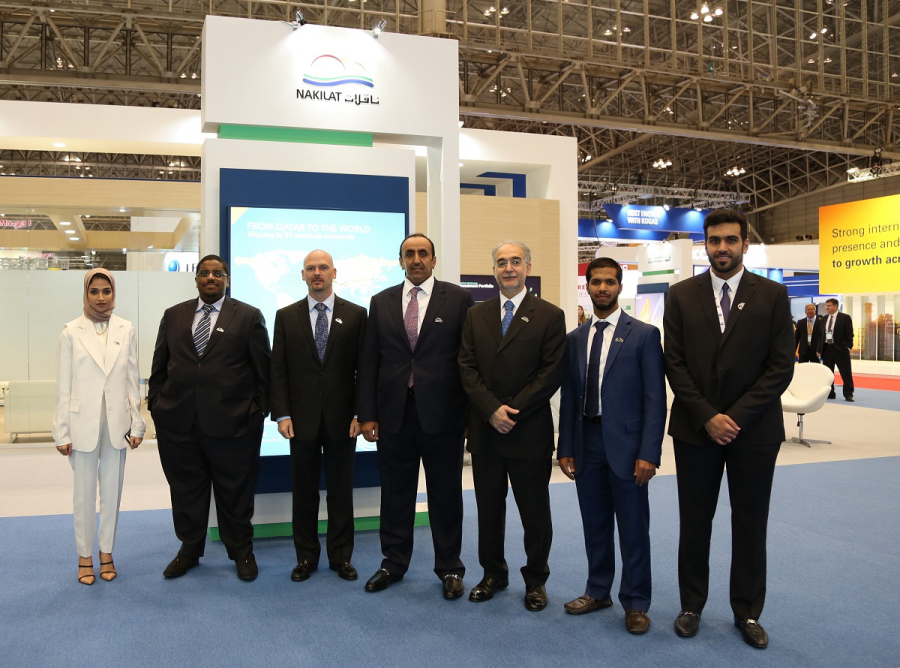
Nakilat showcases maritime expertise at Gastech 2017
 |
Deemed as one of the most highly anticipated gas industry events, Gastech receives more than 25,000 visitors and features over 600 international exhibitors from over 70 countries worldwide.
The company is showcasing its shipping expertise as the world’s leading transporter of Liquefied Natural Gas (LNG), playing an integral role in the State of Qatar’s LNG supply chain. In addition to this, Nakilat offers an extensive range of maritime services through the world class Erhama Bin Jaber Al Jalahma Shipyard at Ras Laffan Industrial City in Qatar.
Gastech serves as an excellent platform to facilitate the sharing of business expertise and creation of business opportunities for Nakilat. The company’s participation in this global event comes as part of its vision to be a global leader and provider of choice for energy transportation and maritime services, which is aligned with Qatar’s National Vision 2030 towards the development of the local maritime industry.
Lloyd’s Register invests in ship management software provider Hanseaticsoft in move to build a marine and offshore Industry 4.0
 |
| Alexander Buchmann |
Clients including NSC, Peter Döhle Schifffahrts KG, Rigel, Atlantic Lloyd and UASC already rely on the portfolio of solutions offered by Cloud Fleet Manager – a flexible and intuitive software suite to manage and organise your entire fleet, including inspections, crew management, purchasing and more.
The investment underlines LR’s strategy to become a leader in supporting clients through the digital transformation of the marine and offshore industries, building a portfolio of investments and partnerships to tackle the challenges and opportunities of Industry 4.0.
LR recently acquired the SEASAFE portfolio of software solutions, which specialises in real-time data management of on board loading and stability for vessels and offshore structures. Importantly, LR also brings expertise in maritime cyber security through its collaboration with QinetiQ, having recently launched its Cyber Secure programme, the next stream in its cyber and cyber physical suite of services. LR’s cyber security specialists work with clients to identify the specific risks posed to their people, assets and business, and co-create a tailored cyber security management plan.
 |
| Nial McCollam |
Nial McCollam, LR’s Chief Technology Officer, said: “This combination of ship management software, risk modelling, and cyber physical solutions, underpinned by the value which big data analytics brings are the building blocks of the marine and offshore Industry 4.0.”
“The sophistication and scope of modern fleet management software has dramatically evolved to cover almost every aspect of vessel operations. We see ship management software as the portal through which we can provide additional integrated solutions for clients, providing a single platform for managing the optimal operation of their fleet, and ultimately their business – reducing costs, increasing return on investment and driving economies of scale from single ship to fleet. We chose Hanseaticsoft simply because it is the most intuitive and integrated platform on the market and because of our shared vision for the future.”
Alexander Buchmann, Managing Director of Hanseaticsoft GmbH, adds: "We are very pleased to have found a partner who shares our vision of the digital future of shipping with the same passion as we do. The experience of LR and the agility of Hanseaticsoft perfectly complement each other to meet the global challenges of the shipping sector. Together, we can accelerate the much-needed digital transformation by combining our shipping and technology-centric approaches.”
Hanseaticsoft will remain an independent open platform but will leverage LR’s global network to build its capability, with three new Hanseaticsoft sales offices in Athens, Copenhagen and Singapore planned for 2017, and at least five other branches are to follow in 2018.
Hanseaticsoft was advised in this transaction by MCF Corporate Finance, Dr Christoph Stoecker.
About Lloyd’s Register
Lloyd’s Register (LR) is a global engineering, technical and business services organisation wholly owned by the Lloyd’s Register Foundation, a UK charity dedicated to research and education in science and engineering. Founded in 1760 as a marine classification society, LR now operates across many industry sectors, with some 8,000 employees in 78 countries.
LR has a long-standing reputation for integrity, impartiality and technical excellence. Our compliance, risk and technical consultancy services give clients confidence that their assets and businesses are safe, sustainable and dependable. Through our global technology centres and research network, LR is at the forefront of understanding the application of new science and technology to future-proof our clients’ businesses.
About Hanseaticsoft
Hanseaticsoft was founded in 2009 by Alexander Buchmann. Buchmann and his team gained many years of experience in the software department of a medium-sized shipping company in Hamburg, the third largest container harbour in Europe. With Hanseaticsoft, the idea of a new software concept was finally realised: giving enterprises access to new and efficient technologies by means of intuitive software solutions.
Today, Hanseaticsoft has more than 30 employees and develops software solutions for shipping companies. For further information, visit www.hanseaticsoft.com.
Why investors are paying attention to the Baltic Dry Index again
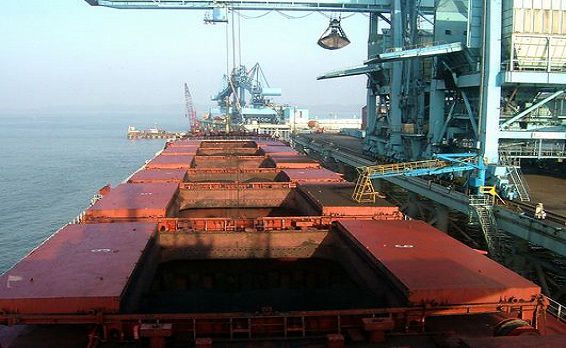
The index, which tracks the cost of moving raw materials such as grain, iron ore and coal by ship, is on a tear. The index rose 4\% Wednesday to trade at its highest level in more than two years. It’s surged more than 55\% in March, according to FactSet, leaving it with a nearly 39\% rise in the year to date.
Analysts have noted the index tends to see a seasonal boost following the Lunar New Year. But economists at Panjiva Research argued that those effects had already dissipated by mid-February. ”The move in rates may reflect, therefore, a more fundamentally positive view” of the market, Panjiva said in a report earlier this month.
As for the equity market, the index tends to lead year-over-year performance of the MSCI World Stock Index—a global equity benchmark that tracks large- and midcap stock performance across 23 developed-market countries—by around two months, said Jeff deGraaf, chairman and head technical analyst at Renaissance Macro, in a Tuesday note that included the chart below:

Powered by  © Μaritimes 2019