


 |
Developing infrastructures for the deployment of LNG for marine and road transportation, was on the agenda.
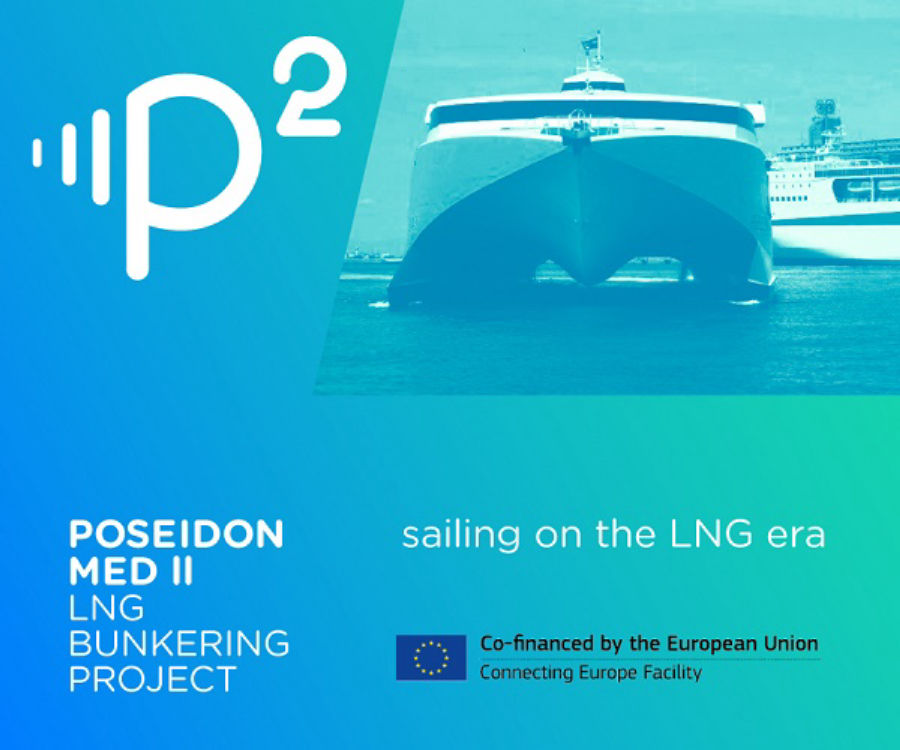
Specific emphasis was given to the Poseidon Med II approach, focusing on the project work on regulatory framework, funding and investment schemes, risk assessment methodologies and safety aspects, port studies and ship designs. Additionally, the shipping industry perspective towards LNG choice and the competitive advantage of Revithoussa terminal on the developing small scale LNG supply chain in the region were also highlighted.
The meeting offered a platform of knowledge exchange and discussion among high-level officials and key stakeholders from the participating countries in Adriatic-Ionian Initiative . The correlation between the Action Plan of EUSAIR and Poseidon Med II project, as well as the benefits that will occur for the region from Poseidon Med II successful implementation, may raise Poseidon MED II, among the credible regional projects and a reliable partner of the Adriatic-Ionian Initiative.
Poseidon Med II activities regarding small scale LNG facilities, as part of the already established large scale LNG network of Greece, actively contribute to the regional connection, one of EUSAIR’s main pillars, while promoting security of supply.
The meeting has set the base for cooperation between Poseidon Med II and key stakeholders, exploring synergies building and opportunities for best practices and policies exchange, defining the way forward.
Poseidon Med II project
Poseidon Med II project is a practical roadmap which aims to bring about the wide adoption of LNG as a safe, environmentally efficient and viable alternative fuel for shipping and help the East Mediterranean marine transportation propel towards a low-carbon future. The project, which is co-funded by the European Union, involves three countries Greece, Italy and Cyprus, six European ports (Piraeus, Patras, Lemesos, Venice, Heraklion, Igoumenitsa) as well as the Revithoussa LNG terminal. The project brings together top experts from the marine, energy and financial sectors to design an integrated LNG value chain and establish a well-functioning and sustainable LNG market.

