


‘From Cyprus we cover a world of ships’, says American Hellenic Hull at Maritime Cyprus 2017
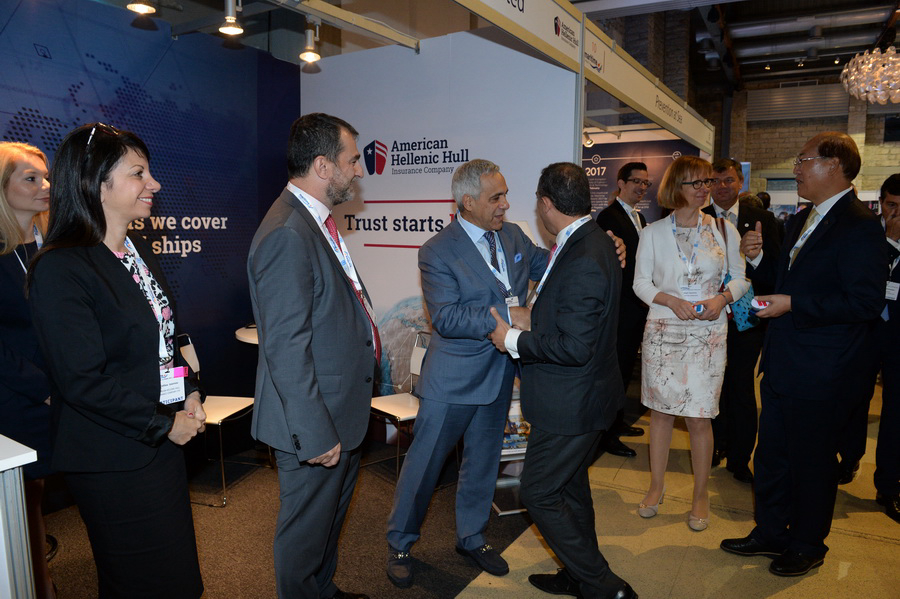
· AHHIC was event Gold Sponsor and sponsored the official Opening Reception
· The AHHIC Board of Directors and the Chief Executive introduced the company and its services to hundreds of top shipping executives from across the world
American Hellenic Hull Insurance company (AHHIC) was one of the leading participants at "Maritime Cyprus 2017", held from 8-11 October 2017 in Limassol, Cyprus. Every two years the international conference and exhibition attracts a high level of visitors, not only from the resident shipping community in Cyprus but also from the maritime industry all over the world. This year American Hellenic was the event’s Gold Sponsor and donor of the official Opening Reception as well as an exhibitor.
Maritime Cyprus, first established in 1989, has become an established shipping event organized by the Ministry of Transport, Communications and Works and the Department of Merchant Shipping in cooperation with the Cyprus Shipping Chamber and the Cyprus Union of Shipowners.
Underlining the prestige of the event and its importance for the Cyprus economy, it was officially opened by H.E. the President of the Republic of Cyprus, Nicos Anastasiades. Besides the conference, featuring internationally-reputed speakers, a maritime services exhibition provided a platform for leading companies to promote themselves to more than 850 shipping executives from around the globe. This year’s event was widely seen as the largest and most successful in Maritime Cyprus’ history.
American Hellenic Chief Executive Ilias Tsakiris stated: “We were proud to support Maritime Cyprus 2017. It has become a major event in the international maritime calendar and Cyprus’s complete shipping infrastructure is an invaluable asset for Europe and for the international shipping community in general”.
AHHIC promoted itself under the slogan ‘From Cyprus we cover a world of ships’. “In a very short space of time, our company has grown into a global provider of marine insurance with a large fleet, catering to leading shipowners from several continents,” Mr. Tsakiris said. “But we also emphasise the importance of our headquarters country – Cyprus,” he said. “The Cypriot shipping industry is dynamic, professional and growing day by day. It’s an inviting country for business, services, and talent.”
AMERICAN HELLENIC HULL INSURANCE COMPANY LTD.
American Hellenic Hull is a private marine insurance company, which covers hull and machinery risks. It is 100\% owned and financially backed by the American P&I Club and exclusively managed by Hellenic Hull Management. The company is registered in Limassol, Cyprus and has affiliated offices in Piraeus, New York, Houston, London, Shanghai and Hong Kong. Its operations commenced on 1st July 2016. American Hellenic Hull is the first marine insurance company licensed in Cyprus under the requirements of the Solvency II regime. The Solvency II Capital Requirement establishes the amount of capital to be held by an insurance entity in order to ensure that ruin occurs no more often than once in every 200 cases or, alternatively, that the company will still be in a position, with a probability of more than 99.5\% to meet its obligations to policy holders and beneficiaries for the following 12 months. American Hellenic has successfully passed additional financial and operational stress tests, ensuring that it has sufficient capital to meet projected obligations for 36 months, thus providing a high level of protection to policy holders.
SOLVENCY II
Solvency II is the new framework for EU insurance legislation regulating a single EU insurance market with the overriding aim of enhancing consumer protection. The third-generation Insurance Directives established an ‘EU passport’ or single license for insurers to operate in all member states. Solvency II marks a fundamental review of the rules for the European insurance industry and establishes new EU-wide capital requirements and risk management standards. Solvency II aims to achieve consistency across the European insurance market in aspects such as balance sheets and regulatory supervision. It also introduces stronger standards of governance, accountability and transparency for insurers as well as risk-based assessments of an insurance entity’s capital adequacy.
 |
 |
 |
Alpha Bank raises USD 250 million with the successful completion of its second Shipping Securitisation transaction
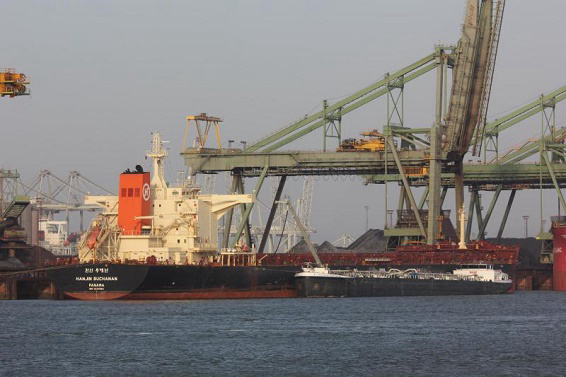
The transaction, which further enhances and diversifies the liquidity position of the Bank, is a non-recourse 4-year term dollar funding with a unique structure and one of the very few shipping securitisation transactions globally.
As the only shipping securitisation transaction placed by a Greek bank, it reflects the confidence of the market in Alpha Bank and its shipping clientele and proves the ability of both counterparties to design and execute complex transactions.
The Managing Director – CEO of Alpha Bank, Mr. Demetrios P. Mantzounis commented: “The successful completion of this new financing transaction with a top international financial organisation demonstrates once more the Bank’s ability to diligently support such transactions and contributes significantly to the implementation of Alpha Bank’s business goal for funding diversification by utilising all its assets efficiently”.
Citi’s EMEA Head of Markets and Securities Services, Mr. Leonardo Arduini, commented: "The transaction underlines Citi's strong and continued commitment to working with Alpha Bank and key industry partners in developing and delivering innovative market solutions to the shipping industry".
19th CPC National Congress to set new milestone in China's development: Greek FM

 |
| A bullet train drives in the fields of Binyang County, south China's Guangxi Zhuang Autonomous Region, April 16, 2017. (Xinhua/Huang Xiaobang) |
"A quick glimpse at the last five years reveals the remarkable progress, both domestically and internationally, that China has achieved under the successful leadership of President Xi Jinping," he said in a written statement to Xinhua.
"Therefore, I see the 19th National Congress as another milestone in the long and historic road of the outstanding transformation of China," he told Xinhua ahead of the key meeting, which opens Wednesday in Beijing.
The CPC has led China since its first national congress in Shanghai in 1921 and has now paved a new path -- socialism with Chinese characteristics -- for the development and prosperity of a modern China that is open to the world, he said.
"I rest assured that regardless of the specific outcome of the 19th National Congress, the Chinese people will continue to follow the prudent path of gradual modernization of the New China, a major and indispensable actor for global prosperity and stability," he said.
"In other words, using the Chinese popular saying and wisdom, I expect the Chinese leadership to keep 'crossing the river by touching the stones,'" the minister said.
"I, personally, and the Greek people will follow with genuine interest this prominent event, while looking forward to further enhancing our excellent bilateral relations with China, our friend and strategic partner," he said.
Kotzias said Greece and China, as cradles of the Western and Eastern civilizations respectively, share a special relationship that has lasted thousands of years and is based on mutual respect and understanding.
"This unique relationship has been the foundation upon which we initiated, together, the Ancient Civilizations Forum," he said, noting that the forum "is now gaining further momentum ... as an important forum for bolstering dialogue and cooperation on cultural issues."
The Greek official also said his country staunchly supports the unity of China, fully respecting the one China policy and Beijing's stance on Taiwan, as well as the "one country, two systems" practice.
"As the 19th National Congress of the Communist Party of China ... is about to kick off, I think that the whole world will follow with close interest its rulings and deliberations," he said. "I wish the participants and the Chinese people every success."
Source: Xinhua
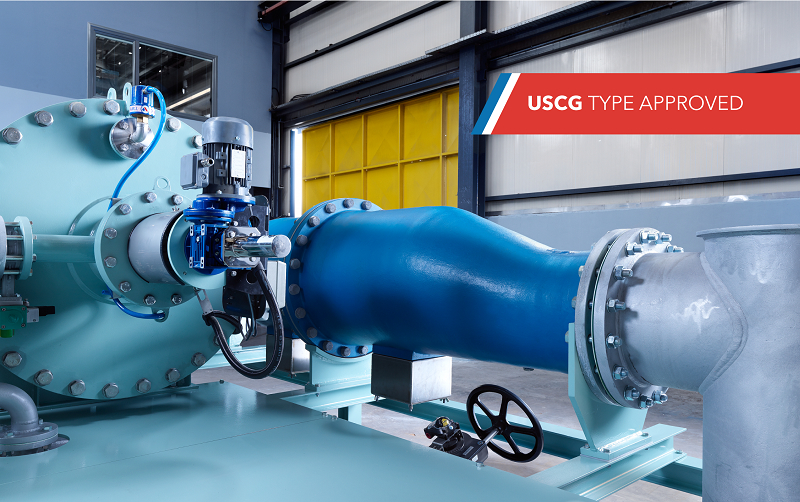
ERMA FIRST BWTS Receives USCG Type Approval
 |
| “ERMA FIRST BWTS Receives USCG Type Approval” |
Following a long testing regime, ERMA FIRST has successfully concluded its tests for the USCG Type Approval end of 2016. The superiority and the mature technology of ERMA FIRST BWTS FIT were endorsed with the application for the USCG Type Approval in May 2017. As of October 2017, ERMA FIRST is delighted to announce that ERMA FIRST BWTS FIT has obtained the USCG Type Approval certificate, becoming the most suitable solution for Ballast Water Treatment.
“With the Convention ratified and entered into force last September and the USCG BWM implementation in place, the installation of a Ballast Water Treatment System is essential for the protection of the marine environment from invasive species. ERMA FIRST proves its leading position in the Ballast Water Treatment Industry both in the New Building and retrofit markets and its capability to undertake and successfully complete challenging projects such as obtaining the Type Approval by the USCG” claims Konstantinos Stampedakis, Managing Director of ERMA FIRST, while Ms. Helen Polychronopoulou, Business Development Manager of ERMA FIRST, continued “These milestones make our clients as well as our team proud, as they prove the efficient operation and high quality of our systems. The units used during the USCG Type Approval process have remained identical since we started. Moreover, no modifications were made to the units already delivered to clients nor will be made to those to follow”.
Throughout the USCG Type Approval process, ERMA FIRST BWTS FIT performed perfectly in a variety of challenging marine environments, in three different water salinities. The system has been carefully designed, developed and engineered so as to undergo the most rigorous testing and ensure reliable operation in challenging natural water conditions.
“After a long and continuous period of working on the USCG program, we are thrilled to we have managed to fit for purpose. This time our "purpose” was the compliance with the USCG rules. In our core business model, environmental compliance is the key point to any sustainable marine/ocean activity. ERMA FIRST BWTS FIT is the first full flow electrolysis BWTS to obtain USCG Type Approval and comply with the latest regulations worldwide.” says Dr. Efi Tsolaki, Chief Scientific Officer at Research & Development Dpt. of ERMA FIRST.
ERMA FIRST BWTS FIT is an advanced modular system developed to exceed all special installation requirements either for New Building vessels or any retrofit projects. Covering an extensive capacity range of 50-3740 m3/hr, ERMA FIRST BWTS FIT is a simple solution suitable for all types and sizes of vessels. The major components of the system are a high-end backwash filter and an electrolytic cell with outstanding performance under the most demanding conditions. The self-cleaning automatic screen filter has a nominal filtration rate of 40 microns. For the de-ballasting of the vessel there is no need to use the system; It is completely by-passed and the water can be discharged directly overboard, after neutralization where applicable, with considerable gains in energy saving for the operators/managers of the vessel. Using an active substance that is produced by the method of electrolysis, any danger for re-growth of microorganisms is eliminated.
ERMA FIRST’s design simplicity and expertise on delivering challenging projects, has been well acknowledged by many ship-owners and operators who have already trusted the company with their newbuilds and retrofit installations. Nowadays, ERMA FIRST has a prestigious reference list comprised of ship-owners and shipyards worldwide such as in Greece, China, Italy, Turkey, Romania, Japan, Korea, US, Denmark, UK, Germany.
Find USCG Type Approval Certificate Here.
Feature: Discovering soul-touching stories in China - a German writer's perspective

 |
| Stefan Schomann takes a photo with a poster of the publicity event for his book Last Refuge in Shanghai at the Shanghai Jewish Refugee Museum in Shanghai on September 10, 2010. (Photo provided by Stefan Schomann ) |
CROSS-BORDER LOVERS DURING WWII
In 1939, when Nazi Germany annexed Austria, Robert Reuven Sokal fled his country with his family, joining the band of less than 20,000 Jews who embarked on an odyssey from central and eastern Europe to the foreign concessions in Shanghai, one of the few places that didn't require Jewish refugees seeking sanctuary to have a visa.
In Shanghai, while studying at St. John's University, Sokal, the son of a Viennese paint factory owner, met Julie Chenchu Yang, who was born in a wealthy Chinese family. By then, Shanghai was experiencing the pain of Japanese invasion and Shanghai's Chinese and Jewish communities shared a common sorrow.
"I was looking for a story that tells more than just this epic story of Jewish immigration to China, to Shanghai. I wanted to tell how China experienced the war ... what happened in China," Schomann said.
To combine a Euro-centric perspective with a Chinese one, which is rarely seen in earlier books on the Jewish community in Shanghai, Schomann talked to the Chinese neighbors of the refugees aside from Jewish survivors.
Since very few people know what really happened in Shanghai in 1937, he thinks "Last Refuge in Shanghai" may serve to fill in gaps in history. "It was ... important to me to tell this (story)," he explained.
The young lovers supported each other through countless challenges, including turmoil and the cruelty of war, opposition from Yang's family, and other obstacles in their intercultural marriage, eventually embracing a happy ending.
WRITING ABOUT CHINA
Born in 1962, Schomann, a student of German literature, has been a frequent visitor to China for almost 20 years. He has been writing articles based in China for leading German media outlets, and has published four books on China in German and Chinese.
Schomann began to write in both languages inspired by Lin Yutang, the Chinese author who lived between 1895 and 1976 and wrote in a polished style in both Chinese and English. The German author said it was Lin who introduced China to him to a degree.
"It was absolutely fascinating to encounter such a bright mind from China, who was writing with such (ease)," he said.
Schomann called Lin a fascinating writer, philosopher, thinker and cultural activist, saying, "His books have a lot to (contribute) for a better understanding of Chinese culture and history, and Chinese mentality."
Yet, understanding China is not an easy task for a Westerner. "I think it's impossible to perceive (China) as a whole, or to judge (it) as a whole, or to make statements about (it) as a whole. It will just lead to strong simplifications and generalizations," he said.
He compared forming an image of China to piecing together mosaics: "The big image is composed of many little images -- pieces of the mosaic. And you are always working on one piece."
This perspective is best illustrated in his new book released in June, "China -- Strolls Through an Empire," which features 10 individual travel stories covering trips to a diversity of Chinese landscapes, from wild deserts in the northwest to modern cities in the coastal east, as well as landlocked cities with ancient history and precious cultural heritages.
Schomann cited an article in the book to illustrate the concept of mosaic. He wrote about the two-day annual traditional storytelling festival in north China's Henan Province, where "the whole universe of Chinese culture, mentality and entertainment" was present and he tried to present "the essence of this culture" in a 2500-word narrative.
"As a journalist you take something quite limited, but then you open up a whole world within this topic," he said.
OBSERVING CHINA AS STORYTELLER
Schomann deems himself to be a peer of Chinese storytellers, one who, by using a different medium, shares his experiences, thinking, and observations over the years "to create a comparatively easy access to China." he calls it a personal access.
"People are intimidated by China. It's such a big country and such a complex subject," he said, explaining how the language with its system of characters instead of an alphabet, is alien to Westerners. And that is just one factor.
His aim is to help readers "overcome this intimidation of China basically by telling people that you don't have to understand everything, just to make the first step, and the second, and the third, then you will be able to get somewhere."
To create a real-life impression of China on people, Schomann resorts to other things besides writing. While researching the Shanghai refugees, he came across some historical footage taken by German photographer Eugen Flegler (1897-1981).
Flegler went on excursions to take photos of the countryside and the peasants in and beyond Shanghai from 1936 to 1938. Very few people took pictures of China's rural areas in those years.
Schomann curated an exhibition with these historical images. The exhibition was held eight times in Germany and China.
Covering China for years, Schomann has his own understanding of the Chinese Dream. He describes it as China "becoming a well-respected member of the global community, and to increase China's importance and significance on an international level."
Within two decades, China has made great progress towards that aim, he said. "China became more international, more cosmopolitan, more respected on (the) international stage."
Jiang Weirui in Beijing, and Yang Zhen and Jiang Liyuan in Shanghai also contributed to the report.
by Xinhua writers He Fei, Ma Qian, Deng Xianlai
http://news.xinhuanet.com
The Polar Code will protect the environment of the Arctic
 |
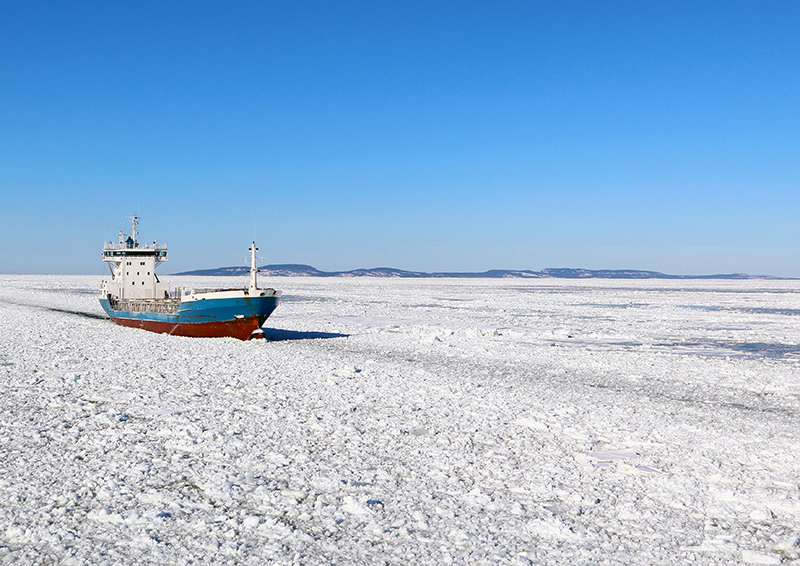
The Ice Navigator may be a suitably qualified member of the ship’s crew or a supernumerary. When an Ice Navigator is carried on-board as a member of the ship’s crew, it is recommended that they are either the Master or the Chief Officer. In essence, polar areas are protected, picturesque and dangerous. They demand a different standard of navigation. The Northern Sea Route itself needs a pilot on-board, whereas North West passage regulations require an Ice Navigator to be part of the bridge team.
To be qualified, the Ice Navigator also needs practical experience in ice. In polar areas, aids to navigation are not so common and Search and Rescue facilities are more spaced apart. This causes time delays to vessels needing assistance. Areas off the main routes are also very poorly - or sometimes - not surveyed at all. Adding to this both traditional and gyro compasses are influenced and GPS coverage is poorer, so navigators need to be extremely careful. The specific qualifications of an Ice Navigator should include documentary evidence of having completed ‘on-the-job’ training, as appropriate, and may include simulator training.
The IMO recommends that the Ice Navigator has documented evidence of satisfactorily completing a qualified training programme in ice navigation. Fortunately, Seagull Maritime’s new distance course on Ice Navigation is classed as part of this documentary evidence, as our modules cover the underpinning knowledge on ice navigation. Our applicable e-learning modules are entitled Navigation in cold environments and Passage planning in cold environments, both of which form a part of the essential skillset of an Ice Navigator.
For the crew on-board a vessel operating in the polar regions, we also recommend Seagull’s modules on:
· Fatigue Management;
· Personal safety in cold environments;
· Engineering operations in cold environments and
· Recovery of persons from the water.
For further information on any of these, please contact Seagull Customer Service.
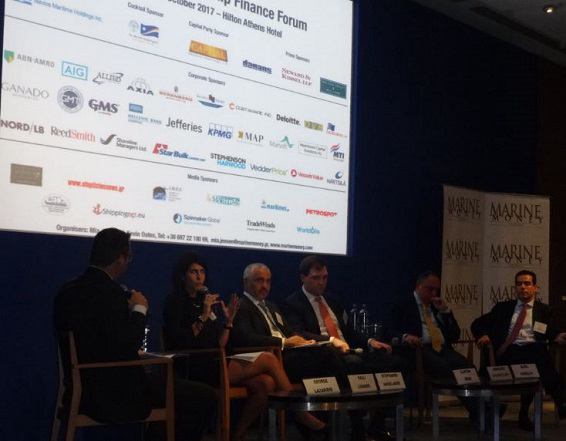
Are we close to a market recovery in dry bulk? What will trigger a better market?
Are we close to a market recovery in dry bulk? What will trigger a better market?
Is shipyard capacity an overhanging threat? Will recycling tip the balance?
Owners, analysts and financiers discuss market fundamentals and what the next five years hold in store.
Panel Discussion
Mr. Basil Sakellis, Managing Director, Alassia NewShips Management Inc.
Mr. Nikolaos Triantafyllakis, Managing Director, W Marine Inc.
Ms. Kalli A. Livanos, Director, Kyla Shipping
Mr. Stephanos Angelakos, Managing Director, Angelakos (Hellas) S.A.
Mr. Clinton Webb, Vice President, Research Division, AXIA Ventures Group
Moderator: Mr. George Lazaridis, Market Research and Valuations, Allied Shipbroking Inc.
Bulkcarrier Contracting: Down But Not Out?
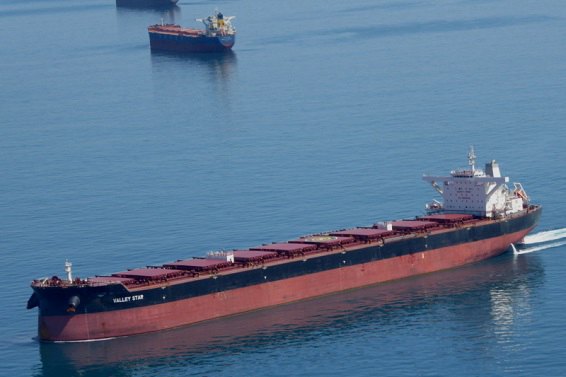
Ordering has been especially subdued in the last few years, although a limited number of yards have been able to secure work, primarily through increased contracting for larger bulkers. Improvements in the market environment today also appear to be providing support.
Hitting Below The Belt
 |
Weighing In
In the last two years, the focus of newbuild activity has shifted towards the Capesize and Panamax sectors, which combined represent 74\% of orders since the start of 2016 in numerical terms, compared to 38\% from 2007 to 2015. In total, 35 of 55 bulker orders in 2016 were Capesizes, 31 of which were ‘Valemaxes’ (c.380-400,000 dwt). This year, the focus has largely been on the Panamax sector, which accounts for half (75) of total bulker orders in the year so far, 70 of which were Kamsarmaxes. This has been driven in part by attractive pricing, with the Kamsarmax guideline price steady at $24.5m as of start October. Ordering may have also picked up due to availability of NOx Tier II compliant units. Around 50-60\% of Kamsarmax orders at Chinese yards in 2017 so far are estimated to be NOx Tier II compliant. Meanwhile, Handymax and Handysize ordering has been limited, representing 12\% and 13\% of bulker orders respectively since the start of 2016, in numerical terms.
China Takes The Title
The number of yards taking bulker contracts has fallen over time as a result of declining contracting and a shift towards larger units. In 2017 so far, a total of 28 yards have received at least one bulker contract, compared to 18 in full year 2016 and down from a peak of 211 in 2007. In 2016, Chinese yards received 88\% of bulker orders in terms of dwt, including 30 ‘Valemax’ orders by domestic owners at six yards. In 2017 so far, Chinese yards have achieved a 49\% market share in dwt terms. Japanese yards received 16 Panamax orders, contributing to a share of 21\% of total bulker orders in dwt terms in 2017 so far, up from 11\% in 2016. Korean yards have received 25\% of bulker orders in 2017 so far in dwt terms, due to an order for 10 VLOCs for charter to Vale, following just one order in 2016.
So, in the last two years bulker shipbuilding has seen both a further decline in contracting, and a focus on larger vessels. For many yards the situation remains difficult, although some yards have benefitted from a limited number of high capacity orders. However, market sentiment appears to be picking up and ordering has at least increased in 2017, showing that bulker contracting may not be out for the count just yet.
Source: Clarksons
The end of the paper chase: DNV GL rolls out electronic certificates across entire fleet

 |
| DNV GL has commenced the roll out of IMO compliant electronic class and statutory certificates across its entire fleet. (Copyright DNV GL) |
For the past few years, DNV GL has been working on pilot projects with several owners and flag administrations, to test and gain acceptance for the use of electronic certificates. This has resulted in almost 50 flag state administrations already having granted DNV GL the authority to issue electronic statutory certificates on their behalf, with more acceptances expected in the near future.
“The electronic certificate regime offered by DNV GL has provided us with a unique advantage in the contemporary market, where leverage from digitalized high-end efficient work processes plays an integral role,” says Morten Nygaard, Fleet Manager, Teekay Offshore, owners of one of the vessels used in the pilot projects. Teekay Offshore is also looking to move their fleet to electronic class and statutory certificates as soon as possible: “It is our intention to benefit from the new regime within the shortest possible time frames,” he added.
Certificates are published on DNV GL’s customer portal immediately after an onboard survey is completed, so that all relevant parties can access the latest certificates from anywhere in the world. The electronic certificates are secured with a digital signature and a unique tracking number (UTN) which can be checked online, assuring their validity and authenticity.
“Over the last several years we have been leveraging digitalization to improve the experience of our classification customers,” says Knut Ørbeck-Nilssen, CEO of DNV GL – Maritime. “The roll out of electronic certificates is a significant step forward in our pathway towards modernizing classification. Electronic certificates will smooth our customer’s interactions with class, allow stakeholders across the industry to capture value from digitalization, and give us a platform for future improvements.”
Customers can choose to share access to their certificates with stakeholders (charterers, ports, flag administrations, insurers) by using temporary access codes. With the temporary code the stakeholder can directly access the customer’s secure certificate folder, bringing the administrative burden on the ship owner down to the absolute minimum.
Electronic certificates will be rapidly rolled out across the DNV GL fleet, with newbuilding vessels receiving certificates upon delivery, and existing vessels at their next scheduled survey or audit. For more information visit the electronic certificate webpage here.
At the same time as electronic certificates will be deployed through DNV GL’s production system, customers will also be able to take advantage of the new Smart Survey Booking tool (SSB). SSB uses smart algorithms and machine learning to help customers find the best time and place to book a survey.
The algorithms identify when the maximum number of survey items can be combined, by assessing the initiation and expiration dates for class surveys, audits and conditions. An estimation of the required time the ship needs to be available for the survey/audit, with the associated travel and costs is also generated. SSB will even recommend a port of call based on all of these factors. Finally, after a customer makes the booking, SSB provides a set of survey preparation documents for the crew of the vessel, enabling them to prepare more effectively. More information on SSB can be found here.
About DNV GL
Driven by our purpose of safeguarding life, property and the environment, DNV GL enables organizations to advance the safety and sustainability of their business. We provide classification, technical assurance, software and independent expert advisory services to the maritime, oil & gas and energy industries. We also provide certification services to customers across a wide range of industries. Operating in more than 100 countries, our professionals are dedicated to helping our customers make the world safer, smarter and greener.
About DNV GL – Maritime
DNV GL is the world’s leading classification society and a recognized advisor for the maritime industry. We enhance safety, quality, energy efficiency and environmental performance of the global shipping industry – across all vessel types and offshore structures. We invest heavily in research and development to find solutions, together with the industry, that address strategic, operational or regulatory challenges. For more information visit www.dnvgl.com/maritime
Dry Bulk FFA: Supramax Index technically bullish, but FIS warns of caution after 10 day rally
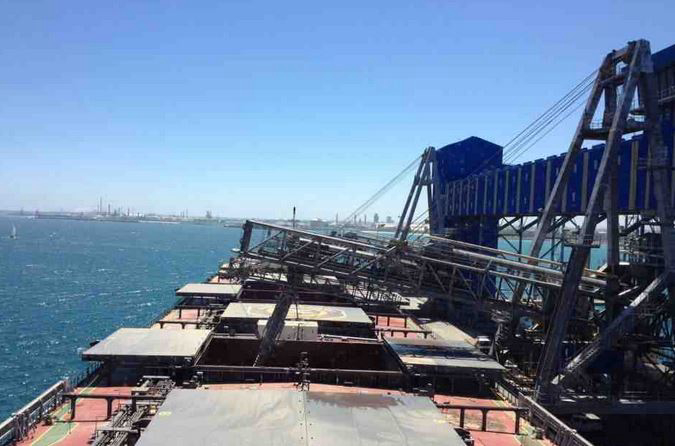
This is not a sell signal, but it does suggest that that there is a weakening in momentum, and the probability of a market correction is increasing. Price action remains the key indicator and this remains bullish, the momentum is a warning, not a certainty. The Daily index has now rallied for 10 consecutive periods, and this is often a signal of potential exhaustion.
Note the daily stochastic is now at 97 and looking overextended. Technically we remain in bullish territory above USD 10,045, but overextended. Pullbacks that hold above this level would suggest continued upside pricing, unless a lower high forms.
Supramax Oct 17 Daily
Support – 11,180, 10,550, 9,870 t – 11,180, 10,550, 9,870
Resistance – 11,475, 11,910
The daily stochastic on the October contract is now in overbought territory have been driven by the hidden bullish divergence highlighted a couple of weeks back. The stochastic at 97 is starting to look overbought, with the current price action failing to trade above the recent high of USD 11,910.
Lower pricing from here would suggest the October contract could be entering a corrective zone. A close below the USD 11,180 should have market longs looking to tighten risk, as from a technical perspective it would suggest that the USD 10,550 level or lower could be tested. Ultimately the trend remains neutral, however there are signs this could soon start to weaken.
Supramax Q4 Daily
Support –11,377, 10,592, 9,828
Resistance – 12,177, 12,247, 12,579
The Q4 Supramax is currently testing our third and final resistance level from last week, at USD 12,177. The trend remains bullish, however the trajectory of the trend and the overbought momentum would suggest this is unsustainable. And a corrective wave is due soon. It is worth noting that we are seeing a divergence on the weekly chart with the stochastic, and the short period RSI. This increases the probability of a market pullback in the near future.
The longer term trend remains bullish above USD 10,592, however there is a small support at USD 11,377 which if broken could attract technical sellers to the market. Market pullbacks that hold above USD 11,377 could see upside continuation to the recent market highs. However, although still bullish below this level, the greater the pullback the harder the climb, and the increased potential of a lower high forming.
Supramax Cal 18 Daily
Support – 9,567, 9,203, 8,640
Resistance – 9,550, 9,635
The Cal 18 has defied expectations and managed to make fresh market highs. Technically the trend is once again in bullish territory.
The daily stochastic is now in overbought territory, with the weekly stochastic showing a bearish divergence, as is the short period RSI. Not a sell signal it does suggest that longer term momentum is showing signs of weakening. And there is now an increased probability of another market pullback.
A close below USD 9,567 could attract technical sellers to the market, targeting the USD 9,203 support and potentially lower. Downside moves that hold above the SUD 9,567 support would imply trend continuation looking to make fresh market highs. Market longs should be wary of higher pricing due to the current divergences on the weekly chart.
Source: FIS

Powered by  © Μaritimes 2019