




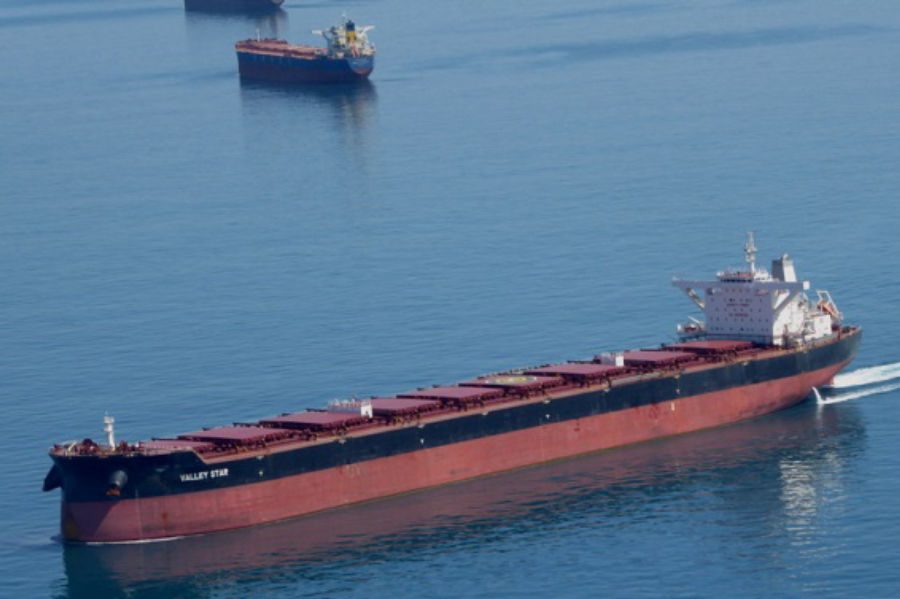
Ordering has been especially subdued in the last few years, although a limited number of yards have been able to secure work, primarily through increased contracting for larger bulkers. Improvements in the market environment today also appear to be providing support.
Hitting Below The Belt
 |
Weighing In
In the last two years, the focus of newbuild activity has shifted towards the Capesize and Panamax sectors, which combined represent 74\% of orders since the start of 2016 in numerical terms, compared to 38\% from 2007 to 2015. In total, 35 of 55 bulker orders in 2016 were Capesizes, 31 of which were ‘Valemaxes’ (c.380-400,000 dwt). This year, the focus has largely been on the Panamax sector, which accounts for half (75) of total bulker orders in the year so far, 70 of which were Kamsarmaxes. This has been driven in part by attractive pricing, with the Kamsarmax guideline price steady at $24.5m as of start October. Ordering may have also picked up due to availability of NOx Tier II compliant units. Around 50-60\% of Kamsarmax orders at Chinese yards in 2017 so far are estimated to be NOx Tier II compliant. Meanwhile, Handymax and Handysize ordering has been limited, representing 12\% and 13\% of bulker orders respectively since the start of 2016, in numerical terms.
China Takes The Title
The number of yards taking bulker contracts has fallen over time as a result of declining contracting and a shift towards larger units. In 2017 so far, a total of 28 yards have received at least one bulker contract, compared to 18 in full year 2016 and down from a peak of 211 in 2007. In 2016, Chinese yards received 88\% of bulker orders in terms of dwt, including 30 ‘Valemax’ orders by domestic owners at six yards. In 2017 so far, Chinese yards have achieved a 49\% market share in dwt terms. Japanese yards received 16 Panamax orders, contributing to a share of 21\% of total bulker orders in dwt terms in 2017 so far, up from 11\% in 2016. Korean yards have received 25\% of bulker orders in 2017 so far in dwt terms, due to an order for 10 VLOCs for charter to Vale, following just one order in 2016.
So, in the last two years bulker shipbuilding has seen both a further decline in contracting, and a focus on larger vessels. For many yards the situation remains difficult, although some yards have benefitted from a limited number of high capacity orders. However, market sentiment appears to be picking up and ordering has at least increased in 2017, showing that bulker contracting may not be out for the count just yet.
Source: Clarksons

