



 |
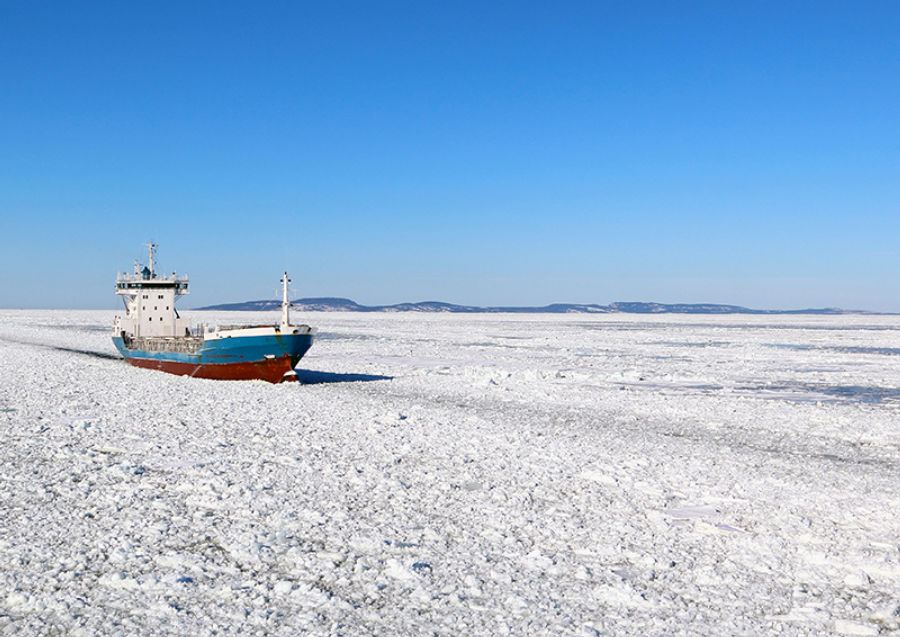
The Ice Navigator may be a suitably qualified member of the ship’s crew or a supernumerary. When an Ice Navigator is carried on-board as a member of the ship’s crew, it is recommended that they are either the Master or the Chief Officer. In essence, polar areas are protected, picturesque and dangerous. They demand a different standard of navigation. The Northern Sea Route itself needs a pilot on-board, whereas North West passage regulations require an Ice Navigator to be part of the bridge team.
To be qualified, the Ice Navigator also needs practical experience in ice. In polar areas, aids to navigation are not so common and Search and Rescue facilities are more spaced apart. This causes time delays to vessels needing assistance. Areas off the main routes are also very poorly - or sometimes - not surveyed at all. Adding to this both traditional and gyro compasses are influenced and GPS coverage is poorer, so navigators need to be extremely careful. The specific qualifications of an Ice Navigator should include documentary evidence of having completed ‘on-the-job’ training, as appropriate, and may include simulator training.
The IMO recommends that the Ice Navigator has documented evidence of satisfactorily completing a qualified training programme in ice navigation. Fortunately, Seagull Maritime’s new distance course on Ice Navigation is classed as part of this documentary evidence, as our modules cover the underpinning knowledge on ice navigation. Our applicable e-learning modules are entitled Navigation in cold environments and Passage planning in cold environments, both of which form a part of the essential skillset of an Ice Navigator.
For the crew on-board a vessel operating in the polar regions, we also recommend Seagull’s modules on:
· Fatigue Management;
· Personal safety in cold environments;
· Engineering operations in cold environments and
· Recovery of persons from the water.
For further information on any of these, please contact Seagull Customer Service.

