



Shipping must remain energy-efficient in a low crude price environment
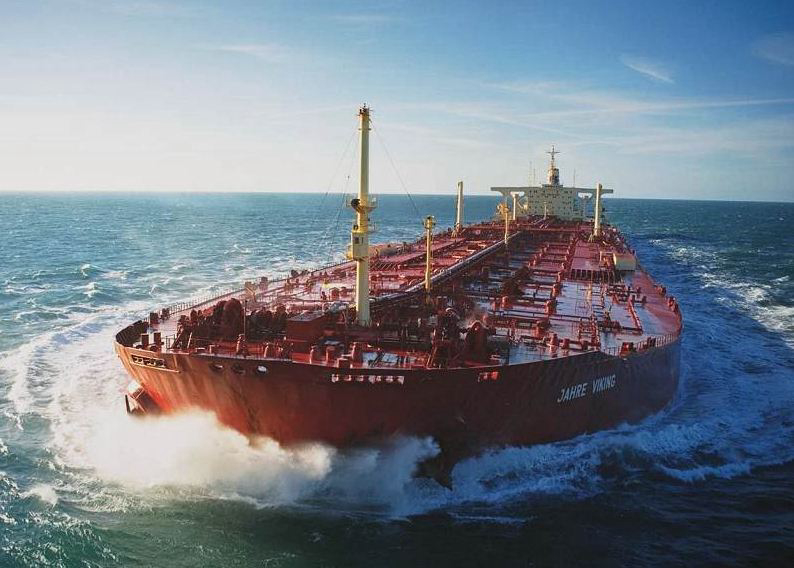
“With crude oil prices at their lowest since April 2009, the temptation is to put your foot on the gas and speed up a bit but this is not the way forward. When oil prices are low shipowners can benefit more fully from energy-saving technologies,” said Hakan Ozcan, the Chief Financial Officer of Ecoships, the technical ship management arm of Newport Shipping Group,
“Admittedly bunker fuel will continue to be the largest single operational cost for shipowners, but with fuel prices continuing to drop, profit and loss accounts will improve, providing owners with the resources needed to re-invest in new ship designs, equipment and technologies capable of reducing fuel consumption even further. It’s a win-win situation for the merchant fleet.”
Whilst Ozcan does not suggest that the industry embarks on the kind of newbuilding spending spree that will prolong or perpetuate over-capacity, he does believe shipowners have a commercially-viable opportunity to replace ageing, less efficient tonnage with vessels capable of meeting increasingly stringent environmental regulations.
“It just makes economic sense. It is highly unlikely that we will see a return to fast steaming, so vessels designed for low fuel consumption to minimise shipping’s impact on the environment will continue to be an integral part of the ship manager’s business model.”
Harald Lone, Newport Shipping Group’s Chairman and CEO, confirmed that vessels under the company’s management will continue to operate sustainably.
“All our vessels continue to operate to optimum energy-efficiency and have systems installed capable of providing a better return for the owner. The industry must continue to do all it can to operate ships more effectively so that the economics of shipping remain commercially and environmentally viable.”
The energy-efficient bulk carrier design Ecoships’ unveiled in September last year is indicative of the shipmanager’s commitment to sustainable shipping.
The Green Lotus 32 is a 32,500dwt geared, wide-hatched, double-hulled bulk carrier designed to meet existing and future CO2, NOx and SOx emissions regulations.
Its 170.90m long, 27m wide hull form, optimised for energy efficient operation using computational fluid dynamics and finite element analysis, has a propulsion arrangement based around a Tier III compliant MAN B&W SG50ME-B9 two-stroke main engine driving a large diameter, fixed pitch propeller.
This configuration provides a heavy fuel oil consumption of just 15.6t/day at a service speed of 14kn and 7.6 t/day at 11kn.
Source: Newport Shipping
Lucy Sofronis: Telemedicine prevents medical evacustion

|
Futurecare: Modern risk management technique Lucy Sofronis, Director of Futurecare, Greek office, is talking on maritimes TV, about the latest developments in the critical field of care of seafarers, stressing that there should be precautionary approach.She indicates that Futercare, with the global network that has both a hospital level and medical staff, provide the most reliable solution to manage any incident happen to crew members at the lowest possible cost to the owner. |
The presentation and the interview took place during the 5th conference organized by the Maritime & Finance Institute, entitled Shipping, Safety & Modern Healthcare Standards, within the Athens Money Show(19-21 December 2014).
interview: Markos Kanztios
camera:Studio Panagiotis Halkidis
Platts Analysis of U.S. EIA Data
U.S. commercial crude oil stocks rose 5.4 million barrels to 387.8 million barrels the week ended January 9, U.S. Energy Administration (EIA) data showed.
Analysts surveyed Monday expected crude oil stocks to have declined 400,000 barrels.
Imports were up 636,000 barrels per day (b/d) to 7.5 million b/d, while crude oil runs dipped below 16 million b/d for the first time since November, helping stocks accumulate.
Refineries processed 15.893 million b/d of crude oil, down 527,000 b/d, lowering the total refinery utilization rate 2.9 percentage points to 91\% of operable capacity.
Stocks at Cushing, Oklahoma — delivery point for the New York Mercantile Exchange (NYMEX) crude oil futures contract — built 1.78 million barrels to 33.874 million barrels.
Cushing stocks have risen 10 million barrels during the last six weeks. The fill-up could be driven by traders storing crude oil to take advantage of NYMEX crude oil’s contango* term structure.
NYMEX prompt futures are less expensive than longer-dated contracts, allowing cash-and-carry trades to be potentially profitable, as long as the spread covers related costs.
On Tuesday, NYMEX crude oil for August delivery settled at a premium of $4.56 per barrel to the February contract.
That being said, Cushing’s role has mostly transformed from a storage hub to transit hub, facilitating the flow of domestic and Canadian production to U.S. Gulf Coast (USGC) refineries via an expanded pipeline network.
Cushing stocks drained in 2014 as a result and remain below levels from one year ago, despite the recent uptick.
Expanded pipeline capacity and the contango term structure also may be pushing USGC crude oil stocks higher. The region’s inventory rose 910,000 barrels the week ended January 9 to 195.579 million barrels, which was 37 million barrels above the EIA five-year (2009-2013) average.
Moreover, USGC crude oil stocks have gained 1.3\% since the last week of November, while over the same 10-week period in 2009-2013, the region’s inventory declined 10.5\% on average.
Meanwhile, USGC refineries have been operating at high levels. While the refinery utilization rate dropped sharply the week ended January 9, down 3.7 percentage points, it remained robust.
USGC refineries operated at 92.2\% of operable capacity the week ended January 9. The region’s utilization rate has been above 90\% for the last 10 weeks, during which time the utilization rate exceeded year-ago levels nine times.
GASOLINE STOCKS BUILD
Total U.S. gasoline inventories increased 3.2 million barrels to 240.3 million barrels the week ended January 9, outpacing expectations of a 2.7 million-barrel build.
In line with the EIA five-year average, gasoline stocks built each week from early November through the week ended January 9.
The scale of the 2014-2015 increase has been larger than in years past. From trough to peak, gasoline stocks rose 19\%, almost double the average gain in the same period in 2009-2013.
On the U.S. Atlantic Coast — home to the New York Harbor-delivered NYMEX RBOB futures contract — gasoline stocks increased 1.8 million barrels to 64.2 million barrels, approximately 11\% above the five-year average.
USGC gasoline stocks were down 925,000 to 80.567 million barrels, helping mitigate the overall U.S. build.
DISTILLATE STOCKS UP
Total U.S. distillate stocks rose 2.9 million barrels, compared with expectations of a 1.9 million-barrel build.
At 139.9 million barrels, distillate stocks were 4.2\% below the five-year average, but the gap keeps closing between current levels and the historic norm for the same reporting period.
Distillate production fell 72,000 b/d to 5.1 million b/d.
USAC combined stocks of low- and ultra-low-sulfur diesel fuel were up 1.5 million barrels to 32.1 million barrels, U.S. Midwest combined stocks increased 838,000 barrels to 33.740 million barrels, and USGC stocks rose 641,000 barrels to 39.640 million barrels.
* Contango is the industry vernacular for the condition whereby prices for nearby delivery are lower than prices for future-month delivery.
Source:Platts
DNV GL certification helps Hapag-Lloyd prepare for MRV
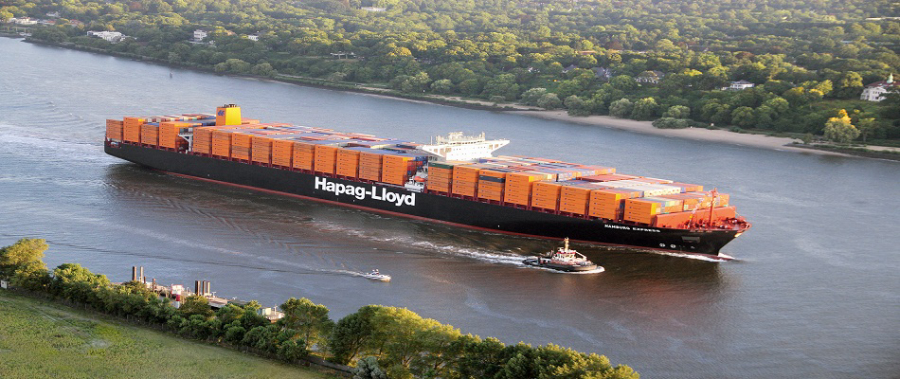
Hamburg, 15th January 2015 – Hapag-Lloyd is preparing to become the world’s first MRV-Ready certified shipowner, working with classification society DNV GL on a verification programme that will prove their readiness with incoming EU emission monitoring regulations for their entire own-managed fleet.
 |
| The DNV GL classed Hamburg Express is the 13,200 TEU flagship of Hapag-Lloyd's fleet. |
Initiated as a joint project between Hapag-Lloyd and DNV GL, the first stage of the verification shows Hapag-Lloyd is well on the way to compliance with MRV. The scope of the verification covers the complete process of emission data monitoring and reporting. This also includes a validation of the monitoring-reporting software, which will be used on board Hapag-Lloyd’s containership fleet.
“We are carrying out the examination work in line with the requirements of the DNV GL Environmental Passport-Operation – a programme aimed at providing a complete certified operational emission inventory, which addresses all of the emissions covered in MARPOL”, explains Dr Jörg Lampe, Senior Project Engineer for Risk & Safety and Systems Engineering at DNV GL. “We are very pleased to be working with Hapag-Lloyd to develop a solution that will allow shipping companies to more easily meet the challenges of complying with the upcoming MRV regulations. Being willing to get out in front of the MRV regulations through early certification shows their leadership in this area and could be a valuable commercial advantage”, he adds.
“Tracking and improving our emissions is important, not only for us as a firm but for our customers. Therefore we are always trying to take proactive steps to anticipate upcoming regulations and be prepared with a compliance solution”, said Richard von Berlepsch, Senior Director Ship Management, Hapag-Lloyd. “However, Hapag-Lloyd concurs with various shipping associations that reporting of cargo and publication of such sensitive data should not be pursued”, he noted.
The MRV-Ready certification can help shipping companies ensure their preparedness for the upcoming verification challenge of the MRV emission regulations. Possible gaps are revealed and steps to remedy them can be taken. Demonstrating readiness for the MRV regulations in advance also demonstrates a responsible attitude towards a sustainable future to customers and stakeholders, a factor that is increasingly playing into commercial decisions.
The MRV regulation (No 525/2013) is a proposal that would create a EU-wide legal framework for collecting and publishing verified annual data on CO2 emissions from all large ships (over 5,000 gross tons) that use EU ports, irrespective of where the ships are registered. Shipowners would have to monitor and report the verified amount of CO2 emitted by their large ships on voyages to, from and between EU ports. Owners would also be required to provide certain other information, such as data to determine the ships' energy efficiency. The regulation is expected to be finalised in 2015 and could enter into force in 2018.
About DNV GL
Driven by our purpose of safeguarding life, property and the environment, DNV GL enables organizations to advance the safety and sustainability of their business. We provide classification and technical assurance along with software and independent expert advisory services to the maritime, oil and gas, and energy industries. We also provide certification services to customers across a wide range of industries. Operating in more than 100 countries, our 16,000 professionals are dedicated to helping our customers make the world safer, smarter and greener.
source:DNV-GL
German vessel under tow
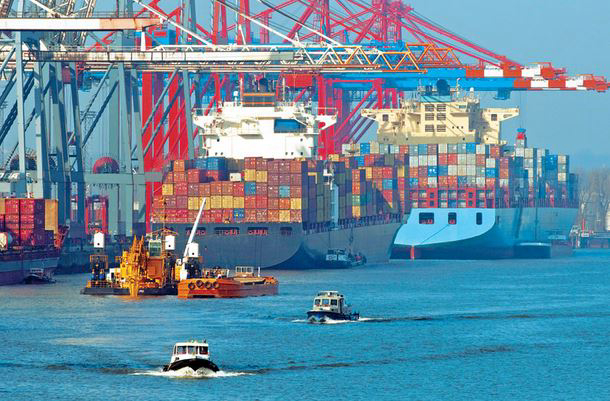
The Antigua and Barbuda flagged 9,739-dwt Thor Commander (built 2011) reported on Sunday night that it had damaged its main engine.
The vessel was drifting north-east of Perkins Reef and north of Elusive Reef in the Swains Reefs group, about 379km north-east of Gladstone when it was disabled.
On Tuesday morning, a towline was established between the disabled vessel and the tug Smit Leopard from Gladstone.
The Australian Maritime Safety Authority (AMSA) said the Thor Commander is due to arrive in Gladstone later this week.
On Monday night a Cosco Bulk capesize vessel secured a towline to the disabled vessel to stop it from drifting.
The towlines between the Thor Commander and the 174,766-dwt Xinfa Hai (built 2004) were established with the assistance of Queensland Police vessel Lyle M Hoey.
The Xinfa Hai towed the vessel slowly in a north-easterly direction on Monday night ahead of the tug’s arrival in the area.
The Thor Commander is currently operated by Thorco Shipping and is owned by Germany’s Held Reederei.
source:www.tradewindsnews.com
Vale’s Leapfrogs Rio, BHP as Cheapest Iron-Ore Shipper
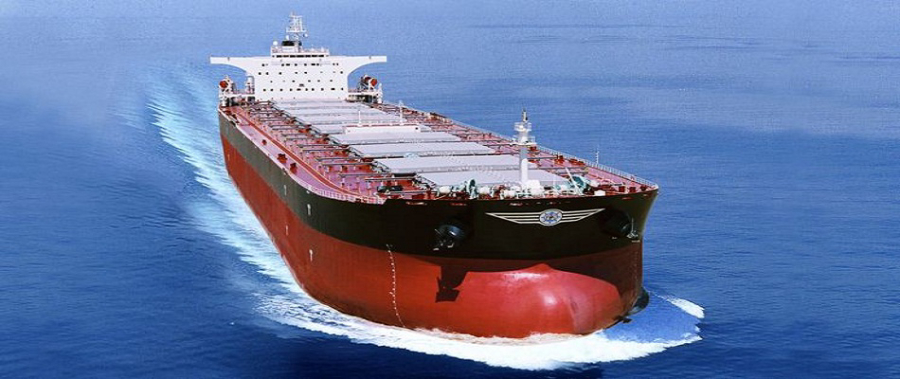
Brazil’sVale SA (VALE), the largest exporter of steel-making iron ore, has usurped its two nearest rivals to become the lowest-cost producer as a slump in the price of oil cuts shipping costs, according to Sanford C. Bernstein Ltd.
“In the last few months we have seen the price for bunker fuel collapse in lock-step with the decline in the global oil price and with it a reordering of the cost position of the global iron-ore industry has taken place,” Paul Gait, an analyst at Bernstein in London, wrote today in a report. Rio Tinto Group andBHP Billiton Ltd. (BHP)are the biggest exporters after Vale. Their Australian mining hubs have traditionally held a cost advantage over Vale due to their proximity toChina.
The three producers collectively control about 60 percent of global exports and have been pumping billions of dollars into expanding output, squeezing higher-cost producers in an already over-supplied market. Oil slumped almost 50 percent last year, the most since the 2008 financial crisis, amid a supply glut, mirroring a 47 percent collapse iniron ore.
Iron ore with 62 percent content at the Chinese port of Qingdao dropped 0.3 percent to $71.18 a dry ton on Jan. 9, according to Metal Bulletin.
Due to a slide in fuel prices Vale is now shipping iron ore to China for about $6 a ton cheaper than Australian exports, Bernstein’s Gait said. That includes the cost of mining.
Competitive Advantage“Over the last five years it has cost an average of $23 a ton to ship iron ore from Brazil to China whilst it has cost only $9 a ton to ship it fromAustralia,” he said. “In a world where freight is free and distance to market not an issue, then Brazil is actually at a significant competitive advantage over Australia.”
A spokesman for BHP couldn’t immediately comment. A spokesman forRio Tintocouldn’t immediately be reached. Vale’s press office didn’t immediately reply to an e-mail seeking comment on the research note.
BHP, the world’s third-biggest iron-ore exporter, last year said it wants to cut production costs to less than $20 a ton, from about $25 a ton at present, excluding freight and royalty costs. That compares with London-based Rio Tinto’s average cost of $20.40 a ton in the first half of last year.
Last year’s iron-ore price slump promptedGoldman Sachs Group Inc. (GS)to declare the “end of the Iron Age” after a China-led demand spike over the past decade brought record profits for producers. China is the biggest consumer of the raw material.
To contact the reporter on this story: Jesse Riseborough in London atThis email address is being protected from spambots. You need JavaScript enabled to view it.
To contact the editors responsible for this story:Will KennedyatThis email address is being protected from spambots. You need JavaScript enabled to view it.Ana Monteiro, Indranil Ghosh
source:bloomberg
Aegean plans fund raiser
The US-listed Greek bunker company said the three-year convertible senior notes will carry a coupon of 4\%.
Jefferies LLC is acting as sole book-running manager for the registered public offering, Aegean confirmed.
The underwriters have a 30-day option to purchase up to an additional $6m worth of the bonds.
The new notes are expected to have the same terms as the five-year convertible bonds issued in October 2013 which raised $86.25m.
Aegean said it expects to use the net proceeds from the sale of the new notes for working capital required to fund its expansion into existing and new markets.
It has been one the key beneficiaries of the collapse of Danish rival OW Bunker, snapping up a number of its assets and staff.
Last week it announced that it was is moving into the German bunker sector with a deal to take over two OW Bunker vessel charters.
It will launch physical operations in Hamburg this month and has assumed contracts for two modern, double-hulled bunkering barges.
In December, it acquired 28,567t of marine fuel and a storage contract with Vopak Terminal Los Angeles for $11m during an auction of OW assets in the US.
It said it expected to integrate much of the former OW Bunker operating infrastructure in Los Angeles into the Aegean organisation and begin operations at the Vopak Terminal in the first quarter of 2015.
source:tradewindsnews.com
TOP Ships Announces Sale and Lease Back of Two Vessels
Consummation of the deal is expected to take place during Q1 2015 for both vessels.
Following the sales, the Company will bareboat charter back both vessels and continue to operate them for seven years. In addition, the company has options to buy back the vessels after the third anniversary.
Source: TOP Ships Inc.
Cautious approach and pessimistic market outlook led to shrinking of dry-bulk fleet
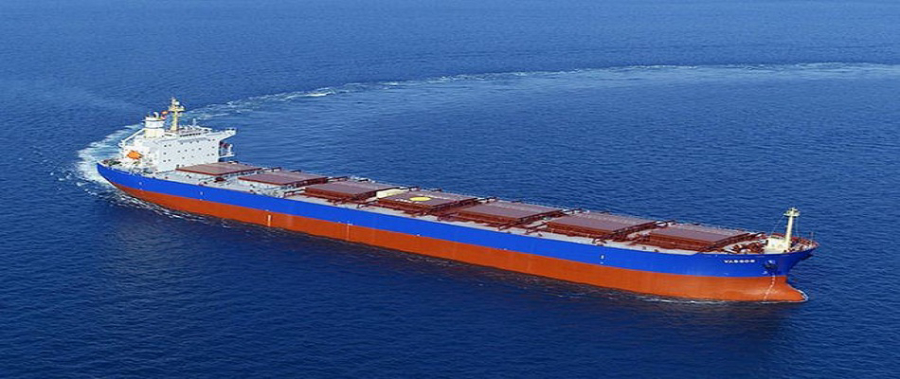
His belief that the oversupply of bulkers will continue for the next two to three years, keeping freight rates low, is one that is shared by many.
Chandratat’s cautious approach, stemming from his years in banking, has resulted in the company drastically scaling down its dry-bulk fleet.
Thoresen has been steadily shrinking the fleet from a 2008 peak of 49 ships, most of which were general cargoships and handysizes. The final few scheduled for disposal will be purged over the next few months, leaving the company with 15 handymaxes, supramaxes and panamaxes.
When Chandratat took the helm at Thoresen, 95\% of its revenue was derived from dry bulk. This has dropped to 33\% and is expected to fall to 20\% by 2013 as the company continues to switch its focus to energy-related activities such as offshore shipping and coal mining.
“The outlook is what drives our strategy,” he said.
Thoresen, Chandratat adds, has developed several broad strategies to cope with present market conditions — one being that the company will only operate the most modern and competitive vessels.
“When our fleet was at its peak, the average vessel capacity was 27,000 dwt and the average age 20 years. Once we are down to 15 ships the average capacity will be 44,000 dwt and the average age 10 years. We have chosen to keep only the most competitive vessels.”
Thoresen still has three very delayed 53,000-dwt bulkers on order at Vinashin in Vietnam. The most recent indications are that the first two will be delivered in 2012 but the status of the third has yet to be confirmed.
“The order still exists. The contract is still around but I don’t know if it will ever get built,” said Chandratat.
The vessels are part of a series Thoresen booked at lesser-known Southeast Asian yards before the 2008 market collapse. Last year, it walked away from a quartet of 50,400-dwt bulkers ordered at PT Pal Shipyard in Indonesia.
The company booked the ships at the end of 2007 but no work had taken place by their delivery date and it was clear the yard was in no position to build them.
As a stop-gap measure, Thoresen bought a couple of modern secondhand supramaxes.
Chandratat confirms the company has no plans to acquire additional dry-bulk tonnage.
“We are happy to run our current fleet for the next three years. We may take some vessels on time charter to meet contract obligations but we won’t be buying ships until market conditions are more favourable,” he said.
Along with new ships has come a new strategy that has seen Thoresen move its focus from spot to longer period charters.
“We want to stay closer to our core customers and position the fleet on medium and long-term contracts with industrial clients,” Chandratat explained.
Medium and long-term period charters and contracts of affreightment (COAs) currently form about 30\% to 40\% of Thoresen’s dry-bulk activity, with the remainder being spot and short period charters. Chandratat wants to boost the percentage of longer period and COA business to at least 60\%.
Once markets begin to show signs of improvement, the company’s dry-bulk fleet will grow to between 20 and 25 ships.
source:tradewindsnews.com
Star Bulk Carriers Corp. Announces Upsizing & Pricing of Primary Public Offering of 49,000,418 Common Shares
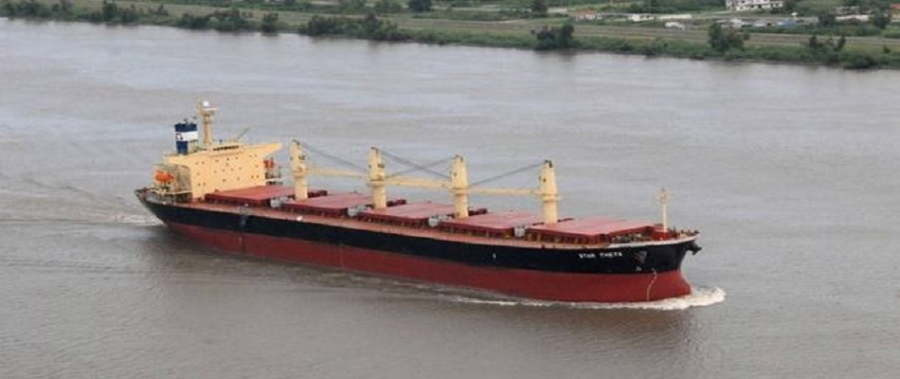
Oaktree Capital Management, L.P. (“Oaktree”), Angelo, Gordon & Co. (“Angelo, Gordon”), Monarch Alternative Capital, LP (“Monarch”) and family members and entities owned and controlled by affiliates of the family of Mr. Petros Pappas, our Chief Executive Officer (the “Pappas Shareholders”), which are four of the Company’s significant shareholders, are expected to purchase approximately 37,250,418 of the common shares in this offering. On an as-adjusted basis, giving effect to this offering and assuming all 29,917,312 common shares comprising the share consideration issued to Excel Maritime Carriers Ltd. (“Excel”), pursuant to the Vessel Purchase Agreement by and among the Company, Excel and Christine Shipco Holdings Corp., dated August 19, 2014, are distributed by Excel to its equity holders, Oaktree, Angelo, Gordon, Monarch the Pappas Shareholders would beneficially own approximately 58.0\%, 5.9\%, 5.9\% and 7.8\%, respectively, of our outstanding common shares (or approximately 57.4\%, 5.8\%, 5.8\% and 7.8\%, respectively, of our outstanding common shares if the underwriters exercise their option in full).
Jefferies LLC and Morgan Stanley & Co. are acting as joint book-running managers for the offering. ABN Amro N.V., Credit Agricole Corporate and Investment Bank, DNB ASA and DVB Bank SE are acting as co-managers for the offering. The underwriters have a 30-day option to purchase up to an additional 1,762,500 common shares.
Source: Star Bulk Carriers Corp.

Powered by  © Μaritimes 2019