


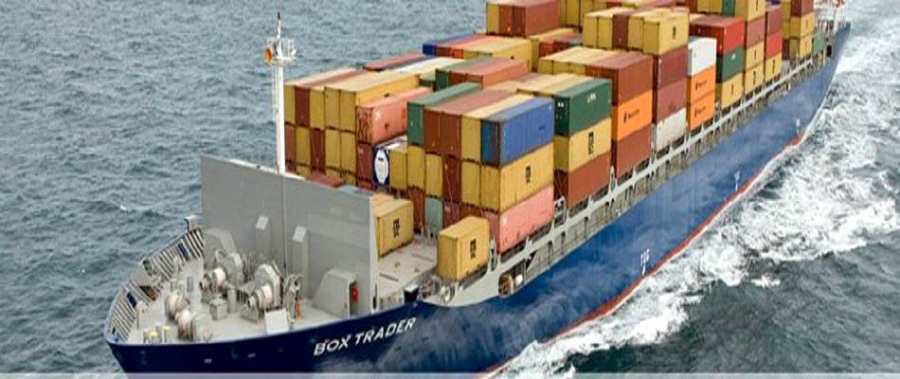
Nowacki buys into Box Ships

Michael Bodouroglou
The Michael Nowacki-led fund has built up 1,830,781shares in the shipowner, an SEC filing showed.
Its 5.9\% stake is worth $1.52m based on the last trade of Box Ships shares on Friday.
Box Ships has a fleet of nine vessels on the water, eight of which are on charters that come up for renewal this year.
The owner finished 2104 by securing relief on a loan headache, curing a covenants breach and agreeing a repayment holiday after making payments upfront.
In a statement Bodouroglou said Box Ships would have enough “liquidity and optionality” to keep its head above water for at least two more years even if the downturn continues.
source:www.tradewindsnews.com
Capt. Panagiotis N. Tsakos Named Connecticut Maritime Association 2015 Commodore
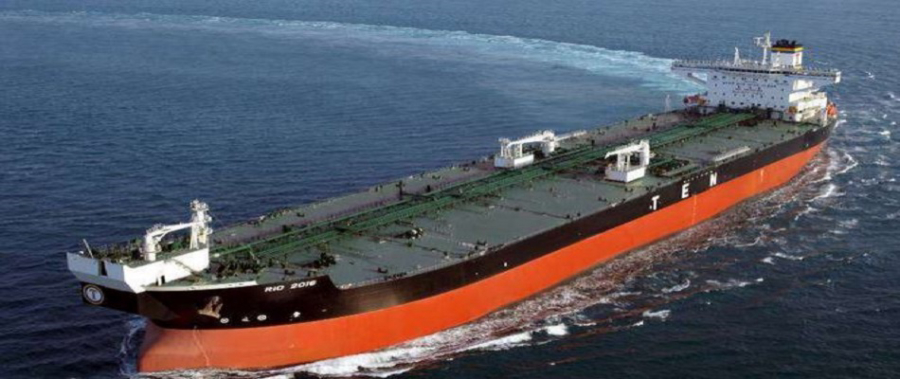
Capt. Tsakos follows a long succession of influential maritime industry leaders as Commodore. The 2015 Commodore Award will be presented on March 25, 2015 at the Gala Dinner marking the conclusion of the annual Connecticut Maritime Association conference and trade exposition, at the Hilton Hotel in Stamford, Connecticut, USA.
The Award is given each year to a person in the international maritime industry who has contributed to the growth and development of the industry. Captain Tsakos has dedicated his life to the sea, to the welfare of the people at sea, to caring for and protecting the environment and building a successful commercial shipping company.
Ian Workman, President of the CMA, upon making the announcement, stated, “ Captain Tsakos represents the finest qualities of service, creativity and commitment to our industry and the seafarers and women and men who safely manage ships and trade the world over. The CMA is honored to present Captain Tsakos with the 2015 Commodore Award. He is a leader we can all admire.”
Former CMA Commodores include: Ole Skaarup, Jacob Stolt-Nielsen, George Livanos, Phil Loree, Thomas Moran, Gregory Hadjieleftheriadis, Helmut Sohmen, Gerhard Kurz, William O’Neil, Richard du Moulin, Per Heidenreich, Marc Saverys, Frank Tsao, Stelios Haji-Ioannou, Peter Georgiopoulos, C. Sean Day, Torben Jensen, Morten Arntzen, John Fredriksen, Capt. Wei Jiafu, Philippe Louis-Dreyfus, Angeliki Frangou, Øivind Lorentzen, III, Peter Evensen and in 2014 Robert Bugbee.
Source: Connecticut Maritime Association
Chinese bank predicts 7.2-percent growth in 2015

The report said uncertainties in the domestic and global situation will continue affecting China’s economy and result in more exports, less investment and stable consumption.
Moderate economic recovery in the United States will help strengthen China’s 2015 exports with faster expansion of about 7 percent.
It said the surplus in commodity and service trade will hit 420 billion U.S. dollars and 195 billion U.S. dollars, respectively, while the actually utilized foreign capital will stand at 125 billion U.S. dollars.
Fixed investment will see slower growth of 14 percent because of overcapacity and stricter supervision of local debt and financing.
New consumption patterns and a booming capital market will ensure a stable growth rate of about 11.8 percent in total retail sales volume by the end of this year.
The bank estimated 13.5-percent growth in new loans year on year to 11 trillion yuan (1.79 trillion U.S. dollars), and the capital market will see total social financing of 3.6 trillion yuan through bonds and stocks.
BOCOM forecast that China’s 2015 GDP growth will slow to around 7.2 percent, but remained cautiously optimistic about development, noting that deepening reforms will improve economic efficiency and bring benefits.
The report also predicted that the country’s consumer prices will not face sharp surges amid prudent monetary policy, but weak domestic demand and overcapacity will continue to drag down the growth of producer prices.
Meanwhile, China’s central bank is likely to announce slight cuts in interest rates and the reserve requirement ratio, said the report.
Source: Xinhua
DSME builds largest container ship
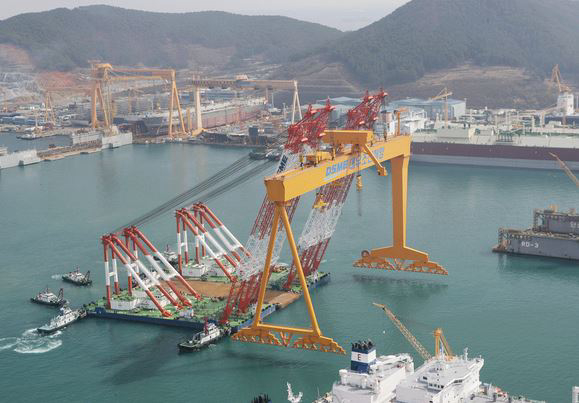
The vessel, MSC Oscar, has a capacity of 19,224 containers, and is the equivalent of four football stadiums in length.
It is the first vessel of the three that China’s Bank of Communications has ordered to charter to Swiss container shipping line Mediterranean Shipping Company (MSC).
“The vessel is equipped with pure dry system that can purify and recycle waste oil produced. It is the most eco-friendly and high-fuel efficient vessel,” said a company official.
Vessels operating costs heavily rely on fuel prices, which account for 60 percent.
Since the shipping industry is grappling with a chronic downturn, it is paying more attention to developing vessels with high-fuel efficiency. The Oscar will run on the Asia-Nothern Europe route from Busan to Shanghai, Rotterdam and Antwerp.
Source: Korea Times
Japan readies record $800 billion 2015-16 budget: sources

The third annual budget since Abe swept to power in late 2012 also highlights his struggle to contain bulging welfare costs for the fast-ageing society while increasing discretionary spending in areas such as the military.
Abe’s 96.3 trillion yen ($813 billion) draft budget for the year from April, to be approved by the Cabinet on Wednesday and submitted to an upcoming session of Parliament, is up from this fiscal year’s initial 95.9 trillion, the two officials told Reuters.
But spending restraint and a surge in tax revenues as the economy recovers allows the government to cut bond issuance by 4.4 trillion yen to 36.9 trillion, the third decrease in a row and the lowest level in six years, the officials said.
The improved fiscal picture helps Abe trim Japan’s public debt, which is well over twice the country’s GDP after years of sluggish growth and huge stimulus spending. The budget for the coming year follows an extra budget of 3.1 trillion yen for this fiscal year, approved last week.
With the budget deficit – excluding new bond sales and debt servicing – projected at roughly 3 percent of gross domestic product for the 2015-16 fiscal year, Abe will meet the government’s promise of halving the debt ratio from 2010-11 levels.
But Finance Ministry calculations show that the goal of balancing the budget by 2020-21 remains ambitious.
Abe raised the national sales tax in April to 8 percent from 5 percent, sending the world’s third-biggest economy into recession. He postponed a second increase, to 10 percent, by 18 months to April 2017, but the economy’s upturn under the premier’s easy-money policies is set to boost tax revenues in the coming year.
The draft budget projects tax revenues rising 4.5 trillion yen to 54.5 trillion yen, the officials said, easing somewhat the need to issue more bonds. Debt will finance about 38 percent of the coming year’s budget, down from this year’s 43 percent.
But as the government continues to run a deficit, debt servicing, interest payments and redemptions, are set to rise about 200 billion yen to 23.5 trillion yen.
Social-welfare spending, such as medical care, is set to rise 1 trillion yen to 31.5 trillion yen.
Source: Reuters (Writing by William Mallard; Editing by Will Waterman)
STEALTHGAS INC. Update on Share Buy Back Program, New Charters and Sale and Lease Back of One Vessel

Share Buy Back Program
Pursuant to its share repurchase program previously announced in November 2014 the Company has, up to today, repurchased 1,075,078 shares of its common stock at an average price of $6.28 per share for a total consideration of $6.8 million.
Saleof Vessel
The Company entered into a sale and leaseback agreement for one vessel in its fleet, the 7,517cbm, built 2001, LPG carrier, Gas Cathar in the fourth quarter of 2014. The proceeds from the sale of the vessel are $14.3 million and net proceeds after debt repayment are approximately $7 million. The Company will continue to operate the vessel and entered into an agreement to bareboat charter back the vessel for four years.
Charter Arrangements for Vessels
The Company also announced the conclusion of the following chartering arrangements:
A one year time charter extension for its 3,434 cbm, 1991 built, LPG carrier, Gas Ice, to an established owner-operator.
A one year time charter for its 5,000 cbm, 2011 built, LPG carrier, Gas Myth, to an European oil major, with a charterer's option to extend for a further two years.
A three month time charter extension for its 3,500 cbm, 2014 built, LPG carrier, Eco Corsair, to an established operator.
A three month time charter for its 5,018 cbm, 1997 built, LPG carrier, Gas Monarch, to an international trading house.
A three month time charter for its 3,500 cbm, 2015 built, LPG carrier, Eco Lucidity, to an international trading house starting with the delivery of the vessel in January 2015.
With these charters, the Company has contracted revenues for its fleet of approximately $220 million. Total voyage days of our fleet are 65 pct covered for 2015 and 31 pct for 2016. Seven vessels are currently operating in the spot market.
Chairman Michael Jolliffe commented
We are excited to start the new year with good news for our company. Firstly we sold another of our middle aged ships at a very firm price and simultaneously we are continuing to buy back our stock at a big discount to NAV! In addition we are very pleased with the new charters announced especially the one for our 24 year old vessel.
About StealthGas Inc.
Headquartered in Athens , Greece , StealthGas Inc. is a ship-owning company primarily serving the liquefied petroleum gas (LPG) sector of the international shipping industry. StealthGas Inc. currently has a fleet of 41 LPG carriers with a total capacity of 194,324 cubic meters (cbm), three M.R. product tankers and one Aframax oil tanker with a total capacity of 255,804 deadweight tons (dwt). The Company has also agreed to operate two more LPG carriers, the Gas Premiership and the Gas Cathar, and to acquire 16 LPG carriers with expected deliveries ranging from 2015 to 2017. Giving effect to the delivery of these acquisitions, and including the Gas Premiership and Gas Cathar, StealthGas Inc.'s LPG fleet will be composed of 59 LPG carriers with a total capacity of 360,000 cubic meters (cbm). StealthGas Inc.'s shares are listed on the NASDAQ Global Select Market and trade under the symbol "GASS".
source:stealthgas
Shipping industry to benefit as oil prices sink
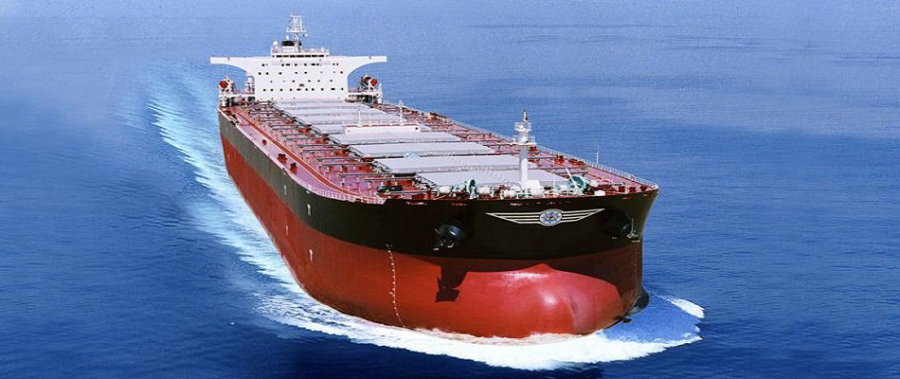
Operation costs of ships have gone down and demand for oil tankers have picked up as some countries like China try to stockpile oil taking advantage of the lower oil prices.
“This is having a positive effect on the shipping industry. We expect profits of companies to go up,” said Per Wistoft, chief executive officer of Dubai-based United Arab Chemical Carriers that operates a big fleet of tankers in the Middle East and the Indian subcontinent.
Oil prices have been sliding for the past few months. From a peak of $115 in June, prices have dropped to around $50 this week. Analysts have predicted the trend to continue till the second quarter of this year.
According to Wistoft, bunkering costs have almost halved since last year and the demand for oil tanker has gone up.
Bunkering costs of very large crude carries also known as super tankers have come down from $40,000 per day to $20,000 per day.
“This has been a substantial help for shipping companies to overcome the cost. Bunkering is one of the major expenses of the shipping companies.”
He predicted floating storage to increase due to low oil prices.
Floating storage is a method by which oil companies hire large vessels to store oil and sell when the price increases.
The capital utilisation to procure oil is much less than before due to falling oil prices, Bounty Marine Services that is involved in bunkering of oil said.
“Buying of diesel has become cheaper due to the market situation. Entire shipping industry is going to benefit,” said Sudai Jallad, the owner of Bounty Marine Services.
He said they used to spend $80,000 for buying 100 tonnes of diesel earlier. “We now get the same quantity for $50,000. It is 40 per cent less.”
Meanwhile, an analyst said China is in an oil buying spree due to lower oil prices but it is unlikely to prop up global oil markets.
“In this time of low oil prices, it comes as no surprise that China is stockpiling fuel,” said Daniel Ang, investment analyst from Phillip Futures.
He added that China is one of the biggest consumers and importers of crude oil, and taking advantage of oil when prices are low is a strategic move.
“However, we see the big uptake of crude oil by China to not be reflective of China’s crude oil demand. These stockpiles would likely remain unused in the short term and thus, giving only an artificial boost on crude demand,” Ang said.
According to shipping consultancy Drewry, container shipping profitability is expected to improve in 2015, despite record vessel deliveries, driven by lower unit costs.
It said more carriers are expected to be profitable in 2015, provided that a number of tailwinds prevail. These include continuing carrier focus on vessel deployment; fuel costs remaining low; recovering demand; successful outcome of annual BCO (Beneficial Cargo Owner) contract negotiations; and new operational alliances delivering greater market stability.
Source: Gulfnews
DryShips Inc. Announces Ocean Rig UDW Inc.’s Agreement With ENI

As part of the contract extension for the Ocean Rig Poseidon, Ocean Rig has agreed to adjust the existing dayrate of the Ocean Rig Poseidon contract in exchange for ENI agreeing to enter into two contracts (the “New ENI Contracts”) for the employment of one or more of Ocean Rig’s available drillships in West Africa starting in the first quarter of 2015 for an aggregate period of approximately 8 months. As a result of this Agreement the total contract backlog of Ocean Rig has increased by approximately $187.0 million. The Agreement outlined above remains subject to customary closing conditions including the approval by national authorities which Ocean Rig expects will be obtained before the end of the first quarter of 2015.
DryShips Inc. is an owner of drybulk carriers and tankers that operate worldwide. Through its majority owned subsidiary, Ocean Rig UDW Inc., DryShips owns and operates 13 offshore ultra deepwater drilling units, comprising of 2 ultra deepwater semisubmersible drilling rigs and 11 ultra deepwater drillships, 1 of which is scheduled to be delivered to Ocean Rig during 2015, 1 of which is scheduled to be delivered to Ocean Rig during 2016 and 2 of which are scheduled to be delivered during 2017. DryShips owns a fleet of 39 drybulk carriers, comprising 13 Capesize, 24 Panamax and 2 Supramax with a combined deadweight tonnage of approximately 4.3 million tons, and 10 tankers, comprising 4 Suezmax and 6 Aframax, with a combined deadweight tonnage of over 1.3 million tons.
Source: DryShips Inc.
Aegean Marine Petroleum To Launch Physical Supply and Marketing Operations in Germany
To support its local German operations, Aegean has assumed the contracts for two modern, double-hull bunkering barges previously under charter to OW Bunker and approximately 20,000 cubic meters of on-shore storage capacity.
The Company has also established a marketing and business development office in Hamburg for the sale and marketing of marine petroleum products throughout the Aegean network and to customers on a worldwide basis.
E. Nikolas Tavlarios, President of Aegean Marine Petroleum Network, commented, “We continue to execute on our strategy to opportunistically enter new markets, strengthen and diversify our operating reach, all while enhancing our ability to service our customers on a worldwide basis. As we embark on a new year we remain confident that we are well positioned to capitalize on several risk-averse opportunities that will allow Aegean to increase the scale and efficiency of its global marine fuel logistics network, grow our customer base and enhance shareholder value.”
Aegean Marine Petroleum Network Inc. is an international marine fuel logistics company that markets and physically supplies refined marine fuel and lubricants to ships in port and at sea. The Company procures product from various sources (such as refineries, oil producers, and traders) and resells it to a diverse group of customers across all major commercial shipping sectors and leading cruise lines. Currently, Aegean has a global presence in 29 markets, including Vancouver, Montreal, Mexico, Jamaica, Trinidad and Tobago, Gibraltar, U.K., Northern Europe, Piraeus, Patras, the United Arab Emirates, Singapore, Morocco, the Antwerp-Rotterdam-Amsterdam (ARA) region, Las Palmas, Tenerife, Panama, Hong Kong, Barcelona, the U.S. East Coast, Los Angeles, Long Beach, Algeciras and the Gulf of Mexico.
Source: Aegean Marine Petroleum Network Inc.
Fulford-Smith builds Affinity with Platou hands
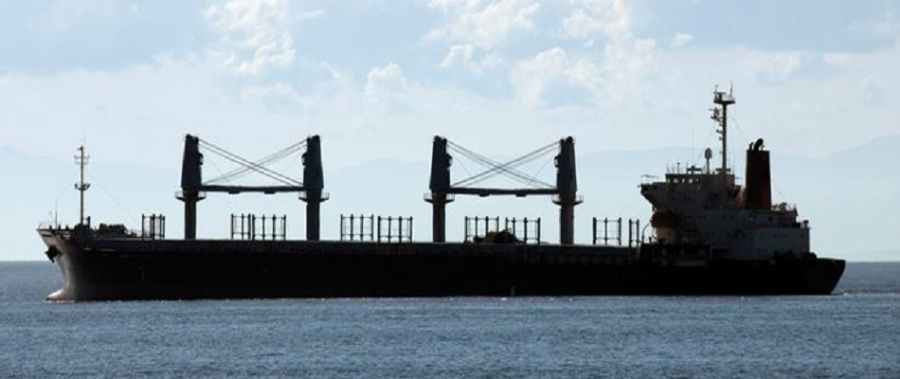
As TradeWinds went to press, Affinity (Shipping) LLP was in the final stages of completing a management buyout of the Norwegian broking shop’s London arm, RS Platou LLP.
The latter circulated an advisory note this week saying: “We appreciate that there has been a certain amount of speculation given recent merger activity, so we would like to take this opportunity to advise that our entire London team will be joining Affinity London.”
Affinity said: “... In addition we will be complemented by a further five offices worldwide, staffed by a team of around 70 in total.”
Fulford-Smith, who left broking giant Clarksons and eventually joined Platou — itself now a takeover target of Clarksons — in 2009, says this year promises “to set the tone for the second half of this decade”.
He describes the dry cargo sector as being “in a complete mess”, the tanker sector as having “some headwinds coming its way”, with the industry generally being up against some “difficult-to-solve geopolitical situations”.
But he adds that Affinity regards itself as being “extremely fortunate”, as 2015 looks set to be “a very interesting” year for shipping.
A temporary new website for Affinity boasts offices for the company in Singapore, Melbourne, Perth, Sydney and Seoul, along with London.
Dry cargo activities are largely concentrated out of Australia and Singapore, while the UK headquarters lists an 11-man sale-and-purchase (S&P) team, an eight-strong tanker team plus four-person newbuilding and LNG outfits. The company says it has “an exciting platform” from which it plans to deliver “an innovative and independent service” to its clients.
Fulford-Smith has explained previously that Affinity (Shipping) will act as a head and trustee company to a raft of sub- and broker-led LLPs based on the company’s different areas of expertise.
These will include a research department that will have an analyst in each team. The company plans to develop an apps-based system to provide live streaming of cargo and term business information to clients.
source:tradewindsnews.com

Powered by  © Μaritimes 2019