



Europe bunker fuel compliance to rise on lower oil price: JBC Energy
Pogl gave two scenarios, one with an oil price of $80/b and a second showing an oil price of $50/b corresponding to the current price level.
March ICE Brent futures were trading below $50/b Monday, near their lowest level in five years, due to growing supplies globally.
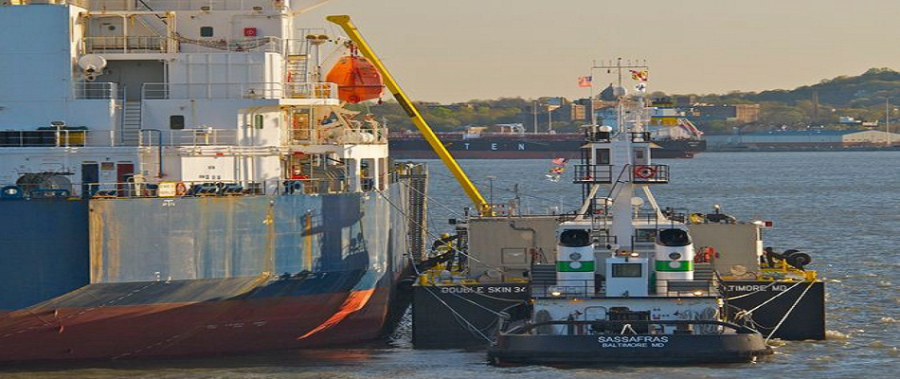
The differential between marine gasoil and high sulfur fuel oil has gone down in recent weeks. Marine gasoil is generally the more expensive product, but a lower oil price has reduced its premium to fuel oil.
Pogl said the lower relative price of marine gasoil made it more likely that European shipowners would switch to using it and therefore comply with Sulfur Emission Control Areas (SECAs), rather than a few months ago when the outright oil price was much higher.
Under the latest International Maritime Organization regulations, since January 1 ships sailing in designated SECA zones, which includes Northwest European waters and coastal US waters, can only burn fuel with a 0.1\% maximum sulfur limit, down from the previous 1\% sulfur cap.
Industry analysts have said in the past fines for non compliance were inadequate in Europe to persuade all shipowners to abide by the new rules.
The SECAs cover several European countries, further complicating the work of authorities in conducting spot checks on vessels.
Source:Platts
LNG Shipping Insight: Another bleak year?
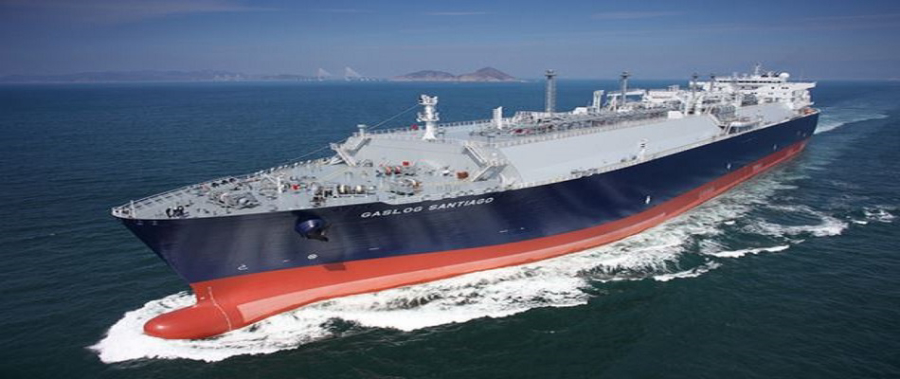
The spot rate for a conventional LNG carrier averaged $50,000pd in 2014, against an average of $98,000 during 2013. The spot rate for modern DFDE vessels averaged $68,000pd in 2014, down from an average of $110,000 pd during 2013. Asian demand, which shot up following the 2011 Fukushima disaster, cooled down in 2014. The weak economic health of Japan, the re-starting of nuclear reactors in South Korea and a preference for coal by power utilities weighed on LNG shipping demand. The year gone by taught an important lesson that LNG is no longer a supply driven market and has to compete with other cheaper fuels (mainly coal) to carve a niche for itself.
In the coming year, when 37 new vessels are expected to join the feet, utilisation rates for LNG vessels are likely to remain under pressure as the demand from Asian countries weakens. The Japanese economy is currently struggling with deflation and high public debt, and although the government is trying to support the economy through aggressive monetary easing and increased public spending, there are no signs of improvement yet. Moreover, the Nuclear Regulation Authority has provisionally approved the safety case for two more reactors. Once all these plants become functional, LNG imports are likely to decline. In South Korea, some nuclear reactors shut during most of 2014 have restarted and are displacing LNG. These plants will further reduce the demand for LNG imports in the coming year. In the same line, Korea Energy Economics Institute has also projected that Korea’s LNG demand and imports will ease after 2015. However there is one bright spot that we could see while entering the new year and that was a fall in oil prices below $50/bbl. If oil prices remain low and LNG prices mirror the same, it might make LNG competitive with other fuels thus create demand for LNG and provide a boost to LNG shipping.
Source: Drewry Maritime Research
China’s shipyards brace for leaner times as oil slump sours rig building spree
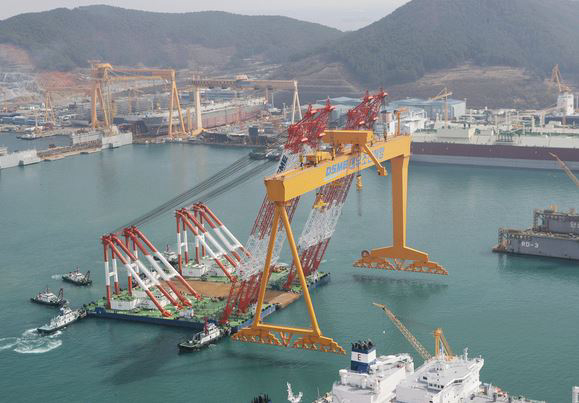
As crude prices slide, oil producers are slashing new project spending. With a near 40 percent slice of a global market worth tens of billions of dollars, Chinese rig builders that offered juicy financing terms and discounts to leapfrog Asian rivals in recent years are now the most exposed to a slowdown.
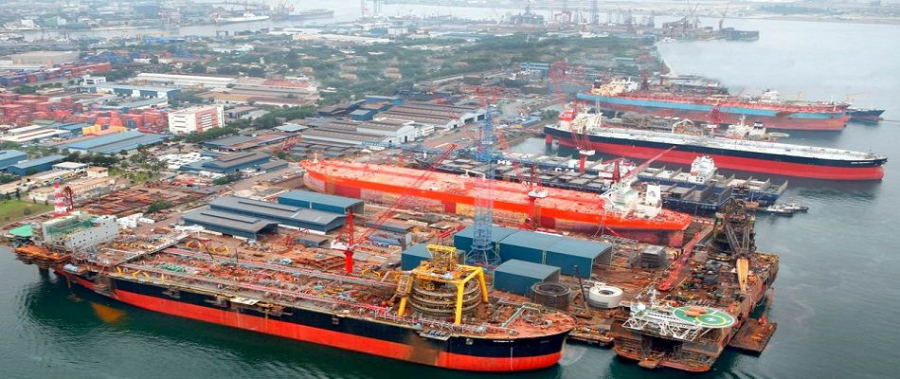
Diversifying to pull out of a downturn in traditional shipbuilding, China’s state and privately owned yards have lured orders away from regional peers, building scores of rigs for down payments of as little at 1 percent. Many haven’t yet been chartered by oil explorers, industry watchers say.
Some in the industry fear that rig builders are now heading toward a slowdown, possibly with cancellations and price cuts, that could persist longer than the oil market’s slump. Even if oil prices recover enough to stoke exploration, an inventory of ready-made rigs will be on hand, delaying new construction.
“Future cancellations will depend on the market going forward and unfortunately we are looking at a real risk for yards in this respect,” said Joachim Skorge, regional head of investment banking in Asia for DNB Market.
Chinese yards are scheduled to supply 37 new ‘jackup’ rigs – used in shallow-water exploration – this year, according to Nomura research, none of which has contracted customers to date. The most widely used drilling platforms, a jackup rig typically carries a price tag of around $200 million.
“We’re having a big headache because there are no orders,” said an official at a large state-backed Chinese shipyard, speaking condition of anonymity. He cited a lack of rig order enquiries for the year 2016 and beyond.
Earlier this month, COSCO Corp (COSC.SI), one of China’s biggest shipyards, said it has decided to terminate building an offshore platform known as Octabuoy after failing to find buyers.
‘MAIN CULPRIT’
China became the world’s biggest offshore drilling rig builder after rapid expansion led by the likes of state-backed yards China Merchants Heavy Industry, Dalian Shipbuilding, a unit of China Shipbuilding Industry Corp , and Shanghai Waigaoqiao, a subsidiary of China CSSC Holdings Ltd . All three yards declined to comment for this story.
But their jackup rig market share gains from traditional powerhouses in Singapore came at a financial cost.
“The Chinese yards are the main culprit (of speculative rig buildup)…Even if crude oil prices are to recover as expected, we expect new-build jackup rig orders to be subdued in 2015″ with considerable inventory of already made rigs available, Nomura analyst Wee Lee Chong said in a report earlier this month.
China Merchants Heavy Industry has the largest number of orders at 14, followed by Dalian Shipbuilding and Shanghai Waigaoqiao, according to data from shipping consultancy Drewry.
By comparison, less than 5 percent of orders at Singapore yards Keppel (KPLM.SI) and Sembcorp Marine (SCMN.SI) are by speculative buyers, according to Oversea-Chinese Banking Corporation. Sembcorp Marine and Keppel declined to comment.
Except for a single order won by Daewoo Shipbuilding & Marine Engineering in 2013, South Korean shipyards make very few jackup rigs, leaving the business for its Chinese and Singaporean rivals. Companies like Samsung Heavy have concentrated on deepwater drillships instead.
Even without competition from South Korea, prospects look bleak in the jackup rig trade.
“Some yards might have to drop their prices by 5-10 percent in order to attract potential buyers in the current market climate,” said Lianghui Xia, a Shanghai-based shipbroker at RS Platou.
Source: Reuters (Additional reporting by SHANGHAI Newsroom and Joyce Lee in SEOUL; Editing by Kenneth Maxwell)
Owners in capesize scrap spree

Dr Anil Sharma, president of GMS.
Some 10 capesizes are being mentioned for disposal and are a various stages in the process, cash buyer GMS said in its weekly report.
“Amidst dire rates and a bloated orderbook the writing has been on the wall for this particular segment for some time now,” the report said.
GMS and shipbroking sources say Meandros Lines has sent the 149,000-dwt Coppersmith (built 1995) for scrap at Pakistan.
A figure of $409 per ldt is placed on the sale, which would mean a $9.07m pay day for the owner.
As TradeWinds has reported, Meandros has been looking to sell the vessel as it prepares for the delivery of a suezmax newbuilding.
Brokers say the removal of a number of capesizes would be positive for the market at a time when earnings have been suck below levels that would cover operating expenses. Scrap as many as possible, one broker quipped.
GMS said potential capesize sales come at a time when scrap prices are already down 20\% and have yet to settle following a flood of cheap Chinese billets into the market.
source:www.tradewindsnews.com
Charger in at Costamare
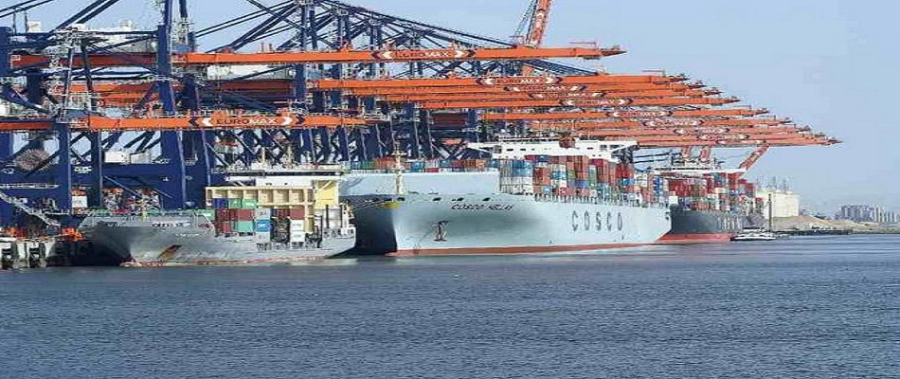

Costis Constantakopoulos, chief executive of Costamare.
First Trust Portfolios and First Trust Advisors are sitting on 4,283,423 share on behalf of investors, an SEC filing showed.
The stock, equal to a 5.73\% slice of Costamare, is worth over $70m based on the last trade of the owner’s shares.
Costamare closed at $16.39 per share in the US Friday, valuing the company at $1.23bn.
On Friday TradeWinds reported that the owner had picked Samsung Heavy Industries for a near $1bn newbuilding order.
Four firm 20,500-teu vessels and two options are believed to be in the works at the South Korean shipbuilder at a price of $155m each.
source:www.tradewindsnews.com
DryShips Inc. Announces Ocean Rig UDW Inc.’s up to $475 Million Committed Bank Financing for the Ocean Rig Apollo

The facility amount is for the lesser of $475 million and 70\% of the fair market value of the drillship. This facility has a 5 year term, and approximate 12 year repayment profile, and bears interest at LIBOR plus a margin. This financing is led by DNB and the lending syndicate consists of DVB Bank and potentially other commercial lenders as well as the Import-Export Bank of Korea (KEXIM).
This agreement is subject to definitive documentation which Ocean Rig expects to complete in the following weeks.
Source: DryShips Inc.
Costamare selects Samsung for $930m boxship deal
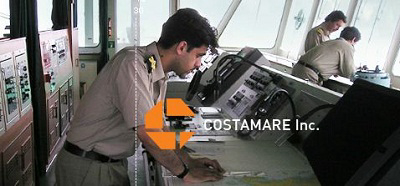
Costamare of Greece is set to strengthen its relationship with Samsung Heavy Industries (SHI) by placing an order for the largest containerships in its history.
 |
Market players say SHI and Hyundai Heavy Industries (HHI) were vying for the 20,500-teu newbuildings but the former won the race after offering a better price.
Costamare is said to be paying $155m each for its four firm newbuildings, with a further two options priced at the same level. Deliveries are scheduled for 2017.
Costamare chief executive Costis Constantakopoulos has booked the vessels on the back of long-term charters to Japanese shipping giant Mitsui OSK Lines (MOL).
Details of the deal have not been disclosed but MOL is said to be looking at 10 to 15 years at rates below $60,000 per day.
Shipbroking sources say it is not clear if the vessels have been ordered by the owner independently or via its venture with private-equity partner, York Capital Management.
Gregory Zikos, chief financial officer of Costamare, which is presently in a quiet period ahead of its fourth-quarter results announcement, declined to comment on the matter when contacted by TradeWinds this week.
Costamare is an existing customer of SHI. It currently has five 14,400-teu newbuildings under construction at the yard. The quintet was placed early last year for delivery in 2016 against long-term charters to Evergreen Marine Corp of Taiwan.
The deal marks the second major boxship order for SHI in quick succession. As TradeWinds reported last week, Quantum Scorpio Box booked three further 19,200-teu units at the yard to take its orderbook to six.
Besides fixing in the Costamare ULCs, MOL is also chartering two vessels of similar size from Shoei Kisen (see story, page 23).
Sources say the Japanese owner has commissioned sister company Imabari Shipbuilding to construct the containerships for delivery in the first half of 2017.
Privately owned Imabari will build a new drydock at its Marugame facility to build them, as reported by TradeWinds last week.
The shipbuilder, which is controlled by the Higaki family, is targeting the emerging market for ULCs that is currently dominated by South Korean yards.
China issues 9.75 million mt of oil export quotas, first lot in 2015
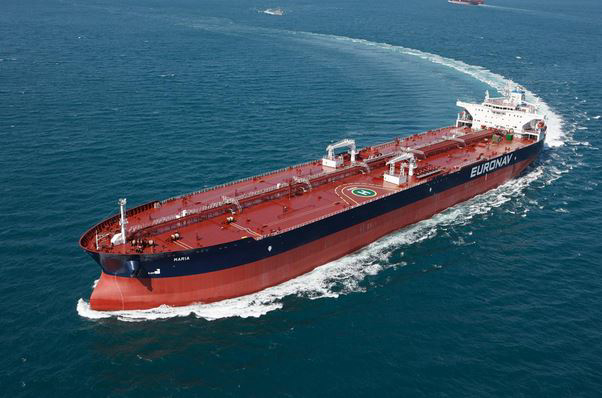
This is significantly more than the roughly 8 million mt of quotas that were awarded in the first quarter of last year.
State-owned companies seek export quotas for some oil products from the government based on their requirements and can also request to have unused volumes from the quota of a particular oil product converted to another product.
Quotas are given out approximately every quarter and unused volumes can be rolled over to the following quarter.
The latest quotas were approved by the Ministry of Commerce and General Administration of Customs late last month, according to sources.
GASOIL QUOTA DROPS
Reflecting a slight improvement in domestic gasoil demand and continued robust domestic production of gasoline and jet fuel/kerosene, the quota for gasoil was the lowest of the three main transport fuels, at 1.36 million mt — 28.4\% lower than the quota awarded in Q1 last year.
This suggests the pace of gasoil exports may not pick up significantly from the fourth quarter of last year, when outflows over October and November averaged 290,000 mt/month. Data for December will be released next week.
The total gasoline export quota of 2.68 million mt was up 22.4\% from the first batch last year while jet/kerosene volumes soared 59.4\% over the same period to 5.61 million mt.
The surge in jet fuel/kerosene quotas likely reflects expectations that the domestic market will continue to be oversupplied, largely because output by refineries is growing at nearly 20\% year on year while demand is rising by roughly 13\%.
China National Petroleum Corp. and Sinopec were each awarded total oil product quotas of 4.8 million mt while China National Oil Corp. received 150,000 mt.
Sinopec only received 350,000 mt of gasoil quota in this round, versus the nearly 1 million mt awarded to CNPC.
This is surprising given that Sinopec’s trading arm Unipec is responsible for the bulk of China’s gasoil exports.
A source close to the matter said that export economics for gasoil are not that favorable so it is unlikely that Chinaoil, CNPC’s trading arm, will utilize all its gasoil export quotas.
GASOLINE EXPORTS MORE ATTRACTIVE
CNPC has received the right to export 2.06 million mt of gasoline, while Sinopec has received an export quota of 600,000 mt.
Export-oriented refinery Dalian West Pacific Petrochemical Corp., which is majority held by CNPC, has received a quota to export 700,000 mt of gasoline, 700,000 mt for jet/kerosene, 200,000 mt for gasoil and 100,000 mt for naphtha.
A source at Wepec noted that it is now more profitable to export gasoline than gasoil, mainly because the export price of gasoline is higher than current domestic prices, but the reverse is true for gasoil.
The refinery expects to export slightly more oil products in the current quarter than in Q4 last year.
This month, it will likely export 100,000 mt of gasoline, 108,000 mt of jet fuel and 40,000 mt of gasoil.
CNOOC, which only started exporting from its 240,000 b/d Huizhou refinery in southern Guangdong province in the second half of last year, received the go-ahead to export 20,000 mt of gasoline, 30,000 mt of gasoil and 100,000 mt of jet/kerosene.
The quotas this year cover 20 refineries.
Besides Huizhou, CNPC’s eight refineries are unchanged from last year while Sinopec has only awarded quotas to 11 refineries instead of 12 — its 280,000 b/d Fujian joint venture refinery with Saudi Aramco and ExxonMobil is no longer on the list of facilities awarded export quotas.
Fujian was awarded 90,000 mt of jet/kerosene export quota last year but did not utilize any volumes.
Source:Platts
Lloyd’s Register: Group Review 2014 highlights positive year
LR has also continued to reduce its total recordable injury incident rate, down to 0.39 per 200,000 worked hours, a 23.5\% reduction on last year’s figure. In the last three years, the number of lost time events has been reduced by 95\%.
CEO, Richard Sadler, says: “I am proud to say that LR, at 254 years old, is still at the leading edge of technology and the review celebrates our technical excellence. The cover shows two of our Marine specialists outside our new Southampton Global Technology Centre (GTC), the cornerstone of our marine research and technology network. Our GTCs in Southampton and Singapore are creating centres of excellence for technology, innovation and research that will benefit our clients, the local economies, industry and society at large.”
In the Group Review 2014, we report a very positive performance over the 2013/14 financial year, exceeding £1 billion in turnover for the first time (turnover was 11.8\% higher at £1.03 billion, which includes the Senergy group from September 2013).
Richard concludes: “LR is unique in terms of the range of skills and expertise that we can offer our clients, and we strongly believe that by leveraging this, we will continue to grow and to maximise our contribution to the Lloyd’s Register Foundation.”
The Lloyd’s Register Foundation has also published its annual review 2014 and the two reports illustrate the developing relationship between the two bodies, both guided by our mission to protect life and property through securing high technical standards of design, manufacture, construction, maintenance, operation and performance and to advance public education.
Source: Lloyd’s Register
Seanergy buys cape


Seanergy CEO Stamatis Tsantanis
The Greek bulker operator said the vessel, acquired from an unaffiliated third party, was built in 2001 at a renowned Japanese shipyard.
Seanergy expects to take delivery of the vessel between mid of the first quarter and early of the second quarter of 2015.
The purchase price of the vessel will be funded by secured senior bank debt as well as financing by one of Seanergy’s major shareholders.
“We have been cautiously monitoring the deterioration of the asset values for the last six months, where certain dry bulk asset values suffered value reduction of more than 20\%, bottoming close to historical lows,” said chief executive Stamatis Tsantanis.
“Taking advantage of these market trends, we decided to proceed with a secondhand vessel acquisition and we are pleased to announce that we entered into an agreement with an unaffiliated third party for the acquisition of a capesize vessel.”
Seanergy also announced that would postpone the acquisition of four capesize bulkers from entities related to members of the Restis family.
“In respect of the announced acquisition of four capesize vessels, due to the significant deterioration of the dry bulk freight market conditions, it was deemed that it would be to the best interests of our shareholders to reevaluate certain terms of the initial agreement of April 2014,” said Tsantanis.
“We have now agreed with the sellers of the four capesize vessels to defer the transaction to a later time in 2015.”
News of Seanergy’s S&P dealings came as the company reported net income of $81.6m in the nine months ended 30 September 2014.
The company said it ended the quarter with about $2.8m in shareholders’ equity, zero debt and $2.9m in cash and cash equivalents.
“Given that a large portion of the overall returns in shipping relate to the timing and price of asset acquisitions, we believe that Seanergy represents today a unique platform and opportunity for growth in the dry bulk space,” said Tsantanis.
“With a clean balance sheet and no contingencies of any sort, we are rebuilding our fleet acquiring vessels close to their historic lows.”
source:tradewindsnews.com

Powered by  © Μaritimes 2019