



Global LNG Bunker Fuel Consumption and Market Revenue to reach 22,540 kilo tons and USD 11,775.4 million by 2025
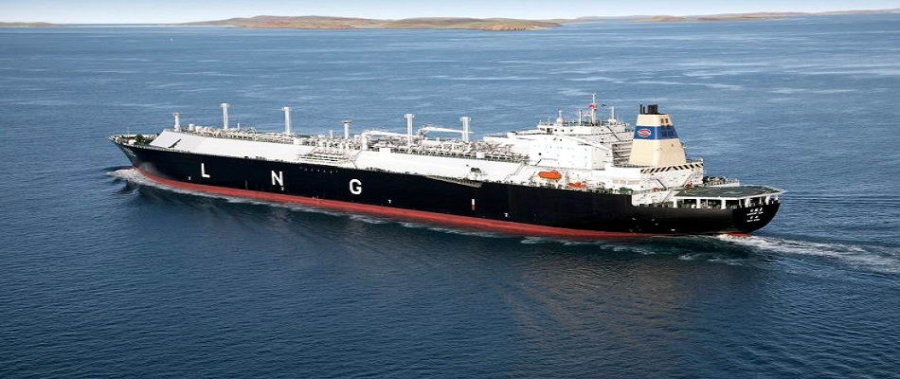
LNG is an attractive bunker fuel option for many shipping companies operating in the Emission Control Areas (ECAs). The price of LNG bunker fuel is significantly lower than any other ECA complaint fuels available in North America and Europe. However, the development of LNG bunkering infrastructure is restricted to a few countries in Northern Europe such as Norway and Sweden. LNG bunkering infrastructure has only developed in ports around the Baltic Sea, North Sea, and English Channel, as shipping companies operating in these areas face stiff sulfur regulations. An anticipated tightening of sulfur emission norms and a widening gap between natural gas prices and other conventional fuels are major drivers for the development of LNG bunkering infrastructure in these regions. Natural gas providers are gradually expected to increase investments in LNG bunkering facilities as several ship owners have taken initiatives to use LNG as a bunker fuel.
Currently, Northern Europe hosts most of the region’s LNG bunkering stations, which are specifically designed to cater to the fueling requirements of inland vessels and large ships docking at ports within ECAs. The initiatives taken by different port authorities and the financial assistance provided by the European Union has led to the development of LNG bunkering facilities around major trading centers in Europe. Low natural gas prices in North America are likely to boost the sales of LNG bunker fuel in the North American ports. In Asia Pacific, countries such as China and South Korea have invested substantially for developing LNG as a bunker fuel. However, no strict sulfur emission regulations are anticipated to be enforced before 2020 in this region. As a result, demand for LNG bunker fuel in Asia Pacific is anticipated to grow from 2020 onwards.
Marine vessels consuming LNG bunker fuel have been broadly segmented into tankers, bulk and general cargo vessels, container ships, and ferries & offshore support vessels. Presently, ferries & offshore support vessels account for the major consumption of LNG bunker fuel globally. Ferries, including passenger ships, spend maximum amount of voyage time within the ECAs. As a result, shipping companies operating these vessels are slowly shifting from conventional engines to LNG fueled vessels. Container vessels and tankers are anticipated to significantly adopt LNG as a marine fuel in the next few years. Rising container traffic in Asia Pacific and Europe is one the factors anticipated to lead to the adoption of LNG as a bunker fuel.
Source: Transparency Market Research
'From HR Metrics to Human Capital Analytics' co organized by SEV and ALBA

On Tuesday December 16th Sev and ALBA Graduate Business School at The American College of Greece organized an event in order to highlight the important role and the necessity of Human Resource Management. The event titled ”From HR Metrics to Human Capital Analytics” was attended by many executives and HR specialists who discussed and learnt about the use of special tools and methods that can contribute to the effective decision making and the application of policies to the most valued asset of modern enterprises, its human resources.

According to SEV, the competitive advantage of the job market is hidden in the knowledge and the application of the modern management methods and not in the cheap costs. That is why SEV is in a very close partnership with ALBA, toaccelerate the development of the suitable tools and methods.
Dean Travlos made a short welcome note saying that ‘research creates knowledge which is transferred from the academic to the enterprise field and turns on the flame that creates the competitive advantage of an enterprise. Greek human resources, which is exquisite, needs to be organized, motivated and also it needs the suitable management tactics in order to be more productive and more creative.’
Later on, Dr. Olga Epitropaki, The Stavros Costopoulos Chair in Human Resource Management and Development, Professor of Organizational Behavior and Human Resources Management, MSc in Strategic HRM Academic Director presented and analyzed the HR Metrics.
The event concluded with a networking workshop where 60 HR executives and specialists exchanged knowledge and expertise on practices and actions in 3 interactive discussion circles.
SEV and ALBA share a strong partnership which is evolving and becoming more robust. A representative example is the 'Women in Leadership' program, a coaching program for women executives initiated by SEV and conducted by ALBA which was realized during the last trimester of 2014 and had a huge receipt from top women executives.
source: ALBA
World’s Largest Traders Use Offshore Supertankers to Store Oil
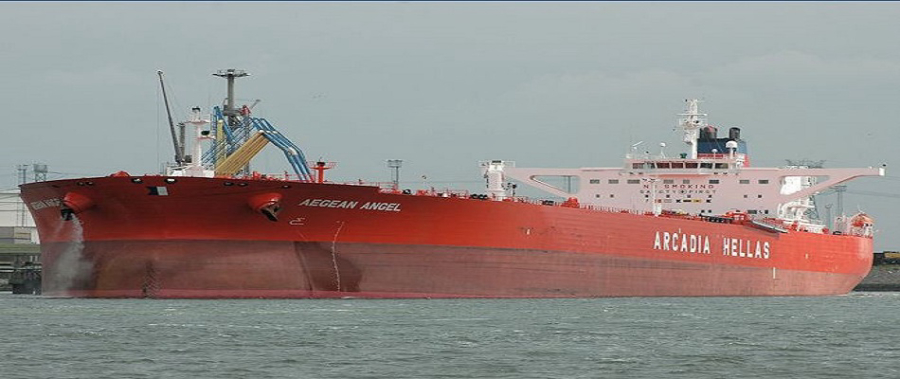
According to shipbrokers and analysts, the 3-million-barrel megaship—one of the largest in the world—is just one example of efforts by traders to turn a profit in the slumping global oil market. The strategy is simple: buy and store oil at cheap prices now, selling futures contracts to lock in the higher oil prices expected later.
“It is one of the easy ways to make money and that’s one of the interesting things about it from a trading perspective: It’s a counter cyclical source of profit for the Vitols and Glencores and Trafiguras,” said Craig Pirrong, a finance professor at the University of Houston, referring to a handful of the biggest oil traders in the world.
According to shipbrokers and analysts, major traders including Vitol SA, Gunvor SA, Trafigura Beheer BV and Koch Supply & Trading Co. Ltd have chartered supertankers capable of storing a combined total of more than 30 million barrels of oil—many of them in the past few weeks. Vitol, Gunvor and Trafigura declined to comment. Koch didn’t respond to requests for comment.
The opportunity to stockpile oil in such large quantities has come from the dramatic shift in the market for the commodity in recent months. Since June, prices have collapsed, tumbling by more than 50\% amid soaring production from the U.S. and unwavering output from the Organization of the Petroleum Exporting Countries, at a time when global economic growth—the main determinant of demand—is slowing.
The oversupply has given rise to a so-called contango in the market, when the current price of a commodity is lower than prices for delivery in the future. That makes it attractive for buyers to purchase oil now at the cheaper rates, store it and strike sales agreements at a higher price in the future, locking in profits.
The price difference between the March and August contracts for Brent crude oil, the international benchmark grade, is currently $6 a barrel. That is the steepest premium since an oil-price slump in 2008 and 2009.
For years, oil trading houses have contended with high prices and low volatility, which have squeezed margins. Firms have responded by investing in infrastructure like oil-storage tanks, terminals and refineries to gain flexibility in trading, as well as better information about what is happening in the market.
Combined with the companies’ access to the physical oil market, these investments have made the trading firms uniquely well-positioned to exploit the shift in the market and store oil for a profit.
Glencore PLC, a Swiss commodity-trading giant, and Trafigura Beheer, one of the world’s largest independent oil traders, have both already highlighted to investors that the market’s dramatic change since June is expected to bolster their profits.
Onshore storage tanks are filling up fast. According to Citigroup Inc., China’s coastline storage facilities ran out of space as the country filled up strategic oil reserves last year. Stocks at the U.S. storage hub at Cushing, Okla., have risen more than 20\% since December, according to Genscape Inc., a data provider based in Kentucky.
That means more unusual storage options, such as the ships, are becoming increasingly popular.
“Because so much oil doesn’t have a home right now, there is a frenzy of traders and companies looking to hire supertankers,” said Halvor Ellefsen, chief executive officer of Galbraiths, a London-based shipbroker .
The last time there was a similar situation, in spring 2009, more than 70 million barrels of oil were stored in tankers, according to shipbrokers.
The current tanker craze may not quite reach those levels, as the disparity between current and futures prices isn’t as steep at the moment. Bank of America Merril Lynch predicts the volume of oil stored on tankers could rise to 55 million barrels by the end of the second quarter.
However, the potentially lucrative storage trade isn’t open to everyone, nor is it risk free. It requires detailed knowledge of the way oil is moved around the world that few outside a tightknit group of oil traders possess. Making a profit depends on numerous factors, including rates for freight and storage and, ultimately, finding a buyer for the crude.
“If people think the contango is some kind of magical way to make money they are incorrect,” said Benoit Lioud, senior research analyst at Mercuria Energy Group, a Swiss-based trading house. “Storing big quantities of crude oil is not an easy game. It’s not a game at all.”
Source: Wall Street Journal
ABS Awards AIP for Next-generation HD12000 Drillship
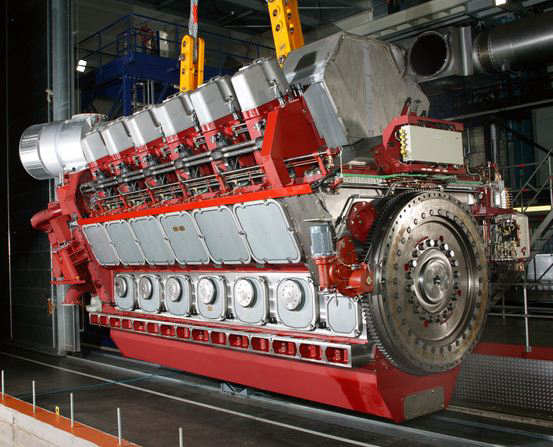
The drillship, which can accommodate a 20,000-psi blowout preventer system, has been designed in full compliance with the ABS Guide for the Classification of Drilling Systems (CDS Guide) and other applicable ABS Rules and industry standards.
The HD12000 drillship will be capable of operating in 12,000 ft (3,658 m) water depth with a drilling depth to 40,000 ft (12,192 m). Featuring an innovative hull form, the design based on HHI’s proprietary technology includes enhanced dynamic positioning (DPS-3) capability through reduced hull resistance and thruster interaction, improved motion performance in maximum roll angle, and reduced wave resistance at field transit conditions.
“Awarding AIP is an important step toward supporting the evolving needs of our clients as we collectively work to enhance safety and efficiency standards,” says ABS Executive Vice President, Energy Development Ken Richardson. “Addressing greater complexity in offshore drilling, the ABS CDS Guide provides a comprehensive approach to classing offshore drilling systems and their associated support systems and equipment.”
“This is an important milestone toward meeting the applicable classification requirements for validating the structural integrity of HHI’s latest generation of drillships,” says Mr. Yun-Sik Lee, Senior Vice President, Initial Design Team at HHI. “Through the award of AIP, the design of HD12000 has been developed and verified with improved versatility and strength, increased deck space, benign motion characteristics and a reduced maintenance profile.”
As part of the basic approval work scope, ABS reviewed the concept design and associated configurations interfacing with the drilling equipment and systems that will be installed on board the drillship.
“It is essential to verify new design concepts by an independent party and it is also desirable to share experiences throughout the collaboration process that can improve on the design early on,” adds Mr. Yun-Sik Lee, Senior Vice President. “AIP provides HHI and the future owner with the additional confidence to carry out this innovative design and improve drilling efficiencies.”
ABS was the first to provide classification services to the offshore and energy industry in 1958 and continues to support the development and application of innovative floating concepts around the globe.
Source: ABS
All eyes on GLNG
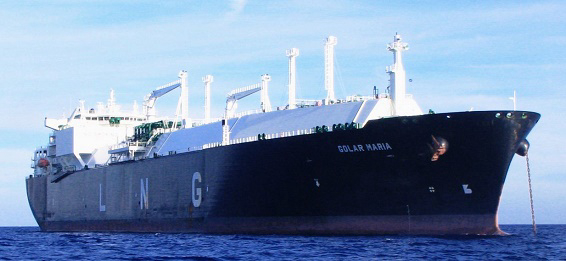
In a client briefing an analyst at Wells Fargo Securities argued that the deals are a positive development but not a game changer.
Michael Webber pointed out that LNG carriers are no longer the “primary driver” for Golar, which trades on Nasdaq under the ticker “GLNG”.
“While LNG carriers are no longer the primary driver for the GLNG story (it's now a FLNG concept stock) a deal like this isn't as meaningful as it once was for GLNG, particularly since the carriers are financed,” the forecaster wrote.
It’s unclear how much the 160,000-cbmGolar FrostandGolar Crystal(both built 2014) fetched but the analyst does believe the deal will boost Golar’s bottom line.
“While the actual charter rate was not disclosed, relative to our conservative numbers, we believe the cash flow impact will likely be accretive,” Webber added.
On Tuesday an equity analyst at Clarkson Capital Markets, Omar Nokta, noted the freshly minted fixtures represent the first term contracts that Golar has secured for its current newbuilding programme.
“Although the terms are for just one year, they do provide some extended visibility compared to the choppy earnings profile in recent quarters,” he continued in a weekly market briefing.
Golar made TradeWinds headlines late last week when it chartered the Golar Frost and Golar Crystal to Nigeria LNG for approximately one year.
The day rate was not disclosed but Nokta believes the duo are poised to earn roughly $67,000 daily a piece, which is slightly lower than Webber’s initial estimate.
On Monday the operator made waves again when it announced the resignation of chief executive Doug Arnell, who will be succeeded by industry veteran Gary Smith.
Today, Webber argued that the impact of the change will be minor since Smith has been in the business for 35 years and presided over Golar during the financial crisis.
He also pointed out that Smith oversaw the conversion of two LNG carriers into floating storage and regasification units that were chartered to Petrobras.
source:www.tradewindsnews.com
S.Korea: Shipbuilders Seeking Different Survival Strategies in Offshore Plant Industry
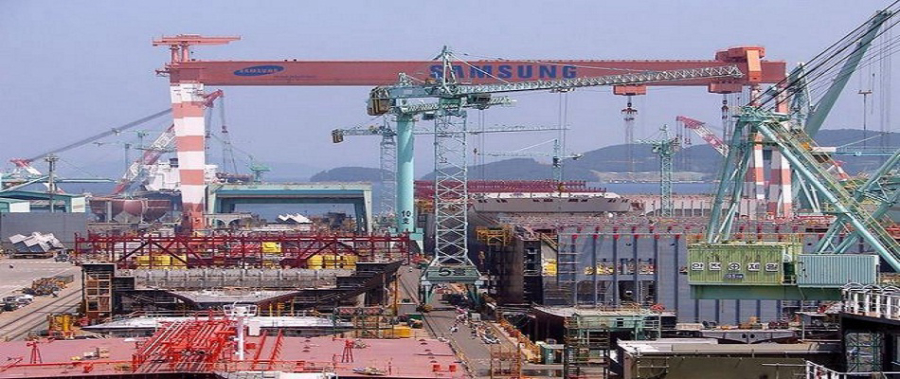
Specifically, Hyundai Heavy Industries and Daewoo Shipbuilding & Marine Engineering are planning to cut back, whereas Samsung Heavy Industries is trying to cope with the situation by means of aggressive expansion.
Samsung Heavy Industries is planning to win back the first place in the industry this year. It is aiming to win orders worth at least US$15 billion this year and attain at least US$7 billion of it in the offshore plant sector.
Meanwhile, Hyundai Heavy Industries, which is the global number one now, recently decided to let1,500 office workers go and combined the plant business unit with the ocean business unit. Hyundai Heavy Industries president Kwon Oh-kap mentioned a business goal of US$23 billion earlier this year, which is 22 percent less than the previous year’s goal. It is said that most of the decrement will pertain to its offshore plant business.
Daewoo Shipbuilding & Marine Engineering, which was the only one of the big three that succeeded in meeting the annual business target for last year, had to see its performance in the offshore plant sector limited to just 18 percent, or US$2.7 billion, of the total orders obtained. Also, its business strategies for this year revolve around LNG carriers, meaning a performance improvement in the sector will be less likely. Still, the company is going to accelerate technological development in this field by means of partnerships with foreign offshore plant design firms.
Source: Business Korea
Onassis in second VL score

Statue of Aristotle Onassis at Nydri, Lefkada
Repsol is said to have hired the 317,000-dwt Olympic Light (built 2011) on a 13 to 15 month deal placed at $48,500 daily.
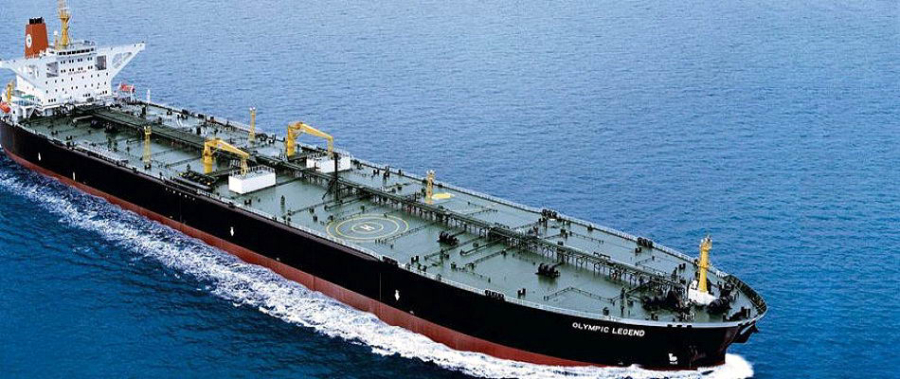
It follows just a week after Shell’s fixture of the 309,270-dwt Olympic Legend (built 2003) for a two-year period at $39,000 per day, as reported by TradeWinds on Friday.
Onassis bought the Olympic Light as Fortune Elephant last summer as the fleet of TMT was auctioned off. It paid $78.1m for the ship.
Ben Nolan of Stifel says around 24 VLCCs have now been fixed on potential storage contracts as traders look to play contango in the oil price.
“As more of the fleet is contracted on period charters, the crude tanker supply/demand balance should tighten well into 2015,” Nolan said in his weekly report.
“However, we do believe that the potential unwinding of slow steaming could offset this impact resulting in a rate ceiling.”
Analysts at RS Platou Markets saw the situation slightly differently.
“That speed is currently increasing is a good thing because it just means rates are high,” its analysts said yesterday.
“Unlike marathon runners, shipping is not a race for speed but a competition to generate the highest possible earnings during its voyage.”
source:www.tradewindsnews.com
Euronav sights $185m from IPO
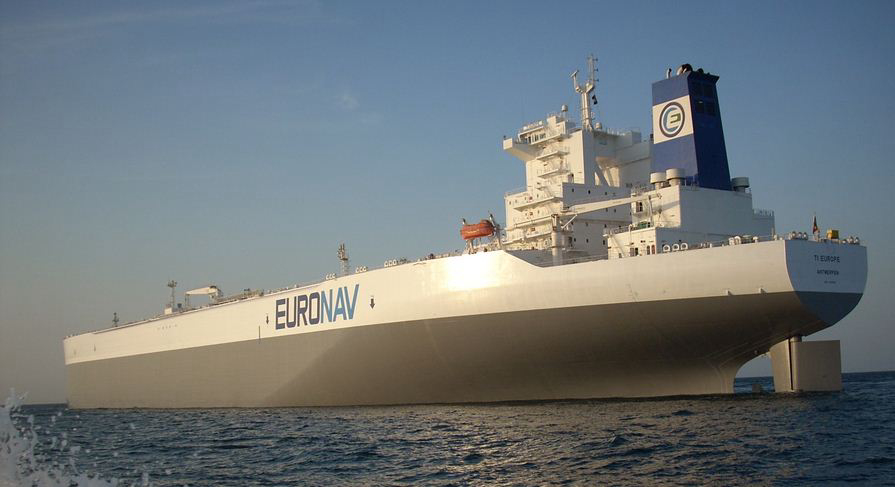

Paddy Rodgers, chief executive of Euronav
Paddy Rodgers-led Euronav has set its sights on proceeds of $160.5m from the offering of 13,550,000 ordinary shares.
Its purse will hit $185.1m should underwriters take up their options.
Its figures are based on a price of $12.94 per share, a number which stems from the value of its shares which trade on the Euronext Brussels.
Funds from the IPO will be diverted both to repay debt and continue an ambitious fleet growth plan which started a year ago with a $980m move for 15 VLCCs.
Deutsche Bank, Citigroup, J.P. Morgan Securities and Morgan Stanley are acting as joint book-running managers.
DNB Markets, Skandinaviska Enskilda Banken and Evercore Group are acting as senior managers, while ABN Amro Securities, Scotia Capital, Clarkson Capital Markets and KBC Securities are involved as co-managers.
Tankers to stay strong
Euronav’s move comes with VLCCs enjoying the best start to a year since the financial crisis struck in 2008 and only a few months after it delayed the listing due to stock market turbulance.
"We believe that crude oil tanker rates should remain strong in the coming months due to positive seasonal demand factors and improving underlying supply/demand fundamentals," its updated IPO prospectus said.
It is taking a fleet of 52 vessels to the New York Stock Exchange, including 26 VLCCs, 23 suezmaxes and two FSOs.
Euronav says 25 of its vessels trade in the Tankers International pool, in which it holds a 41.1\% stake.
A further 14 trade directly in the spot market, and 11 are on time charters with an average of 13.6 months to run. Its FSOs are on long-term contracts.
Euronav reveals the IPO will the cut the holding of chairman Peter Livanos from 14.5\% to 12\% despite his 19,003,509 shares remaining unchanged,
Marc Saverys will own 10.7\% with an increased 17,026,896 shares to his name.
York Capital will remain the largest independent shareholder with a reduced 7.6\% slice, while Blue Mountain Capital and Golden Tree Asset Management will have 5.6\% and 6\% respectively.
source:www.tradewindsnews.com
Seanergy Maritime Holdings Corp. Reports Financial Results and Announces Acquistion of a Secondhand Capesize

Third Quarter 2014 Highlights:
Indebtedness of $NIL
Total shareholder’s equity of $2.80 million
Equity contribution of $0.96 million in September of 2014 by certain of our major shareholders
Subsequent Corporate Developments:
Agreement to acquire a 2001 built Capesize vessel from an unaffiliated third party
Arrangement to fund part of Capesize acquisition price by one of the Company’s major shareholders
Equity contribution of $1.11 million in December of 2014 by one of the Company’s major shareholders
Deferral of the previously announced deal of four Capesize vessels
Management Discussion:
Stamatis Tsantanis, the Company’s Chairman & Chief Executive Officer, stated:
“Since the successful completion of the Company’s financial restructuring in March 2014, we have worked towards rebuilding the Company’s fleet so we can initiate the positive cash-flow generation that will deliver value to our shareholders.
“Regarding our immediate expansion plans we have been cautiously monitoring the deterioration of the asset values for the last six months, where certain dry bulk asset values suffered value reduction of more than 20\%, bottoming close to historical lows. Taking advantage of these market trends, we decided to proceed with a secondhand vessel acquisition and we are pleased to announce that we entered into an agreement with an unaffiliated third party for the acquisition of a Capesize vessel.
“The vessel was built in 2001 at a renowned Japanese shipyard and is expected to be delivered to the Company between mid of the first quarter and early of the second quarter of 2015. The gross purchase price of the vessel, which is $17.3 million, will be funded by secured senior bank debt as well as financing by one of the Company’s major shareholders.
“In respect of the announced acquisition of four Capesize vessels, due to the significant deterioration of the dry bulk freight market conditions, it was deemed that it would be to the best interests of our shareholders to reevaluate certain terms of the initial agreement of April 2014. We have now agreed with the sellers of the four Capesize vessels to defer the transaction to a later time in 2015. Continued discussions could lead to changes in the transaction, subject to certain conditions and sellers’ third party required consents.
“At the same time, certain of our major shareholders have showed their continued commitment to Seanergy’s prospects and plans and made a cash contribution of $0.96 million in exchange for new shares in order to support the Company’s equity for the period ended September 30, 2014. In addition, one of our major shareholders contributed another $1.11 million on December 30, 2014 which will allow us to execute on our business plan.
“Turning to the financial results, in the nine months ended September 30, 2014, Seanergy reported net income of $81.6 million, which includes a non-cash restructuring gain that took place in the first quarter of the year. The Company ended the third quarter of 2014 with approximately $2.8 million in shareholders’ equity, zero debt and $2.9 million in cash and cash equivalents.
“Given that a large portion of the overall returns in shipping relate to the timing and price of asset acquisitions, we believe that Seanergy represents today a unique platform and opportunity for growth in the dry bulk space. With a clean balance sheet and no contingencies of any sort, we are rebuilding our fleet acquiring vessels close to their historic lows.”
Third Quarter 2014 Developments:
2014 Annual General Meeting
The annual general meeting of shareholders was held on Tuesday, September 16, 2014 at the Company’s executive offices. At the meeting the following proposals were approved and adopted: 1) the election of Ms. Christina Anagnostara, as Class B Director to serve until the 2017 Annual Meeting of Shareholders, 2) the appointment of Ernst & Young (Hellas) Certified Auditors Accountants S.A. as the Company’s Independent Registered Public Accounting Firm for the fiscal year ending December 31, 2014, and 3) the approval of a reverse stock split of the Company’s issued and outstanding common stock by a ratio of not less than one-for-two and not more than one-for-fifteen with the exact ratio to be set at a whole number within this range to be determined by the Company’s Board of Directors in its discretion and the approval of the related amendment to the Company’s Amended and Restated Articles of Incorporation. Following the approval the Board of Directors has the authority to effect the stock split at any time at any of the approved split ratios within the range.
Equity Contribution by Major Shareholders
On September 30, 2014, certain of the Company’s existing major shareholders contributed the amount of $0.96 million in exchange for 1,600,000 common shares. The purchasers also received customary registration rights in respect of the shares issued in the transaction. The transaction was approved by an independent committee of the Company’s Board of Directors, which obtained a fairness opinion from an independent financial firm for this transaction.
Subsequent Developments:
Strategic Agreement for the Contribution of Four Capesize Vessels
The closing of the previously announced agreement for the contribution of four Capesize vessels to Seanergy has been extended to June 30, 2015. Continued discussions could lead to changes in the transaction which remains subject to certain conditions and sellers’ third party consents.
Funding Arrangement by One of the Company’s Major Shareholders
On December 17, 2014 a company affiliated with one of the Company’s major shareholders entered into a letter of intent with the Company to provide financing in an aggregate amount of up to $8.5 million to the Company for the purpose of partly funding the acquisition of a second hand Capesize vessel and general corporate purposes. This transaction has been also approved by an independent committee of the Company’s Board of Directors, which obtained a fairness opinion from an independent financial firm. This transaction is subject to final documentation expected to be entered into by the affiliated entity and the Company by January 31, 2015.
Acquisition of a 2001 built Capesize vessel
On December 23, 2014 the Company entered into an agreement for the purchase of a second hand Capesize vessel for a gross purchase price of $17.3 million. The acquisition will be funded by secured senior bank debt, as well as financing by one of the Company’s major shareholders. The transaction has been approved by the Board of Directors and the delivery of the vessel is subject to standard closing documentation and is expected to take place between mid-February 2015 and mid-April 2015.
Source: Seanergy Maritime Holdings Corp.
Offshore Drilling Contractors Facing Uncertainty
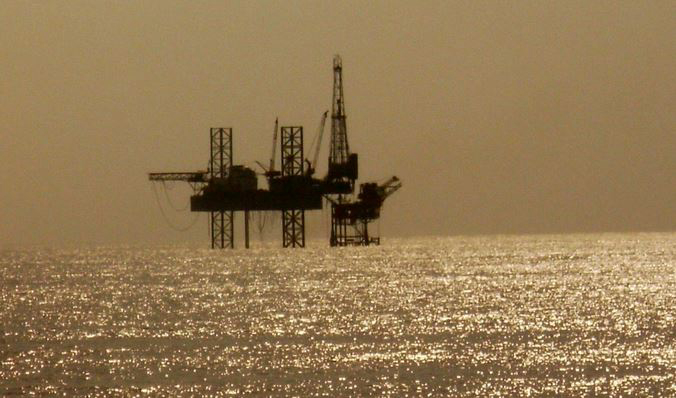
While these sharp falls in share prices reflect similar trends across the oil and gas industry, the number of active ultra-deep water rigs have remained high with 171 units contracted versus 175 units last January. Dayrates have also increased slightly from an average of $470,000 to $485,465, though this is largely a result of contracts signed before the fall in oil prices.
Concerns about drilling contractors’ backlogs and their ability to put their most expensive assets to use are well founded with operators announcing decreases in capital expenditure. However, based on Douglas-Westwood’s offshore drilling forecast, there are still plenty of wells to be drilled if the 2015 oil prices average between $50-70bbl. Total wells drilled could be expected to increase by 17\% by 2020 with deepwater wells growing at 32\%, despite the current price environment.
A fundamental issue is not only a lack of demand, but one of the industry’s own making. The recent build cycle has resulted in a sharp growth in supply that will need time to be absorbed by expected long-term growth in demand. Like other subsectors of the offshore marine industry such as offshore vessels and production assets, supply not just demand will determine the future direction of the offshore drilling market.
Source: Douglas-Westwood

Powered by  © Μaritimes 2019