


Economou’s kitchen
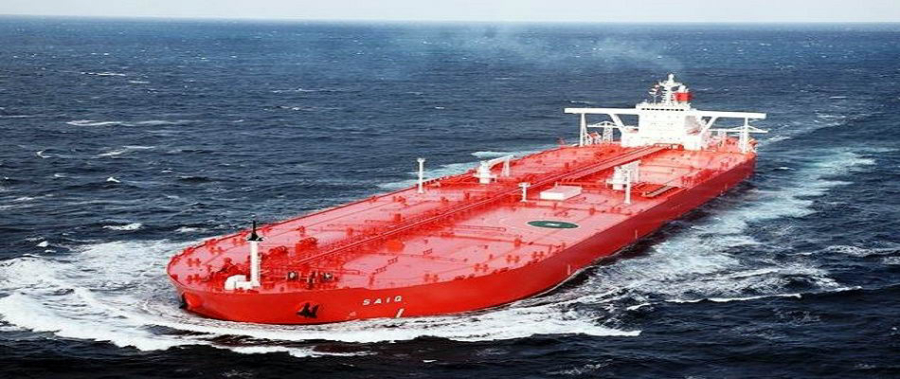

In addition to Tankships George Economou is the chairman and chief executive of DryShips and Ocean Rig.
The company, Tankships Investment Holdings, is looking to rake in up to $100m from a share sale that will set the stage for a Nasdaq listing.
The DryShips spin-off, which currently controls four suezmaxes and six aframaxes, intends to apply a portion of the proceeds towards the acquisition of three 157,000-dwt tankers from affiliates of Economou and his former wife.
When pressed for an opinion about the Greek shipping magnate’s latest foray into the capital markets the reaction from industry observers was mixed.
A number of brokers argued that the $209m price tag tied to the suezmaxes that Tankships intends to acquire represents a premium of approximately $10m, a claim that is supported by valuations calculated by the VesselsValue.com portal.
Fees fan debate
Critics feel the fees that Tankships must pay to its chief executive’s private shipping interests are high as well but advocates believe they are in line with the current industry average.
Opponents are also concerned that dealings with Economou’s affiliates could create conflicts of interest, a possibility that the company identified as a risk in its most recent prospectus.
If Tankships purchases newbuildings TMS Tankers (TMS) will be able to collect a “construction supervisory fee” that amounts to 10\% of the budgeted supervision cost.
The same company is entitled to a “daily management fee” that works out to more than $2,000 per vessel per day, “discretionary incentive fee” and 1.25\% commission on charter hire agreements.
When TMS arranges sale-and-purchase deals Tankships has agreed to pay a 1\% commission that will be based on the price of the asset that changes hands, according to yesterday’s prospectus.
In addition, Cardiff Tankers, another Economou affiliate, is poised to collect a 1.25\% commission on charter hire earned by all of the new venture’s vessels.
Vivid Finance, which is controlled by the shipping mogul as well, is one of the few entities that isn’t entitled to any fees since it agreed to provide consulting services related to the sourcing of cash at no charge to Tankships.
Going concern
The same individuals who expressed concerns about fees claim they were rattled when they read about a working capital deficit that has, in the words of the IPO hopeful’s auditor, “raised substantial doubt about [its] ability to continue as a going concern”.
They also noted that Tankships warned investors who plan to participate in the offering, which is backed by DNB Markets, that they will suffer what the prospectus described as “substantial dilution”.
“The initial public offering price per common share will be substantially higher than our pro forma net tangible book value per share immediately after this offering,” the operator wrote.
“As a result, you will pay a price per common share that substantially exceeds the per share book value of our tangible assets after subtracting our liabilities.
“In addition, you will pay more for your common shares than the amounts paid by our existing shareholders.”
According to regulatory filings the historical net tangible book value of Tankships was $351.2m as of 30 September 2014. At that same point in time it said indebtedness stood at $277.5m.
Timing is everything
While the company’s IPO has captivated the masses advocates are quick to point out that Economou has been planning to spin-off some of DryShips’ tankers for some time.
Critics see Tankships as what one described as “another cash cow” for Economou but some his fans, when asked if they agreed with this statement, argued that the listing will benefit DryShips and its investors.
As the parent of a subsidiary that owns the IPO hopeful’s shares they believe the float is an effective way of monetizing the Nasdaq-quoted operator’s exposure to the crude segment.
A handful of investors who frequent a DryShips chatboard hosted by Yahoo Finance agree with this, others think it would make more sense to hold on to tonnage bequeathed to Tankships.
Several said they will be sad to see the tankers go since the forecast for the dry-bulk market is looking increasingly grim and freight rates for crude carriers are on the rise.
At a glance the initial reaction to Tankships’ pursuit of a Times Square listing appears to be lukewarm but observers on both sides of the debate agree that the timing of the endeavour makes sense.
“The success of Euronav’s offering, which was oversubscribed, coupled with the encouraging outlook for the tanker sector, there’s no question that the timing makes sense,” said one observer.
“It’ll be interesting to see how the market responds, however,” he continued. “I think this is less of a question about Wall Street’s appetite for tanker exposure, which seems to be increasingly big, and more a question about whether investors trust Economou.”
Another contact with ties to the US capital markets argued that, regardless of what people think about Economou, the mogul has had a great deal of success in raising money on Wall Street and boasts an impressive empire.
“Some people love Economou, some don’t, but what is undeniable is that the guy has a knack for raising cash, a fact that Tankships identifies as a ‘competitive strength’ in its prospectus,” he continued.
“Regardless of what you think of the guy it’s important to note that he has been able to keep DryShips afloat.
"Last time I checked the stock was around a buck but he kept DRYS alive during a time that a number of peers left investors holding the bag by filing for bankruptcy.”
You read the most recent edition of Tankships’ IPO prospectus in full by clicking on the link located under the Related Media section to the right of this article
source:www.tradewindsnews.com
Apollo lifts Baltic stake
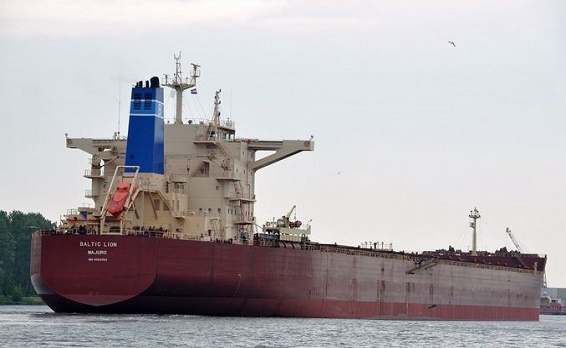
The US hedge fund said it has acquired a further 376,234 shares in the US-listed shipowner paying an average of $1.789 per share.
The filing to the US Securities and Exchange Commission (SEC) said Apollo now controls over 7m shares, or over 10\% of the company.
Baltic boasts a fleet of 17 bulkers, including four newbuildings, but was recently reported to be looking to exit the capesize sector.
Its 179,200-dwt Baltic Lion (built 2012) and Baltic Tiger (built 2011) have been circulated by sale and purchase brokers in Europe.
Baltic bought the ships as K Global Pride and K Happiness in late 2013 via an en bloc deal with SK Shipping at above today’s market level.
Shares in Baltic are down nearly 80\% over the last nine months. The shares closed in New York on Monday at $1.71 each.
Apollo, the hedge fund fronted by Leon Black, Joshua Harris and Marc Rowan, has strong shipping links with other shipowners.
It has a joint venture with German owner Rickmers, is a partner in Jones Act owner Philly Tankers, backed by Kristian Rokke, and an investor in Principal Maritime among others.
source:www.tradewindsnews.com
Chinese premier congratulates inauguration of COSCO pier expansion project in Greece
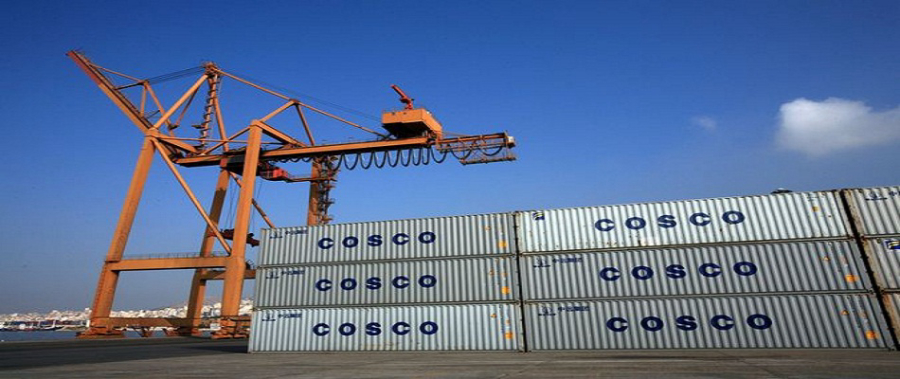
BEIJING, Jan. 23 (Xinhua) -- Chinese Premier Li Keqiang on Thursday congratulated the inauguration of the project of expansion of Pier III of the COSCO Container Terminal at the Greek port of Piraeus, saying it is a paradigm of mutually beneficial cooperation between China and Greece.
Currently, China and Greece have seen a comprehensive and rapid development in their relations, and mutual political trust between the two countries are increasingly firm, Li said in his congratulatory message for the inauguration of the expansion project involving the China Ocean Shipping (Group) Company (COSCO).
Pragmatic cooperation between China and Greece is unceasingly reaping achievements, among which the mutually beneficial and win-win cooperation between the two countries at the Piraeus port is in the interest of the two peoples, said Li.
The Chinese premier expressed the hope that the two sides could join hands to build the Piraeus port into a first-rate port and important pivot in the Mediterranean Sea region, thus to speed up the construction of the China-Europe Land-Sea Express Line to constantly advance pragmatic cooperation between the two countries and bring more benefits to the two countries and the two peoples.
At the groundbreaking ceremony of the expansion project, Greek Prime Minister Antonis Samaras said that COSCO's investment in the Piraeus port has become a successful example for Creece to attract foreign investment.
Since 2008, the Piraeus port has grown rapidly and turned into the fastest-growing container port in the world as well as the most dynamic port in Europe, which has vigorously boosted Creece's economic development and created numerous jobs, said Samaras.
The Creek prime minister wishes the port would make greater success.
The Piraeus Container Terminal (PCT), a subsidiary of Chinese shipping giant COSCO, launched operations in Greece at Pier II in 2009, with a plan to turn Piraeus port into a leading container terminal in the Mediterranean Sea region, and ever since has also built Pier III and posted remarkable results.
Commercial traffic through the port has multiplied by eight times since COSCO's arrival. Piraeus was the fastest-growing port worldwide in 2012 and 2013 and the fastest-growing in Europe in 2014.
Pier III became operational in July 2013. The expansion of Pier III ,which was signed a few months ago between PCT and Piraeus Port Authority (OLP), opens the way for the construction of a new Oil Product Pier.
source:XINHUA
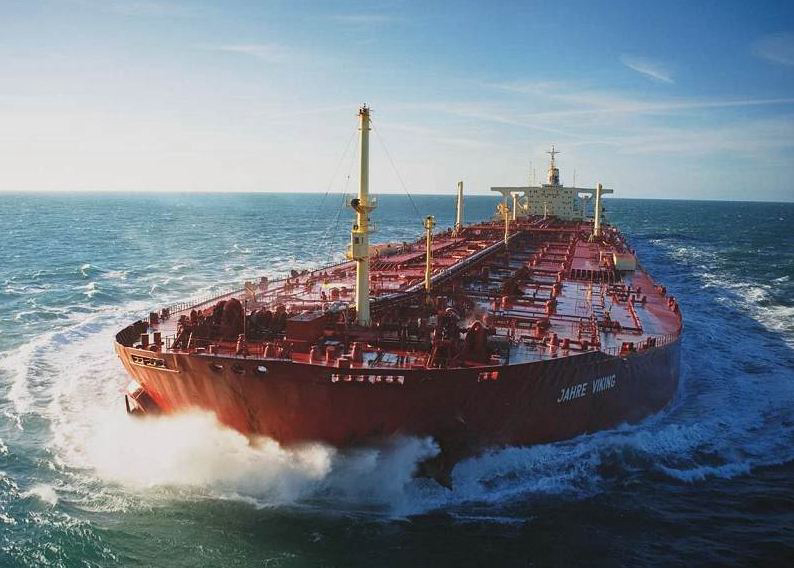
Economou flips drillship for tankers at Samsung
 |
Brokers say Economou has swapped one of his Nasdaq-listed Ocean Rig’s drillships for the clutch of tankers.
Efforts by TradeWinds to contact the Greek owner were unsuccessful. SHI officials decline to comment on the orders.
Ocean Rig is due to take delivery of the first drillship — the Ocean Rig Apollo — shortly and a second — the Ocean Rig Santorini — in 2016. The former will be undertake drilling work for Total in the Republic of Congo for three years, while the Ocean Rig Santorini has not found employment.
The remaining two units should be delivered during the first half of 2017.
Market players have cast doubt on Economou’s ability to convert the drillship order into tankers as the price gap between offshore vessels and conventional ships is so huge.
The latter two drillships at SHI are advanced, seventh-generation ultra-deepwater (UDW) units that stock-exchange filings list as costing $728m each — which is well below the total $470m estimated cost of the combined tanker newbuildings. But brokers have suggested that Economou has also pencilled in a string of options for both types of vessel at the yard, which could go further towards covering the drillship contract.
In China, there are also whispers in broking circles that Cardiff is in talks with yards there to convert some of its newcastlemax bulker newbuildings into long-range-two (LR2) tankers. But one market expert thinks the likelihood of this is slim, as the orders were placed some time ago yards would already have procured the materials needed for the bulkers.
Cardiff is listed by London broker Clarksons as having six newcastlemaxes on order at Yangzijiang Shipbuilding and four at Shanghai Waigaoqiao Shipbuilding (SWS). The 208,000-dwt vessels are scheduled for delivery between this year and 2016.
In December, Economou sold six suezmaxes en bloc to Teekay spin-off Tanker Investments Ltd (TIL). The Oslo-listed outfit was reported to have paid $315m for the Kamari, Toska, Taipan, Vadela (all built in 2009), Matala and Karakare (built in 2010). All were built at China Rongsheng Heavy Industries.
source:www.tradewindsnews.com
Chinese, Greek PMs hail port expansion project
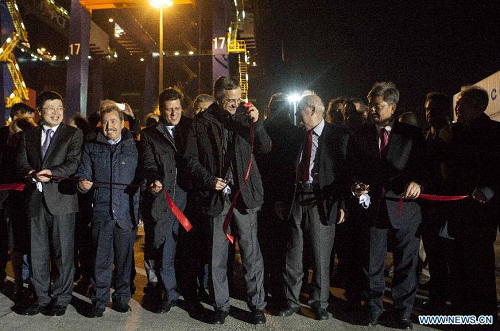
At a ground-breaking ceremony on Thursday for the expansion of Pier III, Samaras thanked China's trust in and commitment to Piraeus and Greece as a whole and wished for more Chinese investment in his country.
Greek Prime Minister Antonis Samaras (C) and Chinese Ambassador to Greece Zou Xiaoli (1st L) cut the ribbon during the starting ceremony of the expansion of Pier III of Piraeus port in Athens, Greece, Jan. 22, 2014. Antonis Samaras on Thursday inaugurated the expansion project of Piraeus port's Pier III run since 2009 by Piraeus Container Terminal (PCT), a subsidiary of Chinese shipping conglomerate COSCO. The upgrade will increase the annual capacity of PCT to 6.2 million TEUs from 3.7 million containers in 2014. (Xinhua/Chen Zhanjie)
The Chinese premier sent a congratulatory message on the occasion.
"China highly values its relations with Greece and hopes that through joint efforts with Greece, the Piraeus port will be turned into a first-class port in the Mediterranean Sea and a vital hub of the region, and on that basis, the building of the China-Europe Land-Sea Express Line will be accelerated. By so doing, we will move China-Greece practical cooperation steadily forward and deliver even greater benefits to our two countries and peoples," read the message.
"China and Greece are enjoying all-round and rapid development of bilateral relations. Our political mutual trust is growing, and our practical cooperation is yielding new results. Our cooperation on the Piraeus port, in particular, has set a fine example."
Samaras said the investment showed the prospect and potential of privatization and the significance of the presence of foreign investors.
Piraeus port has been run by a subsidiary of Chinese shipping conglomerate COSCO since 2009 in the wake of a financial crisis.
Commercial traffic through the port has increased eight-fold since COSCO's takeover, attracting international giants such as ZTE and Hewlett-Packard to use the cargo terminals as logistics centers for their products.
According to a recent study by the Greek National Bank, the concession of Pier II to COSCO and the steps taken after that will lead to the boost of GDP by 2.5 percent by 2018 and the creation of about 125,000 new jobs in the area.
source: XINHUA
Syriza heading for victory

The result will cause concern among Greece’s shipping industry who face increases in their contribution to the country’s economy.
Syriza, led by Alexis Tsipras, has said it wants to re-examine from scratch all tax concessions given to shipowners.
Shipowners have previously told TradeWinds that if Syriza implements its plans, many of them might consider leaving the country.
Last week Theodore Veniamis, the president of the Union of Greek Shipowners said Greek shipping should remain beyond political parties.
He urged the country’s next government to respect the legal framework under which Greek companies operate.
Veniamis added that with this prerequisite, Greek shipping is willing to contribute more to the national economy of the crisis-hit country.
According to Bank of Greece figures, shipping brought in over EUR 12bn ($13.9bn) in foreign exchange in 2013, down from EUR 13.3bn in 2012, while the 2013 outflow totalled EUR 5.6bn.
Syriza notes that foreign exchange earned from shipping is shrinking and the 2013 total was the smallest incoming amount since 2004.
source:www.tradewindsnews.com
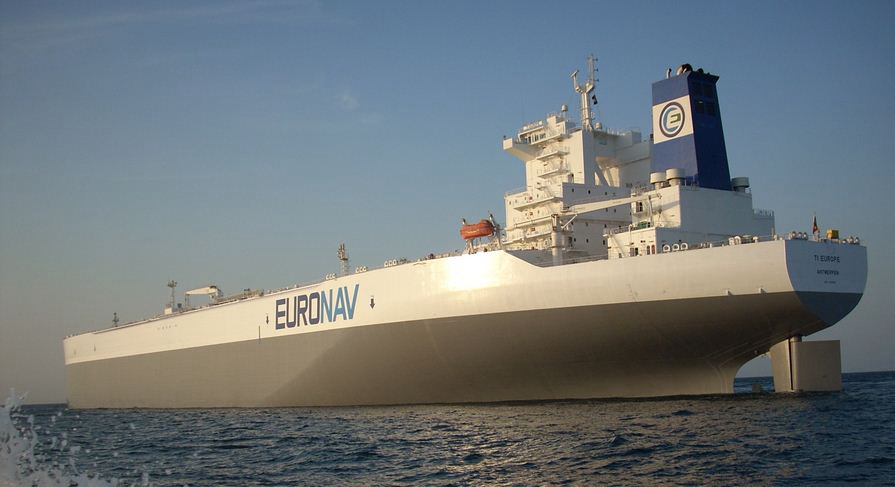
Euronav set to list

Euronav chief executive Paddy Rodgers
“There has been significant interest from energy investors and every indication that the deal is oversubscribed,” said one source familiar with reaction to Euronav’s mini deal roadshow this week.
Euronav’s US initial public offering was nominally scheduled to price next week, but finance sources say the level of interest was sufficient to wrap up the deal more quickly.
While pricing is still expected to remain around the $12.94 mentioned in Euronav’s prospectus — tied to its trading level on the Euronext — there is a chance the owner will choose to increase proceeds by selling more new shares, sources said.
Paddy Rodgers-led Euronav has set its sights on proceeds of $160.5m from the offering of 13,550,000 ordinary shares.
Its purse will hit $185.1m should underwriters take up their full options.
Funds from the IPO will both repay debt and continue an ambitious fleet growth plan which started a year ago with a $980m move for 15 VLCCs.
Deutsche Bank, Citigroup, J.P. Morgan Securities and Morgan Stanley are acting as joint book-running managers.
It is taking a fleet of 52 vessels to the New York Stock Exchange, including 26 VLCCs, 23 suezmaxes and two FSOs.
source:www.tradewindsnews.com
2014: An Explosive Year For Gas Carriers?
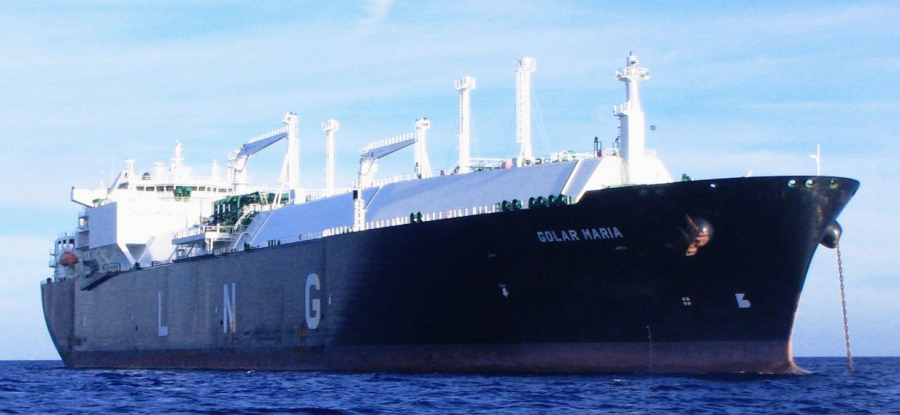
Gas Ordering On A High
Last year a record 176 gas carriers of a combined 16.6m cbm were contracted globally, up 49\% y-o-y in terms of cbm. LNG carriers accounted for 42\% of  orders and 66\% of capacity whilst a record volume of LPG tonnage was ordered (5.6m cbm), with strong newbuilding interest for Very Large Gas Carriers (54 orders, a record). This surge in ordering has led to a 40\% increase in the volume of gas carrier tonnage on order since the start of 2014 and the sector’s orderbook currently totals 34.6m cbm – equivalent to 10\% of the global orderbook in GT terms.
Who’s Fuelled Ordering?
Gas sector ordering has been concentrated amongst a relatively small number of owner nations and the top 5, in terms of cbm on order, account for 65\% of the gas carrier orderbook and 48\% of the current fleet. Greek owners have the largest LNG and LPG carrier orderbook globally, totalling 7.8m cbm, though this is mainly LNG units (72\%). The Japanese owned gas carrier fleet is the largest by far (14.6m cbm), equivalent to 18\% of total fleet, and consequently the nation’s orderbook to fleet ratio is relatively low at 33\%. Again, LNG units account for the majority of tonnage on order (81\%). The Norwegian and Chinese owned orderbooks are more evenly split with LNG carriers accounting for 59\% and 54\% of units on order respectively in terms of cbm. In 2014, Chinese gas sector contracting reached record levels, a total 1.8m cbm, and their orderbook to fleet ratio is one of the highest at 202\% (also reflecting the fact that their fleet is relatively limited). Elsewhere, Canadian owners have the fourth largest gas carrier orderbook (3.1m cbm), equivalent to 81\% of their gas carrier fleet. The orderbook is held by one group (Teekay) and is wholly compromised of LNG units, as is 99\% of the fleet.
West Meets East?
At the start of 2005, over half of the 34.5m cbm gas carrier fleet was Asian owned (55\%) with European owners accounting for 25\% of the fleet. Over the last decade Europeans have invested heavily in the LNG sector and, more recently, the LPG sector, and their share of the current 82.5m cbm gas carrier fleet has risen to 32\%. Meanwhile, Asian owners’ share has fallen to 42\%. Looking forward, the European owned fleet looks set to continue to catch up with the Asian owned fleet with Europeans holding 45\% of the 34.6m cbm gas carrier orderbook versus Asian owners’ 34\% share.
The recent surge in gas sector ordering has pushed the orderbook to record levels and it now totals 42\% of the gas carrier fleet. Investment by European owners in the gas sector has seen their share of the fleet rise whilst Asian owners’ share has fallen. With the European owned gas carrier orderbook 35\% larger than that of their Asian counterparts, the gap between the size of their gas carrier fleets is likely to close.
Source: Clarksons
Economou goes for IPO


George Economou, chief executive of DryShips
The George Economou-led company has filed with the SEC to list Tankships Investment Holdings.
It plans to list on the Nasdaq under the TNKS ticker.
Tankships is registered in the Marshall Islands and has four suezmaxes and six aframaxes totalling more than 1.3m dwt and with an average age of 2.5 years.
The vessels are all built between 2011 and 2013 and operate in the spot market. They are listed as owned by DryShips and Economou's private Cardiff Marine.
If the IPO is successful Tankships will strike deals with one company related to its CEO Economou and two related to his ex-wives to acquire three more eco-ships.
These 157,000-dwt suezmax newbuildings are being constructed at Jiangsu Rongsheng in China for delivery between 1 March and 30 April this year.
They will cost $209m, of which $115.7m will be payable in cash and $93.3m in Tankships shares.
The company also said it expects to arrange a secured credit facility worth $375m over seven years with unnamed lenders.
This will fully refinance the bank debt of the existing fleet and finance some of the cost of the three new tankers.
 Economou has also granted Tankships the option to buy other vessels in his private fleet.
These deals could total 17 ships : 15 aframaxes built between 2004 and 2010 and the 297,000-dwt VLCC duo Solana (built 2010) and Desimi (built 2011) . All are working the spot market.
Tankships also said it will expand the fleet through the purchase of additional modern second-hand vessels.
Spot focus
The new company has been formed from Olympian Asclepius Holdings, which registered in the Marshall Islands in 2010 and changed its name in December.
A number of its single-shipowning companies will be reorganised under the name Tanker Owners following the IPO.
The company said it will be spot-market focused, but could use longer charters from time to time.
It said was “well positioned to benefit from improving tanker market fundamentals.”
“Although the spot market has historically been volatile with periods of low charter rates often lasting multiple years, we believe the spot market has delivered the highest returns on average over time,” it added.
source:www.tradewindsnews.com
PPG Protective & Marine Coatings Greece holds second highly-anticipated customer event
The sessions were led by George Petkovski, Technical Training Manager PPG EMEA who made presentations on the use of marine coatings in modern shipbuilding, focusing on corrosion paint technology, essential painting and spray application procedures, antifouling and fouling release coatings and maintenance and repairs.
Discussion forums were also held across the two day event on the importance of shipboard maintenance, ballast tanks, newbuildings, cargo holds and chemical tanks.
Speaking during day two, Tassos Kaklamanis, Market Manager Marine said:
“Following the success of our first event in 2013, we wanted to build on our relationships with our customers and local businesses, to give them a wider understanding of what we do, and how we can work with them to increase their Fleets’ operational efficiency and profitability. We have been extremely pleased with feedback from those attending and we hope to continue these ‘up close’ customer events in the future.”
PPG is a world leader in protective and marine coatings, developing products that protect customers’ assets in some of the world’s most demanding conditions and environments.
Source: PPG Greece

Powered by  © Μaritimes 2019