


Container Ships Lowered Emissions by 2.4\% during 2016
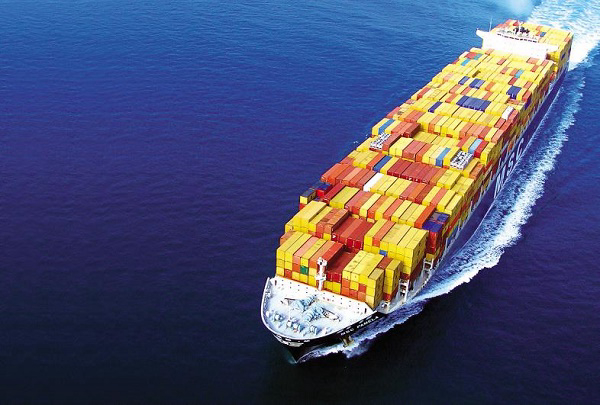
The data show that the industry improved performance of greenhouse gas emissions by 2.4 percent (per TEU-km) from 2015 to 2016, a lower rate of improvement than in previous years.
This highlights that performance continues to improve but demonstrates the critical importance of collaboration and collective action to enable shipping to contribute to global emissions reductions targets. This was also the first year that 100 percent of carriers included in the emissions factors were verified using the CCWG procedure and guidance for verifying CO2 and SOx data.
The Clean Cargo Working Group has also reached a major milestone of 50 corporate members. The group now includes 22 container carriers and 28 of this industry’s largest customers—both global brands and freight forwarders. APL Logistics, CEVA Logistics, EFL, Expeditors International, LF Logistics, Panalpina Management Ltd., Philips Lighting, and SAT Albatros all joined in 2017. The list of all group members can be found here. “Partnerships along the value chain are key to truly conducting business sustainably. In joining CCWG, we join a group of peers dedicated to accelerating sustainability in the container shipping industry,” said Nicola Kimm, Head of Sustainability, Environment, Health & Safety at Philips Lighting, one of the new shippers to join in 2017. “Furthermore, we gain access to reliable and accurate data on individual carrier performance, enabling us to make better informed procurement decisions and drive down carbon emissions of our logistics.”
The group continues to foster environmental performance innovations for the sector, such as a pilot by members Electrolux and Hamburg Sud to reduce pollution in ports. CCWG has also kicked off a materiality assessment to prioritize the most critical social, ethical, and environmental impacts industrywide that will help CCWG to set a vision for 2030 and a three-year agenda. “CCWG provides so much more than relevant, credible data; they are also the forum to work collaboratively with our supply chain and other buyers to make progress toward the Electrolux ‘For the Better’ sustainability framework,” said Tomas Dahlman, Director, Global Energy Strategies for Electrolux. “The group works on several innovative initiatives that enable us and the shipping industry to work more sustainably.”
BSR is a global nonprofit organization that works with its network of more than 250 member companies and other partners to build a just and sustainable world. From its offices in Asia, Europe, and North America, BSR develops sustainable business strategies and solutions through consulting, research, and cross-sector collaboration
Source: BSR
Drewry warns BCOs to adapt their contract strategy
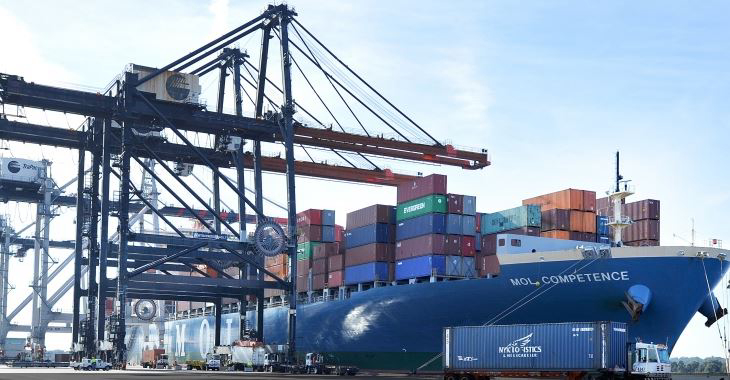
In the last five years, beneficial cargo owners have been able to secure large reductions in freight costs by running traditional competitive bids with numerous providers in an over-supplied, fragmented market.
“Today’s business environment is starkly different, so we are now pro-actively advising our BCO customers that last year’s contract strategy will simply not work as a blueprint for the forthcoming annual ocean tender,” said Philip Damas, Head of Drewry’s logistics practice. “Things will be different and organisations must be prepared.”
“Rapid consolidation in the supplier base, changes in supplier behaviour, huge reductions in vessel orders and new developments in tender technology will bring real change and uncertainty to the ocean transport procurement environment,” he added.
For example, on the Asia-North Europe route, the number of containership operators (excluding slot charterers) will decrease from 15 in July 2016 to 11 in July 17 to just 8 in July 2018. Globally, in 2016, orders for new containerships decreased from US$17 billion in 2015 to US$2 billion in 2016. On the other hand, the capacity of new containership deliveries is expected to increase from about 900,000 teu in 2016 to 1.1 million this year. The bankruptcy of Hanjin Shipping in 2016 has highlighted the performance risks of some financially weak providers and some BCOs and ocean carriers are experimenting with new contractual models.
Annual contracts being renegotiated on the Asia-North Europe and Asia-US West Coast routes are typically seeing container annual freight rate increases of about 50\% (although from a low base).
In such a market Drewry believes that BCOs will need to re-think their contract negotiation strategy and believes that, by incorporating benchmarking and e-sourcing best practices in their tender management process, rate increases can be mitigated. Use of big data and optimisation can also help find the best combination of bids to meet the intended balance between cost and service for the BCO’s many different lanes or supply chains.
BCOs could also face more frequent potential issues from roll-overs and cancelled sailings in the medium term. In early 2017, European exporters suffered shortages of export shipping capacity to Asia, at a time when quarterly volumes to China were running 18\% higher than in the first quarter of 2016.
Source: Drewry
Eagle Bulk Shipping Inc. Successfully Completes Greenship Bulk Fleet Acquisition
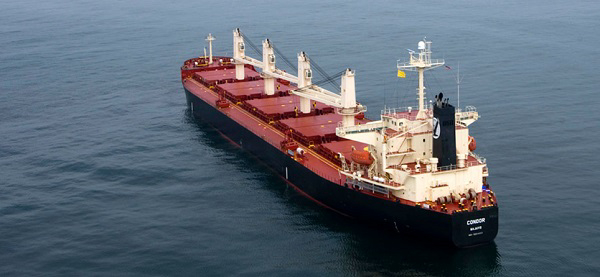
Gary Vogel, Eagle Bulk's CEO, commented, "The successful conclusion of the nine-vessel fleet acquisition from Greenship Bulk provides clear and unambiguous benefits for Eagle, chief among them a significantly expanded commercial footprint and a more modern and efficient fleet. These positive developments, in conjunction with the successful buildout of our active management model, should help ensure we generate both higher time charter equivalent (“TCE”) earnings and incremental shareholder value.”
With the addition of the M/V Westport Eagle, the Eagle Bulk fleet currently consists of 48 vessels on the water, comprised exclusively of Supramax/Ultramax vessels.
About Eagle Bulk Shipping
Eagle Bulk Shipping Inc. is a Marshall Islands corporation headquartered in Stamford, Connecticut. Eagle Bulk owns one of the largest fleets of Supramax/Ultramax dry bulk vessels in the world. Supramax/Ultramax vessels, which are constructed with on-board cranes, range in size from approximately 50,000 to 65,000 dwt. The Company transports a broad range of major and minor bulk cargoes, including but not limited to coal, grain, ore, pet coke, cement and fertilizer, along worldwide shipping routes.
In Depth: The Maritime Industry Responds to Upcoming Regulations
 |
Volvo Penta, for example, recently introduced its new Tier 3 engine. Initially intended for 13-litre models from 2018, the engine uses Selective Catalytic Reduction (SCR) technology for the after-treatment of exhaust gases. Volvo Penta has made additional advances in the field of sustainability with its engines by also allowing operators to select biofuels as a primary fuel choice. By using hydrotreated vegetable oil (HVO), carbon dioxide and particulate matter emissions can be reduced by up to 90 per cent.
Client input
As an American concern, Caterpillar’s attention on EPA legislation has been its driving force behind new products, something that has progressed logically to the IMO.
“We have a complete range of IMO Tier 3 compliant engines, with a main focus on 600 kW and above, but also the smaller engines and generator sets from 130 kW going up to the larger high-speed engines – all certified from the factory,” Peter Snijders, Business Developer at Pon Power, the Caterpillar dealership for the Netherlands, Norway, Sweden and Denmark, said.
The company’s recently introduced 3500E series illustrates the significance of client input when putting a new product together.
“It is very important for us to listen to the voice of business in the product development process. Our customers point out things that are important to them and we use this input for development. A good example of this is fuel optimisation, which leads to lower operation costs.”
Indeed, the new series provides operators with five to seven per cent fuel savings.
“Other feedback comes from analysis of engine use – sailing profiles, average loads and idling behaviour, for example. We track that and share the data with Caterpillar.”
Realistic business case
Other features of Caterpillar’s new engine range are unchanged back pressure – even with its integrated SCR – and its ability to function in a very wide range of operating windows due to skip firing modifications.
“We have also reduced PM [particulate material] emissions by 80 per cent by controlling the combustion temperature. This is particularly significant for improving air quality in urban areas or for yacht owners.”
In the context of the ‘big picture’ of increasing sustainability in the maritime sector, Snijders concludes that Caterpillar’s Tier 3 engines prove that there is a business case for cleaner technology.
“It doesn’t have to mean that you have to add costs. Yes, the initial investment is increased, but the operating costs are reduced. In fact, the best feedback that we have got so far is that we are receiving orders, because that is ultimately our goal – to help customers reduce their operating costs and maximise their uptime.”
Progress on LNG
Moving to the subject of the 2020 global sulphur cap, using LNG as primary fuel is one choice facing ship-owners looking to comply with future legislation. While the transport of LNG is not new – large 100,000 cubic metres carriers have in fact been carrying LNG for decades – the small scale LNG market of up to 15,000 cubic metres has been quite slow to get off the ground (in what has commonly been defined as a ‘chicken-and-egg’ situation regarding supply and demand).
Recent events have shown that progress is being made and that this market is beginning to fully emerge.
Bastiaan Schurink, Design & Proposal cargo vessels at Damen Shipyards, explains: “The fact that financial subsidies have been made available from the EU is a major breakthrough in terms of stimulating LNG bunkering infrastructure. The improved availability of LNG should lead to more ship owners deciding to make the switch to LNG.”
Raising the subject of EU-subsidies brings comparisons to the offshore wind sector.
“Offshore wind has been on the receiving end of subsidies from the EU as well as from national governments. And now you are seeing that the first offshore wind farms are repaying on that initial investment. We expect to see similar progress with LNG – starting with the relatively small quantities that we are seeing now, and increasing in the mid to long term. And as the bunker volumes increase, LNG will also become more interesting in terms of price in comparison to MGO.”
More than maritime
This growing market will require vessels of various sizes capable of carrying LNG.
“It’s important to understand the different vessel sizes,” Schurink continues.
“There is a big difference between the large 100,000 cubic metres carriers, intended for intercontinental LNG transport, and the smaller vessels which have been developed in recent years.”
He is referring to Damen’s range of liquefied gas carriers with capacities ranging from 800 to 7,500 cubic metres.
“These vessels are able to transport LNG from large scale LNG terminals to remote located small scale LNG terminals; feeder services from Rotterdam to the Baltic, for example. And, as well as transport execution, we are also able to deliver a liquefied gas carrier which can perform LNG ship-to-ship bunkering operations.”
Still, in the realms of LNG transport, but not in terms of fuel, it should also be noted that the subject of LNG goes further than the maritime sector.
“Small islands – in the Caribbean or the Mediterranean, for example – are also looking to LNG for electricity generation requirements. Many islands that are dependent on diesel generators for their electricity supply are considering a switch to LNG, which would increase independence from fluctuating oil prices and also be cleaner, environmentally speaking. Our expectations for this market are positive – combining our liquefied gas carrier and floating storage unit (FSU) designs. In this configuration, the liquefied gas carrier can transfer LNG to the FSU; which is effectively an economic LNG storage solution. In turn, the FSU can transfer LNG, via piping, to shore or the FSU can be used as LNG conditioning unit to transfer LNG to natural gas.”
Scrubber solutions
Retrofitting their vessels with a scrubber is another alternative that shipowners have when looking for compliance with the 2020 global sulphur cap. Products come from an array of companies – such as Alfa Laval and AEC Maritime – as the competition is set to increase as the 2020 deadline approaches.
The advantage of a scrubber is that a vessel can still be operated with HFO. This has the potential to lead to financial savings because of the fact that low sulphur fuel oil is more expensive than high sulphur fuel oil; hence a ship-owner will see a return on the initial investment of a scrubber installation.
Since that, apart from price, one of the biggest issues on the minds of shipowners considering a scrubber retrofit is downtime, the announcement last year from scrubber producer AEC Maritime and Damen to cooperate to provide a more integrated service for scrubber retrofit projects was a key move. AEC Maritime has drawn on more than 20 years’ experience from sister company AEC Systems, which has installed more than 2,600 land-based scrubber systems, to develop a scrubber for the maritime sector. And Damen Green Solutions has teamed up with Damen Shiprepair and Conversion to offer streamlined engineering, project management and installation services.
Preparatory works
The trio of companies recently took this way of thinking a step further with their so-called ‘Modular Approach’ to scrubber retrofits. This process utilises the time before a vessel arrives at a repair yard to prepare for the actual scrubber installation – thus reducing the time spent in dock from weeks to days.
The first installation of this type was carried out for the RoRo cargo vessel Stena Scotia. The scrubber and supporting systems are prefabricated, while on board preparation work involving steel works and piping takes place during routine stopovers.
“With the need to access the vessel during its regular operations to undertake the preparations, it is vital to work very closely with the owner and crew to make the hours available as productive as possible,” Stef Loffeld, Damen Project Manager, said.
“Fortunately, DSC’s Harbour & Voyage teams are expert at working efficiently and unobtrusively when a ship is still in an operational mode. The result is a fast and effective installation with minimum downtime.”
Yet another choice available to shipowners is to decide to run their vessels on low sulphur fuel oil. Currently, this subject raises all sorts of challenges – ones that will not necessarily have to be addressed by the global maritime industry, but rather by the global oil industry.
As the balance of supply and demand of low sulphur fuel shifts, there will be the hurdles of increased production by refineries, sourcing and bunkering to overcome.
Tom Scott
This article was previously published in Maritime Holland edition #4– 2017.
MSC maiden call at the Genoa IMT Terminal

The Msc "Songa Alya", a 3,100 teu (2480 @ 14t) container vessel, will stregthen the collaboration between the Genoese group Messina and the Geneva based company; this ship will call at the Genoa IMT terminal (managed by the Messina Group) on Friday 8 September within the MAF1 vessel sharing agreement, including MSC, Ignazio Messina & C. and Cosco.
The IMT terminal recorded a booming traffic increase: in the first seven months of 2017, the terminal scored a 20\% growth in the container sector.
The new MAF1 service was inaugurated only a few days ago, on August 28, with the departure of the “Calais Trader” container vessel operated by the Chinese company Cosco: it employs six ships of capacity between 2,500 and 3,100 TEU and connects directly, without transhipment, the western Med ports with West African destinations, offering weekly departures from the ports of Vado Ligure, Genoa, Castellon, Valencia and Algeciras to Dakar, Lome, Apapa, Tincan, Tema, Takoradi and Abidjan, thus granting best transit time on the market.
Thanks to the connections in the Genoa and Castellon hubs, Ignazio Messina & C. is able to offer highly competitive transit times for cargoes from North Africa, the Levante, the Red Sea, the Gulf and Iran.
Aegean Shipping Management enters dry bulk sector with kamsarmax newbuilding order adding more "green ships"
 |
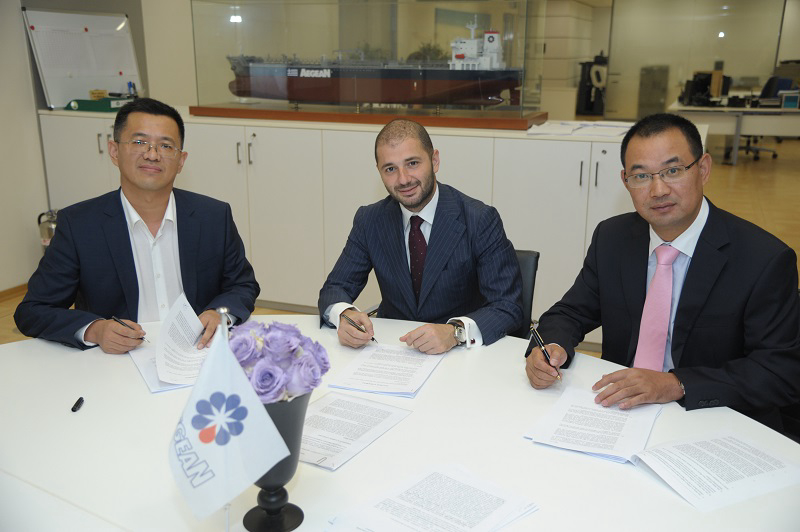
| L-R Mr Swem Sun, Director Cosco Shipping Heavy Industry Co., Ltd. Mr George Melissanidis, Chairman Aegean Shipping Management S.A. Mr Zhou Jianhua, General Manager Cosco (Zhoushan) Shipyard Co., Ltd. |
This marks the first move of Aegean Shipping Management into the dry bulk sector and will coincide with the creation of the spin-off Aegean Shipping Dry Bulk.
Announcing the order, Company Chairman Mr George Melissanidis stressed: "We decided to move into the dry bulk sector now as an investment, taking advantage of the historically low asset price levels, combined with our belief that this sector is on its way to a sustainable recovery by 2018/19. We believe this is the right time to enter and we are very happy to be collaborating with our partners at Cosco Shipping in this exciting new venture for Aegean Shipping Management - I am convinced that the Dry Bulk development will prove a great success."
This bulk carrier order will see the ships being delivered at a time when most industry analyses show the dry cargo sector to have recovered to long-term sustainable average rates as there will have been an increase in trade and we will have had more scrapping.
Company CEO, Apostolos Poulovassilis stressed: "This is a very significant newbuilding order for us and it is firmly aligned with our diversification and fleet expansion strategy via modern and efficient vessels. The specification for these vessels has been jointly developed with the yard and designers, COSCO and SDARI, and has been enhanced in accordance with our Company's Green Fleet standards in order to meet and exceed industry demand requirements for this ship type."
DVB Bank Group (DVB) posts half-yearly results for 2017
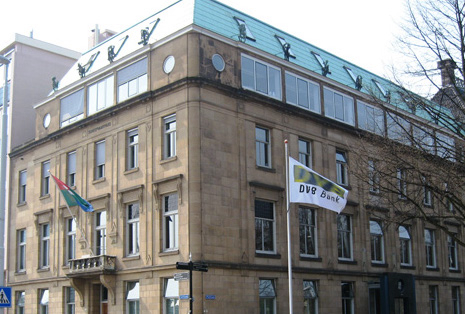
Frankfurt/Main – DVB, the specialist in international transport finance, reported a consolidated net loss before taxes of €506.3 million in the first six months of 2017 (previous year: net income of €14.1 million). The net figure was dominated by a significant increase in allowance for credit losses, to €445.3 million (previous year: €83.4 million), reflecting market developments. Moreover, due to the continued narrowing of spreads for euro/US dollar cross-currency swaps, the net result from financial instruments in accordance with IAS 39 fell to €–67.9 million (previous year: €10.0 million).
Ralf Bedranowsky, CEO and Chairman of DVB Bank SE's Board of Managing Directors, commented on the Bank's consolidated results:
“The increase in allowance for credit losses was largely required for legacy exposures in the Shipping Finance portfolio, and for financings in the Offshore Finance portfolio. These developments reflected the following market trends:
- Given persistent oil price uncertainty, oil and gas companies have continued to reduce their exploration and production spending, which has further curtailed demand for offshore vessels and equipment. Shipowners remain under pressure from low charter rates and competition for employment. Against this background, owners of vessels and drilling rigs adjusted their capacities, through lay-ups, restructuring or consolidation.
- Excess capacity remained a major challenge on shipping markets throughout the first half of 2017. Container carriers, bulk carriers and tankers are the three most important sectors for the maritime industry, in terms of transport volumes and services.
Especially in container shipping, persistently difficult market conditions have burdened performance amongst shipowners. In this context, increasing consolidation of shipping lines is set to intensify competition amongst shipowners chartering their vessels to line operators. Even though charter rates in container shipping showed some improvement during the first half of 2017, whether this trend will in fact be sustainable is open to question, for two reasons. On the one hand, consolidation among shipping lines is accelerating, and on the other hand, charter rates are further burdened, given the continued delivery of a large number of 20,000 TEU container ships. Consequently, market values of container vessels have not been able to recover so far. Looking ahead, the cascading effect caused by substantial deliveries of large container carriers will mostly have a negative effect upon the development of charter rates and market values in the other size categories.
Bulk carriers enjoyed a strong increase in earnings during the first half of 2017. The Baltic Dry Index (BDI) was quoted at an average of 976 points during the first six months of the year – up 101\% year-on year. Freight rates were supported by continued Chinese demand for iron ore and coal. The BDI reached its year-to-date high in April, albeit staying far away from the historical peak of more than 10,000 points in 2007/2008. A multi-year comparison shows that charter rates for bulk carriers have remained insufficient, given that a large number of vessels was bought and financed at record prices.
Following an improvement during the first quarter of 2017, which was driven by seasonal factors, tanker markets declined again during the second quarter, putting pressure on shipowners' earnings. The extension of OPEC members' agreement to reduce production volumes had a negative impact on tonne-mile demand in the crude oil tanker segment. Yet at the same time, the crude oil tanker fleet grew by 5.5\% year-on-year. The significant volume of new tonnage on order – which rose further year-to-date – created an additional burden. - Excess capacity was accompanied by escalating liquidity shortages faced by shipowners. These described challenging market conditions triggered numerous new restructuring measures, thus influencing the performance amongst many market participants.
As mentioned above, the net result from financial instruments in accordance with IAS 39 amounted to €–67.9 million (previous year: €10.0 million); this was largely driven by the measurement of cross-currency swaps, which the Bank is not allowed to include in its hedge accounting. Based on prudent economic risk management, these derivatives form hedging relationships with the related hedged items, whereby measurement gains and losses reported on a particular record date are neutralised over the entire term of the financings extended.
At the beginning of August 2017, DVB received a €500 million contribution to income from our parent company, DZ BANK AG, Deutsche Zentral-Genossenschaftsbank, Frankfurt am Main. DVB was unable to recognise this contribution in income as at 30 June 2017, but will recognise it in income during the third quarter of 2017. The contribution will stabilise both the common equity tier 1 ratio (which stood at 8.9\% as at 30 June 2017) as well as the deteriorating key financial indicators, return on equity, cost/income ratio, and Economic Value Added.“
The individual items of the half-yearly financial statements are as follows:
Total income (before IAS 39) – composing net interest income after allowance for credit losses, net fee and commission income, result from investments in companies accounted for using the equity method and net other operating income/expenses – amounted to €–335.2 million (previous year: €106.5 million).
Net interest income declined by 13.2\%, from €124.5 million to €108.1 million, driven mainly by more moderate new business in the Transport Finance divisions, lower interest income from operating leases, as well as by higher interest expenses on deposits and subordinated capital.
Whilst many international shipping financiers withdrew from the market, DVB continued to enter into new business with selected shipping clients, in a market environment characterised by less liquidity. This was conducted on a selective basis however – hence, with clearly lower volumes than in the previous year. New business in Aviation Finance, and in Land Transport Finance, where it finances rail rolling stock and other rail-related vehicles, showed stable, though subdued development, reflecting high liquidity and intensifying competition. Overall, the Bank originated €1.8 billion in new business during the first half of 2017 – down by €1.0 billion compared to the same period of the previous year.
Allowance for credit losses amounted to €445.3 million (previous year: €83.4 million). New allowances recognised for credit losses totalled €519.7 million (previous year: €196.4 million), of which €497.0 million (previous year: €167.0 million) was accounted for by Shipping Finance and Offshore Finance, due to the difficult environment surrounding the international shipping and offshore markets, as outlined above. Conversely, allowance for credit losses of €74.3 million (previous year: €112.2 million) was reversed, of which €61.2 million (previous year: €95.8 million) in Shipping Finance and Offshore Finance. Net interest income after allowance for credit losses thus amounted to €–337.2 million (previous year: €41.1 million).
Total allowance for credit losses (comprising specific allowance for credit losses, portfolio-based allowances for credit losses, and provisions) rose to €990.9 million, up 56.5\% from year-end 2016 (€633.1 million).
Net fee and commission income, which primarily includes fees and commissions from new Transport Finance business, asset management fees, and fees generated from Corporate Finance advisory mandates, was down 8.3\%, from €56.5 million to €51.8 million. Fee and commission income declined by 5.4\%, to €56.5 million (previous year: €59.7 million); fee and commission expenses were up 46.9\%, from €3.2 million to €4.7 million.
Results from investments accounting for using the equity method stood at €–7.2 million (previous year: €4.1 million).
Net other operating income/expenses amounted to €–42.6 million (previous year: €4.8 million). Other operating expenses largely comprised €59.2 million in impairment of goodwill in the Shipping Finance division.
DVB managed to lower general administrative expenses, by 1.0\%, to €90.4 million (previous year: €91.3 million), despite the continued high expenses required for regulatory-driven projects. Staff expenses increased slightly, by 0.9\%, to €55.7 million (previous year: €55.2 million). Non-staff expenses (including amortisation, depreciation and write-downs) decreased by 3.9\%, from €36.1 million to €34.7 million.
Net result from financial instruments in accordance with IAS 39 (comprising the trading result, the hedge result, the result from derivatives entered into without intention to trade, and the result from investment securities) amounted to €–67.9 million (previous year: €10.0 million).
Consolidated net income/loss before bank levy, BVR Deposit Guarantee Scheme, and taxes fell to €–493.5 million (previous year: €25.2 million).
Consolidated net income/loss before taxes thus amounted to €–506.3 million (previous year: €14.1 million). Consolidated net income/loss (after taxes) was €–547.1 million (previous year: €10.6 million), largely due to €40.8 million in write-downs of deferred tax assets.
DVB's total assets decreased to €24.9 billion as at 30 June 2017, down 10.0\% from the 2016 year-end (31 December 2016: €27.7 billion).
DVB's nominal volume of customer lending (the aggregate of loans and advances to customers, guarantees and indemnities, irrevocable loan commitments, and derivatives) declined by 13.1\%, to €22.5 billion. In US dollar terms, it was down 5.9\%, from US$27.3 billion to US$25.7 billion.
Key financial indicators developed as follows:
Return on equity (before taxes) decreased to –73.4\% (previous year: 0.6\%). Cost/income ratio stood at 91.2\% (previous year: 52.6\%). Risk-adjusted Economic Value Added amounted to €–496.0 million (previous year: €–47.2 million).
DVB discloses capital ratios determined in accordance with Basel III (Advanced Approach). On this basis, DVB's common equity tier 1 ratio as at 30 June 2017 was 8.9\% (31 December 2016: 13.2\%), whilst the total capital ratio amounted to 16.8\% (31 December 2016: 20.7\%).
DVB's outlook reads as follows:
DVB plans to sustain the positive business development in Aviation Finance as well as in Land Transport Finance, and strengthen the earnings power of these businesses.
Due to the persistent crisis in the shipping and offshore sectors, DVB expects risk costs in its Shipping Finance and Offshore Finance portfolios to remain high throughout the financial year 2017. Accordingly, risk management in these two divisions will continue to command particular attention, as well as proactive restructuring measures.
The Bank thus expects consolidated return on equity for 2017 (before taxes and before IAS 39) to significantly fall short of the forecast; it is also unlikely to match the forecasts for the other key financial indicators, cost/income ratio and Economic Value Added.
DVB strives to preserve sound core operational earnings before risk costs and before IAS 39. This means that, in addition to the lending business, the Bank will focus on value-added services for clients in its Transport Finance business – such as capital markets products and advisory services.
The Bank will keep supporting their shipping clients in a market environment characterised by less liquidity supply, on a selective basis – yet with markedly lower volumes of new business.
Structural changes with differing characteristics can be observed in the sub-markets of the global transport sector. Whilst aviation and land transport markets are predominantly shaped by high excess liquidity together with strong margin and competitive pressures, the shipping and offshore industries have yet to see the end of the ongoing consolidation phase.
DVB will continue to analyse the business environment in the markets they cover, in great detail – to focus on business opportunities which allow DVB to return to adequate profitability, and to sustainably stabilise for the future.
About DVB Bank SE
DVB Bank SE, headquartered in Frankfurt/Main, Germany, is specialised in the international transport finance business. The Bank offers integrated financing solutions and advisory services in respect of Shipping Finance, Aviation Finance, Offshore Finance and Land Transport Finance. DVB is present at all key international financial centres and transport hubs: at its Frankfurt/Main head office, as well as various European locations (Amsterdam, Athens, Hamburg, London and Oslo), plus offices in the Americas (New York City and Curaçao) and in Asia (Singapore and Tokyo).
www.dvbbank.com
G. Marinakis outlines his vision for the Maritime ICT market and Digital Transformation
Q: With most commercial shipping sectors in tough economic conditions, do you believe that the shipping firms will accept the need to invest in the digitization and smart-ship technologies?
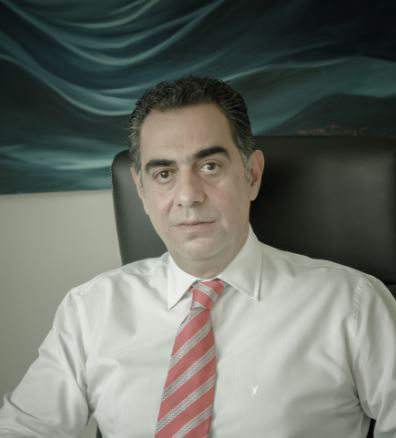
SetelHellas Managing Director Mr. George Marinakis
A: The digital transformation certainly did not contribute to the problem and in many-many cases, it may even be a solution to the problem!
Despite the grim situation, improved functionality at lower prices is driving higher penetration of new generation Maritime-Apps for connected vessels, and increases the adoption of the Maritime Internet of Things (IoT) from one day to another.
For those vessels owners or operators who need to take proper actions in order to enhance their vessels’ operations, improve system performance and deliver operational efficiencies, integrated technologies are increasingly being developed according to the new industry needs while follow closely the fastest ROI principles.
Thanks to underlying technologies —such as novel Remote Performance Monitoring systems, Network Intelligence Devices, data processing tools, visualization and cloud-based services—shore based activities can be integrated now seamlessly with on-board tasks and events, e-navigation equipment, bridge technologies, engine room systems, automation devices and almost with any specialised vessel’s “object” in effective and efficient ways toward safer and more economical ship operation.
Q: Today, a modern ship is a complex asset. On-board equipment and automation technology continues to become more and more complex. What is the key for the maximum vessel systems availability and high level of operational reliability?
A: I agree. Today, a modern ship is completely a complex asset - which on top of that, is operated by a permanently changing crew with all that this implies … and not only that: Also, maintenance activities become more and more complex. Acceptable risk of society is going down and environmental awareness is growing up. Voyage data is collected temporarily and usually lost for further process. Typical maritime ERP applications support a process only in the first stage and by doing so, produce a lot of unstructured data and information…. Yes, a modern ship is a complex asset difficult to manage manually further.
Well, information integration and digitalisation are the keys!
The digital transformation is well underway. Affordable smart technologies and connectivity tools are opening up new opportunities for modern ships in the context of current industry needs and trends. IoT ecosystem is opening new ways to integrate data and harmonise almost all the ship management functions, creating value from information. The consistent use and analysis of integrated vessel data along the entire life cycle can drastically increase vessel systems availability and operational reliability, as well as the competitiveness of all sectors along the chain.
Today, SetelHellas is working with a number of business partners in both local and international maritime space to deliver a new holistic approach, embracing the needs of Information integration in the context of the “Lifecycle management” principles.
Q: In our days, the commitment to eco-friendly vessels and environmental friendly strategies appear to be an ultimate goal for the shipping industry. Are you taking notice of this trend?
A: It’s true! In our days, the commitment to sustainability has become a main strategy for many-many companies in Europe and all over the world. The trend moving towards sustainability has reached the critical point and the “eco-friendly” has currently become flagship for many organizations and markets.
Today, you cannot operate your TV; read a newspaper or visit a social networking website without seeing an article or company advertising “eco-friendly”, “green technology”, “sustainable growth” or “sustainability”.
Well, the effect of mass-media exposure on climate change together with the environmental regulations has increased the environmental awareness and call for immediately actions.
In this respect, successful companies have adopted environmental policy as an integral part of their overall business strategy and actual day-to-day operation. Nevertheless, an environmental policy can mean different things depending on the type of business.
In the maritime sector, the goals of an environmental policy are very clear and tangible: Reduce emissions and environmental footprint. However, a good environmental policy can achieve much more. For example, when a shipping company integrates environmental attributes with its strategic business activities, it also improves operational efficiency, while enhancing the company’s public reputation and differentiation.
The good news is that any shipping company, regardless of size and type of vessels, can implement an “environmental friendly” strategy with some very simple steps. Digital technologies – like SeeMBox-V MRV, offers to the market an unprecedented opportunity to easily reduce emissions, minimize environmental footprint and accelerate the development of green vessels while achieving benefits and opportunities beyond the regulation and compliance.
Q: You've recently joined STRATEGIS – Maritime Center of Excellence. Please tell us a few words.
A: SetelHellas is a proud founding member of STRATEGIS. A non-for-profit organization with the vision to become a global R&D and consulting Center in advanced technologies, strategy and business models for the Smart-Sea and Blue Economy.
The main activity of STRATEGIS and its founding members (SetelHellas, CISCO Greece, Furuno Hellas, BlueGrowth, GMC – Maritime Training Center and Municipality of Piraeus) focuses on the creation, development and management of collaborative innovation networks and commercial clusters in the shipping industry, with emphasis on the application of advanced ICT technologies in digital shipping.
Q: What are SetelHellas’ expansion plans for the future?
A: Despite the fact that the marine industry faces substantial pressure, we continue to see the crisis as a friend who brings us opportunities.
As such –after our expansion in Asia, Middle East and Cyprus we are continuing executing the final leg of SetelHellas’ 2016 expansion plan, focusing on Scandinavia.
Our aim is to accelerate SetelHellas’ growth into more industries, across broader geographies and channels, and into additional market segments.
Fortune Technologies: New eco-friendly policy/ tools for its customers

 |
| Maria Choupa Software Consultant Fortune Technologies SA |
“Maritime transport has a great impact on global climate and on air quality, so it is important for shipping companies to follow an eco-friendly policy and have an overall control of their fleets’ emissions”, Fortune Technologies SA Software Consultant Maria Choupa noted.
International shipping emits around 1,000 million tones of CO2 annually. As part of efforts to reduce this footprint, the EU decided to enact the MRV system for Monitoring, Reporting and Verification of CO2 emissions while the ships are at sea as well as at berth.
Large ships (above 5.000 GT) using EU ports regardless of their flag will be required from January 1, 2018 to report their verified annual emissions and other relevant information.
“Fortune Technologies SA will help companies to obtain, record, compile, analyze and document the necessary monitoring data in a transparent manner ”, Ms. Choupa said.
Fortune Technologies’ Microsoft Dynamics NAV-Vessel Operation Solution is designed to act as an interactive monitoring tool for various vessel operations.
“Our system includes a variety of reports which can be used for recording vessel operations data information, e.g. oil & lubricants consumptions, cargo carried and lots of other. In that way, operators will have a full control over the data which will be analyzed and documented so as to prepare maritime company’s CO2 Emissions Report for verification submission”, she explained.
Among the basic principles of the new EU regulation is data validity. Shipping companies shall apply appropriate measures to prevent any data gaps within the reporting period and ensure that the determination of CO2 emissions is accurate.
Fortune Technologies guarantees the accuracy of the data reported. “Both our Microsoft Dynamics NAV platform and our onboard application will ensure data validity by performing a series of validations and auto-calculations. Data will be in this way double-checked at vessel side and approved by office side”, Ms. Choupa underlined.
 |
G. Yovanof: Digital transformation offers tremendous potential benefits to the Maritime industry
 |
Industry 4.0 is the fourth industrial revolution, the confluence of cyber physical systems that are reshaping the industrial sector. Digital transformation offers tremendous potential benefits to the Maritime industry. Digital solutions allow the shipping sector to accelerate innovation, improve processes, create value, and sustainability in the digital era.
In several discussions with industry visionaries and leaders, notably, Mr. Georgios Marinakis, Managing Director of SetelHellas, and Mr. Petros Kokkalis councilor for local economic growth and entrepreneurship at Piraeus Municipality, we identified early on the need for better coordination amongst the leading stakeholders in the regional maritime ICT sector to raise the creativity capital of the region in order to meet the challenges of the future. The idea for the creation of an innovation cluster with the focus on advanced technologies for the Digital Era in the maritime industry was first introduced during the SetelHellas Maritime Conference in April, 2015. The local industry embraced instantly the idea and that led to the establishment of the Strategis - Maritime Center of Excellence in January 2016.
Q1: Tell us what is Strategis about?
STRATEGIS – Maritime Center of Excellence, is a non-for-profit organization with the vision to become a global Consulting and R&D center in advanced technologies, strategy and entrepreneurship for the Blue Economy & the Digital Shipping of the future.
Drawing on the global leadership of Greek Shipping, STRATEGIS aims to facilitate further development of the maritime sector in Greece augmenting its role as a key growth engine of the Greek economy, and to help establish Greece among the world's leading powers in Blue-Growth and the Blue Economy.
Q2: How is Strategis planning to achieve all this?
Strategis plans to achieve this through its vast knowledge base in ICT and the maritime industry, based on the collective expertise of the world-leading members of the STRATEGIS – Maritime ICT cluster.
Strategis’ vision is to be the flagship of a world-class Blue Economy Knowledge Hub in South-East Europe, with its center in Piraeus, Greece - a major driver of the Smart Sustainable Growth in the region.
Strategis’ primary aim as a Maritime Center of Excellence is to function as a Facilitator - Coordinator for the organized development and management of clusters of innovation with the strategic goal of creating effective integrated productive ecosystems in the shipping sector and the Blue Economy by expanding the competitive advantage of Greek shipping. Ultimately, it would contribute to the sustainable development of the wider region of SE Europe.
Q3: Why did you set out, embark on Strategis?
We plan to marry ICT with shipping to modernize the industry and make it even more successful worldwide. We plan to achieve this through our strategic objective of consolidating shipping as a key factor of regional development, STRATEGIS focuses on:
To achieve the strategic objective of consolidating shipping and Blue Economy as a key factor of regional development, STRATEGIS focuses on:
· Research and Development in frontier Maritime & Smart-Sea ICT Technologies;
· Development of strategy and innovative business models for the Blue Economy;
· Raising the region’s Creative Capital (Intellectual & Human Capital);
· Development of infrastructures supporting smart, sustainable regional growth (smart sea, smart ship, smart port and smart city technologies);
· International standardization activities, policies and regulations facilitating efficient collaboration of stakeholders in the innovation ecosystem.
Q4: Where is Strategis headquartered?
Strategis is headquarted in Piraeus, Greece. Greece is a leading maritime power despite the global economic crisis and it leads the industry.
The main activity of Strategis focuses on the establishment, development, and management of collaborative innovation networks and commercial clusters in the shipping industry, with emphasis on the application of advanced ICT technologies in shipping.
Q5: When will Strategis launch?
Strategis has launched and is active now. The Strategis- Maritime Center of Excellence currently serves as the facilitator of the Strategis – Maritime ICT Cluster <strategis-cluster.com>. With its headquarters in the port of Piraeus, Greece, the Strategis-Maritime ICT Cluster is strategically positioned to act as a catalyst of smart growth for the wider SE Europe region. The Strategis cluster of innovation offers 21st century maritime services and synergies for growth, enabling Smart Sea, sustainable business opportunities.
The official announcement of the establishment of the Strategis – Maritime ICT Cluster will be on May 10th, 2017, in the context of an International Maritime Conference at the Laskaridis Foundation in Piraeus, organized by one of the founding members of the cluster, SetelHellas.
Strategis is slated to be a world-class maritime innovation hub. The Strategis cluster extends its network to representatives of all the stakeholders of the regional Maritime ICT ecosystem and includes startups, SMEs, large enterprises, academic & research organizations, innovation incubators &accelerators, financial institutions and venture capital funding groups, business & legal consulting firms, regional authorities.
Q6: Who are the founding members of Strategis?
The founding core of the STRATEGIC - Maritime ICT Cluster network consists of the following members:
· Cisco Systems. Inc., Hellas – “There’s Never Been a Better Time, to make cities smarter”
· Setel Hellas S.A. – “Unlock the Business Value of Digital Ship” an international provider of market leading ICT solutions specially designed for the maritime and offshore vertical businesses. SetelHellas is currently operating in Piraeus, Cyprus, Dubai, Singapore and Korea covering the International Shipping Industry and serving directly and through our partners more than 200 shipping companies worldwide.
· IDE – Intracom Defense Electronics Development & Production of: Tactical Communications, Data Links and Telemetries, Information Security, Homeland Security and Hybrid Power Systems.
· Helica Maritime – Maritime ICT
· Municipality of Piraeus - the port of Attica and the most important port of Greece and the East Mediterranean coast.
· Aephoria.net & BlueGrowth – incubator aiming to inspire and help young entrepreneurs realize their innovative concepts relating to shipping, marine and freshwater resources.
· GMC – Maritime Training Center & Services
· Athens Information Technology – Center of Excellence for Research & Education in ICT & Management of Technological Innovation
· NIKOLINAKOS – LARDAS & PARTNERS Law Firm: “The experts in telecommunications, technology, digital media & e-business”
 |
| Strategis Founding Members (from the left) Mr. Gregory Yovanof, Managing Director of STRATEGIS maritime center of excellence & Mr. George Marinakis, Managing Director at SetelHellas & Mr. Yannis Papaefthymiou & Mr. Antonis Tsiboukis, Managing Director at Cisco Greece & Mr. Ioannis Giannopoulos, Managing Director at GMC Maritime Training Center & Services. #Strategis #ICT #Cluster |
 |
CONTACT Information:
To join our network, please contact This email address is being protected from spambots. You need JavaScript enabled to view it..

Powered by  © Μaritimes 2019