


Hellenic-Arab Maritime Academy to start on Oct 16
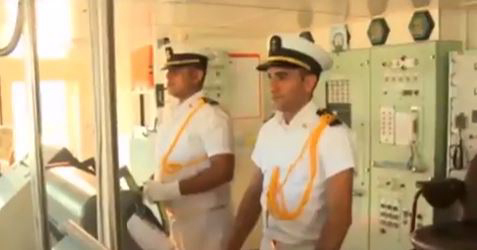
According to an Arab-Hellenic Chamber of Commerce and Development press release, this is the first example of Greek-Arab cooperation in higher education.
The Hellenic-Arab Maritime Academy is the result of collaboration between the City Unity College in Greece and the Arab Maritime Academy, ranked second in the world, arranged via the Arab-Hellenic Chamber.
The City Unity College will offer university and technical courses to senior officers of the merchant navy while the Arabs have invested in modern simulators and high-end technological equipment to ensure that the Academy's graduates fully professionally trained and have a good academic standard.
The courses will last four years and the entry criteria will be very high. The Academy will be supported by the first educational ship in Europe, the AIDA IV.
The aim of the project is to attract students from all over the world.
http://int.ert.gr
China shipbuilders see 11\% fall in new orders in first eight months
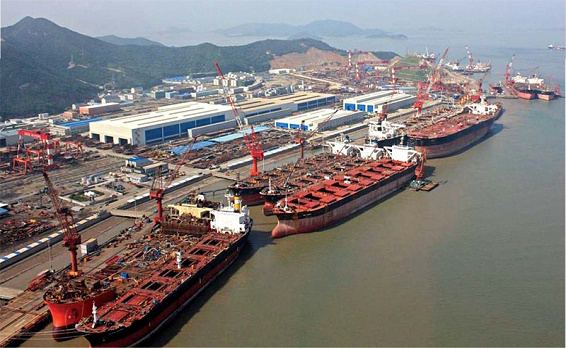
The declining figure on new orders has resulted in a deflated order backlog at China’s shipyards, which stood at 81.11m dwt as at 31 August 2017, a decrease of 29\% on a year-on-year comparison and down 18.6\% compared to end-2016, according to data from the China Association of the National Shipbuilding Industry (Cansi).
In completed newbuild tonnage, Chinese shipyards built a total of 31.32m dwt between January to August, an increase of 41.4\% compared to the same period of 2016.
Cansi figures further zoomed in to show that China’s 53 leading shipyards sat on a combined new order of 14.75m dwt, taking up 93.1\% of the country’s newbuilding market share.
The 53 leading yards completed new vessel tonnage of 27.34m dwt, an increase of 33.2\% year-on-year, and sat on an order backlog of 77.61m dwt, down 29.4\%.
Cansi also monitors 80 main shipyards showing that their combined completed newbuild ships were valued at RMB259bn ($40.3bn) in the first eight months, a decrease of 4.9\% year-on-year.
Among the total value, shipbuilding accounted for RMB110bn, equipment took up RMB16.9bn and repairs amounted to RMB7.7bn.
The 80 main shipyards generated a total revenue of RMB180bn from January to August 2017, a decline of 6\% compared to the previous corresponding period while total profit plunged by 20.6\% to RMB2.2bn.
Spotlight: Bizarre political phenomena cast shadows over European democratic system
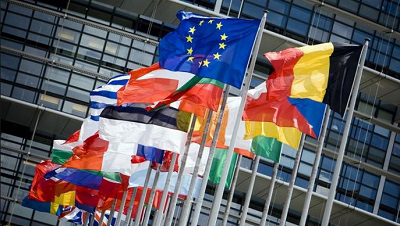
BLACK SWAN REARS ITS HEAD
The Brexit referendum was the first "black swan" event of 2016. Prior to the plebiscite, most heavyweights from different political strips took up the cudgel against opting out of the European Union (EU), warning that leaving the bloc is detrimental to British national interests. Opinion polls also showed that the "remain" has the edge over the "leave".
However, catching many people off guard, the result of the referendum showed that the "leave" outgunned the "remain" by a narrow margin. A broad swathe of pro-leave folk cast their emotional votes out of the anger over current situation and the eager for a change.
"I don't see us benefiting whether we had voted remain or leave. But I thought voting leave was worth the risk. There will inevitably be change after Brexit," said O'Neill, a 52-year-old service driver in Liverpool told Xinhua.
But he admitted that he was "not sure how I would vote now if there was a re-run of the referendum".
POLITICAL ROOKIES HIT PURPLE PATCH
In the snap election which took place nearly one year after the Brexit referendum, the opposition Labor party, headed by Jeremy Corbin, scooped 33 more seats in the House of Commons, dealing a crushing blow to British Prime Minister Theresa May's plan of boosting her small 17-seat majority.
May's Conservative Party only won 318 seats, eight short of the number need to command even a one-set majority. The result was unimaginable in April when May called the snap the election in a bid to strengthen her hand in the Brexit negotiations with the EU.
The Labor party's "victory" to a large extent is the upshot of pro-youth campaigning strategy of Corbin, who has long been on the touchline in British politics and was often snubbed by British media.
At the other side of the English Channel, a political rookie also hit a purple patch. During the French presidential election in April and May, candidates of the traditional political party were given cold shoulder by voters, whereas centrist Emmanuel Macron scored an emphatic victory with 66 percent votes.
Woefully, high expectation easily breeds frustration. On Aug. 15, the day marking Macron's 100th day at the Elysee, an opinion poll showed that his approval rating nosedived to 36 percent.
The slump of support, with the fastest pace compared to his predecessors since 1995, was mainly caused by Macron's push for reforming the labor law and axing the defense budget. These moves not only irked vested interest groups, but also raised ordinary folk's hackles, according to analysts.
Some labor unions have called on their members to hit the streets in September. Youth movement "Nuit Debout", or "Up All Night", which were in the spotlight early last year, is likely to stage a comeback.
In March and April 2016, hundreds of youths occupied the Republic square in Paris every evening for a spontaneous nocturnal sit-in to express their objection to the government's labor reforms seen as threatening workers' rights. The protest then expanded onto other French cities for further causes including migrant rights and anti-globalization.
POPULISIT PARTIES GAIN MOMENTUM
By whipping up anti-globalization, anti-integration and anti-immigration mood, populist parties garnered considerable votes in the elections of several European countries this year. For instance, during the first round of French presidential election, Marine Le Pen, leader of France's far-right National Front (FN) party, secured votes outnumbering most candidates of traditional political parties.
In Germany likewise, recent opinion polls showed that the far-right Alternative for Germany (AfD) enjoyed the third highest approval rating, only after Chancellor Angela Merkel-led ruling coalition of Christian Democratic Union (CDU) and its Bavaria sister party Christian Socialist Union (CSU), and the Social Democratic Party led by Martin Schulz, former president of the European Parliament.
As the German federal elections scheduled on Sept. 24 are approaching, the AfD, which gained popularity as Merkel decided in 2015 to open Germany's borders to over 1 million refugees, is likely to win over 5 percent of votes and thus reach the threshold for entering the Bundestag, or the Federal Parliament, for the first time after the WWII as a far-right party.
Regarding such a prospect, Dr. Stephen Broechler, an expert on German and comparative government at Berlin Humboldt University said: "The good news is that for a long time in the future the AfD won't be part of the government. No party in the German Bundestag will form a coalition with the AfD. The non-coalition policy of the leading parties also applies to state parliaments."
But, "AfD will penetrate German parliamentarism, will polarize party competition and conflictize the political debate," he stressed.
COMPLACENCY ON WESTERN DEMOCRACY OUTDATED
These bizarre political phenomena are inextricably linked to the daily lives of European voters, many of whom fume over the high unemployment rate, the increase of taxes, the influx of immigrants and the surge of terrorist attacks, among others.
But scratching beneath the surface, these phenomena are more to this than meet the eye. In fact, they indicate a representation crisis of Western democratic politics.
First of all, ordinary folk are increasingly disgruntled with mainstream political parties, which they think fail to represent their own interests. Non-traditional political parties and policies have a stronger appeal with them.
According to an opinion poll published by the French newspaper Le Monde late last year, 57 percent of French people thought the democracy was "bad" in France, and 77 percent of them thought it was "getting worse".
The prime reason for these feelings was "corruption among lawmakers is rife", other reasons included "although there are elections, nothing has been changed", "social order is poor", "people's demands are not considered", "lawmakers fail to be good representative of the people", and so on.
At the first sight, the European democratic system appears to be fair, but given the generally low turnout, poll results should not be taken at face value. In the case of the Brexit referendum, for example, voters who chose to leave the EU only made up 37.8 percent of all eligible voters.
The threshold for voting to leave the EU was so low that the minority could hijack the will of majority, noted Kenneth Rogoff, professor of economics and public policy at Harvard University in an article on The Boston Globe, underlining that the plebiscite unmasked Britain's democratic failure.
Other scholars argued that these bizarre phenomena come down to the force dominating Western politics.
"The policies of the oligarchic, economic, and financial groups resulted in the current crisis. The current system does not really absorb and inform the majority of people," French economist Jean Gardrey said.
To be sure, reflection over the drawbacks of Western democratic system in plainly not new, but the interlocking crises haunting the Western societies in the past few years have deepened and broadened the reflection.
David Gosset, a French pundit on international studies, told Xinhua that if seen through the lens of social management, Western democratic system is stymied by serious problems, but "we have fallen to a pitfall of complacency. We regard our democratic system as most perfect and thus irreplaceable".
However, this kind of complacency has subdued in the wake of shambolic political order in Europe. Around one third of the French people now thought that other political systems can be as good as their democratic system, the aforementioned poll of Le Monde revealed. Enditem
Spotlight: European welfare states, a glory fading away
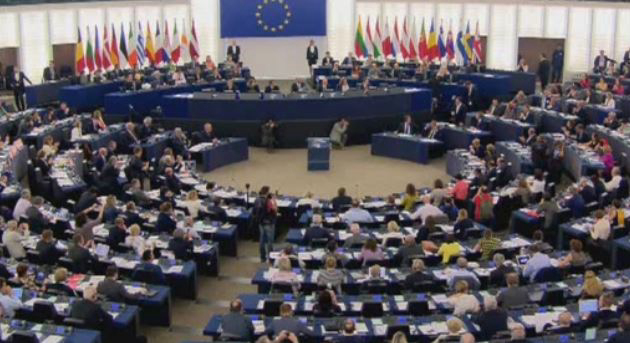
Extravagant spending has now become a heavy burden despite repeated efforts to seek reforms.
In the aftermath of World War II, many European countries established comprehensive welfare systems, covering most aspects of people's lives.
An individual could enjoy various benefits, such as early education, basic education, housing, healthcare, unemployment support and pensions, among others. They were known as generous systems that provide welfare "from cradle to grave."
While the system enhanced social equality and provided a sound security net for decades, it has become difficult to finance it in recent years.
"No system is perfect," Juho Saari, professor of the University of Eastern Finland, told Xinhua. He believed the welfare states have been steadily adjusted to meet new requirements and are by and large doing well.
"It occasionally is evident, that our incentive systems do not perform satisfactorily, resulting in welfare dependency," said Saari, who has been entrusted by Finnish Prime Minister Juha Sipila to lead a working group tasked to halt increasing inequality.
ECONOMIC DOWNTURN
The European welfare systems were based on rapid economic growth and increasing tax revenues. They face a series of problems amid economic downturns.
In 2009, Greece, a member of the European Union (EU) with weak economic strength, suffered from the downgrading by the three major credit rating agencies owing to severe fiscal deficits and high debt levels, which led to the start of its sovereign debt crisis. The outbreak not only exposed the structural rigidness of the euro zone, but also warned of the risks of maintaining a giant welfare system. ( Since welfare expenditures are heavily dependent on good economic performance and a robust labor market, the increasing unemployment rate will lead to tax reduction and insufficient welfare spending.
From 2012 to 2014, for instance, the Finnish economy experienced negative growth for three consecutive years and became one of the worst performing economies in the EU. It was estimated by the then government that there would be a funding gap of 10 billion euros (12 billion U.S. dollars) for the welfare sector in the next 15 years.
The situation in Finland is not an exception. Quite a few European countries are facing an awkward situation in terms of maintaining social welfare. To Tackle the problem, the European countries have been trying to reform structures at both national and EU levels, with plenty of challenges lying ahead and a lack of fruitful results.
AGING SOCIETY
One of the biggest challenges is the end of the demographic dividend era. Saari said the dependency ratio has been a major risk imbedded in the welfare system. Since the European countries have "aging" societies, the labor force will have a bigger burden to support the non-labor.
Many European authorities are trying to extend the working life, reducing social support, encouraging the elderly to take care of themselves and calling on family members to partially shoulder the responsibility of supporting their senior relatives. The support of old people used to be a public task.
The influx of refugees has made the situation even worse. Since 2015, a large number of asylum seekers have been swarming into Europe from the Middle East. On humanitarian grounds, the host states provide them with basic support like healthcare, food, housing and basic education, no matter they have got the permission to stay or not.
Sweden, a Nordic country once boasted as a model of high-level welfare, received 163,000 refugees in 2015. Facing a crisis in housing, education and health care, the Swedish government had to change its policy from voluntary acceptance to mandatory assignment for municipalities.
Marten Blix, a researcher at the Research Institute of Industrial Economics, said the refugee crisis would impact the Swedish model.
Sweden has been among the countries with the world's highest salaries and wages, but many refugees have low education, poorly adapted to the labor market. "It's a very bad combination and the statistics speak its clear language," Blix said.
EXCESSIVE BENEFITS
In the process of institutionalization of the welfare systems, some economists kept warning against letting the excess benefits drift into solid demands.
Christophe Brochard, an economist at the University of Strasbourg, said in an interview with Xinhua that employees and entrepreneurs are "against each other to an extent that the sense of public interest has been lost."
Brochard also criticized the "intermediate bodies," which "are very powerful, defend their vested interest and lack the will to reform."
An analytical report conducted by the Organization for Economic Cooperation and Development (OECD) argued that Europe's generous welfare states, with their overprotective job security, high minimum wages and generous unemployment insurance, heavy taxation and their overriding emphasis on coordinated wage bargaining and social dialogue, had raised the costs of labor above market clearing levels. The OECD Jobs Strategy published in 1994 had examined the labor market performance of the welfare systems and suggested an overall reform to reduce the excessive benefits.
Obviously, the suggestion was merely a mission impossible in the European democratic society. "In terms of median voter, it is clear that you cannot win national elections with the anti-welfare state agenda," noted Saari.
Instead, Saari recommended flexicurity-models like those in Denmark. "A new welfare state model is likely to emerge and it shall probably consist of the elements of flexicurity-models, with labor market reforms, active labor market policy models, life-long learning and more pro-active social policies." Enditem
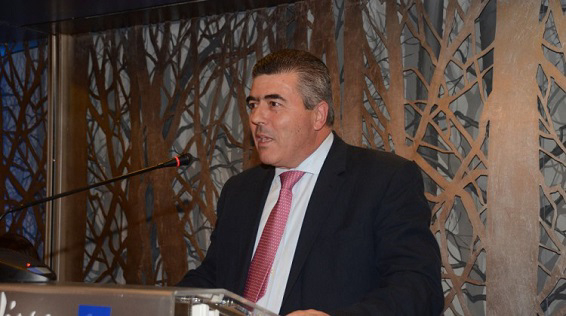
S. Palyogiannis: The Role of LNG for SEE Energy Security
 |
which took place at the IENE International Workshop entitled "Energy Security in SE Europe and the Role of LNG", held in Athens on 4 & 5 July.
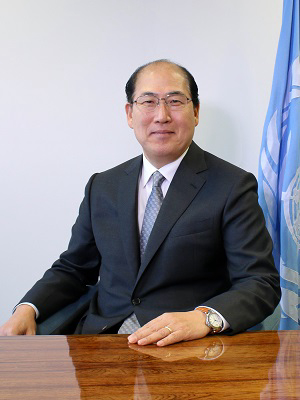
Kitack Lim: shipping is on the brink of a new era
 |
It is a pleasure to be with you and I am very grateful to your Chairman, my friend Esben Poulsson, for the invitation to speak to you today.
Let me say at the beginning, on behalf of the whole of IMO, that I really appreciate the role you play in the work of the Organization. IMO is an organization where its Member governments, together with NGOs like ICS, have made a very significant contribution to IMO's substantive output over many decades. And, just as important, the participation of organisations representing so many different points of view – be they environmental groups, seafarer organizations or indeed, from the industry itself – adds greatly to the credibility of the overall output. I think it is vital that all your voices can be equally heard at IMO.
IMO regulations need to be both pragmatic and proactive - and the common-sense advice provided by ICS, especially with regard to practicality, has been invaluable. The range and number of topics on which you have submitted papers to IMO is immense, and very much appreciated by the membership.
Indeed, the technical input from ICS is reflected in many of the 50-plus international instruments adopted by IMO which, together, create a regulatory framework that ensures shipping is safe, secure and environment-friendly.
Let me now turn to some of these measures in more detail; and I'll start with two of the most important issues on our current agenda - reducing harmful emissions and dealing with invasive species.
One thing they have in common is that, despite a huge amount of progress, both represent "unfinished business".
If we look at emissions first, it is important to remember that IMO has already developed and adopted a raft of measures designed to control emissions from the shipping sector. Thanks to IMO, international shipping was the first industry to be subject to global, mandatory, energy-efficiency measures designed to address greenhouse gas emissions.
But the work has continued and steps are being taken for further measures to be considered. The mandatory collection and reporting of fuel-oil consumption data for ships of 5,000 gross tonnage and above will provide a firm statistical basis for an objective, transparent and inclusive policy debate in the MEPC. And IMO Member States have told the world they will produce a comprehensive strategy for reducing greenhouse gas emissions from ships, beginning with an initial strategy to be adopted next year.
Make no mistake, the whole world will be watching IMO next year, and looking for something of real substance, an initial strategy that will provide a firm basis for our work towards the revised strategy in 2023. Next year really will be a time when the world will expect the IMO Member States to deliver a clear vision as the first stage of the approved roadmap. I know that you in the industry are also expecting clarity on this.
Still on emissions, let me once again underscore my appreciation for the IMO Member States' decision to confirm 2020 as the implementation date for the compulsory reduction in the sulphur content of ships' fuel-oil globally. This is something we can be really be proud of as an Organization and an excellent example of IMO's regulatory work having a profound and beneficial impact far beyond the shipping industry.
Moving to ballast water management, it was also a source of great encouragement that, in July, the MEPC was able to adopt a practical and pragmatic implementation schedule for ships to comply with the IMO Ballast Water Management Convention.
The Convention entered into force last week and, amid all the interest about when ships should comply with the D2 standard, it should not be overlooked that all ships to which the Convention applies are required to manage their ballast water to avoid the transfer of potentially invasive species from the day of entry into force. Implementation of the Convention began straight away, and the requirement to exchange or treat ballast water applies to both new and existing ships - no exceptions, and no delays.
Which means a problem that was identified more than 30 years ago as one of the major global threats to the marine environment is being actively addressed. And that has to be good news.
Ladies and gentlemen, let me finish by looking a bit further into the future. I believe that, thanks to the opportunities afforded by new technology, shipping is on the brink of a new era. The technologies emerging around fuel and energy use, automation and vessel management, materials and construction and so many other areas, will lead to new generations of ships that bring substantial improvements in all the areas that IMO regulates. Indeed, I believe technology and the use of data hold the key to a safer and more sustainable future for shipping.
But technological advances present challenges as well as opportunities, so their introduction into the regulatory framework needs to be considered carefully. We need to balance the benefits against safety and security concerns, the impact on the environment and on international trade, the potential costs to the industry and, not least, their impact on personnel, both on board and ashore.
How we incorporate new technology into the regulatory framework is a key issue for IMO. On the agenda of the Maritime Safety Committee, for example, you will find future-orientated items such as cyber security, e-navigation, the modernization of the maritime distress and safety communication as well as the rapidly emerging prospect of autonomous vessels.
It is absolutely right and proper that IMO should take a proactive and leading role in these issues, given the rapid technological developments surrounding them.
Indeed, IMO regulations for shipping can provide a tangible focus for development of innovative, game-changing technical solutions. In response to IMO regulations, new technologies have already brought significant beneficial changes in the way ships are designed, constructed and operated, contributing to a more interconnected and efficient global supply chain.
By driving technology and encouraging innovation, IMO's global regulatory framework enables the industry to thrive while still serving society's changing demands and expectations.
Thank you."
SECOND QUARTER 2017: CMA CGM outperforms the market with very strong operating and financial results
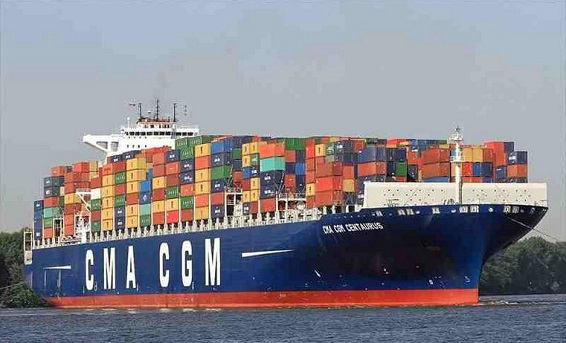
On the release of the financial results, Rodolphe Saadé, the CEO of CMA CGM Group, stated:
”The Group releases excellent financial results for the 2nd quarter, with a core EBIT margin sharply rising thanks to our strategy of profitable growth. Once again, CMA CGM outperforms the industry and demonstrates the excellence of its operational management as well as the relevance of its strategy. During the quarter, we also continued to support the group’s growth with the planned acquisition of Mercosul, opening up the Brazilian domestic market. The Group is also preparing for the future with the order of 9 container ships of 22,000 TEUs which will enable us to continue our development and maintain our competitiveness.”
Q2 Activity and Financial Results
Strong increase in shipping volumes and revenue
During Q2 2017, volumes carried grew by 33.3\% in comparison to Q2 2016, thanks to the integration of APL, the launch of OCEAN ALLIANCE and the industry dynamism.
The increase in freight rates on most of the Group's lines led to a significant 12.5\% increase in average revenues per container in the second quarter of 2017.
The Group’s consolidated revenues hence strongly increased by +56.8\% in comparison with Q2 2016, to reach 5.55 billion USD.
Upsurge in Financial Performance
Despite an increase in fuel price of almost 60\%, unit costs were stable in Q2 2017 thanks to the combined effect of the operational efficiency improvement plan Agility and the synergies from the integration of APL (excluding purchases/sales of slots through Ocean Alliance).
CMA CGM reported a core EBIT margin of 8.9\% to 472 million USD, showing a significant increase in comparison to Q2 2016 (+11.2pts), as well as an increase of +3.4pts in comparison to previous quarter. A year after its acquisition, APL contributes 137 million USD to these results.
CMA CGM is once again positioning itself as the best performing player in the global container shipping market in terms of core EBIT margin, as in Q1 2017.
For Q2 2017, the Group has registered a consolidated net income Group share of 219 million USD.
Highlights of Q2 2017
Launch of OCEAN ALLIANCE
On April 1st 2017, the largest operational shipping alliance, OCEAN ALLIANCE went live. With more than 40 maritime services, this operational alliance was very well received by customers, thanks to the port coverage and transit times offered.
Signing of a JV with Adani
On April 26, 2017, CMA CGM and Adani signed a joint venture agreement to jointly operate the new container terminal at the port of Mundra.
Launch of a new CMA CGM mobile app
On May 4, 2017, CMA CGM launched the new version of its mobile application for its customers, enhanced with new features, also available on tablets running on Android and IOS operating systems.
Proposed acquisition of Mercosul Line
On June 12, 2017, CMA CGM and Maersk Line announced that they have signed a binding agreement whereby CMA CGM would acquire Mercosul Line (Mercosul), one of the leading players in Brazil’s domestic container shipping market. The acquisition of Mercosul will allow CMA CGM to strengthen its service offering to and from South America, most notably in Brazil, especially on cabotage and “door-to-door” services. This proposed acquisition of Mercosul is accompanied by a new service offering between South America, Northern Europe and the Mediterranean.
Sale of Los Angeles Global Gateway South terminal
On June 30, 2017, CMA CGM signed a binding agreement for the sale of a 90\% equity interest in Global Gateway South Terminal (GGS) in Los Angeles, for a cash consideration of 817 million USD to be paid at closing. Transaction terms also provide for the Group to receive additional deferred, contingent cash consideration of which sequence and quantum will depend on GGS’ future operating and financial performance. The disposal of GGS enables CMA CGM to complete the financial deleveraging plan communicated in December 2015 upon APL acquisition. This transaction is expected to close by end of 2017.
Recent developments
S&P rating
On July 3rd, 2017, S&P revised the rating of the CMA CGM group to B, with a positive outlook.
New 650 million EUR bond issue and 205 million dollars revolving credit facility
At the beginning of July, the Group issued a new bond issue for an amount of 650 million euros, in order to refinance other bonds maturities. On this occasion, the group also concluded an agreement with its core banking partners for a new revolving credit facility of 205 million USD.
Order of 9 container ships of 22,000 TEU
In order to keep pace with market growth and the Group's needs, the Board of Directors of CMA CGM has approved the order for 9 container ships of 22,000 twenty-foot equivalent (TEU). This order, of which the first ships will come into service from the end of 2019, will further reduce unit transport costs, particularly on the Asia-Europe routes.
Outlook
Given the recent trend in freight rates, and excluding a significant change in fuel prices and exchange rates, CMA CGM expects to continue to improve its operating results in the second semester compared to the first semester.
Global Energy Demand And Shipping’s Promethean Feats
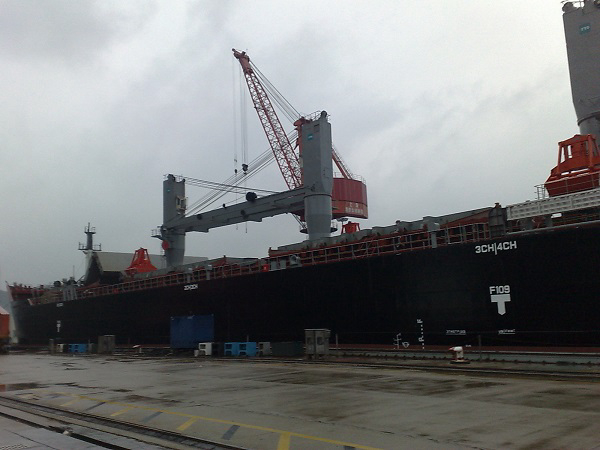
Today the still increasing energy needs of humanity are greater and more diverse than ever before. And in this energy tale, shipping of course plays a titanic role…
Setting The Scene
Energy consumption is ubiquitous in economic activity in the contemporary world, from the internal combustion engine to the many fruits of electrification. In 2016, total primary energy consumption was in excess of 13bn toe globally, with fossil fuels meeting 86\% of energy needs. As far as shipping is concerned, the continuing relevance of fossil fuels has been highly beneficial over the long run, with rising seaborne trade in coal, oil and gas supporting growth in the bulker, oil tanker and LNG fleets to a combined 22,000 vessels as of start September 2017.
 |
An Ocean Of Oil
In the last three decades, global oil consumption increased by 40\% to stand at 4.4bn tonnes in 2016 (equivalent to 33\% of global energy demand). But seaborne trade in crude oil increased by over 70\% to reach 1.9bn tonnes in 2016, representing 44\% of world oil consumption, versus 36\% in 1990. While much oil is consumed where it is produced and large volumes are moved via pipeline, tankers have been vital in connecting oil producing areas such as the Middle East with distant areas of oil demand growth such as Asian non-OECD countries. With the US perhaps set to become a more significant oil exporter and Brazil a key source of oil production growth, long-haul trade to Asia looks set to remain a key feature of tanker and hence energy markets.
The Ascent Of Coal
Prospects are not so clear cut for coal. It has been a key energy source since the Industrial Revolution and in 2016, steam coal met 28\% of global energy needs. China and India’s fast growing economies have been key drivers of steam coal demand and imports (e.g. from Indonesia) in the last few decades, but pressure from environmental policies are clearly building. Still, seaborne trade represented 17\% of global steam coal demand in 2016, compared to 9\% in 1990.
The Age Of Natural Gas?
In energy terms, global natural gas consumption was equivalent to 3.2bn tonnes of oil in 2016, accounting for 24\% of global energy demand, up from 20\% thirty years ago. The increasingly widespread adoption of LNG technology has seen the seaborne share of global gas consumption rise from 4\% in 1990 to 10\% in 2016. In a world where renewables like solar and wind still meet just 3\% of energy demand, natural gas is increasingly seen as a ‘bridging fuel’ to a lower-carbon future.
So, in energy terms, seaborne trade in coal, oil and gas represented 25\% of global demand met by fossil fuels in 2016, up from under 20\% three decades ago, even with fossil fuel consumption up by 75\%. Energy is clearly a major part of shipping; but conversely, shipping now appears more vital to the global energy nexus than ever – a heroic feat indeed!
Source: Clarksons
Spotlight: Europe's economic recovery stumbles despite encouraging signs
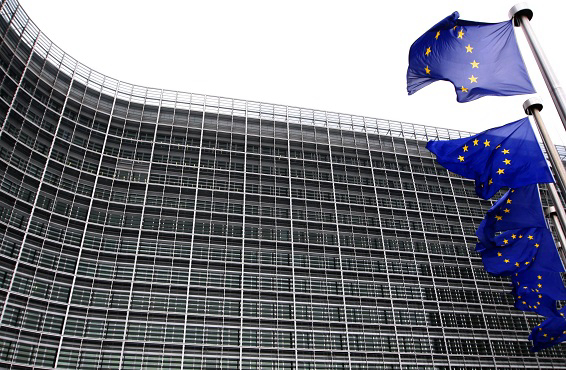
However, despite encouraging signs that have become increasingly visible since the beginning of this year, observers said it is largely related to a cyclical recovery rather than strong, balanced and sustainable growth.
WHERE'S THE SUSTAINABLE GROWTH?
The European economy has entered its fifth year of recovery, which is reaching all European Union (EU) Member States, the European Commission summarized in its Spring Economic Forecast, expecting that the recovery would continue at a largely steady pace this year and next.
With private consumption consistently boosting growth and foreign trade expanding moderately, the annual Gross Domestic Product (GDP) growth of the EU is expected to reach 1.9 percent this year, according to a European Commission projection, which shows improving sentiment.
There is no doubt that after years of crisis, Europe has successfully entered a broad-based cyclical recovery, which is confirmed by encouraging data like a declining unemployment rate, a growing headline inflation rate etc. However, it is widely believed that Europe's economic potential remains below its pre-crisis level.
Struggling to tackle the financial crisis for almost a decade, the EU has not achieved a credible return to economic vigor, said Maria Demertzis, deputy director at EU think tank Bruegel.
"It is true that Europe has seen some renewed growth recently, but it remains weak and precarious," she said in a recently published article.
Germany's economic growth, the largest economy in Europe, appears to be on solid footing but remains unreliable.
"The robust cyclical upswing is masking the creeping erosion of growth," Deutsche Bank said in a research report released last month, warning that by 2025 Germany's trend growth looks set to halve to only 0.75 percent.
In Italy, where one third of youths remain unemployed, just 6 percent of people expressed optimism for future growth, according to one report.
LAME-DUCK POLICY
The ultra-loose monetary policy by the European Central Bank (ECB) has succeeded in preserving the euro, preventing the single currency union from collapse, long-term recession and deflation, since ECB President Mario Draghi claimed "whatever it takes..." in the summer of 2012.
The package of accommodative monetary policy tools, both conventional and unconventional, including a zero interest rate plus massive asset purchases of over two trillion euro (2.4 trillion U.S. dollars) as of August, have been working in the euro area, yet made the recovery addicted to cheap money provided by Eurosystem, so that the ECB is still lack of confidence to taper quantitative easing.
Monetary policy alone would not be enough to jump-start the economy, Draghi said, urging the fiscal policy as well as structural reforms both at the EU level and national level to accelerate.
In fact, investment has contributed far less to growth in Europe in context of ongoing de-leveraging and fiscal consolidation.
The business investment ratio in the euro area is currently around 15 percent, much lower than the level at the beginning of 2009, while the public debt ratio of the eurozone has risen to 89.5 percent as of the first quarter of 2017, which anchored many countries to the dilemma of cutting the deficit and expanding investment.
"The improving near-term outlook is clouded by significant downside risks, especially in the medium and long term, amidst thin policy buffers," according to the IMF Staff Report concerning the eurozone policy which was released in July.
The IMF urged that high-debt countries with relatively less fiscal space, like Italy, France and Portugal, should consolidate to put debt firmly on a downward path and to rebuild buffers.
Not only subdued investment dynamics but also sluggish structural reforms, the key to solving structural problems, have led to chronically slow growth of productivity in Europe.
"Europe has experienced a two-decade long decline in competitiveness," the European Investment Bank (EIB) said in a report.
"This trend has undermined the comparative ability of European firms to compete and to provide rewarding jobs and a high standard of living," the EIB underlined in its report.
DEEP-ROOTED PROBLEMS
Observers said Europe has failed to upgrade its economic recovery towards solid, sustainable and balanced growth, mainly due to lack of strong determination as well as underpinning of consistent, effective and coordinated policies, which reflects more deep-rooted problems that have been troubling Europe for long time.
Electoral systems in Europe make many politicians focus too much on ballots rather than governance, which may delay or even hinder reforms.
Although the elites in Europe are aware of the deep-rooted "social ills," they are not determined to take painful reforms.
As a result, the market didn't work well when problems arose.
For example, elite class solidification, or the growing gap between the elite and middle classes, is considered to be the root of a variety of problems in France, said Luc Rouban, a researcher with the Center of Political Research of Science Po.
"The interest groups who manipulate 'state apparatus' care much for the steadiness of the political system, not willing to see much change in this regard, which make reforms even more difficult," he added. Enditem
Spotlight: Terrorist attacks are plaguing Europe like cancer
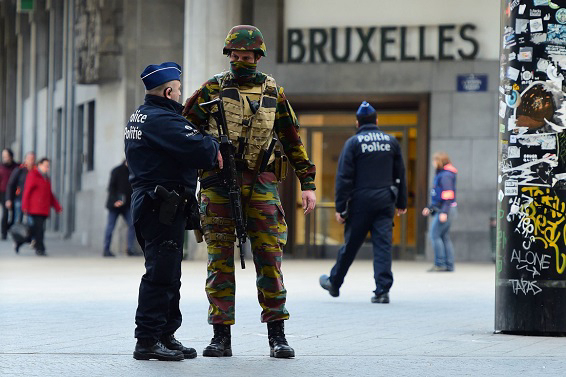
But heavily armed soldiers patrolling parks, stations and tourist resorts immediately bring them back to reality -- this city, which has been attacked twice this year, is under the threat of terrorism.
What happens in Brussels is just an epitome of whole Europe. Like a ghost, the threat of terrorist attacks is haunting Europeans incessantly. Plagued by the threat, Europe is rapidly drifting away from a land of tranquility.
THREE NEW TRENDS OF TERRORIST ATTACKS IN EUROPE
Despite the counter-terrorism measures taken by European governments and the European Union (EU), the number and frequency of terrorist attacks are increasing steadily.
As of the end of August, the whole continent witnessed at least 13 terrorist attacks, leaving at least 58 people killed and over 300 injured in Belgium, Britain, Finland, France, Germany, Spain and Sweden, among others.
"They (terrorists) aren't looking for spectacular results using huge resources, but rather they want frequency to try to destabilize their adversaries," Frederic Gallois, former head of France's elite GIGN anti-terror unit, told local media after the twin terrorist attacks in Barcelona. "It's the regularity which is the problem."
"At the moment, there's an attack every four to six weeks in Europe," he added. Then after each lull, "everyone says to themselves 'something's going to happen'."
Unlike sophisticatedly organized attacks such as "9/11," today's terrorist activities are intertwined with "lone wolf" style attacks and organized ones. In addition, suspects of attacks in Barcelona and Finland were ordinary people who had no criminal records before, making police investigations after the attack more difficult. And the use of social media as well as daily tools when committing crimes also makes the attacks harder to be detected and prevented.
Meanwhile, many suspects of terrorist attacks in Europe are descendants of native immigrants. For a long time, European countries turned a blind eye to the fact that their citizens were inspired by extremism and joined "Jihad" in the Middle East and other war-torn areas.
As terrorist groups like the Islamic State are being hit hard in the Middle East, they returned to Europe as legal residents. Europol estimates those people number over 5,000 and takes them as a serious concern.
VICIOUS CIRCLE OF VIOLENCE AGAINST VIOLENCE
The environment that nurtures extremism is not only linked with the social and economic problems in Europe, but also fueled by the international situation, late French philosopher Ruwen Ogien told Xinhua in 2015.
For one thing, the increased terrorist attacks in Europe have much to do with the intervention policies of European countries in the Middle East. Fighting for resources and markets, European countries have long been trying to establish their own sphere of influence there.
However, the one-sided competition in the region and egocentric policy of European countries not only disturbed local economic development, but also hindered Arabian industrialization, resulting in more poverty and inequality, a hotbed of terrorism.
Pursuing double standards, Western countries have long been taking anti-terrorism as a tool to implement their "Middle East policy." Instead of eliminating terrorism, Western powers had created soil for the survival of terrorism in the Middle East, leading Europe into a vicious circle of violence against violence, said Shen Yihuai, an expert on European affairs at China's Institute of Modern International Relations.
For another, due to Europe's economic downturn and high unemployment in recent years, the long-existing problem of immigrants' integration into the European society has deteriorated.
British economist and writer Martin Wolf said the 2008 financial crisis has adversely affected those unskilled and semi-skilled male workers in the West, who were once significant beneficiaries of industrialization.
Wolf, an associate editor and chief economic commentator of the London-based daily Financial Times, believes that the rising role of the financial sector, the increasing imports of labor-intensive goods and the surging immigration are behind the Western public anger.
Thirdly, the inherent paradox of the Western democracy results in the insufficient protection of the interests of the marginalized groups. Frequent terrorist attacks cannot only be attributed to cultural and religious conflicts between the West and the Middle East. The Western social system ridden with internal conflicts and contradictions should also be blamed, said Ogien.
In addition, the mainstream Christian culture in European countries still distorts and repels Muslim culture, consequently intensifying the trend of conservatism in the European society.
European countries should reflect on their internal and external policies and make timely adjustments, which are the key to long-term stability on the continent, said Cui Hongjian, director of the China Institute of International Studies. Enditem

Powered by  © Μaritimes 2019