

-
Home

-
Maritimes NEWS
-
Ports
- maritimes


maritimes
Cruise industry announces European Summit 2024 and inaugural innovation expo to take place in Genoa in partnership with local and regional leadership

CLIA’s annual European Summit and inaugural CLIA Innovation Expo will take place 11-14 March 2024
Genoa, Italy – 1 August 2023- Cruise Lines International Association (CLIA) announces Genoa, Italy, will be host to the 2024 European Summit and the new CLIA Innovation Expo. Both events will be part of a week of activities during 11-14 March 2024 focused on innovation, sustainability, and community.
In partnership with the Ligurian Region, Municipality of Genoa, the Ports of Genoa, and Chamber of Commerce of Genoa, top cruise line executives, industry innovators, and political leaders will gather to showcase the industry’s leading role in providing environmental and tourism management solutions.
The CLIA Innovation Expo is a new forum for companies currently supplying, or interested in supplying, the cruise industry, with a focus on maritime technology, and hospitality. The Expo will showcase solutions and products from across Europe, Italy, and in particular Liguria and the surrounding regions.
The CLIA Innovation Expo will include an innovation hub where technology developers and suppliers across various categories will introduce and discuss new products and solutions for the industry. A Taste of Cruise Pavilion will include a culinary demonstration area and connect hotel, food, and beverage suppliers with cruise line decisionmakers in procurement and operations to explore new offerings.
The European Summit will build on the successful Summit in Genoa 2022 and Paris 2023, which brought together institutional representatives and stakeholders from across the supply chain to debate key policy issues and developments.
Pierfrancesco Vago, Global Chairman, CLIA, and Executive Chairman, MSC Cruises, said: “Sustainability and innovation are the hallmarks of the cruise industry, and this week of activities will demonstrate this unequivocally. The entire cruise industry will send representatives, including senior executives and buyers, making this a unique opportunity for anyone who wants to engage with our industry to come and showcase their products, solutions, and services. This is the first time that these events will take place, and Genoa, as a leading European cruise port and a centre for shipbuilding and marine technology development, is a perfect match.”
“The central role of Liguria in the cruise industry," explains Liguria Region President Giovanni Toti, "is once again recognized by an international initiative. Thanks to CLIA, the new challenges of the blue economy will pass through our region to look at the future of the sector: together we will draw the lines for a more sustainable cruise tourism and how innovation will help to achieve new frontiers of shipping. The choice of Genoa as the capital of the event reaffirms the ability of the Liguria Region, the Chamber of Commerce, the Port System Authority, and the Municipality of Genoa to work together to attract major events related to cultural and conference tourism. A unique opportunity for visibility not only for the city, but also for all the ports of call in Liguria."
Mayor Bucci of the Municipality of Genoa declares: “It is a great honour for Genoa. This Summit represents the strategic importance of our city in the Italian and European cruise sector. We have recovered and exceeded the pre-pandemic numbers, thanks to great teamwork. The goal for the coming years is to be able to confirm and surpass the passengers of recent years, demonstrating that our city is increasingly lively and attractive for Italian and foreign visitors.
President Signorini of the Ports of Genoa says: “We are honoured to have the opportunity to host in Genoa, Mediterranean’s leading cruise destination, such an important event for the cruise industry. This year, with a forecast of more than 2 million cruise passengers, the Ports of Genoa are poised to consolidate their leadership in the Mediterranean. The port, shipping, shipyards, and cruise sectors represent an enormous valued-added contribution to the Liguria Region and the City of Genoa’s economy. We are firmly convinced that Genoa will be in a strong position to attract the industry’s major players at the forthcoming Cruise European Summit.”
Luigi Attanasio, President of the Chamber of Commerce of Genoa, noted: "We are proud that Genoa is hosting for the second time the CLIA European Summit and its first Expo that will include a Taste of Cruise pavilion and an Innovation Hub that will allow Liguria and the surrounding regions to introduce many new providers of the world’s finest food, beverage and technical innovations for the cruise industry.”
Marie-Caroline Laurent, Director General, Europe, CLIA said: “The cruise industry is at the heart of Europe. These events will highlight how Europe is leading the way in cruise shipbuilding and what this means for the European economy. Europe is also setting the pace for sustainability and the cruise industry is using its innovation and expertise to help to deliver on Europe’s climate ambitions. Collaboration is key to innovation, and we look forward to a week of debate, displays, and workshops, showcasing the best of our industry.” The week of activities will gather cruise lines decision-makers, senior representatives of shipyards, classification societies, ports and destinations as well as governmental bodies, experts in maritime technologies, and existing and potential cruise suppliers with a focus on technology and hospitality.
For more information about this exciting event and to find out how your company can get involved, please visit www.Cruising.org/CruiseWeekEurope.
To receive details on showcasing your products and services at the Innovation Expo, please email us at This email address is being protected from spambots. You need JavaScript enabled to view it..
In a show of the collective power of the cruise industry, CLIA will build on the success of the third edition of European Summit with expanded and enhanced content, interactive workshops, numerous networking events and a new CLIA Innovation Expo, providing an opportunity to showcase critical and new brands and products across hospitality, food and beverage, and marine technical services. The Expo will bring together the community to collaborate on innovation to help the industry achieve growth and provide new solutions, products, and services. During this week, our members will foster engagement, share intelligence, and connect with buyers, media, and suppliers from across Europe and around the globe.
About the Cruise Lines International Association (CLIA)
CLIA is the world's largest cruise industry trade association, providing a unified voice for the industry as the leading authority of the global cruise community. On behalf of its members, affiliates and partners, the organization supports policies and practices that foster a secure, healthy, and sustainable cruise ship environment, promoting positive travel experiences for the more than 30 million passengers who have cruised annually. The CLIA community includes the world's most prestigious ocean, river, and specialty cruise lines; a highly trained and certified travel agent community; and a widespread network of stakeholders, including ports & destinations, ship development, suppliers, and business services. For further information, please visit cruising.org or europe.cruising.org
[xclusiv] S&P Report 31st July 2023
![[xclusiv] S&P Report 31st July 2023](/media/k2/items/cache/2120a469b9eeaf0d4407bd87924e579b_Generic.jpg)
Market Commentary:
The second quarter of the year has come to an end, and it is time to do a quick review of the S&P market for bulk carriers and tankers. 2022 was a pretty good year for the S&P market, having about 660 transactions within the bulk carrier sector and about 710 transactions within the tanker sector. Bulk carrier transactions lost their pace as 2022 was coming to an end, and tanker transactions were gaining momentum.
2023 started just like 2022 ended. Bulk carrier secondhand sales for the first six months of 2023 accounted to about 325 vessels, 14% lower than the first six months of 2022. The trend in the dry bulk S&P transactions was decreasing since the fourth quarter of 2022 - following the fall of the dry bulk freight rate - although there was an uptick towards end of Q1 2023 in the dry bulk S&P sentiment. In the first quarter of 2023, 175 bulkers changed hands while in the second quarter of 2023, there were a total of 150 transactions, 25 less than the first quarter. These numbers are lower than the 184 transactions of the first quarter of 2022 and the 183 transactions of the second quarter of 2022. It is obvious that most owners and investors, were alarmed by the downward trend in freight rates and the simultaneous high prices of vessels, and as a result became more selective in buying bulkers, pushing for lower prices, and waiting for the market to balance.
“Going deeper underground” with our review for the dry S&P market, Handysize and Supramax vessels are clearly the most sought-after candidates. 86 Supramaxes (Q1 2023: 45, Q2 2023: 41) and 81 Handysizes (Q1 2023: 50, Q2 2023: 31) were sold in the first half of 2023, while Capesize, Ultramax and Panamax vessels followed, with almost similar sales to each other (Capes: 41, Ultramax: 36, Panamax: 32). Capesizes and Newcastlemaxes are the only vessels categories that saw their transactions rise comparing to 2022 in terms of the first half of the year, from 24 to 41 and from 6 to 12 respectively. The preference for vessels between 8 and 13 years old was strong for both 2022 and 2023. More than half of the vessels that were sold in the first half of the year were between these ages. New emission policies along with the high asset prices have made older vessels far less attractive and owners have clearly turned their interest to the most value for money alternatives.
The tanker market follows exactly the opposite trend than the dry bulk market. The war in Ukraine along with the small orderbook, have created the conditions to sustain freight rates at healthy levels, creating earnings for the owners for many consecutive months. This has whetted the appetite for tankers, giving a boost to the S&P market. In the first quarter of 2023, there were 215 transactions while in the second quarter, the transactions were 183. This sums for 398 tankers that changed ownership within the first half of 2023, 88 vessels more comparing to the same period of 2022. In terms of quarters, the first quarter of 2023 had 75% more transactions than the same period of 2022, while the second quarter of 2023 only had a 1% difference compared to the second quarter of 2022.
The champions in the wet S&P market are definitely the MR2 and Panamax/LR1 vessels. 67 and 48 MR2s have changed owners within the first and the second quarter of 2023 respectively. These 115 transactions for the first half of the year are 55% higher compared to the same period of 2022. In the Panamax/LR1 size the difference in numbers between 2023 and 2022 is quite impressive. Within the first six months of 2023, about 64 vessels have been sold, a 146% increase comparing the 26 similar vessels that were sold during the same period in 2022 and 6 vessels more than the whole 2022 year. In terms of vessel age, definitely the majority of sales are about vessels between 13 and 20 years old. About 288 vessels ageing between 13 and 20 years were sold in the first half of 2023, 100 vessels more than the same period of 2022. The increased interest for older aged tankers is mainly connected with the Western sanctions on Russian oil trade, as many Asian companies are trying to get into the game of transporting Russian oil and oil products, filling the gap of Western companies.
Sale and Purchase:
Although the northern hemisphere is in the heart of summer, both the dry and wet S&P activity have revved up during July, as within the current month we witnessed almost 20 dry bulk sales more compared to the number of sales took place in June 2023. On the Newcastlemax sector, the “Clear Horizon” - 208K/2012 NACKS and the “Blue Horizon”- 208K/2012 NACKS were sold for USD 33.5 mills each to undisclosed buyers. The Capesize “Shiosai” - 177K/2009 Namura was sold for region USD 21 mills to Chinese buyers. Finally, the Handysize “Cielo Di Palermo”- 37K/2013 Saiki changed hands for USD 17 mills, while the 3-year older “Cecilia” – 34K/2010 Orient was sold for region USD 13 mills.
Similarly, to the dry firm S&P activity, the tanker S&P activity was also strong during July, with the total tanker sales increasing by 14 sales compared to June’s tanker sales. On the VLCC sector, clients of Sinokor Merchant Marine acquired 3x Scrubber fitted vessels, the “Fida” - 316K/2011 HHI, the “Sifa” - 316K/2011 HHI and the “Saham”- 300K/2010 Universal for region USD 194 mills enbloc. 2x Ice Class 1B LR1 vessels, the “Mandala”- 65K/2006 Brodosplit and the “Donna” - 65K/2006 Brodosplit found new owners for USD 21 mills each. On the MR2 sector, the “Cassiopeia II” - 51K/2008 SPP changed hands for USD 23 mills. Last but not least, the Chemical tanker “Celsius Monaco” - 20K/2005 Shin Kurushima was sold for high USD 13 mills.
The Ambassador & General Consul of Panama in Greece meets with the Deputy Minister of Foreign Affairs of the Hellenic Republic

The Ambasssador and General Consul of Panama in Greece, H.E. Mrs. Julie Lymberopulos met the Deputy Minister of Foreign Affairs of the Hellenic Republic, Honorable Mr. Giorgos Kotsiras, on Tuesday 25th of July 2023 at the Ministry of Foreign Affairs of Hellenic Republic to discuss about the strengthening of the cooperation between the two countries, in various sections such as Diplomacy, Shipping, Trade and Investment.
The conversation between the Deputy Minister and the Ambassador was carried out in an atmosphere of mutual appreciation and sympathy.
Panamax market finally finding some life
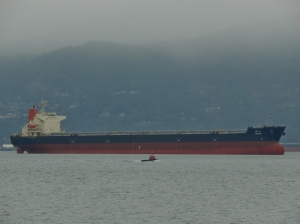
Capesize
After a slow beginning to the week, the Capesize market experienced a surge on Wednesday with a rise of over $2,500 in a day on its five timecharter routes average. The week closed at $15,180 with +$3,222 week-on-week. Both fronthaul and trans-Atlantic business were particularly active whilst tonnage in the Atlantic tightened. Solid volume lent support and made the North Atlantic the strongest sector of the week. By Friday, vessels delivered in the Continent/Mediterranean were paid close to $36,000 for runs to the Far East. From Brazil, moving iron ore to China was marked in the mid $19s for second half August loading. In the Pacific, the West Australia to Qingdao trade remained stable throughout the week at the level of $7.70. Currently both a trans-Pacific and a China to Brazil round voyage are in the $12,000s per day.
Panamax
It was an eventful week with the Panamax market finally finding some life. The week began slowly, but eventually sparked and was duly accompanied by an FFA drive/some Cape splits in parts only to flatten out as the week ended. In the Atlantic, some much needed mineral demand was evident alongside solid demand ex South America for mid/end August arrival window. 82,000-dwt types delivery Singapore were now achieving somewhere between $10,500 and $11,000 date dependent. Further north, an 82,000-dwt delivery Continent achieved $7,500 for a trans-Atlantic round trip via US East Coast. In Asia, rates improved marginally, buoyed somewhat by the pick-up in South America, but decent levels of Australian coal provided the support for most part of the week and a small smattering of NoPac enquiry mid-week, but pitted against a lengthy tonnage list rates hovered around the $6,000 mark for Australian mineral round trips.
Ultramax/Supramax
Another rather unexciting week for the sector, certainly from the Atlantic, which saw further drops with limited fresh impetus across most areas with the ongoing Summertime slow down. The US Gulf was described as positional whilst the South Atlantic had positional opportunities for owners with prompt vessels, although it did remain fairly uneventful. A 55,000-dwt was heard fixed delivery Recalada for a trip to the East Mediterranean at $14,000. In the US Gulf, a 58,000-dwt was heard to have fixed from SW Pass to the Mediterranean at $9,000. From Asia, stronger enquiry was seen in the south at the beginning of the week and with the recent bad weather some vessels where delayed, which kept levels at a reasonable level. Further north, some saw demand remain for backhaul enquiry but limited fresh enquiry was seen from the NoPac. A newbuilding 64,000-dwt open Japan fixed a trip to Brazil in the high $7,000s. Further south, a 63,000-dwt fixed delivery Koh Si Chang via Indonesia redelivery China at $9,000.
Handysize
Limited enquiry in the South Atlantic has led to ever growing tonnage availability. A 32,000-dwt was fixed basis delivery Recalada for a trip to the US East Coast with an intended cargo of sugar and duration of about 50 days at $9,000. The US Gulf was also suffering similar issues with limited cargo availability. A 32,000-dwt was fixed from SW Pass to Israel with an intended cargo of grains at $5,000 and a 38,000-dwt fixed from Barranquilla to China with an intended cargo of coal at $10,000. In Asia, a 34,000-dwt opening in Koh Si Chang was fixed for a trip via Kijing to Samalaju with an intended cargo of alumina at $4,750 and a 37,000-dwt was fixed from Papa New Guinea via Australia for a round voyage at around $10,000 with an intended cargo of concentrates whilst a 36,000-dwt open in Japan was linked to fixing for a round trip via Australia in the upper $5,000s.
Source: The Baltic Exchange
Drewry: Container Equity Index Up 10.4% in July
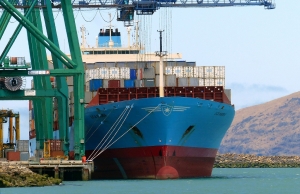
Container shipping equities have started recovering after significant declines in 2Q23, anticipating an uptick in demand with the peak season’s arrival, albeit later than historical standards. The Drewry Container Equity Index increased 10.4% in July (as of 21 July 2023), but due to the 24.0% decline in 2Q23 (vs 1Q23: +11.3%), the index fell 6.7% YTD (ending 21 July 2023). The S&P 500 posted an 13.6% growth during the same period.
The Drewry Container Equity Index trades at a P/B of 0.6x, a 38.7% discount to its pre-pandemic average (2013-18). Plunging spot rates should translate into weaker earnings in 2H23 despite higher volumes than in 1H23.
The Drewry World Container Index (WCI) at USD 1536.90 per day per 40ft container as of 20 July 2023 (-28.0% in YTD 2023) was nearly half its 10-year average, indicating that overcapacity is dragging down the earnings of the industry. However, the index remained stable (+0.1%) in June, suggesting that the rate of decline is reducing.
With effective capacity forecast to grow 26.2% in 2023, supply should outpace demand significantly. Thus, any uptick in demand will unlikely prevent carriers from making a net loss in full-year 2023. Nonetheless, carriers continue to expand their orderbooks, placing 304 kteu on order in June (+57.7% YoY). However, in 1H23, the new orders placed were down 39.7% YoY to 898 kteu
While we wait for the announcement of 2Q23 results by the carriers, we focus on the liquidity of the container shipping industry. The operating cash flow for the industry decreased 75.7% YoY to USD 11.0bn in 1Q23, driven by the 80.9% YoY decline in the net income to USD 4.8bn.
In 1Q23 the operating cash flow declined 52.7% QoQ (vs 4Q22: -32.5%). While cargo volumes are forecast to rise 6.0% in 2Q23, the WCI marked a decline of 13.4% in 2Q23. We thus expect further reduction in net income and in turn the operating cash flow in 2Q23.
Amid the downturn, carriers reduced their capex in 1Q23 by 62.8% YoY to USD 1.3bn. On a quarterly basis, the reduction was even sharper at 86.4% QoQ (vs 4Q22: 54.0%). While the outflow on acquisitions was 3.5x higher YoY, it marked an 88.0% decline QoQ in 1Q23 (vs 4Q22: -2.6% QoQ).
The cash and cash equivalent for the industry grew 0.1% YoY as well as QoQ, totalling USD 108.6bn. In 2Q23, there will be a significant outflow in the form of massive 2022 dividends to be paid to the investors, thus, possibly marking a QoQ decline in cash.
The industry’s gross debt reduced 3.2% QoQ at end 1Q23 to USD 51.3bn, which coupled with stable cash, led to the net gearing improving to -30.5% in 1Q23 (vs 4Q22: -28.5%).
Source: Drewry Maritime Financial Research
Chinese military a steadfast force for world peace, stability: spokesperson

BEIJING, July 29 (Xinhua) -- The Chinese military has always been a steadfast force in upholding world peace and stability, a defense spokesperson said on Saturday.
China's military force has never posed a challenge to anyone nor threatened others, said Tan Kefei, spokesperson for the Chinese Ministry of National Defense, in response to a question concerning the 2023 defense white paper newly approved by the Japanese government.
According to media reports, the white paper says China has presented an unprecedented and the greatest strategic challenge to Japan.
The Japanese defense white paper clings to its mistaken perception of China, deliberately exaggerates the so-called "Chinese military threat," smears China's legitimate military development and activities, rudely interferes in China's internal affairs, and provokes regional tensions, Tan said.
"We strongly oppose this and have already made serious representations to Japan," the spokesperson noted.
In recent years, Japan has substantially increased defense spending and has been steadily advancing its military expansion, Tan said, adding that it has aligned itself with certain major powers, forming targeted "small circles."
These acts have posed a severe challenge to regional and global peace, security, and stability, Tan added.
The spokesperson urged Japan to learn from historical lessons, refrain from irresponsible words and actions, abandon zero-sum and confrontational thinking toward neighboring countries, develop a correct understanding of China, and take practical steps to restore bilateral relations onto the right path. ■
Land-sea trade corridor helps China better integrate with global market
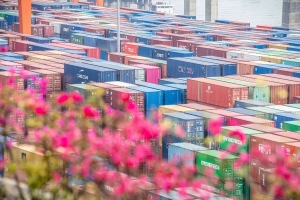
BEIJING, July 26 (Xinhua) -- Guoyuan Port in southwest China's Chongqing is bustling, with rows of new energy vehicles queuing up to be transported overseas via the New International Land-Sea Trade Corridor.
Launched in 2017, the new corridor is a trade and logistics passage that was jointly built by provincial-level regions in western China and ASEAN countries. It is also one of the key projects under the Belt and Road Initiative (BRI), which was initiated by China.
Trade and investment often follow closely on the heels of infrastructure connectivity. More companies, especially those in western China, are expanding their footprints in overseas markets amid tailwinds from facilitated transportation.
"The new trade corridor has provided us with a more efficient alternative, thus helping us to go global, and has greatly enhanced our competitiveness in the global market," said Wang Di, senior manager of the logistics department at Changan Automobile Co., Ltd., a leading vehicle manufacturer based in Chongqing.
For instance, through the trade corridor, Changan's cars can reach Central Asia in only about 30 days, whereas previously it would take about two months.
In the first half of the year, the company exported 178,000 vehicles, with the export volume through the trade corridor 3.5 times more than during the same period of 2022.
As part of its strategy for broader expansion in the Southeast Asian market, the company will put a new plant in Thailand into production in 2024, with an expected annual output of 100,000 units. "We anticipate that the overseas market will account for 30 percent of the total by 2030, with the exports reaching 1.2 million units by then," Wang said.
Chongqing Wankai New Materials Technology Co., Ltd. is another company benefitting from the route as it seeks more business in the global market. Thanks to the corridor, the food-grade polyethylene terephthalate producer can cut costs and transportation times when selling its products to countries around the globe.
"Compared with the previous shipping route via river and sea, the new corridor offers a shortcut, saving us about 10 days and helping us gain an upper hand in the global market," said Lin Zheng, the company's logistics manager.
"We believe that the trade route will attract more enterprises to develop their business in western China and nurture industrial clusters," Lin added.
Over six years of rapid growth, the land-sea corridor program has enabled western Chinese provinces and regions to form close links with global markets, especially in ASEAN member nations, sending their cargo to 393 ports across 119 countries.
A total of 756,000 twenty-foot equivalent unit containers were transported through the trade corridor in 2022, a 223-fold increase over the same period of 2017. The variety of items transported also expanded to 940 plus from 50 in 2017.
Thanks to the trade corridor, an increasing number of products from China's inland provinces and regions along the route, such as Ningxia Hui Autonomous Region's red wine and nuts from Xinjiang Uygur Autonomous Region, have explored broader markets worldwide.
Meanwhile, Cambodian rice, Thai coconuts and mangosteens, and Vietnamese passion fruit and durians can now reach the Chinese market through the trade corridor in just a few days.
The new trade corridor has provided greater market space for China, as well as regions and countries along the route, and has boosted their trade and exchanges, said Liu Wei, director of the logistics and operation coordination center of the New International Land-Sea Trade Corridor.
"It also serves as an embodiment of the concept of a community with a shared future for humanity," Liu said.
China is planning to further strengthen the connection between domestic and external logistics, enhance cooperation with key ports along the route and promote multimodal transportation to ensure the stable growth of cargo volume, Liu added. ■
China's road, waterway passenger trips soar in January-May
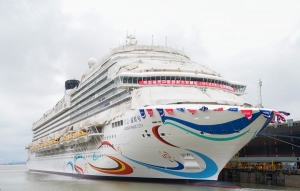
BEIJING, July 27 (Xinhua) -- China's road and waterway passenger volume registered robust growth in the first five months of the year, data from the Ministry of Transport shows.
There were 1.75 billion road passenger trips made in the country during the period, surging 17.5 percent year on year, according to the ministry.
In the same period, passenger trips made on China's waterways totaled 97.48 million, soaring 160.4 percent from last year.
In May alone, China's road passenger trips climbed 46.7 percent year on year, and its waterway passenger volume skyrocketed 269.6 percent from the same period of 2022, the data also reveals. ■
China-Europe freight trains facilitate NEV exports
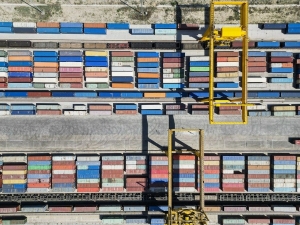
URUMQI, July 26 (Xinhua) -- With a loud train whistle echoing through the air, a freight train loaded with more than 260 new energy vehicles (NEVs) slowly pulled out of the Horgos Port in northwest China, and prepared to head to Uzbekistan.
In the first half of this year, a total of 18,000 NEVs were exported through the Horgos Port in Xinjiang Uygur Autonomous Region, mostly via China-Europe freight trains, marking a 3.9-fold increase compared to the previous year, the Horgos Customs said.
"The China-Europe freight train has provided us with a new pathway for exporting automobiles," said Li Ruikang, manager of Sino-Worlink Special Cargo Railway Logistics Co., Ltd.
Li added that 25 percent of the vehicles exported by his company are through railway transportation, with the efficient customs clearance process being a crucial factor in their decision to utilize the China-Europe freight train.
Based on vehicle type, weight, dimensions and other details, relevant facilitation measures for customs clearance have been formulated by the Horgos Customs, significantly reducing clearance time and lowering costs for car manufacturers.
Currently, the majority of automobiles transported through the Horgos Port, one of China's closest ports to Central Asia and Europe by land transport, come from provincial-level regions such as Chongqing, Sichuan and Guangdong, destined for countries along the Belt and Road, including Kazakhstan and Uzbekistan.
The China-Europe freight train service that started operations in 2011 has offered a secure and reliable channel between Asia and Europe, transporting a variety of goods ranging from IT products and automobiles to wines and coffee beans.
An increasing number of NEV exporters are turning to China-Europe freight train service due to its stable and smooth transportation environment, multiple routes and stops, said Lyu Wangsheng, an official from Horgos Customs.
In January, a freight train carrying 50 NEVs departed south China's Guangzhou metropolis for Europe. It's the first China-Europe freight train departing from Guangdong Province that is exclusively for Chinese-made NEVs.
Guangzhou Customs has opened a green channel for NEV exports to ensure smooth logistics and supply chains.
As global pressure to reduce carbon emissions and energy crises intensify, many countries are embracing policies that support the adoption of NEVs. Leveraging its industrial chain advantages, China's export of new energy vehicles has witnessed significant growth.
In the first half of 2023, China exported 534,000 NEVs, expanding 160 percent from a year earlier, data from the China Association of Automobile Manufacturers showed. ■
GLOBALink | Business insiders hail China's role as it's striving to realize economic goals in 2023
Business insiders have spoken highly of China's role in world economy as the country is striving to realize economic development goals in 2023. #GLOBALink
Produced by Xinhua Global Service

Powered by  © Μaritimes 2019